by:

posted in: MAPWaters

December 16, 2025

MAPWaters Act Heads to President’s Desk for Signature  

Bill will direct agencies to digitize recreational access information on federal waterways  

The Theodore Roosevelt Conservation Partnership joins America’s anglers and hunters in celebrating Senate passage of the Modernizing Access to Our Public Waters Act (H.R. 187). The MAPWaters Act now heads to President Trump’s desk to be signed into law.

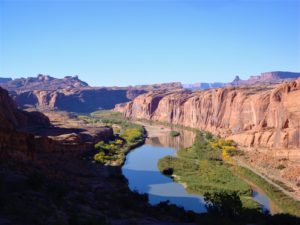
The MAPWaters Act will improve recreation on federal waterways by investing in modern technology to provide anglers, hunters, boaters, and other water users the information they need to safely and legally access and utilize public waters administered by federal agencies.

The bipartisan legislation is led by U.S. Senators John Barrasso (R-Wyo.) and Angus King (I-Maine) and Representatives Blake Moore (R-Utah), Jimmy Panetta (D-Calif.), Russ Fulcher (R-Idaho), and Debbie Dingell (D-Mich.).

TRCP thanks Senators Mike Lee (R-Utah) and Martin Heinrich (D-N.M.) for their leadership to ensure this important access legislation crossed the finish line so American anglers and hunters can enjoy their public waterways.

“Federally managed waters provide millions of American anglers and hunters with innumerable opportunities to fish and hunt,” said Joel Pedersen, president and CEO of the Theodore Roosevelt Conservation Partnership. “The MAPWaters Act will digitize and clarify the complex rules of public waterways and make them readily available to all to ensure Americans recreate legally and safely on our public waters.”

The MAPWaters Act builds on the success of the MAPLand Act by directing federal agencies to digitize water and fishing access and recreational use information on federal waterways and to make those resources readily available to the public. Federal waterways include any portion of a body of water managed, or partially managed, by one or more of the following federal agencies: the Bureau of Reclamation, the National Park Service, the Bureau of Land Management, the United States Fish and Wildlife Service, and the Forest Service.

This newly digitized public information would include:

• Status information on which waterways are open or closed to entry or watercraft, including watercraft inspection or decontamination requirements.

• The areas of waterways with restrictions on motorized propulsion, horsepower, or gasoline fuel.

• Types of watercraft that are restricted on each area of a waterway, including the permissibility of canoes, rafts, motorboats, airboats, oversnow vehicles on frozen bodies of water, etc.

• The location and geographic boundaries of fishing restrictions on recreational and commercial fishing, including full or partial closures, no-take zones, and fishing restrictions within or surrounding marine protected areas.

• Fishing restrictions concerning specific types of equipment or bait, such as restrictions on the use of barbed hooks or live bait and requirements with respect to catch and release.

Much of this information is housed in agency documents and difficult for the public to discover and access. For example, in the Code of Federal Regulations, the U.S. Fish and Wildlife Service includes 42 pages worth of National Wildlife Refuge specific recreation rules, many of which are tied to waterway navigation, use, and fishing. The clarity and accessibility of regulations for both the public and the agencies entrusted to manage these waters will result in more Americans confidently accessing and enjoying their public waters.

“Among America’s 57.7 million anglers, navigation tools, mapping apps, and chartplotters are as popular and widespread as ever,” said Glenn Hughes, president and CEO of the American Sportfishing Association. “The Senate’s passage of the MAPWaters Act will enhance access to key information through these mapping tools and devices, allowing the public to confidently fish, boat, and enjoy time on the water. As this legislation heads to the President’s desk, ASA thanks Senators Barrasso and King for their leadership of this bill, and their commitment to enhancing fishing and boating experiences by ensuring that recreational information on fishing restrictions, no wake zones, and speed restrictions is standardized and digitized across jurisdictions.”

“We’re excited that the MAPWaters Act is headed to the President’s desk,” said Laura Orvidas, CEO of onX. “For hunters, anglers, and paddlers, knowing where to legally and responsibly access our waterways is essential. By digitizing complex water access information, this legislation provides the outdoor community with the critical data they need to access, explore, and protect our public waters. We’re proud to support this effort to make water access more transparent and available—both now and for future generations.”

“Knowing where to go fishing and what you can do when you get there is basic information all anglers need for a successful day on the water,” said Lindsay Slater, vice president of government affairs for Trout Unlimited. “Trout Unlimited applauds the passage of the MAPWaters Act and thanks the bill’s sponsors for shepherding this legislation through Congress. This law will simplify information for anglers to access and use waters managed by federal agencies, including decontamination requirements to help prevent the spread of aquatic invasive species, helping to better inform anglers while also stewarding our fisheries.”

To help educate hunters and anglers on the suite of important, bipartisan, access legislation that has been passed and is currently under consideration, the TRCP launched the MAPping Public Access webpage that breaks down the history, status, and relevance of the MAPLand, MAPWaters, MAPOceans, and MAP Roads Acts.

Learn more about TRCP’s work to improve your access to public lands and waters HERE.

Do you have any thoughts on this post?

XHTML: You can use these tags: <a href="" title=""> <abbr title=""> <acronym title=""> <b> <blockquote cite=""> <cite> <code> <del datetime=""> <em> <i> <q cite=""> <s> <strike> <strong>

Comments must be under 1000 characters.

by:

posted in: MAPWaters

December 11, 2025

Our Top Conservation Achievements in 2025 

Your support helped make these conservation achievements possible. 

In many ways, 2025 was a year defined by gridlock and uncertainty in Washington D.C. Partisan divides slowed much of Congress, budgets were tight, and long-term solutions often felt just out of reach. Yet even in this environment, one thing remains clear: when hunters, anglers, and conservation partners stay engaged and unite, conservation solutions take shape and harmful proposals sink. 

 Those moments underscored why steady engagement matters and they reinforce TRCP’s commitment to remain vigilant, build durable coalitions, and continue advocating for the balanced conservation solutions that safeguard America’s lands, waters, and wildlife. 

In 2025, the hunting and fishing community stepped into the arena and delivered meaningful achievements that safeguarded access, strengthened habitat, and advanced bipartisan, durable solutions that will benefit the future of our sporting traditions. Here are just a few: 

Working alongside a broad, bipartisan coalition, TRCP helped defeat proposals that would have mandated the sale of millions of acres of public lands as part of the budget reconciliation process. Through sustained advocacy and engagement with hunters, anglers, and Congress, those provisions were removed, ensuring that public lands remain in public hands. 

That same commitment to collaboration was reflected in the formation of new bipartisan caucuses in Congress, efforts that TRCP helped propel forward by working closely with key lawmakers to grow membership and support early momentum. In the House, lawmakers from both parties launched the Public Lands Caucus to advance common-ground solutions that protect access, habitat, and America’s public lands legacy. In the Senate, the creation of the bipartisan Stewardship Caucus further reinforced the principle that conservation succeeds when leaders work together for the common good – and commit to increasing the pace and scale of stewardship across the public and private lands that hunters and anglers depend on. 

Access is fundamental to our outdoor traditions, and 2025 brought continued momentum behind tools that help hunters and anglers navigate the landscape with confidence. 

Progress on MAPLand and MAPRoads Acts improved clarity around public access points and legal routes. Continued efforts on the MAPWaters Act advanced a clearer understanding of water access for anglers, while the MAPOceans Act aims to support transparency and access for recreational saltwater fishing. 

Together, these initiatives reflect a bipartisan commitment to reduce confusion, avoid conflict, and help people enjoy the outdoors responsibly – proof that progress doesn’t always require sweeping reform to be meaningful. 

Read more about how this suite of legislation aims to enhance access to your public lands and waters by digitizing public access records and paper maps HERE

Strong conservation outcomes depend not just on safeguards, but on thoughtful, science-informed management and 2025 saw meaningful progress on both fronts. 

Bipartisan momentum behind the Fix Our Forests Act reflected a shared recognition that healthy forests are essential to resilient wildlife habitat, strong fisheries and watershed health, safer communities, and sustained recreational access. This management-first approach mirrors TRCP’s emphasis on solutions that endure beyond a single season or policy cycle. 

That same mindset guided progress on the Farm Bill, which added over $15 billion to the conservation baseline. These investments provide stability for private-land conservation programs and support the landowners who play a critical role in sustaining wildlife habitat across the country. 

Targeted investments through USDA also advanced efforts to address Chronic Wasting Disease, supporting the long-term health of the big game herds hunters care deeply about. 

Some of the most tangible conservation gains in 2025 occurred where conservation meets daily life. 

State-level investments in wildlife crossing projects, including efforts in Montana and New Mexico, strengthened habitat connectivity while reducing collisions and improving safety for both wildlife and people. These highlight the power of collaboration and the value of durable, locally supported solutions. 

In 2025, conservation continued to prove its value as a high-return investment for communities, jobs, and economic growth. 

new report showed that investments in fish and wildlife conservation generate significant economic activity nationwide – supporting hundreds of thousands of jobs, contributing billions to GDP, and serving as the bedrock of the $1.1 trillion outdoor recreation economy that many rural and gateway communities depend on. 

For hunters, anglers, and community leaders alike, the takeaway is clear: conservation is not only good stewardship – it’s smart economics, delivering significant benefits that support local livelihoods and America’s outdoor heritage. 

Read Conservation Economy in America: A Snapshot of Total Fish and Wildlife-Associated Direct Investments and Economic Contributions

We Maintained Focus on Bipartisan, Durable Solutions

Not every policy decision in 2025 aligned with the priorities of hunters and anglers – but those moments only reinforced why persistence matters. They sharpened our resolve to stay engaged, to keep building strong bipartisan coalitions, and to remain vigilant in advocating for balanced, durable, science-based solutions. Guided by our mission, TRCP is more committed than ever to standing up for the lands, waters, wildlife, and sporting traditions that define us. 

Even as Washington, D.C. continues to navigate uncertainty, one thing remains evident: conservation advances when hunters, anglers, partners, and decision-makers step into the arena together. Collaboration matters. And showing up – year after year – matters. When we unite, we win. 

Courtesy Library of Congress, Motion Picture & Broadcast Virgin Collection, item MP76000126

by:

posted in: MAPWaters

January 22, 2025

Anglers and Hunters Cheer House Passage of MAPWaters Act

Bill would direct agencies to digitize recreational access information on federal waterways 

The Theodore Roosevelt Conservation Partnership joins anglers and hunters in cheering House passage of the Modernizing Access to Our Public Waters Act (H.R. 187).

The MAPWaters Act would improve recreation on federal waterways by investing in modern technology to provide anglers, hunters, boaters, and other water users the information they need to safely and legally access and utilize public waters administered by federal agencies.

The bipartisan legislation is led by Rep. Blake Moore (R-Utah), Rep. Jimmy Panetta (D-Calif.), Rep. Russ Fulcher (R-Idaho), and Rep. Debbie Dingell (D-Mich.).

“The MAPWaters Act will help Americans make the most of their days on the water by directing federal agencies to clarify the complex rules of public waterways and making them readily available,” said Joel Pedersen, president and CEO of the Theodore Roosevelt Conservation Partnership. “This bipartisan legislation will ensure Americans recreate safely and legally as they enjoy our nations waters.”

The MAPWaters Act builds on the success of the MAPLand Act by directing federal agencies to digitize water and fishing access and recreational use information on federal waterways and to make those resources readily available to the public. Federal waterways include any portion of a body of water managed, or partially managed, by one or more of the following federal agencies: the Bureau of Reclamation, the National Park Service, the Bureau of Land Management, the United States Fish and Wildlife Service, and the Forest Service.

This newly digitized public information would include:

• Status information on which waterways are open or closed to entry or watercraft, including watercraft inspection or decontamination requirements.

• The areas of waterways with restrictions on motorized propulsion, horsepower, or gasoline fuel.

• Types of watercraft that are restricted on each area of a waterway, including the permissibility of canoes, rafts, motorboats, airboats, oversnow vehicles on frozen bodies of water, etc.

• The location and geographic boundaries of fishing restrictions on recreational and commercial fishing, including full or partial closures, no-take zones, and fishing restrictions within or surrounding marine protected areas.

• Fishing restrictions concerning specific types of equipment or bait, such as restrictions on the use of barbed hooks or live bait and requirements with respect to catch and release.

Much of this information is housed in agency documents and difficult for the public to discover and access. For example, in the Code of Federal Regulations, the U.S. Fish and Wildlife Service includes 42 pages worth of National Wildlife Refuge specific recreation rules, many of which are tied to waterway navigation, use, and fishing.

The clarity and accessibility of regulations for both the public and the agencies entrusted to manage these waters will result in more Americans confidently accessing and enjoying their public waters.

Learn more about TRCP’s commitment to public access HERE.

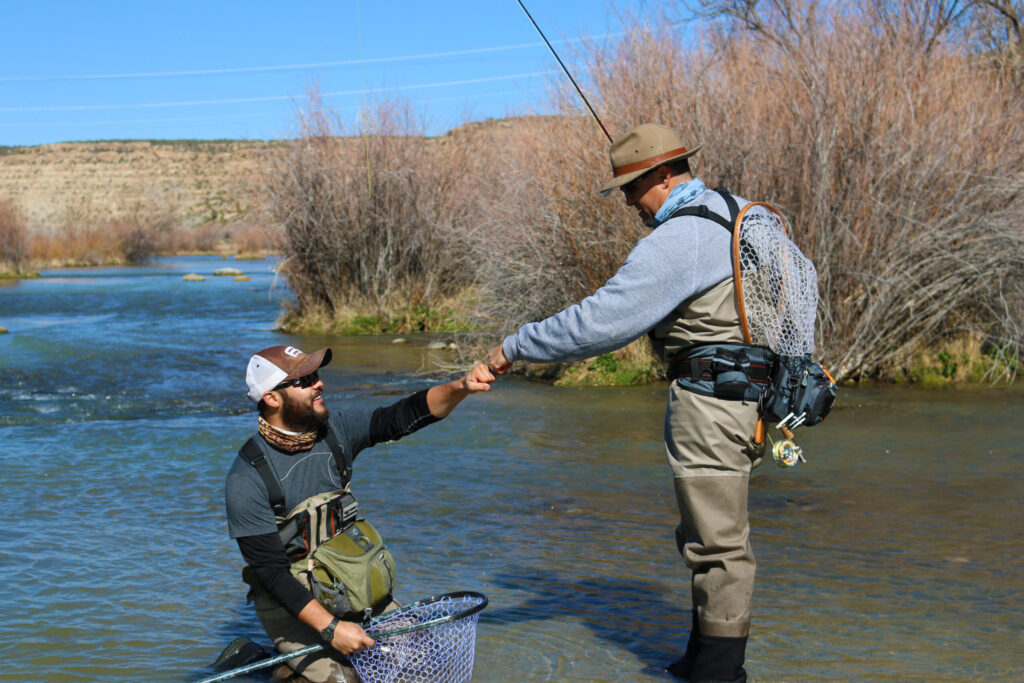
Photo credit: Gregg Flores 

by:

posted in: MAPWaters

January 13, 2025

How the 119th Congress Can Deliver for Hunters and Anglers

How lawmakers can build on recent conservation successes and deliver big wins for the hunting and fishing community

The 118th Congress was productive for hunters, anglers, and the TRCP community. Alongside our partners, we celebrated the passage of the EXPLORE Act, America’s Conservation Enhancement Act, and the Water Resources Development Act which all contained important provisions for habitat conservation and access, but there is still work to be done. 

The 119th Congress officially began on January 3, 2025. Amid the uncertainty of navigating a presidential transition, new leadership in the Senate, and fresh faces sitting atop numerous committees, Congress has the potential to deliver big wins for fish and wildlife, habitat conservation, and hunting, fishing, and recreational access. 

Below are a few ways the 119th Congress can advance conservation and access:

Yet another Farm Bill expiration deadline came and went in late 2024 without a new bill being signed. The U.S. Department of Agriculture is still operating on the 2018 Farm Bill, leaving big opportunities on the table to expand support for voluntary access and habitat conservation programs on private lands. As Agriculture Committees return to work with new leadership, the TRCP will be pushing for a Farm Bill that supports wildlife, habitat, and hunters and anglers across the country.    

Among the most impactful things that this Congress can do to bolster conservation and access is to invest Inflation Reduction Act funds into the Farm Bill baseline, making them permanent. Failure to do so would wipe out billions of dollars that go directly to farmers and ranchers through these popular, voluntary programs. The good news is there was bipartisan support last Congress among leadership of Agriculture Committees to roll these funds into the Farm Bill baseline.  

Any new Farm Bill should also include a reauthorization and expanded funding for the Voluntary Public Access and Habitat Incentive Program, the only federal tool aimed at increasing hunting and fishing access on private lands. Additionally, Congress should use Farm Bill proposals from the 118th Congress to conserve big game migratory habitat on private lands and improve forest health and fish and wildlife habitat in headwater environments.   


Photo James Wicks

Hunters, anglers, and outdoor recreationists had plenty to cheer about in the 118th Congress with the passage of the EXPLORE Act, a first of its kind recreation-focused legislative package. However, Congress still has work to do in the 119th to unlock more access opportunities on federal waterways and oceans. 

Here are a few ways Congress can do this: 

Pass the MAPWaters Act. The MAPWaters Act would require federal land management agencies to digitize water and fishing access and recreational use information on federal waterways and make those resources available to the public. The bill passed both the House and Senate last Congress on sweeping bipartisan margins, but minor differences in the two bills meant that the bill ultimately failed to cross the finish line in the 118th Congress.  

Pass the MAPOceans Act. Like the MAPWaters Act, the MAPOceans Act would require NOAA to create a publicly accessible database that outlines fishing restrictions and closures, boating restrictions and closures, and allowable methods of take in federal waters.  

Reauthorize the National Parks and Public Lands Legacy Restoration Fund. Established by the Great American Outdoors Act, the National Parks and Public Lands Legacy Restoration Fund is set to expire. This fund provides federal land management agencies with resources to address the backlog of deferred maintenance projects. Congress should act to reauthorize this important source of funding to restore and expand access opportunities on public lands. 

Given the demonstrated, broad support, the 119th Congress should move quickly to send these common-sense bills to the President’s desk. 


Photo by J. M. Villarreal/USDA

Despite a compromise deal emerging from the Senate, the 118th Congress ultimately failed to pass a comprehensive permitting reform legislative package. Permitting reform talks have largely focused on expediting environmental review for energy and transmission projects, but Congress must also address the issue of overly cumbersome and excessive delays on approving ecosystem restoration and other environmentally beneficial projects. Currently, these projects go through the same approval process as other development and infrastructure projects, which creates unnecessary hurdles and complicates on-the-ground habitat restoration work. These projects help support recreational access and sustain the $1.1 trillion annual outdoor economy.  

TRCP worked with our partners to develop common-sense recommendations to cut through the “green tape” that delays conservation and restoration projects. By developing a categorical exclusion specific to the Department of Interior for restoration actions and simplifying, and scaling, mitigation as a component of permitting, Congress can help get more conservation and restoration work on the ground and reduce the amount of money spent on environmental analysis without diminishing protections under the National Environmental Policy Act (NEPA) or other bedrock environmental statutes.  


The Wildlife Movement Through Partnerships Act, introduced in the 118th Congress, would formally authorize existing federal programs initiated by the Department of the Interior during the Trump Administration through Secretarial Order 3362, signed by then-Secretary Ryan Zinke, to conserve big game migration corridors through voluntary financial and technical assistance to states, Tribes, and private landowners.  

These programs have been supported and expanded by the Biden Administration but remain discretionary, meaning that they rely on federal agencies setting aside funding each year to continue implementing these programs. Congressional action to formalize these discretionary programs would guarantee that the work persists regardless of administration changes. This is important because the annual budgets of state and Tribal wildlife agencies are unable to meet the full demand for resource management. The financial and technical assistance from these federal programs would help to bridge that funding gap. 

The Wildlife Movement Through Partnerships Act gained momentum in the 118th Congress having hearings in both the House and Senate which presents a strong jumping off point for swift consideration in the 119th Congress. Passing this bill would represent the culmination of nearly a decade of work by the hunting and fishing community while building upon the success of existing big game habitat conservation efforts.  


Photo by Colorado Department of Transportation.

Congress passed a comprehensive surface transportation and infrastructure bill, the Infrastructure Investment and Jobs Act (IIJA), in 2021. The IIJA included numerous conservation investments championed by TRCP and our partners including generational investments in wildlife crossing infrastructure, fish passage, public land access, and natural infrastructure solutions. Many of these programs funded under the IIJA are set to expire in fiscal year 2026, handing the 119th Congress an opportunity to build on the success of these programs that benefit fish and wildlife habitat, reduce costs, create jobs, and enhance public safety. 

 For example, the IIJA allocated $350 million to the Wildlife Crossing Pilot Program, a first-of-its-kind grant program to construct wildlife-friendly roadway infrastructure to reduce wildlife vehicle collisions and improve habitat connectivity for big game and other wildlife. IIJA has also provided investments in aquatic connectivity, which have addressed barriers to fish passage and improved aquatic habitat and have similarly spurred innovation and collaboration across numerous federal and state agencies and other partners and should be prioritized in a surface transportation bill. 

Simply put, the Wildlife Crossings Pilot is successful partnership-based program that leverages expertise and funds across numerous federal and state departments and Congress should seek to permanently authorize this program and allocate additional funds to better meet demand. 

The 119th Congress should also seek to enhance access opportunities for hunters, anglers, and recreationists through a surface transportation bill. Despite a surface transportation reauthorization bill being colloquially called a “Highway Bill,” there’s an opportunity to improve access to remote, rural public lands through partnerships with counties. Congress could establish a pilot program to make grants available to counties to digitize records and make information publicly available on the location and status of county-maintained roads.  


Photo by seth schulte on Unsplash

Republican leadership in the House and Senate are widely expected to prioritize a broad tax reform package in 2025. This provides an opportunity for the 119th Congress to close tax loopholes that divert funds away from conservation.  

The rise of online marketplaces that facilitate direct-to-consumer sales from overseas manufacturers has created a growing loophole that is undermining the North American Model of Wildlife Conservation. The federal excise tax on hunting and fishing equipment established under Pittman-Robertson and Dingell-Johnson is not being collected on foreign-made fishing tackle and archery equipment sold direct from overseas to U.S. consumers, and online marketplaces are not currently responsible for collecting the excise tax on archery and fishing tackle imports. Any comprehensive legislative package on tax policy must close this loophole that accounts for an estimated annual loss of $17 million dollars that would otherwise go to fund state fish and wildlife management agencies.

Conservation is, and should be, a shared priority regardless of party affiliation or ideology. Congress needs to hear that conservation is important to you. For more information, and to take action in support of critical conservation priorities in the year ahead, visit the TRCP Action Center


The TRCP is your resource for all things conservation. In our weekly Roosevelt Report, you’ll receive the latest news on emerging habitat threats, legislation and proposals on the move, public land access solutions we’re spearheading, and opportunities for hunters and anglers to take action. Sign up now.

by:

posted in: MAPWaters

December 20, 2024

Looking Ahead: Our Top Conservation Priorities in 2025

Breaking down the most pressing needs for habitat, access, and our sporting traditions in 2025.

The year ahead provides hunters, anglers, and the conservation community with significant opportunity to further advance America’s legacy of conservation, habitat, and access.

Working alongside our partners, here’s what we want to get done in 2025.

Loss of access to the places where we hunt and fish is one of the biggest threats to the future of conservation and our outdoor recreation opportunities. Americans’ access to the outdoors is unparalleled in all the world, but there are more competing demands on our natural resources than ever before. Sportsmen and sportswomen can’t afford to get edged out.  

In order to guarantee quality places to hunt and fish, TRCP will work to stop efforts to sell or transfer public lands, while simultaneously striving to expand access and improve the management of public lands for the benefit of hunters and anglers.

Learn more about our commitment to public access HERE    

Most of the land in the continental United States is privately owned and managed by farmers, ranchers, and forest landowners. Farm Bill conservation programs give these landowners tools and incentives to manage their land with conservation in mind. Landowners use these programs create and enhance wildlife habitat, improve water quality, and even provide hunting and fishing access. Taken together, Farm Bill conservation programs are the single largest investment in conservation that we make in the United States. 

To our disappointment, and despite years of work, Congress has been unable to find compromise on an updated Farm Bill. The upcoming year will be critical for the conservation programs we cherish as hunters and anglers. The TRCP, and our partners, are working with decision makers in Congress, especially the House and Senate Ag Committees, and USDA to keep hunter and angler priorities top of mind, both in the writing of the next Farm Bill and in the interim. 

Learn more about Farm Bill Conservation Programs HERE

If you want great sport fishing, you need healthy forage fish.  Like other small but critically important forage fish, menhaden and herring play a central role in marine food webs. These tiny, oily baitfish are an essential food source for some of the most economically important sportfish: striped bass, redfish, bluefin tuna, bluefish, speckled trout, weakfish, tarpon, summer flounder, and sharks. 

TRCP will continue to elevate the voices of sportsmen and sportswomen as we call upon regional fisheries managers to change their approach to managing forage fish like menhaden and herring in 2025. 

Learn more about forage fish conservation HERE

Chronic wasting disease has spread rapidly among deer and elk populations, particularly in the last ten years. If you don’t have CWD where you hunt, you don’t want it. This disease is 100% fatal, highly contagious, and can remain in an infected environment for years. Wildlife managers need the resources to deal with this disease, as well as more and better science on the best ways to manage its spread. 

In 2025, TRCP, our partners, and the hunting community will continue to advocate for investments in disease response and research, as well as greater education and awareness for the hunting community, to ensure the future of our deer and elk herds and hunting opportunities. 

Learn more about chronic wasting disease HERE

The historic investments in the restoration and renewal of our nation’s public lands through the Bipartisan Infrastructure Law and the Inflation Reduction Act started to hit the ground in 2024, providing benefits to hunters, anglers, and outdoor recreationalists.   

In 2025, TRCP, our partners, and the sporting community will focus on ensuring that these investments, and their implementation, continue to restore and protect wetlands, manage upland habitat, and build resilience to drought and wildfires so habitat for fish and wildlife are safeguarded and that the recreational opportunities for the next generations of hunters and anglers are protected. 

Learn more about our commitment to habitat and clean water HERE

In recent years, big game migration has taken center stage at the intersection of science, policy, and management. We’ve known for decades that these animals migrate, but recent research and technology have helped to define the exact locations of migratory corridors and stopover areas, and how animals use these habitats. As a result, it is imperative that efforts to conserve these habitats advance on both public and private lands in 2025.  

TRCP, and our partners, aim to ensure that public land management plans on BLM and USFS land continue to conserve the most sensitive big game habitats and will work towards passage of the Wildlife Movement Through Partnership Act to formalize migration conservation programs that provide financial and technical assistance to states, Tribes, and private landowners. 

Learn more about big game migration corridors HERE

Stay connected in 2025. The TRCP is your resource for all things conservation. In our weekly Roosevelt Report, you’ll receive the latest news on emerging habitat threats, legislation and proposals on the move, public land access solutions we’re spearheading, and opportunities for hunters and anglers to take action. Sign up now

HOW YOU CAN HELP

TRCP has partnered with Afuera Coffee Co. to further our commitment to conservation. $4 from each bag is donated to the TRCP, to help continue our efforts of safeguarding critical habitats, productive hunting grounds, and favorite fishing holes for future generations.

Learn More
Subscribe


You have Successfully Subscribed!

You have Successfully Subscribed!

You have Successfully Subscribed!

You have Successfully Subscribed!

You have Successfully Subscribed!