September 12, 2025

MAPOceans Act Passes Senate

New legislation would modernize accessibility to saltwater recreational fishing regulations and marine waters navigation information 

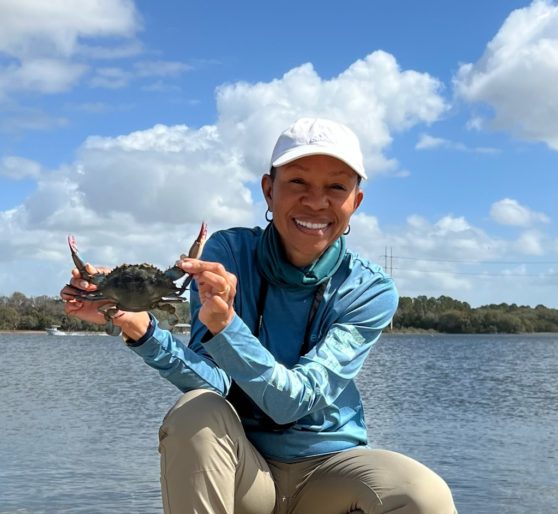
Saltwater anglers, hunters, and marine recreationists joined the Theodore Roosevelt Conservation Partnership in cheering Senate passage of the Modernizing Access to Our Public Oceans Act this week by unanimous consent. The MAPOceans Act will direct the standardization, consolidation, and digitization of boating and recreational fishing information for federally managed marine waters and federal fisheries administered by the National Oceanic and Atmospheric Administration. 

The bipartisan legislation was introduced by U.S. Senators Ted Cruz (R-Texas) and Angus King (I-Maine). 

“TRCP joins America’s sportsmen and sportswomen in thanking Senators Cruz and King for bringing forth this bipartisan, access-oriented legislation, and greatly appreciates the broader Senate support for its passage,” said Joel Pedersen, president and CEO of the Theodore Roosevelt Conservation Partnership. “The MAPOceans Act will help simplify fishing and boating experiences to enhance recreation opportunities, while expanding access by making the necessary information for safe, legal saltwater fishing more readily available through digital technology.” 

The MAPOceans Act builds on the success of the MAPLand Act, passed in 2022, and the MAPWaters Act, which passed out of the House of Representatives in January 2025, by directing NOAA to digitize navigation and recreational use rules for marine waters and federal fisheries, and to make those resources readily available to the public. The hundreds of thousands of offshore ocean miles and numerous saltwater fish species regulated by NOAA present enormous recreational opportunities where restrictions are difficult to access and constantly changing. MAPOceans directs the federal agency to compile those rules in digital form so they can be integrated into GPS units and smartphone applications that are popular with boaters and anglers, making that information available to the public in real time. 

“The MAPOceans Act consolidates and makes existing spatial information more accessible, empowering anglers to better understand and safely enjoy our marine waters,” said Glenn Hughes, president of the American Sportfishing Association. “We thank the Senate for passing this bipartisan bill and look forward to its continued progress.” 

“We applaud Senator Cruz and Congressional Sportsmen’s Caucus Co-Chair Senator King for their leadership in passing the MAPOceans Act out of the Senate,” said Chris Horton, senior director of fisheries policy for the Congressional Sportsmen’s Foundation. “This much needed, bipartisan legislation will finally remove the uncertainty about where we can fish and with what gear that can often create barriers for angler participation on our coastal waters.”    

“At the Marine Retailers Association of the Americas, we recognize the immense value our coastal regions provide—not only as vital ecosystems but also as hubs for recreation that drive local economies and support marine retailers,” said Matt Gruhn, president of the MRAA. “The MAPOceans Act represents a crucial step forward in providing standardized, accessible data about our nation’s waterways. By digitizing key information like fishing regulations and restrictions, this legislation will enhance safety and enjoyment for recreational boaters and anglers, while also supporting conservation efforts. We’re grateful to Senators King and Cruz for their leadership in championing this important initiative and their hard work to get it passed out of the Senate.” 

“Expanding access to the information anglers and boaters need to safely get out on the water will help fuel America’s $1.2 trillion outdoor recreation economy,” said Jessica Wahl Turner, president of the Outdoor Recreation Roundtable Association. “The Outdoor Recreation Roundtable appreciates Senators Cruz and King for championing the MAPOceans Act and for finding innovate ways to allow more Americans to enjoy the outdoors.” 

Learn more about TRCP’s work to improve your access to public lands and waters HERE

Photo Credit: David Mangum

Do you have any thoughts on this post?

XHTML: You can use these tags: <a href="" title=""> <abbr title=""> <acronym title=""> <b> <blockquote cite=""> <cite> <code> <del datetime=""> <em> <i> <q cite=""> <s> <strike> <strong>

Comments must be under 1000 characters.

by:

posted in: Press Releases

September 8, 2025

TRCP Expands Government Affairs Team with Promotion and New Hire

Nakayama promoted to Senior Manager; Haynes joins as Advisor to strengthen conservation advocacy

The Theodore Roosevelt Conservation Partnership (TRCP), the largest conservation coalition in the United States, is pleased to announce the promotion of Ian Nakayama to Senior Manager, Government Affairs, and the hiring of Grayson Haynes as Government Affairs Advisor. Together, their experience will strengthen TRCP’s ability to advance bipartisan conservation policy on behalf of hunters and anglers nationwide. 

Nakayama joined TRCP in 2021 and has played an instrumental role in advancing legislative and administrative priorities for TRCP and across the conservation community. As Senior Manager, Government Affairs, he will continue to contribute to TRCP’s federal policy strategy and expand engagement with lawmakers on issues ranging from public land access and habitat conservation to water resources and fish and wildlife management. Nakayama previously worked in legislative offices, including Congresswoman Jennifer Wexton’s office, and for Delegate Paul Krizek in the Virginia General Assembly, and is a graduate of the University of Virginia.  

“We are proud to recognize Ian with this well-deserved promotion,” said Joel Pedersen, president and CEO of the TRCP. “His deep expertise and strong track record on Capitol Hill have made him a trusted resource for policymakers and TRCP partners alike.” 

The TRCP also welcomes Grayson Haynes as Government Affairs Advisor. Haynes brings experience working across both Congress and the conservation nonprofit sector. He began his career on Capitol Hill as a staff assistant for the House Agriculture Committee during the 118th Congress. Most recently, he worked with the National Audubon Society’s Working Lands team, where he partnered with ranchers, landowners, and producers to advocate for Farm Bill conservation programs. 

A Virginia native from a military family, Haynes grew up fishing and exploring the coastlines with his grandfather. He is an avid hunter of waterfowl, deer, and turkey on Chesapeake Bay public lands. 

“Grayson’s firsthand knowledge of agriculture policy, combined with his personal connection to hunting and fishing, will be a tremendous asset to TRCP’s advocacy work,” said Pedersen. “We’re thrilled to welcome him to the team.” 

With these additions, TRCP’s government affairs team is well positioned to secure lasting, bipartisan policy outcomes that aim to guarantee all Americans quality places to hunt and fish. 

Learn more about TRCP’s leadership HERE.  


The TRCP is your resource for all things conservation. In our weekly Roosevelt Report, you’ll receive the latest news on emerging habitat threats, legislation and proposals on the move, public land access solutions we’re spearheading, and opportunities for hunters and anglers to take action. Sign up now.

September 4, 2025

BLM Advances Greater Sage Grouse Land Use Planning

TRCP supports final plans that are durable and consistent

The BLM has opened a public comment period on updated management actions to the Proposed Greater Sage Grouse RMP Amendments for BLM-managed lands in California, Idaho, Montana, Nevada, North Dakota, South Dakota, Utah, and Wyoming. This announcement is a step toward revising land use plans across the 10-state range of the greater sage grouse in response to a court ruling that identified legal deficiencies in previous plans finalized in 2020.

In November 2024, the BLM issued proposed final plan amendments across the 10-state range of the greater sage grouse and signed Records of Decision in January 2025 for plan amendments in Colorado and Oregon. Since that time, the agency has continued to work with the remaining states to resolve administrative protests and consistency reviews submitted by several Governors.

“For more than a decade, state agencies have worked in unprecedented collaboration with the BLM to amend land management plans to conserve over 67 million acres of sagebrush habitat,” said Madeleine West, vice president of Western conservation for the Theodore Roosevelt Conservation Partnership. “The BLM’s action this week indicates they are committed to completing plan amendments in the remaining Western states. Finalizing these outstanding plan amendments could end a cycle of BLM planning that first began in 2012, allowing federal and state agency staff and resources to refocus on important species and land management work to benefit the sagebrush ecosystem and Western communities.” 

The TRCP has been on the front lines in support of sage grouse conservation for over a decade. The decline of this iconic game bird of the American West indicates that sagebrush habitat is in trouble, and that matters for sportsmen and women because the sagebrush ecosystem is home to more than 350 different species of plants and animals, including pronghorn and mule deer. A 2022 U.S. Geological Survey report revealed that half of the original sagebrush ecosystem has been lost at a rate of approximately 1.3 million acres each year over the last two decades. 

“We support the BLM’s efforts to collaborate with states to finalize the remaining land use plans in a manner that creates durable and consistent management across the range of the species,” continued West.

The BLM is accepting public comments on proposed updated management actions until October 3, 2025. Documents are available on the agency’s eplanning website.

by:

posted in: Press Releases

Bipartisan Headwaters Protection Act Reintroduced to Safeguard America’s Forests and Watersheds

Hunters, anglers, and conservation groups applaud legislation aimed at new investments in source watersheds and resilient forests. 

On Wednesday, a bipartisan group of U.S. Senators – including Michael Bennet (D-Colo.), Mike Crapo (R-Idaho), John Hickenlooper (D-Colo.), Ben Ray Luján (D-N.M.), and James Risch (R-Idaho) introduced the Headwaters Protection Act in an effort to invest in America’s forests and watersheds by expanding support for two U.S. Forest Service Programs created in the 2018 Farm Bill: The Water Source Protection Program (WSPP) and the Watershed Condition Framework (WCF). These two programs are unique in that they are the only Forest Service authorities that specifically support efforts to identify and implement conservation and restoration efforts to improve the quality of water originating on National Forest Service lands, which provide benefits for both downstream water users and fish and wildlife.  

If passed, the bill would support critical public-private partnerships working to ensure our National Forests provide clean water to downstream communities, benefit agricultural water users, and safeguard fish and wildlife habitat that hunters, anglers, and communities rely on. 

Originally introduced in 2023, the reintroduced bill aims to make important updates that will expand participation, increase funding, and boost resilience.  

“Healthy source watersheds improve water reliability and quality, bolster resilience to drought and wildfire, and sustain the fish and wildlife habitat that hunters and anglers depend on,” said Alex Funk, TRCP’s director of water resources. “The Headwaters Protection Act will strengthen public-private partnerships to accelerate restoration and conservation of these landscapes, and we applaud Senators Bennet, Crapo, Hickenlooper, Luján, and Risch for their leadership in introducing this important bipartisan legislation aimed at keeping our forests and watersheds healthy.” 

From backcountry trout streams to irrigation canals that sustain farms, healthy headwaters are the foundation of both America’s sporting traditions and our economy. National forests supply drinking water to more than 150 million Americans and sustain countless fish and wildlife species that hunters and anglers depend on. The Headwaters Protection Act would:  

  • Reauthorize the Water Source Protection Program (WSPP) and increase the authorization of appropriations for the program from $10 million per year to $30 million per year.   
  • Broaden the range of water users, including rural communities and Tribes, who could participate in and benefit from the WSPP.  
  • Reduce financial barriers for water users to participate in the WSPP by providing more flexible match requirements.  
  • Prioritize WSPP projects that benefit drinking water quality and improve resilience to wildfire and other natural disasters.  
  • Make a technical change to the Watershed Condition Framework (WCF) that ensures healthy watersheds do not become further degraded and authorizes $30 million in new appropriations per year for the implementation of locally led watershed restoration plans.   

The WSPP and WCF projects would:  

  • Conserve and restore freshwater resources within National Forest System Lands and nearby non-federal lands, which supply drinking water to one in five Americans and contain much of our country’s best remaining cold-water habitat for salmon, steelhead, and trout.  
  • Complement and strengthen the Forest Service’s efforts to respond to growing wildfire risk by encouraging partnerships with water users to reduce threats associated with wildfire to water supplies. 

Learn more about TRCP’s work on Habitat & Clean Water | Theodore Roosevelt Conservation Partnership


Hunters and anglers have always been the unsung heroes of conservation in America, quietly paying it forward every time we buy a license, a box of ammo, or a tank of boat fuel. We know you’re not satisfied with simply going hunting or fishing and then going home—so go the extra distance. You can take action on the conservation issues that matter right now. Click here to get started.

by:

posted in: Press Releases

August 5, 2025

onX and TRCP Release Map of Public Acres Available for Potential Sale

First-of-its-kind tool identifies six million acres the Bureau of Land Management could advance for sale

onX and the Theodore Roosevelt Conservation Partnership today launched an interactive map that identifies lands deemed eligible for potential sale by the Bureau of Land Management. This map is the first publicly available, easy-to-use tool to inform both the public and policymakers about the locations of public land parcels that the federal government could advance for sale.

“Public lands, like those managed by the BLM, support 178.5 million outdoor recreation participants who rely on these landscapes to hunt, hike, fish, off-road, ski, climb, and bike,” said onX CEO Laura Orvidas. “The outdoor community cherishes these places, and has recently fought fiercely to keep them public. Yet the land disposal process has historically been opaque–often buried in hundreds of pages of government documents. We created this map with TRCP to bring transparency to the land disposal process, to inform outdoor enthusiasts of nearby parcels, and to encourage lawmakers to uphold existing policies that safeguard the public interest when considering any land sales.”

This map was developed using publicly available GIS data derived from 160 individual BLM Resource Management Plans in 17 western states. It reveals 6,086,900 acres of public land marked for potential sale.

“For the first time, the public and policymakers can engage with one map that spans most BLM planning areas, and see public land parcels eligible for sale in the context of other landmarks, like towns, roads, and adjoining public lands,” said Joel Pedersen, president and CEO of the Theodore Roosevelt Conservation Partnership. “TRCP is proud to partner with onX to share this valuable tool that shows specific locations of land that could be considered for sale like never before.”

The six million acres depicted in the map are not guaranteed to be sold, rather, they have been identified in BLM land use plans as eligible for potential disposal or sale. Identification of lands as eligible for disposal does not trigger immediate action, it means those parcels may be considered for sale if and when a proposal is advanced. Importantly, any future sale must go through a multi-step process that includes additional opportunities for public review and comment. By showing these parcels on a map, the public can more readily participate in any future public process.

Explore the map HERE.

Learn more about the BLM’s land disposal history and current process HERE.


Public lands need champions, and thankfully, several bipartisan members of Congress are taking the lead. Learn more about the Public Land Caucus HERE.

HOW YOU CAN HELP

TRCP has partnered with Afuera Coffee Co. to further our commitment to conservation. $4 from each bag is donated to the TRCP, to help continue our efforts of safeguarding critical habitats, productive hunting grounds, and favorite fishing holes for future generations.

Learn More
Subscribe


You have Successfully Subscribed!

You have Successfully Subscribed!

You have Successfully Subscribed!

You have Successfully Subscribed!

You have Successfully Subscribed!