December 18, 2025

Bipartisan Wildlife Road Crossings Program Reauthorization Bills Introduced in Senate

Companion bill was introduced in the House of Representatives in November

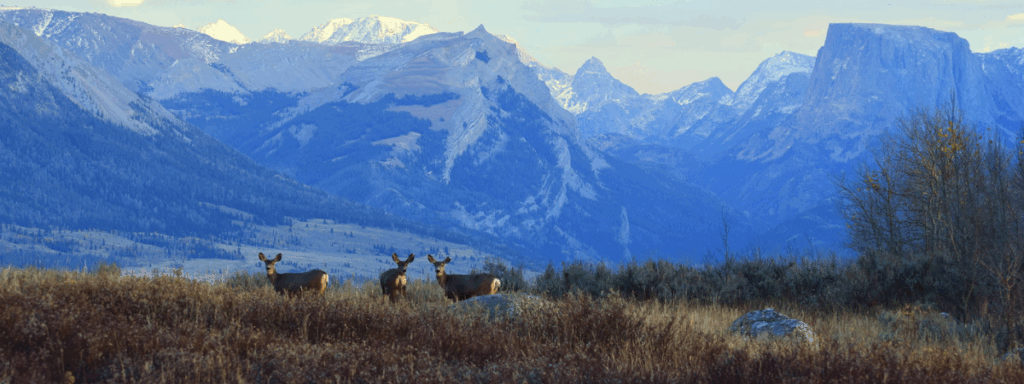
The Theodore Roosevelt Conservation Partnership applauds Senate introduction of two bills that would reauthorize and increase funding for the Wildlife Crossings Program through fiscal year 2031.

Senators Alsobrooks (D-Md.), Cramer (R-N.D.), Merkley (D-Ore.), and Curtis (R-Utah) along with Senators Heinrich (D-N.M.) and Sheehy (R-Mont.) are leading legislation in the Senate. In November of this year, Congressmen Zinke (R-Mont.) and Beyer (D-Va.) introduced similar legislation in the House.

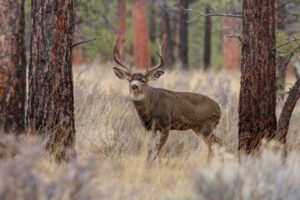
The Wildlife Crossings Program provides grant funding to state and Tribal governments to construct wildlife crossings such as overpasses, underpasses, and fencing. This infrastructure has proven to significantly reduce the number of wildlife-vehicle collisions and improve habitat connectivity.

“Wildlife crossings on America’s highways increase motorist safety, ensure habitat connectivity, and save countless dollars by preventing vehicle-wildlife collisions,” said Joel Pedersen, president and CEO of the Theodore Roosevelt Conservation Partnership. “TRCP applauds Senators Alsobrooks, Cramer, Merkley, Curtis, Heinrich, and Sheehy along with Representatives Zinke and Beyer for their foresight and leadership to introduce legislation that would increase public safety while supporting the wildlife populations that American sportsmen and women depend upon.”

Learn more about TRCP’s commitment to wildlife migration conservation HERE.

One Response to “Bipartisan Wildlife Road Crossings Program Reauthorization Bills Introduced in Senate”

Do you have any thoughts on this post?

XHTML: You can use these tags: <a href="" title=""> <abbr title=""> <acronym title=""> <b> <blockquote cite=""> <cite> <code> <del datetime=""> <em> <i> <q cite=""> <s> <strike> <strong>

Comments must be under 1000 characters.

December 16, 2025

Restoring America’s Largest Swamp to Improve Louisiana Fisheries

The Atchafalaya Basin is in decline due to the construction of levees and canals, the proliferation of aquatic invasive species, and sediment build-up, but restoration will benefit habitat while maintaining flood control

The Atchafalaya Basin is the embodiment of Sportsman’s Paradise.

It’s America’s largest swamp, encompassing more than 250,000 acres of iconic cypress and tupelo gum forests, winding bayous, and lakes that give way to growing deltas as the Atchafalaya River’s sediment-heavy waters near the Gulf.

Too many Louisianans to count have explored the fertile bayous, bays, lakes, and flats of the Basin in pursuit of bass, sac-a-lait, goggle eye, hand-sized bluegill, and numerous other fish.

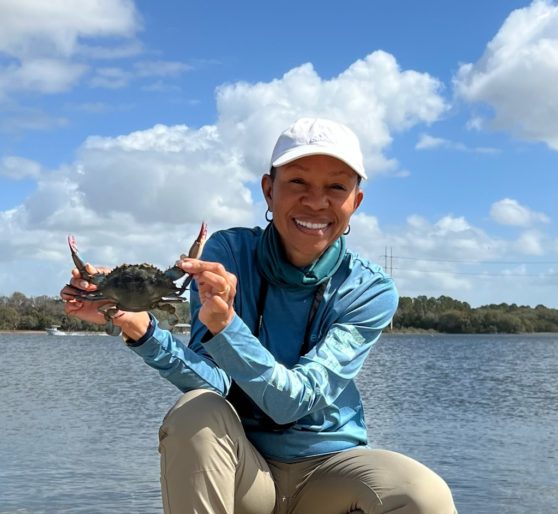
The Atchafalaya also supports ample deer and squirrel hunting opportunities and world’s largest annual wild crawfish harvest. It teems with alligators, ducks, and other waterfowl and supports commercial fishing for catfish, buffalo, carp, and blue crabs.

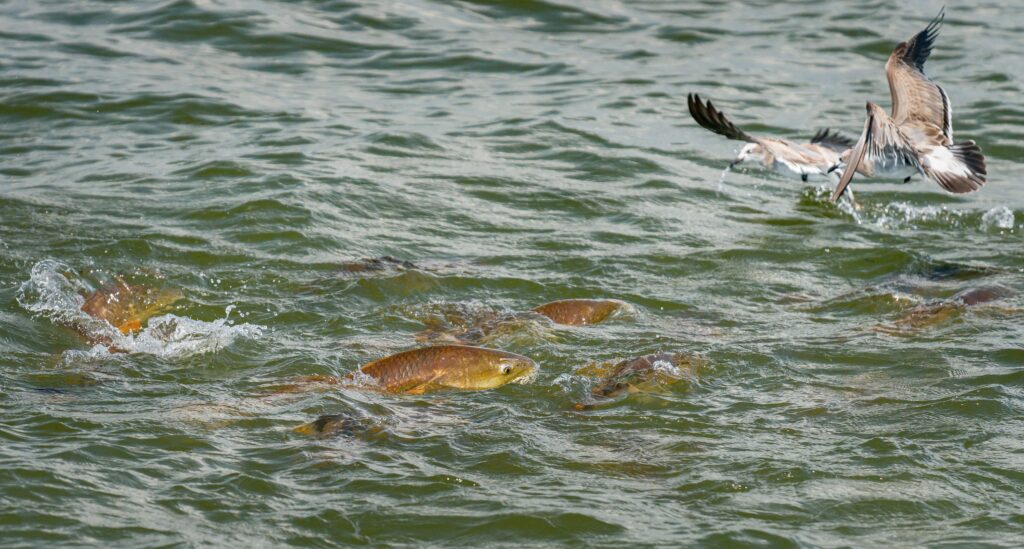
The Atchafalaya Basin is one of America’s top freshwater fisheries. Credit: Samuel Lei

While the Basin is inarguably one of the country’s top fisheries, it’s become obvious to many its productivity has declined over the last 20 years. Sediment coming down the Atchafalaya River, which is fed by the combined waters of the Mississippi and Red Rivers and directed by the Old River Control Structure, is filling in and shallowing bayous, canals, and lakes throughout the Basin.

The sediment that makes it all the way to the Basin’s final stretches in Atchafalaya Bay is building extensive deltas at the mouth of the Atchafalaya River and the Wax Lake Outlet, expanding valuable habitat for ducks, bald eagles, and a wide variety of other birds and fish. However, in the northern and middle grounds of the Basin, areas like Grand Lake, Little Bayou Pigeon, Buffalo Cove, and Grand River Flats, the sediment is clogging waterways and blocking some north-south flows that are critical to bringing oxygenated waters into the swamp.

“While the Basin is inarguably one of the country’s top fisheries, it’s become obvious to many its productivity has declined over the last 20 years.”

Other man-made issues plague the Basin as well. First, while it remains wild in appearance and supports a wide range of fisheries and wildlife, the Basin is a heavily managed flood control spillway used by the U.S. Army Corps of Engineers to help make sure the Mississippi River doesn’t overtop its levees or tries to switch course and begin to use the Atchafalaya River as its primary outlet to the Gulf.

Guide levees built by the Corps to stop floodwaters from spreading and protect communities have cut off annual spring floods from filtering into areas that were once part of the Basin like Lake Verret and Lake Fausse Point. Areas inside the levees are silting in while the swamps cut off by the levees are sinking and filling in with rotting leaves and other organic materials.

Man-made oil and gas canals and barge channels like the Whiskey Bay Pilot Channel have changed the natural water flows and spoil banks have interrupted the critical “sheet” flow that spread nutrients and sediments across the swamp during spring floods.

Invasive vegetation like salvinia and hyacinth have choked off waterways and Asian carp have infiltrated, disrupting the food chain for gamefish, catfish, and other species.

“Atchafalaya bass anglers have been sounding the alarm about bass populations and overall size of fish for more than a decade.”

Long-time Atchafalaya bass anglers have been sounding the alarm about bass populations and overall size of fish for more than a decade, noting tournament stringers have declined in total weight by as much as five pounds on average over the last decade-plus. Biologists with Louisiana’s Department of Wildlife and Fisheries have figured the average life span of a Basin bass to be about three years, much shorter than bass in reservoirs.

Crawfishermen are feeling it as well with low dissolved oxygen levels often killing their catch in the traps before they can sack the crawfish and get them to market.

Low dissolved oxygen could be the chief culprit limiting bass size as well. The stress of low dissolved oxygen levels, especially during summer months when water temps can climb into the high 80s and in areas not getting the proper water movement, causes bass to stop eating and forces them to concentrate in areas with higher oxygen.

State and federal habitat and fisheries managers understand the problems and are trying to take some steps, working within the constraints of funding and the reality that the Basin is a critical flood control tool.

Invasive vegetation like salvinia and hyacinth can choke off waterways. Credit: Florida Fish and Wildlife Conservation Commission

The Corps of Engineers is in the middle of its Lower Mississippi River Comprehensive Management Study, a multi-year, $25 million “Mega Study” authorized by Congress to examine changes that can be made in Mississippi River management from southern Missouri to the Gulf to improve navigation, flood control, and recreational access and better manage water and habitat for fish and wildlife production. The study is set to conclude in late 2027 and could be the basis for federally approved water resources projects that affect the Atchafalaya Basin and other Mississippi River floodplains for decades.

At the same time, Louisiana’s Coastal Protection and Restoration Authority is in the middle of a four-year process of public engagement, engineering, and modeling and identifying funding sources for a comprehensive Master Plan for the Basin that would prescribe a host of dredging, water quality, habitat restoration, boat launches, and other public access projects.

The Nature Conservancy, a habitat restoration and preservation-focused nonprofit group, is working closely with both agencies and the Department of Wildlife and Fisheries through the Sustainable Rivers Program to develop specific recommendations on how water levels and habitat can be better managed in the Basin to improve fisheries, wildlife, and forests. Among some early recommendations are inundating the Basin’s floodplains early enough in the year and long enough for bass and sac-a-lait to successfully spawn, drawing down water in the early summer before high temperatures kill oxygen levels, and pulsing water through the Old River Control Structure into the Basin in the late summer to improve water quality.

All of these efforts will take time to develop. But it’s good news that state and federal agencies and conservation organizations are paying real attention to the problems in the Atchafalaya Basin and thinking beyond temporary fixes and short-term band-aids.

Hopefully that means 10 years from now Basin bass anglers are again bragging about tournament stringers instead of still lamenting about what used to be.       

(Note: This story originally appeared in the June 2025 issue of Louisiana Sportsman.)

All images courtesy Chris Macaluso

December 11, 2025

Our Top Conservation Achievements in 2025 

Your support helped make these conservation achievements possible. 

In many ways, 2025 was a year defined by gridlock and uncertainty in Washington D.C. Partisan divides slowed much of Congress, budgets were tight, and long-term solutions often felt just out of reach. Yet even in this environment, one thing remains clear: when hunters, anglers, and conservation partners stay engaged and unite, conservation solutions take shape and harmful proposals sink. 

 Those moments underscored why steady engagement matters and they reinforce TRCP’s commitment to remain vigilant, build durable coalitions, and continue advocating for the balanced conservation solutions that safeguard America’s lands, waters, and wildlife. 

In 2025, the hunting and fishing community stepped into the arena and delivered meaningful achievements that safeguarded access, strengthened habitat, and advanced bipartisan, durable solutions that will benefit the future of our sporting traditions. Here are just a few: 

Working alongside a broad, bipartisan coalition, TRCP helped defeat proposals that would have mandated the sale of millions of acres of public lands as part of the budget reconciliation process. Through sustained advocacy and engagement with hunters, anglers, and Congress, those provisions were removed, ensuring that public lands remain in public hands. 

That same commitment to collaboration was reflected in the formation of new bipartisan caucuses in Congress, efforts that TRCP helped propel forward by working closely with key lawmakers to grow membership and support early momentum. In the House, lawmakers from both parties launched the Public Lands Caucus to advance common-ground solutions that protect access, habitat, and America’s public lands legacy. In the Senate, the creation of the bipartisan Stewardship Caucus further reinforced the principle that conservation succeeds when leaders work together for the common good – and commit to increasing the pace and scale of stewardship across the public and private lands that hunters and anglers depend on. 

Access is fundamental to our outdoor traditions, and 2025 brought continued momentum behind tools that help hunters and anglers navigate the landscape with confidence. 

Progress on MAPLand and MAPRoads Acts improved clarity around public access points and legal routes. Continued efforts on the MAPWaters Act advanced a clearer understanding of water access for anglers, while the MAPOceans Act aims to support transparency and access for recreational saltwater fishing. 

Together, these initiatives reflect a bipartisan commitment to reduce confusion, avoid conflict, and help people enjoy the outdoors responsibly – proof that progress doesn’t always require sweeping reform to be meaningful. 

Read more about how this suite of legislation aims to enhance access to your public lands and waters by digitizing public access records and paper maps HERE

Strong conservation outcomes depend not just on safeguards, but on thoughtful, science-informed management and 2025 saw meaningful progress on both fronts. 

Bipartisan momentum behind the Fix Our Forests Act reflected a shared recognition that healthy forests are essential to resilient wildlife habitat, strong fisheries and watershed health, safer communities, and sustained recreational access. This management-first approach mirrors TRCP’s emphasis on solutions that endure beyond a single season or policy cycle. 

That same mindset guided progress on the Farm Bill, which added over $15 billion to the conservation baseline. These investments provide stability for private-land conservation programs and support the landowners who play a critical role in sustaining wildlife habitat across the country. 

Targeted investments through USDA also advanced efforts to address Chronic Wasting Disease, supporting the long-term health of the big game herds hunters care deeply about. 

Some of the most tangible conservation gains in 2025 occurred where conservation meets daily life. 

State-level investments in wildlife crossing projects, including efforts in Montana and New Mexico, strengthened habitat connectivity while reducing collisions and improving safety for both wildlife and people. These highlight the power of collaboration and the value of durable, locally supported solutions. 

In 2025, conservation continued to prove its value as a high-return investment for communities, jobs, and economic growth. 

new report showed that investments in fish and wildlife conservation generate significant economic activity nationwide – supporting hundreds of thousands of jobs, contributing billions to GDP, and serving as the bedrock of the $1.1 trillion outdoor recreation economy that many rural and gateway communities depend on. 

For hunters, anglers, and community leaders alike, the takeaway is clear: conservation is not only good stewardship – it’s smart economics, delivering significant benefits that support local livelihoods and America’s outdoor heritage. 

Read Conservation Economy in America: A Snapshot of Total Fish and Wildlife-Associated Direct Investments and Economic Contributions

We Maintained Focus on Bipartisan, Durable Solutions

Not every policy decision in 2025 aligned with the priorities of hunters and anglers – but those moments only reinforced why persistence matters. They sharpened our resolve to stay engaged, to keep building strong bipartisan coalitions, and to remain vigilant in advocating for balanced, durable, science-based solutions. Guided by our mission, TRCP is more committed than ever to standing up for the lands, waters, wildlife, and sporting traditions that define us. 

Even as Washington, D.C. continues to navigate uncertainty, one thing remains evident: conservation advances when hunters, anglers, partners, and decision-makers step into the arena together. Collaboration matters. And showing up – year after year – matters. When we unite, we win. 

Courtesy Library of Congress, Motion Picture & Broadcast Virgin Collection, item MP76000126

December 2, 2025

Fast-Tracking Top Everglades Restoration Project a Win for Hunters, Anglers

The Everglades Agricultural Area Reservoir, which will store and deliver billions of gallons of clean water to South Florida fish and wildlife habitat, is now scheduled to be completed years ahead of schedule

The Florida’s Everglades are on the brink of a historic transformation. Thanks to a landmark agreement earlier this year between the State of Florida and the U.S. Army Corps of Engineers, the completion of the Everglades Agricultural Area (EAA) Reservoir is now set for 2029, a full five years ahead of the original schedule.

The EAA Reservoir project is designed to restore the natural north-to-south flow of water of the Everglades system, reduce harmful discharges of nutrient-laden water from Lake Okeechobee, and improve water quality across South Florida’s wetlands and estuaries. The reservoir, being constructed south of Lake O, is frequently referred to as the “crown jewel” of Everglades restoration because, once finished, it will store over 78 billion gallons of untreated water and deliver up to 470 billion gallons of clean water annually to the Everglades and Florida Bay.

Credit: U.S. Army Corps of Engineers

The recent agreement between Florida and the Army Corps will not only accelerate the EAA Reservoir’s construction timeline by five years, but also will:

  • Authorize Florida to construct the project’s inflow and outflow pump stations, along with other supporting features, enabling the Corps to focus on the main reservoir basin.
  • Allow Florida to assume responsibility for the Blue Shanty Flow Way, another vital project to deliver clean water south across the Tamiami Trail and into Florida Bay through removing flow barriers and improving conveyance.
  • Enable Florida to manage future Comprehensive Everglades Restoration Plan (CERP) projects, through expedited permitting processes and updated federal memoranda of understanding.
  • Cut federal red tape and redirect resources to fast-track critical restoration efforts.

This expedited timeline is more than just a construction milestone; it’s a game-changer for everyone who loves Florida’s wild spaces, especially hunters and anglers.

Once finished, the EAA Reservoir will store over 78 billion gallons of untreated water and deliver up to 470 billion gallons of clean water annually to the Everglades and Florida Bay.

How Expedited Completion Benefits Hunters and Anglers

1. Faster Habitat Recovery

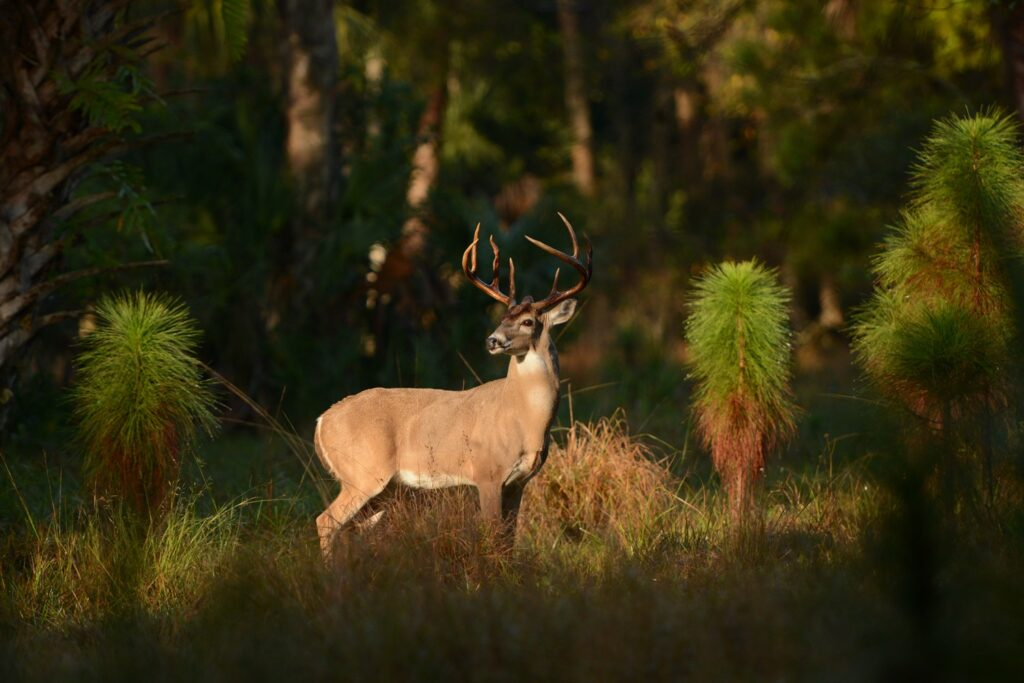
The Everglades are home to some of America’s most iconic fish and game species, but years of altered water flows and pollution have degraded these habitats, leading to less waterfowl, game birds, whitetail deer, and sportfish. By finishing the reservoir five years early, the restoration of wetlands and estuaries will happen sooner, providing critical habitat for waterfowl, deer, Osceola turkeys, and other game species. Anglers should see healthier populations of redfish, snook, speckled trout, and tarpon in Florida Bay as cleaner water supports the food webs these species rely on.

Credit: Pat Ford Photography

2. Cleaner Water, Better Fishing

The EAA Reservoir will dramatically reduce the frequency and severity of toxic algae blooms and red tide events by filtering nutrient-rich water before it reaches the coasts, by allowing nutrient-heavy water to be stored in the reservoir and treated before it flows offshore. This means fewer fish kills and healthier sea grasses, which are essential for sportfish breeding and feeding. For anglers, this translates to more productive days on the water and a more resilient fishery for years to come.

3. Improved Waterfowl and Game Bird Hunting

Restored wetlands mean more aquatic vegetation and invertebrates—the primary food sources for ducks and other waterfowl, and other migratory birds such as snipe and woodcock. As the EAA Reservoir brings cleaner water and revitalized marshes, hunters can expect improved waterfowl and game numbers and better hunting opportunities throughout the region.

Credit: Ryan Lockwood

4. Boosted Outdoor Recreation Economy

Florida’s outdoor recreation industry, including hunting and fishing, generates billions of dollars in economic activity each year. By accelerating the EAA Reservoir’s completion, the state is investing in the future of its clean water economy, supporting guides, outfitters, tackle shops, and the broader tourism sector that depends on healthy ecosystems.

A Model for Conservation Partnerships

This expedited timeline is possible thanks to unprecedented cooperation between state and federal agencies, bipartisan political support, and the advocacy of conservation groups and outdoor enthusiasts – including TRCP members who continue to voice their support for Everglades restoration. It’s a testament to what can be achieved when diverse stakeholders unite around a shared vision for restoration and recreation.

Click here to support Everglades habitat conservation efforts by urging lawmakers to continue funding critical infrastructure work.

Banner image courtesy Pat Ford Photography

November 19, 2025

New Report Shows Conservation Is a High-Return Investment for Communities, Jobs, and Growth

Investments to conserve, restore, and manage fish and wildlife pump billions into the economy – fueling jobs, powering the $1.1 trillion outdoor recreation industry, and rivaling major U.S. sectors. 

A new report titled, “Conservation Economy in America: A Snapshot of Total Fish and Wildlife-Associated Direct Investments and Economic Contributions,” reveals that fish and wildlife conservation generates substantial economic benefits. Federal, state, local, and nonprofit contributions combined contributed $115.8 billion in total economic activity and supported over 575,000 jobs nationwide. Leading conservation organizations across the country applauded the findings, underscoring the report’s importance for America’s economy, communities, and natural resources. 

“Conservation is an investment in America’s future and the bedrock of economic growth in communities nationwide,” said Joel Pedersen, president and CEO of the Theodore Roosevelt Conservation Partnership. “This report makes clear that the principles of stewardship and collaboration that built our nation’s conservation legacy continue to drive prosperity today. By supporting proven programs that restore habitat, enhance resilience, and expand access, Congress and the Administration can deliver lasting returns for people, wildlife, and local economies alike.” 

The report finds that $55.3 billion in direct spending on conservation – including habitat restoration, fish and wildlife management, and expanded public access – forms the foundation of the nation’s $1.1 trillion outdoor recreation economy. These conservation investments generate powerful economic returns, adding $76.6 billion to the U.S. Gross Domestic Product (GDP) and $16.3 billion in tax revenues for state, local, and federal governments. Simply put, the outdoor recreation economy doesn’t happen without conservation – its contributions are the bedrock upon which all outdoor recreation depends. 

“Hunting and fishing alone contribute nearly $400 billion annually to the United States economy, and sound financial investments into conservation are the backbone of our uniquely American sporting traditions and this important sector of the economy,” said Congressional Sportsmen’s Foundation President and CEO Jeff Crane. “Investments into conservation not only bolster fish, wildlife, and their habitats, but they also strengthen hunting and fishing opportunities for sportsmen and women across the nation, a win-win for our economy and our natural resources.”    

The federal government was the leading source of conservation investments, accounting for approximately 48% of all spending. Its share, however, has been declining, even as state and local governments now provide 45% of spending – reflecting a shrinking portion of federal contributions to total conservation funding. 

Together, these investments generated tax revenues on par with the video game industry – underscoring conservation’s powerful return for communities and the economy alike, while simultaneously preserving biodiversity and strengthening long-term growth. 

Read the full report HERE

What They’re Saying 

“This report is a crystal-clear illustration that conservation investments stimulate the economy, from Wall Street to Main Street,” explained Marilyn Vetter, President & CEO of Pheasants Forever and Quail Forever. “These numbers tell the story of the conservation industry’s exponential effectiveness at turning each dollar into an economic ripple large enough to amplify our nation’s GDP. Just as important are the on-the-ground dividends of these investments, the habitat, wildlife, and water that benefit us all—hunters, anglers, families, and communities.” 

“Theodore Roosevelt once proclaimed, ‘There can be no greater issue than that of conservation in this country,” said Gray N. Thornton, president and CEO of the Wild Sheep Foundation. “This captures the essence of Roosevelt’s commitment to conservation, emphasizing both the environmental challenges of his time and the timeless relevance of his vision. He recognized that human activities threatened natural resources, and he advocated for their responsible management to ensure that future generations could enjoy the benefits of nature. Today, as the report highlights, conservation not only serves ecological purposes but also holds significant economic value. The sustainable use of natural resources can support economies while preserving the environment, reflecting Roosevelt’s original intent to protect wild lands and wildlife for the enjoyment of all. This dual focus on ecological integrity and economic prosperity underlines the importance of effective conservation efforts in contemporary society.” 

“For the many Americans who have experienced the life-changing power of the outdoors, the conservation of our country’s wildlife and wild places is self-evidently one of the greatest aspects of our nation,” said Jason Burckhalter, National Wild Turkey Federation co-CEO. “This report emphasizes how conservation efforts bolster our beloved traditions and enrich our experiences outside and it illustrates how our conservation efforts create a powerful engine for our nation’s economy. It is imperative that our elected officials see both the importance of investing in conservation, from our vital natural resources to our nation’s economy. We are excited to collaboratively share the insights from the new report with our conservation partners and make meaningful impacts for future generations.”   

“When we save wildlife, we save ourselves. This important report affirms how wildlife conservation not only helps people thrive, but also grows local economies and creates jobs in communities across the country,” said Collin O’Mara, president and CEO of the National Wildlife Federation. “This report is a clarion call for Congress and the White House that investing dedicated funding for state, Tribal, and territorial wildlife conservation will yield immense returns for taxpayers and future generations alike.” 

“America’s strong conservation economy is a testament to the contributions from hunters, anglers, and outdoorsmen and women across the country,” said Ducks Unlimited CEO Adam Putnam. “This report highlights what we’ve known for years – supporting the conservation of wildlife habitat is an incredible return on investment for our communities. With every Duck Stamp sold, every hunting or fishing license purchased, and every outfitter patronized, sportsmen and women are doing their part to support America’s natural places and rural economies, and we hope lawmakers see the immense value in strengthening these investments at all levels of government.” 

“The recreation economy remains a foundational driver of caring for the health and productivity of our family forests,” said Rita Hite, president & CEO of the American Forest Foundation. “This report highlights both the importance and meaningful impact of public and private funding in our woodlands. When we invest in family lands through recreation, we are investing in clean air and water, more biodiversity, improved wildlife habitat, and bolstering rural economies.” 

“Conservation is a core American value,” said Desiree Sorenson-Groves, President and CEO of the National Wildlife Refuge Association. “As a nation, we value our public lands and shared wildlife heritage as a tenant of who we are as a people and this report shows that our shared investment in conservation isn’t just a nice thing to do, it is an essential economic driver for Americans. Conservation paves the way for the activation of the natural resource economy in all parts of our nation from rural communities to urban cities and this report highlights how investments pay dividends now and into the future.” 

“Fish and wildlife are among our nation’s most valuable resources, along with clean air, water, healthy forests and lands that support all of us,” said Paul Johansen, Chief of the Wildlife Resources Section of the West Virginia Division of Natural Resources and President of the Association of Fish & Wildlife Agencies. “State agencies have a primary responsibility for conserving our treasured natural resources. This report clearly illustrates that states, in collaboration with their federal, tribal, and conservation partners, deliver fish and wildlife conservation to our citizens with an impressive return on investment that generates positive impacts felt throughout the larger economy.”  

“When we discuss funding for conservation programs, it’s important that we think of these programs as investments for the future – the future of clean water, clean air, outdoor recreation, and abundant fish and wildlife. However, this report confirms that these conservation programs are also literal financial investments that help everyone’s bottom line, beyond the outdoor recreation industry and everyone it employs, directly or indirectly,” said Jeff Kopaska, Executive Director of the American Fisheries Society. “We saw this with the establishment of the Sport Fish Restoration Program 75 years ago. A small percentage of spending on fishing gear and boating fuel is directed towards fisheries restoration, research, and conservation, creating a self-sustaining cycle that builds up the sport fishing industry, along with providing more recreational opportunities and of course, benefitting our fish populations.” 

HOW YOU CAN HELP

TRCP has partnered with Afuera Coffee Co. to further our commitment to conservation. $4 from each bag is donated to the TRCP, to help continue our efforts of safeguarding critical habitats, productive hunting grounds, and favorite fishing holes for future generations.

Learn More
Subscribe


You have Successfully Subscribed!

You have Successfully Subscribed!

You have Successfully Subscribed!

You have Successfully Subscribed!

You have Successfully Subscribed!