1-bird-and-leaf
Do you have any thoughts on this post?
In many ways, 2025 was a year defined by gridlock and uncertainty in Washington D.C. Partisan divides slowed much of Congress, budgets were tight, and long-term solutions often felt just out of reach. Yet even in this environment, one thing remains clear: when hunters, anglers, and conservation partners stay engaged and unite, conservation solutions take shape and harmful proposals sink.
Those moments underscored why steady engagement matters and they reinforce TRCP’s commitment to remain vigilant, build durable coalitions, and continue advocating for the balanced conservation solutions that safeguard America’s lands, waters, and wildlife.
In 2025, the hunting and fishing community stepped into the arena and delivered meaningful achievements that safeguarded access, strengthened habitat, and advanced bipartisan, durable solutions that will benefit the future of our sporting traditions. Here are just a few:

Public lands are a cornerstone of America’s conservation legacy – and of our hunting and fishing traditions. In 2025, the sporting and conservation community achieved a significant win that safeguarded our nation’s public lands.
Working alongside a broad, bipartisan coalition, TRCP helped defeat proposals that would have mandated the sale of millions of acres of public lands as part of the budget reconciliation process. Through sustained advocacy and engagement with hunters, anglers, and Congress, those provisions were removed, ensuring that public lands remain in public hands.
That same commitment to collaboration was reflected in the formation of new bipartisan caucuses in Congress, efforts that TRCP helped propel forward by working closely with key lawmakers to grow membership and support early momentum. In the House, lawmakers from both parties launched the Public Lands Caucus to advance common-ground solutions that protect access, habitat, and America’s public lands legacy. In the Senate, the creation of the bipartisan Stewardship Caucus further reinforced the principle that conservation succeeds when leaders work together for the common good – and commit to increasing the pace and scale of stewardship across the public and private lands that hunters and anglers depend on.
Taken together, these underscore the strength of coordinated advocacy and the importance of staying engaged when public lands access and stewardship are on the line

Access is fundamental to our outdoor traditions, and 2025 brought continued momentum behind tools that help hunters and anglers navigate the landscape with confidence.
Progress on MAPLand and MAPRoads Acts improved clarity around public access points and legal routes. Continued efforts on the MAPWaters Act advanced a clearer understanding of water access for anglers, while the MAPOceans Act aims to support transparency and access for recreational saltwater fishing.
Together, these initiatives reflect a bipartisan commitment to reduce confusion, avoid conflict, and help people enjoy the outdoors responsibly – proof that progress doesn’t always require sweeping reform to be meaningful.
Read more about how this suite of legislation aims to enhance access to your public lands and waters by digitizing public access records and paper maps HERE.

Strong conservation outcomes depend not just on safeguards, but on thoughtful, science-informed management and 2025 saw meaningful progress on both fronts.
Bipartisan momentum behind the Fix Our Forests Act reflected a shared recognition that healthy forests are essential to resilient wildlife habitat, strong fisheries and watershed health, safer communities, and sustained recreational access. This management-first approach mirrors TRCP’s emphasis on solutions that endure beyond a single season or policy cycle.
That same mindset guided progress on the Farm Bill, which added over $15 billion to the conservation baseline. These investments provide stability for private-land conservation programs and support the landowners who play a critical role in sustaining wildlife habitat across the country.
Targeted investments through USDA also advanced efforts to address Chronic Wasting Disease, supporting the long-term health of the big game herds hunters care deeply about.

Some of the most tangible conservation gains in 2025 occurred where conservation meets daily life.
State-level investments in wildlife crossing projects, including efforts in Montana and New Mexico, strengthened habitat connectivity while reducing collisions and improving safety for both wildlife and people. These highlight the power of collaboration and the value of durable, locally supported solutions.

In 2025, conservation continued to prove its value as a high-return investment for communities, jobs, and economic growth.
A new report showed that investments in fish and wildlife conservation generate significant economic activity nationwide – supporting hundreds of thousands of jobs, contributing billions to GDP, and serving as the bedrock of the $1.1 trillion outdoor recreation economy that many rural and gateway communities depend on.
For hunters, anglers, and community leaders alike, the takeaway is clear: conservation is not only good stewardship – it’s smart economics, delivering significant benefits that support local livelihoods and America’s outdoor heritage.
Not every policy decision in 2025 aligned with the priorities of hunters and anglers – but those moments only reinforced why persistence matters. They sharpened our resolve to stay engaged, to keep building strong bipartisan coalitions, and to remain vigilant in advocating for balanced, durable, science-based solutions. Guided by our mission, TRCP is more committed than ever to standing up for the lands, waters, wildlife, and sporting traditions that define us.
Even as Washington, D.C. continues to navigate uncertainty, one thing remains evident: conservation advances when hunters, anglers, partners, and decision-makers step into the arena together. Collaboration matters. And showing up – year after year – matters. When we unite, we win.
Watch the full film below to learn more
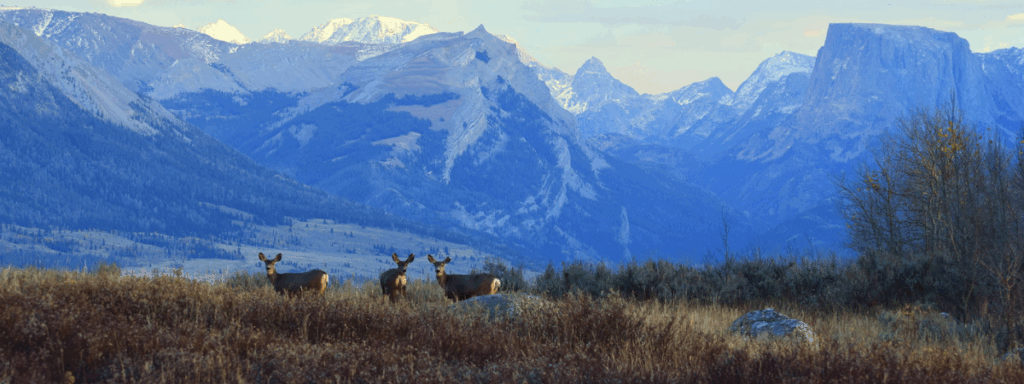
onX’s new film, Inaccessible, tells the story of the access barriers surrounding America’s public lands (which hunters and anglers deeply understand) through the lens of a ski mission deep in Montana’s Crazy Mountains.
Joel Webster, the Theodore Roosevelt Conservation Partnership’s Chief Conservation Officer, appears in the film and shares the history of how checkerboarded land ownership came to be as a result of 19th century railroad land grants. He also explains how these inaccessible acres reduce hunting and fishing opportunities for Americans as well as other forms of recreation.
This story is more than a ski film, it’s about our country’s past, the complexities of land ownership, and the 16 million acres of public land that remain out of reach.
Watch the full film below.
Ski athletes Griffin Post, Emilé Zynobia, and Eric Jackson traverse snowy terrain searching for the best backcountry lines as they explore the public-private checkerboard in the high elevations of the Crazy Mountains. These three athletes hunt, fish, and shred to find common ground across outdoor user groups and unite to protect access to our shared spaces.
America’s 640 million acres of national public lands provide irreplaceable hunting, fishing, hiking, mountain biking, skiing, snowboarding, off-roading, and other recreation opportunities to millions of Americans. That’s why TRCP is committed to protecting public access to our nation’s public lands. Learn more about TRCP’s work to enhance public land access HERE.
Watch the film HERE.
The Florida’s Everglades are on the brink of a historic transformation. Thanks to a landmark agreement earlier this year between the State of Florida and the U.S. Army Corps of Engineers, the completion of the Everglades Agricultural Area (EAA) Reservoir is now set for 2029, a full five years ahead of the original schedule.
The EAA Reservoir project is designed to restore the natural north-to-south flow of water of the Everglades system, reduce harmful discharges of nutrient-laden water from Lake Okeechobee, and improve water quality across South Florida’s wetlands and estuaries. The reservoir, being constructed south of Lake O, is frequently referred to as the “crown jewel” of Everglades restoration because, once finished, it will store over 78 billion gallons of untreated water and deliver up to 470 billion gallons of clean water annually to the Everglades and Florida Bay.

The recent agreement between Florida and the Army Corps will not only accelerate the EAA Reservoir’s construction timeline by five years, but also will:
This expedited timeline is more than just a construction milestone; it’s a game-changer for everyone who loves Florida’s wild spaces, especially hunters and anglers.
Once finished, the EAA Reservoir will store over 78 billion gallons of untreated water and deliver up to 470 billion gallons of clean water annually to the Everglades and Florida Bay.
1. Faster Habitat Recovery
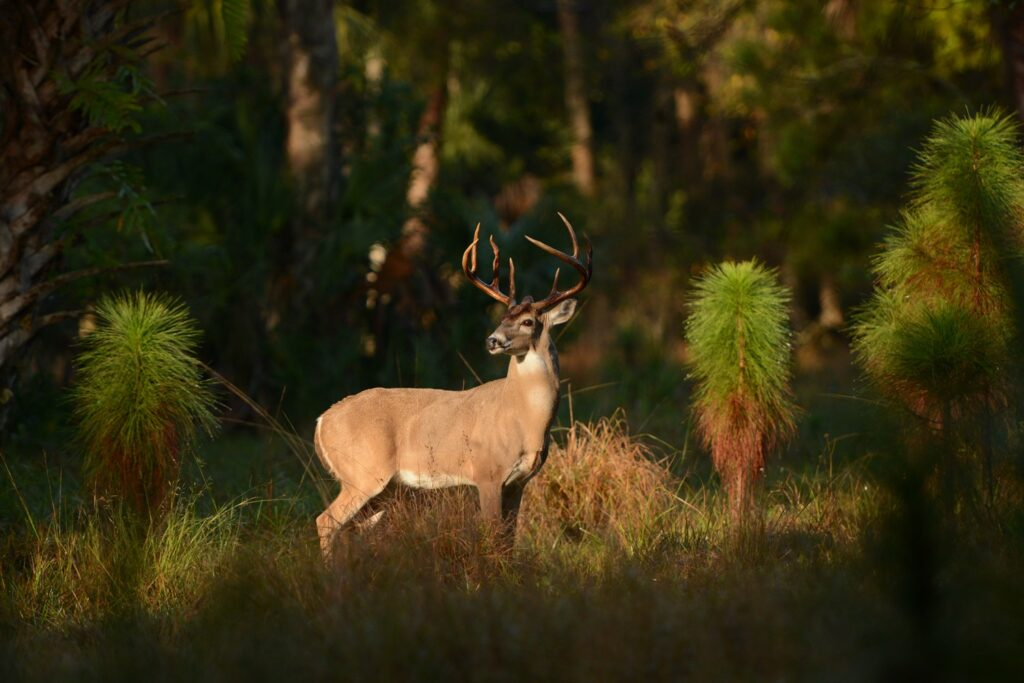
The Everglades are home to some of America’s most iconic fish and game species, but years of altered water flows and pollution have degraded these habitats, leading to less waterfowl, game birds, whitetail deer, and sportfish. By finishing the reservoir five years early, the restoration of wetlands and estuaries will happen sooner, providing critical habitat for waterfowl, deer, Osceola turkeys, and other game species. Anglers should see healthier populations of redfish, snook, speckled trout, and tarpon in Florida Bay as cleaner water supports the food webs these species rely on.

2. Cleaner Water, Better Fishing
The EAA Reservoir will dramatically reduce the frequency and severity of toxic algae blooms and red tide events by filtering nutrient-rich water before it reaches the coasts, by allowing nutrient-heavy water to be stored in the reservoir and treated before it flows offshore. This means fewer fish kills and healthier sea grasses, which are essential for sportfish breeding and feeding. For anglers, this translates to more productive days on the water and a more resilient fishery for years to come.
3. Improved Waterfowl and Game Bird Hunting
Restored wetlands mean more aquatic vegetation and invertebrates—the primary food sources for ducks and other waterfowl, and other migratory birds such as snipe and woodcock. As the EAA Reservoir brings cleaner water and revitalized marshes, hunters can expect improved waterfowl and game numbers and better hunting opportunities throughout the region.

4. Boosted Outdoor Recreation Economy
Florida’s outdoor recreation industry, including hunting and fishing, generates billions of dollars in economic activity each year. By accelerating the EAA Reservoir’s completion, the state is investing in the future of its clean water economy, supporting guides, outfitters, tackle shops, and the broader tourism sector that depends on healthy ecosystems.
This expedited timeline is possible thanks to unprecedented cooperation between state and federal agencies, bipartisan political support, and the advocacy of conservation groups and outdoor enthusiasts – including TRCP members who continue to voice their support for Everglades restoration. It’s a testament to what can be achieved when diverse stakeholders unite around a shared vision for restoration and recreation.
Click here to support Everglades habitat conservation efforts by urging lawmakers to continue funding critical infrastructure work.

Banner image courtesy Pat Ford Photography
As deer seasons unfold across the country, the first chapters of TRCP’s Deer Season – Hunting & CWD series have taken us from the hardwoods of Pennsylvania to the farmland and forests of Minnesota and into the wide-open landscapes of Montana. Through personal stories from the field, our staff hunters are exploring what it looks like to balance longstanding traditions with the evolving realities of Chronic Wasting Disease – and why everyday hunters play such a critical role in keeping deer herds healthy.
Together, these early-season stories highlight a shared theme: responsible hunting practices, informed by science and rooted in tradition, are essential to sustaining deer hunting for future generations.

Deer Season – Hunting & CWD: Prepping for the Pennsylvania Season by Jim Kauffman, TRCP’s Pennsylvania field representative and wildlife health coordinator
Jim Kauffman’s preseason story from Pennsylvania focuses on preparation—both practical and personal. From reviewing updated CWD regulations to understanding disease management zones and carcass movement rules, Jim highlights how staying informed has become an essential part of modern deer hunting. His reflections reinforce the idea that preparation doesn’t start on opening day; it begins long before hunters’ step into the woods.
Read Jim’s Pennsylvania preseason story HERE
“Last season brought long days, snow, and new challenges, but also memories that I’ll never forget, especially carrying out a buck on my back, in the dark, with my grandfather’s rifle, and sharing venison with friends and family.”
Jim Kauffman, TRCP’s Pennsylvania field representative and wildlife health coordinator

Deer Season – Hunting & CWD: A Season of Firsts in Minnesota by Aaron Field, TRCP’s director of private lands conservation
In Minnesota, Aaron Field shares a preseason perspective rooted in family tradition, including guiding a young hunter and hunting close to home in a new CWD zone. His story illustrates how learning about CWD best practices is no longer separate from passing on hunting traditions – it’s part of the lesson. From discussions around the kitchen table to planning how and where venison will be processed, these moments help shape the next generation of responsible hunters.
Read Aaron’s Minnesota story HERE.
“Right now, wildlife management in general, and CWD in particular, are not getting the attention and funding they deserve. Without hunters speaking up, they never will.”
Aaron Field, TRCP’s director of private lands conservation

Deer Season – Hunting & CWD: A Hunting Journal Found and New Hunters in the Making by Ryan Chapin, TRCP’s Montana field manager
Ryan Chapin’s Montana story brings readers west, where wide-open landscapes meet the responsibility of mentorship. His reflections connect a rediscovered hunting journal from his youth with the experience of mentoring new hunters today. Ryan highlights how introducing new hunters to the field now includes conversations about CWD testing, regulations, and why these steps matter. His story reminds us that mentorship is about more than success in the field – it’s about ensuring hunting remains sustainable and grounded in stewardship.
Read Ryan’s Montana story HERE.
“Tomorrow, my daughter Ella, her friend Addie and I will join our friends in setting the annual Youth Deer Hunting camp on Rock Creek…”
Ryan Chapin, TRCP’s Montana field manager
Scientific research continues to show that informed and responsible hunter behavior plays an important role in managing CWD risks. As seasons continue, hunters can make a difference by:
For additional guidance, visit TRCP’s CWD resources page
The hunt isn’t over – and neither are the stories. Coming up next are post-season reflections from Pennsylvania, Minnesota, and Montana. These upcoming blogs will explore lessons learned in the field, experiences with testing and processing, and what this season reinforced about the future of deer hunting.
As Theodore Roosevelt once said, “In a civilized and cultivated country, wild animals only continue to exist at all when preserved by sportsmen.” We invite you to read the first three stories, apply what you’ve learned this season, and follow along as the full Deer Season – Hunting & CWD series continues.
Catch up on the Deer Season – Hunting & CWD posts HERE
This new TRCP series shares the personal deer hunting stories of three staff members while exploring the practices aimed at addressing the spread of chronic wasting disease. This season, we invite you to follow along and take part in preserving what we love most about deer hunting.
Learn more about Chronic Wasting Disease here.

TRCP has partnered with Afuera Coffee Co. to further our commitment to conservation. $4 from each bag is donated to the TRCP, to help continue our efforts of safeguarding critical habitats, productive hunting grounds, and favorite fishing holes for future generations.
Learn More