From guiding a young hunter to facing a new CWD zone, TRCP’s Aaron Field finds meaning – and responsibility – in a lifetime of deer seasons close to home
“If you sit here long enough, and quiet enough, a deer will walk by.”
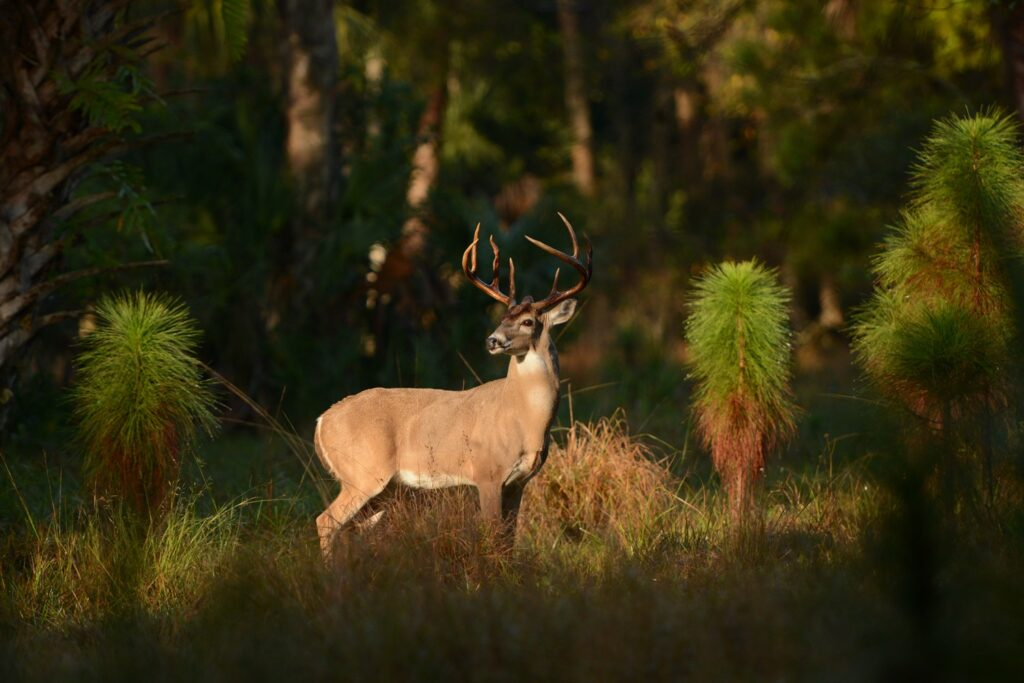
That advice, delivered by my dad at the start of my very first hunt, still bounces around in my skull every time I go out, and I haven’t proved him wrong yet.
I’ve looked forward to every deer season since then, but this one already stands out as a season of firsts. From the opportunity to guide my daughter through her first morning in the woods to now navigating a new CWD management zone, I’ll be seeing familiar country in a different light – and feeling a deeper sense of responsibility for what’s ahead.
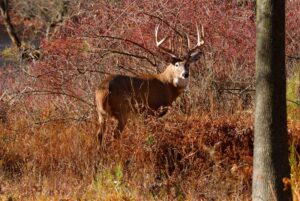
My first hunting experience was for white-tailed deer in western Minnesota, and I have repeated that experience for almost 25 years now, almost exclusively within a 20-mile radius of where I’m sitting right now. By the time I was old enough to go along, deer were the only thing my dad hunted. Losing a great dog and access to a few favorite ponds had ended his interest in duck hunting. Ruffed grouse numbers weren’t what they used to be, and “No Trespassing” signs had gotten a lot more common. But he still hunted deer, so I had my entry point.
In those first years, deer populations were down. Rifle hunters could choose to hunt for two days on opening weekend or three days the following, and nobody I knew hunted with a bow. Either-sex tags were only available via lottery. As you can imagine, we didn’t let forkhorn bucks walk by back then.
I’m a public land bird hunter, but I hunt deer on private land. I’m lucky enough to have good access to decent deer hunting, and I figure that I don’t need to compete with the people who don’t, especially when, for many hunters, deer season is their only chance to get out.
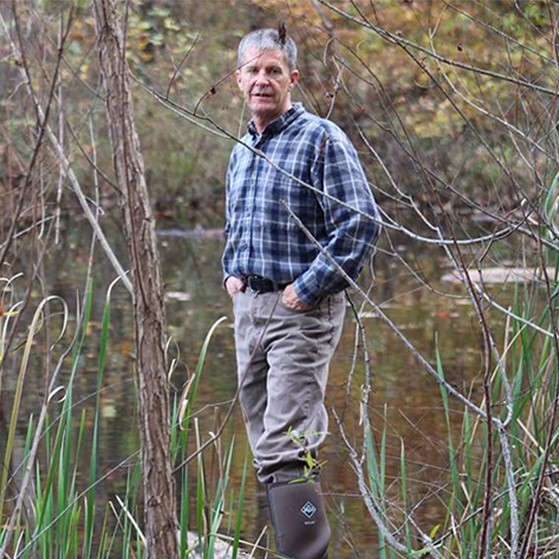
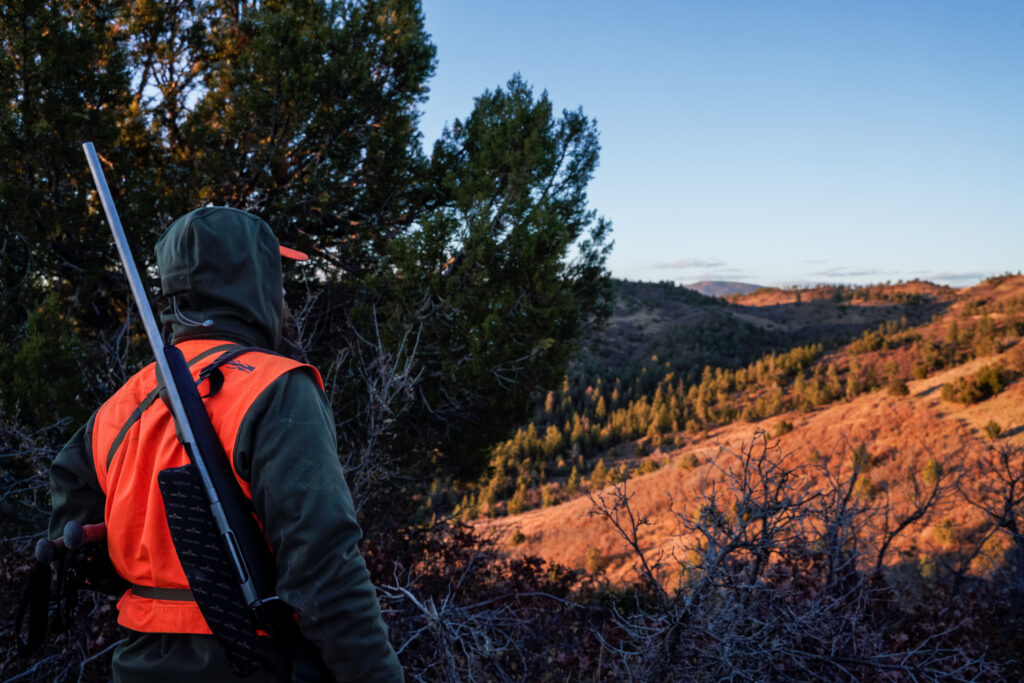
For the last five years I’ve taken it a little further and limited myself to hunting deer on my own property, within a couple hundred yards of my house. I’ve got about 15 acres of woods and swamp, and there’s decent deer traffic as they move from bedding in the swamp to feeding in the neighbor’s’ corn and soybean fields. After a few years on a ladder stand, I built an elevated box stand, 6’x8’ with a roof and a good staircase. I built it big (and safe) so I could bring my kids along, but I can’t say it bothers me one bit to have a windbreak and a spot to set my coffee cup on cold mornings. I know it’s not modern to have one, fixed stand location that you hunt in any wind direction, but I’ve always wanted to replicate the one I “helped” my dad and uncle build when I was a kid, and I rarely sit there without having deer go by, so I’m sticking with it for now.


I get a ton of satisfaction from that stand. It’s on my land, I built it myself, and the deer I see are there, at least partially, because of my own chainsaw and shovel time. When I bought the property, it was heavily invaded by common buckthorn. Not only does buckthorn limit the growth of native plants that deer prefer, having a dense stand of thorny shrubs really hurt my kids’ willingness to play in the woods. I’ve spent the last five years using a combination of chainsaw time, herbicides, and targeted goat browsing to knock it back, and I’m making good progress. It’s one of those battles that might be unwinnable in the long run, but one I’m going to keep fighting.


This year is one of at least two firsts. After a quarter century of hunting on my own and for myself, this year my primary goal is supporting my 11-year-old daughter’s first deer hunt. She’s a good shot, has spent time with me in the deer stand before, and has done a little squirrel hunting, but I was surprised when she told me she wanted to hunt deer this year. She passed her hunter safety training with flying colors and is an awful lot more responsible than I was when I started hunting, so we’re going to give it a go.

The second first is a lot less exciting. During the 2024 season, a wild deer harvested in the neighboring permit area, maybe 25 miles northwest, tested positive for Chronic Wasting Disease, or CWD, which means I’m now hunting in a “CWD Surveillance” unit. I’ve been working on federal policy related to CWD for a few years now, so I understand the issue a lot better than I would otherwise, but I must admit that it has been nice to not deal with it here at home.
Both personally and professionally, I’ve tried not to be too prescriptive on how I ask other hunters to deal with CWD. There are too many variables, personal motivations, and constraints for me to try to tell someone exactly what they should do. There are definitely best practices out there though, and I think the least we can do as hunters is learn about this issue and avoid being part of the problem. Mainly, hunters should know and follow the regulations, even if it’s inconvenient. In my case, I’ve been impressed with the clarity and amount of information that the Minnesota Department of Natural Resources has available for hunters like me dealing with CWD for the first time.
CWD doesn’t move quickly on its own, but it can cover large distances if humans move deer around. For a long time, hunters have focused on the role that captive cervid operations play in moving potentially infected deer long distances and across state lines. That’s valid criticism, and the practice needs to stop, but hunters also need to make sure we don’t compound the problem. For me, that means any deer we take stays close to home. That’s easy for us, as we typically do our own processing, but I am getting a little tired of the “just ok” smoked sausage I tend to end up with, so we may be engaging a local professional for at least one deer this year.


Hunter participation in CWD testing is a little more complicated than what’s in the regulations book. Testing will only be mandatory if I harvest a deer during the opening weekend of our firearms deer season, but I intend to have every deer we harvest tested this year. Where I hunt, the odds of harvesting a CWD-positive deer are probably very low, so I would personally be comfortable going without testing from a food-safety perspective. But testing results here will determine how deer biologists and managers respond to CWD in my area. The better data these professionals have, the more likely they are to keep prevalence at low or even zero levels.
I have a biology degree, but I was always a lot more interested in ecology than anatomy, so digging lymph nodes out of a deer head and mailing them in for testing doesn’t really appeal to me. I’ve watched the process done at a check station in Nebraska once, and attended a demonstration by the Minnesota DNR last fall, but, if I’m honest, I didn’t pay nearly as much attention as I should have. I was a lot more interested in seeing how a professional butcher broke down a deer than I was in learning how CWD testing was done.

Thankfully, there will be a limited number of staffed check stations nearby, although they’re only open for part of the season. Minnesota DNR also partners with taxidermists, who will remove samples and submit them for testing for a fee. Otherwise, the website says I can make an appointment with my local DNR biologist to get some help. That sounds like the most interesting option and would give me an excuse to meet a local biologist, but I imagine they will be busy. I intend to use one of those routes for the first deer or two and ask a lot of questions. After that I’m hoping I’ll feel competent enough to pull my own samples moving forward.
Those who really care about the future of deer hunting and want to do more have options too. One of the most important is finding ways to make sure that decision-makers, whether in your state or at the federal level, know how important wild deer and wild deer hunting are to you. Let them know that you value quality deer hunting, and that federal and state governments should value it too. Right now, wildlife management in general, and CWD in particular, are not getting the attention and funding they deserve. Without hunters speaking up, they never will.
I can’t wait for the season to come, and by the time anybody reads this, it probably has. It will be a season of firsts for me – some exciting, some challenging – but each one a reminder of why hunting matters and what’s at stake. I’m 100% certain the positives will far outweigh the negatives, and I’ll do everything I can to make sure that when my daughter’s 25th deer season rolls around, it’s even better than her first.

Deer Season – Hunting and CWD.
This new TRCP series shares the personal deer hunting stories of three staff members while exploring the practices aimed at addressing the spread of chronic wasting disease. This season, we invite you to follow along and take part in preserving what we love most about deer hunting.

As deer seasons open across the country, hunters are packing gear, checking maps, and preparing for the moments that define another fall outdoors. But today’s deer hunters face new challenges – chief among them, the spread of Chronic Wasting Disease (CWD), a 100-percent fatal neurodegenerative wildlife disease that affects members of the deer family. While more and more hunters are finding CWD in their backyards, it remains a source of confusion for many.
From pre-season prep and regulation changes to lessons learned in the woods and around deer camp, Deer Season – Hunting and CWD will show how everyday hunters are part of the solution. Along the way, you’ll find tips, resources, and reflections that tie together our love of the hunt with our shared responsibility to keep deer herds healthy for future generations.