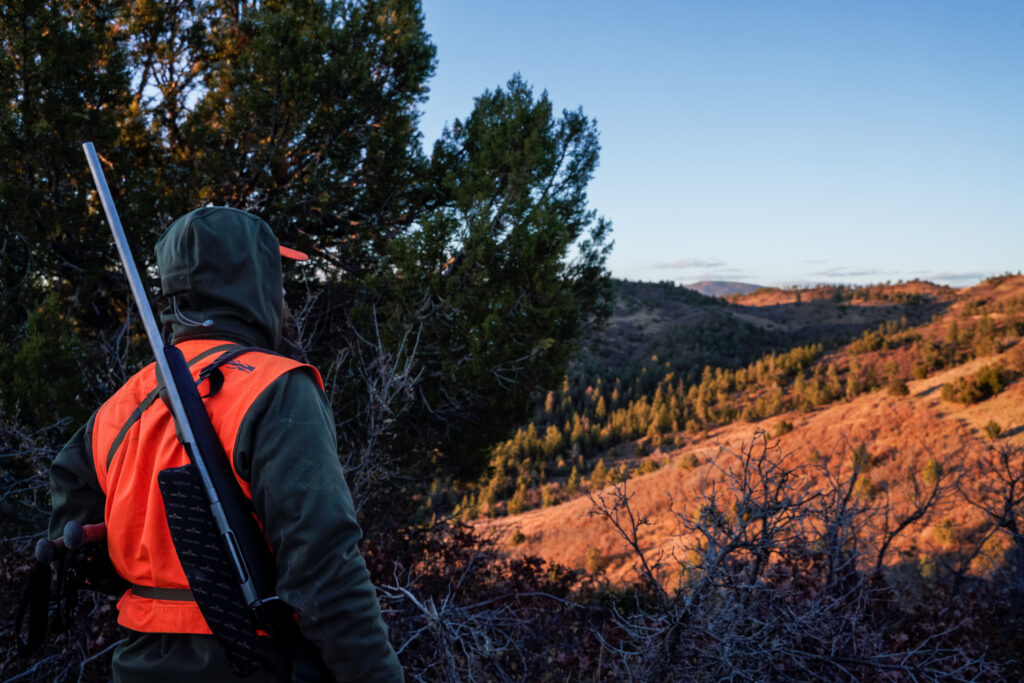
This new TRCP series shares the personal deer hunting stories of three staff members while exploring the practices aimed at addressing the spread of chronic wasting disease.
This year marks my 24th year as a deer hunter, and almost all that hunting has taken place within 20 miles of where I’m sitting right now. I suppose I could call it 25 years, but I wasn’t old enough to carry a rifle the first time I got to go along. Back then we had a real deer camp. Dave and Arlene, my great uncle and aunt, had a piece of property a little ways east of here, in the part of western Minnesota that starts to look like the swamps and woods further east.
There were probably 6-10 hunters on any given day. We’d head for our stands before first light and sit until Uncle Dave got restless, which usually didn’t take more than a few hours, and then we’d get together and plan the midday deer drive. Generally, those who still had tags to fill would sit on stumps, buckets, or box stands on likely escape routes. Everybody else, including the “husky” 11-year-old I was at the time, formed a line and drove the tamarack and cattail swamps toward the posted hunters.
I still have a clear memory of that first drive. Watching my Dad duct tape the tops of his rubber boots to his jeans, I wondered if I might be in over my head. Turns out I just about was. It was mid-November in Minnesota, and the swamps were frozen, but the ice was only about a half inch thick. Most steps I’d break through, but I was determined to keep up my place on the line. Eventually I figured out I could hop from root to root on the tamaracks and make pretty good progress.
My strategy fell apart when the forested swamp faded into an open cattail slough. The cattails were taller than I was, so I couldn’t see the rest of the drivers, but I could hear the steady whoops and whistles we used to keep track of each other. About the time I thought I couldn’t break cattails for another step, I stumbled into a beaver run going exactly the direction I was heading. I was soaked to the knee already, so walking in the water was no problem, and I silently praised my genius as a navigator.
That is, until about 50 yards later when the foot deep beaver trail dropped off to four feet and left me standing neck deep in icy water. I’ll never forget the laughter and pride in Uncle Dave’s eyes when he saw me pop out of the swamp at the end of that drive, exhausted, soaked, grinning, and a newly minted lifelong deer hunter.
I’d bet that every deer hunter reading this has a similar story, and probably several. Deer hunting creates community, it teaches life lessons, it fosters a connection to nature, and it feeds families.
That’s why this fall, the Theodore Roosevelt Conservation Partnership is launching a new blog series, Deer Season: Hunting and CWD. Through the eyes of three TRCP staff members: Ryan Chapin in Montana, Aaron Field in Minnesota, and Jim Kauffman in Pennsylvania, we’ll share personal stories from the field and explore what hunters can do to help slow the spread of CWD.
Deer Season – Hunting and CWD

As deer seasons open across the country, hunters are packing gear, checking maps, and preparing for the moments that define another fall outdoors. But today’s deer hunters face new challenges – chief among them, the spread of Chronic Wasting Disease (CWD), a 100-percent fatal neurodegenerative wildlife disease that affects members of the deer family. While more and more hunters are finding CWD in their backyards, it remains a source of confusion for many.
From pre-season prep and regulation changes to lessons learned in the woods and around deer camp, these stories will show how everyday hunters are part of the solution. Along the way, you’ll find tips, resources, and reflections that tie together our love of the hunt with our shared responsibility to keep deer herds healthy for future generations.
As Theodore Roosevelt once said, “In a civilized and cultivated country, wild animals only continue to exist at all when preserved by sportsmen.” This season, we invite you to follow along and take part in preserving what we love most about deer hunting.