Photo: Lael Johnson
Media (6)
Do you have any thoughts on this post?
Photo: Lael Johnson
The Florida’s Everglades are on the brink of a historic transformation. Thanks to a landmark agreement earlier this year between the State of Florida and the U.S. Army Corps of Engineers, the completion of the Everglades Agricultural Area (EAA) Reservoir is now set for 2029, a full five years ahead of the original schedule.
The EAA Reservoir project is designed to restore the natural north-to-south flow of water of the Everglades system, reduce harmful discharges of nutrient-laden water from Lake Okeechobee, and improve water quality across South Florida’s wetlands and estuaries. The reservoir, being constructed south of Lake O, is frequently referred to as the “crown jewel” of Everglades restoration because, once finished, it will store over 78 billion gallons of untreated water and deliver up to 470 billion gallons of clean water annually to the Everglades and Florida Bay.

The recent agreement between Florida and the Army Corps will not only accelerate the EAA Reservoir’s construction timeline by five years, but also will:
This expedited timeline is more than just a construction milestone; it’s a game-changer for everyone who loves Florida’s wild spaces, especially hunters and anglers.
Once finished, the EAA Reservoir will store over 78 billion gallons of untreated water and deliver up to 470 billion gallons of clean water annually to the Everglades and Florida Bay.
1. Faster Habitat Recovery
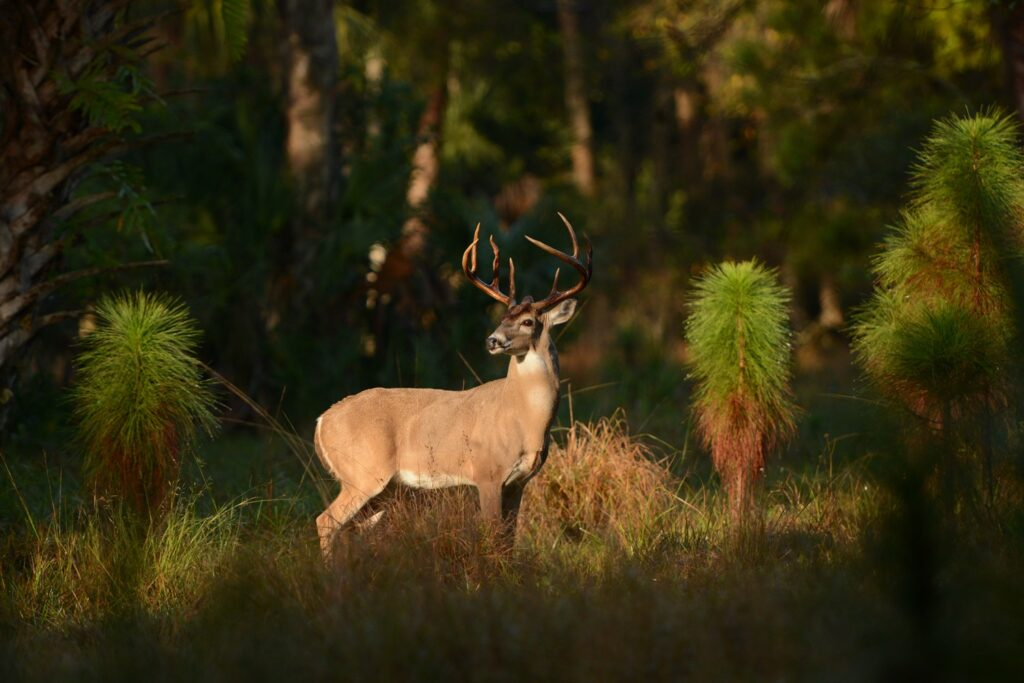
The Everglades are home to some of America’s most iconic fish and game species, but years of altered water flows and pollution have degraded these habitats, leading to less waterfowl, game birds, whitetail deer, and sportfish. By finishing the reservoir five years early, the restoration of wetlands and estuaries will happen sooner, providing critical habitat for waterfowl, deer, Osceola turkeys, and other game species. Anglers should see healthier populations of redfish, snook, speckled trout, and tarpon in Florida Bay as cleaner water supports the food webs these species rely on.

2. Cleaner Water, Better Fishing
The EAA Reservoir will dramatically reduce the frequency and severity of toxic algae blooms and red tide events by filtering nutrient-rich water before it reaches the coasts, by allowing nutrient-heavy water to be stored in the reservoir and treated before it flows offshore. This means fewer fish kills and healthier sea grasses, which are essential for sportfish breeding and feeding. For anglers, this translates to more productive days on the water and a more resilient fishery for years to come.
3. Improved Waterfowl and Game Bird Hunting
Restored wetlands mean more aquatic vegetation and invertebrates—the primary food sources for ducks and other waterfowl, and other migratory birds such as snipe and woodcock. As the EAA Reservoir brings cleaner water and revitalized marshes, hunters can expect improved waterfowl and game numbers and better hunting opportunities throughout the region.

4. Boosted Outdoor Recreation Economy
Florida’s outdoor recreation industry, including hunting and fishing, generates billions of dollars in economic activity each year. By accelerating the EAA Reservoir’s completion, the state is investing in the future of its clean water economy, supporting guides, outfitters, tackle shops, and the broader tourism sector that depends on healthy ecosystems.
This expedited timeline is possible thanks to unprecedented cooperation between state and federal agencies, bipartisan political support, and the advocacy of conservation groups and outdoor enthusiasts – including TRCP members who continue to voice their support for Everglades restoration. It’s a testament to what can be achieved when diverse stakeholders unite around a shared vision for restoration and recreation.
Click here to support Everglades habitat conservation efforts by urging lawmakers to continue funding critical infrastructure work.

Banner image courtesy Pat Ford Photography
As deer seasons unfold across the country, the first chapters of TRCP’s Deer Season – Hunting & CWD series have taken us from the hardwoods of Pennsylvania to the farmland and forests of Minnesota and into the wide-open landscapes of Montana. Through personal stories from the field, our staff hunters are exploring what it looks like to balance longstanding traditions with the evolving realities of Chronic Wasting Disease – and why everyday hunters play such a critical role in keeping deer herds healthy.
Together, these early-season stories highlight a shared theme: responsible hunting practices, informed by science and rooted in tradition, are essential to sustaining deer hunting for future generations.

Deer Season – Hunting & CWD: Prepping for the Pennsylvania Season by Jim Kauffman, TRCP’s Pennsylvania field representative and wildlife health coordinator
Jim Kauffman’s preseason story from Pennsylvania focuses on preparation—both practical and personal. From reviewing updated CWD regulations to understanding disease management zones and carcass movement rules, Jim highlights how staying informed has become an essential part of modern deer hunting. His reflections reinforce the idea that preparation doesn’t start on opening day; it begins long before hunters’ step into the woods.
Read Jim’s Pennsylvania preseason story HERE
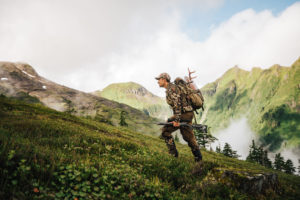
“Last season brought long days, snow, and new challenges, but also memories that I’ll never forget, especially carrying out a buck on my back, in the dark, with my grandfather’s rifle, and sharing venison with friends and family.”
Jim Kauffman, TRCP’s Pennsylvania field representative and wildlife health coordinator

Deer Season – Hunting & CWD: A Season of Firsts in Minnesota by Aaron Field, TRCP’s director of private lands conservation
In Minnesota, Aaron Field shares a preseason perspective rooted in family tradition, including guiding a young hunter and hunting close to home in a new CWD zone. His story illustrates how learning about CWD best practices is no longer separate from passing on hunting traditions – it’s part of the lesson. From discussions around the kitchen table to planning how and where venison will be processed, these moments help shape the next generation of responsible hunters.
Read Aaron’s Minnesota story HERE.
“Right now, wildlife management in general, and CWD in particular, are not getting the attention and funding they deserve. Without hunters speaking up, they never will.”
Aaron Field, TRCP’s director of private lands conservation

Deer Season – Hunting & CWD: A Hunting Journal Found and New Hunters in the Making by Ryan Chapin, TRCP’s Montana field manager
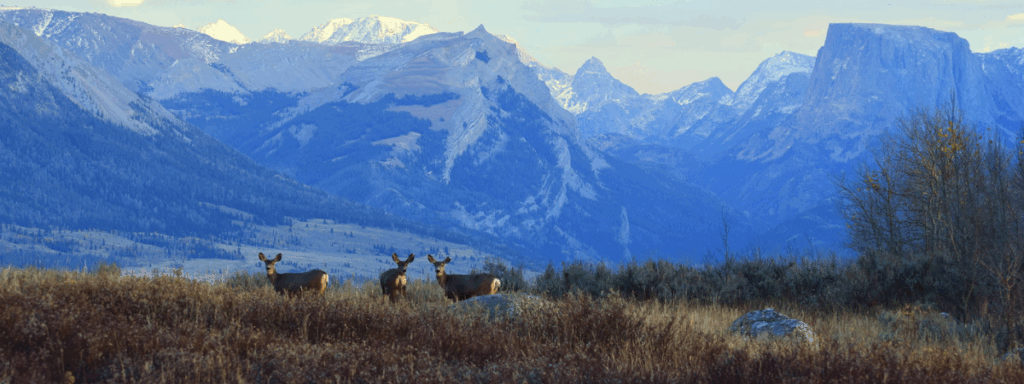
Ryan Chapin’s Montana story brings readers west, where wide-open landscapes meet the responsibility of mentorship. His reflections connect a rediscovered hunting journal from his youth with the experience of mentoring new hunters today. Ryan highlights how introducing new hunters to the field now includes conversations about CWD testing, regulations, and why these steps matter. His story reminds us that mentorship is about more than success in the field – it’s about ensuring hunting remains sustainable and grounded in stewardship.
Read Ryan’s Montana story HERE.
“Tomorrow, my daughter Ella, her friend Addie and I will join our friends in setting the annual Youth Deer Hunting camp on Rock Creek…”
Ryan Chapin, TRCP’s Montana field manager
Scientific research continues to show that informed and responsible hunter behavior plays an important role in managing CWD risks. As seasons continue, hunters can make a difference by:
For additional guidance, visit TRCP’s CWD resources page
The hunt isn’t over – and neither are the stories. Coming up next are post-season reflections from Pennsylvania, Minnesota, and Montana. These upcoming blogs will explore lessons learned in the field, experiences with testing and processing, and what this season reinforced about the future of deer hunting.
As Theodore Roosevelt once said, “In a civilized and cultivated country, wild animals only continue to exist at all when preserved by sportsmen.” We invite you to read the first three stories, apply what you’ve learned this season, and follow along as the full Deer Season – Hunting & CWD series continues.
Catch up on the Deer Season – Hunting & CWD posts HERE
This new TRCP series shares the personal deer hunting stories of three staff members while exploring the practices aimed at addressing the spread of chronic wasting disease. This season, we invite you to follow along and take part in preserving what we love most about deer hunting.
Learn more about Chronic Wasting Disease here.

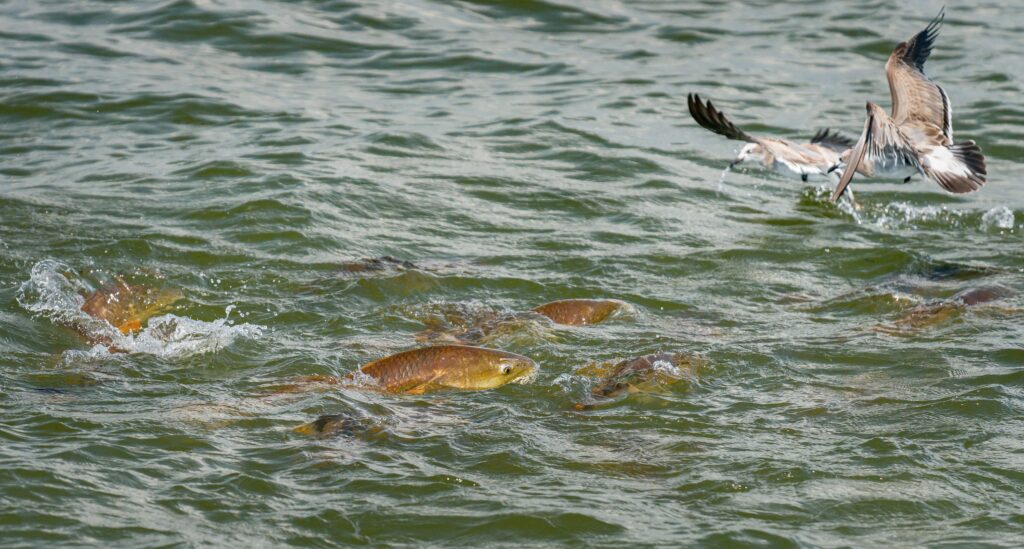
I can still hear the animated phone call from a breathless childhood friend after observing his first school of truly giant striped bass feeding during a local river herring run in the early 2000s. Being a few years older than me, he had just gotten his driver’s license and couldn’t wait to share his discovery with me the next evening. He said there were stripers feeding in the mouth of the brook last night that were so big “it sounded like Volkswagens being thrown in the water.”
Not one to ever turn down such an opportunity, we headed off that night to figure out the most creative way to get access to the location without trespassing. Unfortunately, the only access we uncovered required blindly inching our way along a quarter-mile of steep banks and knee-deep mud as we pushed toward the sounds of splashing fish. By the time we had finally dragged ourselves into position, the tide had fallen, the bass had moved out of casting range, and we were forced to listen to the commotion where they continued their assault on the large schools of alewives.
We repeated this trip for dozens of nights over the next few springs, ultimately landing many striped bass up to thirty-five pounds amongst the spawning herring. These were nights that I will never forget. The kind where friends stayed up until deep into the wee hours, laughing, celebrating, and lamenting over legendary fish that were hooked and many lost. But sadly, as time marched on, the alewives returned less and less each season, and the giant bass disappeared with them. By the time I graduated high school in 2007, this small herring run, along with most others in Connecticut, was gone and I wouldn’t see another alewife or striped bass in this location again until the spring of 2025, when another much-needed phone call finally came in.
Blueback herring populations in Connecticut have decreased 99.9 percent since 1985.
Since beginning my career as a river herring biologist with the state of Connecticut in 2018, I have been working to build a network of professionals, researchers, and stakeholders, hoping to track population recovery of blueback herring and alewives, collectively known as river herring, across southern New England. We communicate constantly during the spring, and I am always hoping for a call like the ones I used to receive when river herring were plentiful.
Sadly, the majority of the calls I’ve received were from curious and often frustrated stakeholders asking where the herring had gone, or when were we lifting the harvest ban. These stakeholders remembered the “glory days” and were frustrated that decades of hard work had not brought these fish back. I too was frustrated, wondering why the investment of tens of millions of dollars across the state on projects that included the removal of dozens of dams, the construction of over fifty fishways, and the re-introduction of 156,000 pre-spawn alewives were not restoring herring runs. This lack of significant success occurred despite a full moratorium on the take of both river herring species in place in Connecticut since 2002, as in-river protections and restoration work were not enough to bring river herring back.

In the spring of 2022 and again in 2023, fisheries biologists, Tribal Elders, birdwatchers, herring wardens, and recreational anglers across Southern New England again watched with heavy hearts as the already minuscule river herring numbers collapsed further. Here in Connecticut, alewife runs diminished by 63 percent and 69 percent, respectively (a reduction of 350,000 fish), and we saw our second worst blueback herring returns since 1975, with only 570 fish returning to state-monitored runs in 2022. This was an astounding 99.9 percent decrease in blueback herring populations across Connecticut since 1985. In other words, this species was essentially extirpated in the state and alewives were holding on by only a thread with just 152,000 fish across Connecticut in 2023.
Dismal southern New England river herring runs forced biologists to look for answers outside restored rivers to the open ocean, where herring spend most of their lives.
So as the 2023 river herring runs ended, it was fair to say that many of us had all but lost hope in achieving a recovery for these species in southern New England. We had been watching each year with great envy and confusion as river herring runs in the Gulf of Maine continued to rebound in response to in-river restoration efforts nearly identical to ours. This reality forced managers in southern New England to again explain to our stakeholders that our runs were still too small to allow in-river harvest, while states outside our region like Maine and South Carolina continued to have enough river herring to keep their fisheries open. Our goal has been to reopen in-river recreational and commercial river herring fisheries that fuel local economies and inspire stewardship of the runs, but we are nowhere near the “escapement” goals (of enough fish surviving and escaping fishing pressure to return to freshwater spawning grounds) required to meet the Atlantic States Marine Fisheries Commission’s requirements to open these fisheries to harvest.
This clear geographic bias that seemed to only be affecting the southern New England and Mid-Atlantic river herring runs forced many of us to look for answers outside the rivers, where the restoration work was completed, and inside the ocean where river herring spend the majority of their life.
TAKE ACTION FOR HERRING: TRCP offers information at the end of the blog on how you can make your voice heard to protect river herring.
In April 2025, I received the first of what would end up being dozens of phone calls and emails from stakeholders across Connecticut who were not only finally seeing river herring, but seeing large numbers in places they hadn’t seen them in decades. This first call was special, though, because it came from one of my seasonal resource technicians, and she was calling me from the very run I fished for striped bass over two decades earlier.
She said there were thousands of alewives there. Thousands. I’m pretty sure I blacked out from shock the moment I heard those words because I cannot remember anything about that day until the moment I finally climbed down the bank and peered into the pool myself. Swimming in front of me were scores of spawning alewives in a scene that put me right back where I had left off in high school, a scene I had been hoping to relive each spring since 2007.

In the weeks that followed, I would receive phone calls and emails like this from people across the state highlighting their amazement that they were seeing river herring again. Alewives running up small streams into people’s backyards, osprey dropping them in town parks and on roadways, anglers rediscovering large striped bass hot on the tails of the baitfish, and, most shockingly, a call describing “thousands of herring” at an alewife run in the center of Connecticut’s largest city. This was especially shocking because the call was in late May and alewives don’t usually run in Connecticut in late May; blueback herring do. Having never seen a blueback herring at that location, we quickly packed up the sampling gear and drove west to find roughly 10,000 blueback herring working their way up the fishway.
Where were these fish coming from? When I sat down and reflected upon the season, I wasn’t as surprised as I thought. Because the answer, after years of research, was very likely the result of increased at-sea survival of adult river herring.
The river herring rebound is likely the result of increased at-sea survival, following restrictions on industrial Atlantic herring and mackerel fisheries.
Each year, the industrial Atlantic mackerel and Atlantic herring fisheries off the coast of New England are allowed to land and sell a combined total of roughly 5 million river herring and shad, fish not targeted but that swim with other species and are allowed to be retained, before they are shut down by catch limits. Since the river herring and shad catch cap program started, the overwhelming majority of all species landed by the fishery have been alewife and blueback herring, and the majority of those fish have been landed from the waters off southern New England.
When researchers looked at the river herring landed in the Atlantic herring fishery, they unsurprisingly found that the majority are genetically linked to the runs of southern New England and the mid-Atlantic states struggling to restore their river herring runs. The Gulf of Maine, where river herring runs are recovering at lightning pace, make up less than 10 percent of the reported catch cap landings since this program started. So why the sudden spike in southern New England in 2025?
In October of 2023, the industrial Atlantic mackerel fishery was essentially closed by low quotas, following concerns of mackerel stock collapse. This kept these large boats from targeting mackerel in the waters off southern New England and prevented the utilization of the 129-metric-ton river herring and shad quota each year. Similarly, the Atlantic herring stock has collapsed, and the allowed quotas are now the lowest in decades, forcing that industry to focus its limited efforts on a small and productive area off of Cape Cod each winter. As a result, the industry is now largely avoiding areas off Rhode Island and New York that they historically targeted, where the river herring/shad quota is the highest.
This has meant that the southern New England catch cap area, where historically high river herring catches have occurred as a result of fishing for Atlantic herring, has essentially been unfished by the fleet during the last couple years. Additionally, in 2023 and 2024, the now-limited fishery was prematurely shut down by river herring/shad catch cap quota triggers off this area near Cape Cod and was shut down again this year by extremely low Atlantic herring quotas that were reached after just a few days of fishing in January.
Together, these closures afforded southern New England river herring at-sea protections not seen since the late ’70s and ’80s when the Magnuson-Stevens Fishery Conservation and Management Act forced foreign trawling vessels, which had collapsed our Atlantic herring, Atlantic mackerel, and river herring stocks back then, at least 200 miles offshore. So, in essence, management restrictions of two marine species – Atlantic herring and mackerel – also appear to have already allowed for the early recovery of river herring and alewives.

This spring, I found myself being pulled back to the herring runs I had haunted as a teenager, not as a biologist but with a fishing rod in hand and a smile on my face. As I quietly waded into position on my first night back, I could hear the telltale sound of herring spawning and striped bass in tow, while that long forgotten feeling of youthful excitement quickly flooded my veins. The first striped bass I hooked that night was only around 10 pounds, but it might as well have been 50 the way it made me feel as it screamed across the shallow pool, sending herring in all directions. As I released it, in the very place that brought me so much joy in my youth, I knew I had a lot of calls to make that night and a lot of joy to share.
This was a transformative year for river herring in southern New England, and I don’t want that to be lost on anyone. But this recent resurgence is by no means guaranteed to continue. Now is the time to stand up for the science and continue supporting regulations and protections that will help keep this momentum moving forward. The people of southern New England deserve to again harvest river herring and we have the ability to make that happen.
I think the English writer and philosopher Aldous Huxley put it best when he said, “That men do not learn very much from the lessons of history is the most important of all the lessons that history has to teach.” So let us learn from the overfishing that has been allowed to occur in our waters and take great care moving forward to not let the same mistakes happen again. It’s time to learn from history.
Kevin Job, a native New Englander, is a fisheries biologist with the Connecticut Department of Energy and Environmental Protection. His work focuses on diadromous fishes including river herring and shad.
Here at TRCP, we have been keeping tabs on the upcoming decision points for Atlantic mackerel and Atlantic herring at their respective regional councils. There are multiple ways you can get involved to make public comments to let decisionmakers know that the recovery of these two species, and that of river herring and shad, should remain a top priority when setting commercial catch limits and bycatch caps. Now that the link between all these fish has been made clear, it is imperative that managers stay on track to keep rebuilding all of these critical forage fish – for future generations of predators on the water, and future generations of anglers.
The Mid Atlantic Fishery Management Council meets on Dec. 16 to set the Atlantic mackerel quotas for 2026-2027 and to discuss river herring and shad catch caps. You can submit written public comments here by Thursday, Dec. 11, speak in-person at the meeting in Washington, D.C., or participate remotely via webinar.
The New England Fishery Management Council meets on Dec. 4 to set 2026 priorities, which will hopefully include Amendment 10 to the Atlantic herring fishery management plan. We have been working to support Amendment 10 action since 2023, and it’s imperative that the Council doesn’t keep kicking the can down the road regarding this important potential management measure. The written comment deadline has passed for this meeting, but you can still speak in-person at the meeting in Newport, R.I., or remotely via webinar.
Members of the Public Lands Caucus unite behind legislation designed to continue transparency and uphold long-standing public land policies
The Bipartisan Public Lands Caucus officially endorsed the Public Lands in Public Hands Act, marking an important moment for lawmakers working together to safeguard America’s system of public lands. Formed earlier this year by Representatives Gabe Vasquez (D-N.M.) and Ryan Zinke (R-Mont.) and co-chaired alongside Representatives Debbie Dingell (D-Mich.) and Mike Simpson (R-Idaho), the Caucus was created to provide a Bully Pulpit – a term coined by President Theodore Roosevelt, a staunch advocate for public lands – for members to speak on issues important to preserving our country’s public land legacy with support from their colleagues.
The Public Lands in Public Hands Act aims to prevent certain public lands from being sold or transferred without extra oversight. Among its key highlights, the bill:
These provisions are intended to maintain public access to activities such as hunting, fishing, camping, and hiking, while ensuring transparency and accountability around any future land transactions.
The endorsement reflects ongoing bipartisan support in the stewardship of public lands, which bolster rural economies, contribute to cultural traditions, provide habitat for fish and wildlife, and ensure our nation’s outdoor legacy. Earlier this year, members of the Caucus collaborated across party lines to remove a proposal that would have authorized the sale of 500,000 acres of public lands, underscoring the role the group aims to play in reviewing and discussing major public land decisions.
“Public lands are a defining feature of the American landscape, and clear, consistent policy helps safeguard these places for future generations,” said Joel Pedersen, president and CEO of the Theodore Roosevelt Conservation Partnership. “The TRCP commends this bipartisan endorsement, which highlights how lawmakers can come together around shared values that have long mattered to hunters, anglers, and outdoor recreationists.”
With the Caucus’s endorsement, the Public Lands in Public Hands Act now proceeds through the House legislative process. TRCP will continue to monitor the bill and provide information to hunters, anglers, and the broader public as it advances.
Learn more about the Public Lands in Public Hands Act HERE.
Photo Credit: Tristan Henry
TRCP has partnered with Afuera Coffee Co. to further our commitment to conservation. $4 from each bag is donated to the TRCP, to help continue our efforts of safeguarding critical habitats, productive hunting grounds, and favorite fishing holes for future generations.
Learn More