Our Issues
Public Lands
Why It Matters

Hunting & Fishing Access

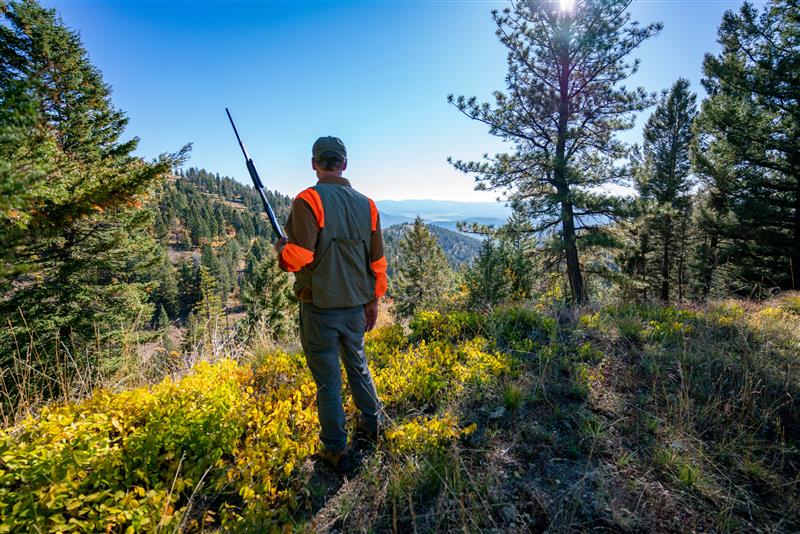
America’s 640 million acres of national public lands provide irreplaceable hunting and fishing opportunities to millions of Americans.

Learn More About Access
What TRCP is Doing

We’re working to safeguard America’s public lands so hunters and anglers always have quality places to pursue their passions.
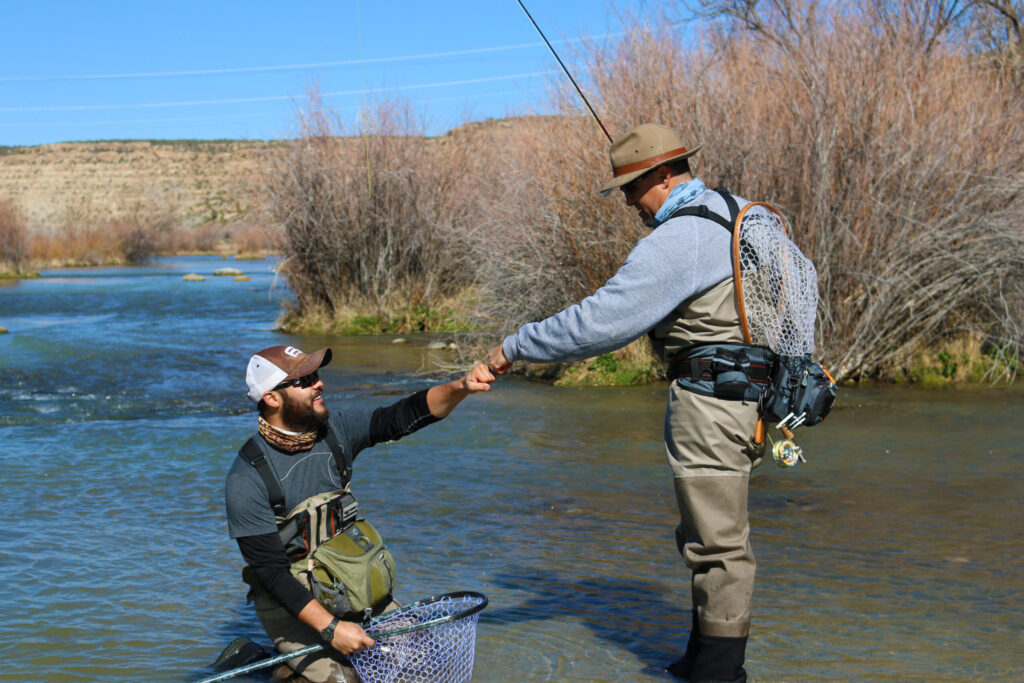
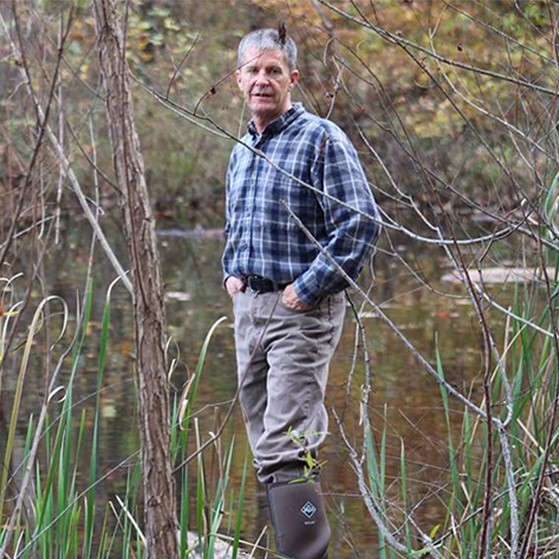
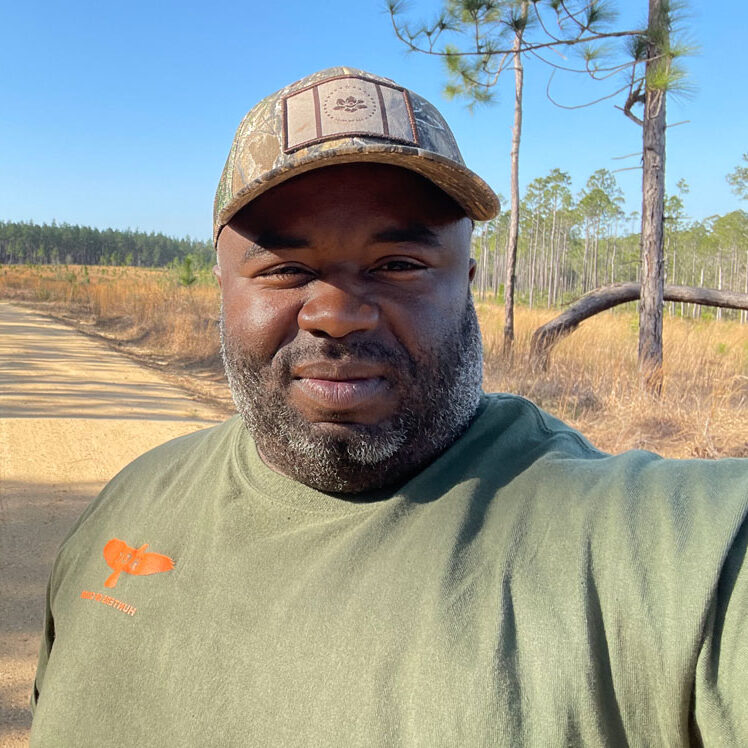
 Brian Flynn, Two Wolf Foundation
How Sportsmen Are Doing It Right

Brian Flynn, Two Wolf Foundation's Story

Following a distinguished career in the U.S. Army, lifelong outdoorsman Brian Flynn returned home from a deployment in Afghanistan and…

Hunting
Why It Matters

Key Issues for America’s Hunters

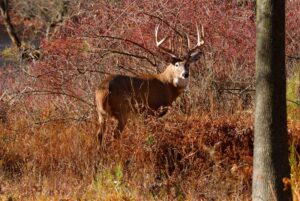
Your source for the latest policy updates, conservation challenges, and opportunities shaping America’s hunting traditions.

What TRCP is Doing

We’re fighting for meaningful policy changes that benefit wildlife, our waters, and the American landscapes that make our outdoor traditions possible.

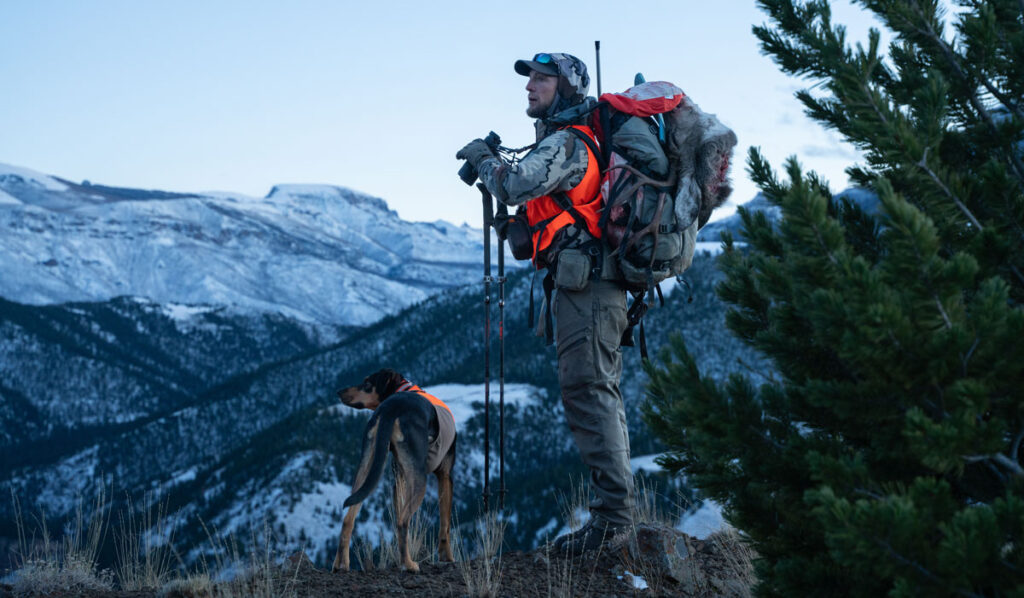
 Ryan Sparks
How Sportsmen Are Doing It Right

Ryan Sparks's Story

TRCP’s “In the Arena” series highlights the individual voices of hunters and anglers who, as Theodore Roosevelt so famously said,…
Fishing
Why It Matters

Key Issues for America’s Anglers

Your source for the latest policy updates, conservation challenges, and opportunities shaping America’s fishing traditions.

Sign Up For Forage Fish Updates
What TRCP is Doing

We’re fighting for meaningful policy changes that benefit wildlife, our waters, and the American landscapes that make our outdoor traditions possible.

 David Mangum
How Sportsmen Are Doing It Right

David Mangum's Story

Capt. David Mangum is a YETI ambassador and outdoor photographer who utilizes his talents to produce media that inspire a…

Private Land
Why It Matters

Stewardship on America’s private lands

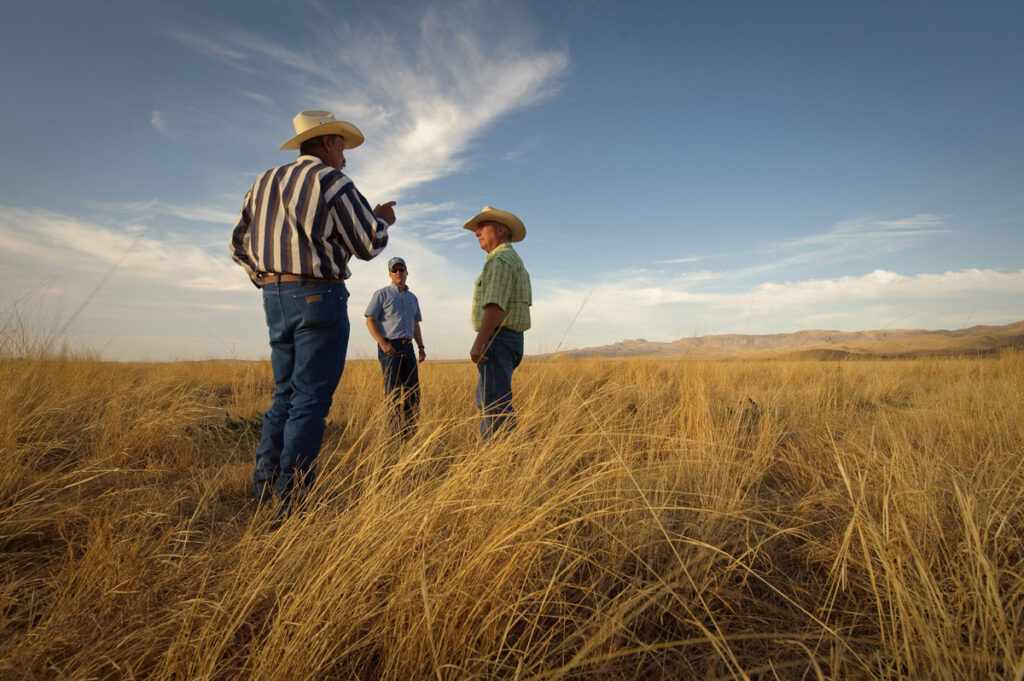
With 70 percent of U.S. lands in private hands and many of our best hunt and fish opportunities occurring there, investing in voluntary conservation on working lands safeguards access, strengthens habitat and water quality, and ensures resilient landscapes.

Take Action - Farm Bill 2026
What TRCP is Doing

We champion policies and programs that restore wildlife habitat, improve soil and water health, and keep working lands productive.

 Ward Burton
How Sportsmen are Doing It Right

Ward Burton's Story

Ward Burton’s NASCAR driving career stretched across most of two decades. As an avid sportsman and conservationist, he founded the…

Special Places
Why It Matters

Special Places Worth Protecting

America’s most iconic landscapes provide unmatched habitat and unforgettable days afield. These places sustain wildlife, anchor local economies, and define the hunting and fishing traditions we pass down.

What TRCP is Doing

We’re working to conserve special places that provide world-class habitat and unforgettable opportunities for hunters and anglers.

 Franklin Adams
How Sportsmen Are Doing It Right

Franklin Adams's Story

As a true Gladesman, conservationist, and historian, Capt. Franklin Adams has spent more than six decades championing Everglades restoration efforts…

Habitat & Clean Water
Why It Matters

Healthy Habitat Powers Every Pursuit

All hunting and fishing opportunities depend on quality habitat, from clean water and healthy wetlands to winter and summer habitats and the migration corridors that connect them.

All About Habitat & Clean Water
What TRCP is Doing

We are working to safeguard the habitats that power every hunting and fishing opportunity.

 Alex Harvey
How Sportsmen Are Doing It Right

Alex Harvey's Story

Alex Harvey, founder of Legacy Land Management, is a registered professional forester in Mississippi and Alabama with a Master's degree…

Science
Why It Matters

Science That Guides TRCP

From conserving migration corridors and wetlands to ensuring clean water and resilient landscapes, science provides evidence that turns conservation goals into effective action.

Science for Conservation
What TRCP is Doing

For hunters and anglers, science safeguards the experiences we treasure including resilient big game populations, abundant fish, and wild places that endure changing social landscapes.

Jamelle Ellis
Your Science Expert

Jamelle Ellis's Story

Jamelle Ellis joined the Theodore Roosevelt Conservation Partnership in 2022. Jamelle spent the last three years as an environmental sustainability…

Where We Work
Across the Nation

Conservation Across America

TRCP works across the country to ensure hunters and anglers can enjoy healthy fish and wildlife and quality days afield, no matter where they live.

See All Issues
TRCP in Your Region

TRCP works across the country to ensure hunters and anglers can enjoy healthy fish and wildlife and quality days afield, no matter where they live.

Who We Are
Our Mission

To guarantee all Americans quality places to hunt & fish

We unite and amplify our partners’ voices to advance America’s legacy of conservation, habitat, and access.

Our Mission & Values
Our People & Partners
  • Meet the TRCP Team

    Our staff and board members unite and amplify our partners’ voices to advance America’s legacy of conservation, habitat, and access.

    Meet the Team
  • Our Partners

    ‘Partnership’ is in our name. We work with 64 diverse partner groups that represent today’s leading hunting, fishing, and conservation organizations in order to strengthen the sportsman’s voice in Washington, D.C.

    Our Partners
  • Corporate Council

    TRCP’s Corporate Council is made up of diverse corporations that share a common passion for conservation.

    Corporate Council
Our Organization

Looking for more information?

Explore our latest news, policy updates, and conservation resources to get the information you need.

Giving
How You Can Help

To guarantee all Americans quality places to hunt & fish

Your tax-deductible donation will support TRCP's mission, now and into the future.

DONATE
Special Ways to support trcp
  • Capital Conservation Awards Dinner

    The CCAD is one of Washington's best-attended conservation celebrations, featuring dinner, cocktails, and a silent auction.

    Learn More
  • Step Into the Arena

    Help us ensure that our treasured wild habitats and game remain intact for the next generation to enjoy – lend your support to the TRCP’s efforts today!

    Donate
  • Roosevelt Roast

    TRCP has partnered with Afuera Coffee Co. to further our commitment to conservation.

    Learn More
More donation options

Find the best way for you to lend your support. Join one of TRCP’s donor circles for special invitations, premium offerings from outdoor retailers, and more exclusive benefits. Take control of your legacy with planned giving or contribute to special conservation funds.

Other Ways To Give
News
In the Spotlight

Your Kid’s Favorite Book Is Making the Case for Wildlife Crossings

A coyote slips under a bridge in a children's book — and it's making the case for one of the smartest conservation investments in America. Here's why hunters and anglers should pay attention.

Read More

Stay Informed

Receive our newsletter, the Roosevelt Report, right in your inbox. Never miss the latest news in conservation issues.

by:

posted in:

April 3, 2026

North central PA trout stream fishing-750

Do you have any thoughts on this post?

XHTML: You can use these tags: <a href="" title=""> <abbr title=""> <acronym title=""> <b> <blockquote cite=""> <cite> <code> <del datetime=""> <em> <i> <q cite=""> <s> <strike> <strong>

Comments must be under 1000 characters.

by:

posted in:

April 1, 2026

State Funding Decline Threatens Tennessee Outdoor Recreation Opportunities

Tennesseans can help protect wildlife and recreation access by supporting dedicated state funding for the Tennessee Wildlife Resources Agency

Tennessee’s wildlife resources mean more to the state than heritage alone.  They are a cornerstone of our culture, lifestyle, and economy. In Tennessee, hunting, fishing, and wildlife-related recreation generate nearly $12 billion annually and support 200,000 jobs, while contributing to over $1 billion in state and local tax revenue. These revenues are especially important in rural communities.

The Theodore Roosevelt Conservation Partnership recognizes the need for hunter and angler engagement with the growing cost of conservation as a significant challenge for state wildlife agencies in today’s world, including in Tennessee and the Lower Mississippi River Valley. Right now, two bills are being considered in the state that would dedicate funding to wildlife resources and help prevent increases in license fees and lower hunter participation.

The Situation

Currently, the Tennessee Wildlife Resources Agency (TWRA) is facing a growing financial crisis. Inflation has raised the agency’s operating costs by more than 30 percent in the last decade, placing stress on the management of properties such as the popular waterfowl hunting Wildlife Management Areas, fisheries programs, and essential maintenance of recreation access infrastructure. To make matters worse, the agency is facing an additional $18.5 million in state-mandated expenses that remain unfunded. Hunters and anglers currently fund 81 percent of TWRA’s budget. While state-mandated expenses rise, it is unsustainable to rely on hunters and anglers alone to cover all these costs through license sales alone.

TWRA has acted responsibly, holding positions vacant, deferring maintenance, and trimming programs. But the agency cannot absorb rising costs while fulfilling unfunded mandates, particularly ones that do not tie directly to hunting and fishing. Without dedicated financial support, habitat management and access improvements will suffer. This will inevitably threaten the quality and quantity of hunting and fishing opportunities across the state. The investments made by TWRA into management of the state’s natural resources are critical to the economic growth of the state. The agency’s continuing maintenance and infrastructure investments will provide nature-based solutions to Tennessee’s diverse landscapes benefiting people and wildlife alike – solutions like wetland restoration, active forest management, and stream improvements that benefit water quality and fisheries.

Dedicated General Fund Support as a Solution

Perhaps the best way to restore full funding to the TWRA is through the state’s General Fund. In virtually all states, General Funds are the primary and most flexible accounts for paying for a state’s everyday operations and are funded chiefly through existing taxes. General Funds, unlike most other funds, are not earmarked for specific purposes, allowing lawmakers the authority to allocate them differently over time for everything from education to healthcare to general government functions. And in a situation like Tennessee is currently facing, they can be a lifeline for key programs to support wildlife and habitat management and the economic benefits they return to the state.

Dedicating a portion of the state’s General Fund to the TWRA is necessary for many reasons:

  • Wildlife is a public resource that is available to all taxpayers, and funding should reflect that.
  • This offers dedicated funding mechanisms that can account for inflation and provide consistency.
  • Many other states provide General Fund support to keep license fees affordable, allowing hunters to maintain active participation in the outdoors.
  • TWRA has been successful at managing its budget efficiently; dedicated funding would supplement, not replace, sportsmen funding.
  • Hunters and anglers already fund most of TWRA through licenses and federal excise taxes, and shouldn’t be required to pay more.
  • License fee hikes are not a solution—they only reduce participation and revenue.
  • Funding ensures federal matches, stabilizes programs, and safeguards access for all Tennesseans.

Two bills are now being considered in Tennessee that would require a percent of payments retained by the state from the Tennessee Valley Authority for the General Fund to be allocated to the wildlife resources fund and used for boating and wildlife resources purposes, easing the strain on hunters and anglers who already pay their fair share.

TRCP encourages all Tennessee hunters and anglers to reach out to their state legislators requesting their votes to pass House Bill 2138/Senate Bill 2183 to provide dedicated General Fund support, distribute costs equitably, and protect one of Tennessee’s strongest economic engines while securing hunting and fishing access for future generations. We encourage you to draw your comments from the bulleted list above.

Tennessee’s wildlife resources are one of the most diverse in our country. To leave them vulnerable to funding deficits would be failure as sportsmen and sportswomen.

All images courtesy Tennessee Wildlife Resources Agency


The TRCP is your resource for all things conservation. In our weekly Roosevelt Report, you’ll receive the latest news on emerging habitat threats, legislation and proposals on the move, public land access solutions we’re spearheading, and opportunities for hunters and anglers to take action. 

Click here to sign up today.

by:

posted in:

March 31, 2026

Idaho Passes Wins for Motorist Safety, Habitat Connectivity, and Public Lands

Senate Concurrent Resolution No. 124 and Senate Joint Memorial 111 establish state priorities on conservation and federal public lands

Senate Concurrent Resolution No. 124

On March 24, the Idaho legislature took official steps to acknowledge the importance of wildlife migration conservation and habitat connectivity for iconic species such as deer, elk, moose, and pronghorn, while also committing to making the state’s highways safer for motorists and wildlife alike. By conserving these habitats, Idaho can ensure future generations will be able to enjoy these herds and a multitude of other game and non-game species.

Senate Concurrent Resolution No. 124 establishes a path to support investing in wildlife crossing infrastructure—underpasses, overpasses, and exclusionary fencing—to keep big game animals off the pavement. Idaho has roughly a thousand wildlife-vehicle collisions annually, and according to the Federal Highway Administration, the estimated cost of these accidents is roughly $150 million.

Senate Concurrent Resolution No. 124 establishes a path to support investing in wildlife crossing infrastructure. (Carl Erquiaga)

Idaho’s resolution builds on decades of work by the Idaho Department of Fish and Game, the Idaho Transportation Department, conservation groups, and other state and federal agencies to better understand and support wildlife migrations and address where wildlife corridors and highways intersect.

Big game migration conservation was emphasized in 2018 with Secretarial Order 3362. The order highlighted wildlife movement research and the conservation of migration habitat. The order also kickstarted several policy efforts such as NRCS’s Working Lands for Wildlife and the recently introduced Habitat Connectivity on Working Lands Act.  But maybe the greatest success has been building highway crossing infrastructure to keep big animals off busy roadways.

In Idaho, that success can be seen through projects like the Cervidae Peak overpass on Highway 21 northeast of Boise. The first-of-its-kind overpass in Idaho ushers elk and deer over the highway, and officials predict the overpass will reduce collisions by 80 percent.

Cervidae isn’t the only example of wildlife crossing infrastructure in Idaho. In central Idaho’s Lemhi Valley, recently constructed fencing funnels big game animals under Highway 28. Although miles from the nearest peaks and forests, game cameras have caught not only routine use by deer and elk, but also a mountain goat avoiding the highway.

With the human population and development increasing in Idaho, this resolution couldn’t have passed at a better time as it is critical to protect motorists and conserve wildlife as our highways grow busier and habitat fragmentation continues.

Building highway crossing infrastructure helps keep big animals off busy roadways and increases motorist safety. (IDFG)

Senate Joint Memorial 111

Also on March 24, Idaho’s lawmakers passed Senate Joint Memorial 111 (SJM 111), declaring the legislature’s belief that federal public lands in Idaho should remain in public ownership.

Sponsored by Senator Treg Bernt (R-Meridian) and carried in the House by Representative Britt Raybould (R-Rexburg), SJM 111 affirms the importance of federal public lands to Idaho’s economy, wildlife, and way of life. The memorial emphasizes the value of these lands for grazing, timber, mining, and outdoor recreation, as well as traditional pursuits such as hunting, fishing, and trapping. It also calls on Congress to continue supporting critical funding sources for counties, wildfire response, shared stewardship agreements, and mutually beneficial land exchanges.

The memorial signals support for federal legislation to strengthen protections for public lands through the Public Lands in Public Hands Act (H.R. 718). H.R. 718 was introduced in Congress and is supported by a bipartisan group of Western legislators, including Idaho’s Representative Mike Simpson. The bill would require congressional approval for the sale of public lands that are more than 300 acres.

Thank you to the Idaho legislature for committing to public safety, wildlife habitat connectivity, and our state’s outdoor legacy through this resolution and memorial.

Learn more about TRCP’s work in the Pacific Northwest HERE.

Feature Image: IDFG

by:

posted in:

March 26, 2026

The Habitat Connectivity on Working Lands Act Introduced in Senate

Legislation aims to codify highly successful USDA Migratory Big Game Initiative to enhance wildlife habitat connectivity on private and working lands

Senators Martin Heinrich (D-N.M.) and Tim Sheehy (R-Mont.) have introduced the Habitat Connectivity on Working Lands Act into the Senate. This bill would expand voluntary efforts to improve wildlife habitat, including big game migratory habitat, on working lands. This is now a bipartisan, bicameral effort, with the House version of this bill led by Representatives Gabe Vasquez (D-N.M) and Ryan Zinke (R-Mont.).

Building on the success of the U.S. Department of Agriculture’s (USDA) Migratory Big Game Initiative (MBGI) in Wyoming, Montana, and Idaho, the bill would codify USDA’s ability to leverage unique cost-share, technical assistance, and payments provided under the Grassland Conservation Reserve Program (GCRP) and Environmental Quality Incentives Program (EQIP) for the benefit of wildlife and agricultural producers. 

The MBGI partnership has been both innovative and highly successful. In Wyoming, enrollment in conservation programs in priority corridors increased by 264% compared to before the partnership. However, the USDA is unlikely to expand this model nationwide unless the Farm Bill is updated as proposed in this legislation.

In addition, the bill will spur USDA research on virtual fencing technologies, which allow for greater wildlife movement and animal safety on livestock operations while enabling fine-scale grazing management for better fish and wildlife habitat. It also provides additional incentives through EQIP for the adoption of conservation practices that conserve or restore wildlife habitat connectivity.   

“Working lands provide key habitat for migratory fish and wildlife, including big game like elk and mule deer. USDA’s voluntary conservation programs need to work together to support farmers and ranchers who create and enhance this habitat, and the next Farm Bill is our opportunity to make that happen,” said Joel Webster, chief conservation officer for TRCP. “The Habitat Connectivity on Working Lands Act removes unnecessary barriers to working lands stewardship and TRCP thanks Senator Heinrich and Senator Sheehy for their leadership on this bill.”

Learn more about Farm Bill conservation programs HERE.

Learn more about TRCP’s big game migration policy priorities HERE.

Photo Credit: Josh Metten

by:

posted in:

March 18, 2026

Preventing the Decline of a Top Louisiana Fishery

TRCP’s Chris Macaluso recently fished in Louisiana’s famous Atchafalaya Basin to target a local favorite catch and share updates and thoughts on the quintessential swamp’s restoration needs

The Atchafalaya Basin is the largest river-basin swamp in the U.S., offering a quarter-million acres of cypress and black gum forests and productive bayous and lakes that ultimately feed into the Gulf. Louisiana sportsmen and women have long explored the fertile Basin waters to target sac-a-lait, bass, bluegill, and other freshwater fish. (Sac-a-lait is the Louisiana term for white or black crappie, considered the state’s premier panfish because they offer white, flaky fillets).  The Basin is also the number one producer of wild caught crawfish in the U.S.

TRCP’s Chris Macaluso recently joined prominent angler and online influencer Todd “Marsh Man” Masson to target sac-a-lait and other panfish on a sunny winter day. Watch as they land a lot of fish (but release them all, since they forgot to bring a cooler) and talk about the importance of the Atchafalaya Basin’s fishery to anglers and the local economy and culture.

Though the Basin offers one of the nation’s top fisheries, its productivity has declined over the past three decades as sediment from the Atchafalaya, Mississippi, and Red rivers is filling in and shallowing the bayous, canals, and other waters of the Basin. Low dissolved oxygen is limiting bass size and productivity here, especially during summer months when stagnant, impounded water temperatures increase, causing bass to stop hunting for food. Aquatic invasive species like giant salvinia, water hyacinth, and Asian carp also impact the fishery.

“I think one of the biggest things is the water just doesn’t move the way it needs to in a lot of these places like it did 50, 60 years ago,” said Chris Macaluso, TRCP director, Center of Fisheries and Mississippi River Program.

As part of larger efforts to restore the waters and habitats of the Mississippi River Basin, TRCP and partners continue to support the progress and funding for one potential solution for the Atchafalaya. The U.S. Army Corps of Engineers is in the process of completing the $25 million Lower Mississippi River Comprehensive Management Study, a multi-year study authorized by Congress to examine potential changes for Mississippi River management from southern Missouri to the Gulf. The study is set to conclude late next year and could provide the basis for federally approved projects that affect the Atchafalaya Basin and other Mississippi River floodplains for a generation to come.

HOW YOU CAN HELP

TRCP has partnered with Afuera Coffee Co. to further our commitment to conservation. $4 from each bag is donated to the TRCP, to help continue our efforts of safeguarding critical habitats, productive hunting grounds, and favorite fishing holes for future generations.

Learn More

You have Successfully Subscribed!

You have Successfully Subscribed!

You have Successfully Subscribed!

You have Successfully Subscribed!