Our Issues
Public Lands
Why It Matters

Hunting & Fishing Access

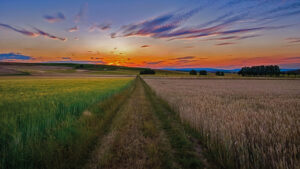
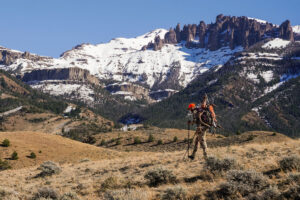
America’s 640 million acres of national public lands provide irreplaceable hunting and fishing opportunities to millions of Americans.

Learn More About Access
What TRCP is Doing

We’re working to safeguard America’s public lands so hunters and anglers always have quality places to pursue their passions.

 Brian Flynn, Two Wolf Foundation
How Sportsmen Are Doing It Right

Brian Flynn, Two Wolf Foundation's Story

Following a distinguished career in the U.S. Army, lifelong outdoorsman Brian Flynn returned home from a deployment in Afghanistan and…


Hunting
Why It Matters

Key Issues for America’s Hunters

Your source for the latest policy updates, conservation challenges, and opportunities shaping America’s hunting traditions.

What TRCP is Doing

We’re fighting for meaningful policy changes that benefit wildlife, our waters, and the American landscapes that make our outdoor traditions possible.

 Ryan Sparks
How Sportsmen Are Doing It Right

Ryan Sparks's Story

TRCP’s “In the Arena” series highlights the individual voices of hunters and anglers who, as Theodore Roosevelt so famously said,…

Fishing
Why It Matters

Key Issues for America’s Anglers

Your source for the latest policy updates, conservation challenges, and opportunities shaping America’s fishing traditions.

Sign Up For Forage Fish Updates
What TRCP is Doing

We’re fighting for meaningful policy changes that benefit wildlife, our waters, and the American landscapes that make our outdoor traditions possible.

 David Mangum
How Sportsmen Are Doing It Right

David Mangum's Story

Capt. David Mangum is a YETI ambassador and outdoor photographer who utilizes his talents to produce media that inspire a…

Private Land
Why It Matters

Stewardship on America’s private lands

With 70 percent of U.S. lands in private hands and many of our best hunt and fish opportunities occurring there, investing in voluntary conservation on working lands safeguards access, strengthens habitat and water quality, and ensures resilient landscapes.

Take Action - Farm Bill 2026
What TRCP is Doing

We champion policies and programs that restore wildlife habitat, improve soil and water health, and keep working lands productive.

 Ward Burton
How Sportsmen are Doing It Right

Ward Burton's Story

Ward Burton’s NASCAR driving career stretched across most of two decades. As an avid sportsman and conservationist, he founded the…

Special Places
Why It Matters

Special Places Worth Protecting

America’s most iconic landscapes provide unmatched habitat and unforgettable days afield. These places sustain wildlife, anchor local economies, and define the hunting and fishing traditions we pass down.

What TRCP is Doing

We’re working to conserve special places that provide world-class habitat and unforgettable opportunities for hunters and anglers.

 Franklin Adams
How Sportsmen Are Doing It Right

Franklin Adams's Story

As a true Gladesman, conservationist, and historian, Capt. Franklin Adams has spent more than six decades championing Everglades restoration efforts…

Habitat & Clean Water
Why It Matters

Healthy Habitat Powers Every Pursuit

All hunting and fishing opportunities depend on quality habitat, from clean water and healthy wetlands to winter and summer habitats and the migration corridors that connect them.

All About Habitat & Clean Water
What TRCP is Doing

We are working to safeguard the habitats that power every hunting and fishing opportunity.

 Alex Harvey
How Sportsmen Are Doing It Right

Alex Harvey's Story

Alex Harvey, founder of Legacy Land Management, is a registered professional forester in Mississippi and Alabama with a Master's degree…

Science
Why It Matters

Science That Guides TRCP

From conserving migration corridors and wetlands to ensuring clean water and resilient landscapes, science provides evidence that turns conservation goals into effective action.

Science for Conservation
What TRCP is Doing

For hunters and anglers, science safeguards the experiences we treasure including resilient big game populations, abundant fish, and wild places that endure changing social landscapes.

Jamelle Ellis
Your Science Expert

Jamelle Ellis's Story

Jamelle Ellis joined the Theodore Roosevelt Conservation Partnership in 2022. Jamelle spent the last three years as an environmental sustainability…

Where We Work
Across the Nation

Conservation Across America

TRCP works across the country to ensure hunters and anglers can enjoy healthy fish and wildlife and quality days afield, no matter where they live.

See All Issues
TRCP in Your Region

TRCP works across the country to ensure hunters and anglers can enjoy healthy fish and wildlife and quality days afield, no matter where they live.

Who We Are
Our Mission

To guarantee all Americans quality places to hunt & fish

We unite and amplify our partners’ voices to advance America’s legacy of conservation, habitat, and access.

Our Mission & Values
Our People & Partners
  • Meet the TRCP Team

    Our staff and board members unite and amplify our partners’ voices to advance America’s legacy of conservation, habitat, and access.

    Meet the Team
  • Our Partners

    ‘Partnership’ is in our name. We work with 64 diverse partner groups that represent today’s leading hunting, fishing, and conservation organizations in order to strengthen the sportsman’s voice in Washington, D.C.

    Our Partners
  • Corporate Council

    TRCP’s Corporate Council is made up of diverse corporations that share a common passion for conservation.

    Corporate Council
Our Organization

Looking for more information?

Explore our latest news, policy updates, and conservation resources to get the information you need.

Giving
How You Can Help

To guarantee all Americans quality places to hunt & fish

Your tax-deductible donation will support TRCP's mission, now and into the future.

DONATE
Special Ways to support trcp
  • TRCP MeatEater 2026 Sweepstakes

    The TRCP MeatEater 2026 Sweepstakes is your chance to join Steven Rinella and Janis Putelis.

    Learn More
  • Capital Conservation Awards Dinner

    The CCAD is one of Washington's best-attended conservation celebrations, featuring dinner, cocktails, and a silent auction.

    Learn More
  • Step Into the Arena

    Help us ensure that our treasured wild habitats and game remain intact for the next generation to enjoy – lend your support to the TRCP’s efforts today!

    Donate
  • Roosevelt Roast

    TRCP has partnered with Afuera Coffee Co. to further our commitment to conservation.

    Learn More
More donation options

Find the best way for you to lend your support. Join one of TRCP’s donor circles for special invitations, premium offerings from outdoor retailers, and more exclusive benefits. Take control of your legacy with planned giving or contribute to special conservation funds.

Other Ways To Give
News
In the Spotlight

AZ State Budget a Win for Fisheries & Wildlife, But Highlights Future Needs for Water Protections

A bipartisan state budget was approved in Arizona for 2027 after weeks of negotiations between state lawmakers and the Governor, resulting in wins for fisheries and wildlife, but more work needed for water protections.

Read More

Stay Informed

Receive our newsletter, the Roosevelt Report, right in your inbox. Never miss the latest news in conservation issues.

by:

posted in:

June 18, 2026

2022-09-09(2)_1600

Do you have any thoughts on this post?

XHTML: You can use these tags: <a href="" title=""> <abbr title=""> <acronym title=""> <b> <blockquote cite=""> <cite> <code> <del datetime=""> <em> <i> <q cite=""> <s> <strike> <strong>

Comments must be under 1000 characters.

by:

posted in:

Senate Advances America the Beautiful Act, Aiming to Renew Critical Funding for Public Lands  

Reauthorization of the Legacy Restoration Fund would mean better access and infrastructure for America’s hunters and anglers 

Yesterday, hunters, anglers, and outdoor enthusiasts joined the Theodore Roosevelt Conservation Partnership in commending the Senate Environment & Natural Resources Committee for unanimously re-authorizing the National Parks and Public Land Legacy Restoration Fund (LRF) through the America the Beautiful Act (S.1547).  

 The bipartisan legislation was introduced in the Senate by Senator Steve Daines (R-Mont.), Senator Angus King (I-ME), and 63 Senate co-sponsors and is aimed at addressing the $43 billion maintenance backlog on America’s public lands across several federal agencies.  

“The America the Beautiful Act wouldn’t just fund maintenance on our national parks, forests, and refuges – it would require federal agencies to prioritize public access. That means better water infrastructure on refuges for waterfowl hunters, passable trails for turkey and big game hunters, and improved access points for anglers,” said Joel Webster, chief conservation officer at the Theodore Roosevelt Conservation Partnership. “TRCP joins sportsmen and women in thanking Senators Daines and King for their leadership in introducing this bipartisan legislation and the efforts of Senators Lee and Heinrich in moving it through the Senate Environment and Natural Resources Committee.”

The Legacy Restoration Fund was originally established in 2020 through the Great American Outdoors Act, a landmark bipartisan conservation bill. The fund expired in 2025, leaving a critical gap in addressing the $43 billion maintenance backlog on America’s public lands. With the reauthorization provided by the America the Beautiful Act, the Legacy Restoration Fund would deliver $1.9 billion annually over the next five years to rebuild the roads, trails, campgrounds, staff housing, and ADA-accessible infrastructure that hunters, anglers, and all public lands users depend on. 

The America the Beautiful Act now heads to the Senate floor for a full vote before moving to the House and ultimately to the President’s desk.  

by:

posted in:

The Only Way is Forward

TRCP communications manager Noah Davis shares how exploring a new creek parallels the path of conservation work

My dad and I haven’t waded this far up the creek before. The rising cutthroats keep pulling us higher. At every stretch that looks a little shallow, at every chance we could scramble up out of the water, we see another pool that makes us forget how far we already have to hike out, the plans we made back in town, and the desire to fish the big river that evening.

The pools are dug into the rock or deepen in front of logjams. The water is clear and colored by the red and blue stones that cobble the bottom. Currents welcome our flies and float them gently to the trout that wait to strike at the depth change. The white posts of our parachute flies disappear in white splashes and we are tied to trout after trout.

It reaches the point that when a drift goes uninterrupted, our eyebrows raise and we look at each other in surprise.

The start of the canyon.

“Not good enough for them, huh?” I say as Dad false casts.

“Getting picky all of a sudden.” He lays down an offering that is accepted quickly.

“I guess not that picky yet!”

The cutthroats are healthy and beautiful. Their oranges slashes flash and the many spots on their tails shimmer as we release them. The water is cold enough for us to shake our hands after submersions, but the air is warm enough that we feel comfortable wet wading.

I’ve long felt that when entering public lands, whatever I carry—rod, rifle, or bucket for berries or mushrooms—is a kind of key. We as Americans are blessed with hundreds of millions of acres of federal public lands where the only admission is the wheels, hooves, or boots to reach them. Once we arrive, these mountains, prairies, creeks, canyons, and lakes offer more than a lifetime of experiences. The tools we carry can unlock them.

My favorite mule deer ridge was found because I was carrying a rifle. I discovered the sweetest huckleberries I’ve ever tasted because I was chasing early season dusky grouse. My go-to morel patch is along a stream where brown trout nail streamers in the high, spring water. What we love to do helps us fall deeper in love with the places that offer us these opportunities.

The higher we climb, the steeper the walls become, until finally we are in a canyon. Dad wades back a hundred yards then scales a spring seep to look ahead. When he returns, he says he can’t see how long it goes.

“No reason to leave these fish,” I say.

“Just means we’re committed,” he replies.

We wade up and turn the corner. Suddenly we are fully blocked in. We know the way down, but the way up is a mystery, fresh fish and undisturbed pools are all ahead.

A healthy cutthroat trout moments before release.

I bow-and-arrow my purple haze on the far side of a run and a cutthroat comes up from between two large stones to porpoise on the fly. It’s a take that gives the angler all the advantage. The fish goes down on the fly while the angler pulls up on the line and the two competing directions usually result in a set hook and a fighting fish.

When the trout comes to hand, the belly is heavy and I look around and see dozens of stonefly shucks clinging weightlessly to the rock walls. I release the cutthroat back into the pool and wonder when the last time the fish saw a human.

We continue to pick up trout, and the sky narrows above us. The world feels funneled here and Dad and I are following the canyon as if we were bobsledders following the track.

“How much longer do you think?” I ask.

“Your guess is as good as mine,” Dad says, again prepping to cast.

“I think we’re too far in to turn back now.”

“Only way to go is forward. We’ll see how long it takes.”

We as Americans are blessed with hundreds of millions of acres of federal public lands where the only admission is the wheels, hooves, or boots to reach them.

How do we reach the elk in the morning? How do we hike to the lake to hit the bass bite in the evening? How do we get out of a canyon? It’s the same way that we safeguard our public access and public lands: one step in front of the other, moving forward.

TRCP is made up of dedicated hunters and anglers who direct their passions for chasing deer, pheasants, ducks, redfish, and stripers into their work for conservation. They know that success doesn’t happen in a day, and that the work to guarantee all Americans quality places to hunt and fish is a long-term mission but still understand that every step counts.

And that’s why we need all hunters and anglers to be involved in speaking up for the public lands and waters that make our passions possible. Sign up for our weekly newsletter below to stay updated on conservation news and opportunities to engage with decisions that influence where you hunt and fish.

The only way is forward.

Two hours later, we arrive in a flat blooming with beargrass. The canyon is behind us, and an old horse trail is visible crossing the creek.

“I think it will be quicker getting out than getting in,” Dad says.

I look upstream and see a small falls digging a pool. The light is slanting, but I think we still have an hour of light left. Our headlamps have batteries.

“I think I want to try that pool up there. Three casts at most.”


The TRCP is your resource for all things conservation. In our weekly Roosevelt Report, you’ll receive the latest news on emerging habitat threats, legislation and proposals on the move, public land access solutions we’re spearheading, and opportunities for hunters and anglers to take action. Sign up now.

by:

posted in:

June 16, 2026

It’s Time for Menhaden Quotas to Follow the Fish

New petition and video call for more equitable Atlantic menhaden commercial catch allocations to East Coast states as the ASMFC considers initiating a reallocation process in November

Atlantic menhaden are one of the most important fish on the East Coast. They feed striped bass, bluefish, tuna, whales, ospreys, and countless other predators. They provide bait for commercial fisheries harvesting lobster and crab as well as for recreational fisheries, sustaining coastal economies from Maine to Florida.

But while New England’s stake in the menhaden fishery has grown, the system used to allocate harvest access among Atlantic states has remained largely unchanged.

That’s why the TRCP has launched a new petition and companion video calling on the Atlantic States Marine Fisheries Commission (ASMFC) to establish a more equitable allocation of Atlantic menhaden catch quota when it considers reallocation this November.

Fueling Marine Food Webs, Fishing Economies

Atlantic menhaden are often called the “most important fish in the sea” because they serve as a critical base for the marine food web. Healthy menhaden populations support some of the Atlantic coast’s most iconic recreational and commercial fisheries, while providing essential forage for marine predators.

In recent years, menhaden have become increasingly abundant in New England waters, possibly due to climate change, migration patterns, or other factors. Regardless of the cause, as a result of more menhaden (or “bunker”) in the region, anglers are seeing more striped bass and tuna feeding on the large schools. Whales are appearing closer to shore. And commercial bait fisheries are benefiting from greater availability of this important resource.

This shift matters beyond fishing opportunities. Where menhaden are available determines where predators can feed, from striped bass and bluefish to humpback whales and seabirds. Yet despite these changes, harvest access remains concentrated in a system built around historical fishing patterns from decades ago.

A Quota System Out of Step with Today’s Fishery

For nearly two decades, the ASMFC’s state allocation system for the menhaden fishery has given over 75 percent of the coastwide quota to a single state – Virginia – where most of that harvest is taken by a single, foreign-owned reduction fishery that processes menhaden into fish meal and fish oil. These products benefit interests far from local communities where the menhaden are harvested, such as foreign aquaculture production and livestock feed.

Meanwhile, New England states and other regions where menhaden abundance has increased continue to face quota constraints despite growing ecological importance and economic demand. In many cases, bait suppliers and fishermen in the Northeast rely on quota transfers from other states just to meet the needs of lobster, commercial, and recreational fisheries.

For many coastal communities, access to menhaden bait directly supports lobster fisheries, charter businesses, tackle shops, marinas, and other jobs tied to recreational and commercial fishing. More balanced state allocations would strengthen bait supply, reduce dependence on temporary quota transfers, and better distribute the economic benefits of this resource along the Atlantic Coast.

Photo Credit: Jim Nix

The current state allocation formula was established primarily using historical landing data. Because quotas are tied to past harvest patterns, rather than current ecological distribution or economic dependence, it reinforces a fishery structure that no longer reflects present-day conditions on the water.

The result is a growing disconnect between where menhaden are most abundant, where they are needed to support coastal economies, and where harvest access is allocated.

A Critical Opportunity This Fall

This November, the ASMFC will consider whether to initiate a process to reallocate state menhaden quotas. This upcoming action represents a rare opportunity to address longstanding inequities in the fishery and create a more balanced allocation system moving forward.

The Commission has the authority to revise quota allocations among states, meaning this is not just a debate – it is a decision that will directly determine Atlantic states’ access to a shared public resource. Future changes to the coastwide total allowable catch will make those allocation decisions even more important.

A fairer allocation framework would better recognize New England’s growing role in the fishery, support working waterfronts and bait-dependent businesses, and ensure that the benefits of this public resource are more equitably shared across the Atlantic Coast. Without action, the current allocation structure could remain in place for years, even as the ecological and economic center of gravity for menhaden continues to shift northward.

Photo Credit: smilla4

Make Your Voice Heard

Atlantic menhaden belong to the entire Atlantic Coast. They fuel world-class recreational fisheries, support coastal economies, and sustain marine ecosystems from New England to the Chesapeake Bay and beyond. This upcoming process will help shape how the benefits of this critical resource are shared for years to come.

Atlantic menhaden are a shared public resource. Tell the ASMFC to redistribute the Atlantic menhaden quota so that states with growing ecological and economic dependence on the resource receive a fairer share of harvest, and to relieve pressure on the Chesapeake Bay.

Watch the video, sign the petition, and tell fisheries managers that Atlantic menhaden management should reflect today’s realities – not the conditions of decades past.

Banner image of shark and menhaden courtesy Joanna Steidle

by:

posted in:

June 11, 2026

MAPLand Milestone Marks Major Step Forward for Public Access

New access information is now available, good behavior encouraged when using easements

In May 2026, TRCP announced that federal land management agencies had completed a key first step in implementing the 2022 Modernizing Access to our Public Land Act by publishing more than 30,000 records of easements and reservations that secure public rights-of-way across private land. The newly available data was released through the MAPLand ARC GIS Hub, making it easier for hunters, anglers, outdoor recreationists, land managers, and mapping companies to identify and use legal access routes to enjoy and effectively manage public lands.

This access success was years in the making.

When onX and TRCP launched a collaborative effort in 2018 to better understand the scope of inaccessible public lands, we had no idea where the work would lead. That research ultimately found that 16.43 million acres of federal, state, and local public lands across 22 states are effectively landlocked and lack legal public access.

Eight years later, that effort has helped drive a growing body of work focused on expanding and improving public access. Recreational access funding is now a mandated component of the federal Land and Water Conservation Fund, federal agencies have identified priority areas for opening landlocked public lands and lands with restricted access, and agencies are now digitizing and mapping public access information so it can be integrated into smartphone applications, third-party mapping platforms, and other digital tools.

TRCP and our partners are working toward a future where Americans can clearly identify which roads and routes are public and which are private so hunters, anglers, and other recreationists do not have to turn around at an unmarked two-track wondering whether they are legally allowed to continue.

This access work took a major step forward recently as the more than 30,000 access easement records uploaded onto a new MAPLand geospatial platform are now available on the onX Hunt App for hunters and anglers to use and explore.

If an easement appears on the MAPLand platform, the relevant federal agency has determined that public access rights exist. It has been estimated that roughly 90,000 permanent access easements and reservations may ultimately be digitized through this effort.

How to Use New Access Easements

Access easements are legal rights-of-way across private land that allow public and/or administrative access to public lands. If an easement appears on the MAPLand platform, the relevant federal agency has determined that public access rights exist. Thousands of additional  access easements and reservations are expected to be digitized through this effort.

Many of these easements were secured decades ago and, until now, existed primarily in paper records stored in agency offices and county courthouses. Similar to the early days of GPS mapping technology, when previously overlooked public parcels suddenly became visible and available to the public, some of these access routes are likely unfamiliar to recreationists, and nearby landowners may not be accustomed to the public using them.

As this information becomes more widely available, we encourage recreationists to use good judgment and act respectfully. Easements provide a legal access right, but the underlying land remains private property. If an easement is gated, if no road was ever constructed, or if conditions on the ground appear unclear, do not assume vehicle access is appropriate. In situations where conflict or confusion may arise, contact the local land management agency or game warden before using the route. It is also often a good idea to respectfully communicate with nearby landowners to avoid misunderstandings.

If something on the map appears inconsistent or confusing, use the MAPLand GeoPlatform site HERE to provide feedback, or contact the local district or field office so staff can review the underlying records and help clarify the situation. Responsible use of these easements will be critical to maintaining long-term support for public access efforts. Decisionmakers from both parties support access easements—let’s keep it that way.

Importantly, this is only the beginning. The recently uploaded easements represent the first major tranche of access information that will become publicly available through MAPLand in the coming years.

Next Steps

The next phase of MAPLand implementation will require federal agencies to geospatially map roads, trails, access sites, and areas with weapon restrictions and make that information publicly available beginning in April 2027. Following that milestone, implementation of the recently passed MAPWaters Act will begin uploading water-access information in 2029.

TRCP appreciates the work of the federal departments and agencies carrying out this effort to improve public access information for hunters, anglers, and other outdoor recreationists. And this milestone is only the beginning. We are continuing to work with Congress and partners to advance additional mapping and access legislation—including the MAPOceans Act and MAPRoads Act—and to build a future where Americans can more easily discover, understand, and responsibly access the public lands and waters they own.

Sign up to learn more about TRCP’s work to secure and enhance recreational access HERE.

Check out the onX Hunt App HERE.

HOW YOU CAN HELP

TRCP has partnered with Afuera Coffee Co. to further our commitment to conservation. $4 from each bag is donated to the TRCP, to help continue our efforts of safeguarding critical habitats, productive hunting grounds, and favorite fishing holes for future generations.

Learn More

You have Successfully Subscribed!

You have Successfully Subscribed!

You have Successfully Subscribed!

You have Successfully Subscribed!