Our Issues
Public Lands
Why It Matters

Hunting & Fishing Access

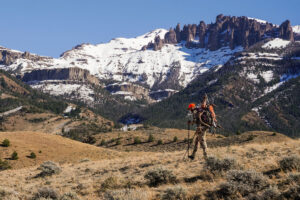
America’s 640 million acres of national public lands provide irreplaceable hunting and fishing opportunities to millions of Americans.

Learn More About Access
What TRCP is Doing

We’re working to safeguard America’s public lands so hunters and anglers always have quality places to pursue their passions.


 Brian Flynn, Two Wolf Foundation
How Sportsmen Are Doing It Right

Brian Flynn, Two Wolf Foundation's Story

Following a distinguished career in the U.S. Army, lifelong outdoorsman Brian Flynn returned home from a deployment in Afghanistan and…


Hunting
Why It Matters

Key Issues for America’s Hunters

Your source for the latest policy updates, conservation challenges, and opportunities shaping America’s hunting traditions.

What TRCP is Doing

We’re fighting for meaningful policy changes that benefit wildlife, our waters, and the American landscapes that make our outdoor traditions possible.

 Ryan Sparks
How Sportsmen Are Doing It Right

Ryan Sparks's Story

TRCP’s “In the Arena” series highlights the individual voices of hunters and anglers who, as Theodore Roosevelt so famously said,…

Fishing
Why It Matters

Key Issues for America’s Anglers

Your source for the latest policy updates, conservation challenges, and opportunities shaping America’s fishing traditions.

Sign Up For Forage Fish Updates
What TRCP is Doing

We’re fighting for meaningful policy changes that benefit wildlife, our waters, and the American landscapes that make our outdoor traditions possible.

 David Mangum
How Sportsmen Are Doing It Right

David Mangum's Story

Capt. David Mangum is a YETI ambassador and outdoor photographer who utilizes his talents to produce media that inspire a…

Private Land
Why It Matters

Stewardship on America’s private lands

With 70 percent of U.S. lands in private hands and many of our best hunt and fish opportunities occurring there, investing in voluntary conservation on working lands safeguards access, strengthens habitat and water quality, and ensures resilient landscapes.

Take Action - Farm Bill 2026
What TRCP is Doing

We champion policies and programs that restore wildlife habitat, improve soil and water health, and keep working lands productive.

 Ward Burton
How Sportsmen are Doing It Right

Ward Burton's Story

Ward Burton’s NASCAR driving career stretched across most of two decades. As an avid sportsman and conservationist, he founded the…

Special Places
Why It Matters

Special Places Worth Protecting

America’s most iconic landscapes provide unmatched habitat and unforgettable days afield. These places sustain wildlife, anchor local economies, and define the hunting and fishing traditions we pass down.

What TRCP is Doing

We’re working to conserve special places that provide world-class habitat and unforgettable opportunities for hunters and anglers.

 Franklin Adams
How Sportsmen Are Doing It Right

Franklin Adams's Story

As a true Gladesman, conservationist, and historian, Capt. Franklin Adams has spent more than six decades championing Everglades restoration efforts…

Habitat & Clean Water
Why It Matters

Healthy Habitat Powers Every Pursuit

All hunting and fishing opportunities depend on quality habitat, from clean water and healthy wetlands to winter and summer habitats and the migration corridors that connect them.

All About Habitat & Clean Water
What TRCP is Doing

We are working to safeguard the habitats that power every hunting and fishing opportunity.

 Alex Harvey
How Sportsmen Are Doing It Right

Alex Harvey's Story

Alex Harvey, founder of Legacy Land Management, is a registered professional forester in Mississippi and Alabama with a Master's degree…

Science
Why It Matters

Science That Guides TRCP

From conserving migration corridors and wetlands to ensuring clean water and resilient landscapes, science provides evidence that turns conservation goals into effective action.

Science for Conservation
What TRCP is Doing

For hunters and anglers, science safeguards the experiences we treasure including resilient big game populations, abundant fish, and wild places that endure changing social landscapes.

Jamelle Ellis
Your Science Expert

Jamelle Ellis's Story

Jamelle Ellis joined the Theodore Roosevelt Conservation Partnership in 2022. Jamelle spent the last three years as an environmental sustainability…

Where We Work
Across the Nation

Conservation Across America

TRCP works across the country to ensure hunters and anglers can enjoy healthy fish and wildlife and quality days afield, no matter where they live.

See All Issues
TRCP in Your Region

TRCP works across the country to ensure hunters and anglers can enjoy healthy fish and wildlife and quality days afield, no matter where they live.

Who We Are
Our Mission

To guarantee all Americans quality places to hunt & fish

We unite and amplify our partners’ voices to advance America’s legacy of conservation, habitat, and access.

Our Mission & Values
Our People & Partners
  • Meet the TRCP Team

    Our staff and board members unite and amplify our partners’ voices to advance America’s legacy of conservation, habitat, and access.

    Meet the Team
  • Our Partners

    ‘Partnership’ is in our name. We work with 64 diverse partner groups that represent today’s leading hunting, fishing, and conservation organizations in order to strengthen the sportsman’s voice in Washington, D.C.

    Our Partners
  • Corporate Council

    TRCP’s Corporate Council is made up of diverse corporations that share a common passion for conservation.

    Corporate Council
Our Organization

Looking for more information?

Explore our latest news, policy updates, and conservation resources to get the information you need.

Giving
How You Can Help

To guarantee all Americans quality places to hunt & fish

Your tax-deductible donation will support TRCP's mission, now and into the future.

DONATE
Special Ways to support trcp
  • TRCP MeatEater 2026 Sweepstakes

    The TRCP MeatEater 2026 Sweepstakes is your chance to join Steven Rinella and Janis Putelis.

    Learn More
  • Capital Conservation Awards Dinner

    The CCAD is one of Washington's best-attended conservation celebrations, featuring dinner, cocktails, and a silent auction.

    Learn More
  • Step Into the Arena

    Help us ensure that our treasured wild habitats and game remain intact for the next generation to enjoy – lend your support to the TRCP’s efforts today!

    Donate
  • Roosevelt Roast

    TRCP has partnered with Afuera Coffee Co. to further our commitment to conservation.

    Learn More
More donation options

Find the best way for you to lend your support. Join one of TRCP’s donor circles for special invitations, premium offerings from outdoor retailers, and more exclusive benefits. Take control of your legacy with planned giving or contribute to special conservation funds.

Other Ways To Give
News
In the Spotlight

AZ State Budget a Win for Fisheries & Wildlife, But Highlights Future Needs for Water Protections

A bipartisan state budget was approved in Arizona for 2027 after weeks of negotiations between state lawmakers and the Governor, resulting in wins for fisheries and wildlife, but more work needed for water protections.

Read More

Stay Informed

Receive our newsletter, the Roosevelt Report, right in your inbox. Never miss the latest news in conservation issues.

June 18, 2026

The Only Way is Forward

TRCP communications manager Noah Davis shares how exploring a new creek parallels the path of conservation work

My dad and I haven’t waded this far up the creek before. The rising cutthroats keep pulling us higher. At every stretch that looks a little shallow, at every chance we could scramble up out of the water, we see another pool that makes us forget how far we already have to hike out, the plans we made back in town, and the desire to fish the big river that evening.

The pools are dug into the rock or deepen in front of logjams. The water is clear and colored by the red and blue stones that cobble the bottom. Currents welcome our flies and float them gently to the trout that wait to strike at the depth change. The white posts of our parachute flies disappear in white splashes and we are tied to trout after trout.

It reaches the point that when a drift goes uninterrupted, our eyebrows raise and we look at each other in surprise.

The start of the canyon.

“Not good enough for them, huh?” I say as Dad false casts.

“Getting picky all of a sudden.” He lays down an offering that is accepted quickly.

“I guess not that picky yet!”

The cutthroats are healthy and beautiful. Their oranges slashes flash and the many spots on their tails shimmer as we release them. The water is cold enough for us to shake our hands after submersions, but the air is warm enough that we feel comfortable wet wading.

I’ve long felt that when entering public lands, whatever I carry—rod, rifle, or bucket for berries or mushrooms—is a kind of key. We as Americans are blessed with hundreds of millions of acres of federal public lands where the only admission is the wheels, hooves, or boots to reach them. Once we arrive, these mountains, prairies, creeks, canyons, and lakes offer more than a lifetime of experiences. The tools we carry can unlock them.

My favorite mule deer ridge was found because I was carrying a rifle. I discovered the sweetest huckleberries I’ve ever tasted because I was chasing early season dusky grouse. My go-to morel patch is along a stream where brown trout nail streamers in the high, spring water. What we love to do helps us fall deeper in love with the places that offer us these opportunities.

The higher we climb, the steeper the walls become, until finally we are in a canyon. Dad wades back a hundred yards then scales a spring seep to look ahead. When he returns, he says he can’t see how long it goes.

“No reason to leave these fish,” I say.

“Just means we’re committed,” he replies.

We wade up and turn the corner. Suddenly we are fully blocked in. We know the way down, but the way up is a mystery, fresh fish and undisturbed pools are all ahead.

A healthy cutthroat trout moments before release.

I bow-and-arrow my purple haze on the far side of a run and a cutthroat comes up from between two large stones to porpoise on the fly. It’s a take that gives the angler all the advantage. The fish goes down on the fly while the angler pulls up on the line and the two competing directions usually result in a set hook and a fighting fish.

When the trout comes to hand, the belly is heavy and I look around and see dozens of stonefly shucks clinging weightlessly to the rock walls. I release the cutthroat back into the pool and wonder when the last time the fish saw a human.

We continue to pick up trout, and the sky narrows above us. The world feels funneled here and Dad and I are following the canyon as if we were bobsledders following the track.

“How much longer do you think?” I ask.

“Your guess is as good as mine,” Dad says, again prepping to cast.

“I think we’re too far in to turn back now.”

“Only way to go is forward. We’ll see how long it takes.”

We as Americans are blessed with hundreds of millions of acres of federal public lands where the only admission is the wheels, hooves, or boots to reach them.

How do we reach the elk in the morning? How do we hike to the lake to hit the bass bite in the evening? How do we get out of a canyon? It’s the same way that we safeguard our public access and public lands: one step in front of the other, moving forward.

TRCP is made up of dedicated hunters and anglers who direct their passions for chasing deer, pheasants, ducks, redfish, and stripers into their work for conservation. They know that success doesn’t happen in a day, and that the work to guarantee all Americans quality places to hunt and fish is a long-term mission but still understand that every step counts.

And that’s why we need all hunters and anglers to be involved in speaking up for the public lands and waters that make our passions possible. Sign up for our weekly newsletter below to stay updated on conservation news and opportunities to engage with decisions that influence where you hunt and fish.

The only way is forward.

Two hours later, we arrive in a flat blooming with beargrass. The canyon is behind us, and an old horse trail is visible crossing the creek.

“I think it will be quicker getting out than getting in,” Dad says.

I look upstream and see a small falls digging a pool. The light is slanting, but I think we still have an hour of light left. Our headlamps have batteries.

“I think I want to try that pool up there. Three casts at most.”


The TRCP is your resource for all things conservation. In our weekly Roosevelt Report, you’ll receive the latest news on emerging habitat threats, legislation and proposals on the move, public land access solutions we’re spearheading, and opportunities for hunters and anglers to take action. Sign up now.

Do you have any thoughts on this post?

XHTML: You can use these tags: <a href="" title=""> <abbr title=""> <acronym title=""> <b> <blockquote cite=""> <cite> <code> <del datetime=""> <em> <i> <q cite=""> <s> <strike> <strong>

Comments must be under 1000 characters.

June 11, 2026

MAPLand Milestone Marks Major Step Forward for Public Access

New access information is now available, good behavior encouraged when using easements

In May 2026, TRCP announced that federal land management agencies had completed a key first step in implementing the 2022 Modernizing Access to our Public Land Act by publishing more than 30,000 records of easements and reservations that secure public rights-of-way across private land. The newly available data was released through the MAPLand ARC GIS Hub, making it easier for hunters, anglers, outdoor recreationists, land managers, and mapping companies to identify and use legal access routes to enjoy and effectively manage public lands.

This access success was years in the making.

When onX and TRCP launched a collaborative effort in 2018 to better understand the scope of inaccessible public lands, we had no idea where the work would lead. That research ultimately found that 16.43 million acres of federal, state, and local public lands across 22 states are effectively landlocked and lack legal public access.

Eight years later, that effort has helped drive a growing body of work focused on expanding and improving public access. Recreational access funding is now a mandated component of the federal Land and Water Conservation Fund, federal agencies have identified priority areas for opening landlocked public lands and lands with restricted access, and agencies are now digitizing and mapping public access information so it can be integrated into smartphone applications, third-party mapping platforms, and other digital tools.

TRCP and our partners are working toward a future where Americans can clearly identify which roads and routes are public and which are private so hunters, anglers, and other recreationists do not have to turn around at an unmarked two-track wondering whether they are legally allowed to continue.

This access work took a major step forward recently as the more than 30,000 access easement records uploaded onto a new MAPLand geospatial platform are now available on the onX Hunt App for hunters and anglers to use and explore.

If an easement appears on the MAPLand platform, the relevant federal agency has determined that public access rights exist. It has been estimated that roughly 90,000 permanent access easements and reservations may ultimately be digitized through this effort.

How to Use New Access Easements

Access easements are legal rights-of-way across private land that allow public and/or administrative access to public lands. If an easement appears on the MAPLand platform, the relevant federal agency has determined that public access rights exist. Thousands of additional  access easements and reservations are expected to be digitized through this effort.

Many of these easements were secured decades ago and, until now, existed primarily in paper records stored in agency offices and county courthouses. Similar to the early days of GPS mapping technology, when previously overlooked public parcels suddenly became visible and available to the public, some of these access routes are likely unfamiliar to recreationists, and nearby landowners may not be accustomed to the public using them.

As this information becomes more widely available, we encourage recreationists to use good judgment and act respectfully. Easements provide a legal access right, but the underlying land remains private property. If an easement is gated, if no road was ever constructed, or if conditions on the ground appear unclear, do not assume vehicle access is appropriate. In situations where conflict or confusion may arise, contact the local land management agency or game warden before using the route. It is also often a good idea to respectfully communicate with nearby landowners to avoid misunderstandings.

If something on the map appears inconsistent or confusing, use the MAPLand GeoPlatform site HERE to provide feedback, or contact the local district or field office so staff can review the underlying records and help clarify the situation. Responsible use of these easements will be critical to maintaining long-term support for public access efforts. Decisionmakers from both parties support access easements—let’s keep it that way.

Importantly, this is only the beginning. The recently uploaded easements represent the first major tranche of access information that will become publicly available through MAPLand in the coming years.

Next Steps

The next phase of MAPLand implementation will require federal agencies to geospatially map roads, trails, access sites, and areas with weapon restrictions and make that information publicly available beginning in April 2027. Following that milestone, implementation of the recently passed MAPWaters Act will begin uploading water-access information in 2029.

TRCP appreciates the work of the federal departments and agencies carrying out this effort to improve public access information for hunters, anglers, and other outdoor recreationists. And this milestone is only the beginning. We are continuing to work with Congress and partners to advance additional mapping and access legislation—including the MAPOceans Act and MAPRoads Act—and to build a future where Americans can more easily discover, understand, and responsibly access the public lands and waters they own.

Sign up to learn more about TRCP’s work to secure and enhance recreational access HERE.

Check out the onX Hunt App HERE.

June 3, 2026

Hunters, Anglers, and Conservation Groups Call on Senate to Strengthen the Conservation Reserve Program in 2026 Farm Bill

Sportsmen’s and conservation groups send letter to Senate Agriculture, Nutrition, and Forestry Committee urging long-overdue funding and updates for CRP as Farm Bill negotiations advance 

Today, 51 conservation and sportsmen’s organizations sent a letter to the Senate Agriculture, Nutrition, and Forestry Committee expressing strong support for the Conservation Reserve Program (CRP) as the Committee prepares to consider a 2026 Farm Bill. Now in its 40th year, CRP is one of USDA’s flagship voluntary conservation programs and one of the most powerful tools available for creating and restoring the wildlife habitat that hunters and anglers depend on – while also delivering significant benefits for farmers, ranchers, wildlife, soil health, and water quality across the country. 

The letter urges the Committee to increase resources in the Farm Bill’s conservation title to deliver meaningful investment and improvements to CRP. Despite the program’s proven success and widespread popularity among producers and landowners, CRP has been operating under short-term extensions since 2023 and has not received substantive policy updates or new resources since the 2018 Farm Bill – even as Congress made historic investments in all other major Farm Bill conservation programs.  

“Habitat makes opportunity, and no USDA program creates more habitat that benefits both producers and hunters and anglers than the Conservation Reserve Program,” said Aaron Field, director of private lands conservation at the Theodore Roosevelt Conservation Partnership. “CRP has a long track record of supporting wildlife, improving water quality, and expanding access to quality hunting and fishing opportunities, while keeping working lands working. With a 2026 Farm Bill on the horizon, Congress has a clear opportunity to build on that record and ensure CRP has the resources it needs for its next 40 years.”   

Since its inception in 1985, CRP has served as a critical part of the farm safety net, helping producers and landowners manage risk, generate on-farm income, provide forage during extreme drought, and conserve environmentally sensitive lands. For hunters and anglers, the program is equally indispensable: CRP has restored millions of acres of wildlife habitat for pheasants, quail, waterfowl, whitetail deer, and dozens of other species, improved water quality in streams and rivers that support fisheries and helped support the $1.3 trillion outdoor recreation economy

The organizations expressed appreciation for the Committee’s bipartisan leadership on agricultural conservation and called on members to ensure CRP is not left behind as a Farm Bill moves forward.  Representing tens of millions of hunters, anglers, and outdoor enthusiasts, the organizations stated their commitment to working with the Committee to strengthen CRP, so it remains a valuable and effective option for producers, landowners, and sportsmen and women for the next 40 years and beyond. 

Read the letter HERE 


Learn more about the Conservation Reserve Program here, and if you are a landowner interested in enrolling, find your nearest USDA Service Center here

Learn more about Farm Bill Conservation Programs here

May 20, 2026

Decisionmakers, Agencies, and Groups Celebrate Increased Public Land Access Through MAPLand Act Milestone

New easement data now available to the public and digital mapping companies

In a major win for public access, federal land management agencies have completed a key first step in implementing the 2022 Modernizing Access to our Public Land Act by publishing 30,000 records of easements and reservations that secure public rights-of-way across private land. The newly available data has been released through the MAPLand ARC GIS Hub, making it easier for hunters, anglers, outdoor recreationists, land managers, and mapping companies to identify and use legal access routes to enjoy and effectively manage public lands.

“One of the first of my bills to be enacted into law was the MAPLand Act,” said Representative Blake Moore of Utah. “Utah is home to some of the most beautiful landscapes in our country, but more often than not, there are no digitized maps of the public lands that hunters, fishers, and hikers use every day. I’m thrilled that this law is now being implemented across the country and for the impact that it will have on recreators everywhere. With more accurate and accessible information, Americans will have a greater ability to spend time outdoors on federal lands.” 

“Forest Service manages over 193 million acres of public lands offering some of the most accessible gateways to the outdoors, meeting a wide range of public needs and interests,” said Forest Service Chief Tom Schultz. “Nearly 200 million Americans hike, hunt, fish and recreate outdoors, much of the time on federal lands. With consistent geospatial data covering all federal lands, recreationists now have the tools they need to make informed decisions about public access easements to reach their favorite outdoor destinations responsibly and safely.” 

This milestone represents a step toward fulfilling Executive Order 14313, which established the Make America Beautiful Again Commission and includes direction for agencies to expand access to public lands and waters for recreation, hunting, and fishing.

“TRCP is grateful for the work of the federal land management agencies in digitizing and publishing information about the location of public access easements, which advances the priorities of the MABA Commission,” said Joel Webster, chief conservation officer for the Theodore Roosevelt Conservation Partnership. “This is an important first milestone in implementing the MAPLand Act. TRCP looks forward to working with the agencies to ensure the remaining access records and the additional recreation information required under this law are digitized and made publicly available.”

The MAPLand Act is designed to enhance access to existing public lands by requiring federal land management agencies to digitize paper maps and records. At the four-year implementation mark, agencies were required to make access easements and reservations that secure public rights-of-way across private land digitally available. While that work is not complete, the release of 30,000 records represents meaningful progress.

The U.S. Forest Service, Bureau of Land Management, Bureau of Reclamation, U.S. Fish and Wildlife Service, U.S. Army Corps of Engineers, and National Park Service all contributed to this new set of digitized access easements and reservations. Other MAPLand requirements—including year-round or seasonal road and trail closures, vehicle-specific road restrictions, and boundaries of areas where special hunting and shooting rules apply—have an additional year before they will be published.

“At onX, we believe that access to data and access to land go hand in hand,” said Laura Orvidas, CEO for onX. “The remarkable effort that went into digitizing and publishing these 30,000 easement records reflects real expertise and dedication from the land management agencies, and we’re deeply grateful for it. Whether you’re a hunter, angler, hiker, horseback rider, or simply someone who cherishes time outdoors, easements provide the connective tissue between you and the public lands you have a right to explore.”

“Hunters value access because access creates opportunity—to hunt, connect with the land, and carry forward our outdoor traditions,” said Greg Sheehan, CEO for the Mule Deer Foundation. “MAPLand’s work to improve public access information is an important step in helping sportsmen and women enjoy the public lands they own. The Mule Deer Foundation appreciates this progress and the commitment to keeping public lands accessible.”

“This is a meaningful step toward unlocking more opportunities for Americans to get outside,” said Whitney Potter Schwartz, senior vice president for the Outdoor Recreation Roundtable. “By digitizing and publishing these easements, federal agencies are not only expanding access to public lands and waters, but also empowering innovation through modern mapping tools and technology that help people confidently and responsibly explore the outdoors. Increased access fuels participation, supports local communities, and strengthens the $1.3 trillion outdoor recreation economy. We look forward to continued progress, including implementing the EXPLORE Act, to ensure that more Americans can experience the benefits of the outdoors while driving economic growth nationwide.”

“The Wild Sheep Foundation thanks the administration for its commitment to MAPLand,” said Gray N. Thornton, President and CEO for the Wild Sheep Foundation. “This way of knowing what treasures of nature are available to all Americans is part of what makes America great!” 

Explore the newly digitized access easements and rights-of-way to federal public lands HERE.

Learn more about TRCP’s work to modernize access to public lands and waters HERE.

April 30, 2026

New Farm Bill Passes the House: Key Impacts for Hunters and Anglers

Today, the House of Representatives passed the Farm, Food, and National Security Act of 2026, a meaningful step forward for hunters, anglers, farmers, ranchers, and the working lands we all depend on.

We are now closer to a comprehensive ag policy update than we have been since 2018. Today, the House of Representatives passed the Farm, Food, and National Security Act of 2026 on a 224-200 vote, with bipartisan support. A lot has happened in agricultural conservation policy since the 2018 Farm Bill. Key programs have been extended and received major funding boosts, first through the Inflation Reduction Act and then made permanent in the One Big Beautiful Bill Act. But without a Farm Bill, there has been no opportunity to improve the underlying structure that makes these programs work. 

“We’re grateful to Chairman Thompson, Ranking Member Angie Craig, and members on both sides of the aisle who worked to advance conservation priorities that benefit hunters, anglers, wildlife habitat and the farmers, ranchers, and landowners who steward these lands every day. This bill recognizes that healthy, productive working lands are good for everyone,” said Aaron Field, TRCP’s director of private lands conservation. “This is one step in a longer journey – negotiations will continue and a Senate process awaits – but we’re encouraged by the bipartisan commitment to building a Farm Bill that works for sportsmen, sportswomen, and working lands alike.”

Before we summarize the key provisions of this bill, there are a few important dynamics to keep in mind.

Compared to House votes on recent Farm Bills, this bill received stronger than average support from both Republicans and Democrats, with 14 Democrats voting in support. With tight margins in the Senate, bipartisanship will be essential. Major sticking points remain, including earlier changes within the Supplemental Nutrition Assistance Program, state authority to regulate swine production, and year-round use of higher blends of ethanol in gasoline. These issues fall outside of TRCP’s primary focus, but they will influence whether conservation priorities ultimately advance.

Work on this Farm Bill began as soon as, or even before, the 2018 bill was signed. Although six or seven years seems like ample time to resolve differences, significant negotiations remain. This passage is a major step forward, but further debate will occur as the bill moves to the Senate. Currently, Senate Agriculture Committee Chairman John Boozman (R-Ark.) and Ranking Member Amy Klobuchar (D-Minn.) are working on their own proposal. Although the bills will likely be very similar, there will be changes before this bill becomes law. 

Extended Farm Bill negotiations are not new, but after more than seven years without a comprehensive bill—and with bipartisan legislation increasingly difficult to move—Congress is fast approaching uncharted waters. At the same time, the Conservation Title is in better shape than usual. Investments in Title II programs through budget reconciliation packages in 2022 and 2025 extended most USDA conservation programs through 2031 and strengthened their long-term funding, providing some stability as Congress debates program changes. However, reconciliation rules allow funding adjustments but not policy reforms, meaning updates to conservation programs are still needed. Additionally, because the Conservation Reserve Program is limited by acreage rather than funding, CRP did not receive a funding increase or long-term reauthorization through reconciliation.  

Policy and funding changes in this Farm Bill will impact fish and wildlife habitat and hunting and fishing access for the next five years and beyond. You can find explanations about how Farm Bill programs support hunters and anglers here. 

Keeping these dynamics in mind, what exactly is in this bill?  Farm Bills cover a wide range of issues—from nutrition assistance and agricultural research to trade, risk management, and livestock disease—so a comprehensive analysis of the entire 800-page bill is beyond the scope of this blog. Instead, we focus on several provisions most likely to affect habitat and access for hunters and anglers. Let’s dig in. 

Key Conservation Provisions in The Farm, Food, and National Security Act of 2026 would: 

This bill has been informally called “Farm Bill 2.0”, in recognition that many priorities were accomplished through the budget reconciliation process last summer. As part of that package, Congress made the remaining conservation funding from the 2022 Inflation Reduction Act permanent. This represented a major investment in Title II programs and shifted the balance among several programs, particularly the Regional Conservation Partnership Program (RCPP) and the Environmental Quality Incentives Program (EQIP). However, Chairman Thompson’s team has consistently stated their intention to reallocate those resources to support policy improvements and new programs in this Farm Bill. Priority programs differ among members of the hunting and fishing community—and even more among the broader ag conservation community— but TRCP’s priority throughout this process has been ensuring that conservation funding remains conservation funding, and this bill meets that criterion.

Chairman Thompson’s 2024 bill included major changes to the Conservation Reserve Program (CRP), some of which were clearly beneficial to habitat and others potentially problematic. This time CRP is simply reauthorized for five years. This puts the program back on the same reauthorization schedule as the rest of Title II and avoids complications associated with repeated expirations and extensions. However, it is also a missed opportunity to make needed improvements to the program. Ideally, the bill would increase payment limitations, restore cost share for mid-contract management, and remove rental rate limitations, among other improvements. Still, leaving CRP largely unchanged gives the Senate significant latitude to pursue these updates, many of which have already been proposed in the bipartisan CRP Improvement and Flexibility Act. Congressman Jim Costa (D-Calif.) offered an amendment reflecting this legislation with support from Representatives Dusty Johnson (R-S.D.), Sharice Davids (D-Kan.), and Randy Feenstra (R-Iowa), but it was withdrawn after the Chairman committed to continuing work toward solutions.  

This bill would have substantial impacts on conservation easement programs. One of the most significant is the creation of a new Forest Conservation Easement Program with mandatory funding filling a gap in current easement opportunities and supporting working forest conservation. The bill also makes several adjustments that expand management opportunities on new and existing wetland easements, helping ensure these wetlands continue to provide quality habitat for generations.  

The Regional Conservation Partnership Program (RCPP) has tremendous potential to deliver conservation in innovative, partnership-driven ways, but the program has long been hampered by barriers that frustrated partners and limited its impact.  Chairman Thompson’s bill returns the RCPP to an earlier structure, that more closely connects projects to “covered programs” like EQIP.  It also aims to shorten approval timelines and reimburse partner administrative expenses. While the covered program model has both advantages and drawbacks, efforts to streamline the RCPP are welcome, as is the addition of wildlife corridors and habitat connectivity to the program’s purposes. 

In addition to the language within RCPP, the bill encourages the Secretary of Agriculture to “encourage the use of conservation practices that support the development, restoration, and maintenance of habitat connectivity and wildlife corridors” in all conservation programs. The impact of this provision will vary depending on the priorities of any given Secretary but given the importance of corridors for species like Western big game, the direction is encouraging.  

During the committee markup, Congressman Gabe Vasquez (D-NM), offered an amendment based on the Habitat Connectivity on Working Lands Act he is leading with Congressman Ryan Zinke (R-Mont.) The amendment includes several provisions supporting migration corridors and habitat connectivity. One of the most significant aims to codify the USDA’s ability to use EQIP or the Conservation Stewardship Program (CSP) on the same acres, but for different purposes, as Grassland CRP. This approach – often referred to as a “program stack,” where multiple conservation programs can be used together on the same acreage – is a key component of the Migratory Big Game Initiative, which has proven successful in Wyoming and elsewhere. The amendment was adopted by voice vote and generated positive comments from members of both parties including Chairman Thompson and Congressman Frank Lucas (R-OK). It was also great to hear Ranking Member Craig comment on the importance of “developing conservation programs with an eye toward restoring wildlife habitat and habitat connectivity.”

Chairman Thompson has long been an advocate for the Voluntary Public Access and Habitat Incentive Program (VPA-HIP). In 2024, the committee tried to include $150 million for the program, a funding level called for by the Voluntary Public Access Improvement Act and dozens of conservation organizations. However, this current bill does not include funding for VPA-HIP. Fortunately, thanks in large part to Chairman Thompson’s efforts, VPA-HIP received $70 million over seven years in the One Big Beautiful Bill Act last summer. While important, that funding level is unlikely to expand the program’s impact.  

The bill provides several new tools aimed at improving forest health and watershed function, with benefits for water quality, fish and wildlife, and resilience to wildfire and drought. Notable provisions include reauthorization of the U.S. Forest Service’s Water Source Protection Program, expanded use of good neighbor agreements, and additional improvements to watershed health and drinking water sources within the Collaborative Forest Landscape Restoration Program. 

While proactively addressing wildfire risk is important, the bill also includes provisions that could limit the U.S. Forest Service’s ability to manage wildfire effectively. These include requirements to suppress certain fires within 24 hours of detection and additional limitations on prescribed fire. Although these provisions apply only in certain areas and conditions, relying primarily on suppression has not historically been an effective wildfire strategy, and experienced land management professionals are better equipped than Congress to make these decisions.  

There are many other provisions in this bill that we will continue to follow, and there is still a long road before its impacts are felt on the ground. The TRCP thanks both House and Senate Agriculture Committee leadership for their work toward a bipartisan Farm Bill that supports habitat and access. 

You can help. Conservation is, and should be, a shared priority regardless of party affiliation or ideology. Congress needs to hear that this is important to you. Take action here

Top photo: @NickMKE on Flickr.


The Hunter & Angler’s Guide to the Farm Bill

We know it can be challenging to break through the alphabet soup of program acronyms to understand why the reauthorization and improvement of Farm Bill conservation programs is a top priority. In The Hunter & Anglers Guide to the Farm Bill, we demystify the Farm Bill and the crucial conservations programs that sportsmen and women should care about.

HOW YOU CAN HELP

TRCP has partnered with Afuera Coffee Co. to further our commitment to conservation. $4 from each bag is donated to the TRCP, to help continue our efforts of safeguarding critical habitats, productive hunting grounds, and favorite fishing holes for future generations.

Learn More
Subscribe


You have Successfully Subscribed!

You have Successfully Subscribed!

You have Successfully Subscribed!

You have Successfully Subscribed!

You have Successfully Subscribed!