ITA profile image (1)
Do you have any thoughts on this post?
Building on the achievements of 2025, the year ahead will require the same steady engagement, practical problem-solving, and bipartisan collaboration that have long defined conservation success for hunters and anglers. Theodore Roosevelt understood that progress is not forged from the sidelines, but by those willing to step into the arena, accept responsibility, and do the work. That spirit continues to guide TRCP forward.
While political uncertainty remains and agency capacity is strained, the path ahead is clear. As T.R. urged, “Get action. Do things; be sane; don’t fritter away your time; create, act, take a place wherever you are and be somebody; get action.” Conservation advances when hunters, anglers, landowners, policymakers, and partners stay engaged, work together, and “get action” with purpose and resolve. In 2026, TRCP will remain focused on durable solutions that safeguard access, strengthen habitat, and carry forward the hunting and fishing traditions that define a vigorous American conservation legacy.
With that focus guiding our work, TRCP’s conservation priorities for 2026 include:

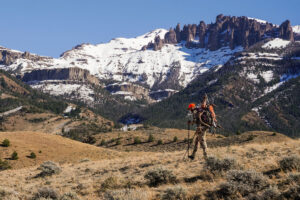
Public lands remain central to this work. TRCP will stay engaged on public access, forest health, habitat restoration, wildlife connectivity, and active stewardship. This work also includes maintaining special places and conserving intact habitats, while advancing management activities that improve habitat conditions and reduce the risk of severe wildfire. We will also focus on ensuring land management plans are implemented as intended, balancing conservation goals with hunting and fishing opportunities.
Access also depends on thoughtful decision making on infrastructure and permitting. TRCP will work to support reforms that improve efficiency without sacrificing longstanding safeguards, recognizing that strong conservation and responsible development must coexist. Bringing diverse stakeholders to the same table will remain central to finding workable, durable solutions.

Healthy habitat is a foundation of conservation – and in 2026, TRCP’s focus will be on turning policy momentum into on-the-ground results. That includes conserving intact habitats where they still exist, while advancing thoughtful management that improves resilience and reduces the risk of severe wildfire.
On private lands, that means ensuring conservation programs deliver real benefits for landowners, wildlife, and sportsmen and women. Historic conservation investments have created opportunities but staffing shortages and delivery challenges threaten outcomes. TRCP will continue working with agencies and partners to identify solutions that keep voluntary conservation effective and accessible, including sustained attention to programs like the Conservation Reserve Program.
Water will remain central to habitat work. In the West, rivers like the Colorado and Rio Grande face increasing pressure from drought, demand, and sustained extreme weather events. TRCP will support bipartisan efforts that promote collaborative river management, invest in watershed health, and recognize that resilient watersheds support fish, wildlife, agriculture, and communities alike.
Habitat priorities also include planning for change. In regions experiencing rapid development, shifting land use, and more extreme weather, TRCP is working to identify priority landscapes and guide smarter conservation investments – particularly where privately owned lands play an outsized role.

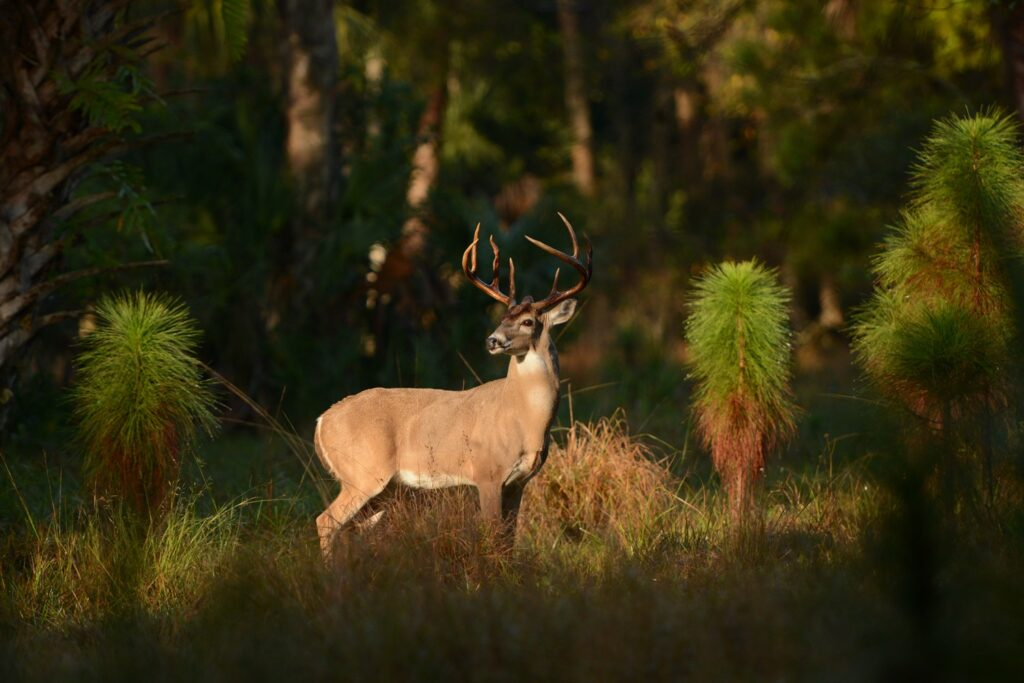
Healthy wildlife populations depend on science-based management and coordination across boundaries. In 2026, TRCP will continue advocating for policies that sustain fish and wildlife while strengthening habitat and supporting the fishing and hunting opportunities they make possible.
This includes championing science-driven marine fisheries management along the Atlantic and Gulf coasts – particularly for forage fish species like menhaden that underpin entire ecosystems and recreational fisheries. TRCP will remain engaged with management bodies to advocate for decisions that reflect the best available science, while building broader regional support for conservation outcomes that benefit anglers, coastal communities, and wildlife alike.
Freshwater systems will also remain a priority. Along the Mississippi River, TRCP is working to elevate interstate and non-profit coordination on fisheries management, nature based solutions, and invasive species – challenges that no single entity can solve alone, but that directly affect habitat restoration and sporting opportunities throughout the basin.
On land, wildlife health continues to demand sustained attention. Chronic wasting disease remains a complex, evolving challenge. In 2026, TRCP will continue focusing on collaborative research and thoughtful engagement that reflects reality – there are no quick fixes, but informed, coordinated action can make a meaningful difference over time.
Across these efforts, TRCP will continue strengthening the links between hunters, anglers, science, and policy – and work to ensure that decision-makers have access to credible research and practical pathways to act.

The year ahead will bring both challenges and opportunity – but conservation has never advanced by standing still. It moves forward when people stay engaged, build on what works, and commit for the long haul.
In 2026, TRCP will continue prioritizing durable, bipartisan solutions grounded in science and strengthened through collaboration. Progress may not always come quickly, but history has shown that steady engagement, shared responsibility, and persistence deliver lasting results.
As we look ahead, the call is the same one Theodore Roosevelt issued more than a century ago: step into the arena, get action, and do the work. Conservation moves forward when hunters, anglers, partners, and decision makers show up together. With your continued support, TRCP will keep working to advance solutions that safeguard wildlife, strengthen habitat, and secure access – today and for generations to come. As TR urged, we will “get action” and do the work necessary to guarantee all Americans quality places to hunt and fish.
Stay connected in 2026. The TRCP is your resource for all things conservation. In our weekly Roosevelt Report, you’ll receive the latest news on emerging habitat threats, legislation and proposals on the move, public land access solutions we’re spearheading, and opportunities for hunters and anglers to take action. Sign up now.
VP of Western Conservation spoke on responsible energy siting. Watch the full panel discussion below.
This week, the Western Governors’ Association held the third workshop of Governor Spencer Cox’s Chair initiative, Energy Superabundance: Unlocking Prosperity in the West in Pheonix, Arizona.
Arizona Governor Katie Hobbs kicked off the workshop which offered a series of expert panels comprised of policymakers, conservationists, and industry leaders from across the West. Topics included the West’s growing energy demands and how these challenges can be addressed through streamlined permitting and siting processes, as well as the expansion of emerging energy technologies.
Madeleine West, TRCP’s VP of Western Conservation, participated in the Siting Considerations for Energy Development panel which discussed the challenges of siting energy infrastructure and considered strategies to improve responsible energy siting outcomes.
“We recognize we need a diverse source of energy to meet our seemingly unquenchable energy needs in this country,” said West. “But we believe that can be done by also conserving the places where we love to hunt and fish and having sustainable fish and wildlife populations.”
Watch the full panel discussion below.
West emphasized that TRCP understands a diversity of energy sources is needed to meet our growing energy needs and reduce carbon emissions. However, many of these options require vast amounts of land, exclusionary fencing, and temporary or permanent disturbance that can impact wildlife directly, as well as sensitive habitats and working agricultural lands. Responsible siting policies must be in place that facilitate expanded deployment of diverse energy resources, while also guaranteeing quality places to hunt and fish.
Joining West on the panel was Jason Baran, director of state government affairs for the Salt River Project; Kathryn Leonard, Arizona state historic preservation officer for the Arizona State Historic Preservation Office; Marc Reyes, director of interconnection and transmission for Fervo Energy; and Tom Vinson, vice president of policy and regulatory affairs for the American Clean Power Association.

West highlighted that fish and wildlife drive a robust and growing outdoor recreation economy, the benefits of which are driven largely in rural communities. These communities are also where much of the new energy infrastructure is being proposed, creating the need to support economic growth from energy development without sacrificing existing wildlife and land-driven economies.
TRCP is working with partners in the hunt-fish community to build scientifically supported policy recommendations to ensure hunting and fishing traditions and growing outdoor recreation economies continue to thrive as energy demands are met.
This includes the Energy Development & Land Use: Fish & Wildlife Platform developed by TRCP and 21 other hunting, fishing, and conservation organizations; the Wildlife for the 21st Century, Volume VII (W-21) by the American Wildlife Conservation Partners, the nation’s top 52 sporting-conservation organizations; the Critical Minerals: A Hunting and Fishing Perspective report, developed by Trout Unlimited, Backcountry Hunters & Anglers, The Nature Conservancy, National Wildlife Federation, and the TRCP; and TRCP’s solar siting guidelines to summarize the emerging science to inform the siting of solar energy facilities in a manner that avoids, minimizes, and mitigates impacts to big game and their habitats.

For our usual year-end forage fish wrap up, we decided this year to dive into the latest alarming menhaden regulatory decisions, what they mean, and let you know how you can continue to engage decision-makers to try to save the hard-fought, science-based wins that our angling and conservation community has worked so hard to put in place.
As we reported two months ago, the Menhaden Management Board of the Atlantic States Marine Fisheries Commission voted in late October to cut the 2026 Atlantic menhaden quota by a mere 20 percent. This may sound like a lot, and while it is a moderate decrease, a revised stock assessment showed the menhaden population size is more than one-third lower than previously estimated, and that a cut of over 50 percent is necessary to ensure there are enough of these critical forage fish available in the water to support rebuilding the Atlantic striped bass population.
The decision to adopt a token reduction in the Atlantic menhaden catch quota disregards the science and input from ASMFC’s own scientists.
The Board also chose to only set the new quota for one year, rather than the full three years consistent with how the ecosystem-based framework is designed. This decision to adopt a token reduction in the coastwide quota disregards the science and input from ASMFC’s own scientists, abandons the Commission’s own ecosystem-based management framework, and undermines public trust in the ASMFC’s management decisions. In addition, even with this decrease in quota, it will likely not decrease coastwide harvest, negating the presumed conservation benefits that the cut could have.
From our perspective, the ASMFC’s decision:
1. Ignored the best available science in the stock assessment update, which showed that the Atlantic menhaden population is 37 percent lower than previously estimated, and that for years fewer forage fish have been in the water for predators to eat.
2. Abandoned the Commission’s own Ecological Reference Point (ERP) management framework, which indicated that even a quota cut of more than 50 percent would achieve only a 50/50 chance of not exceeding the ERP fishing mortality target. (See our earlier blog for an explanation of ERPs.)
3. Allowed one company operating in one state – Omega Protein, in Virginia – to overtly influence the coastwide decision-making process in their favor, to the detriment of not only the ecosystem, but other Atlantic states’ bait industries as well.
4. Disregarded the overwhelming majority of the public who commented in favor of a new quota that would have maintained the integrity of the ecosystem-based menhaden management framework (more than 1,100 opposition comments were generated through TRCP alone).

On a positive note, because this was only a one-year decision, TRCP will push for additional quota reductions in 2026 and 2027. Also, the Board did finally choose to initiate a process to address Chesapeake Bay menhaden management. Early next year, it will consider options for quota periods to distribute menhaden removals more evenly throughout the fishing season, as well as options to reduce the Bay’s reduction fishing cap, ranging from status quo to a 50 percent decrease.
The cap was put in place nearly two decades ago as a precautionary measure to protect predator diet needs in the Chesapeake, but due to industry opposition, efforts to gather data to justify any updates to the cap have been stymied. This process could yield significant benefits to the Bay ecosystem, which has faced multiple concerns recently tied to menhaden, including osprey breeding failures due to chick starvation.

In February 2026, or at the latest, by next summer, the ASMFC should publish the draft addendum for public comment regarding Chesapeake Bay management. It’s imperative that you participate in that public process by submitting comments virtually or in-person at future public hearings. The TRCP and partners will be fully engaged in advocating for options that conserve menhaden for its environmental role in the Bay to sustain striped bass, osprey, and other predators – and we will be sure to provide more information on how you can take action next year.
As we reported last month, after facing intense industry pressure, the Louisiana Wildlife and Fisheries Commission voted to proceed with a Notice of Intent (NOI) that is slated to reduce a half-mile buffer zone for industrial menhaden fishing off Louisiana’s coast to just a quarter-mile in most locations. This change could allow industrial menhaden harvest in waters as shallow as five feet—undoing a compromise reached in 2024 between anglers, conservation groups, the menhaden industry, and state officials. After a one-month public comment period, the NOI will move to natural resource committees in the state legislature for approval, where lawmakers have the ability to reject the proposed changes.
After a half-mile buffer restricting industrial menhaden fishing near Louisiana’s coast was put in place, fish-kill incidents declined by 81 percent.
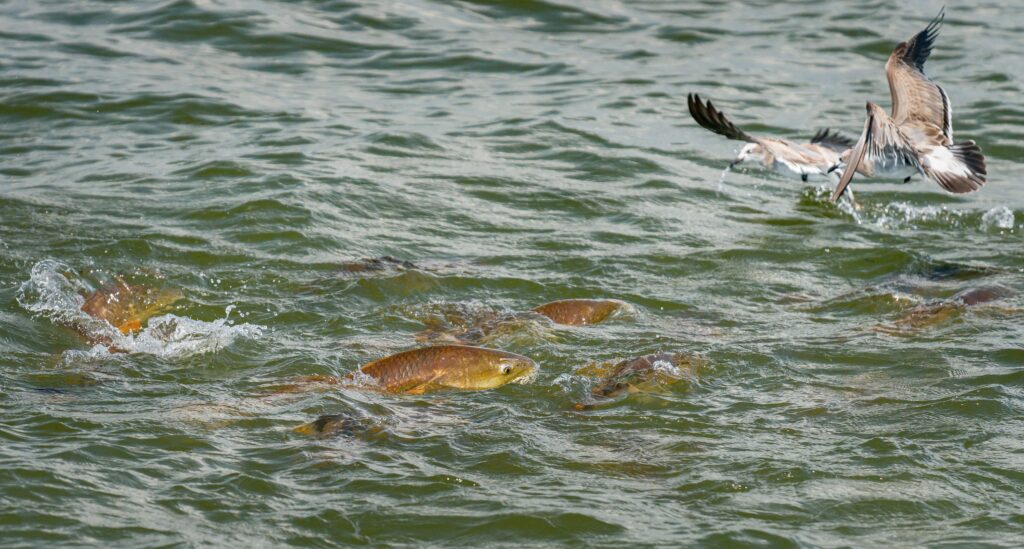
The current buffer was established following multiple fish spills caused by menhaden harvest nearshore in 2023, with torn or overfilled nets wasting over 2.5 million menhaden and killing thousands of breeding-size redfish that washed up on public beaches. We calculated that after that buffer was put in place in 2024, fish-kill incidents declined by 81 percent in 2024-2025, compared to historical averages.

Also, a 2024 study found that approximately 150 million non-target fish are caught as bycatch each year by the menhaden industry, including 30,000 redfish and hundreds of thousands of other predators like spotted seatrout (speckled trout), black drum, and jack crevalle, as well as 25-million-plus sand seatrout, commonly called white trout. The Commission’s decision in November completely ignored this disturbing information, undermining public trust in Louisiana’s fisheries management. This move threatens fragile coastal habitats and fish populations in Sportsman’s Paradise and risks reversing the gains we have made to protect the forage fish base in the Gulf, which supports key sportfish populations and nearshore ecosystems.
From now through Jan. 23, 2026 this NOI will be open for public comment that will be considered by the LWFC. Comments can be submitted directly to Jason Adriance, LDWF’s finfish program manager, or using the TRCP’s action alert system HERE.
Take action by telling the LWFC not to roll back the buffers:

TRCP also is providing another means to potentially reverse the NOI decision. You can sign a separate alert targeting state lawmakers asking them to reject the NOI.
Take action by urging lawmakers to reject the NOI:

We need your help by signing both alerts to let lawmakers and the Commission know that you oppose any rollbacks to the current buffer zones, to protect Louisiana’s nearshore ecosystems and public fisheries. We cannot let the menhaden industry bully the LWFC and Commissioners into making management decisions solely for their benefit. The Commission cannot responsibly abdicate its responsibility to serve all the people and natural resources of Louisiana.
Only together can we ultimately achieve long-term menhaden conservation to support recreational fishing and healthy coastal ecosystems. We appreciate your ongoing and necessary support. As always, feel free to reach out to our team at any time.
Banner image courtesy Joanna Steidle
Companion bill was introduced in the House of Representatives in November
The Theodore Roosevelt Conservation Partnership applauds Senate introduction of two bills that would reauthorize and increase funding for the Wildlife Crossings Program through fiscal year 2031.
Senators Alsobrooks (D-Md.), Cramer (R-N.D.), Merkley (D-Ore.), and Curtis (R-Utah) along with Senators Heinrich (D-N.M.) and Sheehy (R-Mont.) are leading legislation in the Senate. In November of this year, Congressmen Zinke (R-Mont.) and Beyer (D-Va.) introduced similar legislation in the House.
The Wildlife Crossings Program provides grant funding to state and Tribal governments to construct wildlife crossings such as overpasses, underpasses, and fencing. This infrastructure has proven to significantly reduce the number of wildlife-vehicle collisions and improve habitat connectivity.
“Wildlife crossings on America’s highways increase motorist safety, ensure habitat connectivity, and save countless dollars by preventing vehicle-wildlife collisions,” said Joel Pedersen, president and CEO of the Theodore Roosevelt Conservation Partnership. “TRCP applauds Senators Alsobrooks, Cramer, Merkley, Curtis, Heinrich, and Sheehy along with Representatives Zinke and Beyer for their foresight and leadership to introduce legislation that would increase public safety while supporting the wildlife populations that American sportsmen and women depend upon.”
Learn more about TRCP’s commitment to wildlife migration conservation HERE.
TRCP has partnered with Afuera Coffee Co. to further our commitment to conservation. $4 from each bag is donated to the TRCP, to help continue our efforts of safeguarding critical habitats, productive hunting grounds, and favorite fishing holes for future generations.
Learn More