TRCP breaks down the final results of a 2024 Gulf menhaden bycatch study, which reveals multiple ways to protect redfish and other sportfish
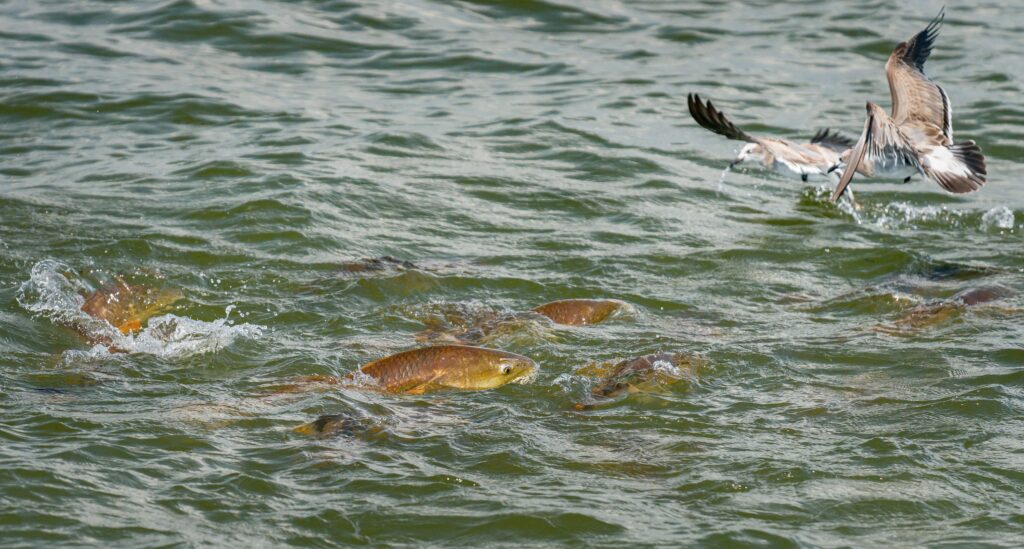
Louisiana’s Gulf menhaden fishery is the second largest fishery in the country, with harvests of nearly 1 billion pounds of these critical forage fish annually. And this comes at a cost. As TRCP recently reported, state-funded research shows that the two companies that harvest Gulf menhaden, also known as “pogies,” are catching and killing nearly 150 million non-target fish each year as bycatch, including 30,000 redfish and hundreds of thousands of other pogy predators like spotted seatrout (speckled trout), black drum, and jack crevalle, as well as 25-million-plus sand seatrout, commonly called white trout.
For Louisiana, this matters because redfish (Louisiana’s only saltwater gamefish, also known as red drum) and other sportfish aren’t just any fish — they’re a cornerstone of the state’s $3.7 billion recreational fishing economy. They bring in anglers, fuel guide services, and support local businesses. When redfish are lost as bycatch – especially breeding-size fish – Louisiana loses twice: in terms of the fish themselves and again in terms of lost economic opportunity.
Environmental research company LGL Ecological Research Associates conducted a two-part study during the 2024 pogy fishing season to examine: 1) What species (including red drum) are caught as bycatch in Louisiana’s menhaden reduction fishery, and 2) What happens to released bycatch—i.e. how many fish survive after being caught and released.
TRCP reported on the preliminary results of this work back in July, but now that we have the final results, the public and Louisiana decisionmakers have the data they’ve needed for years to determine how this industrial fishery truly impacts redfish populations in Sportsman’s Paradise, and which bycatch mitigation measures could be effective moving forward to help sustain healthy sportfish populations.

Key Study Findings
Here are some key takeaways of the full report:
- Total bycatch (i.e. non‐target species) for the fishery was estimated at 3.59 percent by weight – that’s within state limits but represents about 146 million fish unintentionally caught by the menhaden fishery in a single fishing season. This includes 86 total non-target species.
- “Retained bycatch,” which enters a vessel’s hold to be processed with the pogies, made up approximately 82 percent of the bycatch by weight. Top species in retained bycatch were Atlantic croaker, sand seatrout, spot, white shrimp, hardhead catfish, and gafftopsail catfish.
- For released bycatch, there were two main components: “rollover bycatch” (fish too large to enter a suction hose inside the purse net, which were then rolled out into the water at the end of the set) and “chute bycatch” (fish that passed into the hose but were then blocked by an excluder device and diverted into the water via a chute).
- Half of all sets made in 2024 were in less than 15 feet of water.
- Redfish bycatch was more likely to occur in sets made in 0-22 feet of water depth (76 percent of all sets made); deeper than that and redfish bycatch was reduced.
- Croaker, sand seatrout, spot, and white shrimp made up 84 percent of all retained bycatch. An estimated 240,000 speckled trout also were caught as retained bycatch, with an average size of 10 inches.
- Recreational speckled trout regulations prohibit harvesting any fish under 13 inches in Louisiana.
- Many different types of bycatch excluder devices were used between the 32 vessels operating in the fishery, with some much more effective than others at reducing the number of non-target fish sucked into the hose and destined for the chute or the hold.
Redfish bycatch was more likely to occur in net sets made in less than 22 feet of water depth.

Regarding redfish specifically:
- Nearly 45,000 redfish were caught as rollover and chute bycatch, and after survival experiments, nearly 22,000 breeding-size redfish were estimated to die during the season as a result of being caught.
- While 84 percent of redfish remaining in the net as rollover bycatch were estimated to survive, only 2 percent of redfish sucked into the hose and diverted to the chute survived.
- Another approximately 8,300 smaller redfish were caught as retained bycatch, likely all juveniles, all of which died as they ended up in the hold.
- Total redfish mortality (released + retained) was estimated at over 30,000 individuals for the season.
- The average redfish size in rollover bycatch was 37 inches, in chute bycatch 35 inches.
- That means these were nearly all fully mature fish. Recreational redfish regulations prohibit harvesting any fish over 27 inches to protect as many spawning-size redfish as possible.
- In the late summer through fall months, the likelihood of redfish bycatch increased noticeably, with consistently higher bycatch observed along central and eastern Louisiana, with redfish bycatch peaking from August through October.
- A full 45 to 50 percent of female redfish caught as bycatch in September and October were spawning (i.e., egg-laden and ready to reproduce).
In the late summer and fall, the likelihood of redfish bycatch increased noticeably.
Implications for Decisionmakers – And Louisiana’s Redfish Population
Here’s why Louisiana decisionmakers and anglers should care, and what could be done to reduce the menhaden fishery’s impacts on redfish populations:
- Bycatch excluder device design is important. This study underscores that the design of bycatch excluder devices—most importantly, hose cages that prevent larger, non-target fish in the net from experiencing trauma due to entering the suction hose—strongly influences how many mature redfish end up in the more dangerous chute component versus being excluded/rolled over the net while never leaving the water. Of course, handling after capture and before release also affects survival.
- Potential mitigation measure: Require standardized bycatch excluder devices that maximize rollover release and minimize chute mortality.
- Released bycatch mortality is non‐trivial. Even though many redfish caught as bycatch are released, for chute‐released individuals survival is extremely low (about 2 percent). For rollover, survival is far better. But because both methods are used, total mortality from released plus retained bycatch is sizable (approximately 30,000 redfish in 2024 alone). That’s a meaningful number, especially considering this happens each year.
- Potential mitigation measure: Address redfish retention and harvest by the menhaden fishery via current commercial regulations (redfish commercial harvest has technically been prohibited in the state for nearly 40 years).
- Where and when the fishery operates matters. The study showed that bycatch levels aren’t uniform: amounts vary greatly by time of year, by location, by vessel/plant, etc. for different species. This suggests there is potential to reduce harm to species like redfish by reducing pogy boat efforts in certain areas and at specific times.
- Potential mitigation measure: Explore locational/seasonal restrictions in hotspots where redfish bycatch has been shown to be highest, such as during the August to October redfish spawning season in central and eastern Louisiana, particularly in shallower, near-shore waters.
- Additional oversight can help. Louisiana already has some pogy regulations to address bycatch—no more than 5 percent of catch by weight for species other than menhaden and herring-like species, and buffer zones to reduce bycatch in shallow water—but clearly more could be done to evaluate ecosystem impacts moving forward.
- Potential mitigation measure: Continue monitoring bycatch in future fishing seasons (observer coverage and/or electronic monitoring) and update enforcement quality.


Bottom Line
- This study shows that bycatch (both retained and released) in Louisiana’s pogy fishery is a significant fraction of total catch, at more than 146 million fish annually.
- Redfish are one of the primary species caught as bycatch, and while many are released, survival depends heavily on how they are released (rollover vs. chute).
- Of those fish, many that are retained with menhaden in the hold haven’t ever spawned and never will, and many that are caught in the chute and eventually die are mature, and possibly actively spawning.
- Speckled trout caught by the fishery mainly end up in the hold, with over 240,000 mostly juvenile individuals retained annually by the fishery.
While recreational fishing accounts for most of the redfish harvest in Louisiana, bycatch from the industrial menhaden fishery still kills tens of thousands of redfish each year, along with millions of other fish including speckled trout, white trout, Atlantic croaker, and cownose rays. Unlike recreational harvest, these deaths produce no economic return for Louisiana – they’re simply waste. In addition, the industry is clearly commercially harvesting species that are either illegal to harvest commercially or are under regulations that don’t seem to apply to the menhaden fishery’s activities.
The science is clear: with better bycatch reduction gear and data-based locational/seasonal catch considerations, much of this loss could be avoided. By addressing menhaden bycatch from multiple possible angles, Louisiana can protect the sportfish central to its culture and economy, reduce unnecessary waste, and ensure our coastal ecosystems provide abundance for future generations of anglers.
More information about the ecological and recreational importance of Gulf menhaden is available on TRCP’s Forage Fish Recovery Page.
Banner image courtesy Pat Ford Photography


Excellent report. Please do everything possible to reduce the bi-catch for all the species not intended for harvest.