David-and-caribou
Do you have any thoughts on this post?
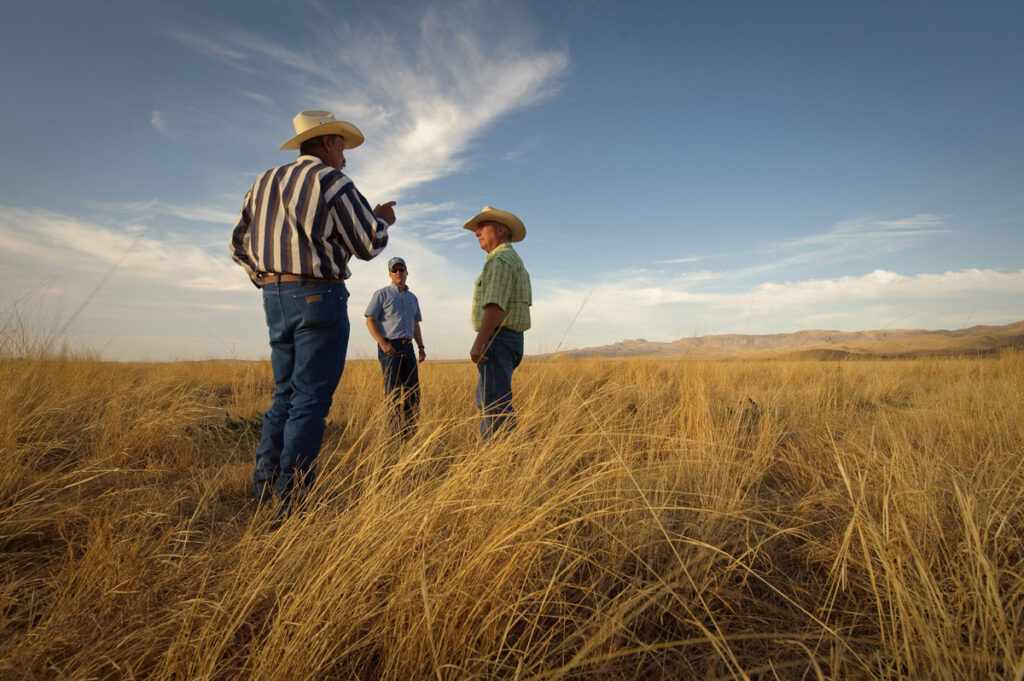
The Conservation Reserve Program (CRP) is one of the nation’s most important federal programs for supporting wildlife habitat. Introduced in the 1985 Farm Bill, the Conservation Reserve Program incentivizes landowners to put a portion of their land into conservation cover, particularly on acres that would be more productive as wildlife habitat than they are for crops. It is currently responsible for creating, maintaining, and enhancing nearly 27 million acres of habitat across the U.S. But due to lack of progress in passing a full, five-year Farm Bill, the program hasn’t had a policy update since 2018.
Thankfully, lawmakers from both sides of the aisle are showing their support for strengthening the CRP. On July 31st, Senators John Thune (R-S.D.), Amy Klobuchar (D-Minn.), Jerry Moran (R-Kan.), and Tina Smith (D-Minn.) introduced the CRP Improvement and Flexibility Act (S.2608).
The CRP Improvement and Flexibility Act would:
“The CRP Improvement and Flexibility Act is an excellent example of lawmakers working across the aisle and among multiple stakeholders to find practical solutions,” said TRCP’s director of private lands conservation Aaron Field. “We are grateful to Majority Leader Thune, Ranking Member Klobuchar, Senator Moran, and Senator Smith for their leadership and pragmatism on improving this critical program for hunters.”
“Ensuring that CRP continues to be an effective option for producers and landowners is critical to South Dakota’s agriculture industry,” said Senator John Thune (R-S.D.). “As a longtime supporter of CRP, I’m proud to lead this commonsense legislation that would help advance the multiple-use benefits of this conservation program, including wildlife habitat and livestock forage potential.”
“The Conservation Reserve Program helps equip our farmers with the tools to conserve and improve soil, water quality, and wildlife habitat,” said Senator Amy Klobuchar (D-Minn.). “This bipartisan legislation makes commonsense improvements to CRP that will strengthen conservation practices and landowner enrollment in this vital program.”
The Conservation Reserve Program has been one of the nation’s most important conservation programs for nearly 40 years. Many of the species we love to pursue find habitat in farm country thanks to the CRP. Without the CRP, pheasant numbers would plummet, the northern plains states would lose much of their best duck breeding habitat, sage grouse in the West would be at even greater risk, and brook trout would decline in Eastern headwaters. Put simply, without the CRP, millions of sportsmen and women would lose hunting and fishing opportunities across rural America.
Learn more about the Conservation Reserve Program and other Farm Bill conservation programs HERE.
Top photo by Anthony Hauck
Lake Pontchartrain was the picture of consistency for speckled trout catches throughout the spring and summer of 2025.
Generally, the hot trout bite in the eastern part of the massive brackish bay that creates New Orleans’ northern boundary peters out in early June and returns around mid-October when massive schools of white shrimp begin leaving brackish marshes.
Climbing water temperatures, longer days and the itch to make babies in saltier waters push trout into Lake Borgne and towards Chandeleur Sound for the summer. This year was different, however. Trout catches stayed consistent through the Fourth of July weekend.
One veteran Pontchartrain guide and avid angler reported he was having trouble finding trout inside Louisiana’s recently implemented 13- to 20-inch slot, not because the fish were too small to reach the bottom end but so many fish were pushing past the 20-inch mark. Louisiana’s trout regulations only allow two 20-plus inch long trout to be kept in a day.

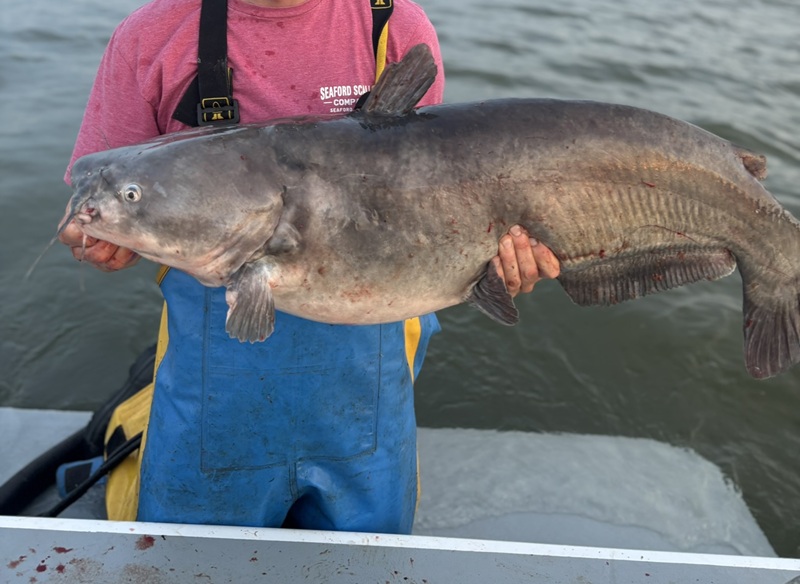
Lake Pontchartrain has always been a decent fishery, producing redfish, drum, sheepshead, big jack crevalle, and the occasional tarpon as well as a host of freshwater species like largemouth bass, panfish, and blue catfish in addition to the trout.
But, 50 years ago, after shell dredging operations had mined the majority of the lake’s extensive water-cleaning Rangia clam beds to make roads and concrete and poorly treated sewage was pumped into the lake from bordering cities, it seemed unlikely the lake and surrounding wetlands would one day be held in as high or higher regard as other well-known Louisiana trout producing ports like Grand Isle or Cocodrie.
Saltwater intrusion had killed off historic submerged grass beds that had long helped clean the water while providing vital fisheries habitat.
Lake Pontchartrain’s recovery can be traced back to 1989 to the creation of the Lake Pontchartrain Basin Foundation, now called the Pontchartrain Conservancy. A group of New Orleans-area citizens and scientists had enough of the constant poor water quality and loss of habitat that had plagued the lake for nearly a century. Throughout the 1990s and beyond, the Foundation’s “Save Our Lake” campaign became ubiquitous across the region with countless cars and trucks emblazoned with the simple and direct message on blue and white bumper stickers.
Shell-dredging operations were banned in 1990, allowing the mussels to begin a slow comeback. Hundreds of millions were invested in updating sewage treatment facilities, while dumping solid waste like tires and old appliances was curbed by increased enforcement and fines.
Saltwater intrusion from the ill-fated, manmade Mississippi River Gulf Outlet (MRGO), the culprit for much of the flooding in the New Orleans area during Hurricane Katrina, had also killed off many of the historic submerged grass beds that lined the lake and tens of thousands of acres of fresh and brackish marsh. That grass had long helped clean the water while providing vital fisheries habitat.
While some argue the super-salty waters coming up the lightly traveled and destructive ship channel improved speckled trout catches, the increased salinities also led to broad areas of low oxygen along the lake’s south shore while poisoning wetlands and cypress swamps throughout the broad basin.

The Conservancy’s work has been aided by a program it helped create in 2000. The Lake Pontchartrain Basin Restoration Program was first authorized by the Lake Pontchartrain Restoration Act, authored by then Congressman David Vitter. Administered by the Environmental Protection Agency, the program began making small-scale grants in 2002. Towns, parishes, advocacy groups, universities, and others capable of developing projects, science, and public education programs that improved the Pontchartrain Basin’s water quality, fish and wildlife habitat, and increased public access to healthy water and fisheries were all eligible to receive funding.
A 1995 comprehensive management plan and subsequent 2006 comprehensive habitat management plan have guided the decision-making for projects receiving funding from the program.
Of course, much has changed since 1995 in the Pontchartrain Basin, which ranges from southern Mississippi across lakes Maurepas, Pontchartrain and Borgne as well as the cypress swamps and coastal marshes east of the Mississippi River all the way to its delta.
The saltwater intrusion from the MRGO has been slowed by closure structures on either end of the channel, while new connections between the Mississippi River and adjacent marshes have opened south of New Orleans bringing in additional sediment and freshwater.
TRCP has been working with the region’s best water quality, habitat restoration, and fisheries management scientists since early 2024 to develop a new management plan for the basin.
Hurricane Katrina and other hurricanes and tropical storms exposed major weaknesses in storm protection levees and floodgates leading to more physical structures to protect communities. Growing communities between Baton Rouge and New Orleans and along Lake Pontchartrain’s Northshore have put pressure on sewage treatment facilities and aging septic systems and increased stormwater drainage. Also, invasive plants, fish, and snails have found their way into rivers, bayous and lakes across the region.
Recognizing the need to update the management plans and expand the restoration program, Louisiana Senator Bill Cassidy secured $53 million in 2021 to, in part, fund an update to the comprehensive management plan to reflect the changes in the Basin over the last 30 years. The Theodore Roosevelt Conservation Partnership has been working with the region’s best water quality, habitat restoration, and fisheries management scientists and experts since early 2024 to develop a new management plan. It’s set for completion in 2026 and will guide decisions to continue to develop the best projects, science, and community engagement needed to keep Lake Pontchartrain and adjacent waters healthy and productive into the future.
The success of Lake Pontchartrain’s restoration should be celebrated by all who live in South Louisiana and the entire region. The boats fishing the lake’s famous bridges or chasing birds diving on schools of white shrimp in the fall are a reminder of just how much progress has been made in the last 30-plus years. Hopefully, thanks to the hard work of a handful of elected officials, advocacy groups, and residents working to update the Pontchartrain Basin’s management plan, that progress will continue for the next 30 years and beyond.
(Note: This story originally appeared in the July 2025 issue of Louisiana Sportsman.)
All images courtesy Chris Macaluso
Memory is a weird thing. It helps us to not repeat mistakes from the past and enables us to recall some of our favorite times. You might remember your first-grade class pet’s name but forget your Netflix password four times in a month. There’s not much rhyme or reason to it.
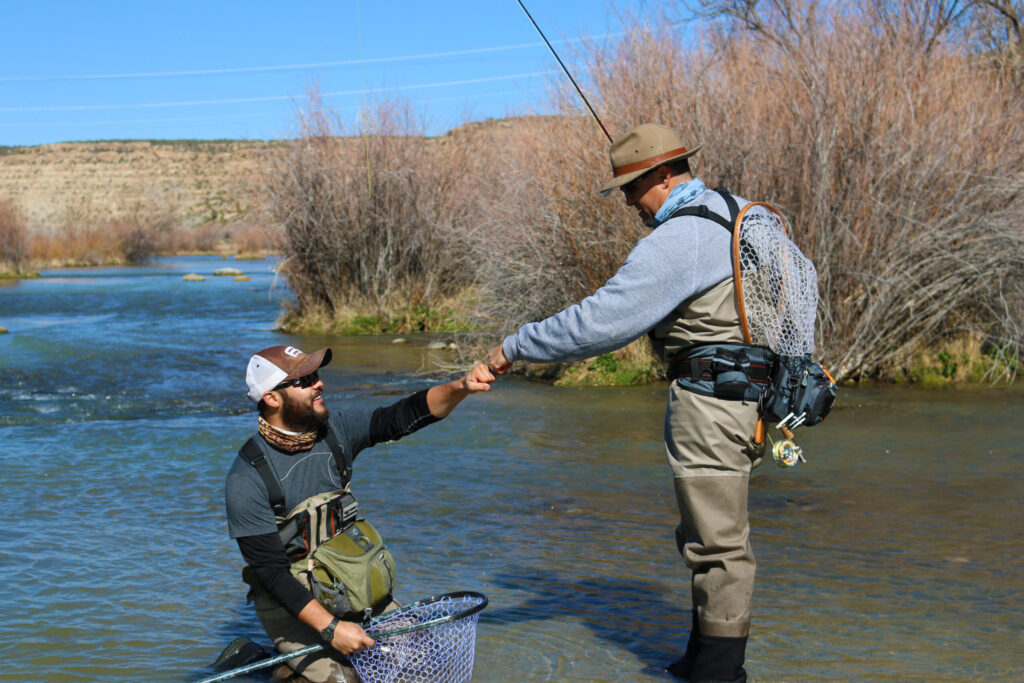
Some people talk about how they can remember the first fish they ever caught. I’m not one of those people — I couldn’t tell you what species it was or where I was when I caught it. However, I can tell you the first time I remember being jealous of a fish someone else caught. One of my friends, Winslow, hooked a bonnethead shark in Charleston Harbor, South Carolina (pictured below), and while I did catch some seatrout that day, it was the allure of Winslow’s shark that brought me back to fishing over and over again. So one thing I do know about memory is that when we learn to fish at a young age, we’ll never forget some of those early experiences – and they will help shape our values and interests.

Last summer, I was lucky enough to work as a fishing and kayaking camp counselor in Charleston and experience the joy of catching a fish for the first time again — this time from a new perspective. My main job was watching kids catch shrimps, minnows, and other small fish with nets and rods off the dock and taking them around in kayaks. What many of these kids learned was that all of these species play a key role in coastal habitats by serving as “forage” (a food source) for larger fish and wildlife.
“More than 90 percent of adult participation in hunting and fishing is directly related to active participation as a youth.“
What amazed me was that kids would come back each day with more excitement and knowledge about fishing and the ecosystem than the day before, and all with their own reasons. A full net of baby shrimps one day turned overnight into questions about osprey and the local food chain. One kid caught a stingray and had a ridiculous grin on his face for the rest of the camp week. Others who weren’t into catching fish were amazed by the dolphins that swam right up to our kayaks in Shem Creek.
According to data from the US Fish and Wildlife Service, more than 90 percent of adult participation in hunting and fishing is directly related to active participation as a youth. Kids that grow up with great outdoor memories tend to pursue those hobbies for the rest of their life, and taking care of our public lands, restoring our wetlands and fisheries, and ensuring access for hunting and angling will be of the types of issues that will be a priority for them.

Many of the marine waters that Southern and Eastern anglers grew up on are now struggling. The management of forage fish like menhaden has been hamstrung over the years due to the influence of industrial-scale reduction fisheries in the Gulf and on the Eastern Seaboard. Menhaden are a vital food source for numerous predators, including larger fish, marine mammals, and birds, and lower localized population numbers have led to ecological backsliding in areas like the Chesapeake Bay, which can impact fisheries in other Atlantic states, including South Carolina.
Industrial-scale removals of menhaden also have other negative impacts. A 2024 study on bycatch in the industrial Gulf menhaden fishery indicates that approximately 22,000 breeding-size redfish, tens of millions of non-target forage fish, and numerous other marine species were killed by the menhaden industry off Louisiana’s coast last year alone.
To effectively manage our coastal ecosystems, we need to have a two-pronged approach: ensuring that forage fish populations continue to improve through federal and state regulations and marine fisheries policies, and getting more young people outside with a rod in their hands to create future champions for our favorite waters.

Kids really don’t need much to have fun. They just need to get outside to experience fishing and hunting opportunities firsthand, and it’s our responsibility to give them that chance as often as we can. The simple memories that kids make from their outdoor experiences will ensure that as long as the next generation loves fishing, like we do, our waters will be left in much better hands.
It’s also our responsibility to guarantee healthy fish populations for that next generation of anglers. And one of the best ways to achieve that in Atlantic and Gulf waters is through protecting forage fish like menhaden.
Find more information about the ecological and recreational importance of menhaden, herring, and other forage fish and what we can do to support them on TRCP’s Forage Fish Recovery Page.
Austin Evans is TRCP’s 2025 marine fisheries intern.

First-of-its-kind tool identifies six million acres the Bureau of Land Management could advance for sale
onX and the Theodore Roosevelt Conservation Partnership today launched an interactive map that identifies lands deemed eligible for potential sale by the Bureau of Land Management. This map is the first publicly available, easy-to-use tool to inform both the public and policymakers about the locations of public land parcels that the federal government could advance for sale.
“Public lands, like those managed by the BLM, support 178.5 million outdoor recreation participants who rely on these landscapes to hunt, hike, fish, off-road, ski, climb, and bike,” said onX CEO Laura Orvidas. “The outdoor community cherishes these places, and has recently fought fiercely to keep them public. Yet the land disposal process has historically been opaque–often buried in hundreds of pages of government documents. We created this map with TRCP to bring transparency to the land disposal process, to inform outdoor enthusiasts of nearby parcels, and to encourage lawmakers to uphold existing policies that safeguard the public interest when considering any land sales.”
This map was developed using publicly available GIS data derived from 160 individual BLM Resource Management Plans in 17 western states. It reveals 6,086,900 acres of public land marked for potential sale.
“For the first time, the public and policymakers can engage with one map that spans most BLM planning areas, and see public land parcels eligible for sale in the context of other landmarks, like towns, roads, and adjoining public lands,” said Joel Pedersen, president and CEO of the Theodore Roosevelt Conservation Partnership. “TRCP is proud to partner with onX to share this valuable tool that shows specific locations of land that could be considered for sale like never before.”
The six million acres depicted in the map are not guaranteed to be sold, rather, they have been identified in BLM land use plans as eligible for potential disposal or sale. Identification of lands as eligible for disposal does not trigger immediate action, it means those parcels may be considered for sale if and when a proposal is advanced. Importantly, any future sale must go through a multi-step process that includes additional opportunities for public review and comment. By showing these parcels on a map, the public can more readily participate in any future public process.
Explore the map HERE.
Learn more about the BLM’s land disposal history and current process HERE.
Public lands need champions, and thankfully, several bipartisan members of Congress are taking the lead. Learn more about the Public Land Caucus HERE.

TRCP has partnered with Afuera Coffee Co. to further our commitment to conservation. $4 from each bag is donated to the TRCP, to help continue our efforts of safeguarding critical habitats, productive hunting grounds, and favorite fishing holes for future generations.
Learn More