TRCP’s “In the Arena” series highlights the individual voices of hunters and anglers who, as Theodore Roosevelt so famously said, strive valiantly in the worthy cause of conservation.
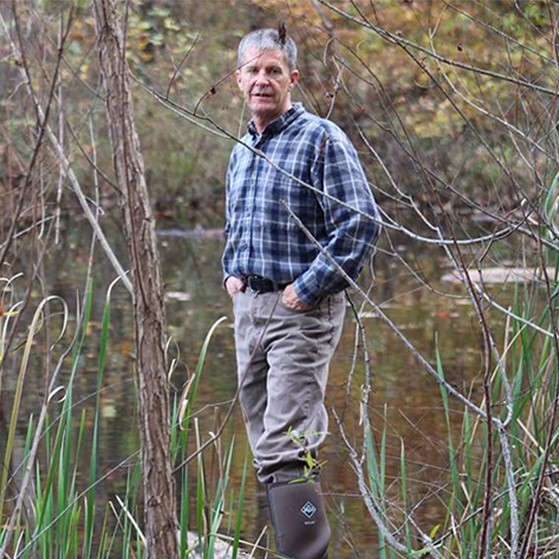
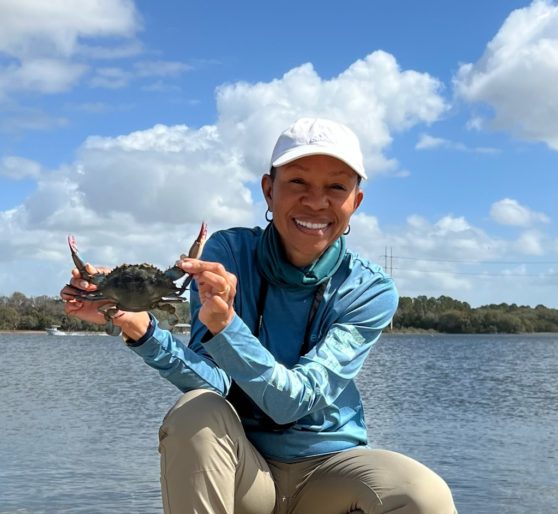
Dr. Carolyn Mahan
Hometown: State College, Pennsylvania
Occupation: Professor of Biology and Environmental Studies, Penn State Altoona
Conservation credentials: Dr. Carolyn Mahan has spent her professional career researching topics to improve conservation across America and the world. Currently, Dr. Mahan’s research interests include wildlife use of human-modified landscapes, management of public lands, and squirrel ecology. Her research has been widely published and cited in top science journals, and she currently serves on Pennsylvania governor Josh Shapiro’s Advisory Council for Conservation.
Dr. Mahan has researched wildlife around the globe but loves the diverse world of the Appalachian Mountains she calls home. Her education and research combined with passions for hunting and fishing make her a fantastic educator in the Penn State University system, as well as an invaluable expert when working with the oil and gas industry on conservation. Dr. Mahan lives a life that takes active steps toward a future where humans and wildlife can coexist.
Here is her story.
TRCP: How were you introduced to hunting, fishing, and the outdoors? Who introduced you?
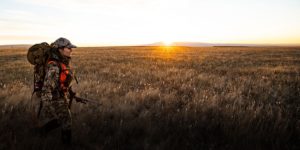
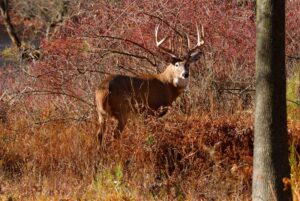
Dr. Mahan: I always loved nature, hiking, bird watching, and wildlife. However, my husband, Kurt Engstrom, introduced me to fishing and hunting while we were dating and both students at the University of Connecticut in the late 1980s. At first, I would just accompany him in the forest and watch wildlife. Gradually, I learned how to fish for bass and trout. Finally, once we moved to Pennsylvania, I began to hunt whitetail deer.

TRCP: Tell us about one of your most memorable outdoor adventures.
Dr. Mahan: I have had so many memorable experiences in nature locally, nationally, and internationally. However, a seemingly small natural event occurs every year on my back porch, and I treasure seeing it. In late March, a pair of Carolina wrens inevitably chooses my laundry apron, the pocket of my hunting coat, or my window box as a place to build their beautiful moss-covered, domed nest. This event is one of the first signs of spring for me and my family, and we watch the wren pair as they lay their four eggs, incubate them, and eventually fledge their babies. This annual event is an on-going sign that, perhaps, humans and wildlife can travel together into the future.
TRCP: If you could hunt or fish anywhere, where would it be and why?
Dr. Mahan: I would like to go on a pack trip on horses into the western backcountry to hunt for elk. I grew up riding horses, so this would combine things that I love. Fishing for Atlantic salmon in the UK or brook trout in Labrador would be amazing as well.
TRCP: How does conservation help enhance your outdoor life?
Dr. Mahan: My entire life is conservation. I am a professor who teaches courses in conservation to undergraduate students at Penn State, and I conduct research on conservation of all types of wildlife (native pollinators, breeding birds, carnivores, small mammals, and rare species) in human-modified landscapes such as oil and gas pipelines. So, every time that I am in the outdoors for work or play, I am thinking about conservation and how to create and restore landscapes where humans and wildlife can coexist.
TRCP: What are the major conservation challenges where you live?
Dr. Mahan: I used to think that habitat loss was the biggest threat to wildlife. Habitat loss is still a critical factor impacting wildlife, but we are learning to manage landscapes so that both humans and wildlife can occupy the landscape. In terms of drastic wildlife losses, the spread of infectious diseases caused, in part, by globalization, climate change, and human activities (e.g, game farming), is the biggest challenge. Infectious diseases and pathogens like Chronic Wasting Disease, White-nosed Syndrome, West Nile Virus, and Avian Malaria has caused sudden and drastic health threats to whitetail Deer, North American bats, ruffed grouse, and songbirds respectively. In addition, non-native species including Japanese knotweed, stilt grass, spotted lanternfly, hemlock woolly adelgid, and emerald ash borer have changed the species composition of Pennsylvania forests over the past few decades.
TRCP: Why is it important to you to be involved in conservation?
Dr. Mahan: Aldo Leopold wrote that “one of the penalties of an ecological education is that one lives alone in a world of wounds.” I feel that quote everyday as I see the changes in wildlife populations and forest composition that I previously mentioned, and sadly, many of these negative changes are unnoticed by the general public. People can make a difference, however, through their actions. Actions may include removing non-native species, planting a native tree, growing native forbs, teaching others to cherish nature, being conscientious about what you purchase, and assisting in wildlife management.

TRCP: Why should conservation matter to the next generation of hunters and anglers?
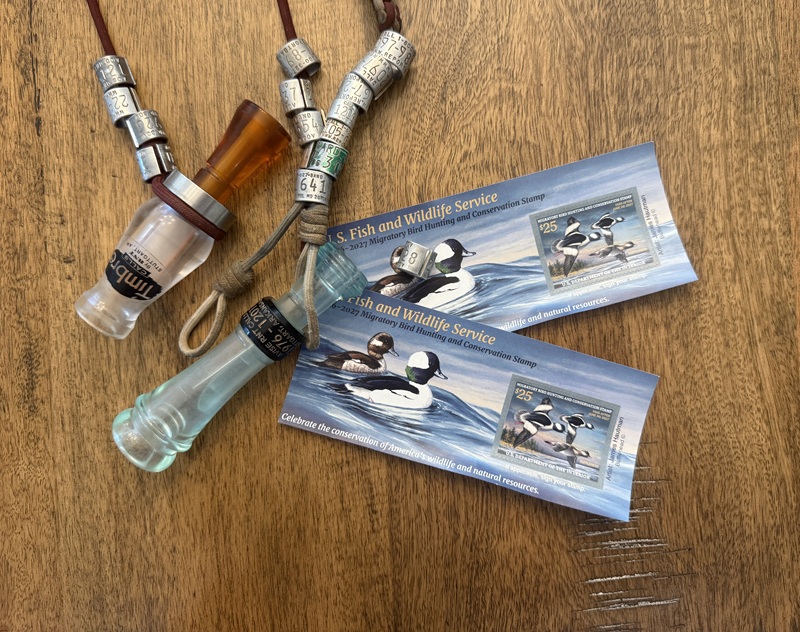
Dr. Mahan: In the United States, conservation is funded at the governmental level primarily by taxes on hunting and fishing equipment and hunting/fishing license sales. If you are a hunter or an angler, your money is used for conservation. Newcomers to these past times should learn about ways that their funds are used and assist state officials in explaining the importance of hunters and anglers in their role as conservationists. I also hope that hunters and anglers will focus on more than just the species that they harvest. Conservationists should care about all species of native wildlife because healthy, functioning ecosystems are critical for sustainable hunting and fishing.
Photo credits: Dr. Carolyn Mahan
The TRCP is your resource for all things conservation. In our weekly Roosevelt Report, you’ll receive the latest news on emerging habitat threats, legislation and proposals on the move, public land access solutions we’re spearheading, and opportunities for hunters and anglers to take action. Sign up now.


As a Penn State graduate of the University’s Environmental Resource Management Program, this “In the Arena” feature caught my attention big time. I can relate with Dr Mahan’s appreciation for even the smallest joys that nature brings to us every day in our own back yards. My wife and I marvel every day at the hummingbirds at our feeder just feet from our kitchen window.
We too have wrens and bluebirds returning every year to our property and watch them build their nests and raise their young.
As a lifelong hunter and fisherman, I appreciate the efforts of Dr Mahan in regards to promoting conservation and sustainable development. My Son and Grandson are committed to carrying on the hunting and fishing family tradition.
Thank you TRCP for sharing Dr Mahan’s story. TR would be proud of her and the other folks who are “In the Arena”!