Mussels in box-Credit Jim Kauffman-800 crop
Do you have any thoughts on this post?
The Louisiana Wildlife and Fisheries Commission (LWFC) voted 4-3 today to move forward with a Notice of Intent (NOI) that could allow industrial pogy boats to again fish within a quarter-mile of most Louisiana beaches – eliminating a broader half-mile buffer zone that the industry agreed to in 2024 after negotiations with recreational angling and conservation groups, LWFC, and the Louisiana Department of Wildlife and Fisheries.
Despite overwhelming public opposition – including testimony, written comments, and letters from nearly 200 Louisiana-based and national conservation organizations and fishing tackle companies urging the LWFC to keep industrial fishing for pogies – also called menhaden – at least ½-mile off Louisiana’s coastline, the LWFC sided with the two foreign-controlled menhaden companies operating in the state.
“Today’s decision is extremely disappointing for anglers, conservationists, and those who care about Louisiana’s coastal ecosystems and habitat,” said Chris Macaluso, director of fisheries for the Theodore Roosevelt Conservation Partnership. “In 2024, anglers, conservationists, and the menhaden industry reached a compromise to establish modest protections for Louisiana’s shallow coastal waters by setting a half-mile buffer off most Louisiana beaches. What happened today is nothing less than the industry and their political allies backing out of that deal.”
Commission Chairman Kevin Sagrera of Abbeville, La. – where Canadian-owned Omega Protein owns one of its two Gulf-based processing plants – instructed Louisiana Department of Wildlife and Fisheries staff in October to draw maps that reduced the ½-mile buffers to ¼-mile across most of the coast at the behest of the industry. The other industrial menhaden company operating in the Gulf is South African-controlled Daybrook Fisheries, which runs a processing plant in Empire, La.
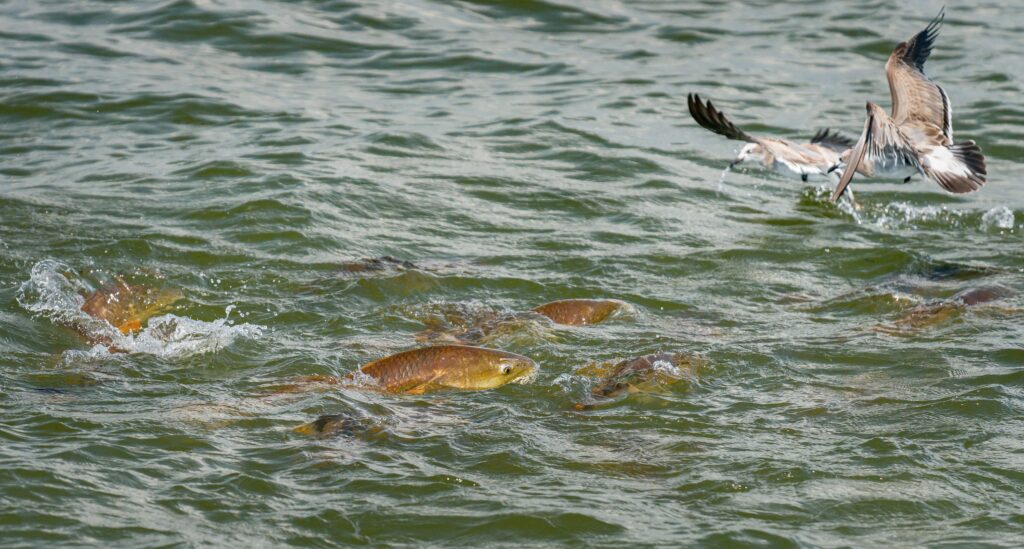
The ½-mile buffers were enacted prior to the 2024 menhaden fishing season after two massive fish kill events were caused by the industry’s boats, as well as net tears in 2022 and 2023, that resulted in wasting millions of dead pogies, redfish, croakers, and other fish that washed up on Louisiana beaches. Menhaden reduction vessels draft around 10 feet, but will now again be permitted to fish in water as shallow as 5 feet if the NOI is ultimately approved in spring 2026.
“What happened today not only undermines public trust in our state’s ability to conservatively manage its fisheries but will ultimately result in harm to fragile coastal habitats and fish like redfish and speckled trout, whose populations have already declined over the past decade.”
–
Chris Macaluso, director of fisheries for the Theodore Roosevelt Conservation Partnership
The Theodore Roosevelt Conservation Partnership analyzed menhaden industry-related fish kill and spill information from 2024 and determined that the estimated number of fish spilled was reduced by 74 percent after the ½-mile buffer was instituted. Menhaden harvest data from NOAA Fisheries database also revealed that – despite industry claims that the buffers were resulting in a loss of jobs, profits, and fewer fish harvested – 2024 harvest levels were similar to levels during the 2021 and 2014 fishing seasons and that the dockside value of the Gulf menhaden harvest increased by a full $60 million from 2021-2024.
A 2024 study that thoroughly examined bycatch associated with the Gulf industrial menhaden fishery showed that more than 140 million non-target fish were killed along with menhaden by industrial vessels that year alone, including 22,000 breeding-size redfish (which are illegal to harvest by recreational anglers), 240,000 speckled trout, more than 80 million croaker, 25 million white trout, 5.5 million white shrimp as well as millions of other species like spot, black drum, catfish, sharks, and rays. An additional 8,000 smaller redfish, Louisiana’s only saltwater gamefish, were killed and along with menhaden reduced by the industry into fish oil, fish meal, and other industrial products. The 2024 study also showed that bycatch of speckled trout, redfish, and other species increased in net sets made in water shallower than 22 feet deep.
The LWFC was set to approve a 1-mile buffer coastwide in early 2024 after extensive public outcry about the millions of dead fish spoiling on Louisiana’s beaches in the previous two seasons. That decision was delayed by Louisiana Governor Jeff Landry’s administration, which eventually insisted both recreational fishing and conservation advocates, along with the menhaden industry, accept a ½-mile buffer as a compromise.
The vote to reduce the current ½-mile buffer will include a 60-day public comment period to begin on December 19 and conclude on January 23, 2026. Should the LWFC give final approval to the NOI after the comment period, the Louisiana Legislature has the option to conduct an oversight hearing of the decision and could remand the decision back to LWFC for changes, if deemed necessary.
More information about the broad importance of menhaden is available on TRCP’s Forage Fish Recovery Page
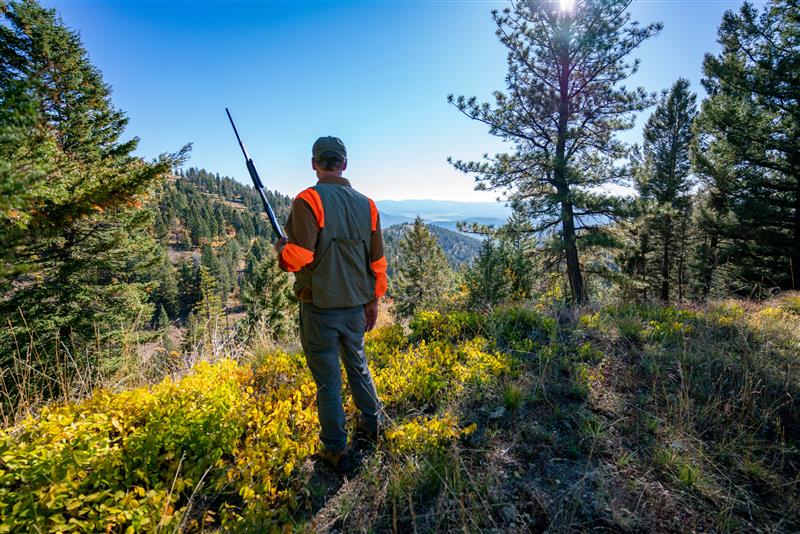
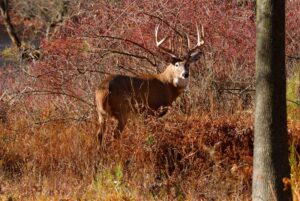
“If you sit here long enough, and quiet enough, a deer will walk by.”
That advice, delivered by my dad at the start of my very first hunt, still bounces around in my skull every time I go out, and I haven’t proved him wrong yet.
I’ve looked forward to every deer season since then, but this one already stands out as a season of firsts. From the opportunity to guide my daughter through her first morning in the woods to now navigating a new CWD management zone, I’ll be seeing familiar country in a different light – and feeling a deeper sense of responsibility for what’s ahead.
My first hunting experience was for white-tailed deer in western Minnesota, and I have repeated that experience for almost 25 years now, almost exclusively within a 20-mile radius of where I’m sitting right now. By the time I was old enough to go along, deer were the only thing my dad hunted. Losing a great dog and access to a few favorite ponds had ended his interest in duck hunting. Ruffed grouse numbers weren’t what they used to be, and “No Trespassing” signs had gotten a lot more common. But he still hunted deer, so I had my entry point.
In those first years, deer populations were down. Rifle hunters could choose to hunt for two days on opening weekend or three days the following, and nobody I knew hunted with a bow. Either-sex tags were only available via lottery. As you can imagine, we didn’t let forkhorn bucks walk by back then.
I’m a public land bird hunter, but I hunt deer on private land. I’m lucky enough to have good access to decent deer hunting, and I figure that I don’t need to compete with the people who don’t, especially when, for many hunters, deer season is their only chance to get out.
For the last five years I’ve taken it a little further and limited myself to hunting deer on my own property, within a couple hundred yards of my house. I’ve got about 15 acres of woods and swamp, and there’s decent deer traffic as they move from bedding in the swamp to feeding in the neighbor’s’ corn and soybean fields. After a few years on a ladder stand, I built an elevated box stand, 6’x8’ with a roof and a good staircase. I built it big (and safe) so I could bring my kids along, but I can’t say it bothers me one bit to have a windbreak and a spot to set my coffee cup on cold mornings. I know it’s not modern to have one, fixed stand location that you hunt in any wind direction, but I’ve always wanted to replicate the one I “helped” my dad and uncle build when I was a kid, and I rarely sit there without having deer go by, so I’m sticking with it for now.


I get a ton of satisfaction from that stand. It’s on my land, I built it myself, and the deer I see are there, at least partially, because of my own chainsaw and shovel time. When I bought the property, it was heavily invaded by common buckthorn. Not only does buckthorn limit the growth of native plants that deer prefer, having a dense stand of thorny shrubs really hurt my kids’ willingness to play in the woods. I’ve spent the last five years using a combination of chainsaw time, herbicides, and targeted goat browsing to knock it back, and I’m making good progress. It’s one of those battles that might be unwinnable in the long run, but one I’m going to keep fighting.


This year is one of at least two firsts. After a quarter century of hunting on my own and for myself, this year my primary goal is supporting my 11-year-old daughter’s first deer hunt. She’s a good shot, has spent time with me in the deer stand before, and has done a little squirrel hunting, but I was surprised when she told me she wanted to hunt deer this year. She passed her hunter safety training with flying colors and is an awful lot more responsible than I was when I started hunting, so we’re going to give it a go.

The second first is a lot less exciting. During the 2024 season, a wild deer harvested in the neighboring permit area, maybe 25 miles northwest, tested positive for Chronic Wasting Disease, or CWD, which means I’m now hunting in a “CWD Surveillance” unit. I’ve been working on federal policy related to CWD for a few years now, so I understand the issue a lot better than I would otherwise, but I must admit that it has been nice to not deal with it here at home.
Both personally and professionally, I’ve tried not to be too prescriptive on how I ask other hunters to deal with CWD. There are too many variables, personal motivations, and constraints for me to try to tell someone exactly what they should do. There are definitely best practices out there though, and I think the least we can do as hunters is learn about this issue and avoid being part of the problem. Mainly, hunters should know and follow the regulations, even if it’s inconvenient. In my case, I’ve been impressed with the clarity and amount of information that the Minnesota Department of Natural Resources has available for hunters like me dealing with CWD for the first time.
CWD doesn’t move quickly on its own, but it can cover large distances if humans move deer around. For a long time, hunters have focused on the role that captive cervid operations play in moving potentially infected deer long distances and across state lines. That’s valid criticism, and the practice needs to stop, but hunters also need to make sure we don’t compound the problem. For me, that means any deer we take stays close to home. That’s easy for us, as we typically do our own processing, but I am getting a little tired of the “just ok” smoked sausage I tend to end up with, so we may be engaging a local professional for at least one deer this year.


Hunter participation in CWD testing is a little more complicated than what’s in the regulations book. Testing will only be mandatory if I harvest a deer during the opening weekend of our firearms deer season, but I intend to have every deer we harvest tested this year. Where I hunt, the odds of harvesting a CWD-positive deer are probably very low, so I would personally be comfortable going without testing from a food-safety perspective. But testing results here will determine how deer biologists and managers respond to CWD in my area. The better data these professionals have, the more likely they are to keep prevalence at low or even zero levels.
I have a biology degree, but I was always a lot more interested in ecology than anatomy, so digging lymph nodes out of a deer head and mailing them in for testing doesn’t really appeal to me. I’ve watched the process done at a check station in Nebraska once, and attended a demonstration by the Minnesota DNR last fall, but, if I’m honest, I didn’t pay nearly as much attention as I should have. I was a lot more interested in seeing how a professional butcher broke down a deer than I was in learning how CWD testing was done.

Thankfully, there will be a limited number of staffed check stations nearby, although they’re only open for part of the season. Minnesota DNR also partners with taxidermists, who will remove samples and submit them for testing for a fee. Otherwise, the website says I can make an appointment with my local DNR biologist to get some help. That sounds like the most interesting option and would give me an excuse to meet a local biologist, but I imagine they will be busy. I intend to use one of those routes for the first deer or two and ask a lot of questions. After that I’m hoping I’ll feel competent enough to pull my own samples moving forward.
Those who really care about the future of deer hunting and want to do more have options too. One of the most important is finding ways to make sure that decision-makers, whether in your state or at the federal level, know how important wild deer and wild deer hunting are to you. Let them know that you value quality deer hunting, and that federal and state governments should value it too. Right now, wildlife management in general, and CWD in particular, are not getting the attention and funding they deserve. Without hunters speaking up, they never will.
I can’t wait for the season to come, and by the time anybody reads this, it probably has. It will be a season of firsts for me – some exciting, some challenging – but each one a reminder of why hunting matters and what’s at stake. I’m 100% certain the positives will far outweigh the negatives, and I’ll do everything I can to make sure that when my daughter’s 25th deer season rolls around, it’s even better than her first.

This new TRCP series shares the personal deer hunting stories of three staff members while exploring the practices aimed at addressing the spread of chronic wasting disease. This season, we invite you to follow along and take part in preserving what we love most about deer hunting.

As deer seasons open across the country, hunters are packing gear, checking maps, and preparing for the moments that define another fall outdoors. But today’s deer hunters face new challenges – chief among them, the spread of Chronic Wasting Disease (CWD), a 100-percent fatal neurodegenerative wildlife disease that affects members of the deer family. While more and more hunters are finding CWD in their backyards, it remains a source of confusion for many.
From pre-season prep and regulation changes to lessons learned in the woods and around deer camp, Deer Season – Hunting and CWD will show how everyday hunters are part of the solution. Along the way, you’ll find tips, resources, and reflections that tie together our love of the hunt with our shared responsibility to keep deer herds healthy for future generations.
TRCP’s “In the Arena” series highlights the individual voices of hunters and anglers who, as Theodore Roosevelt so famously said, strive valiantly in the worthy cause of conservation.
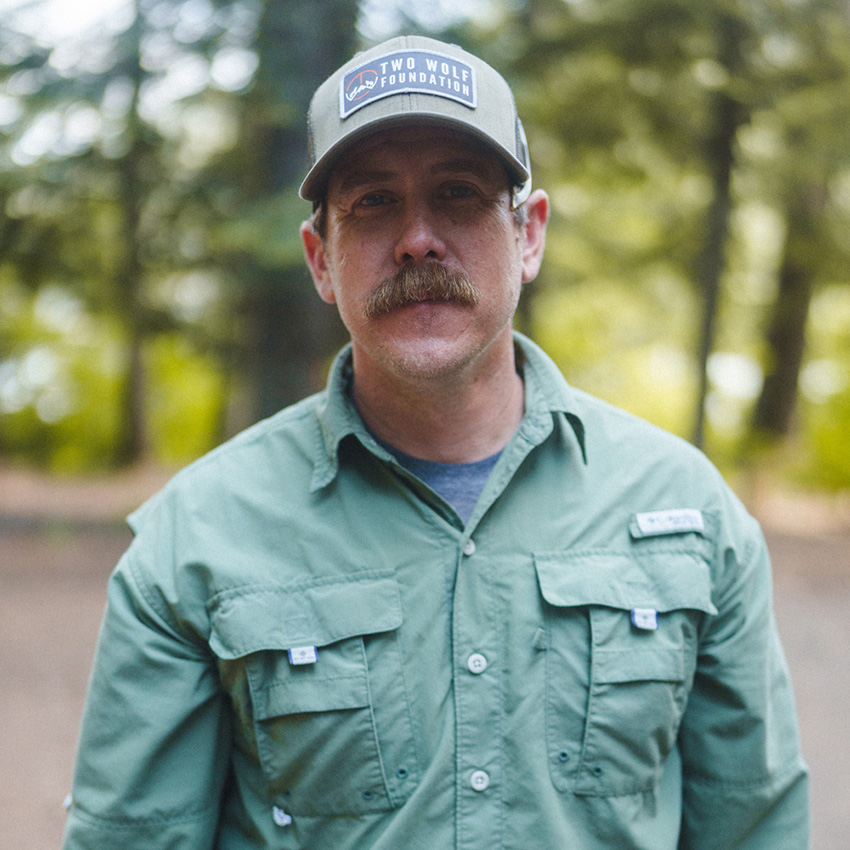
Saravanakumar “Sav” Sankaran
The son of immigrants, Sav Sankaran was introduced to hunting and fishing by a friend’s family while growing up in Pennsylvania. These early experiences set the foundation for a life of chasing trout and birds with good friends behind good dogs. Working for over a decade in the outdoor retail industry, Sankaran has the expertise and passion to be a loud and persistent advocate for conservation and strives to make the outdoors a more welcoming place for all.
Here is his story.
TRCP: How were you introduced to hunting, fishing, and the outdoors? Who introduced you?
Sav Sankaran: Despite growing up in an immigrant family with no direct outdoor mentors, I was lucky enough to have been introduced to the outdoors by a childhood friend and his dad, who included me in their adventures fishing for brook trout and hunting ruffed grouse and deer in Pennsylvania.
Those experiences were the genesis of my deep-rooted belief in creating outdoor experiences for people who may otherwise not have those opportunities.
The first time I walked a grouse cover in the Bald Eagle valley in central Pennsylvania, I was enamored with all the sights, sounds, and smells of the autumnal Allegheny woods. On that first hunt, a bird wild flushed and scared the daylights out of me, but I caught a glimpse as it disappeared, and I was hooked. I connected in that moment with the place I called home in a way I had never experienced and have found passion and purpose in the outdoors ever since.

TRCP: Tell us about one of your most memorable outdoor adventures.
Sav Sankaran: In 2023, with the support of TRCP, my dear friend and fellow outdoor inclusion advocate Durrell Smith and I drove 2,500 miles across the country with our dogs to explore and hunt the Owyhee in eastern Oregon. To see one of the wildest and most remote areas in the Lower 48 was an incredible experience, and to top it off, my dog, Chai, who was just over a year old at the time, pointed and retrieved her first wild birds—chukar—on that trip!
I made the trip with trepidation because of Chai’s relative inexperience and set my expectations low. If she could find her legs and stay out of the way of the more experienced dogs, I would have considered the trip a success. To my surprise and delight, she handled like a dream and loved every minute of it. We were walking the canyon rim above camp, and I saw one of our companions waving me over towards him and spied his German Shorthair on point. With little to no cues from me, Chai immediately backed the other dog, and they worked in tandem to relocate when the birds started to run. Before I knew what was happening, the flush came, I instinctively shouldered, shot, and dropped a double! Having done little to no work on retrieving yet, I didn’t expect Chai to know what to do next, but she immediately located and retrieved both birds to hand. I could not have asked for a better experience for her first wild birds, and it’s a memory I will treasure forever.

TRCP: If you could hunt or fish anywhere, where would it be and why?
Sav Sankaran: As a grouse hunter at heart, my dream is to hunt all the North American grouse species and experience the variety of habitats and ecosystems they reside in. What cooler way would there be to see the country and gain a greater appreciation for the many species that I already love?
TRCP: How does conservation help enhance your outdoor life?
Sav Sankaran: So many of the environments in which I have had my most impactful outdoor experiences have been public lands that organizations like TRCP help support. Without robust support of conservation of public lands, folks like me would have a dearth of recreation opportunities.
TRCP: What are the major conservation challenges where you live?
Sav Sankaran: Unregulated development, habitat loss, and erosion are all huge conservation issues in Southern Appalachia. We are also a community that continues to recover from the devastating economic and ecological damage of Hurricane Helene, which has introduced a variety of challenges that compound the existing ones.

TRCP: Why is it important to you to be involved in conservation?
Sav Sankaran: As the beneficiary of the devoted work of conservationists to preserve and protect the landscapes I hold dear, I feel a responsibility to continue that work, and to ensure that those who feel othered or alienated by the outdoor community feel welcome. The future of public lands depends on a diverse set of stakeholders!
TRCP: Why should conservation matter to the next generation of hunters and anglers?
Sav Sankaran: Public lands and programs are under threat on a variety of fronts, there has never been a more important time to be a loud and persistent advocate for conservation! I also believe that a sustainable future for the outdoors relies on an inclusive, diverse set of outdoor advocates.
Photo credits: Sav Sankaran and Brian Grossenbacher
The TRCP is your resource for all things conservation. In our weekly Roosevelt Report, you’ll receive the latest news on emerging habitat threats, legislation and proposals on the move, public land access solutions we’re spearheading, and opportunities for hunters and anglers to take action. Sign up now.
Despite a 2025 stock assessment indicating that Atlantic menhaden biomass is one-third lower than previously estimated – and an immediate need to cut the coastwide menhaden quota by more than 50 percent to support striped bass rebuilding – the Menhaden Management Board of the Atlantic States Marine Fisheries Commission voted today to reduce 2026 commercial catch by only 20 percent. The decision, which will likely prevent striped bass and other predators largely reliant on menhaden like bluefish, weakfish, spiny dogfish, and ospreys from having sufficient forage, was a disappointment for conservation and recreational angling organizations.
“Rebuilding the Atlantic striped bass population has always involved more than just regulating striped bass harvest. It’s also about ensuring that enough of their key food source, Atlantic menhaden, remains available in the water,” said Chris Macaluso, director of the Center for Fisheries for the Theodore Roosevelt Conservation Partnership. “The Menhaden Management Board’s decision to adopt only a 20 percent reduction in menhaden harvest, despite the science and input from ASMFC’s own scientists who highlighted the risks, makes it more challenging to achieve striped bass recovery by 2029. This step falls short of fully advancing more than a decade of progress toward ecosystem-based management and undermines public trust in the process.”
Three years ago, the Menhaden Management Board voted to increase the Atlantic menhaden catch limits for the 2023-2025 fishing seasons when the best available science indicated it was warranted.
The Board’s decision, made at the agency’s annual meeting in Delaware, ignores its own management framework based on “ecological reference points” (ERPs) — clear, science-based limits that tie menhaden harvest directly to predator health – and new estimates that show there are 37 percent fewer menhaden off the Atlantic coast than previously estimated. The Board also declined to vote for additional coastwide menhaden quota reductions beyond the 2026 fishing season, dodging additional quota cuts for 2027 and 2028 that could have collectively reached an ERP-based reduction that the recreational angling community called for after three years. The Board instead favored revisiting the issue in 2026 to determine if additional reductions are needed.
Notably, three years ago the Menhaden Management Board voted to increase the Atlantic menhaden total allowable catch for the 2023-2025 fishing seasons when the best available science indicated it was warranted. However, now that the best science indicates a reduction in catch is needed, the board has declined to reduce the catch to align with the ecosystem-based management model.
In early October, the ASMFC released its 2025 Atlantic menhaden stock assessment update, which indicated that the coastwide menhaden biomass is lower than previously estimated and suggested that slashing the coastwide catch limit by more than half would be necessary to ensure sufficient forage for rebuilding populations of striped bass. The Board’s decision today is not expected to achieve the standard 50/50 probability of not exceeding the ERP fishing mortality target – the precautionary approach that would dictate risk-tolerant, science-based management – and instead results in a 100 percent chance of exceeding the target in 2026.
“Today, the Menhaden Management Board chose to abandon ecosystem-based management and will be leaving less menhaden in the water to fuel our coastal ecosystems and sportfishing economies,” said Ted Venker, conservation director for the Coastal Conservation Association.
Unlike traditional single-species models that only measure the health of one species like menhaden, ERPs explicitly weigh the tradeoffs between menhaden harvest and effects on predator populations — in this case, most notably striped bass, also known as rockfish.
TRCP and partners successfully advocated for ERPs to be considered in menhaden management starting in 2020. The expectation of all involved in the process was that this methodology would drive future management decisions, even though following ERPs is not mandated for the ASMFC.
“We will continue working with the ASMFC, anglers, and conservationists to ensure that menhaden harvest reductions go beyond 20 percent and align with the ecosystem’s needs and the board’s stated commitments,” Macaluso said.
The Menhaden Management Board also voted today to initiate an addendum to specifically address Chesapeake Bay Management, which will develop options for quota periods which distribute menhaden removals more evenly throughout the fishing season, as well as options to reduce the Chesapeake Bay Reduction Fishing Cap ranging from status quo to a 50 percent decrease. This process could yield significant benefits to the Bay ecosystem, which has faced multiple concerns in recent years, including osprey breeding failures due to chick starvation in many parts of the Bay.
More information about the broad importance of Atlantic menhaden is available on TRCP’s Forage Fish Recovery Page.
Banner image courtesy David Mangum
TRCP has partnered with Afuera Coffee Co. to further our commitment to conservation. $4 from each bag is donated to the TRCP, to help continue our efforts of safeguarding critical habitats, productive hunting grounds, and favorite fishing holes for future generations.
Learn More