Tiny Fish, Mighty Purpose

How baitfish overharvest hurts sportfishing

Learn More Donate

If you want great sportfishing, you need healthy forage fish

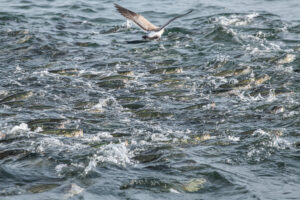
Forage fish, commonly referred to as bait fish or prey fish, are smaller, schooling ocean species that typically feed on plankton and are preyed on by larger fish, marine mammals, and seabirds. These fishes include menhaden (also called pogies or bunker), herrings, sardines, shad, and anchovies, with smaller squid species also being important species that serve as food, or “forage,” and provide a necessary foundation for healthy ecosystems. An abundance of forage species is critical to effectively transfer energy from plankton to much larger fish and wildlife higher in the food chain.

Like other small but critically important forage fish, menhaden and herring play a central role in marine food webs. These tiny, oily baitfish are an essential food source for some of the most economically important sportfish: striped bass, redfish, bluefin tuna, bluefish, speckled trout, weakfish, tarpon, summer flounder, and sharks. Whales, dolphins, ospreys, and other marine species also consume these forage fish in large quantities.

But not all forage fish are managed with consideration for their vital role in coastal ecosystems.

In fact, commercial harvest of Atlantic and Gulf menhaden has increased to meet the demand of what’s called a “reduction fishery,” which reduces billions of menhaden into livestock feed, fish oil, fish meal, fertilizers, cosmetics, and other products. More menhaden are commercially harvested each year than any other fish in the lower 48 states—more than a billion pounds are caught per year on the Atlantic and Gulf coasts. 

Atlantic herring are also netted by the millions, mostly to be sold as lobster trap bait rather than being left as food for larger fish and wildlife, or used as bait for low-impact recreational fishing. The mass removal of these species puts predators at risk and undermines the health of marine ecosystems.

This is why sportsmen and sportswomen are calling for regional fisheries managers to change their approach to managing forage fish like menhaden and herring.

Fish of Many Names

gulf menhaden Gulf menhaden
Atlantic Menhaden Brevoortia tyrannus bunker, mossbunker, fatback, bugfish, shiners
Gulf Menhaden Brevoortia patronus pogies, shad
Atlantic Herring Clupea harengus sea herring, sardines, brits
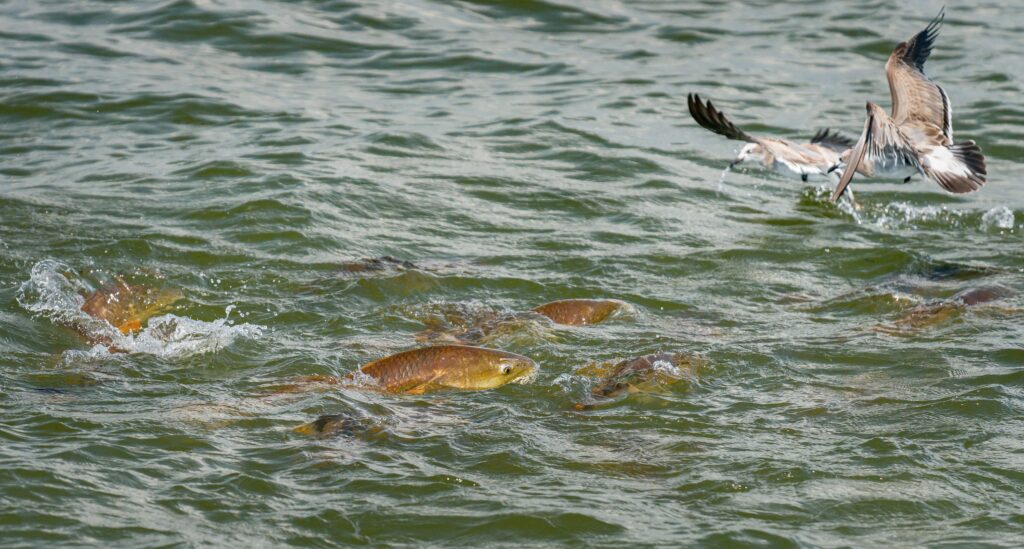
  • <b>Redfish</b> are one of many sportfish that rely on menhaden, which make up 20 percent of their diet in the Gulf of Mexico. Photo credit: David Mangum
    Redfish are one of many sportfish that rely on menhaden, which make up 20 percent of their diet in the Gulf of Mexico. Photo credit: David Mangum
  • <b>Striped bass</b> feed on menhaden and herring; menhaden reduction fishing has been shown to contribute to a nearly 30-percent decline in their coastwide population. Photo courtesy of Sergio Diaz
    Striped bass feed on menhaden and herring; menhaden reduction fishing has been shown to contribute to a nearly 30-percent decline in their coastwide population. Photo courtesy of Sergio Diaz
  • <b>Humpback whales</b> have returned to New York waters in the last few years, feeding on nearshore menhaden schools after the state banned purse seine fishing. Photo courtesy of Sutton Lynch
    Humpback whales have returned to New York waters in the last few years, feeding on nearshore menhaden schools after the state banned purse seine fishing. Photo courtesy of Sutton Lynch
  • Atlantic herring provide a key food source for <b>bluefin tuna</b> (shown), striped bass, cod, and many fish and wildlife species.
    Atlantic herring provide a key food source for bluefin tuna (shown), striped bass, cod, and many fish and wildlife species.
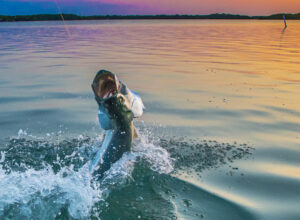
  • <b>Tarpon</b>, one of sportfishing’s greatest prizes, feed on larger menhaden – which are commonly used for bait. Photo credit: Pat Ford Photography
    Tarpon, one of sportfishing’s greatest prizes, feed on larger menhaden – which are commonly used for bait. Photo credit: Pat Ford Photography
  • <b>Osprey</b> nests in parts of the Chesapeake Bay failed at the highest rates ever recorded in recent years, which may be due to a lack of menhaden near nesting areas. 
    Osprey nests in parts of the Chesapeake Bay failed at the highest rates ever recorded in recent years, which may be due to a lack of menhaden near nesting areas. 

Serving A Larger Purpose To The Ecosystem

If nothing changes, excessive removal of these important forage fish can damage our coastal ecosystems and harm America’s outdoor recreation economy. Here’s how leaving more forage fish in the water for predators would benefit anglers and communities that rely on recreational fishing.


Where We Work

The TRCP has partnered with other leading voices in the recreational fishing sector—including the American Sportfishing Association, Coastal Conservation Association, National Marine Manufacturers Association, Bonefish & Tarpon Trust, and others—to encourage fisheries managers to leave more forage fish in the water for gamefish and protect sensitive ecosystems from industrial fishing wherever this practice is still taking place. Click on an area of focus to see our most recent efforts and get involved.

  • Atlantic Coast

    After years of advocacy from anglers and recreational fishing business leaders, the Atlantic States Marine Fisheries Commission voted unanimously in August 2020 to implement “ecological reference points” (ERPs) in menhaden management to account for the small baitfish’s impact on predators all the way up the food chain, leaving enough menhaden in the water to support the coastwide striped bass population. This is key for our recreational fishing opportunities, because studies show that menhaden reduction fishing contributes to a nearly 30 percent decline in striped bass numbers.

    However, in 2025, the ASMFC ignored the best available science in the most recent stock assessment update, which showed that the Atlantic menhaden population is 37 percent lower than previously estimated, and abandoned the Commission’s own ERP management framework, which indicated that a quota cut of more than 50 percent was necessary to rebuild the Atlantic striped bass population. Instead, only a 20 percent quota cut was made – which will not lower harvest by the menhaden reduction industry, based on recent landings, but will cut into New England’s bait harvest.

    Also, while anglers in northern Atlantic coastal waters, especially off of New York, observed a robust rise in menhaden and their predators such as striped bass, bluefin tuna, and humpback whales for several years, numbers appear to have diminished starting in 2024. The previous rise in nearshore fish populations was partly due to coastal protections for these essential forage fish – now implemented by every Atlantic state except Virginia. The reason for the more recent decline has not yet been determined, but could include fishing pressure, climate change, and normal cyclical patterns. Our menhaden conservation efforts include supporting continued improvements to the management model to benefit striped bass populations and pushing for catch quotas that align with the ERP framework and the best available science.

    Source: Source: Fishing events for 8 vessels derived from Global Fishing Watch using AIS data; buffer data from Virginia Marine Resources Commission

Our Coalition

null


Subscribe


You have Successfully Subscribed!

You have Successfully Subscribed!

You have Successfully Subscribed!

You have Successfully Subscribed!

You have Successfully Subscribed!

You have Successfully Subscribed!