July 21, 2025

Against the Odds

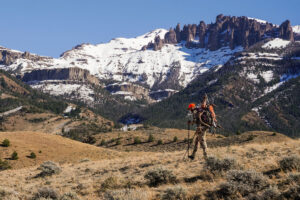
TRCP’s Chief Conservation Officer drew a coveted Nevada elk tag in 2024, and the hunt, along with some conservation issues of the state, was documented by Randy Newberg and the Fresh Tracks Team. Watch the full episode HERE.

After nearly two decades of applying, Joel Webster, TRCP’s Chief Conservation Officer, was fortunate enough to draw a highly sought-after elk tag in Nevada. The type of elk tag that offers less than 1% draw odds for nonresidents.

Planning began as soon as the tag results were announced, and Webster scouted the area over the summer and fall to familiarize himself with the unit and how to hunt it.

Being a conservation professional, Webster understands that while there are incredible hunting opportunities within Nevada’s Great Basin region, there are also conservation challenges that must be addressed to maintain and enhance hunting opportunities.

Randy Newberg, host of Fresh Tracks and the Hunt Talk Radio podcast, joined Webster in November to help him find a mature bull and to also highlight the conservation issues of the region.

The challenges discussed in the episode include drought, invasive grasses, and feral horses, all of which put a strain on the high desert and island range ecosystems that are crucial to the future of beloved animals such as elk, mule deer, pronghorn, and sage grouse.

Webster (left) and Newberg celebrate a successful pack out.

After cold mornings and evenings glassing and maneuvering around other hunters, Joel was able to punch his tag on a gorgeous 6×6 bull on a juniper-studded slope. A generous gift from public lands to someone committed to helping secure quality places to hunt and fish for all Americans.

“I really care about the future of hunting and fishing in America, and I want to make sure these traditions are sustained and that our rights and opportunities are maintained,” said Webster. “When I get up in the morning, that’s what I focus on all day long and that’s a big part of my life.”

Watch the full episode HERE.

Photo credits: Fresh Tracks


The TRCP is your resource for all things conservation. In our weekly Roosevelt Report, you’ll receive the latest news on emerging habitat threats, legislation and proposals on the move, public land access solutions we’re spearheading, and opportunities for hunters and anglers to take action. Sign up now.

Do you have any thoughts on this post?

XHTML: You can use these tags: <a href="" title=""> <abbr title=""> <acronym title=""> <b> <blockquote cite=""> <cite> <code> <del datetime=""> <em> <i> <q cite=""> <s> <strike> <strong>

Comments must be under 1000 characters.

July 1, 2025

Water for Deer, Pronghorn, Chukar, and a Whole Lot More 

Nevada Bighorns Unlimited, NV Energy, Nevada Department of Wildlife staff, the Theodore Roosevelt Conservation Partnership, and conservation-minded volunteers construct a water guzzler for desert wildlife 

This past May, employees of NV Energy joined staff from the Nevada Department of Wildlife, Nevada Bighorns Unlimited, the Theodore Roosevelt Conservation Partnership, and other conservation-minded volunteers to construct a new guzzler in Churchill County for mule deer, pronghorn, chukar, desert bighorns, and other wildlife.

Water is the primary limiting factor for wildlife in much of Nevada, and guzzlers have become a critical habitat improvement in arid climates across the West. Guzzlers are human-made rain or snow collection systems that store water in a reservoir for wildlife to drink during drought. Many have been funded and built in the same way as this Churchill County project – through volunteers and donations.

“I am very grateful that NV Energy partnered with the Nevada Bighorns Unlimited, Nevada Department of Wildlife, and the TRCP allowing us this opportunity to contribute to the sustainability of Nevada’s wildlife,” said Tony Gildone, NV Energy director of electric delivery operations, Northeast Region.

The NV Energy Foundation, as part of a grant awarded to TRCP for conservation work in Nevada, funded a portion of the cost of the event, and several NV Energy employees and their families participated in the volunteer day.

“My son is already talking about helping Nevada Bighorns Unlimited with the next build,” said Jason Tarr NV Energy business systems analyst. “He really enjoyed that experience.”

The day of the guzzler build saw an incredible turnout of nearly 200 volunteers. After a welcome and a safety talk from the Nevada Bighorns Unlimited board, everyone headed out to the project. Thanks to the Nevada Department of Wildlife crews who were out days prior clearing roads and preparing the site with tanks totaling 12,000 gallons of storage and the self levelling drinker, the volunteers were able to step right in and complete the project by mid-afternoon.

“I enjoyed my time working on the guzzler project and hope NV Energy does it again next year,” said Mariel Forman, NV Energy customer service representative. “It was a great opportunity to give back to wildlife in Nevada and spend time with my family.”

Learn more about the history of guzzler building in Nevada HERE.


The TRCP is your resource for all things conservation. In our weekly Roosevelt Report, you’ll receive the latest news on emerging habitat threats, legislation and proposals on the move, public land access solutions we’re spearheading, and opportunities for hunters and anglers to take action. Sign up now.

June 26, 2025

Alaska Stewardship in Action

TRCP, BHA, the Forest Service, and the Kenai Watershed Forum team up to help conserve the Russian River

At the Theodore Roosevelt Conservation Partnership, we believe the most impactful conservation wins occur through collaboration and recent work on Alaska’s Russian River this past May perfectly personifies that sentiment.

This spring, as TRCP’s senior Alaska program manager, I volunteered with the Alaska Chapter of Backcountry Hunters & Anglers, the U.S. Forest Service, and the Kenai Watershed Forum for the annual Russian River Stewardship Project. Being out in the field to help conserve crucial salmon habitat reminded me just how essential this work is to maintaining Alaska’s remarkable fisheries for anglers and local communities alike.

Each year, this effort brings together volunteers to maintain one of Alaska’s most cherished salmon fisheries. The project focuses on installing temporary fencing along the river to guide anglers to designated access points—a simple but effective way to prevent bank erosion and safeguard fish habitat.

The Russian River is one of the most popular and heavily used fisheries in the state. Each summer, the Russian draws thousands of anglers from across Alaska and beyond hoping to experience the thrill of sockeye fishing in a stunning wild setting. Its clear waters, strong salmon returns, and relatively easy access from the road system make it a treasured public resource—not only for anglers but also for local economies and outdoor recreation traditions. Conserving the river’s ecological health is essential to keeping these opportunities alive for future generations.

At the heart of this fishery are the sockeye salmon, whose migration drives fishing opportunities and the broader ecological cycle. These salmon nourish bears, eagles, and countless other species, and when they spawn and die, their bodies deliver vital marine nutrients deep into inland ecosystems. Ensuring healthy salmon runs means maintaining the health of the forest, the river, and all the life they support—including ours.

With clear skies above and snow still clinging to the distant peaks, ten volunteers suited up in waders, gloves, and hit the trail. Spirits were high, and the sense of community was strong.

Once at the river, the crew worked together to drive posts and stretch fencing along popular access points. While the task was physical, it was also rewarding—each stake in the ground was a small but meaningful investment in the health of the river. By guiding foot traffic away from vulnerable banks, fencing helps reduce sediment runoff, which can degrade spawning habitat and impact salmon survival.

Of course, no day on the Russian is complete without pausing to take in the scenery of water rushing through a lush green corridor framed by rugged alpine slopes. It was a beautiful reminder of what’s at stake and why this kind of stewardship matters.

This work fits squarely within TRCP’s mission in Alaska—to maintain public access and wild places and support the habitat that sustains fish and wildlife populations. Whether we’re weighing in on federal policy or rolling up our sleeves for on-the-ground projects like this one, TRCP is committed to ensuring Alaska remains a place where salmon run strong, hunting and fishing traditions thrive, and conservation is driven by people who care deeply for the land.

Thank you to our partners at BHA, the U.S Forest Service, and the Kenai Watershed Forum for leading this effort, and to the volunteers who made the time to show up and do the work. Your hands-on conservation helps ensure that places like the Russian River remain healthy, accessible, and fishable for generations to come.

We’re proud to support this project and look forward to continuing our work together in the years ahead.

Learn more about TRCP’s work in Alaska HERE.

May 6, 2025

Lawmakers Tour Innovative Water Projects in Southeast Arizona

Bipartisan delegation explores federally funded water initiatives aimed at boosting Arizona’s resilience amid growing challenges.

On April 22, the TRCP and partners hosted a legislative field tour of four innovative water resilience projects in Southeast Arizona, all critical to ensuring water availability in the state for communities, fish and wildlife, and aquatic and terrestrial habitats.  

TRCP’s Western Water Policy Associate Christian Fauser, along with Audubon Southwest’s Haley Paul and Business For Water Stewardship’s Harold Thomas, brought Representative Juan Ciscomani (R-Ariz., CD 6) and staff from Senator Gallego (D-Ariz.)’s office to projects that collectively demonstrate the extensive impact that large-scale state and federal funding for water resilience have on Arizona’s water future. The tour featured works from the Metropolitan Domestic Water Improvement District (Metro Water), Marana Water, the Santa Cruz Watershed Collaborative (SCWC), and Tucson Water.  

One key project the tour highlighted was a Metro Water well site that treats Tucson’s drinking water for PFAS—chemicals that are linked to health conditions including cancer and reproductive issues. Marana Water also discussed improvements to water meters, and Tucson Water discussed the replacement of grass with turf to improve efficiency, save water users money, and conserve water supplies. The water conservation-oriented organizations all emphasized the importance of federal and state grant funding for water resiliency efforts. 

Representatives from Tucson Water also discussed their Tucson Airport Remediation Project (TARP), in which a groundwater treatment plant produces up to seven million gallons of highly treated groundwater per day. Most of this water is delivered to the reclaimed water system and used for irrigation throughout the community. Treated water also goes into the Santa Cruz River, which has helped create new habitat for species such as quail and javelina, in the previously dry site. 

While stopped along the banks of Tanque Verde Creek, Representative Ciscomani acknowledged the important role of federal and state funding for water resilience projects, through programs such as the Bureau of Reclamation’s Cooperative Watershed Management Program, in enhancing water security for the benefit of Arizona’s communities, ecosystems, and wildlife. Following his remarks, representatives from SCWC discussed their efforts to improve local drought responses that increase water resilience for the local community, as well as nearby habitat for numerous species. 

Tucson’s local watersheds and the shallow groundwater areas beneath them sustain remnant riparian habitat, which has been impacted by drought and groundwater pumping over time. To address mounting pressure on the local water supply, SCWC, which includes government, nonprofit, Tribal, and university partners, is working to develop a Drought Coordination Blueprint to establish watershed-wide coordination between 40 varied stakeholders. The project will also develop a coordination plan for the collaborative and recommendations for local partners to help mitigate impacts during periods of local shortages and drought.  

TRCP greatly appreciates Representative Ciscomani for his leadership on securing federal funds for watershed restoration efforts and we look forward to working with him, and other members of the Colorado River Caucus, as we strive to enhance water security in Arizona for the benefit of communities, wildlife populations, and their habitat as challenges continue to evolve. We also extend our thanks to Tucson Water, Marana Water, Metro Water, Watershed Management Group, Pima Association of Governments, and the Santa Cruz Watershed Collaborative for sharing their incredible examples of resilience projects in Arizona’s 6th Congressional District.  

Learn more about TRCP’s commitment to habitat and clean water HERE


The TRCP is your resource for all things conservation. In our weekly Roosevelt Report, you’ll receive the latest news on emerging habitat threats, legislation and proposals on the move, public land access solutions we’re spearheading, and opportunities for hunters and anglers to take action. Sign up now.

February 12, 2025

Field Notes from the Deschutes: A Day with California Bighorn Sheep 

TRCP’s Oregon and Nevada field representatives volunteered at a recent California bighorn relocation operation  

A train of headlights and dusty-red taillights cut the pre-dawn dark as they rolled north from Maupin and downstream along the Deschutes River Access road. Our convoy, comprised of state-badged vehicles from both Oregon and Nevada and private rigs, rumbled to a halt at the Beavertail access site and quickly set about deploying various trailers, tables, and tools. Tangible excitement was suspended in the cold morning air, surrounded by the focused silence of folks preparing to work. Within moments, the crew had transformed the graveled boat ramp into a field veterinary station that rivaled any backwoods veterinary clinic. No sooner had the sun begun to crest the canyon wall when the helicopter’s blades split the calm to briefly touch down. 

The reason for the early rendezvous was to capture and relocate California bighorn sheep from Oregon to Nevada. I, along with my TRCP colleague, Nevada field representative, Carl Erquiaga, joined the Oregon Wild Sheep Foundation and Nevada Bighorns Unlimited volunteers to assist biologists and wildlife managers from the Oregon Department of Fish and Wildlife and the Nevada Department of Wildlife. 

“… a daisy chain of blindfolded ewes descended from the sky…”

In the Lower Deschutes, some 900 California bighorns call the canyon home—a remarkable conservation success story, embodying resilience and the power of collaborative wildlife management. Once widespread across the state, bighorn sheep populations were driven to near extinction in the 19th and early 20th centuries due to habitat loss, overhunting, and diseases introduced by domestic sheep. By the early 1900s, bighorn sheep had vanished entirely from Oregon, Idaho, and Nevada. In the 1950s, efforts to reintroduce the species began, with state agencies and partners working tirelessly to restore these iconic animals to their native range. Transplants from neighboring states and Canada re-established herds, and through ongoing management, Oregon’s bighorn numbers are now strong enough to pay it forward.  

Numerous sporting organizations whose missions revolve around bighorn sheep have risen to the challenge across the western United States and Canada to help bolster wild sheep conservation. National organizations like the Wild Sheep Foundation and many state-based groups like the Oregon Wild Sheep Foundation and Nevada Bighorns Unlimited hold fundraising events every year and contribute millions of dollars to wildlife agencies which have expanded their bighorn efforts. Many of these groups also provide much-needed volunteer labor for projects such as sheep relocations. In many cases those dollars and volunteer hours can be matched with federal funding through the Federal Aid in Wildlife Restoration Act of 1937. Without these groups, projects like this would be nearly impossible to carry out. 

TRCP Nevada field representative, Carl Erquiaga, takes a break between batches of sheep.

The helicopter roared up the canyon while the crew scanned rimrock bands for the unmistakable white rumps of bighorns. When groups were spotted, the pilots charged the sheep over steep terrain and the obvious pop from the net gun signaled a success. Not long thereafter, a daisy chain of blindfolded ewes descended from the sky where they were met with stretchers and gloved hands.  

Whispers replaced conversation as each ewe was carefully carried to the processing area where they were handled reverently and deliberately. Vitals were recorded. Weight, temperature, and other measurements of body and reproductive condition were jotted in field notes. Blood and fecal samples were collected for analysis. Each sheep was fitted with a GPS collar and given a mild sedative to keep them calm in the trailer, as well as select vitamins and minerals to fortify them on their journey. Don Whitaker, ODFW’s chief ungulate biologist, moved through the scene with the quiet confidence of a man who’d spent decades working with wild animals and understood the dedication required to conserve them. Watching him work was like seeing a musician with their instrument, his passion and skill apparent with every gesture.  

A young California bighorn ram lands softly on the stretcher to be prepared for relocation.

By noon, twenty sheep had been processed and loaded into trailers bound for Nevada’s Calico Mountains. This herd would bolster a struggling population in the high desert north of the Black Rock. Relocation is no easy task. It requires coordination, funding, and a level of commitment that transcends state lines and agency borders. This event is also a testament to the principles enshrined in the North American Model of Wildlife Conservation. This system, which ensures wildlife is managed in the public trust with sound science, also includes the belief that access to nature should be available to all.  

Biologists from NVDW take the vitals of a California bighorn ewe.

As the last trailer pulled away and the canyon settled back into its winter stillness, I was struck by what I had witnessed. The relocation done here was indeed wildlife management, but also a declaration of work beyond the status quo. This work is the legacy of conservation in North America: a system where hunters and anglers fund and passionately work for the future of species like the California bighorn.

Photo credit: Tristan Henry


The TRCP is your resource for all things conservation. In our weekly Roosevelt Report, you’ll receive the latest news on emerging habitat threats, legislation and proposals on the move, public land access solutions we’re spearheading, and opportunities for hunters and anglers to take action. Sign up now.

HOW YOU CAN HELP

TRCP has partnered with Afuera Coffee Co. to further our commitment to conservation. $4 from each bag is donated to the TRCP, to help continue our efforts of safeguarding critical habitats, productive hunting grounds, and favorite fishing holes for future generations.

Learn More
Subscribe


You have Successfully Subscribed!

You have Successfully Subscribed!

You have Successfully Subscribed!

You have Successfully Subscribed!

You have Successfully Subscribed!