by:

posted in:

January 5, 2026

Lindsey Davis Headshot

Do you have any thoughts on this post?

XHTML: You can use these tags: <a href="" title=""> <abbr title=""> <acronym title=""> <b> <blockquote cite=""> <cite> <code> <del datetime=""> <em> <i> <q cite=""> <s> <strike> <strong>

Comments must be under 1000 characters.

by:

posted in:

December 23, 2025

The Tongass Assessment Report Balances the Needs of Hunters, Anglers, and Other Users

TRCP commends the Forest Service for its emphasis on assuring healthy fish and wildlife habitat and ensuring continued access and recreation opportunities for local and visiting hunters and anglers

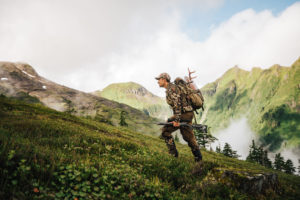
The Forest Service recently released the Tongass National Forest Plan Assessment Report, which highlights the agency’s focus on strong watershed conservation for salmon, deer habitat restoration through science-based forestry, reliable access for traditional and recreational use, and continued collaboration with Tribes, local communities, and conservation partners. TRCP commends the Forest Service for its emphasis on assuring healthy fish and wildlife habitat and ensuring continued access and recreation opportunities for local and visiting hunters and anglers.

“The overarching vision for the Tongass, as shown by the public feedback results, is that it remains a healthy ecosystem,” the Forest Service writes. “When viewed as an entire 17-million-acre region, the Tongass National Forest has retained natural ecosystem processes to a degree far greater than most National Forests in the Lower 48 states. There have not been wholesale changes in natural processes in Southeast Alaska, and it is one of the last places where natural salmon runs thrive.”

The report is one of the first steps in revising the Tongass Land and Resource Management Plan (also called the Forest Management Plan). The plan highlights priorities to guide the next chapter in managing America’s largest and wildest national forest.

Big forest, big salmon, big smiles.

Big, Wet, and Wild

The Tongass National Forest, encompassing most of Southeast Alaska, is what locals call a working forest. Roughly 72,000 people live in 32 communities within the Forest’s boundaries. Salmon are the backbone of the region’s ecosystem. All five species of Pacific salmon spawn in the Tongass’s 3,000 plus streams, and these fish provide the foundation for many of the region’s economic opportunities, supporting commercial fishing, tourism, and the hunting and fishing lifestyle. Around 2.3 million visitors come to the Tongass each year to experience the scenery and outdoor opportunities, which are all tied to a well-functioning ecosystem.

Locals live alongside some of the wildest and most intact lands in America. The forest supports a robust population of Sitka blacktail deer, mountain goats, and brown and black bears. Southeast Alaska’s remaining old growth forests are key to the health of salmon streams and winter habitat for deer and goats that support hunting and fishing.

In this assessment, the Forest Service is focused on adaptive management to meet the challenges of a variety of environmental changes, like expected increases in temperature, rainfall, flooding, and landslides that will affect fish habitat, deer populations, and access routes.

Exciting Changes

The Tongass has reached a pivotal moment of its management where millions of acres of young growth forest are now ready for commercial harvest that could also restore wildlife habitat. The Forest Service’s report makes it clear that Tribes and Alaska Native Corporations have requested this approach to forest management. Other public input has also supported young growth timber harvests that improve browse habitat and support local sawmills. While salmon stream restoration work has been conducted for the last few decades with positive results, the focus on forest restoration to benefit deer and other wildlife is more recent. Restoration is building momentum, creating jobs, and is something locals and visiting outdoorsmen and women are excited to see enacted.

Young growth timber harvests can improve browse habitat for Sitka blacktails and support local sawmills.

Maintain Existing Roads

The Tongass has thousands of miles of existing roads. The budget for road maintenance is underfunded, and many roaded areas lack maintained access. The report highlights the importance of maintaining and repairing roads, trails, docks, and campsites for access to hunting and fishing grounds. The monitoring of road culverts is also important to prevent fish blockages, and surveying aquatic species and habitat restoration is important to sustain the ecosystems that hunters and anglers rely on.

The report notes that road construction, as well as mining and tourism growth, all carry risks for aquatic habitat if not managed carefully. The revised plan could strengthen standards and guidelines to conserve fish-bearing streams and surface resources.

A Path to a Positive Future Depends on All of Us

It’s no easy task to balance different users’ interests, but the Forest Service’s report shows that the agency is invested in a strong, working future for Southeast Alaska. It’ll be an exciting future for America’s largest national forest if the report’s priorities are adopted into the revised Tongass Forest Management Plan. To ensure this result, it is even more important that the hunting and fishing community stay engaged. There will be more public comment periods as revisions continue.

Photo Credit: Bjorn Dihle

by:

posted in:

The Physical Art of Photography: A Conversation with Brian Grossenbacher  

The photographer, angler, and conservationist shares stories from an adventure-filled career, tips for budding photographers, and the importance of being involved in conservation 

Brian Grossenbacher has become one of the foremost photographers in the hunting and fishing space. Arriving to the art in the midst of a fly-fishing guiding career, Grossenbacher’s singular eye—an eye that he developed from decades of hunting and fishing—offered unique perspectives and angles that editors and companies gravitated to. Over the course of his career, Grossenbacher has shot across America and the world, capturing the moments that pull all of us to the woods and water. 

In our exclusive TRCP conversation, Grossenbacher recounts adventures chasing salt-water crocodiles in Myanmar, guiding fly fishing trips down the Yellowstone in the 90s, how and why he first picked up a camera, and the physicality of being an outdoor photographer. This is one you won’t want to miss. 

Can you pack more adventure into a single photo?

In our conversation, Grossenbacher provides a few tips to photographers looking to improve their skills. 

“Shoot with your subject matter in mind and use the camera to crop for you,” offers Grossenbacher. “When you set up a shot, think about where you want the subject to be. Don’t just shoot everything wide and figure that you can go in and clean it up later. Be intentional with how you’re shooting because if you do just go out and spray and pray…it comes back and it haunts you on the back end when you have to go through and edit all those photos.” 

“Be intentional with how you’re shooting…”

Grossenbacher has shot commercial campaigns for Yeti, Orvis, Simms, Costa, and Mossy Oak. He recently surpassed the 300th magazine cover milestone and regularly contributes to publications such as Field & StreamOutdoor LifeGray’s Sporting Journal, and Covey Rise. Grossenbacher also provided the photographs to the book Trout written by Tom Rosenbauer, as well as The Orvis Guide to Upland Hunting written by Reid Bryant.  

But it’s Grossenbacher’s combined skill with a camera and his commitment to conservation that makes him such an invaluable member of the outdoor community. 

“If conservation just becomes part of our mindset and we approach life as our responsibility, I think we’re gonna make the world a better place,” said Grossenbacher

Conservation ensures the future of these places and our outdoor traditions.

Learn about outdoor photography, the importance of conservation, and more in our full conversation with Brian Grossenbacher. 

Watch the interview HERE.

Photo Credit: Brian Grossenbacher


The TRCP is your resource for all things conservation. In our weekly Roosevelt Report, you’ll receive the latest news on emerging habitat threats, legislation and proposals on the move, public land access solutions we’re spearheading, and opportunities for hunters and anglers to take action. Sign up now.

by:

posted in:

BLM Completes Third Round of Planning to Conserve Iconic Greater Sage Grouse

Opportunity to move beyond planning to conserve sagebrush habitat for hunters, anglers, and Western communities

Today, the Bureau of Land Management published approved resource management plans and records of decision for greater sage grouse plan amendments in California, Idaho, Montana, Nevada, North Dakota, South Dakota, Utah, and Wyoming.  Approved resources management plans for Colorado and Oregon were finalized in January 2025.  Together, these plans guide how millions of acres of sagebrush habitat across the West will be managed to conserve wildlife, support Western communities, and ensure quality places for hunters and anglers. 

For almost 15 years, state agencies have worked in an unprecedented collaboration with the BLM to revise management plans to conserve over 67 million acres of sagebrush habitat,”said Madeleine West, vice president of Western conservation for the Theodore Roosevelt Conservation Partnership. “We hope the completion of these plans ends the roller coaster cycle of planning so that state and federal agency resources can be spent on what is most important – species and land management to benefit the sagebrush ecosystem and Western communities that rely on it.”   

This concludes the BLM’s third round of land use planning, the first of which began in 2011.  Plans originally completed in 2015 were revised in 2020, and those 2020 plans were subsequently challenged in court, necessitating this latest round of revisions.  As the largest manager of sage grouse habitat, it is essential that the BLM have robust land use plans that incorporate the best available science to conserve the species.  But for over a decade the BLM has needed to prioritize planning over management, which fails to serve the iconic bird, other sagebrush obligate species, and the people who depend on these landscapes.   

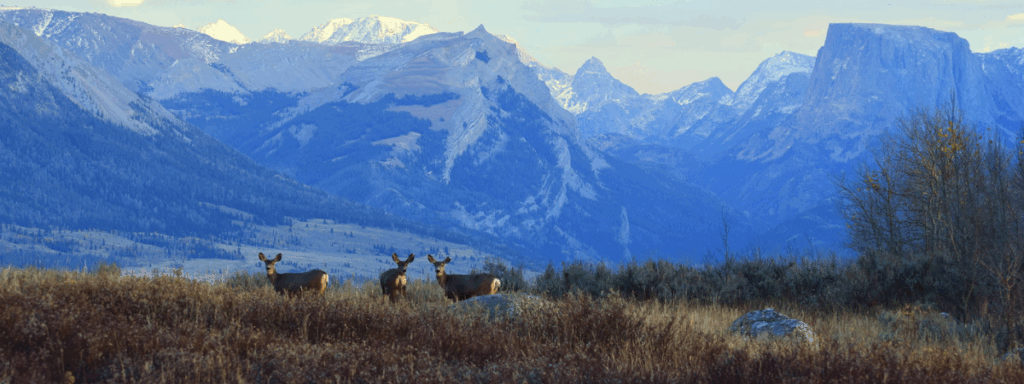
The TRCP has been on the front lines of sage grouse conservation for years. The decline of this iconic game bird of the American West is the most visible indicator that sagebrush habitat is in trouble. That matters to hunters and anglers because the sagebrush ecosystem is home to more than 350 different species of plants and animals, including such iconic game species as pronghorn and mule deer.  Healthy, intact sagebrush landscapes are essential not only for sage grouse, but for resilient wildlife populations, migration corridors, and quality places to hunt and fish across the West.    

For more information about the Greater Sage-grouse Land Use Plan Amendments, click HERE.    

by:

posted in:

Ruffed Grouse, Bird Dogs, and Season Reflections

TRCP’s Oregon field representative takes time to consider young and old dogs, his upland journey, and our public lands

Seven seasons into my dog-handling career, I find myself thinking about ruffed grouse more than might be healthy. I have hunted birds my whole life, but it still took me until my early thirties to come to my first pointing dog. Since then, Sturgil and I have learned various covers together and wandered parts of my home state I never would have seen without a bird to draw me there.

This year, on September 1, my friends and I convened our first, of hopefully many, grouse opening-weekend camping trips. We chose a spot in the Blue Mountains with all the tell-tale signs of good habitat. We hoped to find blue grouse up high in the open timber and edges and ruffed grouse down in the alders where the water talks. The wooded hills of northeast Oregon are cross hatched with Forest Service roads, and old spurs into and stands at every stage make for good access. Mixed-seral covers, canyon breaks, sagey flat tops, and tag-alder-hewn drainages that hold shade when the late summer heat is still hanging on offered plenty of possibilities.

Grouse cover in Oregon’s Blue Mountains.

In my head, Grouse Camp should be like the deer camps of Northeast lore that I read about in Gray’s Sporting Journal as an adolescent. Fellowship, good dogs sleeping in the shade, and the self-satisfaction of a morning hunt.

This first trip gave us exactly that but not much more. Ruffed grouse have a way of humbling a hunter. In frustrated flushes and unrequited miles, the richness of the pursuit seems to grow in proportion to the effort, desire, and reverence we pour into the hours afield.

In Septembers past, I would keep an arrow in my quiver expressly to fling at a sitting grouse or plink one with a .22 and marvel at the pretty bird I had taken when I should’ve been focused on elk. I would laugh to myself about what I expect the old writers would regard as impropriety, but figured it defensible and utilitarian to procure dinner in so ideal a way. At any rate, my reverence for the bird outweighed any chivalrous notion about how the animal was killed, even though I do generally adhere to the moral moratorium on ground-swatting.

Colors of the ruffed grouse woods.

Sturgill – now squarely middle-aged in human terms – has seven seasons under his collar, and my hunting partners are edging toward their tweed years themselves. Practiced in the art of squeezing moments of recreation into short weekends and thirsty for time with our four-legged companions whose too-short lives count one autumn to our seven, we wait for the heat to break, birds to feather up, and for the full-swing of season to give us something else to think about.

Thankfully, puppies are a time-tested antidote to the melancholy that can come from framing things in dog years, and I had one such distraction in camp this year. Striking out on my first puppy walk with Hal, my new German Shorthaired Pointer, was certainly bittersweet. And it wasn’t made any easier by the persistent whining of my old companion muffled through the nose-marked windshield glass, but this is the price of admission, and it’s well worth it. I have come to realize my hunger for just one more day afield with my friends and with my family is all I’m ever attempting to satiate.

Hank and a well-earned ruffed grouse.

For now, I’m grateful for the fresh memories, healthy covers, and the cornucopia of autumn mountains with leaves and color and the sound of water. The garish color of pheasants and the tradition that welcomed me into the world of upland hunting were visited in October. In November and December, I chased eastern Oregon partridge in the rim-rock canyons that kept me honest. But those grouse walks in clean, colorful woods are now my pumpkin spice. Between the intermittent looks and the fewer shots when chasing ruffies, I’ve come to agree with Leopold who said there are two kinds of hunting, ordinary hunting and ruffed grouse hunting. It’s just taken hunting ruffed grouse differently to see the other ways as ordinary.

Photo Credit: Tristan Henry


These memories were made possible through the author’s access to public land. The TRCP’s mission is to guarantee all Americans quality places to hunt and fish so our nation’s outdoor legacy will endure for generations.

HOW YOU CAN HELP

TRCP has partnered with Afuera Coffee Co. to further our commitment to conservation. $4 from each bag is donated to the TRCP, to help continue our efforts of safeguarding critical habitats, productive hunting grounds, and favorite fishing holes for future generations.

Learn More

You have Successfully Subscribed!

You have Successfully Subscribed!

You have Successfully Subscribed!

You have Successfully Subscribed!