TRCP’s Oregon field representative takes time to consider young and old dogs, his upland journey, and our public lands
Seven seasons into my dog-handling career, I find myself thinking about ruffed grouse more than might be healthy. I have hunted birds my whole life, but it still took me until my early thirties to come to my first pointing dog. Since then, Sturgil and I have learned various covers together and wandered parts of my home state I never would have seen without a bird to draw me there.
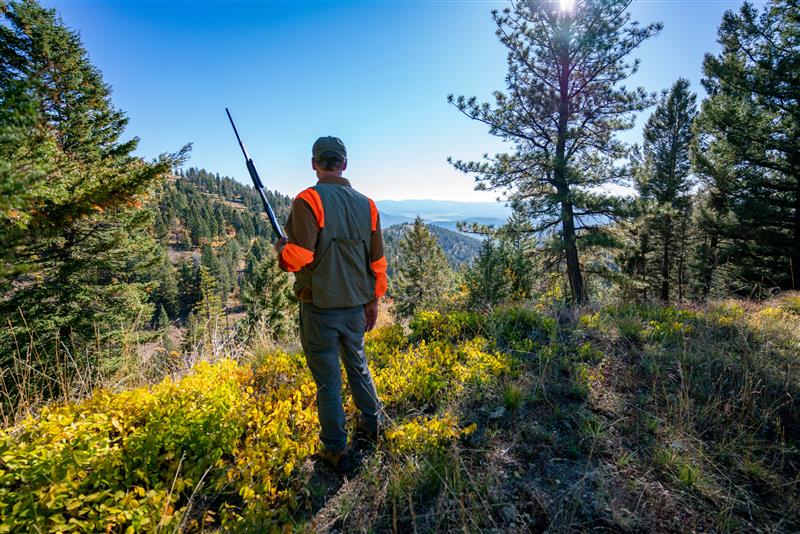
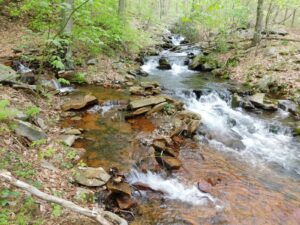
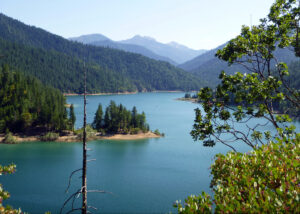
This year, on September 1, my friends and I convened our first, of hopefully many, grouse opening-weekend camping trips. We chose a spot in the Blue Mountains with all the tell-tale signs of good habitat. We hoped to find blue grouse up high in the open timber and edges and ruffed grouse down in the alders where the water talks. The wooded hills of northeast Oregon are cross hatched with Forest Service roads, and old spurs into and stands at every stage make for good access. Mixed-seral covers, canyon breaks, sagey flat tops, and tag-alder-hewn drainages that hold shade when the late summer heat is still hanging on offered plenty of possibilities.
Grouse cover in Oregon’s Blue Mountains.
In my head, Grouse Camp should be like the deer camps of Northeast lore that I read about in Gray’s Sporting Journal as an adolescent. Fellowship, good dogs sleeping in the shade, and the self-satisfaction of a morning hunt.
This first trip gave us exactly that but not much more. Ruffed grouse have a way of humbling a hunter. In frustrated flushes and unrequited miles, the richness of the pursuit seems to grow in proportion to the effort, desire, and reverence we pour into the hours afield.
In Septembers past, I would keep an arrow in my quiver expressly to fling at a sitting grouse or plink one with a .22 and marvel at the pretty bird I had taken when I should’ve been focused on elk. I would laugh to myself about what I expect the old writers would regard as impropriety, but figured it defensible and utilitarian to procure dinner in so ideal a way. At any rate, my reverence for the bird outweighed any chivalrous notion about how the animal was killed, even though I do generally adhere to the moral moratorium on ground-swatting.
Colors of the ruffed grouse woods.
Sturgill – now squarely middle-aged in human terms – has seven seasons under his collar, and my hunting partners are edging toward their tweed years themselves. Practiced in the art of squeezing moments of recreation into short weekends and thirsty for time with our four-legged companions whose too-short lives count one autumn to our seven, we wait for the heat to break, birds to feather up, and for the full-swing of season to give us something else to think about.
Thankfully, puppies are a time-tested antidote to the melancholy that can come from framing things in dog years, and I had one such distraction in camp this year. Striking out on my first puppy walk with Hal, my new German Shorthaired Pointer, was certainly bittersweet. And it wasn’t made any easier by the persistent whining of my old companion muffled through the nose-marked windshield glass, but this is the price of admission, and it’s well worth it. I have come to realize my hunger for just one more day afield with my friends and with my family is all I’m ever attempting to satiate.
Hank and a well-earned ruffed grouse.
For now, I’m grateful for the fresh memories, healthy covers, and the cornucopia of autumn mountains with leaves and color and the sound of water. The garish color of pheasants and the tradition that welcomed me into the world of upland hunting were visited in October. In November and December, I chased eastern Oregon partridge in the rim-rock canyons that kept me honest. But those grouse walks in clean, colorful woods are now my pumpkin spice. Between the intermittent looks and the fewer shots when chasing ruffies, I’ve come to agree with Leopold who said there are two kinds of hunting, ordinary hunting and ruffed grouse hunting. It’s just taken hunting ruffed grouse differently to see the other ways as ordinary.
Photo Credit: Tristan Henry
These memories were made possible through the author’s access to public land. The TRCP’s mission is to guarantee all Americans quality places to hunt and fish so our nation’s outdoor legacy will endure for generations.
Deer Season: Hunting & CWD- Reflections from our Family’s Montana Hunting Season
A season-long reflection from TRCP’s Ryan Chapin on family, tradition, and stewardship during a Montana hunting season
Across the country, deer season looks a little different than it did a generation ago. In Ryan Chapin’s first installment in TRCP’s Deer Season: Hunting & CWD series (Deer Season – Hunting & CWD: A Hunting Journal Found and New Hunters in the Making), Chapin reflected on how hunting traditions are passed on and how responsibility now comes with every tag filled. His second installment from Montana builds on that theme, offering another family’s perspective on how Chronic Wasting Disease has become part of modern hunting seasons, shaping preparation, harvest decisions, and the way hunters contribute to wildlife conservation while keeping time-honored traditions strong
Now that the 2025 big game season is in the rearview mirror and our freezers are full, I’ve had some time to reflect as my mind categorizes the many moments that make up an entire season. The memories replay vividly like daydreams, but I smile inwardly knowing that these memories are real and now a part of all who participated.
There’s the memory of canoeing with my son and brother at night back to camp while stars hung bright above and elk bugles echoed off glassy water, or the memory of watching my wife and son work together to find her second ever mule deer buck in the rifle’s scope before she could make the shot. I still laugh when I recount her words, “I only see a little black circle filled with grass and no buck, what the heck!” Then there’s the memory of my two bird dogs, in sled dog harnesses to “Dog-assist” me and a mountain bike four miles up a steep grade where I harvested a whitetail buck, there’s a memory of my son and I talking quietly together as the sun set while we sat on a mountain top, and finally, the surreal memory of our whole family, my brother’s family, and our collective three dogs all working together as our daughter Ella harvested her first elk. Taken as a whole, these moments are gifts etched into my memory adding a sense of gratitude for the ever-fleeting time we all spend together during the fall hunting season.
CWD Best Practices in Action
To an extent, CWD shaped each of our hunts this year, not as a barrier but as part of the tasks and responsibilities of the season. Before the season we checked FWP’s latest updates and mapped out the units where testing was required, which did not include any of the units we hunted. Nonetheless, we still carried sample kits alongside knives and game bags, and we made a habit of taking lymph node samples as soon as an animal was down. We made a point to turn it into a fun, shared experience – much like we did with Ella’s first elk. We processed Ella’s elk around a large warming fire and the kids helped identify and cut out the lymph nodes while the adults discussed how testing informs biologists and ultimately helps protect the herd. All our deer tests came back negative, but Ella’s elk results are still pending. Implementing best management practices is one way my family and I can contribute to the science database and is one more way we honor the animals that we hunt and eat.
Reflections
Looking back at the highs; the bugling elk, Kate’s mule deer success, the dogs and our bikejoring whitetail, time on the mountain with Quinn, Ella’s “family” elk, and all the other moments in between, I’m struck by how hunting has evolved for our family. These are the same moments I’ve tried to capture in my hunting journals and shared in the first installment of this series – moments defined by family, effort, and time afield. It is no longer only about filling tags, as it once was for me. Now, tags are still filled, but we also practice care, teach the next generation, and adapt to ensure that these traditions endure.
As I look to next season, I’m hopeful. The hope is that our kids, and their kids, will someday stand in these same forests and climb these same ridges, where their own memories will layer on top of mine to close out their own fleeting, yet sugar-sweet hunting seasons. In the meantime, it’s on all of us to carry the many responsibilities that are stitched into each season by doing our part now to ensure that future generations have the same or even greater opportunities. Someday, I hope those future seasons are captured in my kids own hunting journals, carrying forward not just the stories of the hunt, but the knowledge, care, and responsibility that will keep these traditions strong.
Deer Season – Hunting and CWD.
This new TRCP series shares the personal deer hunting stories of three staff members while exploring the practices aimed at addressing the spread of chronic wasting disease. This season, we invite you to follow along and take part in preserving what we love most about deer hunting.
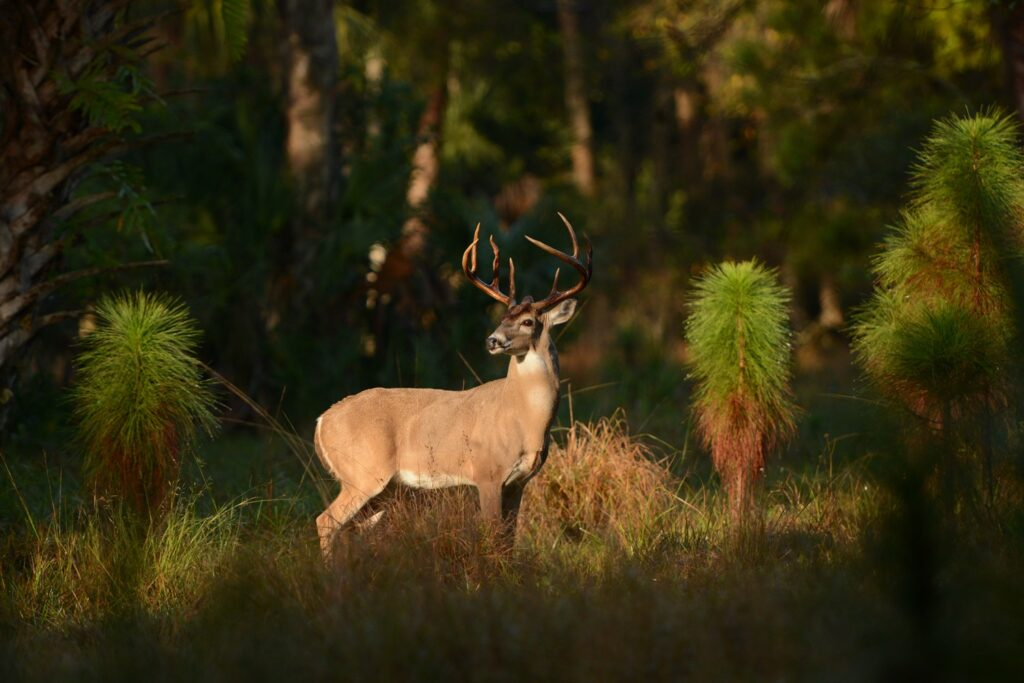
As deer seasons open across the country, hunters are packing gear, checking maps, and preparing for the moments that define another fall outdoors. But today’s deer hunters face new challenges – chief among them, the spread of Chronic Wasting Disease (CWD), a 100-percent fatal neurodegenerative wildlife disease that affects members of the deer family. While more and more hunters are finding CWD in their backyards, it remains a source of confusion for many.
From pre-season prep and regulation changes to lessons learned in the woods and around deer camp, Deer Season – Hunting and CWD will show how everyday hunters are part of the solution. Along the way, you’ll find tips, resources, and reflections that tie together our love of the hunt with our shared responsibility to keep deer herds healthy for future generations.
Deer Season: Hunting & CWD — Reflections from a Pennsylvania Deer Season
A season-long reflection from TRCP’s Jim Kauffman on hunting Pennsylvania and doing our part to help manage chronic wasting disease.
In Jim Kauffman’s first Pennsylvania installment in TRCP’s Deer Season: Hunting & CWD series (Deer Season – Hunting & CWD: Prepping for the Pennsylvania Season), the focus was on preparation—scouting, planning, and understanding the steps hunters can take before the season begins to help curb the spread of chronic wasting disease. But responsibility doesn’t end when the season opens. As the weeks unfold and tags are filled—or go unpunched—hunters make decisions in real time that directly affect herd health, hunting traditions, and the future of deer hunting itself. Jim’s second installment follows a Pennsylvania season from early archery through rifle, showing what it looks like to balance time-honored deer camp traditions with the everyday choices that help support and protect healthy deer herds.
I missed. I stood there dumbfounded as the buck slowly meandered away. For four straight days I sat in that same tree, without seeing a single deer. But my preseason scouting convinced me that a buck would show if I hung in there. And when he did, I blew it. My arrow deflected off a small twig and embedded itself within the shallow Pocono mountain soil just underneath the deer. In the big woods of Pennsylvania’s public lands, opportunities at mature buck are fleeting, so when the time comes, execution is paramount. I would not sleep much that night back at camp, but I was thankful that my errant arrow cleanly missed. Moments like that are part of every deer season – but what happens before and after those moments matters just as much for the health of the herd and the future of our deer hunting tradition.
Early Archery Season
As it often does, archery season in Pennsylvania started off warm. To shake off the rust I began the season hunting a small private parcel close to home, hoping to fill my local doe tags. As luck would have it, the deer were moving in the evenings despite the heat. I was fortunate to take two mature doe early in the season, ensuring a good start to filling our freezers. I enjoyed the spoils of fresh deer steaks on the grill, making sure to share some venison with my friends that graciously allowed me to hunt their property.
The Rut
With the progression of deer seasons, the decisions that hunters like us make – where to hunt, what to harvest, and how to handle animals afterward – remains important. As I shifted between regions, I continued to consult PGC CWD guidelines to ensure I was prepared for proper carcass handling in the event of a successful hunt.
As the whitetail rut approached, I headed to the Poconos to spend my typical deer and bear archery week climbing trees on public land. Acorns were prevalent, and deer were on the move-they were just moving everywhere that I wasn’t. After a few days, I settled on a location where I would ride out the week, feeling good that the sign and topography would produce a buck within bow range. And after four days in that tree, I got my opportunity. But thanks to that one small twig, my hopes of taking a good buck on public land with the bow were quickly dashed.
Throughout the remainder of the archery season I spent time between my friend’s local private parcel and our hunting camp in the northern tier. Although I was unsuccessful, I did have opportunities at some smaller bucks that I decided to pass, and we had two guests at our camp take nice bucks with the bow. The inclusion of Sunday hunting throughout archery season enhanced our trips to camp, allowing us to do more hunting during a quick weekend trip. And fresh venison on the camp skillet certainly added value to the experience. Because CWD has not yet been detected in some areas of Pennsylvania, it is still possible to enjoy a fresh venison meal before waiting for test results-although the risk of eating CWD positive meat still remains. This reality underscores the importance of staying informed about evolving CWD science, testing guidance, and Disease Management Areas. As CWD spreads into new areas of the state, the experience of cooking fresh venison and the value associated with this time-honored tradition could be lost.
Sika Camp
Traveling to hunt comes with added responsibility, especially when it comes to preventing the spread of CWD across state lines.
In early November, I joined some friends to hunt sika deer on the Eastern Shore of Maryland. Before I headed south, I consulted the guidelines for transport of cervid parts into Pennsylvania and reviewed Maryland’s regulations. To deter further CWD introductions, Pennsylvania prohibits the importation of high risk cervid parts from other states and provinces, unless the animal goes directly to a Game Commission approved cooperator. As a result, I developed a plan to adhere to these regulations if I were to take a sika during our hunt. As luck would have it, I was fortunate enough to take a mature stag with the bow after two days in the marsh. I located a PGC-approved cooperator close to my home and dropped off the head to be processed for a European mount. And because CWD has not yet been detected in Dorchester County, we were able to enjoy some fresh sika steaks at camp-and they were as good as advertised.
Rifle Season
With rifle season on the horizon, we headed north to hunting camp, a rite of passage for many Pennsylvania hunters. The public lands of Pennsylvania’s northern tier are wild and rugged, dotted with historic hunting camps-many of which have stood for over a century. Deer camp is a time-honored tradition that we look forward to each year. The hunting is hard, but that’s what makes it rewarding.
Much of northern Pennsylvania received a blanket of snow prior to the season and we had seen some good bucks during bear season-so we were excited to get back up to camp. Unfortunately, luck was not with us. We had seven hunters in camp and could not even see a single deer between our group. After four days of braving cold, snowy, ‘deer-less’ sidehills, we decided to break camp and head home. Thus is the challenge of hunting Pennsylvania’s big woods public land.
Upon returning home I shifted gears to prepare for a hunt on local public lands that I had scouted earlier in the fall. The habitat looked good, deer sign was plentiful, and my cameras showed some good buck cruising during the rut. Temperatures continued to fall and snow began to accumulate, creating great deer hunting conditions. After an exciting morning hunt, I caught up to nice 8-pointer that I was fortunate to connect on. Unfortunately, I was over two miles from the truck, so it would be a long extraction. After resting my legs, I removed the antlers and bagged the head to drop him off at a CWD headbin testing site. Despite being outside of a DMA, I wanted to ensure that I was doing my part to contribute to CWD surveillance and avoid consuming CWD-infected meat. With a successful hunt, my attention shifted from opportunity to responsibility, making sure my actions supported CWD surveillance and the long-term health of the herd. I chose to wait to consume the meat until test results were available – a simple step we can all take that helps protect hunters, families, and healthy deer populations.
As the rifle season waned, I joined a couple small crews in an effort to push deer to friends and family. Our public land drives didn’t yield any kills, but we had some action and saw some beautiful country. On the last day of the season, I had the opportunity to push a private farm in hopes that some friends would fill their doe tags. And as luck would have it, a father and son in our crew would both harvest doe that day-a pretty special way to end the season.
The conclusion of deer season is always bittersweet. We look back at the miles, the memories, and the heartbreaks with fondness, storing photographs and stories for the deer camps to come. We wait all year for it to arrive, and just like that, it’s over. Some seasons are better than others, but each is unique and memorable if you focus on what really matters.
The value of deer hunting lies in the experience as a whole. The forests, the game, the friends and family, the photos, the stories, and the meals that these animals provide. When you remove any piece of that puzzle, you lose the total value of the experience.
If CWD continues to spread and prevalence rates increase, we run the risk of losing the opportunity to hunt robust, healthy deer herds and enjoy the fruits of our labor with some incredible fresh table fare. By being proactive as hunters, we have the opportunity to help manage this disease by following PGC recommendations that prevent further spread and aid in detection. Adhering to these guidelines will ensure that we don’t lose the deer that we so passionately pursue, but we retain the parts that matter just as much-the stories, the laughs, and the time spent afield with friends and family.
That balance – between tradition and responsibility – is at the heart of sustaining deer hunting for the long-term. Protecting healthy deer herds requires hunters to stay engaged beyond the shot, whether that means following transport rules, participating in testing, or sharing best practices with others at camp and at home. By taking these steps, hunters help ensure that the experiences, meals, memories, and stories that define deer season remain part of our lives for generations to come. It’s how we safeguard not only the deer we pursue, but the quality places to hunt and the traditions that make the season matter in the first place.
Deer Season – Hunting and CWD.
This new TRCP series shares the personal deer hunting stories of three staff members while exploring the practices aimed at addressing the spread of chronic wasting disease. This season, we invite you to follow along and take part in preserving what we love most about deer hunting.
As deer seasons open across the country, hunters are packing gear, checking maps, and preparing for the moments that define another fall outdoors. But today’s deer hunters face new challenges – chief among them, the spread of Chronic Wasting Disease (CWD), a 100-percent fatal neurodegenerative wildlife disease that affects members of the deer family. While more and more hunters are finding CWD in their backyards, it remains a source of confusion for many.
From pre-season prep and regulation changes to lessons learned in the woods and around deer camp, Deer Season – Hunting and CWD will show how everyday hunters are part of the solution. Along the way, you’ll find tips, resources, and reflections that tie together our love of the hunt with our shared responsibility to keep deer herds healthy for future generations.
Deer Season: Hunting & CWD – A Mid-Season Check-In
The hunt isn’t over – and neither are the stories.
As deer seasons unfold across the country, the first chapters of TRCP’s Deer Season – Hunting & CWD series have taken us from the hardwoods of Pennsylvania to the farmland and forests of Minnesota and into the wide-open landscapes of Montana. Through personal stories from the field, our staff hunters are exploring what it looks like to balance longstanding traditions with the evolving realities of Chronic Wasting Disease – and why everyday hunters play such a critical role in keeping deer herds healthy.
Together, these early-season stories highlight a shared theme: responsible hunting practices, informed by science and rooted in tradition, are essential to sustaining deer hunting for future generations.
Pennsylvania: Preparing for the Season with Purpose
Jim Kauffman’s preseason story from Pennsylvania focuses on preparation—both practical and personal. From reviewing updated CWD regulations to understanding disease management zones and carcass movement rules, Jim highlights how staying informed has become an essential part of modern deer hunting. His reflections reinforce the idea that preparation doesn’t start on opening day; it begins long before hunters’ step into the woods.
“Last season brought long days, snow, and new challenges, but also memories that I’ll never forget, especially carrying out a buck on my back, in the dark, with my grandfather’s rifle, and sharing venison with friends and family.”
Jim Kauffman, TRCP’s Pennsylvania field representative and wildlife health coordinator
Minnesota: Passing Down Traditions – and Responsibility
In Minnesota, Aaron Field shares a preseason perspective rooted in family tradition, including guiding a young hunter and hunting close to home in a new CWD zone. His story illustrates how learning about CWD best practices is no longer separate from passing on hunting traditions – it’s part of the lesson. From discussions around the kitchen table to planning how and where venison will be processed, these moments help shape the next generation of responsible hunters.
“Right now, wildlife management in general, and CWD in particular, are not getting the attention and funding they deserve. Without hunters speaking up, they never will.”
Aaron Field, TRCP’s director of private lands conservation
Ryan Chapin’s Montana story brings readers west, where wide-open landscapes meet the responsibility of mentorship. His reflections connect a rediscovered hunting journal from his youth with the experience of mentoring new hunters today. Ryan highlights how introducing new hunters to the field now includes conversations about CWD testing, regulations, and why these steps matter. His story reminds us that mentorship is about more than success in the field – it’s about ensuring hunting remains sustainable and grounded in stewardship.
The hunt isn’t over – and neither are the stories. Coming up next are post-season reflections from Pennsylvania, Minnesota, and Montana. These upcoming blogs will explore lessons learned in the field, experiences with testing and processing, and what this season reinforced about the future of deer hunting.
As Theodore Roosevelt once said, “In a civilized and cultivated country, wild animals only continue to exist at all when preserved by sportsmen.” We invite you to read the first three stories, apply what you’ve learned this season, and follow along as the full Deer Season – Hunting & CWD series continues.
Continue the Series
Catch up on the Deer Season – Hunting & CWD posts HERE
This new TRCP series shares the personal deer hunting stories of three staff members while exploring the practices aimed at addressing the spread of chronic wasting disease. This season, we invite you to follow along and take part in preserving what we love most about deer hunting.
TRCP staff share some of their favorite hunting and fishing memories from this past October and November
For many of TRCP’s staff, fall is the season we wait all year to enjoy. The fishing is amazing, hunting seasons arrive, and the stories of past Octobers and Novembers fuel us to make new memories. Below are a few of those new memories and also some anticipation of those to come.
These moments remind us why we step into the arena to work to safeguard the habitats, access, and traditions that make memories like these possible.
Coston smiles with his daughter, Wren, and her first deer.
October 2025 was an especially special month for our family because it was my 12-year-old daughter Wren’s first big game hunt. She drew an excellent mule deer tag in our home unit, and we could not have been more excited. I had been dreaming of this day ever since I first looked down into her little blue eyes.
We have been fishing and hunting small game together for years, but as the opening day of deer season drew closer, so many emotions and feelings surfaced that I was not sure how to handle them all. Excitement, nervousness, hopefulness, anxiety, amazement, jittery nausea, fear, pride, love, and unspoken expectations. Thank heavens Wren saw what I was going through and could talk me down.
My little girl was cool, confident, and collected. She really did it all. In preparation for the season, she shot boxes of ammo to hone her aim. Then when the hunting started, she hiked, glassed until dark, explored miles of dirt roads, and got up before the sun time and time again. We laughed, we teased, and we hung out. We found big mature bucks, little dinks, and one buck that was just meant to be.
On a windy and chilly morning on our 24th day of hunting, it all came together. We had been trying to relocate a big 4×4 that a friend had seen the day before when we spotted a nice 3×3 running up and over a hill across the canyon from us.
“No, that one is too small, let’s keep hunting the big one,” I said.
Wren looked me square in the eyes and replied, “Dad if you don’t let me shoot this buck, I’m going to start hunting on my own!”
I knew no matter how much I wanted the hunt to continue; I needed to listen to my daughter.
We quickly spotted the buck moving along a ridge. The wind was howling, and the shot had a steep uphill angle at 154 yards. All those emotions from earlier came flooding back. Wren quickly calmed me down and without hesitation dropped into a prone position, settled the crosshairs behind the front shoulder, and squeezed off a shot that laid the buck over in his tracks.
Beaming with pride, I said, “You got him girl!” and then received the best hug of my life!
I still remember my first deer hunt all the way back in 1991 with my grandpa in Jarbidge, Nevada. I was so excited to be out there with him, and that excitement is why I work in conversation: to preserve these opportunities for generations to come, just like the deer hunt I shared with my daughter.
Rose (right) with her father and son on a fall hike.
Fall has, for as long as I can remember, stirred in me a nervous, wild energy. It was rowdy fall dirt biking and camping trips in my teens, snowboard season anticipation in college, then watching waterfowl migrate overhead and wondering when and where deer would be moving in my 20s.
Now I’m in the midst of pregnancy and toddler wrangling, reminding myself to make the most of the little outings I’m capable of. To be patient with myself, to enjoy the playgrounds and parks close to home, and to look forward to sharing the beauty and awe of nature with soon-to-be TWO little boys. Now, more than ever, I appreciate the wide range of public land and public access options we have in Colorado that support our health and wellbeing through life’s many stages, and I’ll always stand up to protect that.
Starting him young.
I think parents are all intimately familiar with an internal tension, rising and falling as the layers of our identities feel at times cohesive, and at other times like they’re repelling one another. I once confidently ran a 50K trail race, now rushing up the stairs leaves me panting. But being a parent is so joyous, so fulfilling, and I’ll be able to crush hills again someday too…right?
To all of you seasoned, outdoorsy parents who have told me with so much sincerity and love how the things we like to do are even sweeter and more rewarding when we get to do them with our kids, THANK YOU. I am immensely thankful to have so many awesome parent role models in the hunting and fishing space. You make a new parent like me extra excited for all the seasons to come.
Noah Davis, TRCP communications manager, and a brace of wood duck drakes.
There are few creatures that epitomize October in the East better than red-bellied brookies and mullet-headed wood ducks. This October, I was lucky enough to enjoy both as I spent time in the Appalachian Mountains.
Thanks to welcoming stream-access laws, I’d spend the hour before shooting light wading into a wood duck hole to wait for their high-pitched calls and careening flights over the sycamores to arrive with the the first rays to break over the ridge. Shooting was fast and difficult in those gray minutes, but the river gifted me enough of the acorn-fat birds to make a good meal.
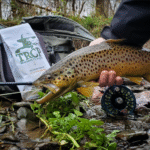
A native brook trout with colors popping before the spawn.
As the sun rose and the birds stopped flying, I traded the shotgun for a rod and went to the hollows to find pre-spawn brook trout. Low water made the fish wary, so every little char to hand was met with a short celebration before releasing them back into the pool.
It’s easy to pass a day in October, and now that the golden window of that month has closed, I miss it. But rifle deer season is still ahead.
Alex Aguirre, TRCP’s Wyoming community coordinator, (right) stands with his best friend Andrew Walker and the bull Walker tagged.
There’s nothing quite like hunting with your best friend. They’re someone you can count on when the loads are heavy, for a joke when the rain won’t let up, and to wake you up from a nap during a glassing session.
When my best friend and college roommate, Andrew Walker, pulled a coveted Wyoming elk rifle tag, we immediately made plans for a backcountry elk hunt in mid-October in a spot we’ve had luck before. However, after getting a truck stuck attempting to reach the trailhead, we had to pivot and hunt some new areas with the truck and horse trailer we still had in our possession while we waited for the first road to dry out.
After an uneventful evening and morning hunt, we glassed some elk in a new zone from afar and decided to take the horses back in there in hopes of getting lucky. This road was not quite as muddy as the first, but we still ended up parking before the end of the road and riding the horses the rest of the way. A few miles later, we were on a great glassing knob as temperatures cooled before sunset.
A few cows fed out of the timber, so we hustled their direction. They ended up slipping away, but we continued on in hopes a bull would follow. With about 30 minutes left of legal shooting light, I threw my binos up on a timbered hillside and glassed a lone 6×6 feeding. He was in range, and Andrew made a clean shot and harvested his best bull to date. But the fun wasn’t over.
As we were breaking his bull down, a curious grizzly appeared in the darkness. Luckily, we were able to shuttle the meat off the hill without any true troubles from the grizzly, loaded the elk up on the horses, and began our midnight trek back to the truck. We slept well that night, and retrieved the stuck truck the next day on the way back home.
I traded my usual archery elk hunt and ten days in the Eagle Cap Wilderness of northeast Oregon to call and pack for my friend Ryan Hibler’s out-of-state elk tag. At first it felt like I was giving something up, but the hills cured me of that. Bugles came steady as clock chimes across the sage flats and the aspen-gold hewn draws. We drank coffee in the dark and the bulls answered from somewhere just out of sight. By noon we lay in the shade near covers and I dreamed of grouse. I thought about my bird dogs five hundred miles away.
A stunning male ruffed grouse.
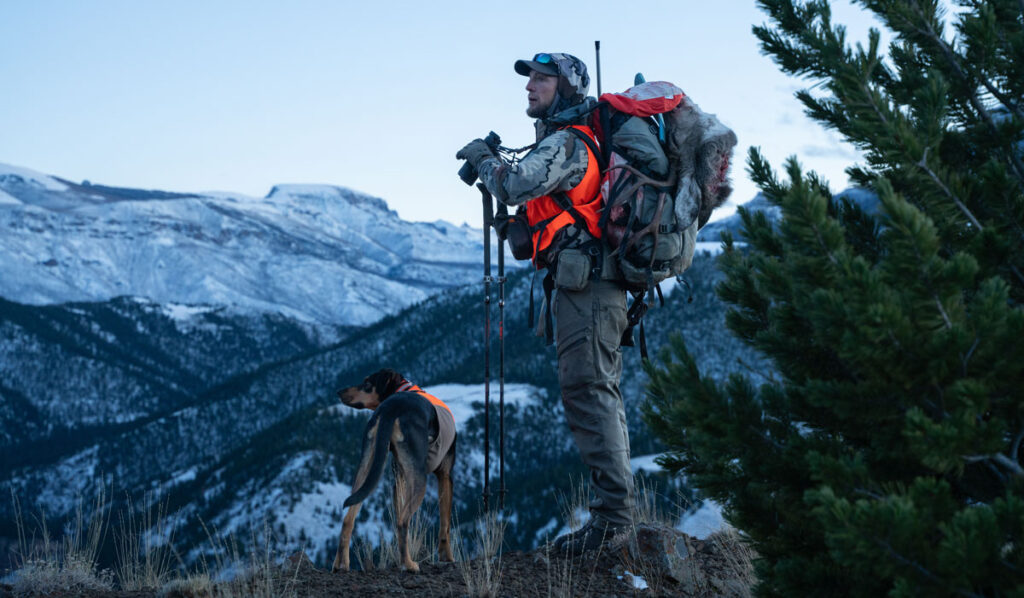
A month and change later, I am sitting with Hal, my seven-month-old GSP, who is panting through a mouthful of grouse feathers. The unseasonable warmth of this November afternoon gives me the excuse I need to trade my rifle for a double gun and go for a grouse walk. I gently place the black-collared male ruffie in my vest and we resume our track. Hal plows energetically through hawthorn while I take the slow line up a game trail, stop, listen and then move again. Another bird comes up through the tangled branches like a small explosion, and all other thoughts yield to the singularity of the flush.
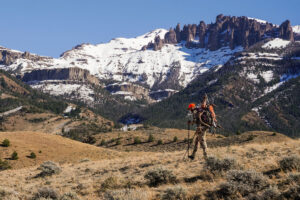
It’s mid-November in Montana, and that means the mule deer rut. The only hitch is that reaching the backcountry camp where my son, Quinn, and I hunt isn’t easy. A steep climb over loose shale and grass with slippery ponderosa pine needles underfoot always tests our legs, lungs, and nerves on the slope. And this time we brought company. With our packs loaded with three days’ worth of gear, Quinn, his friend Cian, Cian’s dad, Rory, and I were up to the challenge.
Our camp sat on a south-facing slope in important winter range. Fresh elk sign greeted us early, and later in the week, we found the herd but couldn’t locate a legal bull. On day two, Cian harvested a muley buck, and we were grateful for camp meat to roast over the fire. Over the three days, my son and I spent hours glassing mule deer does, spikes, and fork-horn bucks. We soaked in the rare and precious November sunshine.
Cian O’Conner with his buck on a steep hillside.
While Quinn nor I harvested a deer, we were content knowing that we helped Cian kill a buck, and that we had this opportunity to spend quality time together in the hills. It’s adventures like this, sharing stories under star-filled skies while warming our feet by the fire with a piece of venison on a stick hovering over the flames, that help me feel truly part of the landscape rather than a mere observer. These experiences remind me why working in conservation matters and why ensuring hunting’s future on lands accessible to all is so meaningful.
Photo credit: Ryan Chapin (Feature), All photos are provided by respective staffers.
From now through the end of the year, you can step into the arena of conservation and make a tax-deductible contribution to ensure hunting and fishing memories like those above continue for generations to come.
TRCP has partnered with Afuera Coffee Co. to further our commitment to conservation. $4 from each bag is donated to the TRCP, to help continue our efforts of safeguarding critical habitats, productive hunting grounds, and favorite fishing holes for future generations.