The Physical Art of Photography: A Conversation with Brian Grossenbacher
The photographer, angler, and conservationist shares stories from an adventure-filled career, tips for budding photographers, and the importance of being involved in conservation
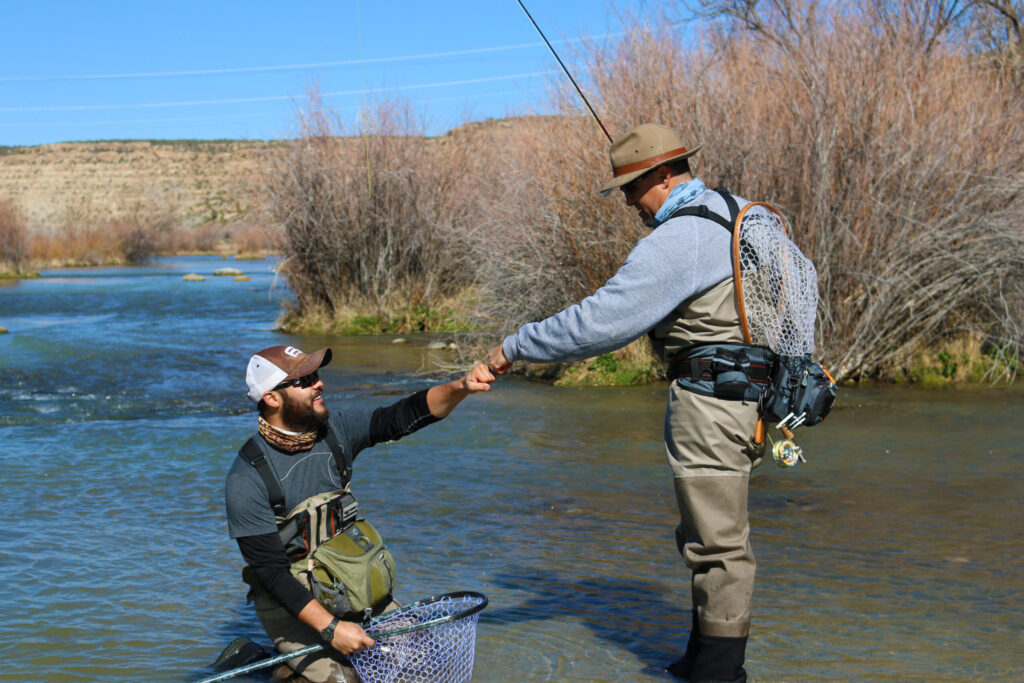
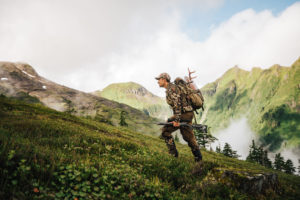
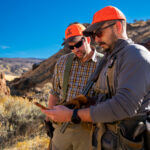
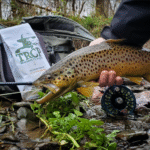
Brian Grossenbacher has become one of the foremost photographers in the hunting and fishing space. Arriving to the art in the midst of a fly-fishing guiding career, Grossenbacher’s singular eye—an eye that he developed from decades of hunting and fishing—offered unique perspectives and angles that editors and companies gravitated to. Over the course of his career, Grossenbacher has shot across America and the world, capturing the moments that pull all of us to the woods and water.
In our exclusive TRCP conversation, Grossenbacher recounts adventures chasing salt-water crocodiles in Myanmar, guiding fly fishing trips down the Yellowstone in the 90s, how and why he first picked up a camera, and the physicality of being an outdoor photographer. This is one you won’t want to miss.
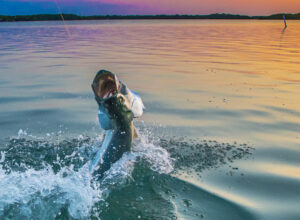
Can you pack more adventure into a single photo?
In our conversation, Grossenbacher provides a few tips to photographers looking to improve their skills.
“Shoot with your subject matter in mind and use the camera to crop for you,” offers Grossenbacher. “When you set up a shot, think about where you want the subject to be. Don’t just shoot everything wide and figure that you can go in and clean it up later. Be intentional with how you’re shooting because if you do just go out and spray and pray…it comes back and it haunts you on the back end when you have to go through and edit all those photos.”
“Be intentional with how you’re shooting…”
Grossenbacher has shot commercial campaigns for Yeti, Orvis, Simms, Costa, and Mossy Oak. He recently surpassed the 300th magazine cover milestone and regularly contributes to publications such as Field & Stream, Outdoor Life, Gray’s Sporting Journal, and Covey Rise. Grossenbacher also provided the photographs to the book Trout written by Tom Rosenbauer, as well as The Orvis Guide to Upland Huntingwritten by Reid Bryant.
But it’s Grossenbacher’s combined skill with a camera and his commitment to conservation that makes him such an invaluable member of the outdoor community.
“If conservation just becomes part of our mindset and we approach life as our responsibility, I think we’re gonna make the world a better place,” said Grossenbacher.
Conservation ensures the future of these places and our outdoor traditions.
Learn about outdoor photography, the importance of conservation, and more in our full conversation with Brian Grossenbacher.
The TRCP is your resource for all things conservation. In our weekly Roosevelt Report, you’ll receive the latest news on emerging habitat threats, legislation and proposals on the move, public land access solutions we’re spearheading, and opportunities for hunters and anglers to take action. Sign up now.
TRCP’s “In the Arena” series highlights the individual voices of hunters and anglers who, as Theodore Roosevelt so famously said, strive valiantly in the worthy cause of conservation.
Mike McTee
Hometown: Missoula, MT Occupation: Researcher at MPG Ranch Conservation credentials: On top of publishing scientific papers on topics ranging from bighorn lamb natural history to the chemical makeup of soil at shooting ranges, Mike McTee has used his expertise and writing talents to share conservation issues with the hunting and fishing public. McTee’s book Wilted Wings follows his own journey of understanding the unintentional impacts of lead bullets left in hunted animals on scavengers, particularly raptors such as eagles, and how hunters, America’s original conservationists, can help.
Mike McTee is a trained scientist who feels comfortable in a lab, but most comfortable at 7,000 feet following elk into the timber or knee deep in a cutthroat stream. Doomed to be an angler as his father had him casting as soon as he could stand upright, McTee has also hunted big game across his home state of Montana, including a bighorn sheep ram from the famed Rock Creek herd. His article about this hunt won him the Jack O’Connor Writers Award from the Wild Sheep Foundation and the Jack O’Connor Hunting Heritage and Education Center.
Here is his story.
TRCP: How were you introduced to hunting, fishing, and the outdoors? Who introduced you?
Mike McTee: My dad was a die-hard traditional archer. He painted and fletched his own wooden arrows and even set up an archery course in our backyard. By kindergarten, I could probably handle a bow and arrow better than a pencil.
My dad also had me reeling in trout when I was just getting out of diapers. By the time I was around 12 years old, fishing was hardwired into my operating system. With a lake only a five-minute walk away from our house, the addiction was easy to feed. To this day, fishing has been the compass that steers many aspects of my life.
A backcountry stream is one of McTee’s favorite places.
TRCP: Tell us about one of your most memorable outdoor adventures.
Mike McTee: After finishing my undergrad at the University of Montana, I bought a series of plane tickets that allowed me to bounce around Oceania, Australia, and Asia. I ended up stopping in New Zealand for six weeks. On one five-day hitch in the Southern Alps, I found the perfect trout stream. The diamond clear waters meandered through meadows of tussock grass in a valley framed by beech forest and mountain peaks.
The first pool had current sweeping toward a rock wall. I cast my #16 parachute Adams and watched a 25” rainbow slowly sip the fly. The day continued in that remarkable fashion as I stalked and landed massive trout in complete solitude. The area left such an impression, my wife and I returned for our honeymoon.
TRCP: If you could hunt or fish anywhere, where would it be and why?
Mike McTee: A fly-in caribou hunt in Alaska always beckons. What lures me most would be sharing that wild landscape with close friends. There’s a special camaraderie that develops in the backcountry. Sure, you’re all friends back home, but on a long hunt, you become a team.
McTee and a beautiful western Montana bighorn ram.
TRCP: How does conservation help enhance your outdoor life?
Mike McTee: I’m fortunate to work a conservation-oriented job among superb naturalists and ecologists. Office conversations are wide-ranging, from rangeland restoration to the behavior of bull elk on their summer range. So I’m often looking at the world through an ecological lens, whether at my desk or sneaking through the woods with a slung rifle. It seems like every year my motivation for an outing becomes a little less about catching fish or securing venison than simply seeing what nature is up to that day.
TRCP: What are the major conservation challenges where you live?
Mike McTee: Just to my west over the Bitterroot Mountains are some of the most pristine salmon and steelhead streams in the Lower 48, but they’re nearly empty of anadromous fish. Salmon and steelhead face copious threats in the ocean, but the fish born in these remote Idaho tributaries must also navigate a gauntlet of dams, posing unique challenges in each direction.
When I’m exploring those streams and find old-growth western red cedars, I imagine their inner rings holding faint traces of nutrients brought from the ocean by steelhead and salmon centuries ago. If the four Snake River dams are removed, maybe young tree rings will once again hold the ocean’s fingerprint.
Research at the range.
TRCP: Why is it important to you to be involved in conservation?
Mike McTee: I came across a placard while fishing the Yellowstone River this fall explaining how I’d be standing near the base of an enormous dam if it weren’t for a group of conservationists. Back in the 1960s and 70s, plans were being drafted to impound the Yellowstone and fill the Paradise Valley with a reservoir. The prospect of drowning one of the most world’s most stunning landscapes luckily sparked sufficient outrage that the project was scrapped.
The placard reminded me that when I’m out hunting and fishing, I’m a beneficiary of prior conservationists. So, when it comes to current efforts, I ask myself how I can move toward a more active role, whether it’s writing an article about a proposed rare-earth mine that endangers a local stream, planting native flowers for pollinators, or simply picking up empty Bud Light cans that washed up on the river. It all adds up.
TRCP: Why should conservation matter to the next generation of hunters and anglers?
Mike McTee: Conservation issues evolve. New issues emerge. Only five years ago, I never worried about shooting a deer that might test positive for chronic wasting disease. Now I test every animal. The conservation playbook must be constantly updated by each generation. But no matter the issue, a healthy landscape is the beating heart of what we value.
Judging by the number of young hunters and anglers I see at trailheads and on the water, I’d like to think we’re in good hands.
Photo credit: Mike McTee
The TRCP is your resource for all things conservation. In our weekly Roosevelt Report, you’ll receive the latest news on emerging habitat threats, legislation and proposals on the move, public land access solutions we’re spearheading, and opportunities for hunters and anglers to take action. Sign up now.
TRCP’s “In the Arena” series highlights the individual voices of hunters and anglers who, as Theodore Roosevelt so famously said, strive valiantly in the worthy cause of conservation.
Jonathan Wilkins
Hometown: Little Rock, AK Occupation: Writer, guide, cook, owner of Black Duck Revival Conservation credentials: Jonathan Wilkins’ conservation ethic of respect, care, and commitment to the land and wildlife permeates through his business, his writing, and all the way to the food he cooks to feed his friends and family.
Jonathan Wilkins came to hunting and fishing after moving to rural Arkansas. Once a friend introduced him to hunting squirrels and deer, Wilkins dove into the hunting and fishing world, eventually founding Black Duck Revival, his guiding, cooking, podcast, and writing platform that celebrates conservation and his connection to the land.
Here is his story.
TRCP: How were you introduced to hunting, fishing, and the outdoors? Who introduced you?
Jonathan Wilkins: Over 15 years ago, I moved in with my girlfriend (now wife) on her family’s property in rural Arkansas. My friend Nate came out to help me build a deck on the mobile home we were living in, and being a passionate angler and hunter, he saw the many opportunities of the property. In 2010, he introduced me to squirrel and deer hunting. I quickly went down the rabbit hole of hunting and fishing with a rocket-powered booster pack.
Wilkins shows the joy of a successful turkey hunt.
TRCP: Tell us about one of your most memorable outdoor adventures.
Jonathan Wilkins: The second black bear I took with my bow was an incredibly validating experience. I had spent the previous five years scouting and hunting hard for black bear and through blind luck had stumbled upon one the year before. The following year though was a culmination of knowledge gained and lessons learned. I had several close encounters and ended up harvesting a bear with my bow at five yards right where I’d hoped I would.
Respect for wildlife extends to how Wilkins prepares his wild game meals.
TRCP: If you could hunt or fish anywhere, where would it be and why?
Jonathan Wilkins: My home state of Arkansas. Catfish, crappie, alligators, whitetail, duck, geese, black bears, turkey, elk, squirrels, and beavers. Need I say more?
TRCP: How does conservation help enhance your outdoor life?
Jonathan Wilkins: I’m a process guy. I want to be involved with as much of my hunting and angling experience as possible. From carving the decoys to making the meal and everything in between. Understanding the history of the land where I pursue critters, the management of those places, and the need to conserve them is integral to that process.
TRCP: What are the major conservation challenges where you live?
Jonathan Wilkins: A lack of public willingness to financially invest in the maintenance of public lands. For example, near me, the nine miles of ditch that need to be cleared out to allow the Bayou Meto GTR to effectively drain in summer months to preserve the flooded timber habitat isn’t working. We don’t have the funding to maintain it, and if we want our hunting and fishing opportunities to continue, we need to invest in this kind of infrastructure and habitat.
A delicious meal served in front of the landscape that offered it.
TRCP: Why is it important to you to be involved in conservation?
Jonathan Wilkins: I relish public lands and the access and opportunities they provide. I want those places and the creatures that inhabit them to be sources of exploration, wonder, and fulfillment for my children and generations to come. These are places that I find strength through physical exertion and validation through my hunting and fishing explorations and my knowledge of the landscape. I want those strength-building exercises to be a part of my children’s lexicon as well.
TRCP: Why should conservation matter to the next generation of hunters and anglers?
Jonathan Wilkins: A society grows great when old men plant trees whose shade they know they shall never sit in. I am the beneficiary of people several generations ago making a concerted effort to preserve these spaces, therefore I hold the same responsibility.
Photo credits: Jonathan Wilkins
The TRCP is your resource for all things conservation. In our weekly Roosevelt Report, you’ll receive the latest news on emerging habitat threats, legislation and proposals on the move, public land access solutions we’re spearheading, and opportunities for hunters and anglers to take action. Sign up now.
TRCP’s “In the Arena” series highlights the individual voices of hunters and anglers who, as Theodore Roosevelt so famously said, strive valiantly in the worthy cause of conservation.
Saravanakumar “Sav” Sankaran
Hometown: Asheville, NC Occupation: Advocate for diverse, inclusive outdoor spaces Conservation credentials: On top of playing bass and singing for the popular bluegrass band Unspoken Tradition, Sankaran has spent his professional life championing conservation and ensuring that those who might feel alienated by the outdoor community feel welcome.
The son of immigrants, Sav Sankaran was introduced to hunting and fishing by a friend’s family while growing up in Pennsylvania. These early experiences set the foundation for a life of chasing trout and birds with good friendsbehind good dogs. Working for over a decade in the outdoor retail industry, Sankaran has the expertise and passion to be a loud and persistent advocate for conservation and strives to make the outdoors a more welcoming place for all.
Here is his story.
TRCP: How were you introduced to hunting, fishing, and the outdoors? Who introduced you?
Sav Sankaran: Despite growing up in an immigrant family with no direct outdoor mentors, I was lucky enough to have been introduced to the outdoors by a childhood friend and his dad, who included me in their adventures fishing for brook trout and hunting ruffed grouse and deer in Pennsylvania.
Those experiences were the genesis of my deep-rooted belief in creating outdoor experiences for people who may otherwise not have those opportunities.
The first time I walked a grouse cover in the Bald Eagle valley in central Pennsylvania, I was enamored with all the sights, sounds, and smells of the autumnal Allegheny woods. On that first hunt, a bird wild flushed and scared the daylights out of me, but I caught a glimpse as it disappeared, and I was hooked. I connected in that moment with the place I called home in a way I had never experienced and have found passion and purpose in the outdoors ever since.
Sav walks in on Chai’s point in Oregon’s Owyhee country.
TRCP: Tell us about one of your most memorable outdoor adventures.
Sav Sankaran: In 2023, with the support of TRCP, my dear friend and fellow outdoor inclusion advocate Durrell Smith and I drove 2,500 miles across the country with our dogs to explore and hunt the Owyhee in eastern Oregon. To see one of the wildest and most remote areas in the Lower 48 was an incredible experience, and to top it off, my dog, Chai, who was just over a year old at the time, pointed and retrieved her first wild birds—chukar—on that trip!
I made the trip with trepidation because of Chai’s relative inexperience and set my expectations low. If she could find her legs and stay out of the way of the more experienced dogs, I would have considered the trip a success. To my surprise and delight, she handled like a dream and loved every minute of it. We were walking the canyon rim above camp, and I saw one of our companions waving me over towards him and spied his German Shorthair on point. With little to no cues from me, Chai immediately backed the other dog, and they worked in tandem to relocate when the birds started to run. Before I knew what was happening, the flush came, I instinctively shouldered, shot, and dropped a double! Having done little to no work on retrieving yet, I didn’t expect Chai to know what to do next, but she immediately located and retrieved both birds to hand. I could not have asked for a better experience for her first wild birds, and it’s a memory I will treasure forever.
Sav and Chai take a quick break in the quail cover.
TRCP: If you could hunt or fish anywhere, where would it be and why?
Sav Sankaran: As a grouse hunter at heart, my dream is to hunt all the North American grouse species and experience the variety of habitats and ecosystems they reside in. What cooler way would there be to see the country and gain a greater appreciation for the many species that I already love?
TRCP: How does conservation help enhance your outdoor life?
Sav Sankaran: So many of the environments in which I have had my most impactful outdoor experiences have been public lands that organizations like TRCP help support. Without robust support of conservation of public lands, folks like me would have a dearth of recreation opportunities.
TRCP: What are the major conservation challenges where you live?
Sav Sankaran: Unregulated development, habitat loss, and erosion are all huge conservation issues in Southern Appalachia. We are also a community that continues to recover from the devastating economic and ecological damage of Hurricane Helene, which has introduced a variety of challenges that compound the existing ones.
Sav casts on a southeast trout tailwater.
TRCP: Why is it important to you to be involved in conservation?
Sav Sankaran: As the beneficiary of the devoted work of conservationists to preserve and protect the landscapes I hold dear, I feel a responsibility to continue that work, and to ensure that those who feel othered or alienated by the outdoor community feel welcome. The future of public lands depends on a diverse set of stakeholders!
TRCP: Why should conservation matter to the next generation of hunters and anglers?
Sav Sankaran: Public lands and programs are under threat on a variety of fronts, there has never been a more important time to be a loud and persistent advocate for conservation! I also believe that a sustainable future for the outdoors relies on an inclusive, diverse set of outdoor advocates.
Photo credits: Sav Sankaran and Brian Grossenbacher
The TRCP is your resource for all things conservation. In our weekly Roosevelt Report, you’ll receive the latest news on emerging habitat threats, legislation and proposals on the move, public land access solutions we’re spearheading, and opportunities for hunters and anglers to take action. Sign up now.
TRCP’s “In the Arena” series highlights the individual voices of hunters and anglers who, as Theodore Roosevelt so famously said, strive valiantly in the worthy cause of conservation.
Brian Grossenbacher
Hometown: Cedar City, UT Occupation: Photographer Conservation credentials: Traveling across America, and the world, Brian Grossenbacher has become one of the foremost hunting and fishing photographers in the business. His generous spirit results in passionate support of conservation organizations and issues where his talent for visual storytelling helps educate hunters and anglers.
Brian Grossenbacher, fly fishing guide turned professional photographer, has shot commercial campaigns for Yeti, Orvis, Simms, Costa, and Mossy Oak. He recently surpassed the 300th magazine cover milestone and regularly contributes to Field and Stream, Outdoor Life, Gray’s Sporting Journal, Anglers Journal, Covey Rise, Shooting Sportsman, and many other publications. Grossenbacher also provided the photographs to the book Trout written by Tom Rosenbauer, as well asThe Orvis Guide to Upland Huntingwritten by Reid Bryant. His skill with a camera and commitment to conservation makes him an invaluable member of the outdoor community.
Here is his story.
TRCP: How were you introduced to hunting, fishing, and the outdoors? Who introduced you?
Brian Grossenbacher: My father and both grandfathers took me fishing every opportunity they had starting at an early age. My proudest childhood moment was catching a four-pound northern pike on my 5th birthday.
The infamous birthday pike!
TRCP: Tell us about one of your most memorable outdoor adventures.
Brian Grossenbacher: I was fortunate enough to be on one of the exploratory trips to visit the Tsimane Tribe in Bolivia to fish for golden dorado. It took us four days to get there, and we landed on a dirt airstrip that wasn’t meant to be seen from the air.
We hired the Tsimane people to take us upriver in their dugout canoes, and ate what we caught, including 12 monkeys that were gutted, shorn, and slow cooked over the fire. There were jaguar tracks in our camp every morning and numerous cayman that kept a close eye when we rinsed off in the river at night. We didn’t have a satellite phone, just a handshake promise from the pilot that he would pick us up in two weeks.
The fishing was outstanding. The largest dorado we landed was 28 pounds, but there were plenty in the 10–15-pound class. Looking back on that trip, it is amazing that there were no injuries…a broken bone out there would have been a big deal. The Tsimane people were excellent hunters with handmade bows and carefully crafted arrows. One night, I watched two young men string up their bows and walk down to the river and within minutes they each had a fish that they fileted and roasted over the coals of our fire. In the amount of time it would take someone to microwave a bag of popcorn, these guys shot and killed two fish (at night without lights) and ate them without a second thought to their next-level predatory skills.
Grossenbacher on one of his many travels.
TRCP: If you could hunt or fish anywhere, where would it be and why?
Brian Grossenbacher: There are some isolated sections of the Clark Fork River in Montana that still feel very wild and remind me of fishing the Yellowstone River when I started guiding in the early 90’s.
TRCP: How does conservation help enhance your outdoor life?
Brian Grossenbacher: As a fly fishing guide and then photographer, I have been blessed to make my living in beautiful places, many of which have been protected through thoughtful acts of conservation. Unfortunately, many of the rivers that do not have conservation measures or proper setbacks have been affected by development with homes and manicured lawns built right down to the water’s edge impacting the valuable habitat the rivers used to provide.
Brave subjects and cooperative sharks make good photos.
TRCP: What are the major conservation challenges where you live?
Brian Grossenbacher: For the last three years, I have lived in southern Utah where water and drought are major concerns. The Colorado River system is overtaxed providing water for over 40 million people from numerous Tribal Nations, Arizona, Colorado, California, New Mexico, Nevada, Utah, Wyoming, and two states in Mexico.
Water levels at Lake Powell are critically low and some models suggest that we could see dead pool levels as early as December 2026. Dead Pool is the elevation where the water is so low it can no longer pass through the dam’s infrastructure to the downstream Colorado River. The potential for reaching dead pool threatens the water supply and power for millions of people in the western US and Mexico, not to mention the renowned recreation of the Grand Canyon. That being said, local conservation can go a long way to helping this problem. The residents of Washington County, Utah’s hottest and driest region, historically used 302 gallons daily, twice as much water as the average American, although they have reduced this consumption in recent years. Ironically, Washington County continues to consider the construction of a 140-mile pipeline from Lake Powell. This project is estimated to cost $2.4 billion and would pump 28 billion gallons of water 2,000 feet uphill across 140 miles of desert to provide 160,000 residents in southwest Utah with more water.
Grossenbacher with a bonefish that tipped the scales at just over 15 pounds.
TRCP: Why is it important to you to be involved in conservation?
Brian Grossenbacher: Why is it important to clean your gun or to sight in your bow or practice your cast? Conservation needs to be as important as maintaining our gear, sharpening our skills, and planning our trips. Simply put, if we lose the resource or access to it, then everything else is fluff. We as individuals must start taking personal responsibility for conservation. I don’t expect my neighbor to maintain my gear, so why would I expect them to protect my favorite river? It’s not enough to buy a license and assume you’ve done your part. Having a place to hunt or fish or hike and camp is a privilege not a right, and we need to do everything possible to protect that for the future.
TRCP: Why should conservation matter to the next generation of hunters and anglers?
Brian Grossenbacher: A lot can happen in a lifetime. We are only seven generations removed from the Lewis and Clark expedition and a time the entire western United States was wild. Today there are a lot of places you can’t throw a frisbee without hitting a strip mall or Starbucks.
Virtually everyone my age has a story about how they used to hunt or fish in a spot before the shopping center or neighborhood was built. If I have learned one thing, it’s that habitat destruction happens fast, and if the land is open and developable, someone will take it.
Roosevelt was three generations removed from Lewis and Clark and already the writing was on the wall. Without adequate conservation, our natural resources would quickly be in peril. Today those lands that he made into national forests and parks are starting to look like islands and habitat loss is widening the gap daily. If you want the opportunity to hunt and fish, then it is your responsibility to help conserve the very resources that offer that privilege. Otherwise, they will disappear or be sold to the highest bidder.
Photo credits: Brian Grossenbacher
The TRCP is your resource for all things conservation. In our weekly Roosevelt Report, you’ll receive the latest news on emerging habitat threats, legislation and proposals on the move, public land access solutions we’re spearheading, and opportunities for hunters and anglers to take action. Sign up now.
HOW YOU CAN HELP
TRCP has partnered with Afuera Coffee Co. to further our commitment to conservation. $4 from each bag is donated to the TRCP, to help continue our efforts of safeguarding critical habitats, productive hunting grounds, and favorite fishing holes for future generations.