Our Issues
Public Lands
Why It Matters

Hunting & Fishing Access

America’s 640 million acres of national public lands provide irreplaceable hunting and fishing opportunities to millions of Americans.

Learn More About Access
What TRCP is Doing

We’re working to safeguard America’s public lands so hunters and anglers always have quality places to pursue their passions.
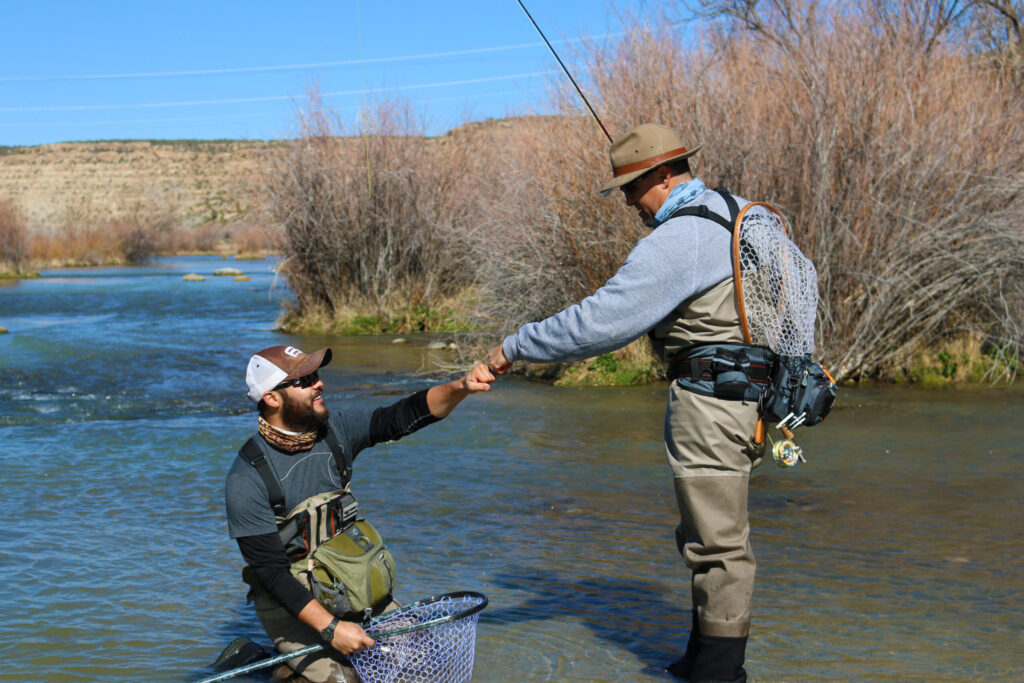
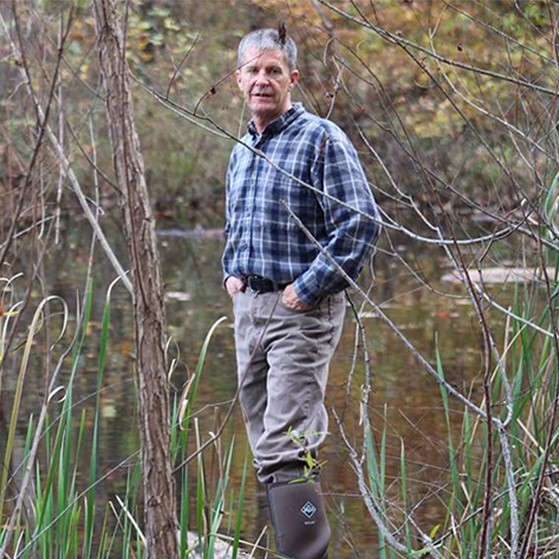
 Brian Flynn, Two Wolf Foundation
How Sportsmen Are Doing It Right

Brian Flynn, Two Wolf Foundation's Story

Following a distinguished career in the U.S. Army, lifelong outdoorsman Brian Flynn returned home from a deployment in Afghanistan and…

Hunting
Why It Matters

Key Issues for America’s Hunters

Your source for the latest policy updates, conservation challenges, and opportunities shaping America’s hunting traditions.

What TRCP is Doing

We’re fighting for meaningful policy changes that benefit wildlife, our waters, and the American landscapes that make our outdoor traditions possible.

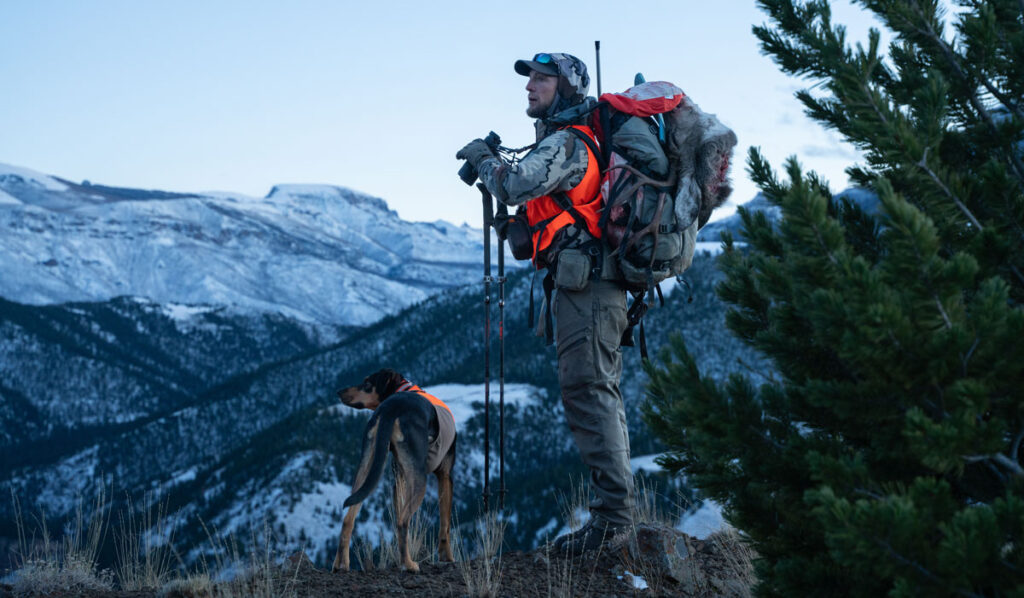
 Ryan Sparks
How Sportsmen Are Doing It Right

Ryan Sparks's Story

TRCP’s “In the Arena” series highlights the individual voices of hunters and anglers who, as Theodore Roosevelt so famously said,…
Fishing
Why It Matters

Key Issues for America’s Anglers

Your source for the latest policy updates, conservation challenges, and opportunities shaping America’s fishing traditions.

Sign Up For Forage Fish Updates
What TRCP is Doing

We’re fighting for meaningful policy changes that benefit wildlife, our waters, and the American landscapes that make our outdoor traditions possible.

 David Mangum
How Sportsmen Are Doing It Right

David Mangum's Story

Capt. David Mangum is a YETI ambassador and outdoor photographer who utilizes his talents to produce media that inspire a…

Private Land
Why It Matters

Stewardship on America’s private lands

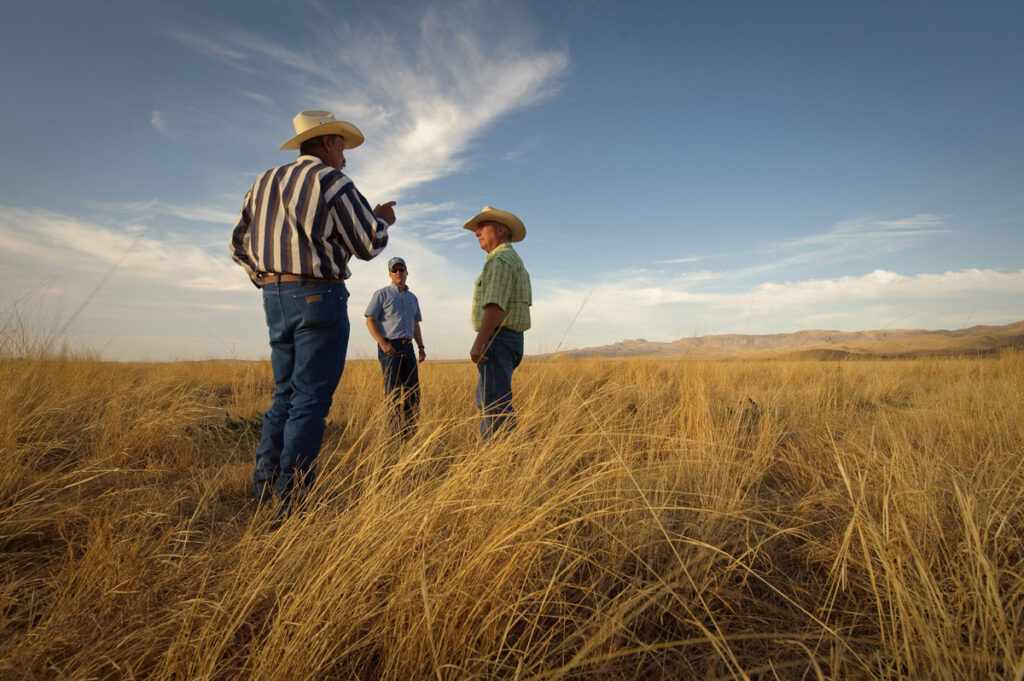
With 70 percent of U.S. lands in private hands and many of our best hunt and fish opportunities occurring there, investing in voluntary conservation on working lands safeguards access, strengthens habitat and water quality, and ensures resilient landscapes.

Take Action - Farm Bill 2026
What TRCP is Doing

We champion policies and programs that restore wildlife habitat, improve soil and water health, and keep working lands productive.

 Ward Burton
How Sportsmen are Doing It Right

Ward Burton's Story

Ward Burton’s NASCAR driving career stretched across most of two decades. As an avid sportsman and conservationist, he founded the…

Special Places
Why It Matters

Special Places Worth Protecting

America’s most iconic landscapes provide unmatched habitat and unforgettable days afield. These places sustain wildlife, anchor local economies, and define the hunting and fishing traditions we pass down.

What TRCP is Doing

We’re working to conserve special places that provide world-class habitat and unforgettable opportunities for hunters and anglers.

 Franklin Adams
How Sportsmen Are Doing It Right

Franklin Adams's Story

As a true Gladesman, conservationist, and historian, Capt. Franklin Adams has spent more than six decades championing Everglades restoration efforts…

Habitat & Clean Water
Why It Matters

Healthy Habitat Powers Every Pursuit

All hunting and fishing opportunities depend on quality habitat, from clean water and healthy wetlands to winter and summer habitats and the migration corridors that connect them.

All About Habitat & Clean Water
What TRCP is Doing

We are working to safeguard the habitats that power every hunting and fishing opportunity.

 Alex Harvey
How Sportsmen Are Doing It Right

Alex Harvey's Story

Alex Harvey, founder of Legacy Land Management, is a registered professional forester in Mississippi and Alabama with a Master's degree…

Science
Why It Matters

Science That Guides TRCP

From conserving migration corridors and wetlands to ensuring clean water and resilient landscapes, science provides evidence that turns conservation goals into effective action.

Science for Conservation
What TRCP is Doing

For hunters and anglers, science safeguards the experiences we treasure including resilient big game populations, abundant fish, and wild places that endure changing social landscapes.

Jamelle Ellis
Your Science Expert

Jamelle Ellis's Story

Jamelle Ellis joined the Theodore Roosevelt Conservation Partnership in 2022. Jamelle spent the last three years as an environmental sustainability…

Where We Work
Across the Nation

Conservation Across America

TRCP works across the country to ensure hunters and anglers can enjoy healthy fish and wildlife and quality days afield, no matter where they live.

See All Issues
TRCP in Your Region

TRCP works across the country to ensure hunters and anglers can enjoy healthy fish and wildlife and quality days afield, no matter where they live.

Who We Are
Our Mission

To guarantee all Americans quality places to hunt & fish

We unite and amplify our partners’ voices to advance America’s legacy of conservation, habitat, and access.

Our Mission & Values
Our People & Partners
  • Meet the TRCP Team

    Our staff and board members unite and amplify our partners’ voices to advance America’s legacy of conservation, habitat, and access.

    Meet the Team
  • Our Partners

    ‘Partnership’ is in our name. We work with 64 diverse partner groups that represent today’s leading hunting, fishing, and conservation organizations in order to strengthen the sportsman’s voice in Washington, D.C.

    Our Partners
  • Corporate Council

    TRCP’s Corporate Council is made up of diverse corporations that share a common passion for conservation.

    Corporate Council
Our Organization

Looking for more information?

Explore our latest news, policy updates, and conservation resources to get the information you need.

Giving
How You Can Help

To guarantee all Americans quality places to hunt & fish

Your tax-deductible donation will support TRCP's mission, now and into the future.

DONATE
Special Ways to support trcp
  • Capital Conservation Awards Dinner

    The CCAD is one of Washington's best-attended conservation celebrations, featuring dinner, cocktails, and a silent auction.

    Learn More
  • Step Into the Arena

    Help us ensure that our treasured wild habitats and game remain intact for the next generation to enjoy – lend your support to the TRCP’s efforts today!

    Donate
  • Roosevelt Roast

    TRCP has partnered with Afuera Coffee Co. to further our commitment to conservation.

    Learn More
More donation options

Find the best way for you to lend your support. Join one of TRCP’s donor circles for special invitations, premium offerings from outdoor retailers, and more exclusive benefits. Take control of your legacy with planned giving or contribute to special conservation funds.

Other Ways To Give
News
In the Spotlight

Western Wetlands Benefit Wildlife, Wildland Firefighters, and Water Resources

At Soda Creek, Colorado, local, state, and Congressional representatives saw firsthand how restoring mountain streams and wetlands can reduce wildfire risk, slow the flow of water across the landscape, and improve fish and wildlife habitat 

Read More

Stay Informed

Receive our newsletter, the Roosevelt Report, right in your inbox. Never miss the latest news in conservation issues.

October 8, 2026

Western Wetlands Benefit Wildlife, Wildland Firefighters, and Water Resources

At Soda Creek, Colorado, local, state, and Congressional representatives saw firsthand how restoring mountain streams and wetlands can reduce wildfire risk, slow the flow of water across the landscape, and improve fish and wildlife habitat 

While many of our readers were out bowhunting or enjoying Colorado’s fall colors (or daydreaming of doing so at their desks), in mid-September staff from the TRCP, National Forest Foundation, and National Wildlife Federation — alongside representatives from Colorado Congressional offices, the U.S. Forest Service, the Colorado Department of Natural Resources, Summit County, and the Blue River Watershed Group — spent a morning touring a Rocky Mountain meadow discussing why wetland restoration not only benefits hunting and angling interests, but belongs in Colorado’s wildfire and water conservation playbooks.  

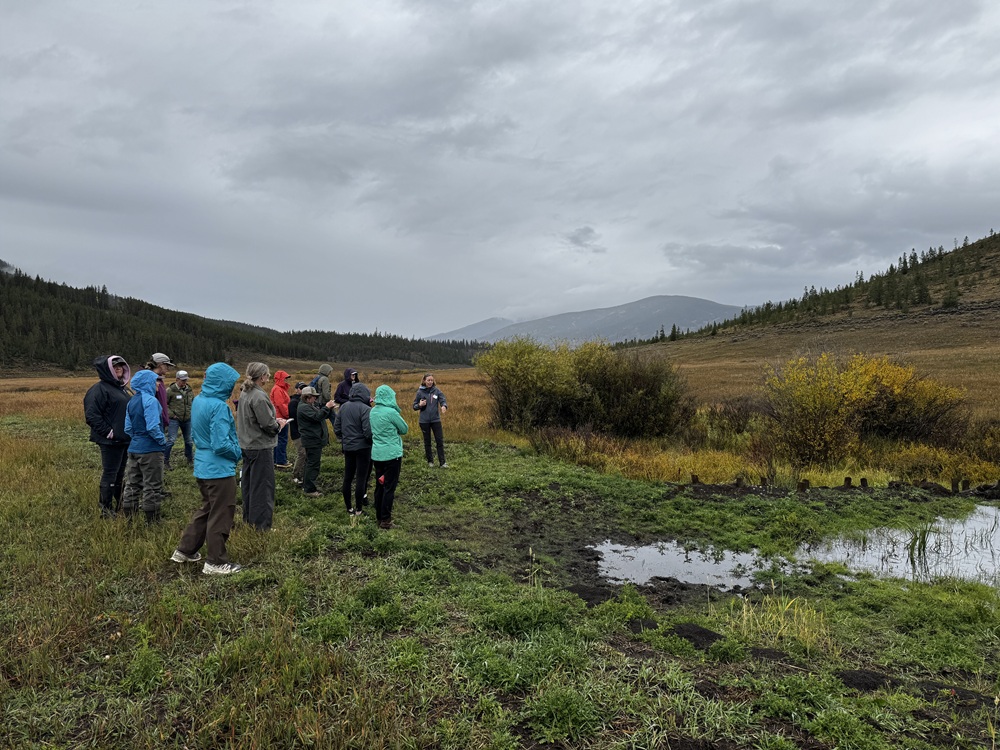
The Soda Creek tour group listens as the project is explained on a rainy September day. Photo credit: Liz Rose

Standing next to Soda Creek in the middle of a wide, green, mountain meadow valley with a blend of both dense and strategically thinned forest on either side, it wasn’t hard to imagine a major theme that came up that day: if there were a forest fire approaching from any direction, this could be a reassuring refuge. Even in Summit County’s (and Colorado’s) sixth-driest year on record since 1895, this restored wetland complex continues to offer deer, elk, and other wildlife a reliable water source. By slowing down surface flows and holding more water on the landscape, wetland restoration can help maintain wet conditions and support streamflow later into the season. But a potentially overlooked benefit of conserving wetlands like these is their natural ability to serve as a potential wet fuel break in the event of an approaching wildfire. 

New Watershed Restoration Effort Put Into Practice 

This little valley, with its wetlands and streams, isn’t just good for wildlife habitat, opportunities for hunters, and water resources. It may also someday serve as part of a “wet fuel break” and as a natural firebreak for firefighters to utilize in the event of a blaze. With thousands of homes and the Dillon Reservoir downstream of this wetland on Soda Creek and its location in between the popular Breckenridge and Keystone ski resorts, fire suppression efforts will almost certainly be warranted someday, and fire managers will be looking for existing fuel breaks, like this one, to slow the fire down.  

The USFS general report Integrating Watershed Restoration in Wildfire Management: Opportunities, Approaches, and Examples, shows what a healthy meadow can look like and notes that “Higher moisture availability creates effective fuel breaks and refuge during fires” in Figure 2b: https://www.fs.usda.gov/sites/default/files/fs_media/fs_document/watershed-restoration-in-wildfire.pdf  

The reality across Colorado is that it’s not if a forest fire will threaten our beloved woods and communities, but when.  

The Soda Creek watershed restoration project site near Dillon, CO., is a 2-mile stream section that feeds into the Colorado River after flowing into the Dillon Reservoir and then northward down the Blue River. It overlaps a mule deer migration corridor, elk severe winter range, and elk winter concentration habitat, among other important wildlife habitats.  

This project is the first example of the USFS’s Integrating Watershed Restoration in Wildfire Management Report’s vision in practice, making it an exciting opportunity to connect emerging restoration approaches with federal agency priorities. Simply put, water doesn’t burn, and wetlands are natural infrastructure superstars. They filter runoff, can help slow and spread water across the floodplain, increase soil moisture, filter sediment, and provide refuge for fish and wildlife during wildfire. These same characteristics can help reduce the severity of some wildfire impacts and support watershed recovery after fire.   

“These kinds of projects make sense. Stream and wetland restoration can be cost-effective investments that improve watershed health and habitat availability, while also supporting fire preparedness and suppression efforts,” says Melanie Thornton, TRCP’s Senior Director of Western Water. “Because these projects help keep water on the landscape, many of their benefits continue long after construction is complete. And in the best-case scenario, the beavers do the work for free.” 

Major Drought Year Drives Project Home 

Colorado has experienced serious water shortages and historic drought conditions in 2026. Just 10 miles down the road, the Town of Silverthorne implemented its highest level of mandatory water restrictions three days prior to our field tour, prohibiting any watering of outdoor vegetation or using water to wash motor vehicles, boats, structures, or paved areas. The Denver Board of Water Commissioners prohibited all lawn watering and spray irrigation beginning October 1. And natural streamflow from April through July across Denver Water’s water collection system was the lowest level observed since recordkeeping began 110 years ago. 

It’s no secret that water is scarce in the West – even in good years. To make the most of our limited water, we need our forests to work with us, not against us.  

Soda Creek during the 2026 tour. Photo credit: Liz Rose

Wetland complexes can provide firefighters another tool on the landscape by helping slow wildfires, while also providing refuge for fish, wildlife, and plants, and helping capture post-fire ash and sediment. Compare that with the cost of waiting: after the Buffalo Creek and Hayman fires three decades ago, Denver Water spent more than $27 million on cleanup and repairs to protect their water supply. 

“As national wildfire activity has increased, so has the motivation to protect the places we love,” said Dan Schroder, Summit County CSU Extension Director and Summit County Wildfire Council Administrator. “When watershed, wildfire, and community protection are factored into wetland mitigation projects, the societal and infrastructure benefits are significant. Today, as we engage in the wildfire conversation, people embrace glades, vistas, and view corridors as one beneficial outcome of active fuels management.” 

Congress, and Colorado voters, Can Kickstart On-the-Ground Action 

The bipartisan Fix Our Forests Act, currently awaiting passage in the Senate, includes a priority TRCP provision that would, for the first time in federal law, recognize the wildfire risk reduction benefits of restoring riparian and wetland habitat. That is why the TRCP is urging the Senate to pass the Fix Our Forests Act and calls on Congress and the State of Colorado to invest in restoration at the pace this moment demands. Additionally, the TRCP encourages Congress to reauthorize the fire funding fix, an appropriation of up to $2.95 billion for wildfire suppression for the USFS and Department of the Interior. Without the fire funding fix in place, resources for these kinds of projects could be redirected to wildfire suppression costs. 

In Colorado’s November 2026 election, voters will consider redirecting existing state sales taxes on certain sporting goods and equipment to fund existing state grant programs with growing demand that reduce wildfire risk and enhance watershed health using science-backed tools, in addition to funding other wildfire mitigation efforts, conservation, and recreation priorities. Multi-benefit stream and wetland restoration projects, like the Soda Creek project, could be supported by increased state funding in the future if Proposition 137 passes in November, which is one of the reasons the TRCP supports this ballot measure. For more information, go to: https://yesonprop137.com/  

Another fire season will always be coming. Let’s do what we can to make sure that when it does, more of Colorado’s mountain valleys are too wet to burn. 

October 2, 2026

TRCP Welcomes Opening of Wildlife Crossings Grants 

Approximately $80 million is now available for projects that keep elk, mule deer, and pronghorn migrations intact, reconnect trout streams and make roads safer for drivers. 

The U.S. Department of Transportation (DOT) announced on Sept. 30 that applications are being accepted for the Wildlife Crossings Pilot Program. The notice will award approximately $80 million in FY26 funding through cost-reimbursable grants, with no minimum or maximum award size, and DOT may also award unspent funds from previous years. Both construction and non-construction projects are eligible, though DOT may give priority to construction. Proposals are due Nov. 16, 2026. 

To help reduce wildlife-vehicle collisions and improve habitat connectivity, $350 million in federal funding became available in 2022 through the Wildlife Crossings Pilot Program.  These funds support research and construction of wildlife crossing infrastructure, such as overpasses, underpasses and fencing that help funnel wildlife across roads safely. Several states, including Utah, Colorado, New Mexico, Montana, Oregon, Virginia and North Carolina, have developed their own funding sources to leverage these federal dollars. 

“Wildlife crossings are one of the clearest examples of a project that makes roads safer for families and keeps big game herds on the move,” said Madeleine West, TRCP’s vice president of Western conservation. “TRCP has worked alongside states, Tribes and partners for years to advance crossings because they deliver for everyone, from commuters and rural communities to the hunters and anglers who depend on healthy herds and connected streams. We’re encouraged to see this new round of funding open and look forward to the projects it will put on the ground.”  

Iconic species such as elk, deer and pronghorn require intact habitat to complete their daily movements and seasonal migrations between summer and winter ranges. As weather patterns change and development grows, highways that cut through those routes pose a greater risk, and each collision is a safety hazard for drivers and a lost animal for the herd. Since Department of the Interior Secretarial Order 3362 in 2018, research and mapping has demonstrated exactly where and how herds travel and has helped states, Tribes, federal agencies and private landowners determine where crossing infrastructure will do the most good. Paired with fencing, crossings can sharply reduce wildlife vehicle collisions: Idaho’s new Cervidae Peak overpass outside Boise is expected to cut reduce collisions by 80 percent. For anglers, the program also fixes undersized culverts that block trout and other fish from upstream spawning and cold-water habitat. Keeping these connections intact helps ensure future generations can enjoy these game species, as well as a multitude of other non-game species. 

These federal investments are heavily leveraged by new state-based funding in many states across the country and broadly supported by bi-partisan lawmakers at all levels of government because they make roadways safer for motorists and wildlife alike. This year is the final round of funding under the Wildlife Crossing Pilot Program, and TRCP and partners are working to reauthorize, and ultimately make permanent, this federal program in the next surface transportation reauthorization bill. 

Learn more about the Wildlife Crossings Pilot Program here, and find the full notice of funding opportunity HERE 

Read more about TRCP’s work on wildlife corridors and bipartisan support for big game migration.

Top photo by Colorado Department of Transportation.


The TRCP is your resource for all things conservation. In our weekly Roosevelt Report, you’ll receive the latest news on emerging habitat threats, legislation and proposals on the move, public land access solutions we’re spearheading, and opportunities for hunters and anglers to take action. Sign up now.

September 25, 2026

A 114-Year History of Oregon Elk and the Plan That Will Decide their Future 

The Blue Mountains Forest Plan will shape elk habitat and hunting opportunities for the next generation; the latest draft falls short of the science and the collaborative vision that this landscape deserves 

The Forest Service’s draft environmental impact statement for the Blue Mountains is open for public comment through September 30, and hunters and anglers have a direct opportunity to weigh in on the future of the many herds that call the Blues home. For a full breakdown of what’s at stake for elk, water, and roadless areas – plus talking points and a link to submit your comment go here.

In the spring of 1912, 15 elk were loaded onto a railcar in Jackson Hole, Wyoming, and shipped west to Wallowa County, Oregon. Three thousand people gathered along the tracks in nearby La Grande just to watch them pass through. From the rail depot, the animals were hauled by horse-drawn wagon through deep snow to Billy Meadows, 46 miles north of Joseph, Oregon, and released into a fenced enclosure on the edge of the Wallowa-Whitman National Forest. A second shipment followed the next year, and by 1915, 265 elk roamed the mountains. By 1933, elk hunting seasons opened across eastern Oregon. 

1912 relocation of elk from Wyoming to Billy Meadows in Wallowa County, Oregon. Photo courtesy of Oregon Historical Society.

That recovery is one of many great conservation success stories of the American West, but truth be told, conservation has never been simple, is rarely convenient, and the pressures on this successful herd have changed dramatically within living memory. 

The Changing Landscape 

After World War Two, the Blue Mountains management focused on a timber landscape. Harvest levels hit historic highs, road networks expanded rapidly to access timber sales, and the forests were managed primarily for commodity production. The environmental and regulatory corrections that followed and shifting public expectations around old growth and forest health swung the pendulum hard in the other direction. Timber harvest dropped precipitously and mill closures rippled through communities that had been built around a steady supply of logs. Forests that had been actively managed for decades were, in many places, left to accumulate fuels and grew increasingly dense. 

While timber policy oscillated, other forces were coming to bear on the landscape. In 1994, Oregon voters passed Measure 18, banning the use of hounds to hunt cougars and bears. Cougar harvest declined and populations grew. Wolves, absent from Oregon for decades, began recolonizing the Blue Mountains in the 2010s, adding another layer of predation pressure. Recreational use of national forest lands increased exponentially too, with more people using roads, trails, and traveling the backcountry than ever before. 

Elk hunting in the Blue Mountains. Photo courtesy of Tristan Henry

Taken individually, each of these changes could be manageable. But together, across 30-40 years, they have reshaped the distribution of elk on this landscape in ways that are now impossible to ignore. Elk have increasingly concentrated on private agricultural lands surrounding the forests, seeking refuge from the cumulative weight of motorized disturbance, hunting pressure, predation, and inadequate habitat security on public lands. The consequences are felt on both sides of the fence: landowners contend with infrastructure and crop damage and forage competition, hunters lose access to animals that were once broadly distributed across public land, and wildlife managers face the difficult task of potentially reducing herd numbers to limit agricultural conflict, even as public land hunting opportunity declines. 

Blue Mountains Collaborative 

This dynamic conflict became a new normal. It was precisely this problem that gave rise to the Blue Mountains Elk Initiative (BMEI) in 1990, a collaborative effort among the Forest Service, the Bureau of Land Management, the Oregon Department of Fish and Wildlife, the Confederated Tribes of the Umatilla Indian Reservation, the Rocky Mountain Elk Foundation, and the Oregon Hunters Association. For more than 30 years, the BMEI has funded and coordinated habitat improvements along with strategic road management decisions to help anchor elk on public lands and reduce conflict with neighboring agricultural operations. By combining grant funding, volunteer power, and agency support, the Initiative has delivered nearly $10 million in habitat improvements to date. It remains one of the longest-running elk initiatives in the country.  

Against this backdrop, the Blue Mountains Intergovernmental Council, a collaborative body of county governments, state and federal agencies, and tribal representatives, also set about addressing the conflict. The Blue Mountains Intergovernmental Council (BIC) developed a desired condition statement for elk security that reflects a clear understanding of the problem and its solution. The BIC calls for managing forest habitats, trails, and road systems in a manner that supports broad distribution of elk on public lands based on their seasonal habitat needs. It recognizes that achieving this requires balancing adequate nutritional resources, cover, and human disturbance regimes, and it explicitly accounts for the many other factors, including predation, hunting pressure, and private land practices, that influence where elk end up. 

“Elk Security: Forest habitats, trails, and road systems are managed and maintained in a manner that supports and enables broad distribution of elk populations based on their seasonal habitat needs. The desired condition is that habitat is managed to provide a balance of adequate nutritional resources, cover, and human disturbance regimes that encourage elk to remain on public lands. Collaboration and coordination occur that benefits these desired future conditions by addressing the many other factors such as predation, hunting, and private land practices that also effect elk distribution while providing year-round recreational and cultural opportunities and limiting agricultural damage on private lands.” -The Blue Mountains Intergovernmental Council

That language deserves recognition. It was developed collaboratively, it reflects the input of the people who live and work closest to this landscape, and it captures what the science consistently shows: that forage, cover, and disturbance must be addressed together if elk are going to stay on public lands. You cannot thin the forest to improve nutrition and expect elk to use it if activity on the road network keeps them moving. Conversely, you cannot close roads and expect elk to move in if the forage is not there. BIC members understood this, and their desired condition statement provides a foundation that any durable forest plan should build on. 

The 1990 forest plans that currently govern these three national forests were supposed to be revised every 15 years. They are now 36 years old, but not for lack of trying. 

The Blue Mountains in spring. Photo courtesy of Michael O’Casey

The Forest Service first initiated a revision in 2004. A draft environmental impact statement followed in 2014, drawing thousands of comments during public feedback opportunities. Years of additional workshops and public engagement produced a near-final plan by 2018, one that incorporated science-based elk security provisions informed by decades of elk management research from the nearby Starkey Experimental Forest and input from the BIC’s predecessors, but that plan was never signed. In March 2019, the Regional Forester withdrew the entire package, citing concerns that the revised plans were difficult to understand and potentially confusing to implement. 

What emerged from that setback was in many ways the most productive chapter of this long process. Forest Service leadership sat down with local elected officials, tribal representatives, and state agencies to identify common ground on the issues that had derailed the prior effort. The Blues Intergovernmental Council was formally established in November 2019, and over the following years it developed the collaboratively agreed-upon desired conditions, including the elk security language discussed above, that were intended to anchor the next revision. 

Then, in 2023 under the 2012 Planning Rule, the Forest Service re-initiated the planning process. The agency released a draft assessment in 2024 and published the draft environmental impact statement in July 2026. The draft plan, however, does not carry forward the BIC’s collaboratively developed desired conditions for elk security. It drops valuable elk security standards from the 1990 forest plans without adopting a science-based replacement. The monitoring program does not include questions about elk habitat, elk distribution on public versus private lands, or the effectiveness of road management for wildlife. The agency’s own Starkey Experimental Forest, located within the planning area, has produced decades of peer-reviewed research demonstrating the relationship between road density, seasonal disturbance, and elk behavior. That science is acknowledged in the draft but is not reflected in the plan’s enforceable components. 

Hunters are not asking for a return to the 1990 standards, but do want modern, measurable elk management direction to sustain quality hunting opportunities that reflects what Starkey and 30 years of additional research have taught us about what elk need to remain on public lands. 

Collaborative Action is the Way Forward 

Hunters are concerned that this moment will pass without integrating those tools into the plan. The policies of the past three decades, whatever their imperfections, were grounded in the recognition that active management and wildlife conservation are not competing objectives. They are partners. Thinning and prescribed fire improve forage. Strategic seasonal motorized closures will let elk use that habitat. Monitoring tells us whether it is working. Adaptive management corrects course when it is not. 

A durable plan does not require choosing between restoration and wildlife, between timber and elk, between access and conservation. It requires doing all of them well, together, with the kind of measurable accountability that lets the public see whether the plan is delivering results.  

That is what the Blue Mountains deserve, and it is what the people who put those first elk on that train 114 years ago were counting on. 

The Forest Service’s draft environmental impact statement for the Blue Mountains is open for public comment through September 30, and hunters and anglers have a direct opportunity to weigh in on the future of this herd. For a full breakdown of what’s at stake for elk, water, and roadless areas – plus talking points and a link to submit your comment – see our article: Speak Up for Elk Habitat and Forest Management in the Blue Mountains.

September 18, 2026

TRCP Welcomes Focus on Hunter and Angler Priorities in New Executive Orders

New executive orders touch on public land access, wildlife migration conservation, invasive species and disease management, and recreational fishing opportunities. 

On Thursday, September 17, President Donald J. Trump signed two executive orders aimed at addressing priorities for hunters and anglers: Restoring American Saltwater Angling and Recreation and Reinvigorating America’s Hunting Heritage. 

“Hunters and anglers have shaped this country’s conservation legacy for more than a century, and they remain some of the most dedicated stewards of our fish, wildlife, and wild places today,” said Joel Webster, chief conservation officer for the Theodore Roosevelt Conservation Partnership. “We appreciate the administration’s support for wildlife corridors, access to landlocked public land, and management of invasive species and wildlife disease, as well as the emphasis on stronger fisheries science and closer coordination between federal and state managers. We look forward to working with the departments and agencies to implement several elements of these orders.” 

The fishing-focused order, Restoring American Saltwater Angling and Recreation, addresses several longstanding priorities for the recreational fishing community. It responds to key recommendations from the Commission on Saltwater Recreational Fisheries Management, which TRCP and sportfishing partners helped convene in 2013 and 2014 to improve cooperation between states and the National Oceanic and Atmospheric Administration to strengthen data collection for recreational fisheries. It directs agencies to modernize federal data collection for recreational fishing, better account for the industry’s economic impact in federal fisheries management decisions, and improve coordination between federal and state agencies, including incorporating state-level data where it improves accuracy. These provisions could help unlock greater opportunities for economically and culturally vital fisheries that support coastal communities and millions of anglers nationwide. Many of them reflect concerns recreational anglers have raised for decades. 

The other order, Reinvigorating America’s Hunting Heritage, addresses several longstanding priorities for the hunting community. Among other things, it directs agencies to reduce barriers to wildlife movement and improve habitat connectivity for big game, and to address invasive species, habitat degradation, and disease affecting game populations. It also calls for prioritizing practical access solutions for landlocked and other difficult-to-reach federal lands, including voluntary easements, land exchanges, and cooperative agreements with states. These provisions could help unlock greater access and healthier habitat for hunters. Many of them reflect concerns hunters have raised for years. 

The provisions in each executive order carry economic weight too. Whether it’s improving access to public lands or giving fisheries and wildlife managers the data and cross-agency coordination they need to make sound decisions, commitments to hunting and fishing issues like these underpin a $1.3 trillion outdoor recreation economy that hunters and anglers help drive. A recent report found that conservation spending alone generated $115.8 billion in economic activity and supported more than 575,000 jobs nationwide, underscoring just how much these efforts mean for local communities and economies. 

In this, our nation’s 250th anniversary year, TRCP is encouraged to see public lands, healthy fisheries managed by sound science and data, and our hunting and fishing traditions are treated as among America’s greatest priorities.  This continues to be reflected in the ongoing work of the Make America Beautiful Again Commission. 


The TRCP is your resource for all things conservation. In our weekly Roosevelt Report, you’ll receive the latest news on emerging habitat threats, legislation and proposals on the move, public land access solutions we’re spearheading, and opportunities for hunters and anglers to take action. 

Click here to sign up today.

September 16, 2026

New Farm Bill Advances in Senate Committee: Key Impacts for Hunters & Anglers

The Senate Agriculture, Nutrition, and Forestry Committee advanced the Agricultural Act of 2026, a major step toward updating conservation programs that will impact wildlife habitat and hunting and fishing access. 

Today, the Senate Agriculture, Nutrition, and Forestry Committee advanced the Agricultural Act of 2026 on a party line vote – bringing us closer to a comprehensive ag policy update than we have been since 2018.   A lot has happened in agricultural conservation policy since then. Key programs have been extended and received major funding boosts, first through the Inflation Reduction Act and then made permanent in the Working Families Tax Cut Act, also known as the One Big Beautiful Bill Act. But without a Farm Bill, there has been no opportunity to improve the underlying structure that makes these programs work.

“It has been far too long since the Farm Bill conservation programs that fish, wildlife, hunters, anglers, and farmers depend on were updated. We’re grateful to Chairman Boozman, Ranking Member Klobuchar, and members on both sides of the aisle who are working to advance positive updates to these critical programs.” said Aaron Field, TRCP’s director of private lands conservation. “This is a significant step, but there is still a lot of work to do and very little time to do it. Despite that challenge, we encourage bipartisan commitment to passing a Farm Bill that works for sportsmen, sportswomen, and working lands alike.” 

Before we summarize some key provisions of this bill, there are a few important dynamics to keep in mind:  

Margins are very tight in both chambers of Congress. This bill advanced out of committee on a party-line vote. That makes it unlikely to pass on the Senate floor in its current form. Bipartisanship will be essential to get this bill across the finish line.

Work on this Farm Bill began as soon as, or even before, the 2018 bill was signed. Although seven or eight years seems like ample time to resolve differences, significant negotiations remain. This bill still needs to be passed on the Senate floor. At the same time, differences between this bill and the Farm, Food, and National Security Act, which passed the House last April, will need to be resolved. 

Extended Farm Bill negotiations are not new, but after so long without a comprehensive bill—and with bipartisan legislation increasingly difficult to move—Congress is in uncharted waters. At the same time, the Conservation Title is in better shape than usual. Investments in Title II programs through budget reconciliation packages in 2022 and 2025 extended most USDA conservation programs through 2031 and strengthened their long-term funding, providing some stability as Congress debates program changes. However, reconciliation rules allow funding adjustments but not policy reforms, meaning updates to conservation programs are still needed. Additionally, because the Conservation Reserve Program is limited by acreage rather than funding, CRP did not receive a funding increase or long-term reauthorization through reconciliation.

Policy and funding changes in this Farm Bill will impact fish and wildlife habitat and hunting and fishing access for the next five years and beyond. You can find explanations about how Farm Bill programs support hunters and anglers here.

With that in mind, what’s actually in this bill? Farm Bills cover a wide range of issues – from nutrition assistance and agricultural research to trade, risk management, and livestock disease. Here, we focus on the provisions most likely to affect habitat and access for hunters and anglers. 

Conservation Provisions in The Agricultural Act of 2026 would:

This bill has been informally called “Farm Bill 2.0”, in recognition that many priorities were accomplished through the budget reconciliation process last summer. As part of that package, Congress made the remaining conservation funding from the 2022 Inflation Reduction Act permanent. This represented a major investment in Title II programs and shifted the balance among several programs, particularly the Regional Conservation Partnership Program (RCPP) and the Environmental Quality Incentives Program (EQIP). However, Chairman Thompson’s team has consistently stated their intention to reallocate those resources to support policy improvements and new programs in this Farm Bill. Priority programs differ among members of the hunting and fishing community—and even more among the broader ag conservation community—but TRCP’s focus throughout this process has been ensuring that conservation funding remains conservation funding, and this bill meets that criterion. 

The Conservation Reserve Program (CRP) is one of the most well-known and important conservation programs that USDA administers. The House-passed Farm Bill would simply reauthorize CRP in its current form. The Senate bill makes much more impactful changes, many of which come directly from the CRP Improvement and Flexibility Act.  By increasing payment limitations, restoring cost share for mid-contract management, and reaching a compromise on emergency haying, this bill would make CRP more attractive to landowners and more valuable to wildlife. 

This bill would have substantial impacts on conservation easement programs. One of the most significant is the creation of a new Forest Conservation Easement Program with mandatory funding filling a gap in current easement opportunities and supporting working forest conservation. The bill also makes several adjustments that expand management opportunities on new and existing wetland easements, helping ensure these wetlands continue to provide quality habitat for generations. Additionally, this bill would expand access to easement programs by exempting them from adjusted gross income (AGI) eligibility limits and eliminating their payment limitation. 

The Regional Conservation Partnership Program (RCPP) has tremendous potential to deliver conservation in innovative, partnership-driven ways, but the program has long been hampered by barriers that frustrated partners and limited its impact.  This bill returns the RCPP to an earlier structure that connects projects to “covered programs” like EQIP.  It also aims to shorten approval timelines and reimburse partner administrative expenses. While the covered program model has both advantages and drawbacks, efforts to streamline the RCPP are welcome, as is the addition of wildlife corridors and habitat connectivity to the program’s purposes. 

In addition to the language within RCPP, the bill encourages the Secretary of Agriculture to “encourage the use of conservation practices that support the development, restoration, and maintenance of habitat connectivity and wildlife corridors” in all conservation programs. The impact of this provision will vary depending on the priorities of any given Secretary but given the importance of corridors for species like Western big game, the direction is encouraging.  

This bill also reiterates Ag Committee support for big game migration by codifying USDA’s authority for the Environmental Quality Incentives Program (EQIP) and Grassland CRP to work together on the same operation. This will improve the wildlife value of both programs, and builds upon the success of the Migratory Big Game Initiative. 

For years, the TRCP has been advocating for increased Voluntary Public Access and Habitat Incentive Program (VPA-HIP) funding. The Voluntary Public Access Improvement Act, led by Senator Steve Daines (R-Mont.) and Senate Ag Committee members Senator Michael Bennet (D-Colo.) and Senator Marshall (R-Kan.) would have met that mark but is not currently included in the Senate Farm Bill. Fortunately, VPA-HIP received $70 million over seven years in the Working Families Tax Cut Act, also known as the One Big Beautiful Bill Act last summer. While important, that funding level is unlikely to expand the program’s impact.  

The bill provides or strengthens several tools aimed at improving forest health and watershed function, with benefits for water quality, fish and wildlife, and resilience to wildfire and drought. Notable provisions include reauthorization of the U.S. Forest Service’s Water Source Protection Program and improving the Watershed Condition Framework, expanded use of good neighbor agreements, and additional improvements to watershed health and drinking water sources within the Collaborative Forest Landscape Restoration Program. 

There are many other provisions in this bill that we will continue to follow, and there is still a long road before its impacts are felt on the ground. The TRCP thanks both House and Senate Agriculture Committee leadership for their work toward a bipartisan Farm Bill that supports habitat and access. 

You can help. Conservation is, and should be, a shared priority regardless of party affiliation or ideology. Congress needs to hear that this is important to you. Take action here. 

Top photo: @NickMKE on Flickr.


The Hunter & Angler’s Guide to the Farm Bill

We know it can be challenging to break through the alphabet soup of program acronyms to understand why the reauthorization and improvement of Farm Bill conservation programs is a top priority. In The Hunter & Anglers Guide to the Farm Bill, we demystify the Farm Bill and the crucial conservations programs that sportsmen and women should care about.

HOW YOU CAN HELP

TRCP has partnered with Afuera Coffee Co. to further our commitment to conservation. $4 from each bag is donated to the TRCP, to help continue our efforts of safeguarding critical habitats, productive hunting grounds, and favorite fishing holes for future generations.

Learn More
Subscribe


You have Successfully Subscribed!

You have Successfully Subscribed!

You have Successfully Subscribed!

You have Successfully Subscribed!

You have Successfully Subscribed!