Our Issues
Public Lands
Why It Matters
Hunting & Fishing Access

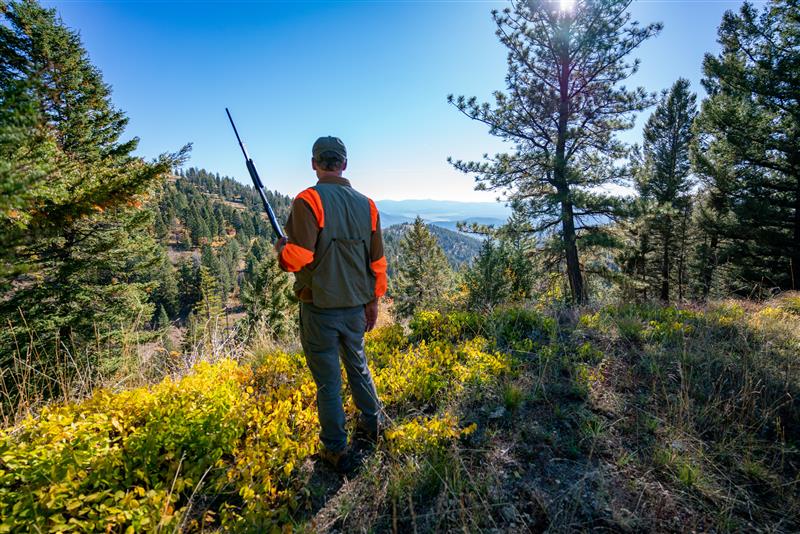
America’s 640 million acres of national public lands provide irreplaceable hunting and fishing opportunities to millions of Americans.

Learn More About Access
What TRCP is Doing

We’re working to safeguard America’s public lands so hunters and anglers always have quality places to pursue their passions.
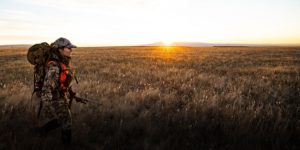
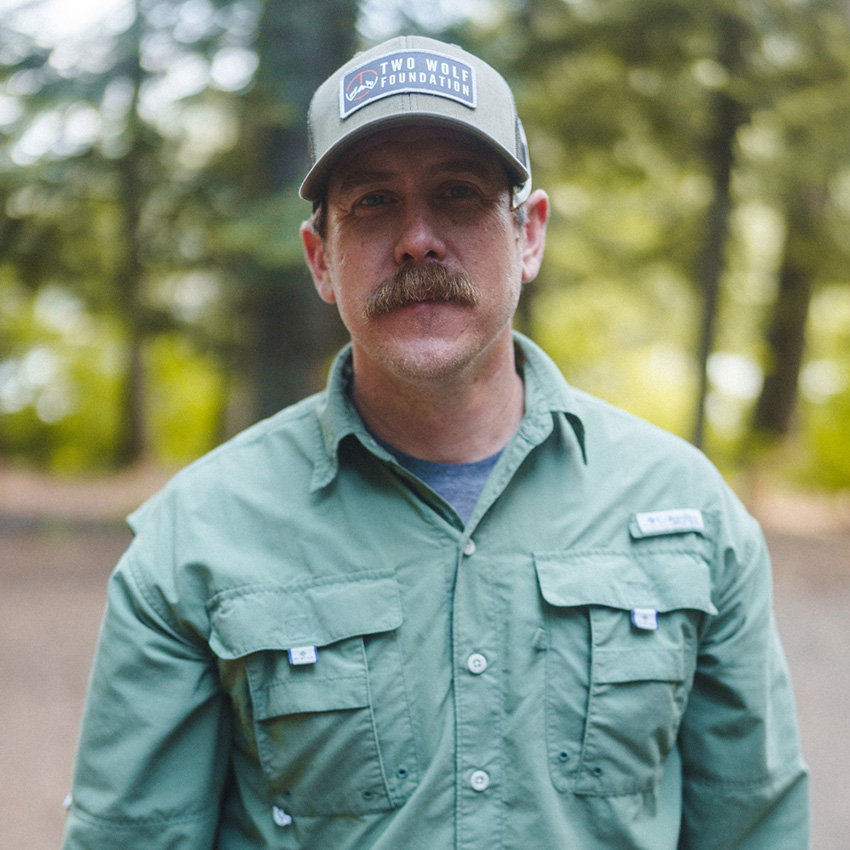
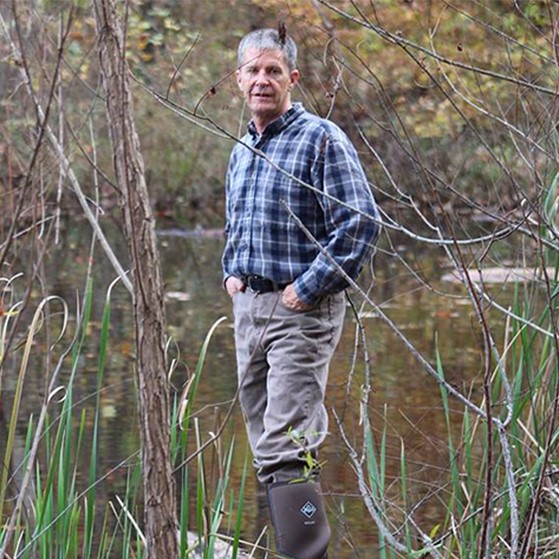
 Brian Flynn, Two Wolf Foundation
How Sportsmen Are Doing It Right

Brian Flynn, Two Wolf Foundation's Story

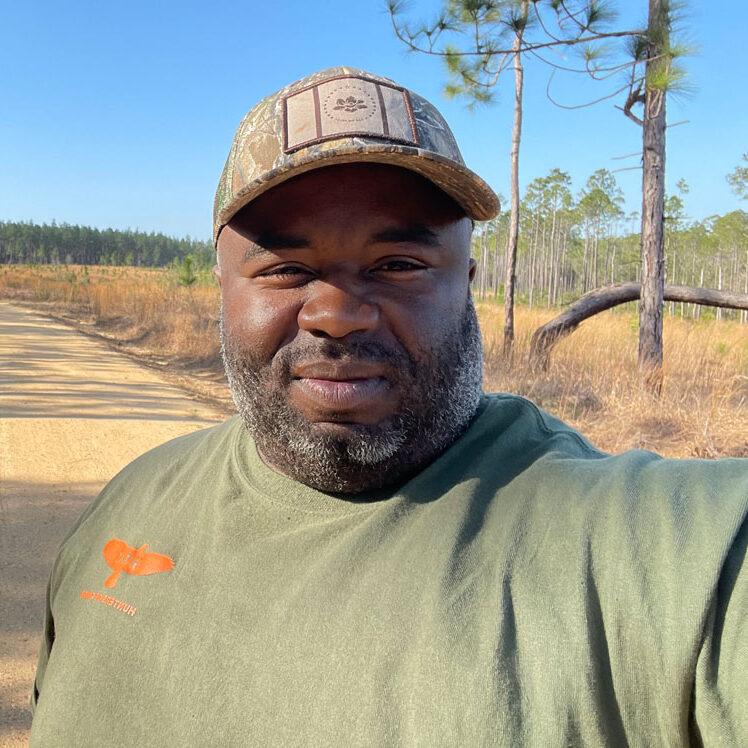
Following a distinguished career in the U.S. Army, lifelong outdoorsman Brian Flynn returned home from a deployment in Afghanistan and…

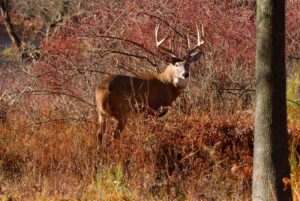
Hunting
Why It Matters

Key Issues for America’s Hunters

Your source for the latest policy updates, conservation challenges, and opportunities shaping America’s hunting traditions.

What TRCP is Doing

We’re fighting for meaningful policy changes that benefit wildlife, our waters, and the American landscapes that make our outdoor traditions possible.

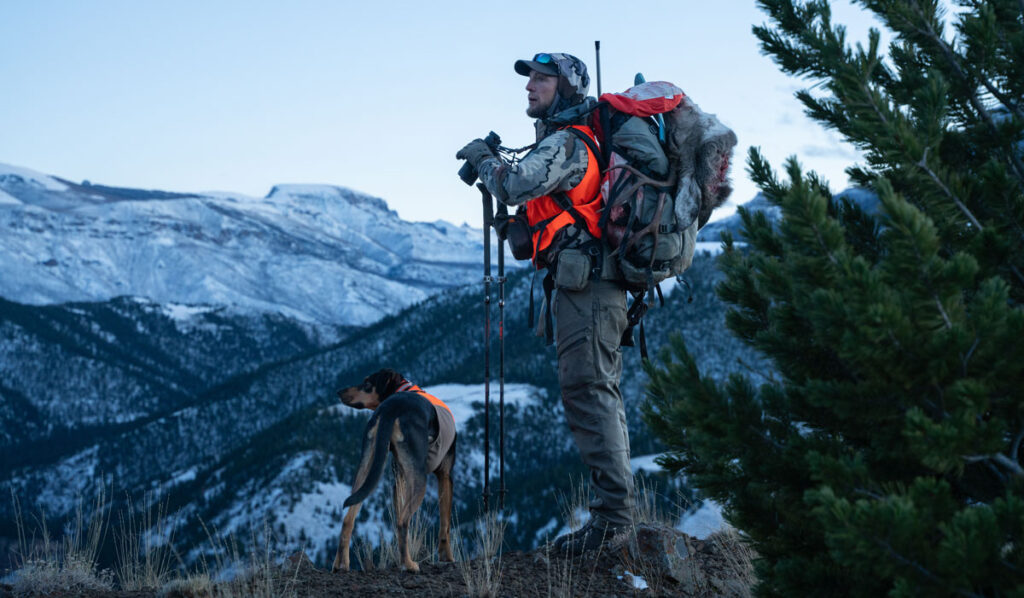
 Ryan Sparks
How Sportsmen Are Doing It Right

Ryan Sparks's Story

TRCP’s “In the Arena” series highlights the individual voices of hunters and anglers who, as Theodore Roosevelt so famously said,…
Fishing
Why It Matters

Key Issues for America’s Anglers

Your source for the latest policy updates, conservation challenges, and opportunities shaping America’s fishing traditions.

Sign Up For Forage Fish Updates
What TRCP is Doing

We’re fighting for meaningful policy changes that benefit wildlife, our waters, and the American landscapes that make our outdoor traditions possible.

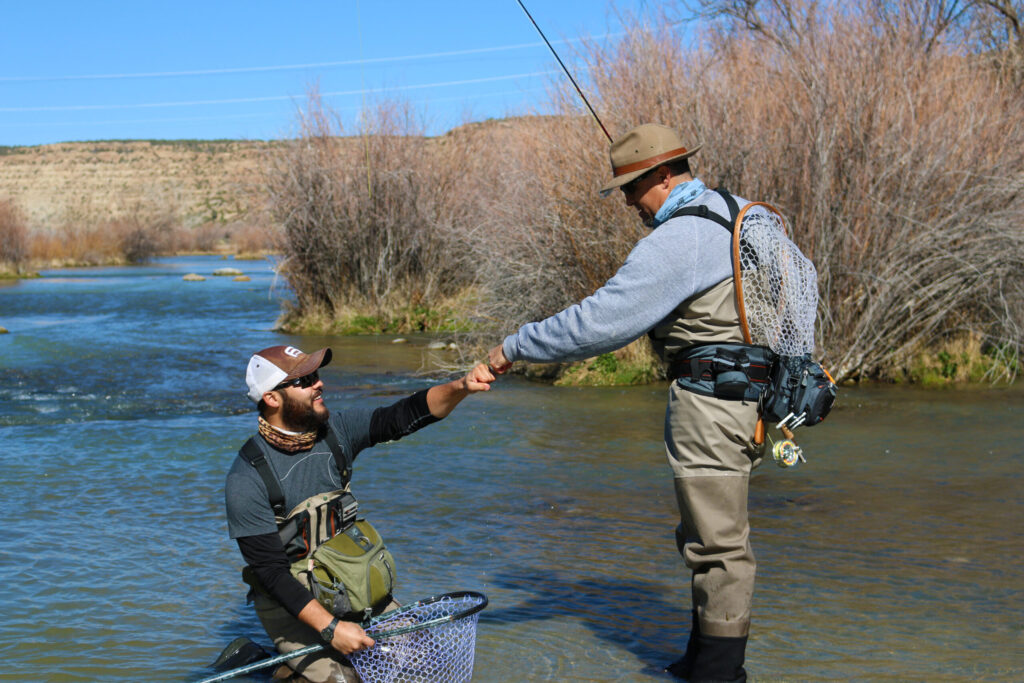
 David Mangum
How Sportsmen Are Doing It Right

David Mangum's Story

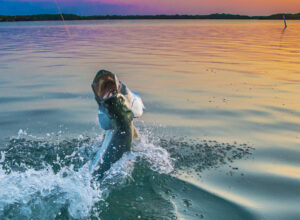
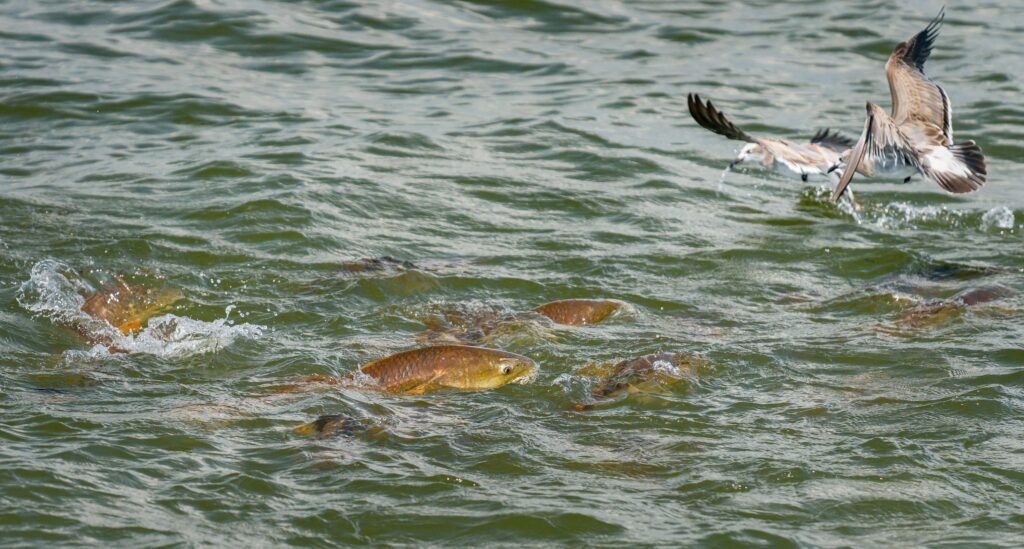
Capt. David Mangum is a YETI ambassador and outdoor photographer who utilizes his talents to produce media that inspire a…

Private Land
Why It Matters

Stewardship on America’s private lands

With 70 percent of U.S. lands in private hands and many of our best hunt and fish opportunities occurring there, investing in voluntary conservation on working lands safeguards access, strengthens habitat and water quality, and ensures resilient landscapes.

Take Action - Farm Bill 2026
What TRCP is Doing

We champion policies and programs that restore wildlife habitat, improve soil and water health, and keep working lands productive.

 Ward Burton
How Sportsmen are Doing It Right

Ward Burton's Story

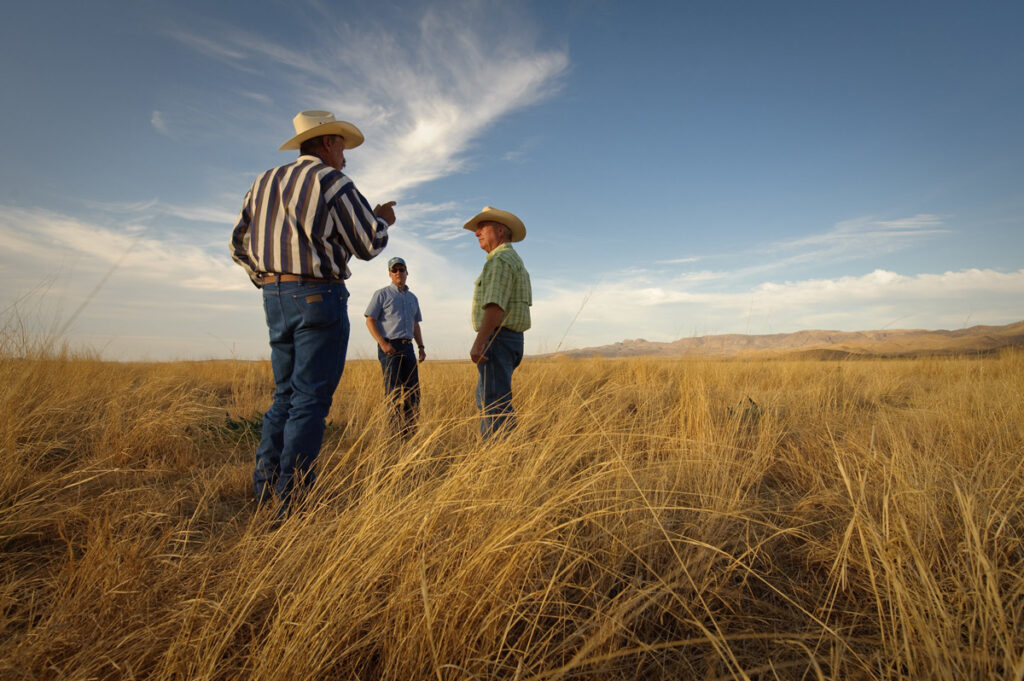
Ward Burton’s NASCAR driving career stretched across most of two decades. As an avid sportsman and conservationist, he founded the…

Special Places
Why It Matters

Special Places Worth Protecting

America’s most iconic landscapes provide unmatched habitat and unforgettable days afield. These places sustain wildlife, anchor local economies, and define the hunting and fishing traditions we pass down.

What TRCP is Doing

We’re working to conserve special places that provide world-class habitat and unforgettable opportunities for hunters and anglers.

 Franklin Adams
How Sportsmen Are Doing It Right

Franklin Adams's Story

As a true Gladesman, conservationist, and historian, Capt. Franklin Adams has spent more than six decades championing Everglades restoration efforts…

Habitat & Clean Water
Why It Matters

Healthy Habitat Powers Every Pursuit

All hunting and fishing opportunities depend on quality habitat, from clean water and healthy wetlands to winter and summer habitats and the migration corridors that connect them.

All About Habitat & Clean Water
What TRCP is Doing

We are working to safeguard the habitats that power every hunting and fishing opportunity.

 Alex Harvey
How Sportsmen Are Doing It Right

Alex Harvey's Story

Alex Harvey, founder of Legacy Land Management, is a registered professional forester in Mississippi and Alabama with a Master's degree…

Science
Why It Matters

Science That Guides TRCP

From conserving migration corridors and wetlands to ensuring clean water and resilient landscapes, science provides evidence that turns conservation goals into effective action.

Science for Conservation
What TRCP is Doing

For hunters and anglers, science safeguards the experiences we treasure including resilient big game populations, abundant fish, and wild places that endure changing social landscapes.

Jamelle Ellis
Your Science Expert

Jamelle Ellis's Story

Jamelle Ellis joined the Theodore Roosevelt Conservation Partnership in 2022. Jamelle spent the last three years as an environmental sustainability…

Where We Work
Across the Nation

Conservation Across America

TRCP works across the country to ensure hunters and anglers can enjoy healthy fish and wildlife and quality days afield, no matter where they live.

See All Issues
TRCP in Your Region

TRCP works across the country to ensure hunters and anglers can enjoy healthy fish and wildlife and quality days afield, no matter where they live.

Who We Are
Our Mission

To guarantee all Americans quality places to hunt & fish

We unite and amplify our partners’ voices to advance America’s legacy of conservation, habitat, and access.

Our Mission & Values
Our People & Partners
  • Meet the TRCP Team

    Our staff and board members unite and amplify our partners’ voices to advance America’s legacy of conservation, habitat, and access.

    Meet the Team
  • Our Partners

    ‘Partnership’ is in our name. We work with 64 diverse partner groups that represent today’s leading hunting, fishing, and conservation organizations in order to strengthen the sportsman’s voice in Washington, D.C.

    Our Partners
  • Corporate Council

    TRCP’s Corporate Council is made up of diverse corporations that share a common passion for conservation.

    Corporate Council
Our Organization

Looking for more information?

Explore our latest news, policy updates, and conservation resources to get the information you need.

Giving
How You Can Help

To guarantee all Americans quality places to hunt & fish

Your tax-deductible donation will support TRCP's mission, now and into the future.

DONATE
Special Ways to support trcp
  • Capital Conservation Awards Dinner

    The CCAD is one of Washington's best-attended conservation celebrations, featuring dinner, cocktails, and a silent auction.

    Learn More
  • Step Into the Arena

    Help us ensure that our treasured wild habitats and game remain intact for the next generation to enjoy – lend your support to the TRCP’s efforts today!

    Donate
  • Roosevelt Roast

    TRCP has partnered with Afuera Coffee Co. to further our commitment to conservation.

    Learn More
More donation options

Find the best way for you to lend your support. Join one of TRCP’s donor circles for special invitations, premium offerings from outdoor retailers, and more exclusive benefits. Take control of your legacy with planned giving or contribute to special conservation funds.

Other Ways To Give
News
In the Spotlight

Wildlife, Wildfire, and the Landscapes that Connect Us

The stars aligned, and the tag gods smiled down on me and 2026 is my year of the deer. I was lucky enough to draw three mule deer tags in three different states; the first tag is in my home state of Nevada and is an early-season archery tag. The second is a Utah muzzleloader tag, and the third is a late-season archery tag in Idaho. All great tags with great trophy potential, but the one I am most excited about is my Nevada archery tag.

Read More

Stay Informed

Receive our newsletter, the Roosevelt Report, right in your inbox. Never miss the latest news in conservation issues.

by:

posted in: General

November 12, 2026

Wildlife, Wildfire, and the Landscapes that Connect Us

In Kris Coston’s “Year of the Deer,” wildfires have challenged and changed his hunting season

The stars aligned, and the tag gods smiled down on me and 2026 is my year of the deer. I was lucky enough to draw three mule deer tags in three different states; the first tag is in my home state of Nevada and is an early-season archery tag. The second is a Utah muzzleloader tag, and the third is a late-season archery tag in Idaho. All great tags with great trophy potential, but the one I am most excited about is my Nevada archery tag.

Seeing migration movement in real time

I love seeing mule deer, particularly when I have a tag in my pocket. I can sit for hours and be perfectly content watching them as they interact with each other and their environment. Observing mule deer and learning their habits is one of my secrets to success. In preparation for my Nevada tag, I spent months scouting and familiarizing myself with the deer in my area. I studied their patterns, the areas they frequented, what they were eating, where they watered, and how they utilized the topography to find cover and bedding areas. As I put all this information together, I began to recognize the corridors that the mule deer in my area prefer to utilize when moving between forage, water, and cover.

Whether it’s in your own backyard or a state away, when you learn to see wildlife corridors, you start to see more animals. Mule deer are creatures of habit and tend to utilize the same areas year after year, generation after generation. They favor different areas within those movement corridors during seasonal migrations for forage, shelter, breeding, and fawning.

Typically, mule deer leave their relatively low-elevation winter ranges in the spring to follow the green wave of fresh vegetation up the slope toward higher-elevation summer ranges as the snow melts away. They reverse direction in the fall, heading back down the mountains toward the low sagebrush flats and valley floors to breed and escape the harshest winter storms.

The hunt begins

My Nevada early-season hunt kicked off August 1. I focused on higher-elevation areas that still had plenty of good forage and were within a mile of a decent water source. I was looking for benches and saddles with pockets of cover for bedding and open sagebrush slopes for browsing. These are the locations I have found that bachelor groups of summer bucks tend to prefer.

It was not long before I had glassed up a few groups of bucks hanging out in different drainages. I had narrowed in on a zone of highly utilized summer habitat near the top of a movement corridor. Really, it was more of a wildlife highway full of dozens of different species, all reliant on the same areas of interconnected habitat that provides them with food, shelter, and water.

From my glassing knob, I saw a gray fox and a badger both grubbing for voles and ground squirrels. A sow black bear was teaching her cubs where to find the low-hanging fruits of summer. I watched ravens harrying red-tailed hawks, who would dive and flip upside down to ward off their pursuers. Golden eagles chasing black-tailed jackrabbits, and all types of small birds flying in and out of the brush looking for the next tasty treat. Does and fawns browsed on willows far down in the creek bottoms, while bucks hid from the hot midday sun in the shade of pinyon trees. This area was alive, full of the diverse species that healthy thriving habitat supports.

As I looked over my shoulder 40 miles to the northwest across the valley to the Petersen Mountain Range, a completely different scenario had started to play out.

Aftermath of fire in Nevada.

Wildfire smoke was rising thousands of feet into the sky, ice capping and creating a pyrocumulus smoke column. A smoke column like that is a telltale sign of intense fire behavior capable of creating its own atmospheric conditions. Beneath that column, flames were consuming thousands of acres of critical mule deer habitat in what would later be named the Bug Fire, burning nearly 94,000 acres, including most of the Petersen Range in northwestern Nevada.

The Petersen range is a vital summer and winter habitat for mule deer in northwestern Nevada and eastern California. Their high peaks provide summer habitat for resident mule deer, while the surrounding foothills and valley bottoms provide crucial winter habitat for deer migrating out of the high country of the Sierra Nevada mountains in search of milder temperatures and better forage. These mountains, along with Peavine Mountain and the eastern slopes of the Sierra Nevada near Hallelujah Junction, are part of a larger interconnected landscape that supports seasonal mule deer movement and is an important migration corridor for three different herds of mule deer.

Wildlife corridors and wildfire are in a complicated dance

Fire itself is a natural process that is not new to the Great Basin. One of the biggest differences between historical fire use and the fires we see today is the influx of a host of invasive annual grasses (IAGs) that were established in the late 1800s.  These IAGs supply abundant, fine fuel that dry out faster than native vegetation and thrive in the bare soil that follows a fires path. This has created a damaging cycle in many sagebrush ecosystems: fires bring invasive grasses which perpetuates the fire cycle, meaning more fires, more often.

As I watched the fire grow and burn across the landscape, I could not help but think about how the wildlife in that area was being impacted and to the future importance of restoring the habitats and corridors that connect those mountain ranges. Wildlife corridors are more than pathways between two locations. They are interconnected habitats that provide the forage, water, shelter, and seasonal resources all types of wildlife need to survive. When those connections are disrupted, the effects can extend far beyond the immediate area.

Fire in sagebrush country.

Wildlife and land management agencies across Nevada have recognized the importance of maintaining these interconnected landscapes. Over the last several decades, wildlife management has expanded beyond focusing on individual species within isolated habitats to encompassing a better understanding of how the entire landscape functions, supporting both wildlife populations and biodiversity. Habitat connectivity has become a cornerstone of wildlife conservation in Nevada. Wildlife managers recognize that when animals lose the ability to move across the landscape to utilize seasonal habitats or respond to changing environmental conditions, wildlife populations and biodiversity decline, impacting the entire ecological balance.

Barriers to movement are common

Many barriers to wildlife movement are both man-made and natural, and that was apparent as I looked across the greater Truckee Meadows valley below my glassing knob. What used to be an expansive open valley covered in ranches, isolated housing development, wetlands, and meandering creeks is now crisscrossed by surface streets, U.S. Highway 395, and Interstate 80. This once incredible ecological corridor is now home to sprawling urban development, fences, a few fields and an ever-increasing human encroachment into the wildland-urban interface. This region is not alone; in many other places human action has impacted wildlife habitat and created additional barriers to wildlife movement in Nevada and the West.

Now compounding those barriers is the increasing frequency, intensity, and duration of wildfires that burn thousands of acres of prime forage and cover. Depending on a fire severity and the condition of the recovering vegetation, these burned landscapes can disrupt wildlife movement, drastically reduce the available habitat, and compromise the connections between seasonal ranges for years. The question is not whether fire belongs on the landscape, but what kind of fire, where it is burning, and vegetation type it is burning in. Wildfires that burn in a healthy, fire-adapted ecosystem can restore habitat, while the same fire burning through a sagebrush steppe that is particularly vulnerable to invasive annual grasses can be permanently degraded.

Nevada has moved to remedy these impacts

Nevada has taken important steps toward recognizing and addressing these connectivity challenges.

Through federal initiatives such as Secretarial Order 3362 and Nevada’s State Action Plan for big game migration corridors, state and federal wildlife managers have worked to identify priority big game habitat, winter range, migration corridors, and the conservation partners needed to maintain these landscapes. Nevada has also advanced its wildlife connectivity, and wildlife crossings work through collaboration between the Nevada Department of Wildlife (NDOW) and the Nevada Department of Transportation (NDOT).

The passage of Assembly Bill 112 (AB-112) in 2023 established a Wildlife Crossings Account and strengthened the framework for identifying and prioritizing highway improvements that reduce wildlife-vehicle collisions and improve habitat connectivity.  With the release of NDOTs Inventory of Wildlife Connectivity Needs and the Wildlife Crossings Prioritization Study, NDOW could now focus on the implementation of the Nevada Wildlife Connectivity Plan. These actions are helping to guide the future of habitat conservation, land-use planning, and transportation infrastructure investments in Nevada.

These are all important accomplishments, but there is a wild card in all this connectivity work and that wild card is wildfire!

Wildfire is reshaping the context for wildlife in Nevada

Nevada has lost approximately 12 million acres of habitat to wildfire over the past 30 years. While state and federal agencies, NDOW, and conservation partners have invested considerable time and resources, those efforts have only restored around 2 million acres of wildfire impacted landscapes. The acreage treated represents only a portion of the overall restoration challenges facing NDOW; an acre treated is not an acre restored. The scale of the problem is enormous, particularly on a landscape level when addressing Nevada’s sagebrush ecosystems, where recovery can take decades and where IAGs can alter the landscape and convert it into a low production grass land in a very short period of time.

The impact of wildfire on our sagebrush steppe and our sagebrush reliant species like mule deer and sage grouse are particularly devastating and there are a whole host of other wildlife species who depend upon sagebrush ecosystems for forage, cover, and shelter.

In most burn areas, invasive annual grasses like cheatgrass, medusahead, and ventenata establish themselves following a fire, perpetuating these devastating wildfire cycles by outcompeting the native vegetation and preventing the natural recovery and restoration of a landscape. In these instances where IAGs dominate the landscape, one of the most effective tools that land managers and wildlife agencies have at their disposal are targeted preemergent herbicides like Imazapic and Indaziflam. Both preemergent are specifically engineered to target annual invasive grass, allowing native vegetation to propagate and establish themselves without the crowding and completion of nonnative species. This is why it is vital that our state and federal land managers, along with our wildlife agencies, retain the ability to use every tool available to them. Wildfire restoration and the control of IAGs must remain a vital part of Nevada’s broader wildlife connectivity strategy for native animals and ecosystems.

Agencies and NGOs are doing the work

As I sat watching the fire continue its march across the Petersen Mountains, I could see several other burn scars scattered across the valley. Some were fresh, others were beginning to recover, and a few were from decades ago, with the vegetation only now approaching its former condition. It was a striking reminder that wildfire’s impacts on wildlife habitat can far outlast the burn scars.

I swung my binos back around to make sure the bucks were still bedded where I left them, thinking about how bad the Bug Fire was getting and what the restoration efforts would look like once the fire died down and NDOW could get in and assess the damage. I shook my head while sitting there, thinking about how the deer were going to survive the winter and would there be enough vegetation left to sustain all the wildlife in that area?

Coston with one of his mule deer bucks.

As I packed up my gear and moved locations to a shady Pinyon tree of my own, I was both hopeful and dismayed about the impacts of wildfire and what it will mean for the future of hunting in Nevada and our abilities to restore  critical wildlife habitat on a landscape level. Wildlife crossing infrastructure, habitat connectivity, and wildfire restoration are also all related and interconnected, much like the landscapes that support the recreational opportunities that we value as hunters and anglers.

I was able to put everything together on my Nevada archery tag, harvesting a mature and massy 4×4. My luck continued into my Utah muzzleloader tag, and I filled my second tag with another great 4×4. Mid-November will tell if the tag gods are still smiling down on me as I try to fill my third and final tag on my late season Idaho archery hunt.

I want to acknowledge the outstanding work that NDOW, the U.S. Forest Service (USFS), the Bureau of Land Management (BLM), the Nevada Division of Forestry (NDF), and our hunting, fishing, and other conservation organizations have accomplished in restoring wildfire-impacted landscapes. These agencies and organizations are working on landscape-level restoration projects that can take decades to fully recover. Their work includes rehabilitating burned areas through the control of invasive vegetation, restoring native plant communities, restoration of waterways, water resources and improving habitat conditions for wildlife, but there is much more that goes into these projects.

One of the recurring challenges facing these efforts is funding. Funding for additional staffing and funding to accomplish on-the-ground restoration projects are two critical factors that influence how many projects can be completed. Projects require planning, environmental review, implementation, monitoring, and, in many cases, additional treatments to achieve long-term success. Without adequate staffing and sustained funding, the ability to complete restoration projects at the scale necessary to address Nevada’s wildfire impacts will and has become increasingly difficult.

We have made significant progress identifying Nevada’s wildlife corridors and understanding the importance of maintaining connectivity across  our state, but identifying these corridors is only part of the work ahead. Wildlife corridors exist all over Nevada and across the West. They are critical to the long-term survival of not only our mule deer and big game species but countless other species. Healthy, intact, and interconnected habitats are the foundation of these corridors. They are the pathways of biodiversity and the lifeblood of thriving, interdependent plant and wildlife populations.

Together, I believe we can affect the landscape level restoration efforts required to rehab critical habitats impacted by wildfire, if we utilize all of the tools available to us and fund the agency staff who work tireless day in and day out for Nevada’s wildlife.


The TRCP is your resource for all things conservation. In our weekly Roosevelt Report, you’ll receive the latest news on emerging habitat threats, legislation and proposals on the move, public land access solutions we’re spearheading, and opportunities for hunters and anglers to take action. Sign up now.

by:

posted in: General

Slow Down, Watch Out: Wildlife-Vehicle Collisions Peak Each November

Changing seasons mean more accidents on the roads

This is the time of the year when deer, elk, moose, or pronghorn country requires extra careful driving. Late fall brings elevated risks to both big game and drivers for two reasons: animal migration and daylight-savings time.

Two big reasons why wildlife collisions spike in the fall

The end of daylight-saving time in western states — minus Arizona — means it gets dark earlier. Drivers are ending the workday in the dark, running end-of-day errands in the dark, and driving more when road visibility conditions are worse. As hunters know, animals most often move under the cover of night. Compounding this confluence of issues is that late autumn is when big game like deer, elk, and pronghorn move from high elevation summer range down to lower elevation winter range as temperatures drop and the availability of food, water, and cover changes. While moose don’t migrate quite the same way as these other big game animals, many will move shorter distances in the winter, and often into urban areas.

Western states have consistent problems with wildlife collisions

Unfortunately for both wildlife and people, lower elevation meadows and valleys tend to be good places to build roads, rail lines, and houses. They are also good places for migratory wildlife to overwinter, which leads to collisions.

Colorado data shows wildlife-vehicle collisions consistently and significantly rise each fall, with November being the worst month for collisions in Colorado every year since 2010 (the extent of the data available on Colorado DOT’s website).

In Wyoming, collisions increase notably from June through November, with November also being the month with the most wildlife-involved crashes. Additionally, 56 percent of Wyoming’s wildlife-involved collisions from 2021 through 2025 occurred in dark and unlighted conditions, with peak wildlife-vehicle collision times occurring from 5 PM to 11 PM and 5 AM to 8 AM.

Similar patterns occur in Montana, which has one of the nation’s highest rates of wildlife-vehicle collisions. As in Colorado and Wyoming, fall migration and breeding activity increase wildlife movements across roadways, contributing to an average of 3,200 reported wildlife-vehicle crashes and more than 6,000 roadside carcasses collected in the state annually. In some key migration corridors, such as the Paradise Valley along U.S. Highway 89, wildlife account for 50% of all reported crashes.

Roadside carcass data confirm that wildlife-vehicle collisions are underreported, so it’s necessary to combine data sources to better estimate wildlife-vehicle collision numbers. Oregon’s Department of Fish and Wildlife and DOT estimate that more than 6,000 deer and elk are hit and killed on Oregon’s public roads and highways annually. Similarly, over 7,700 animals were killed on Colorado roads by drivers in 2025 with over 4,700 of those being deer, the big game animal most frequently hit and killed across the country. Alaska Department of Fish and Game estimates that more than 800 vehicle accidents involving moose occur annually across Alaska, while Alaska Department of Transportation and Public Facilities has historically estimated roughly 765 animal-vehicle collisions per year, with about 85% involving moose.

Figure 1: Colorado Department of Transportation data on Wild Animal Crashes (reported) by Year and by Month, showing the consistent uptick in collisions each fall.

Figure 2: Aggregated Wyoming wildlife-involved collision data from 2017-2021 show a particularly high wildlife-vehicle collision rate in November, and that while deer is the large animal most likely to be hit by motor vehicles, like in most other states, pronghorn account for over 8% of all wildlife-involved crashes in Wyoming. Adapted from the Wyoming Department of Transportation Highway Safety Report, Wildlife-Involved Crashes, September- October 2026, accessed from

Figure 3: Side-by-side maps showing the Colorado highway segments with the highest (top 5%) wildlife-vehicle collision rates on the Western slope (left side map image), and the Eastern Slope & Plains (right side map image), accessed here.

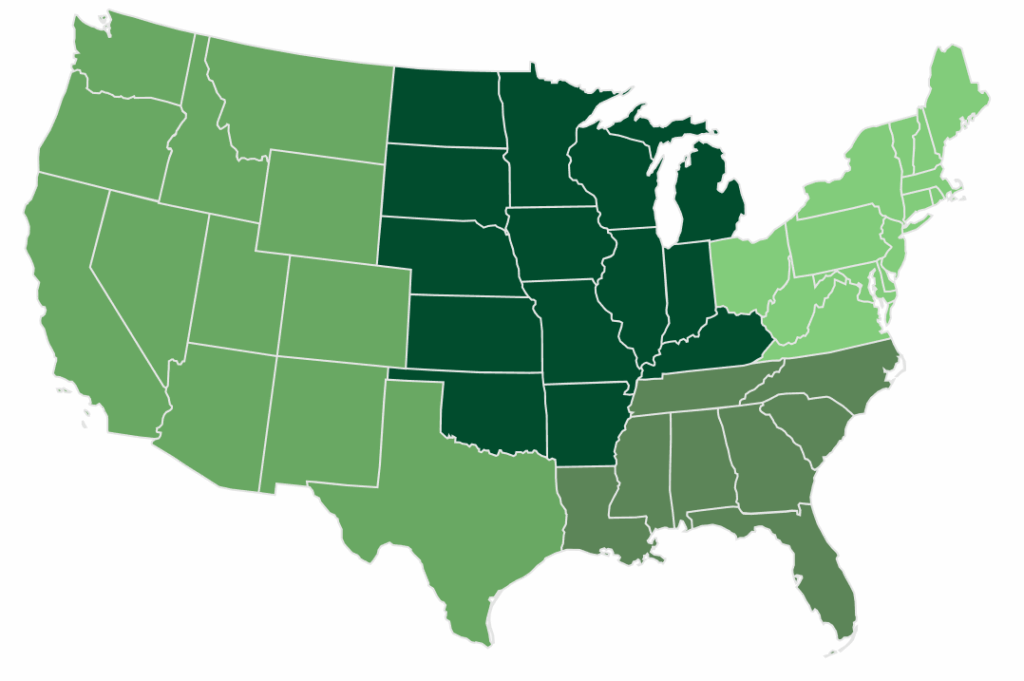
Figure 4: This U.S. map shows animal collision likelihood by state, based on data obtained and analyzed by State Farm from July 1, 2025 through June 30, 2026. State Farm map image accessed here.

How can sportsmen and sportswomen help reduce wildlife and vehicle collisions?

Increasing motorist safety by reducing the risks of wildlife-vehicle collisions is paramount, as these collisions add up in impacts to families and communities, property damage, and harm to wildlife herds.

The U.S. Department of Transportation’s Federal Highway Administration estimates there are 1 to 2 million collisions annually between vehicles and large animals, resulting in 200 fatalities, 26,000 injuries, and more than $8 billion in property damage per year nationwide.  Over the last 15 years, wildlife-vehicle collisions have sadly resulted in an average of over three human fatalities and 340 human injuries per year in Colorado. In Alaska, about 11 of its approximately 800 wildlife-vehicle collisions result in serious injury or death to a motorist each year. In Idaho, wildlife-vehicle collisions resulted in one human fatality and an estimated 1,382 property damage claims in 2023 alone, but on average, between one and four human fatalities and 1,010 collisions occur annually.

While careful and alert driving can help reduce the chances of these scary and dangerous collisions, proven infrastructure improvements can radically reduce the number of collisions on dangerous sections of road.

The TRCP continues to support funding and policies that conserve wildlife corridors, including wildlife crossing infrastructure development in wildlife-vehicle collision hot spots and areas where fish and wildlife have been cut off from their historical ranges. In many places, adding overpasses, underpasses, and fencing can help ensure that wildlife can move between seasonal habitats and necessary resources without compromising motorists’ safety. In 2021, TRCP and partners successfully established a new wildlife crossings pilot program through the Bipartisan Infrastructure Law dedicating $350 million over a five-year period for the construction of new wildlife-friendly overpasses and underpasses. This bill meant that for the first time ever, programmatic federal investment directly supported the work of state wildlife and transportation agencies working on this issue. TRCP is also excited that the pilot project and funding was included in the latest version of the Surface Transportation Reauthorization Bill that Congress is currently working to pass.

Continued investment in big game data acquisition and analysis, and habitat stewardship work by both state and federal agencies has produced the kind of baseline information that informs conservation and infrastructure decisions where important big game habitat and migration corridors are at stake. Since 2018 when Department of the Interior Secretary Ryan Zinke signed Secretarial Order 3362, the Bureau of Land Management has contributed $10 million to the National Fish and Wildlife Foundation’s Western Big Game Seasonal Habitat and Migration Corridors Fund, which in turn has leveraged more than $70 million in matching contributions. These funds have contributed to improved big game migration data, which continues to inform habitat conservation, restoration, and wildlife crossing infrastructure decisions.

Together, we will continue doing our part to make our roads safer for you, for our friends and families, and for big game herds across the country.

Learn more about TRCP’s work on migration corridors here.

Read more about Secretarial Order 3362 and how bipartisan support has built big game migration corridors here.

Blog Data Sources:


The TRCP is your resource for all things conservation. In our weekly Roosevelt Report, you’ll receive the latest news on emerging habitat threats, legislation and proposals on the move, public land access solutions we’re spearheading, and opportunities for hunters and anglers to take action. Sign up now.

by:

posted in: General

November 10, 2026

Hunting, Mule Deer, and Forest Management in the Bridger-Teton National Forest: An Interview with Braden Tethal

Braden Tethal grew up in Wyoming and currently resides in Pinedale. He loves chasing big mule deer and spends all year watching them and learning their patterns. This interview is part of a series on the Bridger-Teton National Forest, which is currently revising its Forest Plan. Hunters and anglers like Braden Tethal are speaking up for the forest’s incredible hunting and fishing opportunities today.

TRCP:  Braden, what first drew you to hunt in the Bridger-Teton National Forest? What first drew you there?

Braden Tethal: I grew up there.  I’ve been in the Bridger-Teton for as long as I can remember. It really is my second home—especially those core areas that my dad returned to year after year. I’ve watched the same trees grow (and fall) since I was in kindergarten. I’m from the far southwest corner of Wyoming, and my dad started hunting in the forest way before my time. I was on the back of a horse up there when I was five years old. I owe my dad a lot for getting me into it and making sure I was involved. I was a part of moose, elk,  and deer hunts up there. My dad is more of an elk guy, so I didn’t really get into the deer world through him—that became more of my own thing—but a lot of the knowledge I gained came from those early years in the forest chasing elk.

TRCP: Are there any moments that stand out the most—your most memorable hunting experience in the forest?

Braden Tethal: If I had to narrow it down, it’s being able to come back year after year and build on what you’ve learned. Going back to the same places and compounding that knowledge is huge. You learn how animals behave in different seasons, how pressure changes things, and how the landscape shifts over time.

Braden Tethal with family in the BTNF after a successful elk hunt. Photo courtesy of Braden Tethal.

One of the earliest hunts I can remember was an elk hunt with my dad. We were riding horses in, and there was a herd of elk on the side of the hill. My dad was the kind of hunter who would take the cow if that was the shot, but I was sitting there as a seven-year-old staring at this beautiful six-point bull up on the skyline. I was yelling at my dad to come back and shoot him. Then I saw a cow rolling down the hill, and right after that the bull stepped out of the trees where he could see it. That image of a classic 6×6 bull sky lined 250 yards away is forever ingrained in my mind, and from then on, my goal was always to get one of those myself. Once I got my first six-point bull on public land in the forest, my gears really shifted, and I went all in on muleys.

TRCP: Why do the mule deer herds in this area matter to you personally?

Braden Tethal: They mean a lot to me. Growing up where I did, I was used to seeing big deer, and when I was younger, I think I almost took that for granted. Elk felt more novel to me at the time because deer were everywhere. Over the years, though, I’ve watched the ebbs and flows in those herds. I remember the winter of 2016-17 and seeing how hard that was. I found my first shed antler when I was four years old, practically right out my back door and boy did that light a fire that’s still burning today.

More recently, being involved with conservation groups has made me think more deeply about development and how it affects migration and habitat. Even where I grew up, we don’t see the same things we used to because pinch points have been cut off; winters have taken a toll, and pressure has changed where those deer go. A lot of deer I used to see now move into neighboring states because of development and pressure. To me, mule deer are the icon of the West. They represent resilience, migration, public lands, and open corridors. When you support mule deer, you’re really supporting an entire functioning ecosystem.

TRCP: What challenges have you seen in these herds, and how have they impacted your hunts?

Braden Tethal: Development is a big one. There are places that used to feel wild that now have private development, houses, and infrastructure where it never used to exist. In some areas, you can be on public land and almost feel like you’re trespassing because there are so many cameras, buildings, or signs of private encroachment nearby. Around places like Pinedale, you can literally see tens of thousands of deer migrating through neighborhoods, and that never used to be the case. Some winter range is overgrazed, and some migration bottlenecks have become much more fragile because of development.

To me, mule deer are the icon of the West. They represent resilience, migration, public lands, and open corridors. When you support mule deer, you’re really supporting an entire functioning ecosystem.

Braden Tethal

TRCP: With the Bridger-Teton forest plan helping guide the future of the forest, what changes—or what things staying the same—would help support healthier mule deer herds?

Braden Tethal: One of the big things is prioritizing responsible, motorized vehicle use. I’ve been up there and had side-by-sides and other machines blow right by me on closed roads or in places they shouldn’t be. I’ve got a side-by-side too, and I enjoy it as much as the next guy, but it must be done responsibly. I don’t think we need roads everywhere. Part of what makes those places special is being able to go somewhere and not hear motors. People value dark skies and quiet spaces, and that matters.

Braden with a sturdy mule deer buck in the BTNF. Photo courtesy of Braden Tethal.

Habitat work also matters—a lot. Shrub growth, aspen regeneration, and healthy understory are critical for deer. I went to school in Montana, so I got to see a lot of forest management there, and in some places the forest was so dense you could barely move through it. In contrast, where you have good understory growth and woody browse, deer have what they need to stay healthy. And more broadly, with all the growth in outdoor recreation in western Wyoming over the last decade, we need people to recreate responsibly. That applies to hunters, hikers, snowmobilers—everyone. If people care about these places, they need to take care of them.

TRCP: Do you have anything else you want to share about the Bridger-Teton forest, or what hunting and fishing there mean to you?

Braden Tethal: I’ve done everything from hunting, snowmobiling, fishing horseback riding and riding my side by side there in the summer, and I have a lot of good memories tied to that place. I have no plans to leave. I’ve had opportunities to leave Wyoming for different career choices, but I’ve deliberately stayed because I love the mule deer, the outdoors, and the public land. Having public land right out my back door is how I grew up, and I feel like that shaped me in an important way.

Ensuring the updated Bridger Teton Forest Plan reflects the priorities of sportsmen and women will be a team effort, and we want to know what matters most to you. Please take five minutes to add your voice to TRCP’s SURVEY and help inform our work to advocate on behalf of hunters and anglers throughout the revision process.  


The TRCP is your resource for all things conservation. In our weekly Roosevelt Report, you’ll receive the latest news on emerging habitat threats, legislation and proposals on the move, public land access solutions we’re spearheading, and opportunities for hunters and anglers to take action. Sign up now.

by:

posted in: General

November 2, 2026

Mark Rehbein joins the TRCP as Vice President of Development

Rehbein is a conservation fundraiser with more than a decade of experience building philanthropic support for fish and wildlife habitat.

The Theodore Roosevelt Conservation Partnership (TRCP) is pleased to announce the hiring of Mark Rehbein as Vice President of Development, bringing more than a decade of conservation fundraising and nonprofit leadership experience to the organization. As the nation’s most impactful conservation coalition, TRCP will draw on his expertise to expand philanthropic support and build lasting relationships with the donors and partners who make its work on behalf of hunters and anglers possible. 

Prior to joining TRCP, Rehbein spent more than 12 years at Bonefish & Tarpon Trust, where he served as director of development and helped drive the organization’s growth. During his tenure, he expanded fundraising programs and cultivated partnerships that supported fisheries research, habitat conservation and advocacy throughout the southeastern United States, the Bahamas, Belize and Mexico. 

A lifelong outdoorsman, Rehbein caught his first fish at age 3 and developed an early love of fishing that eventually grew to include hunting. His early professional experiences took him from Alaska’s Kenai Peninsula to Capitol Hill before his passion for the outdoors ultimately led him to a career in conservation. 

“Mark understands that every conservation success for hunters and anglers starts with people who believe in the work enough to invest in it,” said Liz Ogilvie, TRCP’s chief communications and operations officer. “He has spent his career turning a shared love of hunting and fishing into real gains for fish, wildlife, habitat, and access, and he knows firsthand what it takes to carry our sporting traditions forward. As TRCP heads into its 25th anniversary year, Mark will help us build lasting support for the next generation of hunters and anglers.” 

Rehbein graduated from Elon University and later earned an MBA from Florida International University. He lives in South Florida with his wife and son and enjoys hunting, fishing and exploring public lands and waters with family and friends. 

With this addition, TRCP is well positioned to grow the support needed to guarantee all Americans quality places to hunt and fish. 

Learn more about TRCP’s leadership HERE.  


The TRCP is your resource for all things conservation. In our weekly Roosevelt Report, you’ll receive the latest news on emerging habitat threats, legislation and proposals on the move, public land access solutions we’re spearheading, and opportunities for hunters and anglers to take action. Sign up now.

by:

posted in: General

October 27, 2026

TRCP’s Melanie Thornton Brings Western Water to The MeatEater Podcast 

TRCP’s senior director of western water joins Steven Rinella to break down the Colorado River and Rio Grande for hunters and anglers and make the case for keeping fish and wildlife in the conversation 

Every cutthroat trout in a headwater creek, every mallard working a backwater marsh and every elk herd watering in a desert canyon depends on the same thing: water in the river. Few people understand that connection better than Dr. Melanie Thornton. 

Thornton, TRCP’s senior director of western water, joined Steven Rinella on episode 951 of The MeatEater Podcast. By Rinella’s count, she’s the first hydrologist ever to sit on the show’s couch. She walked listeners through how the Colorado River and Rio Grande are managed, why there is less water to go around and which solutions are already working. 

Thornton brought a scientist’s training and deep experience in federal water policy to the table. After earning her Ph.D., she spent seven years as senior professional staff on the U.S. Senate Committee on Energy and Natural Resources. In that role she worked on Colorado River and Rio Grande management and helped secure more than $15 billion for drought resilience, ecosystem restoration and water infrastructure across the West. On the podcast, she turns that expertise into terms anyone who has watched a favorite trout stream run low can understand. 

Her central point goes to the heart of TRCP’s mission to guarantee all Americans quality places to hunt and fish: “Fish and wildlife don’t have a seat at the table unless somebody brings them there.” TRCP brings hunters and anglers to that table. It works with states, Tribes, farmers, ranchers and conservation partners on solutions that work for everyone, from voluntary conservation and modernized irrigation to restoration projects that keep water on the landscape for fish and wildlife. 

Thornton also offered a lesson any hunter or angler will recognize. You don’t wait for an elk herd to crash before you act. You watch the trends and plan ahead. Water deserves the same approach. 

Hunters and anglers can start by learning where their water comes from, and this episode is a good place to begin. 

Watch “Water Use And Law in the American West” on YouTube or listen wherever you get your podcasts.

HOW YOU CAN HELP

Every hunt and every cast depends on healthy habitat and access to the wild places you love. TRCP’s mission is to guarantee all Americans have quality places to hunt and fish. Help carry this work forward with a donation today.

Learn More
Subscribe


You have Successfully Subscribed!

You have Successfully Subscribed!

You have Successfully Subscribed!

You have Successfully Subscribed!

You have Successfully Subscribed!