by:

posted in:

November 3, 2025

Kids and Goats

Do you have any thoughts on this post?

XHTML: You can use these tags: <a href="" title=""> <abbr title=""> <acronym title=""> <b> <blockquote cite=""> <cite> <code> <del datetime=""> <em> <i> <q cite=""> <s> <strike> <strong>

Comments must be under 1000 characters.

by:

posted in:

October 30, 2025

In the Arena: Saravanakumar “Sav” Sankaran

TRCP’s “In the Arena” series highlights the individual voices of hunters and anglers who, as Theodore Roosevelt so famously said, strive valiantly in the worthy cause of conservation.

Saravanakumar “Sav” Sankaran

Hometown: Asheville, NC
Occupation: Advocate for diverse, inclusive outdoor spaces
Conservation credentials: On top of playing bass and singing for the popular bluegrass band Unspoken Tradition, Sankaran has spent his professional life championing conservation and ensuring that those who might feel alienated by the outdoor community feel welcome.

The son of immigrants, Sav Sankaran was introduced to hunting and fishing by a friend’s family while growing up in Pennsylvania. These early experiences set the foundation for a life of chasing trout and birds with good friends behind good dogs. Working for over a decade in the outdoor retail industry, Sankaran has the expertise and passion to be a loud and persistent advocate for conservation and strives to make the outdoors a more welcoming place for all.

Here is his story.

TRCP: How were you introduced to hunting, fishing, and the outdoors? Who introduced you? 

Sav Sankaran: Despite growing up in an immigrant family with no direct outdoor mentors, I was lucky enough to have been introduced to the outdoors by a childhood friend and his dad, who included me in their adventures fishing for brook trout and hunting ruffed grouse and deer in Pennsylvania.

Those experiences were the genesis of my deep-rooted belief in creating outdoor experiences for people who may otherwise not have those opportunities.

The first time I walked a grouse cover in the Bald Eagle valley in central Pennsylvania, I was enamored with all the sights, sounds, and smells of the autumnal Allegheny woods. On that first hunt, a bird wild flushed and scared the daylights out of me, but I caught a glimpse as it disappeared, and I was hooked. I connected in that moment with the place I called home in a way I had never experienced and have found passion and purpose in the outdoors ever since.

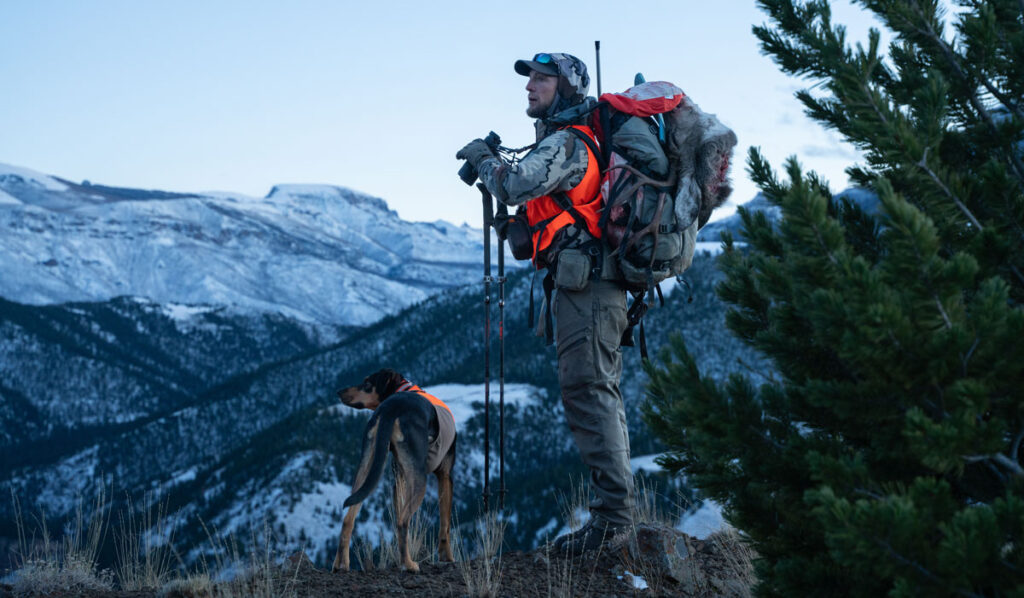
Sav walks in on Chai’s point in Oregon’s Owyhee country.

TRCP: Tell us about one of your most memorable outdoor adventures. 

Sav Sankaran: In 2023, with the support of TRCP, my dear friend and fellow outdoor inclusion advocate Durrell Smith and I drove 2,500 miles across the country with our dogs to explore and hunt the Owyhee in eastern Oregon. To see one of the wildest and most remote areas in the Lower 48 was an incredible experience, and to top it off, my dog, Chai, who was just over a year old at the time, pointed and retrieved her first wild birds—chukar—on that trip!

I made the trip with trepidation because of Chai’s relative inexperience and set my expectations low. If she could find her legs and stay out of the way of the more experienced dogs, I would have considered the trip a success. To my surprise and delight, she handled like a dream and loved every minute of it. We were walking the canyon rim above camp, and I saw one of our companions waving me over towards him and spied his German Shorthair on point. With little to no cues from me, Chai immediately backed the other dog, and they worked in tandem to relocate when the birds started to run. Before I knew what was happening, the flush came, I instinctively shouldered, shot, and dropped a double! Having done little to no work on retrieving yet, I didn’t expect Chai to know what to do next, but she immediately located and retrieved both birds to hand. I could not have asked for a better experience for her first wild birds, and it’s a memory I will treasure forever.

Sav and Chai take a quick break in the quail cover.

TRCP: If you could hunt or fish anywhere, where would it be and why?

Sav Sankaran: As a grouse hunter at heart, my dream is to hunt all the North American grouse species and experience the variety of habitats and ecosystems they reside in. What cooler way would there be to see the country and gain a greater appreciation for the many species that I already love?

TRCP: How does conservation help enhance your outdoor life? 

Sav Sankaran: So many of the environments in which I have had my most impactful outdoor experiences have been public lands that organizations like TRCP help support. Without robust support of conservation of public lands, folks like me would have a dearth of recreation opportunities.

TRCP: What are the major conservation challenges where you live?

Sav Sankaran: Unregulated development, habitat loss, and erosion are all huge conservation issues in Southern Appalachia. We are also a community that continues to recover from the devastating economic and ecological damage of Hurricane Helene, which has introduced a variety of challenges that compound the existing ones.

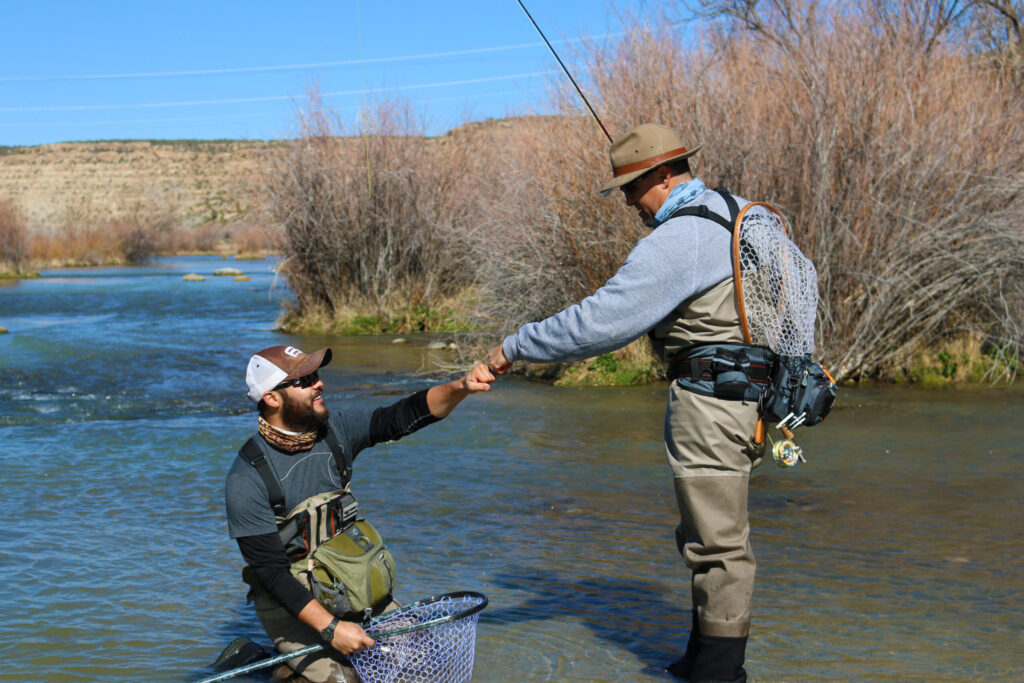
Sav casts on a southeast trout tailwater.

TRCP: Why is it important to you to be involved in conservation? 

Sav Sankaran: As the beneficiary of the devoted work of conservationists to preserve and protect the landscapes I hold dear, I feel a responsibility to continue that work, and to ensure that those who feel othered or alienated by the outdoor community feel welcome. The future of public lands depends on a diverse set of stakeholders!

TRCP: Why should conservation matter to the next generation of hunters and anglers?

Sav Sankaran: Public lands and programs are under threat on a variety of fronts, there has never been a more important time to be a loud and persistent advocate for conservation! I also believe that a sustainable future for the outdoors relies on an inclusive, diverse set of outdoor advocates. 

Photo credits: Sav Sankaran and Brian Grossenbacher


The TRCP is your resource for all things conservation. In our weekly Roosevelt Report, you’ll receive the latest news on emerging habitat threats, legislation and proposals on the move, public land access solutions we’re spearheading, and opportunities for hunters and anglers to take action. Sign up now.

by:

posted in:

October 28, 2025

Marine Fisheries Board Declines to Make Science-Based Reduction to Atlantic Menhaden Catch Limit  

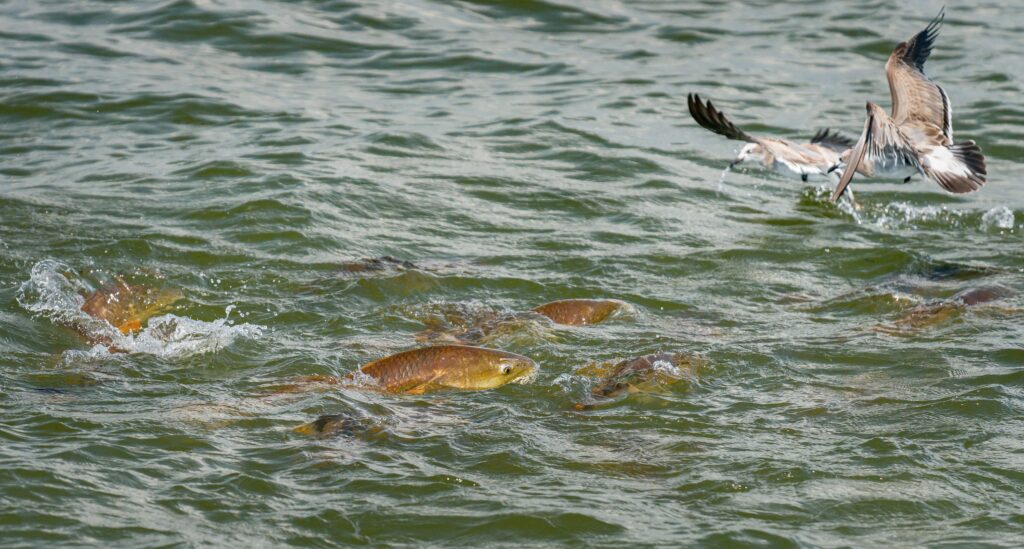
Revised models indicate the need to cut commercial quota by more than half to rebuild striped bass populations, but ASMFC Menhaden Management Board vote today reduces catch limit by a mere 20 percent 

Despite a 2025 stock assessment indicating that Atlantic menhaden biomass is one-third lower than previously estimated – and an immediate need to cut the coastwide menhaden quota by more than 50 percent to support striped bass rebuilding – the Menhaden Management Board of the Atlantic States Marine Fisheries Commission voted today to reduce 2026 commercial catch by only 20 percent. The decision, which will likely prevent striped bass and other predators largely reliant on menhaden like bluefish, weakfish, spiny dogfish, and ospreys from having sufficient forage, was a disappointment for conservation and recreational angling organizations.  

“Rebuilding the Atlantic striped bass population has always involved more than just regulating striped bass harvest. It’s also about ensuring that enough of their key food source, Atlantic menhaden, remains available in the water,” said Chris Macaluso, director of the Center for Fisheries for the Theodore Roosevelt Conservation Partnership. “The Menhaden Management Board’s decision to adopt only a 20 percent reduction in menhaden harvest, despite the science and input from ASMFC’s own scientists who highlighted the risks, makes it more challenging to achieve striped bass recovery by 2029. This step falls short of fully advancing more than a decade of progress toward ecosystem-based management and undermines public trust in the process.”

Three years ago, the Menhaden Management Board voted to increase the Atlantic menhaden catch limits for the 2023-2025 fishing seasons when the best available science indicated it was warranted.

The Board’s decision, made at the agency’s annual meeting in Delaware, ignores its own management framework based on “ecological reference points” (ERPs) — clear, science-based limits that tie menhaden harvest directly to predator health – and new estimates that show there are 37 percent fewer menhaden off the Atlantic coast than previously estimated. The Board also declined to vote for additional coastwide menhaden quota reductions beyond the 2026 fishing season, dodging additional quota cuts for 2027 and 2028 that could have collectively reached an ERP-based reduction that the recreational angling community called for after three years. The Board instead favored revisiting the issue in 2026 to determine if additional reductions are needed.

Notably, three years ago the Menhaden Management Board voted to increase the Atlantic menhaden total allowable catch for the 2023-2025 fishing seasons when the best available science indicated it was warranted. However, now that the best science indicates a reduction in catch is needed, the board has declined to reduce the catch to align with the ecosystem-based management model. 

In early October, the ASMFC released its 2025 Atlantic menhaden stock assessment update, which indicated that the coastwide menhaden biomass is lower than previously estimated and suggested that slashing the coastwide catch limit by more than half would be necessary to ensure sufficient forage for rebuilding populations of striped bass. The Board’s decision today is not expected to achieve the standard 50/50 probability of not exceeding the ERP fishing mortality target – the precautionary approach that would dictate risk-tolerant, science-based management – and instead results in a 100 percent chance of exceeding the target in 2026.

“Today, the Menhaden Management Board chose to abandon ecosystem-based management and will be leaving less menhaden in the water to fuel our coastal ecosystems and sportfishing economies,” said Ted Venker, conservation director for the Coastal Conservation Association.

Unlike traditional single-species models that only measure the health of one species like menhaden, ERPs explicitly weigh the tradeoffs between menhaden harvest and effects on predator populations — in this case, most notably striped bass, also known as rockfish.

TRCP and partners successfully advocated for ERPs to be considered in menhaden management starting in 2020. The expectation of all involved in the process was that this methodology would drive future management decisions, even though following ERPs is not mandated for the ASMFC.

“We will continue working with the ASMFC, anglers, and conservationists to ensure that menhaden harvest reductions go beyond 20 percent and align with the ecosystem’s needs and the board’s stated commitments,” Macaluso said.

The Menhaden Management Board also voted today to initiate an addendum to specifically address Chesapeake Bay Management, which will develop options for quota periods which distribute menhaden removals more evenly throughout the fishing season, as well as options to reduce the Chesapeake Bay Reduction Fishing Cap ranging from status quo to a 50 percent decrease. This process could yield significant benefits to the Bay ecosystem, which has faced multiple concerns in recent years, including osprey breeding failures due to chick starvation in many parts of the Bay.

More information about the broad importance of Atlantic menhaden is available on TRCP’s Forage Fish Recovery Page

Banner image courtesy David Mangum

by:

posted in:

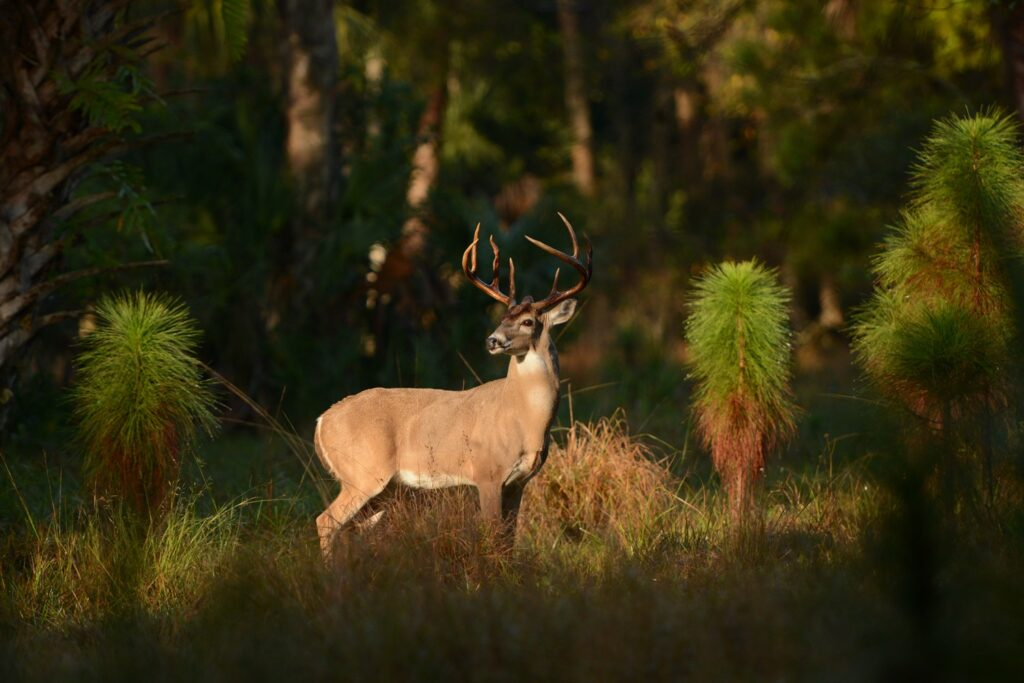
Deer Season – Hunting & CWD: Prepping for the Pennsylvania Season 

As TRCP’s Jim Kauffman prepares for a new deer season in Pennsylvania, he reflects on tradition, responsibility, and staying vigilant about CWD to help keep our herds – and our hunting heritage – strong. 

Each summer, as the days grow shorter and trail cameras start lighting up, I feel that familiar pull toward deer season. The ritual of scouting, planning, and preparing connects me to the same woods my dad and grandfathers hunted. But in recent years, there’s been a new layer of responsibility for that preparation: staying informed about Chronic Wasting Disease (CWD) and how it affects the deer and the places I love to hunt. 

Last season brought long days, snow, and new challenges, but also memories that I’ll never forget, especially carrying out a buck on my back, in the dark, with my grandfather’s rifle, and sharing venison with friends and family. Like many Pennsylvanians, I cherish these traditions and the public lands that make them possible. 

Pennsylvania has a rich tradition of deer hunting camps, and each fall many Pennsylvanians (including me) look forward to pursuing deer in its northern forests. I am fortunate to reside in a region where deer are plentiful, so opportunities also exist to hunt deer at home. Rich agricultural lands with woodlots and forest patches are widespread, and the public lands of the ridge and valley province offer ample deer hunting opportunities. Undulating forested ridges run throughout most of central Pennsylvania, framing semi-developed valleys with productive farmlands. Many of the ridge tops are public land, offering an opportunity to pursue deer that utilize these forests to grow fat on corn and soybeans in the valleys below. The Appalachian Trail runs along the southernmost ridges here, facilitating access to deeper deer haunts, if you are willing to put a few miles on your boots. So before heading to camp, I often pursue deer closer to home.  

The downside of hunting in southern Pennsylvania is facing the reality of CWD. The disease was first detected in wild Pennsylvania deer in 2012, and it has continued to spread across the Commonwealth. Each year, positive cases identified outside of established Disease Management Areas (DMAs) warrant DMA expansions and the potential for changing regulations. So, each preseason, I consult the Pennsylvania Game Commission (PGC) regulations to determine whether I will be hunting in a DMA to plan safe carcass movement, butchering, and disposal. 

In mid-summer, Pennsylvanians purchase their antlerless tags that determine the Wildlife Management Units where they can pursue does. This is a good time to check the CWD regulations and plan for proper field care and butchering. Fortunately, the areas that I plan to hunt this year still fall outside of Pennsylvania’s CWD DMAs.  But this could certainly change in the future as the disease continues to spread – and it is always important to check so you can stay informed about current regulations and requirements. Keep in mind that even if you are hunting outside of Pennsylvania’s DMA areas, you can still get your deer tested if you choose to do so. Testing provides peace of mind to be certain that your deer is not CWD positive, while providing the PGC with additional surveillance data.

During the late summer of this year, I began the usual process of learning a new section of public land on a ridge top closer to home – walking the terrain, looking for signs, and hanging cameras. As summer transitioned to fall, I also spent time at many of my former haunts throughout the northern tier, monitoring conditions and thinking about a game plan for the upcoming seasons. In general, Pennsylvania is having a good mast year, and acorns are plentiful throughout many regions of the state. Scrapes and rubs are becoming more prevalent as bucks prepare for the impending rut, which peaks in Pennsylvania during mid-November. 

The 2025 season will be the first in a very long time that Pennsylvanians have had the opportunity to hunt on most Sundays throughout the fall, thanks to bipartisan legislation that repeals a long-standing ban on Sunday hunting. This legislation provides the PGC with full authority to decide which hunting seasons can include Sunday hunting. By permitting Sunday hunting, we now can extend our hunting opportunities and make hunting more accessible to those with limited time to spend afield. I am certainly looking forward to that opportunity. 

For hunters preparing this fall, it’s worth taking time to check the PGC’s latest guidance on CWD testing, carcass disposal, and best practices—even if your hunting area lies outside a Disease Management Area, talk with your local processor about their disposal methods or encourage hunting partners to get deer tested if they hunt within or near a DMA. Every step we take helps protect the deer herds that define our seasons. 

As hunters, we’ve always cared for the land and wildlife that sustain us. Learning about and adapting to CWD is just the next chapter in that long tradition of responsibility—one that ensures we can keep sharing these woods, and these memories, for generations to come. 

With the Pennsylvania deer seasons fast approaching, I look forward to spending time at deer camp with friends and family. Regardless of success, I am certain this fall will provide another round of memories and stories to tell. Check back in at the conclusion of the season – hopefully I’ll have some good news to report.  

Deer Season – Hunting and CWD.

This new TRCP series shares the personal deer hunting stories of three staff members while exploring the practices aimed at addressing the spread of chronic wasting disease. This season, we invite you to follow along and take part in preserving what we love most about deer hunting. 

As deer seasons open across the country, hunters are packing gear, checking maps, and preparing for the moments that define another fall outdoors. But today’s deer hunters face new challenges – chief among them, the spread of Chronic Wasting Disease (CWD), a 100-percent fatal neurodegenerative wildlife disease that affects members of the deer family. While more and more hunters are finding CWD in their backyards, it remains a source of confusion for many.  

From pre-season prep and regulation changes to lessons learned in the woods and around deer camp, Deer Season – Hunting and CWD will show how everyday hunters are part of the solution. Along the way, you’ll find tips, resources, and reflections that tie together our love of the hunt with our shared responsibility to keep deer herds healthy for future generations. 

Learn more about Chronic Wasting Disease here.

by:

posted in:

October 23, 2025

Introducing TRCP’s New Series: Deer Season – Hunting and CWD 

This new TRCP series shares the personal deer hunting stories of three staff members while exploring the practices aimed at addressing the spread of chronic wasting disease. 

This year marks my 24th year as a deer hunter, and almost all that hunting has taken place within 20 miles of where I’m sitting right now. I suppose I could call it 25 years, but I wasn’t old enough to carry a rifle the first time I got to go along. Back then we had a real deer camp. Dave and Arlene, my great uncle and aunt, had a piece of property a little ways east of here, in the part of western Minnesota that starts to look like the swamps and woods further east.  

There were probably 6-10 hunters on any given day. We’d head for our stands before first light and sit until Uncle Dave got restless, which usually didn’t take more than a few hours, and then we’d get together and plan the midday deer drive. Generally, those who still had tags to fill would sit on stumps, buckets, or box stands on likely escape routes. Everybody else, including the “husky” 11-year-old I was at the time, formed a line and drove the tamarack and cattail swamps toward the posted hunters.  

I still have a clear memory of that first drive. Watching my Dad duct tape the tops of his rubber boots to his jeans, I wondered if I might be in over my head. Turns out I just about was. It was mid-November in Minnesota, and the swamps were frozen, but the ice was only about a half inch thick. Most steps I’d break through, but I was determined to keep up my place on the line. Eventually I figured out I could hop from root to root on the tamaracks and make pretty good progress.  

My strategy fell apart when the forested swamp faded into an open cattail slough. The cattails were taller than I was, so I couldn’t see the rest of the drivers, but I could hear the steady whoops and whistles we used to keep track of each other. About the time I thought I couldn’t break cattails for another step, I stumbled into a beaver run going exactly the direction I was heading. I was soaked to the knee already, so walking in the water was no problem, and I silently praised my genius as a navigator. 

That is, until about 50 yards later when the foot deep beaver trail dropped off to four feet and left me standing neck deep in icy water. I’ll never forget the laughter and pride in Uncle Dave’s eyes when he saw me pop out of the swamp at the end of that drive, exhausted, soaked, grinning, and a newly minted lifelong deer hunter. 

I’d bet that every deer hunter reading this has a similar story, and probably several. Deer hunting creates community, it teaches life lessons, it fosters a connection to nature, and it feeds families.  

That’s why this fall, the Theodore Roosevelt Conservation Partnership is launching a new blog series, Deer Season: Hunting and CWD. Through the eyes of three TRCP staff members: Ryan Chapin in Montana, Aaron Field in Minnesota, and Jim Kauffman in Pennsylvania, we’ll share personal stories from the field and explore what hunters can do to help slow the spread of CWD

Deer Season – Hunting and CWD

As deer seasons open across the country, hunters are packing gear, checking maps, and preparing for the moments that define another fall outdoors. But today’s deer hunters face new challenges – chief among them, the spread of Chronic Wasting Disease (CWD), a 100-percent fatal neurodegenerative wildlife disease that affects members of the deer family. While more and more hunters are finding CWD in their backyards, it remains a source of confusion for many.  

From pre-season prep and regulation changes to lessons learned in the woods and around deer camp, these stories will show how everyday hunters are part of the solution. Along the way, you’ll find tips, resources, and reflections that tie together our love of the hunt with our shared responsibility to keep deer herds healthy for future generations. 

As Theodore Roosevelt once said, “In a civilized and cultivated country, wild animals only continue to exist at all when preserved by sportsmen.” This season, we invite you to follow along and take part in preserving what we love most about deer hunting. 

Learn more about Chronic Wasting Disease here.

HOW YOU CAN HELP

TRCP has partnered with Afuera Coffee Co. to further our commitment to conservation. $4 from each bag is donated to the TRCP, to help continue our efforts of safeguarding critical habitats, productive hunting grounds, and favorite fishing holes for future generations.

Learn More

You have Successfully Subscribed!

You have Successfully Subscribed!

You have Successfully Subscribed!

You have Successfully Subscribed!