October 23, 2025

Hunting and Fishing with a Search and Rescue Perspective

Tips from TRCP’s resident SAR member on how to be found

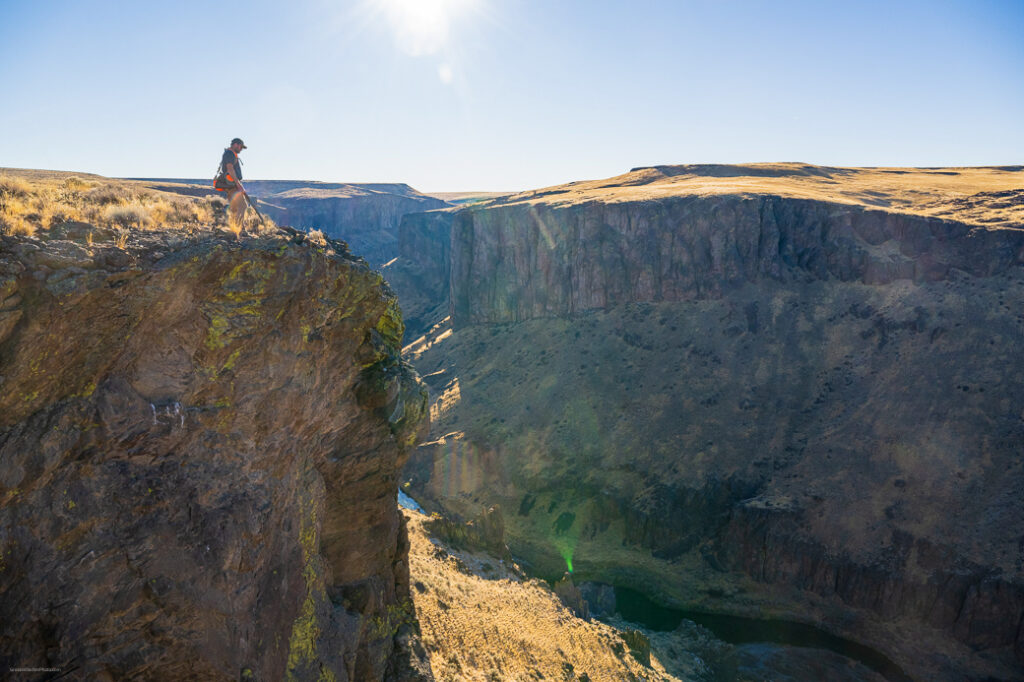
For many hunters and anglers, our love of the outdoors is often because of, rather than despite, the unpredictability that comes with wild places. Otherwise, we’d sit on the couch all day and watch TV. The rugged beauty of the outdoors is enticing, and a big bull or hidden lake can lure the most sensible folks to the next ridge or drainage. 

As hunting seasons ramp up around the country and winter fishing approaches, now is the time to recognize the risks that come with hunting and fishing in our wild places. What can you do to keep yourself and your loved ones from becoming lost while hunting or fishing, and if it happens, how should you act?

This blog shares the basics of Search and Rescue just in time for the seasons we wait all year to enjoy.

Lost vs. Missing

First, there is a difference between someone who is “lost” and someone who is “missing.”  For example, if an angler broke her ankle while crossing a stream and could not walk back to her vehicle, she would be missing, and a SAR team would be deployed to help her get home. If a hunter took a wrong turn and couldn’t find the main trail again, she would be considered lost, and the rest of her hunting party would have to call in a SAR team to help find her.

Both lost and missing people can require a SAR team. This distinction matters because someone who is lost behaves differently than someone who is missing and understanding that distinction can help narrow down the search area. Someone who is truly lost is confused with their current location in respect to finding other locations and is unable to reorient themselves. It is assumed that a missing person knows where they are but is incapable of returning.

In a SAR mission, the lost person is referred to as the “subject” of the search. Whoever reports the subject as missing is interviewed by a searcher and the local sheriff to gain some insight into how they became lost. Based on the answers to these questions, searchers will perform a statistical analysis to determine the probability of detection within a defined search area. The statistical framework used to analyze this data is often based on what the person was doing when they became lost. Hunters and anglers offer different statistics.

Some Numbers on Hunters and Anglers

Hunters are the second most common subject of SAR missions, with hikers being the most common. Despite being common subjects, many hunters refrain from using the term “lost,” and about 33% of lost hunters manage to rescue themselves without the help of rescue teams. Some even avoid searchers out of embarrassment or fear of having to pay a fee for deploying the rescue teams (though most SAR teams do not charge for their services). About 20% of these “lost” hunters are merely overdue and return to their loved ones later than expected.

Several factors influence the reasons hunters become lost and their survivability. Most hunters lose their way in the pursuit of game. Chasing game can lead to deadfall areas and dense underbrush that may become difficult to navigate in the dark. Hunters are more likely to travel at night than most lost persons and can be more active during inclement weather since many hunters believe animals move prior to approaching storm fronts. All of these are factors that rescuers consider when searching for a lost hunter.

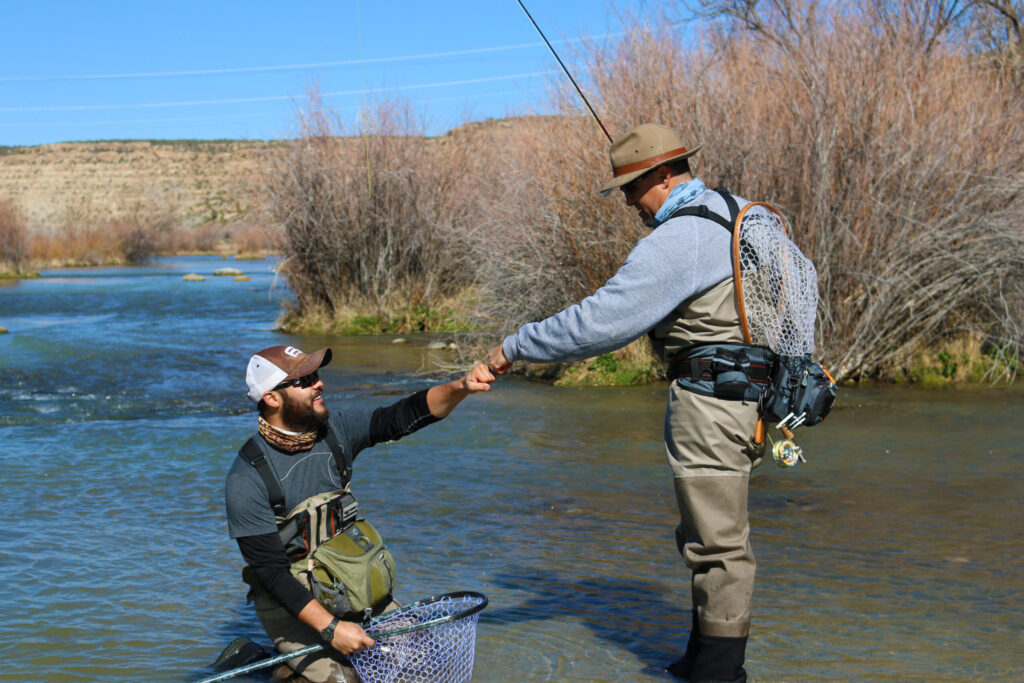
Anglers, while making up a smaller percentage of SAR missions, have a higher percentage of mortalities. This is largely due to their proximity to water. While most anglers can reorient themselves based on their waterway, mistakes can occur while enroute to or from waterways or when the waterway becomes confusing, such as forks in the stream or networks of lakes. Whether fishing from the shore or a boat, wet anglers can rapidly become hypothermic as the sun sets or the weather changes, and this will impact their ability to make decisions. While 44% of lost anglers are truly lost, approximately 30% are merely overdue, 23% become stranded, and a significant number drown.

Be Prepared

Understanding the way people become lost can prevent others from succumbing to the logical fallacies that factor into the decision-making processes of a lost person. It may seem logical to follow a stream downhill, but in some regions, that can lead you to a swamp or a dry washout with no road or civilization in sight. Familiarize yourself with the region prior to going out alone. If you are lost, stay put! Find or build a shelter and stay there until you are found. It’s more difficult for SAR teams to find a moving target.

If you do find yourself turned around, a few key items in your pack can make the difference between returning to your vehicle alive and becoming an unfortunate statistic. A compass, space blanket, and a fire starter are the three basic things that can get you through a tough situation if you know how to use them. There are a variety of technologies out there for GPS devices, emergency beacons, and mapping apps that can also help SAR teams locate you in an emergency.

Support SAR Teams

Search and rescue units are usually volunteer organizations made up of people in the community. Often, these people are also hunters and anglers who love using their outdoor skills to help people in need. SAR teams are dispatched through the local sheriff’s department and are funded through grants and donations. So, the next time you buy a hunting or fishing license, consider opting for the extra donation to SAR in your state. You never know when you might need them!


The TRCP is your resource for all things conservation. In our weekly Roosevelt Report, you’ll receive the latest news on emerging habitat threats, legislation and proposals on the move, public land access solutions we’re spearheading, and opportunities for hunters and anglers to take action. Sign up now.

Do you have any thoughts on this post?

XHTML: You can use these tags: <a href="" title=""> <abbr title=""> <acronym title=""> <b> <blockquote cite=""> <cite> <code> <del datetime=""> <em> <i> <q cite=""> <s> <strike> <strong>

Comments must be under 1000 characters.

Hunting and Fishing with a Search and Rescue Perspective

Tips from TRCP’s resident SAR member on how to be found

For many hunters and anglers, our love of the outdoors is often because of, rather than despite, the unpredictability that comes with wild places. Otherwise, we’d sit on the couch all day and watch TV. The rugged beauty of the outdoors is enticing, and a big bull or hidden lake can lure the most sensible folks to the next ridge or drainage. 

As hunting seasons ramp up around the country and winter fishing approaches, now is the time to recognize the risks that come with hunting and fishing in our wild places. What can you do to keep yourself and your loved ones from becoming lost while hunting or fishing, and if it happens, how should you act?

This blog shares the basics of Search and Rescue just in time for the seasons we wait all year to enjoy.

Lost vs. Missing

First, there is a difference between someone who is “lost” and someone who is “missing.”  For example, if an angler broke her ankle while crossing a stream and could not walk back to her vehicle, she would be missing, and a SAR team would be deployed to help her get home. If a hunter took a wrong turn and couldn’t find the main trail again, she would be considered lost, and the rest of her hunting party would have to call in a SAR team to help find her.

Both lost and missing people can require a SAR team. This distinction matters because someone who is lost behaves differently than someone who is missing and understanding that distinction can help narrow down the search area. Someone who is truly lost is confused with their current location in respect to finding other locations and is unable to reorient themselves. It is assumed that a missing person knows where they are but is incapable of returning.

In a SAR mission, the lost person is referred to as the “subject” of the search. Whoever reports the subject as missing is interviewed by a searcher and the local sheriff to gain some insight into how they became lost. Based on the answers to these questions, searchers will perform a statistical analysis to determine the probability of detection within a defined search area. The statistical framework used to analyze this data is often based on what the person was doing when they became lost. Hunters and anglers offer different statistics.

Some Numbers on Hunters and Anglers

Hunters are the second most common subject of SAR missions, with hikers being the most common. Despite being common subjects, many hunters refrain from using the term “lost,” and about 33% of lost hunters manage to rescue themselves without the help of rescue teams. Some even avoid searchers out of embarrassment or fear of having to pay a fee for deploying the rescue teams (though most SAR teams do not charge for their services). About 20% of these “lost” hunters are merely overdue and return to their loved ones later than expected.

Several factors influence the reasons hunters become lost and their survivability. Most hunters lose their way in the pursuit of game. Chasing game can lead to deadfall areas and dense underbrush that may become difficult to navigate in the dark. Hunters are more likely to travel at night than most lost persons and can be more active during inclement weather since many hunters believe animals move prior to approaching storm fronts. All of these are factors that rescuers consider when searching for a lost hunter.

Anglers, while making up a smaller percentage of SAR missions, have a higher percentage of mortalities. This is largely due to their proximity to water. While most anglers can reorient themselves based on their waterway, mistakes can occur while enroute to or from waterways or when the waterway becomes confusing, such as forks in the stream or networks of lakes. Whether fishing from the shore or a boat, wet anglers can rapidly become hypothermic as the sun sets or the weather changes, and this will impact their ability to make decisions. While 44% of lost anglers are truly lost, approximately 30% are merely overdue, 23% become stranded, and a significant number drown.

Be Prepared

Understanding the way people become lost can prevent others from succumbing to the logical fallacies that factor into the decision-making processes of a lost person. It may seem logical to follow a stream downhill, but in some regions, that can lead you to a swamp or a dry washout with no road or civilization in sight. Familiarize yourself with the region prior to going out alone. If you are lost, stay put! Find or build a shelter and stay there until you are found. It’s more difficult for SAR teams to find a moving target.

If you do find yourself turned around, a few key items in your pack can make the difference between returning to your vehicle alive and becoming an unfortunate statistic. A compass, space blanket, and a fire starter are the three basic things that can get you through a tough situation if you know how to use them. There are a variety of technologies out there for GPS devices, emergency beacons, and mapping apps that can also help SAR teams locate you in an emergency.

Support SAR Teams

Search and rescue units are usually volunteer organizations made up of people in the community. Often, these people are also hunters and anglers who love using their outdoor skills to help people in need. SAR teams are dispatched through the local sheriff’s department and are funded through grants and donations. So, the next time you buy a hunting or fishing license, consider opting for the extra donation to SAR in your state. You never know when you might need them!


The TRCP is your resource for all things conservation. In our weekly Roosevelt Report, you’ll receive the latest news on emerging habitat threats, legislation and proposals on the move, public land access solutions we’re spearheading, and opportunities for hunters and anglers to take action. Sign up now.

November 7, 2024

The Mississippi’s Massive Catfish, Tasty Drums & Bountiful Crabs: Video Compilation

See what happened when TRCP brought a group of talented river anglers with prominent online followings to check off a multitude of fishing wish-list items

TRCP recently hosted several well-known, river-savvy angling influencers on a two-day fishing and crabbing excursion on the Mississippi River, to talk about the importance of restoring the functionality of the river, throughout the basin from the Gulf of Mexico to Minnesota. The video-makers got an up-close look at freshwater and sediment diversions to see firsthand how effective they are at improving productivity and rebuilding land being lost to subsidence, rising seas, and battering from hurricanes.

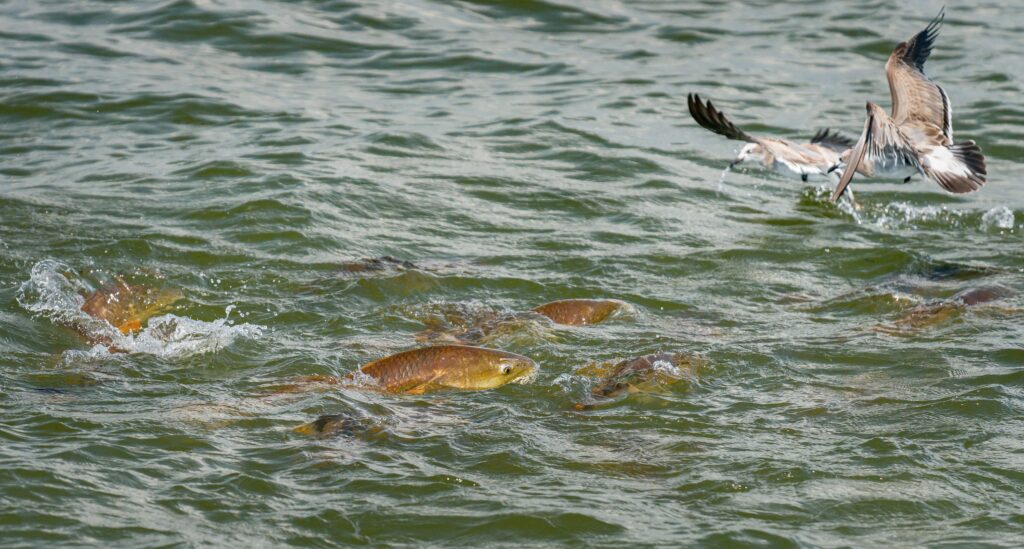
Particularly near the river’s confluence with Neptune Pass, the group got into a bevy of black drum, sheepshead, catfish, redfish, speckled trout, and blue crabs. Chris Macaluso, TRCP’s director of marine fisheries, said that he was impressed by how everyone who attended was already aware of how important a naturally flowing river is for the best angling opportunities.

“Buras, Louisiana, in the fall can be one of the most incredible places in the world to fish because the Mississippi River and its passes and connected marshes are teeming with fresh and saltwater fish, ducks, alligators, crabs, and shrimp,” Macaluso said. “For some, it was their first chance to fish in the river where it meets the Gulf of Mexico and catch redfish and giant catfish with massive ocean-going ships passing by and migrating ducks landing all around. While they hadn’t seen the river at that scale and talked about connecting that much water and sediment into coastal wetlands, all had a story about some of their home waters and how much better the fishing is in rivers that continue to interact with floodplains and support wetland habitats.”

Check out the resulting videos below.

Cole & Jay

Cole and Jay Harken, based in Arkansas, are a husband/wife duo with a passion for wildlife, nature, and fishing in particular who post weekly outdoor content that focuses on freshwater angling as well as interesting wildlife encounters and traditional Southern sporting endeavors like frog gigging.

Marsh Man Masson

Todd Masson is and outdoor writer and lifelong fisherman who travels Louisiana’s Gulf Coast and beyond seeking speckled trout, redfish, flounder, bass, and other sportfish and panfish. His videos offer techniques and locations to help other anglers mimic his success and introduce viewers to local guides. With a mind for conservation, Masson also has been featured in several collaborations with TRCP.

Outside the Levees

This YouTube channel, hosted by Jared Serignè, features hunting and fishing adventures in South Louisiana “outside the levees” of the Mississippi River. The channel offers many videos focusing on targeting invasive species and cultural traditions like shrimping, crabbing, and alligator hunting, with an emphasis on the catch-and-cook mentality.

River Certified

Based in Iowa, Spencer Bauer’s posts on River Certified are mostly about fishing for giant catfish, bass, walleyes, and other Midwestern fish, from kayak, boat, and shore. He also offers angling tips and tricks, and posts on camping and general outdoor fun, with a new video posted every Monday and Thursday afternoon. While in Louisiana with TRCP, Bauer made a number of videos because of all the action he found, including some on landing monster blue catfish.

TRCP is working to improve Louisiana’s coastal wetlands and fish habitat, and enhance recreational fishing opportunities, by restoring more natural flows from the Mississippi River. Click the video below to learn more. 

October 22, 2024

Big, Wild Country: A Brooks Range Hunting and Fishing Story 

TRCP’s Western conservation communications manager recounts his recent caribou hunt in Alaska’s Brooks Range, our country’s most remote landscape  

A lot of folks who are lucky enough to take a fly-in hunting or fishing trip to Alaska say the extreme remoteness doesn’t fully hit them until the pilot takes off and the sound of the engine disappears. 

But for me, it was on the flight in. I knew the pilot wasn’t going to stay. He wasn’t included in our float trip plans. 

We flew over 150 miles from the airstrip, and once the Dalton Highway faded from view, the full expanse below was wild country. For 150 miles it was great mountains and long rivers and jeweled lakes and no roads or trails. To get out from where we were going was a distance that my brain was having trouble comprehending. I’d backpacked in the Bob Marshall Wilderness. I’d hunted wild country in the Rocky Mountains. But this place, the Brooks Range of northern Alaska, held a remoteness to a magnitude I’d never experienced. 

Only from above can one truly see the vastness of the Brooks Range.

Our group of four (Dan, David, John, and me) and three boats (I can’t row in a pool) spent the first day unloading gear, blowing up rafts, and staring in awe of a landscape we’d dreamed of for years. Since hunting on the day you fly in is illegal, we took up the fly rods and waded into the river expecting grayling and resident char.  

However, when John made it to a cliff wall with an obvious pool below and yelped with excitement, I figured that must mean the sea-run Dolly Varden had made their way into the headwaters.  

The fish—20-30 inches in length—hugged the bottom and were strung out in a line on the inside seam of the current. We crouched above them and swung purple, gold, and pink streamers in front of their noses. The Dollies ate with anger and ran with marine strength. Their wide, heavy bodies rode the pull of the river and their color flashed brilliantly in the cold, clear water. A few males tail danced, but most wanted to bully in the deep, giving the 8wts as much bend as they could stand. 

The hens had bellies pink as a sunset and the tips of their mouths were lipsticked orange. The males sported blood-red bellies, kyped jaws, and sharp, jagged teeth. All sides were spotted red with blue halos. For an angler used to brook trout, this was the pinnacle of char fishing. That night, all I dreamed of was fish, despite being able to hunt caribou when the morning arrived. 

Wouldn’t this fish keep you up at night? John Herzer admires a magnificent buck Dolly Varden.

The next day we floated downriver spooking Dollies in every hole, but our focus was on caribou. We made camp six miles downriver, then spent the afternoon and evening glassing the wide basin that opened to the river valley. Blueberries were ripe all around us, and I found a matching set of sheds below the glassing knob. 

Yet no caribou showed in our hours of searching, though the landscape surrounding us displayed the scars of their meandering trails running south. The herd’s path was here, but the herd was not. Their presence etched in the foothills was a clear example of the massive ranges these animals demand for their seasonal movements. Despite supporting so much life, large mammals must travel thousands of miles across the Arctic to find forage and suitable habitats month to month. It will sometimes take a caribou herd years to use their entire range, but ensuring these habitats remain intact means the animals can move where they must in order to thrive. 

Proof that a caribou was once here.

After another night in the teepees, we woke early to climb a bench to the north that overlooked a wide drainage to the east. Before mid-morning, we reached a highpoint to look into the river bottom. And there, as obvious as the sun, were four bull caribou on the white rocks along the river. 

We made a quick play down off the bench, following a spring seep to keep out of sight. Unfortunately, the caribou came up the bench one rise too far and spooked when the wind carried our scent to them.  

As they made their way up over the bench and out of sight, I was struck by how they almost floated over the ground we’d been stumbling through. Their bodies made no wasted movements. Their heads held high carrying the Dr. Suess-esc antlers. Their fur still a dark, summer coat that popped against the willows going yellow and the blueberries and Labrador tea burning red. 

The Brooks Range must be conserved to ensure future generations experience this remote country. To struggle through tussocks, to wade freezing rivers, to see grizzly tracks in the sand, to watch caribou cross country, to eat blueberries by the fistful, and to fall asleep exhausted at the end of the day and dream of doing it all again the next morning.  

We followed the bulls and found them in the riverbed feeding. Dan and David traced the end of the bench out toward them, while John and I made a beeline across the dry basin to the east. After 400 yards, we hit the dry creek bed and waited to see what direction the caribou would go.  

Either pushed by Dan and David or by their own sense of direction, the caribou crossed below us in a single file, and began to follow the rise that would curve them back our way. We scrambled to the cutbank, climbed up, and watched the group close the distance. 

One bull was larger than the rest. His antlers tall and bent in a C. I traced him in my scope as the group closed the distance from 300 to 250 yards, and when John called the final “189,” the bull stepped up on a rise enough for me to see his vitals. With the shot he dropped into the tundra and laid still. 

I thanked the bull when I set my hands on his neck and velveted antlers. The three remaining bulls made their way into the drainage to the east and disappeared. David and Dan arrived, and we all celebrated the first caribou of the trip, the immediate redemption of a missed opportunity, and the gift of good meat that would supplement the freeze-dried meals we all packed. 

The author with a Brooks Range caribou.

The day was cool and having shot the bull in the middle of a dry plain meant a grizzly wouldn’t easily sneak in on us. The clocks hadn’t yet struck 10 a.m. and so we took our time around the bull; admiring his antlers and the body that had carried him across thousands of miles of this wild country before we broke him down into quarters. 

With many hands working, the quartering and packing was swift. And suddenly we were hiking back upriver, loaded heavy, with breaking down camp and meat care ahead of us. I shook my head in disbelief at the dream of a successful caribou hunt being realized so soon after our drop off. 

That night around the fire, fingers greasy from tenderloins wrapped in caul fat, I knew there was over a week left of this trip, and my pulling the trigger only an instant in the whole tale. There were three tags that needed to be clipped onto antlers, and miles of river to ply for char and grayling. Those days would pass as days do, but for the moment, it was all before us, which makes for an adventure


The hunt above occurred on the North Slope of the Brooks Range, hundreds of miles away from the proposed Ambler Road. However, the sweeping crescent of the Brooks Range running east to west across northern Alaksa offers, in its totality, the wildest country left in America. The land that the Ambler industrial corridor would cut across along the Kobuk River is different from the landscape of my hunt, but the remote character is similar, and barreling semis and thousands of culverts interrupting the movements of iconic Arctic animals and fish and degrading the wild space would ruin the experience that so many hunters and anglers travel so far to reach. 

The Brooks Range must be conserved to ensure future generations experience this remote country. To struggle through tussocks, to wade freezing rivers, to see grizzly tracks in the sand, to watch caribou cross country, to eat blueberries by the fistful, and to fall asleep exhausted at the end of the day and dream of doing it all again the next morning.  

The proposed Ambler Road would forever alter the wild character of this country. The 211-mile industrial corridor would slice across the southern foothills of the Brooks Range and require over 2,900 culverts with the potential to cinch off spawning areas for sheefish and Arctic grayling. The estimated 168 daily trips on the road would likely impact big game movement such as the Western Arctic caribou herd that migrates through the region. 

Dan Crockett with a Brooks Range, Arctic grayling.

Fortunately, after an extensive public comment period where over 14,000 hunters and anglers voiced their opposition to the corridor, the Bureau of Land Management issued its final Record of Decision denying the Ambler Road permits in June 2024. The BLM has concluded that there is no way to adequately mitigate the potential impacts of any version of the proposed Ambler Road. Still, new threats to the Brooks Range are emerging. 

An amendment in the Senate version of the National Defense Authorization Act would rescind the Bureau of Land Management’s recent decision to defend Alaska’s Brooks Range and force the Department of the Interior to permit the Ambler Road. It’s critical that the Ambler Road amendment be removed from the final version of this must-pass legislation, which funds our military and will be negotiated by lawmakers in the coming months.  

We need your voice! Send a message directly to your elected officials and urge them to remove the Ambler amendment from the NDAA by clicking HERE

October 17, 2024

Come for the Squirrel, Stay for the Pigeon

TRCP’s western water policy associate reflects on a recent event and how hunting and camaraderie reaffirmed his passion to conserve Arizona’s public lands and waters

As I approach my fifth year as a resident of Arizona, I have been spending time reflecting on two influences that drive my passion for Arizona’s public lands and waters, and the plethora of hunting and angling opportunities they offer nearly year-round. After attending the 8th Annual Family Squirrel Camp, hosted by the Arizona Wildlife Federation and the Arizona Chapter of Backcountry Hunters and Anglers, my belief in the power of mentorship and tenacious commitment were further entrenched. 

Last weekend, I was lucky enough to spend three days in Northern Arizona’s Coconino National Forest with my friend Jack Kelly-Willis, where we attended the 8th Annual Family Squirrel Camp. This annual event centers on offering a comfortable, approachable setting for introducing new hunters to the sport, introducing the unique small game hunting opportunities Arizona affords, and fostering a sense of public land stewardship and conservation ethos in all who attend and participate.  

The 8th Annual Family Squirrel Camp took place over three days in Northern Arizona’s Coconino National Forest.

For three straight days, one would be hard pressed to find a dull moment at Squirrel Camp. First, it was immediately apparent to everyone involved that population numbers for Abert’s squirrel in Arizona were high, with many of us bagging our limit of five squirrels within the first few hours of the day. Additionally, the event coincided with band-tail pigeon season, North America’s only native pigeon species, and with many folks also hitting their daily limit of two pigeons, the phrase, “Come for the squirrel, stay for the pigeon,” was coined and repeated frequently throughout the event (by me).  

The event strongly reaffirmed how important my friend Jack was in introducing me to hunting in a way that equipped me with the skills and knowledge to grow as a hunter independently. He took me on my first squirrel hunt and traded an otherwise successful quail season for one watching coveys fly far away as I fumbled with the safety on my shotgun, and he embodied saint-like compassion and patience as he helped me untangle countless nymph rigs that he helped me set up only minutes before. In that vein, it was incredibly heartening to watch experienced hunters mentor children and less experienced adults as they pursued squirrels across our tiny patch of the Coconino National Forest. Hands down, the most fulfilling and exciting experience I had during Squirrel Camp was helping a new squirrel hunter spot, tree, and shoot her first squirrel. It was a helpful reminder that I have a duty to pass along the lessons Jack imparted to me.  

Experienced hunters mentored children and less experienced adults during their three days together.

The education and mentoring went far beyond harvesting squirrels. There were demonstrations on how to properly process squirrels and pigeons. For those interested in saving their squirrel hides, Jack demonstrated how to properly flesh out, dry, and store squirrel hides.  

Nathan Fyffe, Statewide Small Game Biologist for Arizona Game and Fish Department, gave a talk to the camp on the countless hunting opportunities that exist across the state. Arizona is home to two species of jack rabbit, one species of cottontail, five species of squirrel, three species of quail, more than twenty species of duck, three species of dove, chukar, sand-hill crane, javelina, mule and white-tail deer, elk, turkey, bear, cougar, and others that I am sure I am missing. You could say that Arizona is almost like a Western state, in terms of its hunting opportunities. But I’d say it’s even better – it’s a Southwestern state.  

The author stayed for the pigeon.

The event also showcased the contagious commitment and tenacious dedication to Arizona public lands and waters conservation and passion for hunting and fishing exemplified by Michael Cravens. Michael is the AWF’s Advocacy and Conservation Director and the Vice Chair of AZ BHA. While you might think hunting and fishing for every species Arizona has to offer while raising two kids and a juvenile hawk would leave little time for advocacy, you’d be sorely mistaken. In the past year, I have had the privilege of watching Michael defend public lands at the state capitol, serve game to state politicians in order to highlight the subsistence benefits of hunting in Arizona, and spend a whole day driving 30+ individuals around Northern Arizona to educate them on wildlife corridors, habitat connectivity, and forest management. His commitment and dedication are inspiring. 

Michael Cravens proudly displaying his harvest.

Nights were spent sharing conversations with new and old friends, eating meals consisting of locally harvested game, and listening to fireside speeches from Michael and other AWF and AZ BHA representatives. While giving a speech around a fire immediately enhances credibility in and of itself, these individuals spoke with the passion and vigor of Teddy Roosevelt himself when holding forth on the indescribable value of Arizona’s public lands and waters. They reminded all 40+ attendees of their responsibility to protect, conserve, and enjoy what belongs to them. These folks went a step further in taking the time to educate camp participants on how to proactively engage with the state legislature to advocate for Arizona’s public lands, fish, wildlife, and our sporting traditions.    

I’d be hard pressed to believe a single individual walked away from this event without fully understanding that none of the joy they experienced over our three days together would be possible without our nation’s publicly accessible wild spaces. Even more, I have a feeling that participants left knowledgeable of how to make their voices heard and support efforts to safeguard our country’s public lands legacy.   

Campsite camaraderie at the 8th Annual Family Squirrel Camp.

As a representative of TRCP, I am proud that we are an active state partner with AWF and AZ BHA. I am proud that I get to play a role in conserving Arizona’s wild spaces, and I am grateful for the endless opportunities to hunt and fish in this state.  

This event brought home the power of mentorship and tenacious commitment for me and further inspired my work to guarantee all Americans quality places to hunt and fish. As hunters, anglers, and conservationists, let’s keep reaching out, mentoring, and inspiring our kids, friends, neighbors, coworkers, and the greater community just as Jack and Michael did for me.   

The author and his pup T-Bone.

The TRCP is your resource for all things conservation. In our weekly Roosevelt Report, you’ll receive the latest news on emerging habitat threats, legislation and proposals on the move, public land access solutions we’re spearheading, and opportunities for hunters and anglers to take action. Sign up now.

HOW YOU CAN HELP

TRCP has partnered with Afuera Coffee Co. to further our commitment to conservation. $4 from each bag is donated to the TRCP, to help continue our efforts of safeguarding critical habitats, productive hunting grounds, and favorite fishing holes for future generations.

Learn More
Subscribe


You have Successfully Subscribed!

You have Successfully Subscribed!

You have Successfully Subscribed!

You have Successfully Subscribed!

You have Successfully Subscribed!