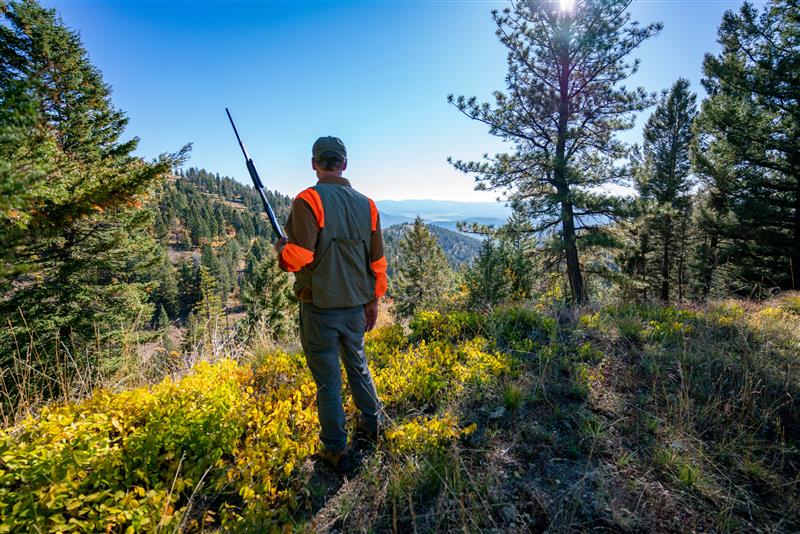
Recap highlights what’s possible when agencies collaborate – and what the state can do in 2026 to conserve big game migration corridors, seasonal habitats, and the hunting traditions they support.
As we approach another Colorado legislative session, the TRCP is working to identify the most promising pathways for continued conservation and management of important big game habitat to ensure quality hunting opportunities continue for generations. Governor Polis, and several state agencies under his leadership, have made habitat conservation a priority during his time in office. In the final year of this administration, there are a few notable opportunities to cement meaningful conservation gains for the future.
Colorado-Led Advances

Staff from Colorado Parks and Wildlife (CPW), Colorado Department of Transportation (CDOT), U.S. Forest Service (USFS), and U.S. Bureau of Land Management (BLM) led the charge on many of the hard-won conservation accomplishments of the past four years, and we want to recognize and celebrate these collaborative successes.
The most noteworthy advances include CPW’s expanded big game migration mapping work, the release of CPW’s 2024 Habitat Conservation and Connectivity Plan, CDOT’s planning and construction of new wildlife crossing infrastructure across the state, USFS’ management to conserve big game populations in the 2024 GMUG National Forests plan update, and the 2024 completion of BLM’s Resource Management Plan Amendment for Big Game Habitat Conservation for Oil and Gas Management. The TRCP supports science-based decision making, and having reliable, up-to-date information and planning tools underpinning agencies’ and elected officials’ actions is essential.
Because wildlife habitat overlaps all land management jurisdictions in Colorado, achieving conservation success is dependent on other state agencies, federal agencies, and local governments also utilizing CPW’s big game migration and habitat maps and science-based best management practices to inform their land use and development decisions.
Timely Conservation Opportunities

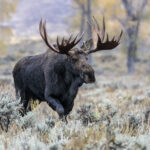
To ensure lasting conservation benefits from this work, decision-makers could endorse targeted changes to select state, local, and federal policies to keep tens of thousands of acres of the most important seasonal deer, elk, bighorn sheep, and pronghorn habitats intact. For hunters, these safeguards would help sustain healthy herds and the opportunities, traditions, and access that depend on them. In a joint report from the Colorado Department of Natural Resources and Colorado Department of Transportation, the 2021 Colorado Big Game Policy Report identified pressing threats to Colorado’s big game populations and recommended policy solutions to address and alleviate the documented threats.
For example, if state and federal agencies and local governments ensure that new development for energy generation, energy transmission, and outdoor recreation infrastructure avoids the most sensitive big game habitats when possible, that will directly conserve wildlife populations and the open spaces that Coloradans love, while still allowing for important development projects to be built in suitable places. Additionally, allocating funding for wildlife crossing projects would reduce wildlife-vehicle collisions and facilitate wildlife movement across Colorado’s busy highways.
The majority of Coloradans surveyed in the 2025 Conservation in the West Poll believe that fish and wildlife habitat loss and population declines, and the loss of natural areas, are an extremely or very serious problem. And in 2024, CDOT responded to 3,777 crashes involving wildlife, so addressing the needs highlighted above would greatly benefit all Colorado motorists, wildlife populations, and future hunting opportunities.
“Successful conservation of big game migration corridors and seasonal habitats requires collaboration between many different people, and it requires deliberate planning and funding,” said Liz Rose, Colorado program manager for the TRCP. “There is a lot to celebrate when it comes to big game conservation in Colorado, and there are still exciting, meaningful opportunities to capitalize on that could alleviate our most pressing, current threats.”
Informed, Intentional Planning, and Collective Will

Coloradans value wildlife, natural open spaces, and strong economies, and the state can set the bar high to advance conservation, recreation, industrial, and residential development needs for the future. We aren’t creating more habitat, but there are promising opportunities to ensure we conserve what remains. TRCP, alongside our great partners in Colorado, continues to urge state, federal, and local government decision makers to incorporate science-based best practices and Big Game Policy Report recommendations into their planning, management, and development policies. For hunters, anglers, and conservation-minded Coloradans, these kinds of policy changes would directly benefit big game herds and the future of the outdoor traditions they cherish.
Together, we must build the collective political will to steer development to locations where adverse impacts to Colorado’s iconic wildlife herds and citizens will be lower, and to manage the timing of land development and use to reduce impacts. Colorado has and will continue to prove that it is possible, beneficial, and popular to do so.
Top photo: Josh Metten