by:

posted in:

August 19, 2025

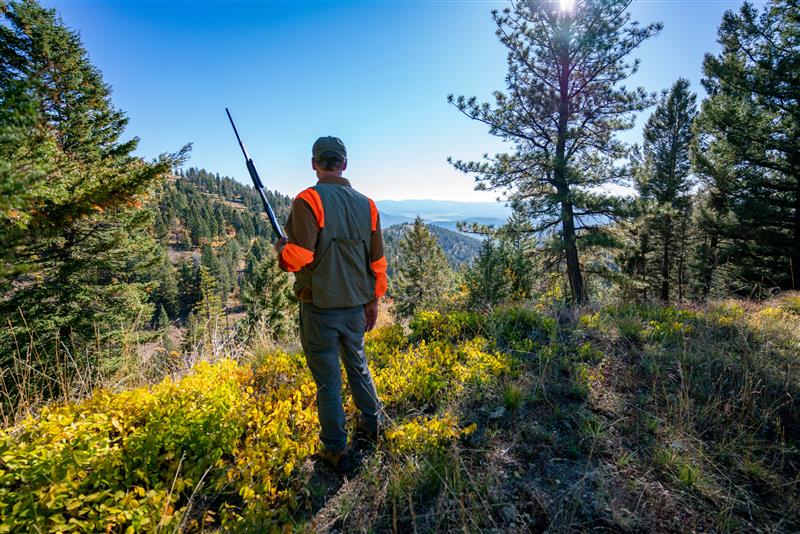
Elk-hunt-Taylor-Glenn-2022-joshmettenphoto-540

Do you have any thoughts on this post?

XHTML: You can use these tags: <a href="" title=""> <abbr title=""> <acronym title=""> <b> <blockquote cite=""> <cite> <code> <del datetime=""> <em> <i> <q cite=""> <s> <strike> <strong>

Comments must be under 1000 characters.

August 12, 2025

TRCP Applauds Bipartisan Support for SHARKED Act

New bipartisan legislation creates a national task force to address rising shark depredation through science, collaboration, and education, supporting both anglers and ocean health

The Theodore Roosevelt Conservation Partnership commends the Senate Commerce, Science and Transportation Committee for advancing the SHARKED Act on July 30 – a vital step toward balancing recreational fishing interests with the ecological importance of sharks.

The Supporting the Health of Aquatic Systems through Research Knowledge and Enhanced Dialogue Act of 2025 (SHARKED Act)  moves on to a full vote by the Senate before heading to the president’s desk to potentially be signed into law. The bill was introduced by Senators Rick Scott (R-FL) and Brian Schatz (D-HI) and directs the Department of Commerce to establish a comprehensive task force focused on shark depredation. The act previously passed the House of Representatives in January.

Image credit: David Hay Jones, courtesy of the MSU Marine Fisheries Ecology Program

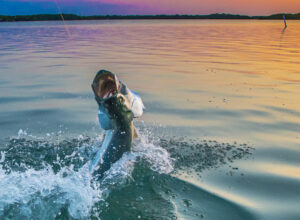
Shark depredation is the phenomenon in which sharks circle fishing vessels to eat hooked fish while anglers fight the fish to the boat. While not a new issue, recreational fishermen and charter captains in the South Atlantic and Gulf of America have been particularly concerned in recent years at what seems to be a dramatic increase in the number of fish like snapper, tunas, tarpon, and even billfish that are being attacked by sharks.

“Anglers across the Atlantic Basin have grown increasingly frustrated in the last several years by sharks taking hooked fish and congregating in large numbers around reefs, wrecks, and other popular fishing areas, something I’ve seen firsthand repeatedly over the last five-plus years,” said TRCP Fisheries Director and avid angler Chris Macaluso. “Getting the best science we can to find out the causes of these increases and working with anglers to find sound, science-based approaches to addressing the issue is what the SHARKED Act aims to accomplish. We applaud Congress for continuing to move this bill forward.”

Image credit: David Hay Jones, courtesy of the MSU Marine Fisheries Ecology Program

The task force will harness expertise from regional fishery management councils, marine fisheries commissions, state wildlife agencies, the National Marine Fisheries Service, and marine scientists to:

  • Enhance coordination between fisheries managers and shark researchers
  • Identify key research priorities and the most effective tactics—from species identification to changing shark behaviors and climate change impacts on shifting shark populations and prey
  • Develop management strategies and non‑lethal approaches to reduce harmful interactions
  • Provide guidance and educational materials to fishers and resource managers

The bill mandates an initial report to Congress within two years of enactment, with biennial updates thereafter, and includes a sunset clause terminating the task force after seven years.

Austin Evans is TRCP’s 2025 marine fisheries intern.

Learn more about how TRCP supports our outdoor recreation economy here.

by:

posted in:

August 11, 2025

Make-A-Will Month: Leave a Legacy for the Wild Places You Love

Safeguard public lands, waters, and wildlife for future generations by making conservation part of your lasting legacy.

Every August, National Make-A-Will Month is a reminder that your legacy is yours to shape. It’s not just about financial planning, it’s about protecting the values, traditions, and places you hold most dear. For hunters, anglers, and outdoor enthusiasts, that means standing up for the future of conservation. 

By including the Theodore Roosevelt Conservation Partnership in your will or estate plan, you’re doing more than leaving a gift—you’re joining a growing community committed to guaranteeing all Americans quality places to hunt and fish, now and forever. 

Planned gifts help TRCP lead the charge on policies that protect public lands, clean water, and safeguard the hunting and fishing access we all cherish. These aren’t just conservation goals; they’re cornerstones of a way of life worth passing down.  

TRCP donors Kim and Mary Martin realize the importance of planned gifts and the impact it will have on conversations for future generations.  

“My wife and I have been bird hunters, anglers, and duck hunters throughout our lives. We give to others that benefit us and will in the future. We cannot think of a better organization than the TRCP, to leave a legacy to for future generations.” 

Kim and Mary Martin, TRCP donors

Adding TRCP to your estate plans helps ensure the next generation can experience the same thrill of a rising trout, bugling elk, or sunrise on public land. It’s a simple but powerful way to keep conservation moving forward. 

This August, take one simple and powerful step: 

  • Add TRCP to your will or estate plan—cash, securities, real estate, or a percentage of your estate. 
  • Contact TRCP’s Director of Program Development, Joshua Walters to learn more and join the T.R. Legacy Society by email at jwalters@trcp.org or by phone at (304) 261-4941.

The fight for conservation doesn’t end with us. Join TRCP this Make-A-Will Month—and be part of a legacy that speaks up for our outdoor way of life, forever. 

“The nation behaves well if it treats the natural resources as assets which it must turn over to the next generation increased and not impaired in value.” – President Theodore Roosevelt 

The information stated here is not intended as financial or legal advice. Always consider seeking the advice of your financial or legal advisor. 


The TRCP is your resource for all things conservation. In our weekly Roosevelt Report, you’ll receive the latest news on emerging habitat threats, legislation and proposals on the move, public land and waters access solutions we’re spearheading, and opportunities for hunters and anglers to take action. Sign up now.

by:

posted in:

August 8, 2025

Senators Introduce Legislation to Strengthen the Conservation Reserve Program 

Bipartisan bill aims to modernize and enhance one of America’s most effective wildlife habitat programs.

The Conservation Reserve Program (CRP) is one of the nation’s most important federal programs for supporting wildlife habitat. Introduced in the 1985 Farm Bill, the Conservation Reserve Program incentivizes landowners to put a portion of their land into conservation cover, particularly on acres that would be more productive as wildlife habitat than they are for crops. It is currently responsible for creating, maintaining, and enhancing nearly 27 million acres of habitat across the U.S. But due to lack of progress in passing a full, five-year Farm Bill, the program hasn’t had a policy update since 2018. 

Thankfully, lawmakers from both sides of the aisle are showing their support for strengthening the CRP. On July 31st, Senators John Thune (R-S.D.), Amy Klobuchar (D-Minn.), Jerry Moran (R-Kan.), and Tina Smith (D-Minn.) introduced the CRP Improvement and Flexibility Act (S.2608).  

The CRP Improvement and Flexibility Act would: 

  • Reestablish cost-share for CRP mid-contract management, encouraging the management that is best for the habitat instead of the cheapest way to comply. 
  • Finally raise the CRP’s 40-year-old payment limitations to reflect inflation and modern land values. 
  • Support grassland management through managed livestock grazing by providing cost-share for grazing infrastructure like fencing and water development. 
  • Permanently establish State Acres for Wildlife Enhancement (SAFE) as a practice under CRP’s Continuous Enrollment option. 
  • Change CRP emergency haying provisions to provide better quality forage for livestock producers in times of drought while preventing damage to wildlife habitat both within and across growing seasons. 

“The CRP Improvement and Flexibility Act is an excellent example of lawmakers working across the aisle and among multiple stakeholders to find practical solutions,” said TRCP’s director of private lands conservation Aaron Field. “We are grateful to Majority Leader Thune, Ranking Member Klobuchar, Senator Moran, and Senator Smith for their leadership and pragmatism on improving this critical program for hunters.” 

“Ensuring that CRP continues to be an effective option for producers and landowners is critical to South Dakota’s agriculture industry,” said Senator John Thune (R-S.D.). “As a longtime supporter of CRP, I’m proud to lead this commonsense legislation that would help advance the multiple-use benefits of this conservation program, including wildlife habitat and livestock forage potential.” 

“The Conservation Reserve Program helps equip our farmers with the tools to conserve and improve soil, water quality, and wildlife habitat,” said Senator Amy Klobuchar (D-Minn.). “This bipartisan legislation makes commonsense improvements to CRP that will strengthen conservation practices and landowner enrollment in this vital program.” 

The Conservation Reserve Program has been one of the nation’s most important conservation programs for nearly 40 years. Many of the species we love to pursue find habitat in farm country thanks to the CRP. Without the CRP, pheasant numbers would plummet, the northern plains states would lose much of their best duck breeding habitat, sage grouse in the West would be at even greater risk, and brook trout would decline in Eastern headwaters. Put simply, without the CRP, millions of sportsmen and women would lose hunting and fishing opportunities across rural America.  

Learn more about the Conservation Reserve Program and other Farm Bill conservation programs HERE. 

Top photo by Anthony Hauck

by:

posted in:

August 7, 2025

The Restoration of Lake Pontchartrain

The famed brackish bay that forms New Orleans’ northern border is offering great fishing again thanks to decades of restoration in the Pontchartrain Basin and Mississippi River

Lake Pontchartrain was the picture of consistency for speckled trout catches throughout the spring and summer of 2025.

Generally, the hot trout bite in the eastern part of the massive brackish bay that creates New Orleans’ northern boundary peters out in early June and returns around mid-October when massive schools of white shrimp begin leaving brackish marshes.

Climbing water temperatures, longer days and the itch to make babies in saltier waters push trout into Lake Borgne and towards Chandeleur Sound for the summer. This year was different, however. Trout catches stayed consistent through the Fourth of July weekend.

One veteran Pontchartrain guide and avid angler reported he was having trouble finding trout inside Louisiana’s recently implemented 13- to 20-inch slot, not because the fish were too small to reach the bottom end but so many fish were pushing past the 20-inch mark. Louisiana’s trout regulations only allow two 20-plus inch long trout to be kept in a day.

Lake Pontchartrain has always been a decent fishery, producing redfish, drum, sheepshead, big jack crevalle, and the occasional tarpon as well as a host of freshwater species like largemouth bass, panfish, and blue catfish in addition to the trout.

But, 50 years ago, after shell dredging operations had mined the majority of the lake’s extensive water-cleaning Rangia clam beds to make roads and concrete and poorly treated sewage was pumped into the lake from bordering cities, it seemed unlikely the lake and surrounding wetlands would one day be held in as high or higher regard as other well-known Louisiana trout producing ports like Grand Isle or Cocodrie.

Saltwater intrusion had killed off historic submerged grass beds that had long helped clean the water while providing vital fisheries habitat.

Lake Pontchartrain’s recovery can be traced back to 1989 to the creation of the Lake Pontchartrain Basin Foundation, now called the Pontchartrain Conservancy. A group of New Orleans-area citizens and scientists had enough of the constant poor water quality and loss of habitat that had plagued the lake for nearly a century. Throughout the 1990s and beyond, the Foundation’s “Save Our Lake” campaign became ubiquitous across the region with countless cars and trucks emblazoned with the simple and direct message on blue and white bumper stickers.

Shell-dredging operations were banned in 1990, allowing the mussels to begin a slow comeback. Hundreds of millions were invested in updating sewage treatment facilities, while dumping solid waste like tires and old appliances was curbed by increased enforcement and fines.

Saltwater intrusion from the ill-fated, manmade Mississippi River Gulf Outlet (MRGO), the culprit for much of the flooding in the New Orleans area during Hurricane Katrina, had also killed off many of the historic submerged grass beds that lined the lake and tens of thousands of acres of fresh and brackish marsh. That grass had long helped clean the water while providing vital fisheries habitat.

While some argue the super-salty waters coming up the lightly traveled and destructive ship channel improved speckled trout catches, the increased salinities also led to broad areas of low oxygen along the lake’s south shore while poisoning wetlands and cypress swamps throughout the broad basin.

The Conservancy’s work has been aided by a program it helped create in 2000. The Lake Pontchartrain Basin Restoration Program was first authorized by the Lake Pontchartrain Restoration Act, authored by then Congressman David Vitter. Administered by the Environmental Protection Agency, the program began making small-scale grants in 2002. Towns, parishes, advocacy groups, universities, and others capable of developing projects, science, and public education programs that improved the Pontchartrain Basin’s water quality, fish and wildlife habitat, and increased public access to healthy water and fisheries were all eligible to receive funding.

A 1995 comprehensive management plan and subsequent 2006 comprehensive habitat management plan have guided the decision-making for projects receiving funding from the program.

Of course, much has changed since 1995 in the Pontchartrain Basin, which ranges from southern Mississippi across lakes Maurepas, Pontchartrain and Borgne as well as the cypress swamps and coastal marshes east of the Mississippi River all the way to its delta.

The saltwater intrusion from the MRGO has been slowed by closure structures on either end of the channel, while new connections between the Mississippi River and adjacent marshes have opened south of New Orleans bringing in additional sediment and freshwater.

TRCP has been working with the region’s best water quality, habitat restoration, and fisheries management scientists since early 2024 to develop a new management plan for the basin.

Hurricane Katrina and other hurricanes and tropical storms exposed major weaknesses in storm protection levees and floodgates leading to more physical structures to protect communities. Growing communities between Baton Rouge and New Orleans and along Lake Pontchartrain’s Northshore have put pressure on sewage treatment facilities and aging septic systems and increased stormwater drainage. Also, invasive plants, fish, and snails have found their way into rivers, bayous and lakes across the region.

Recognizing the need to update the management plans and expand the restoration program, Louisiana Senator Bill Cassidy secured $53 million in 2021 to, in part, fund an update to the comprehensive management plan to reflect the changes in the Basin over the last 30 years. The Theodore Roosevelt Conservation Partnership has been working with the region’s best water quality, habitat restoration, and fisheries management scientists and experts since early 2024 to develop a new management plan. It’s set for completion in 2026 and will guide decisions to continue to develop the best projects, science, and community engagement needed to keep Lake Pontchartrain and adjacent waters healthy and productive into the future.

The success of Lake Pontchartrain’s restoration should be celebrated by all who live in South Louisiana and the entire region. The boats fishing the lake’s famous bridges or chasing birds diving on schools of white shrimp in the fall are a reminder of just how much progress has been made in the last 30-plus years. Hopefully, thanks to the hard work of a handful of elected officials, advocacy groups, and residents working to update the Pontchartrain Basin’s management plan, that progress will continue for the next 30 years and beyond.

(Note: This story originally appeared in the July 2025 issue of Louisiana Sportsman.)

All images courtesy Chris Macaluso

HOW YOU CAN HELP

TRCP has partnered with Afuera Coffee Co. to further our commitment to conservation. $4 from each bag is donated to the TRCP, to help continue our efforts of safeguarding critical habitats, productive hunting grounds, and favorite fishing holes for future generations.

Learn More

You have Successfully Subscribed!

You have Successfully Subscribed!

You have Successfully Subscribed!

You have Successfully Subscribed!