by:

posted in:

July 31, 2025

Marcel-and-baby

Do you have any thoughts on this post?

XHTML: You can use these tags: <a href="" title=""> <abbr title=""> <acronym title=""> <b> <blockquote cite=""> <cite> <code> <del datetime=""> <em> <i> <q cite=""> <s> <strike> <strong>

Comments must be under 1000 characters.

by:

posted in:

Dispatches from Public Lands

After mandatory public land sales were removed from budget reconciliation legislation earlier this summer thanks to tens of thousands of hunters and anglers like you, TRCP staff took to public lands to enjoy places they cherish and celebrate the victory. Below are their stories

From Chelsea Pardo, Alaska Senior Program Manager

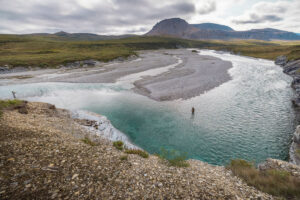
Over the 4th of July holiday, I was fortunate to float the Kenai River in Alaska. The Kenai is the longest river on the Kenai Peninsula in southcentral Alaska and is known for its striking turquoise water and salmon runs.

We packed me, my sister and brother-in-law, and two dogs into the raft and set off on our float. We caught sockeye salmon already well into their spawning transformation as they made their way toward Skilak Lake, and I also landed a rainbow trout, shimmering with incredible colors! Our toughest fishing competition was the grizzly bears along the riverbank.

Throughout the weekend, I felt deep gratitude for having access to such amazing public lands so close to home knowing the public land sales were defeated.

From Emily Forkey, Digital Coordinator

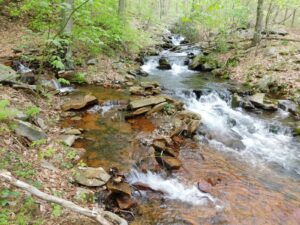
Living in Washington D.C., I sometimes need a little break from the city. Luckily, the Shenandoah and Blue Ridge Mountains and the National Forests that span across those ridges are a short distance away. Since moving to northern Virginia in 2021, the Appalachian Mountains have become really special to me.

When public land sales were removed from budget reconciliation, I was in the middle of enjoying these amazing public lands. My boyfriend and I did a little road trip to Natural Bridge State Park and drove along the Blue Ridge Parkway, stumbling upon Otter Lake Waterfall. We were able to disconnect in the mountains and ended the weekend at Sherando Lake in the George Washington and Jefferson National Forest, swimming and enjoying the beautiful scenery. There was no better way to celebrate this win than spending it in one of my favorite public land spaces.

From Kris Coston, Nevada Field Representative

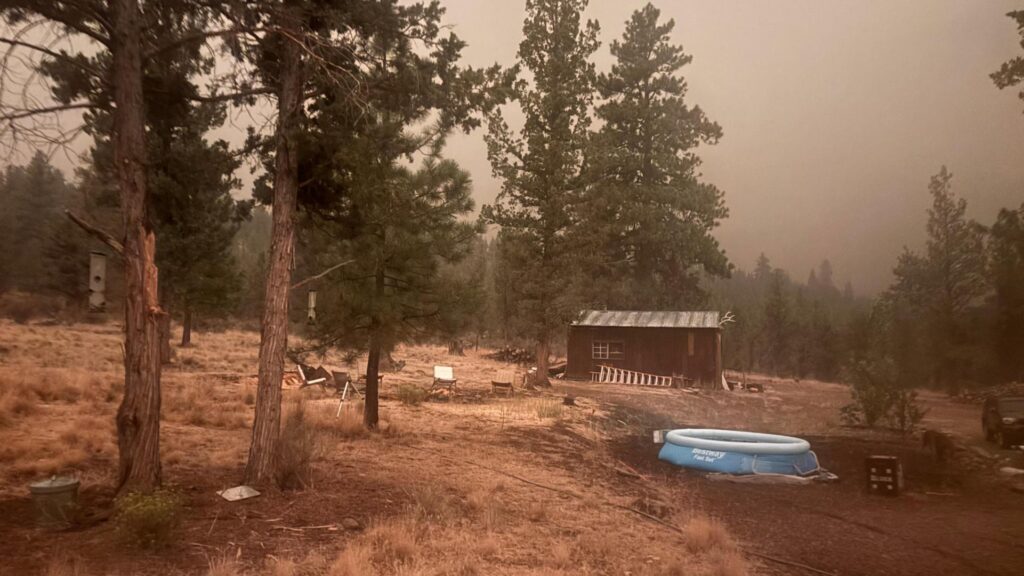
Hot and dry. That’s the 4th of July in northern Nevada.

From my days as a wildland firefighter, I still recall the safety protocols that every wildland firefighter lives and dies by: the LCES’s.

  • Lookouts
  • Communications
  • Escape routes
  • Safety zones

Now that my firefighting days and wilder years of my youth are behind me, LCES’s have taken on a new meaning.

  • Locate
  • Cooler and
  • Establish
  • Shade….

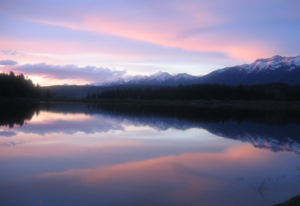
There is no better place to practice your LCES skills and situational awareness than the crest of the Sierra Nevada Mountains, jeweled with countless cool blue lakes and icy streams, the crest is the juxtaposition of hot and dry.

I can load the family in the truck with rods and tackle, ice, water, beer, camping gear, and food and drive up and over the Carson Pass at 8,652 feet and feel the heat drop into the valley floor like a discarded coat. From here on out it’s wet lines and family time as we fish and camp our way from one lake or stream to another.

Celebrating the 4th is something that I used to do on a mountain top blackened by fire. Now I celebrate from the shores of a clear cool lake or stream and reminisce happily about those old and wild times, thinking how lucky I am to live and raise a family in the greatest country on earth where public lands are in public hands.

To all those men and women who protect our public lands from wildfire, I salute you and thank you for your hard work and sacrifice. And thank you to all who spoke up on behalf of public lands so we can all celebrate in these special places.

From Marcel Gaztambide, Southwest Field Manager

For me and my wife, Bria, some of our most cherished memories with family and friends were made on public lands. Everything from following the careful steps of my grandfather while elk hunting in the Uinta Mountains, trout fishing at Flaming Gorge Reservoir, riding horseback in the Wyoming Range, racing dirt bikes and mountain bikes, wind surfing and paddleboarding, desert river trips, and late-night campfires with themed-dress-up silliness. All of this unstructured fun was easily constructed across 640 million acres of public land in the United States.

When we welcomed our son, Ander, into the world 8 months ago, my wife and I were most looking forward to adventuring with him outside. We were so excited to teach him how to bag the peaks, run the rivers, and track big game through the forests. How to set up his tent, build a fire, and hang a bear-bag. How to squeeze the most out of a life spent out-of-doors on public land.

After the beautiful defense of public spaces mounted by tens of thousands of hunters and anglers across our country, we spent our 4th of July weekend camping out on the San Juan National Forest in southwest Colorado. This was Ander’s second time camping, and certainly not his last, and the trip was made sweeter knowing that people from all walks of life are working hard to protect his ability to carry on our traditions and to have his own adventures. Cheers to public lands, the people who enjoy them, and the people who help keep them in public hands!

From Rob Thornberry, Idaho Field Representative

For years, my son, Jake, and I rarely fished or hunted together. The monthly escapes that we enjoyed during his youth were lost to life. First to high school sports and then to his college years and later when he started a family and a career of his own, now a four-hour drive from my home.

Although we happily forged new bonds–his first daughter calls me Bee-pa and has me hopelessly wrapped around her pinkie–I’ve missed our spring excursions to catch trout on stoneflies and our fall adventures to hunt deer and elk.

That is why when the public land sales amendment was removed from the budget reconciliation package, I received another great joy of summer. Jake texted and asked for a fishing trip for his birthday. Me and him.

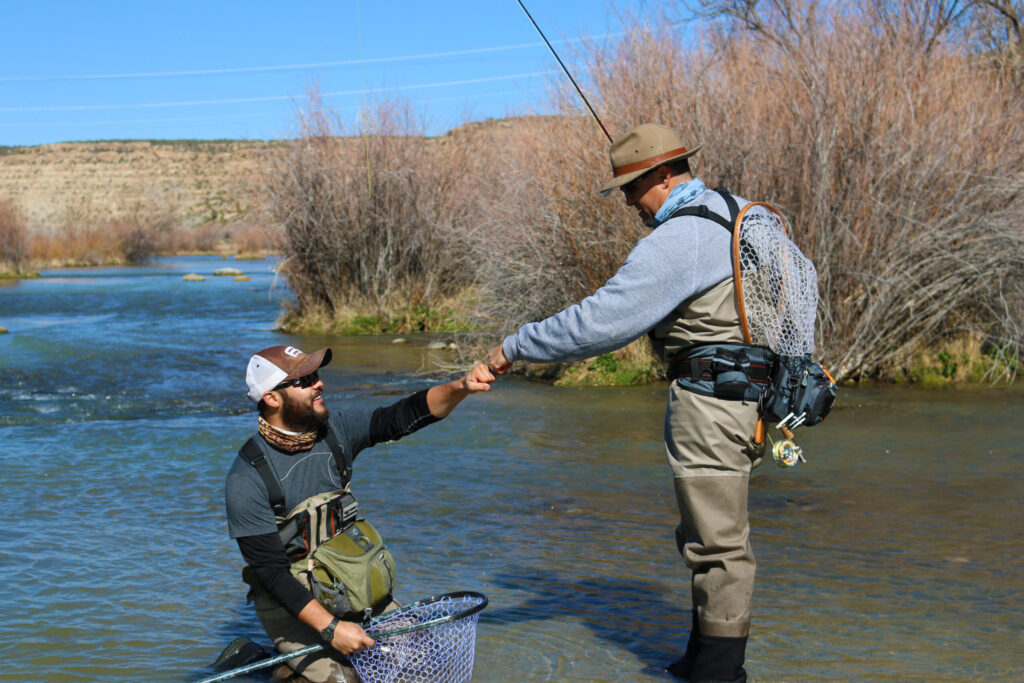
Fast forward a couple of weekends and we were tumbling down the ever-roaring South Fork of the Boise River casting huge flies to fat rainbows, him beaming like the boy I so fondly remembered.

As I write this, the Monday after a perfect weekend, I revel in the text just received: “That was a lot of fun. I’m excited for next year.”

It is a tradition built, and survives to this day, on public lands and waters.

From Michael O’Casey, Director of Public Lands

Growing up, our family vacations were centered around public lands. Always on a budget, our trips only required a tent, gravel roads, and the excitement of discovery and freedom found dispersed camping along mountain streams of Oregon, Idaho, Montana, and Wyoming. These trips often culminated in a few days camping and exploring Yellowstone National Park. We’d make the trek from the Oregon coast, driving through high desert, pine forests, and wildflower-filled meadows as we neared the park boundary. Those long road trips and days outdoors formed some of my favorite childhood memories and sparked a passion that led me to work several seasons for the National Park Service and a career in public lands policy.

This summer, as a father of three (8,3,0), I had the chance to return to Yellowstone and share some of these favorite places with my own kids. Watching my oldest catch his first brown trout on a dry fly, listening to them whine as they covered their noses from the smell of rotten eggs at the geysers, and seeing the shock on their faces as Old Faithful erupted for the first time reminded me of the value of these timeless places.

After experiencing such an amazing win as keeping public lands in public hands, what struck me most was how little the experience has changed, and how important that is. In a world that feels increasingly fast and fragmented, these shared landscapes provide a place to slow down, create quality unbroken time together, and to remember what truly matters.

From Josh Metten, Wyoming Field Manager

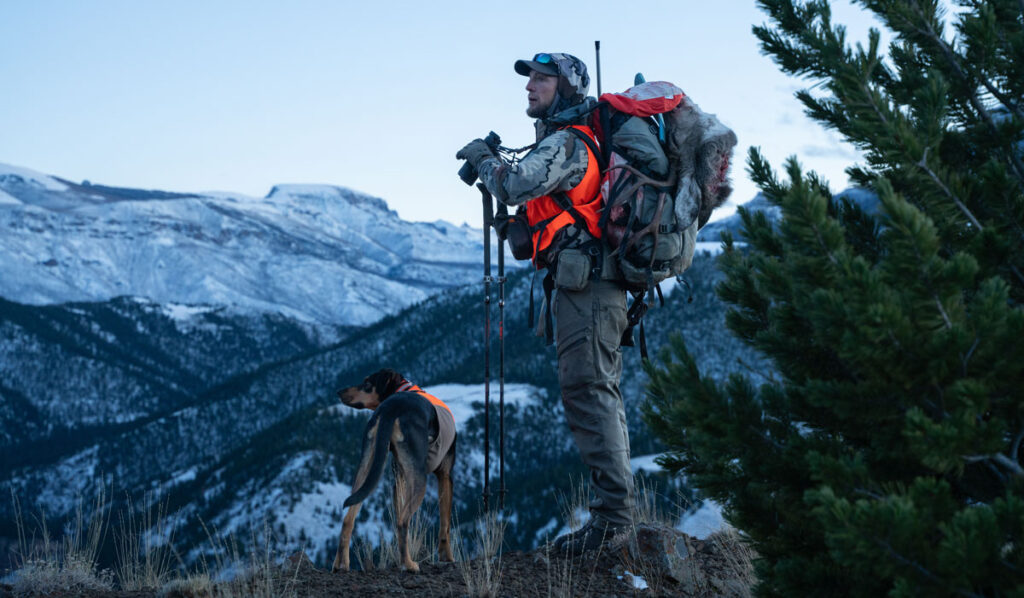
My dog, Ollie, is a public land pup through and through. He’s a rescue mutt from Omaha, Nebraska, but that hasn’t stopped him from becoming a lover of all the outdoor activities public lands have to offer. In our time together in Wyoming, we’ve backpacked through the Absaroka Wilderness, backcountry skied the Tetons, hunted elk in the Wyoming Range, and chased chukar across rugged Bureau of Land Management lands. Most recently, we shared a float down Idaho’s Selway River, which might be my favorite experience with Ollie yet.

Like most Wyomingites, public land is central to my way of life, so I was thrilled that the amendment that would have mandated millions of acres of public land sales in budget reconciliation legislation was removed! Ollie and I celebrated by joining friends on a six-day float down Idaho’s Selway River. The river flows through the Selway Bitterroot Wilderness, which was designated by the 1964 Wilderness Act, a bill sponsored by the late Idaho Senator Frank Church.

Americans love public lands because of their abundance and the freedom they provide. At 640 million acres, we have a massive expanse of diverse landscapes to experience. Floating the Selway was an opportunity to unplug from the rigors of daily life and be thankful that these amazing places have been stewarded for present and future generations to enjoy. I’m happy to share that Ollie loved the float and we can add multi-day river trips to our list of shared public land activities. It turns out that most activities on public lands are better with friends and dogs.

Read another public land reflection from the TRCP team HERE.

Photo credits: TRCP Staff


The TRCP is your resource for all things conservation. In our weekly Roosevelt Report, you’ll receive the latest news on emerging habitat threats, legislation and proposals on the move, public land access solutions we’re spearheading, and opportunities for hunters and anglers to take action. Sign up now.

by:

posted in:

July 29, 2025

Breaking Down BLM Land Disposal

Understanding the past and present of BLM’s land disposal authority

Earlier this summer, tens of thousands of engaged hunters and anglers across the country, as well as national, state, and local hunting and fishing businesses and organizations, and leadership from a bipartisan group of public land champions in Congress defeated an amendment in budget reconciliation legislation that would have forced the sale of up to 3 million acres of public lands. This victory underscores the need to understand how public lands, particularly Bureau of Land Management acres, were established and what current laws guide public land sales and disposals.

At TRCP, we believe America’s public lands are a shared legacy that should be retained for future generations to enjoy. While we strongly oppose large-scale transfers or sales of public lands, we recognize that small, community-driven land sales or exchanges can be appropriate. For us to support such proposals, they must:

  1. Clearly benefit local communities.
  2. Preserve or enhance existing hunting, fishing, and recreational access.
  3. Include a robust public process.
  4. Avoid disposal of lands with important fish and wildlife habitats.
  5. Ensure that proceeds from any sale are reinvested in conservation and public access.

Where It All Began: A Nation Built on Land Disposal

The United States’ expansionist vision in the 19th Century drove a series of major land acquisitions such as the Louisiana Purchase (1803), the Oregon Territory (1846), and the Alaska Purchase (1867), which dramatically expanded the amount of land managed by the federal government. At its peak, the federal government owned approximately 1.8 billion acres. To fuel westward expansion and promote economic growth, federal policies prioritized disposing of these lands to settlers and private companies.

By the mid-20th century, the national mindset had begun to shift. The frontier had closed, and public demand grew for recreation, conservation, and more deliberate land stewardship. In 1946, the federal government created the Bureau of Land Management, which inherited responsibility for managing the leftover lands that hadn’t been claimed or sold off. These lands were long considered “disposable,” and for decades lacked a clear guiding mission. But that changed in 1976.

FLPMA and the End of the Disposal Era

The Federal Land Policy and Management Act, passed by Congress in 1976, was a landmark moment in public land history as it ended the government’s longstanding policy of land disposal and replaced it with a new guiding principle: that public lands should be retained in federal ownership unless disposal clearly serves the national interest.

This “retention policy” marked the beginning of the BLM managing lands more intentionally under the principle of multiple use (recreation, conservation, mining, energy development, and grazing) while ensuring sustainable, science-based planning and public involvement.

Importantly, FLPMA didn’t eliminate the ability to sell or exchange public lands. Instead, it imposed strict criteria and public process requirements. Under Section 203 of the law, lands may only be sold if they meet one or more of the following conditions:

  • They were acquired for a specific purpose and are no longer needed for that or any other federal use;
  • Their disposal would serve important public objectives, like community expansion or economic development, and those objectives outweigh the public values of keeping the land in federal hands; and
  • They are difficult and uneconomic to manage due to location or other characteristics and are not suitable for transfer to another federal agency.

Additionally, Section 102 of FLPMA reinforces that land sales must be carefully weighed and support the broader national interest. Any proposed disposal of a parcel of public lands must have been previously identified as ‘available for disposal’ through the land use planning process during the development of more than 160 individual Resource Management Plans.  Before any parcel is sold, that specific parcel must also go through a formal public comment and notice.

The BLM Today: Managing Lands for All Americans

Today, the BLM is the largest land management agency in the country, overseeing 245 million surface acres and over 700 million acres of subsurface mineral estate. These lands are a cornerstone of America’s hunting, fishing, and outdoor traditions with more than 99% of BLM lands open to hunting and recreational shooting. They also provide important habitat for fish and wildlife, opportunities for hiking, camping, and exploring, and support local economies by providing lands for sustainable grazing and domestic energy development.

Many BLM lands are valuable precisely because they were not sold off during the disposal era. So many of them are rugged, remote, and rich in natural values that make them prized by sportsmen and women and other recreationists. While some parcels identified decades ago as “available for disposal” still appear in planning documents, that designation doesn’t automatically mean they will be sold, especially under today’s laws and standards.

Why It Matters Now

These lands belong to all Americans and are central to TRCP’s mission of guaranteeing all American’s quality places to hunt and fish. Any decision to part with our public lands must be transparent, grounded in science, and open to public scrutiny.

At TRCP, we’re committed to defending America’s public land legacy. We’ll continue working with lawmakers, agency leaders, and conservation partners to ensure that federal land policy upholds the values of access, habitat conservation, and community benefit.

Learn More

Debates about land sales have taken place for decades, most recently in 2025, but the public has had no easy way to see where these parcels marked for potential sale actually sit. onX and the Theodore Roosevelt Conservation Partnership have teamed up to develop a first-of-its-kind webmap that identifies lands deemed eligible for sale by the Bureau of Land Management.

Explore the map to learn what lands are identified for potential sale near you through the button below.


Public lands need champions, and thankfully, several bipartisan members of Congress are taking the lead. Learn more about the Public Land Caucus HERE.

by:

posted in:

July 24, 2025

TRCP Hosts Fisheries Conservation Summit at ICAST 2025

Popular panels on top conservation issues now a fixture at the annual sportfishing trade show

Each year, TRCP provides a Fisheries Conservation Summit at ICAST, the world’s largest sportfishing trade show, hosted by the American Sportfishing Association. At this year’s summit, top minds in fisheries policy and legislation came together to talk priorities—from fish population recovery through stock enhancements to angler data collection and fisheries legislation. One of the most challenging aspects of hosting the summit this year was trying to cram the myriad of hot-button issues in fisheries policy, science, and management into a three-hour window.

“I’m not sure anyone working on fisheries policy can remember a time when there’s been this much going on,” said Chris Macaluso, TRCP director of the Center for Fisheries and Mississippi River Program.

Fisheries Priorities for the Trump Administration and Congress

Fisheries policy experts from TRCP, ASA, Center for Sportfishing Policy, and Congressional Sportsmen’s Foundation highlighted and discussed nearly a dozen management and conservation policies and legislative matters that organizations are together working to advance over the course of the next year and beyond. The recent federal budget reconciliation process in Congress delayed other fisheries legislation this year, with panelists optimistically noting that Congress should be able to address other issues now that the reconciliation bill has passed. The panel also discussed the makeup of the new Trump administration’s fisheries-oriented agency leads; potential reauthorization of the Magnuson-Stevens Act (the primary law controlling marine fisheries management in U.S. waters); transferring management of the South Atlantic red snapper fishery to Florida, Georgia, and South Carolina; and the impact new tariffs have had on recreational fishing, tackle, and boating.

“There has been significant positive action taken by the Trump administration, including withdrawing both the North Atlantic Right Whale Vessel Speed Rule and the bottom fishing closure proposed off northeast Florida,” said Mike Leonard, vice president of government affairs for the American Sportfishing Association. “On the flip side of that, there’s the negative aspect of tariffs. It’s created an incredible amount of uncertainty in our industry.”

Video Premier: “Steel to Sanctuary: The Rigs to Reef Story”

Produced by Arena Energy in cooperation with CSF, this 30-minute documentary was shared publicly last week for the first time at the summit. The film showcases the remarkable habitat provided by energy-producing platforms off the Gulf Coast states and the need to protect this habitat in that region and elsewhere from being removed from coastal waters. This is critical because in the next decade, nearly half of the approximately 1,500 remaining rigs could be removed.

“What aspects of Rigs to Reefs could we fix from the bureaucratic perspective?” asked Chris Horton, Congressional Sportsmen’s Foundation’s senior director, fisheries policy. He offered that one way to achieve greater efficiency in retired rig protection is ensuring continuity of support at all levels – federal, state, nonprofit, and corporate.

Helping Fish Stocks Recover Through Stock Enhancement

A panel of fish hatchery experts and supporters including Bill Shedd, CEO of AFTCO, and staff from the Alabama Department of Conservation and Coastal Conservation Association Alabama highlighted the successes and discussed the limitations of efforts to help improve fish stocks in the Gulf states, California, and beyond through introduction of hatchery-born fish. One goal was to help states that aren’t currently active in stock enhancements learn from successful programs that currently supplement natural fish stocks with hundreds of thousands of hatchery-raised white sea bass, southern flounder, Florida pompano, and spotted seatrout each year. Topics that rose to the top were the importance of hatcheries for aquaculture, of obtaining breeding-size fish from recreational anglers making live donations in tournaments, and recognizing how sensitive fish can be to environmental changes that can have an outsized impact on hatchery success.

Maxwell Westendorf, hatchery manager with the Alabama Department of Conservation’s Marine Resources Division, emphasized that even minor stressors to southern flounder during early juvenile development – such as changing water temperature a few degrees up or down – can trigger masculinizing the young fish such that nearly the entire stock becomes male.

“Which begs the question, our oceans are warming up and will fish populations be able to keep up with these changes?” Westendorf said.

Fixing Data Collection to Improve Fishing Access

Moderated by Brett Fitzgerald of the Angler Action Foundation, a panel of experts from CCA Maryland, The Nature Conservancy, and the Florida Fish and Wildlife Conservation Commission discussed technological advances and the use of “citizen science” to help narrow the gaps in state and federal data collection regarding recreational fishing. They also talked about tracking and tackling the problem of aquatic invasive species using data provided by recreational anglers. For example, CCA Maryland Executive Director David Sikorski said that through partnerships with groups including Yamaha Rightwaters, tournaments like the Great Chesapeake Invasives Count help track the spread and prevalence of Bay invasives like snakeheads, flathead catfish, and blue catfish.

Panelists acknowledged that a problem with fisheries data collection and release has been that managers lack sufficient data, largely because some anglers don’t trust agencies or organizations that supply the information that leads to reasonable regulations. “We have this issue here where anglers don’t trust the data, so they won’t give data to fisheries managers,” said David Moss, fisheries project manager for The Nature Conservancy. This leads to insufficient data to guide regulations, which creates a vicious cycle. But he also reminded the room how sound fisheries management benefits individual angling interests as well as future generations, referring to what can be gained for himself and his daughter.

“I tell everyone I do this because I want a fishery for her,” Moss said. “But I also want a fishery for me.”

Thank You, Sponsors and Presenters!

We want to extend our sincere appreciation to the panelists and attendees of the 2025 summit. We also want to thank this year’s sponsors, ASA and CSF, who made the summit possible.

The TRCP is your resource for all things conservation. In our weekly Roosevelt Report, you’ll receive the latest news on emerging habitat threats, legislation and proposals on the move, public land and waters access solutions we’re spearheading, and opportunities for hunters and anglers to take action. Sign up now.

by:

posted in:

July 23, 2025

In the Arena: Sergio Diaz

TRCP’s “In the Arena” series highlights the individual voices of hunters and anglers who, as Theodore Roosevelt so famously said, strive valiantly in the worthy cause of conservation.

Sergio Diaz

Hometown: Sayville, New York 
Occupation: IT professional by trade, and part-time professional photographer and filmmaker focused on storytelling tied to nature, conservation, and outdoors subject matter
Conservation credentials: Diaz harnesses his adventurous fishing spirit, a gift for outdoor photography, and a prominent platform on social media to advocate for marine conservation, inspiring and helping educate saltwater anglers.

Besides sharing his captivating shots of recreational fishing feats with conservation groups like TRCP and Safeguard the Seas, Diaz has donated his breathtaking underwater shots of striped bass to the Bayshore Saltwater Flyrodders of New Jersey and has been invited to speak at several fly fishing clubs in New York and New Jersey, where he focuses on the importance of safer catch and release practices. Diaz volunteers for the Manhattan Cup, a fishing tournament in New York City that benefits veterans, to shoot photos and video. Currently, he’s working with TRCP partner Bonefish & Tarpon Trust to plan a trip to document the planting of mangroves and habitat restoration in the Bahamas or Caribbean.

Here is his story.

Credit: Sergio Diaz

Some of my earliest memories are from when I lived in the state of Tabasco, Mexico. My father was a military officer in the army, and during those years, the local fisheries were incredibly abundant. We had easy access to rivers and a coastline full of tarpon, snook, tropical gar, and jacks. It wasn’t unusual to see all of those species in a single morning.

Those early experiences with my father, learning how to cast and being immersed in such a diverse ecosystem (so yes, full of biting insects), left a lasting impression on me. They taught me to value wild places and understand the importance of protecting them, especially because, back then, conservation wasn’t practiced the way we know it today.

Credit: Steve Bechard

Over the years, I’ve had the opportunity to experience incredible moments on the water. Recently, while wading the flats of Inagua, Bahamas, looking for bonefish, I spotted something large floating almost motionless along a channel. As I got closer, I realized it was a big barracuda, perfectly still and clearly waiting to ambush prey.

Hoping for a shot at this trophy fish, I quickly clipped my leader, tied on wire, and rigged a large white deceiver fly to try and trigger a strike. Luckily, the barracuda was still holding in place by the time I was ready. On my second cast, she hit so fast I barely saw it happen.

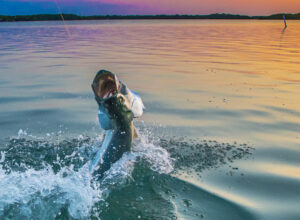
I fought her in the shallow flat, where I could truly appreciate her size and watch her leap into the air several times. An amazing fish—and a moment I won’t forget

Credit: Koby Fulks

There are so many remote angling destinations still on my list. But if I could fish anywhere, I’d have to say I’d go back to Hawaii to wade for big bonefish. The first time I visited was on my honeymoon, and while fishing wasn’t exactly on the itinerary, I couldn’t help but notice bonefish cruising the flats and hear talk of people targeting them. At the time, I had to let it go, but ever since, the idea of returning has stuck with me, especially after seeing videos of those massive fish. Hawaii is home to some of the biggest bonefish in the world, and the thought of sight fishing for them in such a stunning, remote setting is just too good to resist.

Being involved in conservation means protecting the waters, habitats, and species we rely on, so the fish are still there tomorrow.

Conservation is at the heart of my fishing life because the health of the resource is everything. I love everything about fishing – not just catching fish, but the whole experience of being involved in nature, reading the water, and connecting with wild places. Without healthy ecosystems and abundant fish populations, that experience simply wouldn’t exist.

Overfishing and water quality are the biggest conservation challenges where I live in coastal New York. Pressure from recreational and commercial fishing has led to reduced populations of key species like striped bass. A critical part of addressing this is the need to conserve menhaden, commonly known where I live as “bunker,” as an essential forage fish that striped bass and other gamefish species depend on for food. At the same time, water quality degradation from nitrogen pollution, mainly due to septic systems and runoff, continues to destroy habitats and create aquatic dead zones.

Credit: Sergio Diaz

Conservation ensures that the waters I fish today will still be there tomorrow, full of life and possibility. It’s about respecting the resource, practicing catch and release when appropriate, and supporting efforts that protect habitats and biodiversity. For me, being a responsible angler goes hand in hand with being a good steward of the places I love.

I feel compelled to do my part in conservation because I want the next generation to experience the same connection to fishing that I’ve been lucky to have. Fishing isn’t just a pastime. It teaches respect for the environment and shows the value of healthy ecosystems. Being involved in conservation means protecting the waters, habitats, and species we rely on, so the fish are still there tomorrow, not just today. It’s about giving back to a resource that’s given me so much.

Credit: Sergio Diaz

If we don’t take care of the land and water now, there won’t be anything left to hunt or fish later. Conservation helps to keep the traditions alive – the early mornings on the water, the stories, the connection to nature. If we want to continue to enjoy the outdoors, we have to protect them.

Banner image credit Sergio Diaz

HOW YOU CAN HELP

TRCP has partnered with Afuera Coffee Co. to further our commitment to conservation. $4 from each bag is donated to the TRCP, to help continue our efforts of safeguarding critical habitats, productive hunting grounds, and favorite fishing holes for future generations.

Learn More

You have Successfully Subscribed!

You have Successfully Subscribed!

You have Successfully Subscribed!

You have Successfully Subscribed!