by:

posted in: In the Arena

July 23, 2025

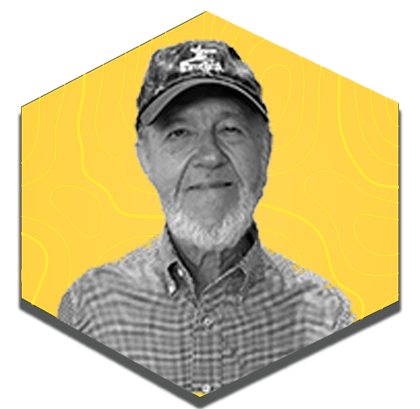
In the Arena: Sergio Diaz

TRCP’s “In the Arena” series highlights the individual voices of hunters and anglers who, as Theodore Roosevelt so famously said, strive valiantly in the worthy cause of conservation.

Sergio Diaz

Hometown: Sayville, New York 
Occupation: IT professional by trade, and part-time professional photographer and filmmaker focused on storytelling tied to nature, conservation, and outdoors subject matter
Conservation credentials: Diaz harnesses his adventurous fishing spirit, a gift for outdoor photography, and a prominent platform on social media to advocate for marine conservation, inspiring and helping educate saltwater anglers.

Besides sharing his captivating shots of recreational fishing feats with conservation groups like TRCP and Safeguard the Seas, Diaz has donated his breathtaking underwater shots of striped bass to the Bayshore Saltwater Flyrodders of New Jersey and has been invited to speak at several fly fishing clubs in New York and New Jersey, where he focuses on the importance of safer catch and release practices. Diaz volunteers for the Manhattan Cup, a fishing tournament in New York City that benefits veterans, to shoot photos and video. Currently, he’s working with TRCP partner Bonefish & Tarpon Trust to plan a trip to document the planting of mangroves and habitat restoration in the Bahamas or Caribbean.

Here is his story.

Credit: Sergio Diaz

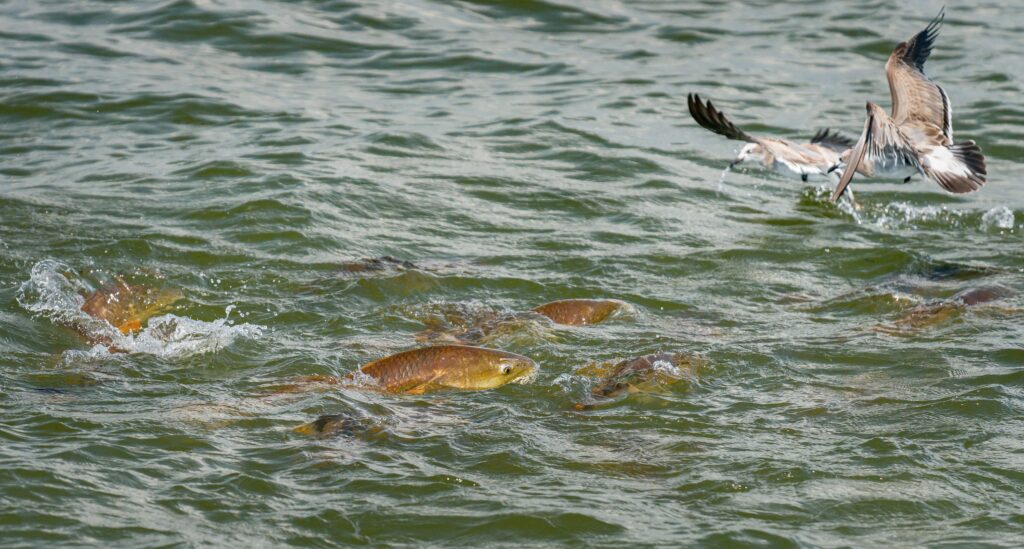
Some of my earliest memories are from when I lived in the state of Tabasco, Mexico. My father was a military officer in the army, and during those years, the local fisheries were incredibly abundant. We had easy access to rivers and a coastline full of tarpon, snook, tropical gar, and jacks. It wasn’t unusual to see all of those species in a single morning.

Those early experiences with my father, learning how to cast and being immersed in such a diverse ecosystem (so yes, full of biting insects), left a lasting impression on me. They taught me to value wild places and understand the importance of protecting them, especially because, back then, conservation wasn’t practiced the way we know it today.

Credit: Steve Bechard

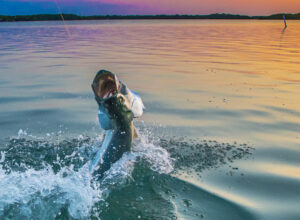
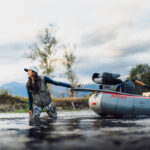
Over the years, I’ve had the opportunity to experience incredible moments on the water. Recently, while wading the flats of Inagua, Bahamas, looking for bonefish, I spotted something large floating almost motionless along a channel. As I got closer, I realized it was a big barracuda, perfectly still and clearly waiting to ambush prey.

Hoping for a shot at this trophy fish, I quickly clipped my leader, tied on wire, and rigged a large white deceiver fly to try and trigger a strike. Luckily, the barracuda was still holding in place by the time I was ready. On my second cast, she hit so fast I barely saw it happen.

I fought her in the shallow flat, where I could truly appreciate her size and watch her leap into the air several times. An amazing fish—and a moment I won’t forget

Credit: Koby Fulks

There are so many remote angling destinations still on my list. But if I could fish anywhere, I’d have to say I’d go back to Hawaii to wade for big bonefish. The first time I visited was on my honeymoon, and while fishing wasn’t exactly on the itinerary, I couldn’t help but notice bonefish cruising the flats and hear talk of people targeting them. At the time, I had to let it go, but ever since, the idea of returning has stuck with me, especially after seeing videos of those massive fish. Hawaii is home to some of the biggest bonefish in the world, and the thought of sight fishing for them in such a stunning, remote setting is just too good to resist.

Being involved in conservation means protecting the waters, habitats, and species we rely on, so the fish are still there tomorrow.

Conservation is at the heart of my fishing life because the health of the resource is everything. I love everything about fishing – not just catching fish, but the whole experience of being involved in nature, reading the water, and connecting with wild places. Without healthy ecosystems and abundant fish populations, that experience simply wouldn’t exist.

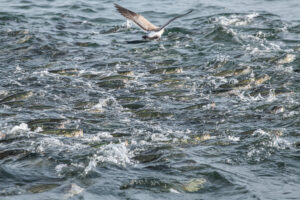
Overfishing and water quality are the biggest conservation challenges where I live in coastal New York. Pressure from recreational and commercial fishing has led to reduced populations of key species like striped bass. A critical part of addressing this is the need to conserve menhaden, commonly known where I live as “bunker,” as an essential forage fish that striped bass and other gamefish species depend on for food. At the same time, water quality degradation from nitrogen pollution, mainly due to septic systems and runoff, continues to destroy habitats and create aquatic dead zones.

Credit: Sergio Diaz

Conservation ensures that the waters I fish today will still be there tomorrow, full of life and possibility. It’s about respecting the resource, practicing catch and release when appropriate, and supporting efforts that protect habitats and biodiversity. For me, being a responsible angler goes hand in hand with being a good steward of the places I love.

I feel compelled to do my part in conservation because I want the next generation to experience the same connection to fishing that I’ve been lucky to have. Fishing isn’t just a pastime. It teaches respect for the environment and shows the value of healthy ecosystems. Being involved in conservation means protecting the waters, habitats, and species we rely on, so the fish are still there tomorrow, not just today. It’s about giving back to a resource that’s given me so much.

Credit: Sergio Diaz

If we don’t take care of the land and water now, there won’t be anything left to hunt or fish later. Conservation helps to keep the traditions alive – the early mornings on the water, the stories, the connection to nature. If we want to continue to enjoy the outdoors, we have to protect them.

Banner image credit Sergio Diaz

Do you have any thoughts on this post?

XHTML: You can use these tags: <a href="" title=""> <abbr title=""> <acronym title=""> <b> <blockquote cite=""> <cite> <code> <del datetime=""> <em> <i> <q cite=""> <s> <strike> <strong>

Comments must be under 1000 characters.

by:

posted in: In the Arena

July 17, 2025

In the Arena: Dr. Carolyn Mahan

TRCP’s “In the Arena” series highlights the individual voices of hunters and anglers who, as Theodore Roosevelt so famously said, strive valiantly in the worthy cause of conservation.

Dr. Carolyn Mahan

Hometown: State College, Pennsylvania
Occupation: Professor of Biology and Environmental Studies, Penn State Altoona
Conservation credentials: Dr. Carolyn Mahan has spent her professional career researching topics to improve conservation across America and the world. Currently, Dr. Mahan’s research interests include wildlife use of human-modified landscapes, management of public lands, and squirrel ecology. Her research has been widely published and cited in top science journals, and she currently serves on Pennsylvania governor Josh Shapiro’s Advisory Council for Conservation.

Dr. Mahan has researched wildlife around the globe but loves the diverse world of the Appalachian Mountains she calls home. Her education and research combined with passions for hunting and fishing make her a fantastic educator in the Penn State University system, as well as an invaluable expert when working with the oil and gas industry on conservation. Dr. Mahan lives a life that takes active steps toward a future where humans and wildlife can coexist. 

Here is her story.

TRCP: How were you introduced to hunting, fishing, and the outdoors? Who introduced you? 

Dr. Mahan: I always loved nature, hiking, bird watching, and wildlife. However, my husband, Kurt Engstrom, introduced me to fishing and hunting while we were dating and both students at the University of Connecticut in the late 1980s. At first, I would just accompany him in the forest and watch wildlife. Gradually, I learned how to fish for bass and trout. Finally, once we moved to Pennsylvania, I began to hunt whitetail deer. 

TRCP: Tell us about one of your most memorable outdoor adventures. 

Dr. Mahan: I have had so many memorable experiences in nature locally, nationally, and internationally.  However, a seemingly small natural event occurs every year on my back porch, and I treasure seeing it. In late March, a pair of Carolina wrens inevitably chooses my laundry apron, the pocket of my hunting coat, or my window box as a place to build their beautiful moss-covered, domed nest.  This event is one of the first signs of spring for me and my family, and we watch the wren pair as they lay their four eggs, incubate them, and eventually fledge their babies. This annual event is an on-going sign that, perhaps, humans and wildlife can travel together into the future.  

TRCP: If you could hunt or fish anywhere, where would it be and why?

Dr. Mahan: I would like to go on a pack trip on horses into the western backcountry to hunt for elk. I grew up riding horses, so this would combine things that I love. Fishing for Atlantic salmon in the UK or brook trout in Labrador would be amazing as well. 

TRCP: How does conservation help enhance your outdoor life? 

Dr. Mahan: My entire life is conservation. I am a professor who teaches courses in conservation to undergraduate students at Penn State, and I conduct research on conservation of all types of wildlife (native pollinators, breeding birds, carnivores, small mammals, and rare species) in human-modified landscapes such as oil and gas pipelines. So, every time that I am in the outdoors for work or play, I am thinking about conservation and how to create and restore landscapes where humans and wildlife can coexist. 

TRCP: What are the major conservation challenges where you live?

Dr. Mahan: I used to think that habitat loss was the biggest threat to wildlife. Habitat loss is still a critical factor impacting wildlife, but we are learning to manage landscapes so that both humans and wildlife can occupy the landscape. In terms of drastic wildlife losses, the spread of infectious diseases caused, in part, by globalization, climate change, and human activities (e.g, game farming), is the biggest challenge. Infectious diseases and pathogens like Chronic Wasting Disease, White-nosed Syndrome, West Nile Virus, and Avian Malaria has caused sudden and drastic health threats to whitetail Deer, North American bats, ruffed grouse, and songbirds respectively. In addition, non-native species including Japanese knotweed, stilt grass, spotted lanternfly, hemlock woolly adelgid, and emerald ash borer have changed the species composition of Pennsylvania forests over the past few decades. 

TRCP: Why is it important to you to be involved in conservation? 

Dr. Mahan: Aldo Leopold wrote that “one of the penalties of an ecological education is that one lives alone in a world of wounds.” I feel that quote everyday as I see the changes in wildlife populations and forest composition that I previously mentioned, and sadly, many of these negative changes are unnoticed by the general public. People can make a difference, however, through their actions.  Actions may include removing non-native species, planting a native tree, growing native forbs, teaching others to cherish nature, being conscientious about what you purchase, and assisting in wildlife management. 

Dr. Mahan on a Pennsylvania pheasant hunt.

TRCP: Why should conservation matter to the next generation of hunters and anglers?

Dr. Mahan: In the United States, conservation is funded at the governmental level primarily by taxes on hunting and fishing equipment and hunting/fishing license sales. If you are a hunter or an angler, your money is used for conservation. Newcomers to these past times should learn about ways that their funds are used and assist state officials in explaining the importance of hunters and anglers in their role as conservationists. I also hope that hunters and anglers will focus on more than just the species that they harvest. Conservationists should care about all species of native wildlife because healthy, functioning ecosystems are critical for sustainable hunting and fishing. 

Photo credits: Dr. Carolyn Mahan


The TRCP is your resource for all things conservation. In our weekly Roosevelt Report, you’ll receive the latest news on emerging habitat threats, legislation and proposals on the move, public land access solutions we’re spearheading, and opportunities for hunters and anglers to take action. Sign up now.

by:

posted in: In the Arena

May 1, 2025

In the Arena: Capt. John McMurray

TRCP’s “In the Arena” series highlights the individual voices of hunters and anglers who, as Theodore Roosevelt so famously said, strive valiantly in the worthy cause of conservation.

John McMurray

Hometown: Oceanside, New York 
Occupation: Fishing guide/charter boat captain
Conservation credentials: McMurray has been the executive director of the Coastal Conservation Association New York and director of grant programs at the Norcross Wildlife Foundation. He was also a legislative proxy for the Atlantic States Marine Fisheries Commission and served for a decade as New York’s recreational representative on the Mid-Atlantic Fishery Management Council.

Capt. John McMurray hails as a renowned big tuna and striped bass charter captain based on Long Island, New York. The hard-charging captain has been the owner and primary operator of One More Cast Charters, Inc. for more than twenty years, where he charters trips far offshore on seaworthy Contenders and inshore on smaller skiffs. McMurray has been a leader with the New York arm of the Coastal Conservation Association and a long-time advocate for menhaden conservation. He’s also served in the U.S. Coast Guard as a coxswain and law enforcement officer, and for 16 years served as the director of grant programs at the Norcross Wildlife Foundation, which distributed over $20 million in grants that largely targeted the protection of marine fish and habitat. Driven to fish hard for his clients without respite during major runs, he’s out on the water almost every day of the season, rain or shine – including a running timeslot every other Sunday he sets aside to take his son and his friends fishing on what he refers to as “Bro-day.”

McMurray is an oft-published outdoor writer, who currently blogs for the Marine Fish Conservation Network and has had feature articles/photography published in On The Water, Saltwater Fly Fishing, and The New York Times. A decade ago he penned a weekly conservation blog for TRCP.

Here is his story.

No one ever really introduced me to the outdoors. I didn’t really come from an outdoorsy family. Just kinda got into it myself. There was a local pond we’d go to in northern Virginia. I started out with bluegills, graduated to catfish, then largemouths in the Potomac. I later enlisted in the Coast Guard, which brought me to New York, where I discovered striped bass and became a full-on addict. Eventually I got into tuna fishing. At that point fishing kinda became my life.

I guess my most memorable outdoor adventure was at that local pond, there was a “giant” catfish (I’m sure it was probably more than one) that would break people off, stole at least one “dead-sticked” rod. No one could ever land it. Eventually, one year (I think I was 9) I stuck it, did a lap around the pond while a small crowd gathered as I landed it. It was not “big” really, maybe 10 lbs., but back then? It was HUGE! I was an instant legend (in my own mind anyway).

If I could fish anywhere in the world, honestly, it would be Long Island, New York, man. Believe it or not, we’ve got one of THE best fisheries in the world. Incredibly abundant striped bass populations. The sight/flats fishing is GREAT in the spring and the fall blitz fishery is Nat Geo-type stuff. We’ve also got an extraordinary giant tuna fishery within sight of land. Mid-shore the recreational size bluefin fishery is awesome too. Fish in the 150, even 200 lb.-range can be caught on spin gear! Offshore? We’ve got an insane yellowfin tuna fishery. We get 100 lb. fish on poppers regularly.

Conservation enhances what I do because it creates abundance, and abundance equals opportunity. The main conservation challenge off of Long Island is that A LOT of our fisheries revolve around menhaden aggregations. We get the menhaden schools, we get predators.  Every year though, the large-scale processors in Virginia sail purse-seine boats and fly spotter planes up here. They sit right off the 3-mile line and rake up hundreds of thousands of pounds of menhaden, effectively shutting down bluefin and striped bass runs. It REALLY sucks.

If we deplete forage fish stocks, those predator fish ain’t coming around.

I’m involved in conservation efforts out of enlightened self-interest. I need there to be an abundance of both predators and forage fish around to be successful at the catching part. My business emphasizes the experience fishing brings rather than just filling coolers. So a fish in the water is WAY more beneficial than a dead one on the dock. It’s not really how many I can kill that’s important, but how many we can catch.

It’s obvious to me why conservation should matter to our next generation of anglers. We kill too many predator fish now, there won’t be any left for my kids. If we deplete forage fish stocks, those predator fish ain’t coming around. For me, or for future generations.

All images credit John McMurray

by:

posted in: In the Arena

March 27, 2025

In the Arena: Leland Brown

TRCP’s “In the Arena” series highlights the individual voices of hunters and anglers who, as Theodore Roosevelt so famously said, strive valiantly in the worthy cause of conservation.

Leland Brown

Hometown: Portland, Oregon
Occupation:
North American Non-lead Partnership co-founder / Oregon Non-lead Hunting Education Program Manager / Ph.D. candidate Portland State University 
Conservation credentials:
Brown carries a degree in environmental biology and is currently researching the terminal performance of hunting ammunition for his Ph.D. at Portland State University.

After graduating with a degree in environmental biology, Brown started working professionally conducting invasive species management projects and taught himself to hunt on his own time. Since then, Brown has hunted big game and upland birds across the West, most recently in Oregon. After realizing the unintended impacts lead left in carcasses and gut piles of shot animals has on scavenging birds of prey as well as other mammals and birds that feed on the carrion, Brown co-founded the North American Non-lead Partnership, which promotes voluntary best management practices, including the use of lead-free ammunition.

Here is his story.

TRCP: How were you introduced to hunting, fishing, and the outdoors? Who introduced you? 

Brown: I was originally introduced to fishing and the outdoors growing up in the White Mountains of New Hampshire. My family would go fishing in the rivers and lakes in the White Mountains, and I have hiked and camped my whole life. I had always been interested in hunting but didn’t have mentors who hunted to teach me how.

My older brother started hunting as a teenager with friends. He really introduced me to the mechanics of shooting and hunting. During university, that interest in hunting was cemented as I learned even more about hunting as a wildlife management tool, and the broader contribution to conservation. After graduating with a degree in environmental biology I started working professionally conducting invasive species management projects and taught myself to hunt on my own time. I’ve been lucky enough to meet a lot of talented hunters over the years and am always learning from people. I love to hunt and fish, and I like being with good people almost as much as the act of hunting or fishing.

TRCP: Tell us about one of your most memorable outdoor adventures. 

Brown: I’ve been incredibly lucky in my adventures. It makes it hard to choose the most memorable one. I’ve done a lot of solo hunting over the years and had some incredible experiences in the field with no one else around.

One that sticks out to me was spending four hours laying behind my rifle in an open grassland canyon watching 15 cow and spike elk bed and feed. They finally stood up when a 5-point bull came up the canyon bottom and started barking at me. I made a shot on a cow 20 minutes before dark and finished butchering her by myself around 11:30 p.m. That solo experience was awesome, but the thing that really means a lot were the friends who dropped everything to help me pack that animal out when I needed the extra hands. Recently I have found a lot of joy in sharing time in the outdoors with my wife and other friends instead of going out solo. 

TRCP: If you could hunt or fish anywhere, where would it be and why?

Brown: This is a classic topic of conversation. I go two directions: 1) I love going to places that I have a past connection to. Continuing to experience a place and seeing the changes that occur over seasons and years whether it’s a river or a forest is awesome. 2) I want to go to new places and experience things I’ve never done before. Realistically, where has become less important than who for me these days. I want to spend the time outdoors with people who love the areas, love the activities, and I enjoy spending the time with. Whether it’s a place I’ve been 100 times, or my first time in an area, if I’m with the right people, then it’s where I want to be.

TRCP: How does conservation help enhance your outdoor life? 

Brown: Conservation and the outdoors are inextricably intertwined for me. My professional career in conservation is so closely linked to the outdoor activities I enjoy that I cannot separate the two. Conservation and knowledge about the ecosystem inform my enjoyment of the outdoors. As is common with people who enjoy the outdoors, being involved in conservation—whether working on habitat, engaging in the process of wildlife management, choosing lead-free ammunition for hunting, or just working to make sure others are aware of the challenges we face—is a way to build a larger connection to our outdoor activities. Conservation provides the foundation and context for my time outdoors, both in making sure it’s there for the future, and in making sure my activities only cause the impact I desire.

If we want to see hunting and angling continue through the next century, I strongly believe that conservation cannot be lip service. It must have active participation from hunters and anglers, and we need to tell the story to the public.

TRCP: What are the major conservation challenges where you live?

Brown: There are a lot of challenges for conservation. One of the biggest that I’ve been focused on is either apathetic or unaware members of the community. For all the conservation challenges we face, we need engaged, active participation to be successful. One of the reasons I shifted from field work to engage more in conservation information and education is that I see the need across all these current issues—habitat loss, migration disruption, changing ecosystems, lead exposure, and disease—will require engaging with not just our fellow hunters and anglers, but also members of the general public. Not only do we have to engage, but we need to do it in a way that builds partnerships between different groups who may not have historically seen themselves as potential partners. We need to shift from conflict in conservation to cooperation to really address the wide variety of issues we are facing in conservation today.

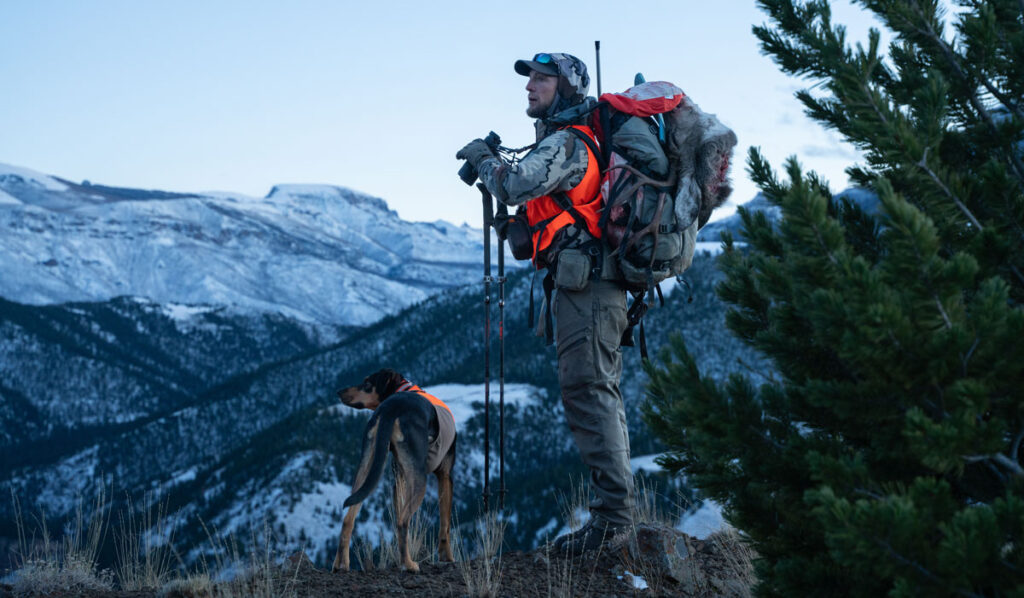
Brown takes advantage of a prime window to glass.

TRCP: Why is it important to you to be involved in conservation? 

Brown: A lot of people talk about leaving things better for the next generation. For me, being actively involved in conservation is my opportunity to contribute not just to the next generation of people who want to have these incredible opportunities in the wild, but also making sure that the entire ecosystem, including people, is in better shape than when I started. It’s a small way of attempting to give back to the lands and wildlife that have sustained me and inviting others into those places. I see the need for active efforts to promote conservation, hunting, and fishing that connect to building strong, resilient ecosystems.

TRCP: Why should conservation matter to the next generation of hunters and anglers?

Brown: Conservation, hunting, and angling need to continue to be connected for our outdoor activities to remain relevant and sustainable. If we want to see hunting and angling continue through the next century, I strongly believe that conservation cannot be lip service. It must have active participation from hunters and anglers, and we need to tell the story to the public. We have a lot of people in America who are supportive of hunting and angling. Conservation is one of the ways we can connect our activities to people who have never had the experience in the field and do it in a way where they leave excited about what we contribute to the resources owned by the public and managed for their benefit. Hunting can contribute to conservation, but we need hunters (and anglers) to be conservationists for us to maintain public support.

Photo credits: Leland Brown


The TRCP is your resource for all things conservation. In our weekly Roosevelt Report, you’ll receive the latest news on emerging habitat threats, legislation and proposals on the move, public land access solutions we’re spearheading, and opportunities for hunters and anglers to take action. Sign up now.

by:

posted in: In the Arena

March 6, 2025

In the Arena: “Python Huntress” Amy Siewe

TRCP’s “In the Arena” series highlights the individual voices of hunters and anglers who, as Theodore Roosevelt so famously said, strive valiantly in the worthy cause of conservation.

Amy Siewe

Hometown:: Kettering, Ohio 
Occupation: Professional python hunter and guide in South Florida
Conservation credentials: Siewe has dedicated her life and career to the capture and removal of invasive Burmese pythons, endemic to Southeast Asia but wreaking havoc on native wildlife in the Everglades. She not only offers guided hunts and goes after snakes on her own – which can top out at almost 19 feet long – but assists researchers working to tag and release male “scout snakes” with transmitters to help find breeding-age females and their nests. Siewe also helps raise money for conservation and other nonprofit efforts, having brought in nearly $600,000 through charity-auctioned hunts for organizations including Rookery Bay National Estuarine Reserve and The Alliance for Florida’s National Parks.

“Python Huntress” Amy Siewe is one of those rare individuals who pursue their passion for an unlikely dream and find phenomenal success. Growing up exposed to wild snakes, she was always drawn to and fasciniated by the reptiles, and later became a volunteer at the Toledo Zoo in college, as well as an exotic pet breeder and educator. She eventually moved into a 13-year, more comfortable career in real estate in the Midwest. Then she began to see news coverage of Burmese python hunts in the Everglades. These incredibly successful apex predators, which were first detected in Florida in the late ‘70s, have since become the invasive wildlife species of top concern in the Everglades.

Six years ago, Siewe took a vacation to see if she could capture one of the invasive pythons. After catching her first snake (a nine-footer), she was hooked, and resolved then and there to do whatever it took to spend her days – and nights – chasing after the evasive predators across South Florida. She walked away from her real estate business and headed to the subtropical U.S. to start a business guiding clients as the Python Huntress, since featured in stories with The New York Times, National Geographic, Time Magazine, and CNN. Working for the Florida Fish and Wildlife Commission and in her own business, she has captured more than 600 snakes as one of the best-known python hunters in the state.

Here is her story.

My dad instilled in me a deep appreciation and respect for nature, teaching me from a young age how to catch and admire all kinds of creatures. From the moment I saw my first snake, I was captivated. That fascination only grew, leading me to a lifelong passion for catching, studying, and even breeding these incredible reptiles.

My passion for snakes is what makes me excel at my job. I have tremendous respect for the Burmese python, but I also have immense respect for Florida’s delicate ecosystems. The reality is clear — these invasive predators must be removed, as there is no alternative. I capture them and ensure they are euthanized in the most humane way possible. It’s not their fault they are here, but protecting our native wildlife means making the tough but necessary choice.

One of my most memorable outdoor adventures happened one night when I was alone in my truck. I spotted a small part of a python pattern in the grass at the tree line. I jumped out and followed the pattern a couple of feet up to its head — the biggest I had ever seen. The rest of its body was hidden, but I knew it was a monster. I only had a small 6-by-6-inch black drawstring bag. (In the veterinary and pet world, we would cover an animal’s head or eyes to calm it down.) I looked at the bag and looked at the snake… questioned my sanity… and jumped on it!

Somehow, I managed to slip the bag over its head—and just like that, the battle was over. It stopped fighting and was completely subdued. Turns out, it was 17’3” long and 110 lbs. (GoPro video here; warning, contains profanities.) That was an unforgettable catch!

“My office is the Everglades. I get to work in one of the most diverse and beautiful places on earth.”

There’s nowhere I’d rather be than hunting invasive pythons right here in South Florida. There is no greater thrill for me than capturing massive pythons. They’re incredibly difficult to find, which makes the moment of discovery an adrenaline rush — and the catch even more exhilarating. While my journey to Florida began with the excitement of hunting these giants, I quickly came to understand the devastating impact they’ve had on the ecosystem. In some areas of the Everglades, pythons have wiped out a full 98 percent of the mammal population (including deer, raccoons, and opossums), leaving a once thriving habitat in crisis.

My office is the Everglades. I get to work in one of the most diverse and beautiful places on earth, catching the giant constrictors and helping to save our precious everglades in a life that I didn’t know existed, until I did. I couldn’t do that if people didn’t care about conservation. So conservation not only benefits our wild places, but also makes my work possible.

“In some areas of the Everglades, pythons have wiped out a full 98 percent of the mammal population.”

Burmese pythons are a major conservation challenge. They thrive in an environment that is 97 percent inaccessible to humans. You can’t simply walk into the swamp and expect to find them. Instead, we rely on spotting them as they cross roads and levees. Adding to the difficulty, these snakes remain motionless for nearly 85 percent of their lives. Their intricate patterns offer a perfect camouflage in this environment. Every one of these factors makes finding them an incredible challenge.

In Florida, we have over 500 non-native plants and animals, with pythons being the most destructive wildlife species. If we don’t find a solution, our native mammals could face extinction. Losing even one native species from the ecosystem sets off a domino effect, leading to catastrophic changes down the line.

This has implications for the next generation of hunters and outdoor users. If invasive species go unchecked, native wildlife will vanish, leaving Florida overrun by non-native creatures that don’t belong. The ecosystem will be forever altered, and Florida will no longer be the place it was meant to be.

Images courtesy Amy Siewe

HOW YOU CAN HELP

TRCP has partnered with Afuera Coffee Co. to further our commitment to conservation. $4 from each bag is donated to the TRCP, to help continue our efforts of safeguarding critical habitats, productive hunting grounds, and favorite fishing holes for future generations.

Learn More
Subscribe


You have Successfully Subscribed!

You have Successfully Subscribed!

You have Successfully Subscribed!

You have Successfully Subscribed!

You have Successfully Subscribed!