Our Issues
Public Lands
Why It Matters

Hunting & Fishing Access

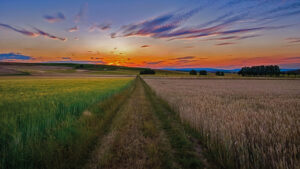
America’s 640 million acres of national public lands provide irreplaceable hunting and fishing opportunities to millions of Americans.

Learn More About Access
What TRCP is Doing

We’re working to safeguard America’s public lands so hunters and anglers always have quality places to pursue their passions.

 Brian Flynn, Two Wolf Foundation
How Sportsmen Are Doing It Right

Brian Flynn, Two Wolf Foundation's Story

Following a distinguished career in the U.S. Army, lifelong outdoorsman Brian Flynn returned home from a deployment in Afghanistan and…


Hunting
Why It Matters

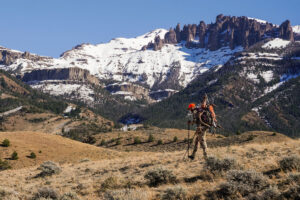
Key Issues for America’s Hunters

Your source for the latest policy updates, conservation challenges, and opportunities shaping America’s hunting traditions.

What TRCP is Doing

We’re fighting for meaningful policy changes that benefit wildlife, our waters, and the American landscapes that make our outdoor traditions possible.

 Ryan Sparks
How Sportsmen Are Doing It Right

Ryan Sparks's Story

TRCP’s “In the Arena” series highlights the individual voices of hunters and anglers who, as Theodore Roosevelt so famously said,…

Fishing
Why It Matters

Key Issues for America’s Anglers

Your source for the latest policy updates, conservation challenges, and opportunities shaping America’s fishing traditions.

Sign Up For Forage Fish Updates
What TRCP is Doing

We’re fighting for meaningful policy changes that benefit wildlife, our waters, and the American landscapes that make our outdoor traditions possible.

 David Mangum
How Sportsmen Are Doing It Right

David Mangum's Story

Capt. David Mangum is a YETI ambassador and outdoor photographer who utilizes his talents to produce media that inspire a…

Private Land
Why It Matters

Stewardship on America’s private lands

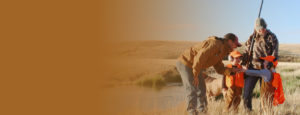
With 70 percent of U.S. lands in private hands and many of our best hunt and fish opportunities occurring there, investing in voluntary conservation on working lands safeguards access, strengthens habitat and water quality, and ensures resilient landscapes.

Take Action - Farm Bill 2026
What TRCP is Doing

We champion policies and programs that restore wildlife habitat, improve soil and water health, and keep working lands productive.

 Ward Burton
How Sportsmen are Doing It Right

Ward Burton's Story

Ward Burton’s NASCAR driving career stretched across most of two decades. As an avid sportsman and conservationist, he founded the…

Special Places
Why It Matters

Special Places Worth Protecting

America’s most iconic landscapes provide unmatched habitat and unforgettable days afield. These places sustain wildlife, anchor local economies, and define the hunting and fishing traditions we pass down.

What TRCP is Doing

We’re working to conserve special places that provide world-class habitat and unforgettable opportunities for hunters and anglers.

 Franklin Adams
How Sportsmen Are Doing It Right

Franklin Adams's Story

As a true Gladesman, conservationist, and historian, Capt. Franklin Adams has spent more than six decades championing Everglades restoration efforts…

Habitat & Clean Water
Why It Matters

Healthy Habitat Powers Every Pursuit

All hunting and fishing opportunities depend on quality habitat, from clean water and healthy wetlands to winter and summer habitats and the migration corridors that connect them.

All About Habitat & Clean Water
What TRCP is Doing

We are working to safeguard the habitats that power every hunting and fishing opportunity.

 Alex Harvey
How Sportsmen Are Doing It Right

Alex Harvey's Story

Alex Harvey, founder of Legacy Land Management, is a registered professional forester in Mississippi and Alabama with a Master's degree…

Science
Why It Matters

Science That Guides TRCP

From conserving migration corridors and wetlands to ensuring clean water and resilient landscapes, science provides evidence that turns conservation goals into effective action.

Science for Conservation
What TRCP is Doing

For hunters and anglers, science safeguards the experiences we treasure including resilient big game populations, abundant fish, and wild places that endure changing social landscapes.

Jamelle Ellis
Your Science Expert

Jamelle Ellis's Story

Jamelle Ellis joined the Theodore Roosevelt Conservation Partnership in 2022. Jamelle spent the last three years as an environmental sustainability…

Where We Work
Across the Nation

Conservation Across America

TRCP works across the country to ensure hunters and anglers can enjoy healthy fish and wildlife and quality days afield, no matter where they live.

See All Issues
TRCP in Your Region

TRCP works across the country to ensure hunters and anglers can enjoy healthy fish and wildlife and quality days afield, no matter where they live.

Who We Are
Our Mission

To guarantee all Americans quality places to hunt & fish

We unite and amplify our partners’ voices to advance America’s legacy of conservation, habitat, and access.

Our Mission & Values
Our People & Partners
  • Meet the TRCP Team

    Our staff and board members unite and amplify our partners’ voices to advance America’s legacy of conservation, habitat, and access.

    Meet the Team
  • Our Partners

    ‘Partnership’ is in our name. We work with 64 diverse partner groups that represent today’s leading hunting, fishing, and conservation organizations in order to strengthen the sportsman’s voice in Washington, D.C.

    Our Partners
  • Corporate Council

    TRCP’s Corporate Council is made up of diverse corporations that share a common passion for conservation.

    Corporate Council
Our Organization

Looking for more information?

Explore our latest news, policy updates, and conservation resources to get the information you need.

Giving
How You Can Help

To guarantee all Americans quality places to hunt & fish

Your tax-deductible donation will support TRCP's mission, now and into the future.

DONATE
Special Ways to support trcp
  • Capital Conservation Awards Dinner

    The CCAD is one of Washington's best-attended conservation celebrations, featuring dinner, cocktails, and a silent auction.

    Learn More
  • Step Into the Arena

    Help us ensure that our treasured wild habitats and game remain intact for the next generation to enjoy – lend your support to the TRCP’s efforts today!

    Donate
  • Roosevelt Roast

    TRCP has partnered with Afuera Coffee Co. to further our commitment to conservation.

    Learn More
More donation options

Find the best way for you to lend your support. Join one of TRCP’s donor circles for special invitations, premium offerings from outdoor retailers, and more exclusive benefits. Take control of your legacy with planned giving or contribute to special conservation funds.

Other Ways To Give
News
In the Spotlight

Hunters and Anglers Weigh in to Ask the Forest Service to Retain Roadless Safeguards 

We can have healthy habitats and fire-resilient landscapes, and the Forest Service has an opportunity to continue to conserve habitat without roads in a way that gives fire management necessary flexibility and retains the core backcountry values that make these places unique. 

Read More

Stay Informed

Receive our newsletter, the Roosevelt Report, right in your inbox. Never miss the latest news in conservation issues.

by:

posted in:

August 7, 2026

PXL_20241028_215005688

Do you have any thoughts on this post?

XHTML: You can use these tags: <a href="" title=""> <abbr title=""> <acronym title=""> <b> <blockquote cite=""> <cite> <code> <del datetime=""> <em> <i> <q cite=""> <s> <strike> <strong>

Comments must be under 1000 characters.

by:

posted in:

August 3, 2026

Hunters and Anglers Applaud Senate Introduction of MAP Roads Act

Bill would direct Department of Transportation to establish grant program to fund the digitization of county public roads 

Senators John Curtis (R-Utah) and Mark Kelly (D-Ariz) have introduced the Modernizing Access to Public Roads Act into the Senate.  The bill would establish a grant program through the U.S. Department of Transportation to address the mapping shortfalls and improve public access on the rural road systems across America, resulting in reduced confusion, fewer conflicts with private landowners, and easier access for hunters and anglers. 

This is a bipartisan, bicameral effort, with the House version of this bill sponsored by Representative Blake Moore (R-Utah) and cosponsored by Representative Val Hoyle (D-Ore.), Representative Jeff Hurd (R-Colo.), and Representative Susie Lee (D-Nev.).  

“The lack of publicly accessible and accurate county road map information is a key barrier for hunters and anglers trying to access public lands,” said Joel Webster, chief conservation officer of the Theodore Roosevelt Conservation Partnership. “The bipartisan, bicameral MAP Roads Act will provide funding to address these mapping shortfalls and improve public access, resulting in reduced confusion for hunters and anglers trying to navigate rural road systems across America. TRCP applauds Senators Curtis and Kelly, as well as Representatives Moore, Hoyle, Hurd, and Lee, for their leadership on this bill” 

The MAP Roads Act builds on the success of the MAPLand Act, MAPWaters Act, and MAPOceans Act by establishing a $20 million, 5-year pilot grant program through the U.S. Department of Transportation to: 

⦁ Fund county road digitization by converting paper or outdated formats into standardized geospatial datasets. 

⦁ Create publicly accessible statewide road data repositories that distinguish public and private roads, are compatible with third-party mapping platforms, and are updated annually. 

⦁ Provide funds to support local capacity toward county subgrants, personnel training, or hiring contractors for data conversion. 

The clarity and accessibility to this information for both the public and local municipalities would improve rural commerce, public safety, navigation, and access to public lands so more Americans can confidently access and enjoy their public roadways and the adventures beyond. The MAP Roads Act would not create any new road authority, or alter any legal status, ownership, or jurisdiction of roads. 

“Access is essential to conserving our hunting traditions and connecting people with the upland habitats that make those traditions possible,” said Ariel Wiegard, Vice President of Government Relations for Pheasants Forever and Quail Forever. “The bipartisan MAP Roads Act will modernize county road records, giving hunters greater confidence as they access public lands while reducing confusion and inadvertent trespass. We thank the Senate sponsors for advancing this commonsense, bipartisan solution that benefits hunters, conservation, and rural communities.” 

“Accurate and accessible maps are fundamental to ensuring Americans can safely and confidently access our public lands and waters,” said Kaden McArthur, Congressional Affairs Director for Trout Unlimited. “We thank Senators Curtis and Kelly for their leadership on the MAP Roads Act, which will modernize outdated public road information and make it easier for anglers and other outdoor recreators to find reliable, legal access to rivers, streams, and other public destinations. By improving the accuracy and availability of these maps, this bipartisan legislation will help people spend less time navigating road systems and more time enjoying the outdoors.” 

Learn more about TRCP’s commitment to public access HERE

by:

posted in:

USDA Awards $53 Million for Habitat and Access 

The Theodore Roosevelt Conservation Partnership applauds the U.S. Department of Agriculture’s investment in habitat and hunting and fishing access across the country. 

The USDA’s Natural Resources Conservation Service (NRCS) on July 31, announced a $53 million investment in hunting and fishing access through the Voluntary Public Access and Habitat Incentive Program (VPA-HIP).  

VPA-HIP supports state-led programs, tailored to the needs of local landowners, hunters, and anglers. It is the only federal program designed to incentivize willing landowners to allow hunting and fishing access. It also  supports streamlined habitat improvement on those same acres. 

“As the Chief of NRCS, one of my top priorities is to expand wildlife conservation and outdoor access; the Voluntary Public Access and Habitat Incentive Program is a key part of our strategy to execute that priority,” said NRCS Chief Colton L. Buckley. “This program – made possible by the Working Families Tax Cuts Act – prioritizes farmers and ranchers while strengthening rural economies through support of wildlife conservation and outdoor recreation. These projects encourage landowners to allow the public to access their land for hunting, fishing, and other wildlife-dependent recreation.”    

TRCP has been a major supporter of VPA-HIP since its inception, and we’ve worked hard to ensure it remains authorized and funded. This award represents the largest single investment in VPA-HIP in history, and the first federal support these programs have received in years.  

“Finding access is one of the biggest challenges hunters and anglers face, especially those of us without large blocks of public land nearby,.said Aaron Field, TRCP’s director of private lands conservation. “We applaud NRCS for this investment and look forward to the great hunting and fishing opportunities it will create nationwide.” 

Learn more about VPA-HIP here


by:

posted in:

July 31, 2026

Oregon’s Hunting Ban Measure Fails to Make the Ballot 

IP 28 is dead, but the pattern behind it – deciding complex wildlife policy at the ballot box – isn’t going away. That conversation is worth continuing. 

Initiative Petition 28 will not appear on Oregon’s November ballot. After proponents submitted 142,784 signatures on July 2, the Secretary of State’s Elections Division tested two random samples and found that neither cleared the roughly 82%  validity rate the petition needed. The measure is finished. 

The measure, formally called the People for the Elimination of Animal Cruelty Exemptions Act (PEACE ACT), would have removed longstanding exemptions from Oregon’s animal-cruelty laws. Activities that injured or killed an animal, including hunting, fishing, trapping, livestock slaughter, certain breeding practices, wildlife management, pest control, and some agricultural and scientific research, could have become criminal offenses.  

For Oregon’s hunters, anglers, trappers, farmers, ranchers, and everyone in the state that relies on protein from harvest of wild game or agricultural practices, this is a relief. In one form or another, this proposal has hung over our community for six years. Defending against it has consumed significant time, money, and attention that our community would have rather spent on habitat work, access, and the actual business of conserving fish and wildlife. But it would be dishonest to say we feel only relief. IP 28 would have forced a statewide conversation that Oregon has needed for a long time and because the ideas behind this measure are not going away on their own, let’s have that conversation anyway. 

Oregon’s foray into direct democracy dates to 1902, when the state adopted the initiative and referendum processes –  a reform so closely identified with this place that it became known nationally as the Oregon System. The initiative was designed as a corrective mechanism, giving citizens recourse when elected officials failed to act, not as a primary governance tool for complex regulatory systems like wildlife management.  

More than a century on, the record is mixed, and the tool that was meant for corrections has been used to increasingly in recent decades. Oregonians have use the initiative to do genuinely important things, but they have also been asked to decide questions that were poorly drafted, misleading in their titles, funded almost entirely from outside the state, used to take the temperature of voters on certain issues, or written by people with no working knowledge of what they proposed to regulate. In 1994, Measure 18 asked voters to prohibit the use of dogs to hunt cougars and bait to hunt bears. It passed. The vote removed a management tool used by the public through campaigning rather than being guided by the state’s wildlife management process. More than three decades later, Oregon’s wildlife professionals have had to manage cougar populations within this voter approved constraint.

Wildlife Management Must Remain Grounded in Science 

Measure 118 and IP 28 are not the same, but together they demonstrate the difficulty of deciding complex wildlife management questions through ballot box biology that offers voters a seemingly simple, yes- or- no, choice. Wildlife is held in trust for all Oregonians, so the public has an essential voice in setting conservation values and holding decision-makers accountable. But specific decisions about seasons, harvest methods, population objectives, and conflict management should be informed by evidence and carried out by qualified wildlife professionals through transparent public processes. The North American Model of Wildlife Conservation was built to provide the foundation for that approach. Its premises are simple and radical: wildlife is held in trust for everyone rather than owned by the wealthy, it is allocated by law rather than by markets, and it is managed according to the best available science. Those principles only hold if the science is allowed to do its work. 

What many Oregonians don’t know is who has been paying for the wildlife and wild places they love, and who has been doing the work: Hunters and anglers built the system that conserves Oregon’s wildlife, and then taxed themselves to fund it. License and tag sales, together with federal excise taxes paid on firearms, ammunition, and fishing tackle under the Pittman-Robertson and Dingell-Johnson Acts, return millions of dollars to Oregon every year. That money pays for habitat restoration, population research, enforcement, and public access. It funds work on songbirds and salamanders as surely as on elk and steelhead. It is, as far as we know, the only conservation model in the world in which the users of a resource asked to be regulated and then volunteered to pay for the careful management of those resources. That is a remarkable thing, and not enough outside our community know the story. 

Neither do most Oregonians know the depth of how this measure would have reached into every day life. The traditions IP 28 treated as cruelty are, in practice, some of the oldest and most careful food cultures known:  the family that fills their freezer with carefully wrapped packages of venison each fall, the crabber and the clam digger on the coast, the rancher and the chef sourcing from within a 100 miles. Hunting, fishing, and agriculture are among the oldest human traditions on this landscape, sustaining communities here for thousands of years before statehood. This is not to say these activities should be beyond scrutiny: Hunters, anglers, farmers, ranchers, and wildlife managers all have a responsibility to uphold high standards of animal care, fair chase, ethical harvest, and responsible stewardship. 

The more Oregonians who understand where conservation funding actually comes from, the better equipped the state is to weigh proposals like this on their merits.  As responsible hunters and anglers, we should talk with our neighbors, legislators, and other Oregonians about why we care. Every conversation that connects a wildlife refuge, a healthy salmon run, or a herd of elk in the Blue Mountains back to the people who paid for it broadens our tent. The North American Model has lasted more than a century because generations of hunters and anglers kept faith with it. It will last another century only if the public that owns this wildlife understands what it owns, and who has been tending it. 

The TRCP is your resource for all things conservation. In our weekly Roosevelt Report, you’ll receive the latest news on emerging habitat threats, legislation and proposals on the move, public land access solutions we’re spearheading, and opportunities for hunters and anglers to take action. Sign up now.

by:

posted in:

A Boy and a River Trip on the Big Blackfoot

A father-son rafting trip on Montana’s Blackfoot River ties conservation and stewardship to family values and lifelong memories.

It was 75 degrees in the shade of the pines, and the Big Sky was powder-blue as we threw gear into the 14-foot raft floating in the Blackfoot River.

Anyone who’s done an overnight rafting trip knows that “work now, play later” is the mantra. My hopes were that this would be one of many lessons imparted on my seven-year-old son, Jackson.

My brother Ryan had secured permits for reservation-only, float-in-campsites, and we’d planned a three-day, two-night trip on the Blackfoot River in western Montana. As locals to the area, the river isn’t an exotic destination for us, but one with serious significance and an almost sacred mystique.

It was mid-June, and thanks to spring snow and rain, the river was flowing higher than we’d expected. From the steep boat ramp that slides to the belly of the river, the water was emerald green, slightly off color and dropping, perfect flyfishing conditions. Golden stones and salmon flies fluttered in the air after launching from river-bank willows.

The Blackfoot River flows 130 miles from the Continental Divide to its confluence with the Clark Fork near Missoula. Undammed and rich with wild trout, it’s known as Montana’s “Family River” for its role in local angling, boating, and community life – though the watershed faces mining legacies, development pressure, wildfire, and low streamflows. 

The Blackfoot River near a float-in-campsite.

TRCP has long worked with local partners to conserve habitat and protect hunting and fishing access in the Blackfoot Valley. Through the BLM’s Missoula Resource Management Plan, TRCP helped secure Backcountry Conservation Areas that balance habitat protection, access, and recreation across the corridor. TRCP also supports the River Runs Through It Act, a community-driven, 25-years-in-the-making proposal to protect the Upper Blackfoot and Monture Creek while advancing habitat conservation, access, forest restoration, and wildfire reduction. 

These efforts complement the ongoing Lolo National Forest Plan Revision, which will set the long-term framework for watershed health, wildlife habitat, recreation, and forest resilience – together supporting the clean water, fish habitat, and access that define the Blackfoot. 

Uncle and nephew taking it all in.

My son was well acquainted with this place, he’d camped on the riverbanks, fished, and swam here every year of his seven revolutions around the sun. He knew it was grizzly bear country, and he knew it held trout that would rise to a dry fly.

I think of my boy as a freestone river, at moments: a roaring torrent. At other times he’s an old soul, like a river’s ancient stones, quiet and contemplative. On this trip I’d hoped he’d see there’s something special about sharing a life alongside moving water. Maybe I’m a hopeless romantic and wishfully thinking.

We pushed off and rowed into a whitewater section, immediately dodging rocks and running small waves trains. Water surged over the bow and soaked the crew as I pointed the raft into the current’s V-pattern. My brother got to fishing immediately, a golden-stone pattern with a tungsten jig-head nymph tied below. While I rowed the boat into position and moaned about the weight of all the gear, he cast his rig into pocket water that lined the banks, surely trout would be holding there, avoiding the fast current. He hooked up on a nice brown. The fish dove then leapt into the air parallel to the boat, we all gasped and cheered. He fought the fish well and kept him on through several wave trains, but the rapid section and varying currents caused him to lose the connection, the fish came off as we exited the last drop pool.

An orange-bellied Salmon fly, a Cheeto-sized snack for trout.

Our first night’s camp was only a few miles from the put-in, so we took our time, fished and swam. Fishing was slower than expected, though massive, orange-bellied salmon flies hovered all around us. the Blackfoot is renowned for this hatch and trout love to gorge themselves on the Cheeto-sized snack. Catching a fast-rising trout on a large-foam dry fly, drifted and twitched on the bank is one of my favorite eats. When the fish weren’t taking the fly, we’d sit back and watch as the many species of birds swooped in and nabbed the swarming salmon flies. Western tanagers, swallows, yellow warblers, and goldfinches presented themselves and snatched the stoneflies from the air. To our surprise the seldom heralded American Robin was perhaps the best hunter of the large aerial insect, he’d dart out, hover and inhale the bugs with precision and grace, rarely missing, like a prize fighter effortlessly landing a jab.

As we floated, I thought of how the Salish, Pend d’Oreille, and Blackfeet, tribes must have looked on this river. Norman Maclean, his father and brother Paul fished these holes, some of them the exact spots described in his famous novella, A River Runs Through It. 

A quarter mile upstream of our camp we came onto a massive fir tree that had fallen across the river, a large watermaster, (a personal raft-like watercraft with an open bottom), was pinned under the log and being yanked around like a rag doll, abandoned. A sobering image and a reminder that there’s no place for complacency out here and that safety was the number one priority. Another rafter floated past us, chasing both of his oars downstream after another sort of mishap. In passing he told us the sunken boat’s captain was able to crawl out and shimmy the tree trunk to shore, we were relieved to hear he was ok.

Frisbee toss at camp.

As we drifted towards camp you could see mountain tops through the pines. Ryan pointed out a spot.

“You see those mountains back there, Jackson? That’s where your dad killed the mule deer buck you have hanging in your kitchen.”

We pulled into our first campsite; jagged purple Precambrian belt rock climbed from the river bottom and jutted out into an opening like an ancient iron gateway. The camp was small but sandy, with perfect landings for the tent and cook station.

“Work now, play later.” Ryan shouted.

We set up our tents and the cook table, swam, and threw the frisbee around before getting back to fishing. My son gripped his Echo Gecko flyrod like a baseball bat, his left hand on the fighting-butt, two-handed casting like a steelhead fisherman loading a Spey rod. He launched a golden stone fly into the soft water seam just off the main current. A nice sized rainbow trout rose from the depths, vertically took the fly and turned; Jackson set the hook and pinned him.

“Get the net, Daddy!” He shouted.

Father and son enjoy bringing a rainbow trout to hand.

But the net was back at camp, sitting in the raft. After managing two runs from the hot rainbow, he pulled it close to shore but as I reached out, it bolted, jumped, and came off in a silver flash. He was dejected but encouraged that he could do it again.

We chatted with kayakers and rafters that floated by camp and welcomed an old friend who had waded up to our station, fishing with her friend, hooting and hollering the whole way upstream. My brother showed Jackson how to split wood with a hatchet, ignite a Bic lighter, and stack kindling to make fire for us to roast marshmallows.

The next morning, we pushed off and into a slower stretch with little to no rapids but good fishing. The dry fly action was slow, but we managed to catch a couple small westslope cutthroats, reddish pink to tawny-yellow and green, a diminishing spot pattern from tail to nose laid out like black stones scattered on a sandy shoal.

We floated into our camp for the second night, clearly marked by a lone pillar of rock protruding from the water, a bonsai looking juniper perched on top with a goose nest at its base, eggshells still in it. Thick sandbar willows on the bank parted into a small birth that gave way to the campground. We walked in and were surprised it opened into a massively wide and sandy pine flat with scattered ponderosas.

A cutthroat trout from the Blackfoot River.

My son found a petrified shell at the base of a tree, he was proud of it, and we hypothesized it was from an ancient freshwater clam, 15,000 years old, that lived at the bottom of the prehistoric Glacial Lake Missoula.

We watched the half-light of the canyon fade at sunset and the river turned black like the glossy blue-steel on a deer rifle’s barrel. Foam lines carried cream-colored mayflies into the darkness. Before we retired, we loaded the cook station and food into the state sanctioned steel bear box to prevent any wondering bruins from being distracted.

“Work now, play later.” I mumbled.

In the morning, we had seven miles to float to the takeout and hoped we wouldn’t face a strong headwind.

“We’ll push, no fishing, just get down and out,” Ryan said.

Five minutes after we pushed off, and Ryan was fishing. The wind was minimal, and we enjoyed the biggest wave train and rapid section of the float, at these levels the fast-moving water was fun and just big enough for some excitement.

“Good job, Daddy!” Jackson shouted as I rowed the boat through the predicable whitewater.

The last hours of the float were slow fishing again, though Ryan did bring one gorgeous cutthroat to hand. We sat in more silence and enjoyed the red and yellow cliff faces, the distant mountains, and noted the bald eagle, kingfisher, osprey, and mallards. We landed at our take-out and got to work unloading the raft.

“Work now, play later.” We all repeated the mantra.

The half-light of the canyon fades at sunset.

The heat of the truck on the drive home only helped to exacerbate my drowsiness. We recounted the fish we’d caught, the ones we’d lost and made plans for our next adventure together.

I was grateful to spend time with my brother and son on our family river. I’d wanted to give Jackson the playbook for getting after it and the lifestyle that’s possible here. I hoped this trip would be foundational for him and that by rafting through the canyon, he too would strive to steward and conserve this river. Regardless, the young boy soaked it all in, his eyes were wide on several occasions, and he echoed our sentiment.

“This is a special place.”

Stepped-cliffs lining the banks of the Blackfoot river.

The TRCP is your resource for all things conservation. In our weekly Roosevelt Report, you’ll receive the latest news on emerging habitat threats, legislation and proposals on the move, public land access solutions we’re spearheading, and opportunities for hunters and anglers to take action. Sign up now.

HOW YOU CAN HELP

TRCP has partnered with Afuera Coffee Co. to further our commitment to conservation. $4 from each bag is donated to the TRCP, to help continue our efforts of safeguarding critical habitats, productive hunting grounds, and favorite fishing holes for future generations.

Learn More

You have Successfully Subscribed!

You have Successfully Subscribed!

You have Successfully Subscribed!

You have Successfully Subscribed!