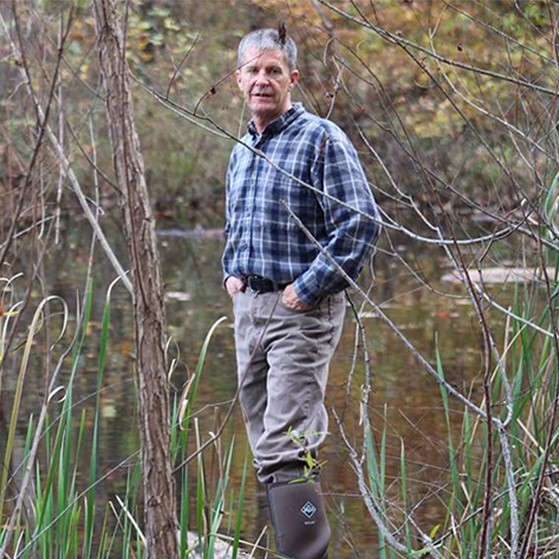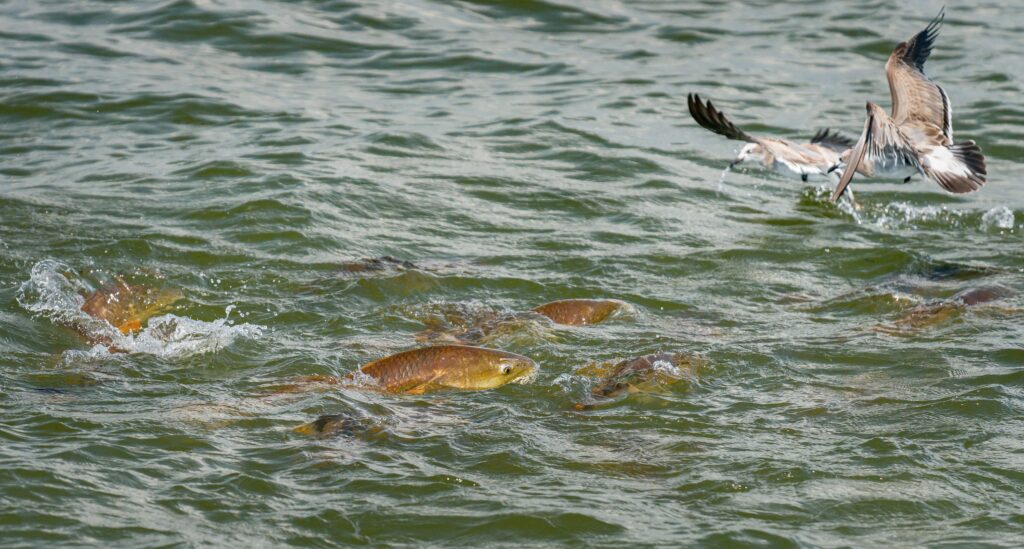
Alewife spawning run in CT-Credit Kevin Job-800 crop
Do you have any thoughts on this post?
Members of the Public Lands Caucus unite behind legislation designed to continue transparency and uphold long-standing public land policies
The Bipartisan Public Lands Caucus officially endorsed the Public Lands in Public Hands Act, marking an important moment for lawmakers working together to safeguard America’s system of public lands. Formed earlier this year by Representatives Gabe Vasquez (D-N.M.) and Ryan Zinke (R-Mont.) and co-chaired alongside Representatives Debbie Dingell (D-Mich.) and Mike Simpson (R-Idaho), the Caucus was created to provide a Bully Pulpit – a term coined by President Theodore Roosevelt, a staunch advocate for public lands – for members to speak on issues important to preserving our country’s public land legacy with support from their colleagues.
The Public Lands in Public Hands Act aims to prevent certain public lands from being sold or transferred without extra oversight. Among its key highlights, the bill:
These provisions are intended to maintain public access to activities such as hunting, fishing, camping, and hiking, while ensuring transparency and accountability around any future land transactions.
The endorsement reflects ongoing bipartisan support in the stewardship of public lands, which bolster rural economies, contribute to cultural traditions, provide habitat for fish and wildlife, and ensure our nation’s outdoor legacy. Earlier this year, members of the Caucus collaborated across party lines to remove a proposal that would have authorized the sale of 500,000 acres of public lands, underscoring the role the group aims to play in reviewing and discussing major public land decisions.
“Public lands are a defining feature of the American landscape, and clear, consistent policy helps safeguard these places for future generations,” said Joel Pedersen, president and CEO of the Theodore Roosevelt Conservation Partnership. “The TRCP commends this bipartisan endorsement, which highlights how lawmakers can come together around shared values that have long mattered to hunters, anglers, and outdoor recreationists.”
With the Caucus’s endorsement, the Public Lands in Public Hands Act now proceeds through the House legislative process. TRCP will continue to monitor the bill and provide information to hunters, anglers, and the broader public as it advances.
Learn more about the Public Lands in Public Hands Act HERE.
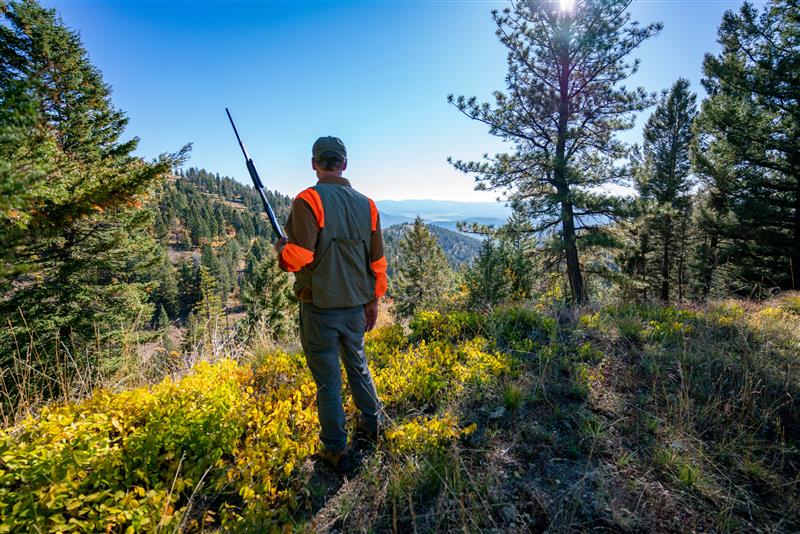
Photo Credit: Tristan Henry
TRCP staff share some of their favorite hunting and fishing memories from this past October and November
For many of TRCP’s staff, fall is the season we wait all year to enjoy. The fishing is amazing, hunting seasons arrive, and the stories of past Octobers and Novembers fuel us to make new memories. Below are a few of those new memories and also some anticipation of those to come.
These moments remind us why we step into the arena to work to safeguard the habitats, access, and traditions that make memories like these possible.
We hope you enjoy.
Kris Coston, TRCP Nevada Field Representative

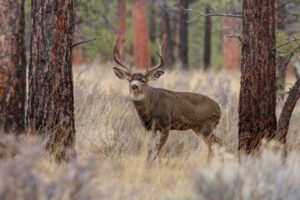
October 2025 was an especially special month for our family because it was my 12-year-old daughter Wren’s first big game hunt. She drew an excellent mule deer tag in our home unit, and we could not have been more excited. I had been dreaming of this day ever since I first looked down into her little blue eyes.
We have been fishing and hunting small game together for years, but as the opening day of deer season drew closer, so many emotions and feelings surfaced that I was not sure how to handle them all. Excitement, nervousness, hopefulness, anxiety, amazement, jittery nausea, fear, pride, love, and unspoken expectations. Thank heavens Wren saw what I was going through and could talk me down.
My little girl was cool, confident, and collected. She really did it all. In preparation for the season, she shot boxes of ammo to hone her aim. Then when the hunting started, she hiked, glassed until dark, explored miles of dirt roads, and got up before the sun time and time again. We laughed, we teased, and we hung out. We found big mature bucks, little dinks, and one buck that was just meant to be.
On a windy and chilly morning on our 24th day of hunting, it all came together. We had been trying to relocate a big 4×4 that a friend had seen the day before when we spotted a nice 3×3 running up and over a hill across the canyon from us.
“No, that one is too small, let’s keep hunting the big one,” I said.
Wren looked me square in the eyes and replied, “Dad if you don’t let me shoot this buck, I’m going to start hunting on my own!”
I knew no matter how much I wanted the hunt to continue; I needed to listen to my daughter.
We quickly spotted the buck moving along a ridge. The wind was howling, and the shot had a steep uphill angle at 154 yards. All those emotions from earlier came flooding back. Wren quickly calmed me down and without hesitation dropped into a prone position, settled the crosshairs behind the front shoulder, and squeezed off a shot that laid the buck over in his tracks.
Beaming with pride, I said, “You got him girl!” and then received the best hug of my life!
I still remember my first deer hunt all the way back in 1991 with my grandpa in Jarbidge, Nevada. I was so excited to be out there with him, and that excitement is why I work in conversation: to preserve these opportunities for generations to come, just like the deer hunt I shared with my daughter.
Liz Rose, Colorado Program Manager

Fall has, for as long as I can remember, stirred in me a nervous, wild energy. It was rowdy fall dirt biking and camping trips in my teens, snowboard season anticipation in college, then watching waterfowl migrate overhead and wondering when and where deer would be moving in my 20s.
Now I’m in the midst of pregnancy and toddler wrangling, reminding myself to make the most of the little outings I’m capable of. To be patient with myself, to enjoy the playgrounds and parks close to home, and to look forward to sharing the beauty and awe of nature with soon-to-be TWO little boys. Now, more than ever, I appreciate the wide range of public land and public access options we have in Colorado that support our health and wellbeing through life’s many stages, and I’ll always stand up to protect that.

I think parents are all intimately familiar with an internal tension, rising and falling as the layers of our identities feel at times cohesive, and at other times like they’re repelling one another. I once confidently ran a 50K trail race, now rushing up the stairs leaves me panting. But being a parent is so joyous, so fulfilling, and I’ll be able to crush hills again someday too…right?
To all of you seasoned, outdoorsy parents who have told me with so much sincerity and love how the things we like to do are even sweeter and more rewarding when we get to do them with our kids, THANK YOU. I am immensely thankful to have so many awesome parent role models in the hunting and fishing space. You make a new parent like me extra excited for all the seasons to come.
Noah Davis, TRCP Communications Manager

There are few creatures that epitomize October in the East better than red-bellied brookies and mullet-headed wood ducks. This October, I was lucky enough to enjoy both as I spent time in the Appalachian Mountains.
Thanks to welcoming stream-access laws, I’d spend the hour before shooting light wading into a wood duck hole to wait for their high-pitched calls and careening flights over the sycamores to arrive with the the first rays to break over the ridge. Shooting was fast and difficult in those gray minutes, but the river gifted me enough of the acorn-fat birds to make a good meal.

As the sun rose and the birds stopped flying, I traded the shotgun for a rod and went to the hollows to find pre-spawn brook trout. Low water made the fish wary, so every little char to hand was met with a short celebration before releasing them back into the pool.
It’s easy to pass a day in October, and now that the golden window of that month has closed, I miss it. But rifle deer season is still ahead.
Alex Aguirre, TRCP Wyoming Community Coordinator

There’s nothing quite like hunting with your best friend. They’re someone you can count on when the loads are heavy, for a joke when the rain won’t let up, and to wake you up from a nap during a glassing session.
When my best friend and college roommate, Andrew Walker, pulled a coveted Wyoming elk rifle tag, we immediately made plans for a backcountry elk hunt in mid-October in a spot we’ve had luck before. However, after getting a truck stuck attempting to reach the trailhead, we had to pivot and hunt some new areas with the truck and horse trailer we still had in our possession while we waited for the first road to dry out.
After an uneventful evening and morning hunt, we glassed some elk in a new zone from afar and decided to take the horses back in there in hopes of getting lucky. This road was not quite as muddy as the first, but we still ended up parking before the end of the road and riding the horses the rest of the way. A few miles later, we were on a great glassing knob as temperatures cooled before sunset.
A few cows fed out of the timber, so we hustled their direction. They ended up slipping away, but we continued on in hopes a bull would follow. With about 30 minutes left of legal shooting light, I threw my binos up on a timbered hillside and glassed a lone 6×6 feeding. He was in range, and Andrew made a clean shot and harvested his best bull to date. But the fun wasn’t over.
As we were breaking his bull down, a curious grizzly appeared in the darkness. Luckily, we were able to shuttle the meat off the hill without any true troubles from the grizzly, loaded the elk up on the horses, and began our midnight trek back to the truck. We slept well that night, and retrieved the stuck truck the next day on the way back home.
When Plan A does not work out, move on to Plan B.
Tristan Henry, TRCP Oregon Field Representative

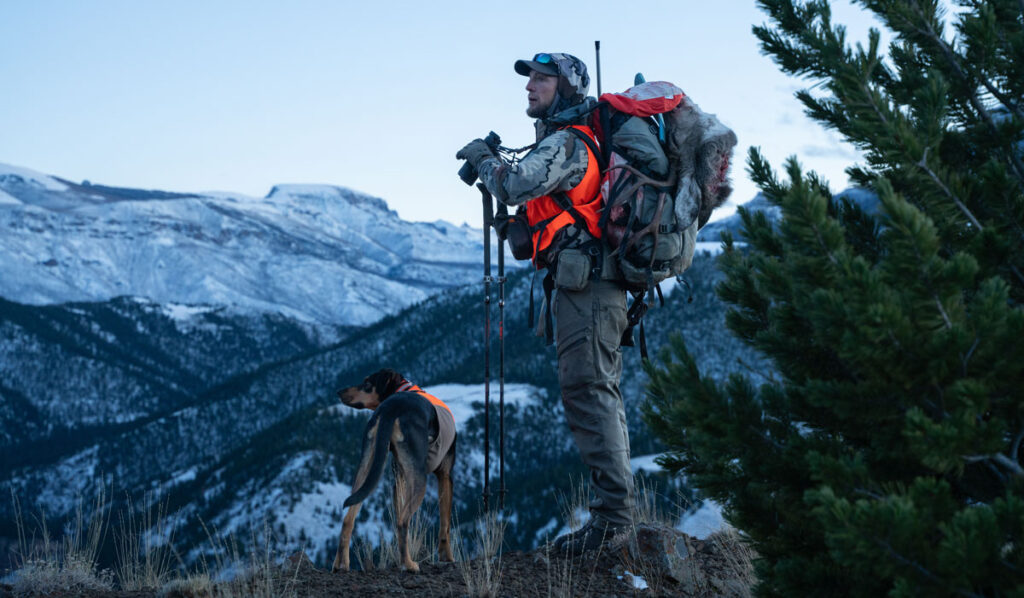
I traded my usual archery elk hunt and ten days in the Eagle Cap Wilderness of northeast Oregon to call and pack for my friend Ryan Hibler’s out-of-state elk tag. At first it felt like I was giving something up, but the hills cured me of that. Bugles came steady as clock chimes across the sage flats and the aspen-gold hewn draws. We drank coffee in the dark and the bulls answered from somewhere just out of sight. By noon we lay in the shade near covers and I dreamed of grouse. I thought about my bird dogs five hundred miles away.

A month and change later, I am sitting with Hal, my seven-month-old GSP, who is panting through a mouthful of grouse feathers. The unseasonable warmth of this November afternoon gives me the excuse I need to trade my rifle for a double gun and go for a grouse walk. I gently place the black-collared male ruffie in my vest and we resume our track. Hal plows energetically through hawthorn while I take the slow line up a game trail, stop, listen and then move again. Another bird comes up through the tangled branches like a small explosion, and all other thoughts yield to the singularity of the flush.
I have time to fill the freezer later.
Ryan Chapin, Montana Field Manager

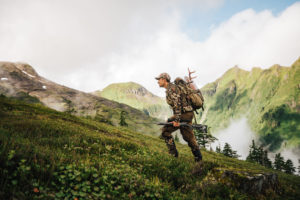
It’s mid-November in Montana, and that means the mule deer rut. The only hitch is that reaching the backcountry camp where my son, Quinn, and I hunt isn’t easy. A steep climb over loose shale and grass with slippery ponderosa pine needles underfoot always tests our legs, lungs, and nerves on the slope. And this time we brought company. With our packs loaded with three days’ worth of gear, Quinn, his friend Cian, Cian’s dad, Rory, and I were up to the challenge.
Our camp sat on a south-facing slope in important winter range. Fresh elk sign greeted us early, and later in the week, we found the herd but couldn’t locate a legal bull. On day two, Cian harvested a muley buck, and we were grateful for camp meat to roast over the fire. Over the three days, my son and I spent hours glassing mule deer does, spikes, and fork-horn bucks. We soaked in the rare and precious November sunshine.

While Quinn nor I harvested a deer, we were content knowing that we helped Cian kill a buck, and that we had this opportunity to spend quality time together in the hills. It’s adventures like this, sharing stories under star-filled skies while warming our feet by the fire with a piece of venison on a stick hovering over the flames, that help me feel truly part of the landscape rather than a mere observer. These experiences remind me why working in conservation matters and why ensuring hunting’s future on lands accessible to all is so meaningful.
Photo credit: Ryan Chapin (Feature), All photos are provided by respective staffers.
From now through the end of the year, you can step into the arena of conservation and make a tax-deductible contribution to ensure hunting and fishing memories like those above continue for generations to come.
TRCP’s “In the Arena” series highlights the individual voices of hunters and anglers who, as Theodore Roosevelt so famously said, strive valiantly in the worthy cause of conservation.
Jonathan Wilkins
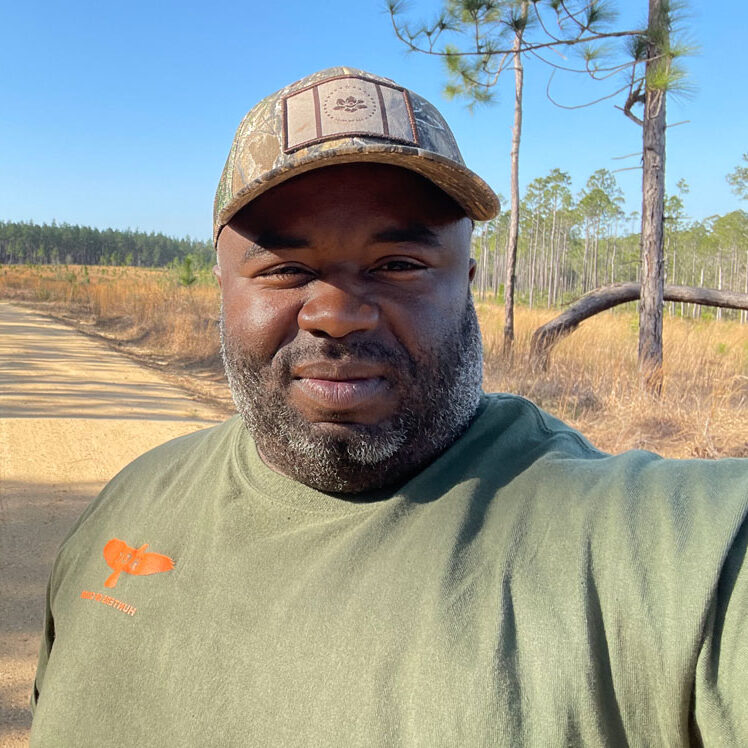
Jonathan Wilkins came to hunting and fishing after moving to rural Arkansas. Once a friend introduced him to hunting squirrels and deer, Wilkins dove into the hunting and fishing world, eventually founding Black Duck Revival, his guiding, cooking, podcast, and writing platform that celebrates conservation and his connection to the land.
Here is his story.
TRCP: How were you introduced to hunting, fishing, and the outdoors? Who introduced you?
Jonathan Wilkins: Over 15 years ago, I moved in with my girlfriend (now wife) on her family’s property in rural Arkansas. My friend Nate came out to help me build a deck on the mobile home we were living in, and being a passionate angler and hunter, he saw the many opportunities of the property. In 2010, he introduced me to squirrel and deer hunting. I quickly went down the rabbit hole of hunting and fishing with a rocket-powered booster pack.

TRCP: Tell us about one of your most memorable outdoor adventures.
Jonathan Wilkins: The second black bear I took with my bow was an incredibly validating experience. I had spent the previous five years scouting and hunting hard for black bear and through blind luck had stumbled upon one the year before. The following year though was a culmination of knowledge gained and lessons learned. I had several close encounters and ended up harvesting a bear with my bow at five yards right where I’d hoped I would.

TRCP: If you could hunt or fish anywhere, where would it be and why?
Jonathan Wilkins: My home state of Arkansas. Catfish, crappie, alligators, whitetail, duck, geese, black bears, turkey, elk, squirrels, and beavers. Need I say more?
TRCP: How does conservation help enhance your outdoor life?
Jonathan Wilkins: I’m a process guy. I want to be involved with as much of my hunting and angling experience as possible. From carving the decoys to making the meal and everything in between. Understanding the history of the land where I pursue critters, the management of those places, and the need to conserve them is integral to that process.
TRCP: What are the major conservation challenges where you live?
Jonathan Wilkins: A lack of public willingness to financially invest in the maintenance of public lands. For example, near me, the nine miles of ditch that need to be cleared out to allow the Bayou Meto GTR to effectively drain in summer months to preserve the flooded timber habitat isn’t working. We don’t have the funding to maintain it, and if we want our hunting and fishing opportunities to continue, we need to invest in this kind of infrastructure and habitat.

TRCP: Why is it important to you to be involved in conservation?
Jonathan Wilkins: I relish public lands and the access and opportunities they provide. I want those places and the creatures that inhabit them to be sources of exploration, wonder, and fulfillment for my children and generations to come. These are places that I find strength through physical exertion and validation through my hunting and fishing explorations and my knowledge of the landscape. I want those strength-building exercises to be a part of my children’s lexicon as well.
TRCP: Why should conservation matter to the next generation of hunters and anglers?
Jonathan Wilkins: A society grows great when old men plant trees whose shade they know they shall never sit in. I am the beneficiary of people several generations ago making a concerted effort to preserve these spaces, therefore I hold the same responsibility.
Photo credits: Jonathan Wilkins
The TRCP is your resource for all things conservation. In our weekly Roosevelt Report, you’ll receive the latest news on emerging habitat threats, legislation and proposals on the move, public land access solutions we’re spearheading, and opportunities for hunters and anglers to take action. Sign up now.
Recap highlights what’s possible when agencies collaborate – and what the state can do in 2026 to conserve big game migration corridors, seasonal habitats, and the hunting traditions they support.
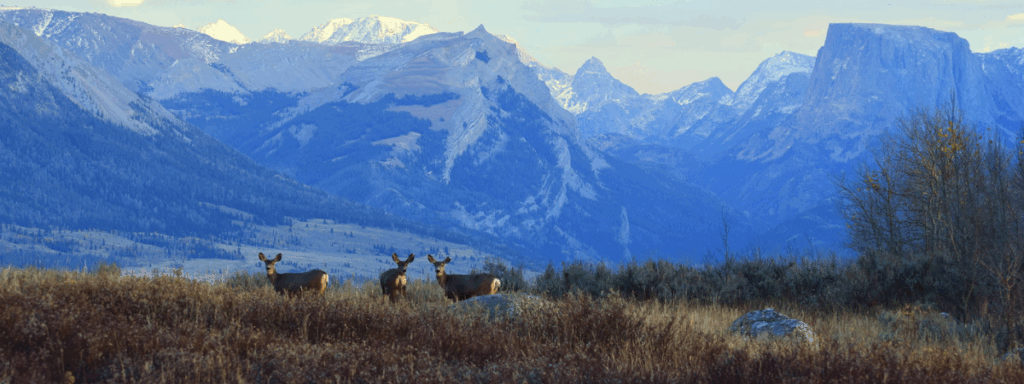
As we approach another Colorado legislative session, the TRCP is working to identify the most promising pathways for continued conservation and management of important big game habitat to ensure quality hunting opportunities continue for generations. Governor Polis, and several state agencies under his leadership, have made habitat conservation a priority during his time in office. In the final year of this administration, there are a few notable opportunities to cement meaningful conservation gains for the future.

Staff from Colorado Parks and Wildlife (CPW), Colorado Department of Transportation (CDOT), U.S. Forest Service (USFS), and U.S. Bureau of Land Management (BLM) led the charge on many of the hard-won conservation accomplishments of the past four years, and we want to recognize and celebrate these collaborative successes.
The most noteworthy advances include CPW’s expanded big game migration mapping work, the release of CPW’s 2024 Habitat Conservation and Connectivity Plan, CDOT’s planning and construction of new wildlife crossing infrastructure across the state, USFS’ management to conserve big game populations in the 2024 GMUG National Forests plan update, and the 2024 completion of BLM’s Resource Management Plan Amendment for Big Game Habitat Conservation for Oil and Gas Management. The TRCP supports science-based decision making, and having reliable, up-to-date information and planning tools underpinning agencies’ and elected officials’ actions is essential.
Because wildlife habitat overlaps all land management jurisdictions in Colorado, achieving conservation success is dependent on other state agencies, federal agencies, and local governments also utilizing CPW’s big game migration and habitat maps and science-based best management practices to inform their land use and development decisions.

To ensure lasting conservation benefits from this work, decision-makers could endorse targeted changes to select state, local, and federal policies to keep tens of thousands of acres of the most important seasonal deer, elk, bighorn sheep, and pronghorn habitats intact. For hunters, these safeguards would help sustain healthy herds and the opportunities, traditions, and access that depend on them. In a joint report from the Colorado Department of Natural Resources and Colorado Department of Transportation, the 2021 Colorado Big Game Policy Report identified pressing threats to Colorado’s big game populations and recommended policy solutions to address and alleviate the documented threats.
For example, if state and federal agencies and local governments ensure that new development for energy generation, energy transmission, and outdoor recreation infrastructure avoids the most sensitive big game habitats when possible, that will directly conserve wildlife populations and the open spaces that Coloradans love, while still allowing for important development projects to be built in suitable places. Additionally, allocating funding for wildlife crossing projects would reduce wildlife-vehicle collisions and facilitate wildlife movement across Colorado’s busy highways.
The majority of Coloradans surveyed in the 2025 Conservation in the West Poll believe that fish and wildlife habitat loss and population declines, and the loss of natural areas, are an extremely or very serious problem. And in 2024, CDOT responded to 3,777 crashes involving wildlife, so addressing the needs highlighted above would greatly benefit all Colorado motorists, wildlife populations, and future hunting opportunities.
“Successful conservation of big game migration corridors and seasonal habitats requires collaboration between many different people, and it requires deliberate planning and funding,” said Liz Rose, Colorado program manager for the TRCP. “There is a lot to celebrate when it comes to big game conservation in Colorado, and there are still exciting, meaningful opportunities to capitalize on that could alleviate our most pressing, current threats.”

Coloradans value wildlife, natural open spaces, and strong economies, and the state can set the bar high to advance conservation, recreation, industrial, and residential development needs for the future. We aren’t creating more habitat, but there are promising opportunities to ensure we conserve what remains. TRCP, alongside our great partners in Colorado, continues to urge state, federal, and local government decision makers to incorporate science-based best practices and Big Game Policy Report recommendations into their planning, management, and development policies. For hunters, anglers, and conservation-minded Coloradans, these kinds of policy changes would directly benefit big game herds and the future of the outdoor traditions they cherish.
Together, we must build the collective political will to steer development to locations where adverse impacts to Colorado’s iconic wildlife herds and citizens will be lower, and to manage the timing of land development and use to reduce impacts. Colorado has and will continue to prove that it is possible, beneficial, and popular to do so.
Top photo: Josh Metten
TRCP has partnered with Afuera Coffee Co. to further our commitment to conservation. $4 from each bag is donated to the TRCP, to help continue our efforts of safeguarding critical habitats, productive hunting grounds, and favorite fishing holes for future generations.
Learn More