November 13, 2025

Helena Event Celebrates Winner of Montana Big Game and Wildlife Highway Crossings License Plate Artwork Contest

Kylie Bute of Bozeman designed the winning plate selected from nearly 30 eligible submissions

The Theodore Roosevelt Conservation Partnership, in collaboration with Montana Fish, Wildlife & Parks and Old Salt Co-op, hosted an event on Wednesday evening in Helena to celebrate Kylie Bute’s winning design of the Montana Big Game and Wildlife Highway Crossings License Plate Artwork Contest. 

Director Christy Clark of Montana Fish, Wildlife & Parks joined the celebration and spoke about the importance of wildlife crossings and safe migration routes for big game species.

“Meaningful conservation efforts take all of us working together,” said Director Clark. “This is a great example of how state agencies and conservation organizations can partner with community groups to find unique ways to help protect wildlife migration and provide for public safety. Congratulations and thank you for this captivating design, Kylie Bute.”

Kylie Bute’s winning design.

The event brought together members of the outdoor conservation community, agency staff, and community members to celebrate the recent milestone legislation supporting wildlife movement and driver safety and to raise funds for wildlife crossing projects across the state. 

“Montana’s big game migrations are iconic, and safe highway crossings are essential for wildlife and drivers alike,” said Ryan Chapin, Montana field manager for the Theodore Roosevelt Conservation Partnership. “We applaud MT FWP for establishing this wildlife movement specialty plate and congratulate Kylie Bute on her winning design which will soon be proudly displayed on vehicles across our great state.”

Bute was announced the winner of the Montana Big Game and Wildlife Highway Crossings License Plate Artwork Contest and received a $1,000 award for her creative contribution to Montana’s conservation efforts. Bute’s winning design will soon appear on specialty plates available to Montana drivers, with proceeds benefiting wildlife connectivity and wildlife-vehicle collision risk reduction projects through MT FWP’s newly established Big Game and Wildlife Highway Crossings and Accommodations Account. Thank you to all the artists who submitted inspirational and compelling designs. 

“My passion for art has always been about telling stories, and this design is a way to spread awareness of the importance of wildlife conservation and movement,” said Kylie Bute, a June 2025 graduate of Gallatin High School. “I’m deeply appreciative and proud to know that my artwork will soon be on vehicles across our great state, helping Montanans connect with the incredible wildlife that surrounds us.”

Guests enjoyed food and drinks from Old Salt Co-op. A portion of the sales during the event will be deposited into the Big Game and Wildlife Highway Crossings and Accommodations Account.

The Montana Big Game and Wildlife Highway Crossings License Plate Artwork Contest was organized by the TRCP and supported by Montana Fish, Wildlife & Parks, Montana Department of Transportation, National Wildlife Federation, Greater Yellowstone Coalition, Glacier-Two Medicine Alliance, Vital Ground Foundation, and Montanans for Safe Wildlife Passage.

Learn more about TRCP’s wildlife migration work HERE.

Do you have any thoughts on this post?

XHTML: You can use these tags: <a href="" title=""> <abbr title=""> <acronym title=""> <b> <blockquote cite=""> <cite> <code> <del datetime=""> <em> <i> <q cite=""> <s> <strike> <strong>

Comments must be under 1000 characters.

October 2, 2025

Collaboration on the Prairie

Across the prairies, partnerships are proving that production and habitat can go hand in hand.  

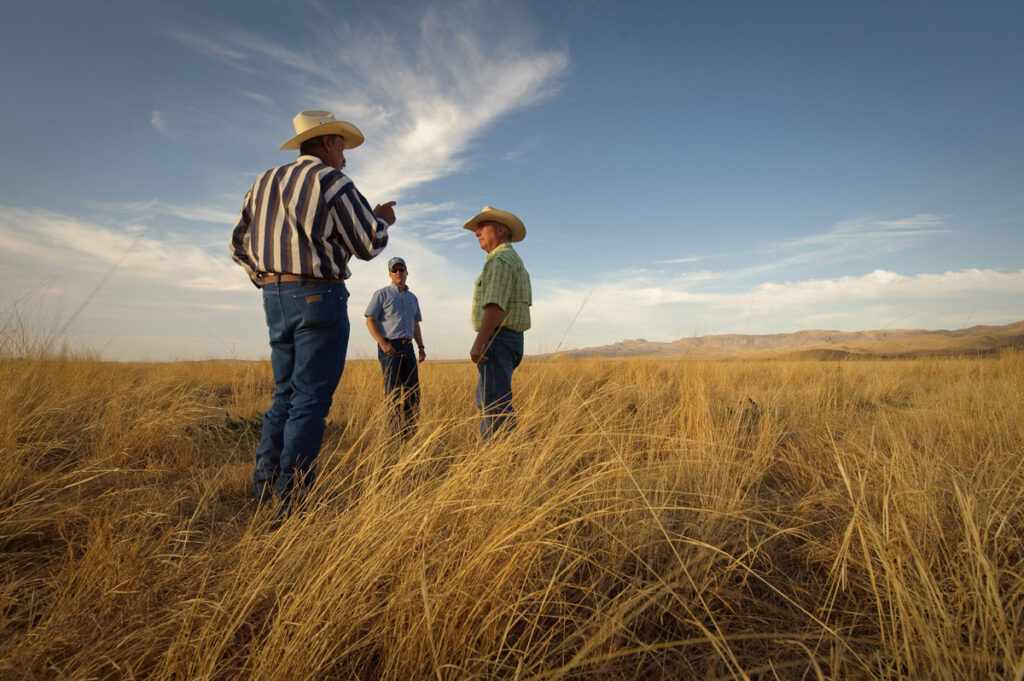
The new Cornell Lab of Ornithology video highlights how ranchers and conservation partners, like the Nature Conservancy and the North American Grouse Partnership, are working together to sustain rural communities and conserve iconic species like the lesser prairie-chicken.

At TRCP, we believe voluntary, incentive-based conservation, through tools like Farm Bill programs, is one of the most effective ways to ensure thriving landscapes, safeguard working lands, improve fish and wildlife habitat, and expand hunting and fishing opportunities. This story is a reminder that collaboration is the path forward for wildlife, water, and rural economies.  


It’s time for Congress to make the Farm Bill a priority. 

The Farm Bill is one of the most important pieces of legislation that Congress considers, supporting agriculture producers and helping to ensure families have food on the table. Within this bill are also vital conservation programs that strengthen habitat, improve water quality, and promote more sustainable landscapes – providing a lifeline for fish and wildlife.   

It has been seven years since most Farm Bill programs were updated, and we are now nearly two years past the initial expiration of the 2018 Farm Bill. Congress has managed to limp these programs along by extending them for one year (twice), but once again, key Farm Bill programs expired on September 30, 2025. 

Now is the time to act.


Top photo: Cornell Lab of Ornithology

September 22, 2025

How Wetland Reserve Easements Benefit Farmers, Ranchers, and Outdoor Enthusiasts

Two new films highlight the value of wetlands and the Wetland Reserve Easement program

Acre for acre, wetlands are among the most important ecosystems in America. They filter water, mitigate flooding, recharge groundwater, and provide essential habitat for fish and wildlife. For generations of hunters, anglers, and outdoor enthusiasts, wetlands are synonymous with abundant ducks, thriving fisheries, and vibrant landscapes. For farmers and ranchers, wetlands conservation programs offer practical tools to manage land, improve water quality, and increase profitability. 

That’s why the U.S. Department of Agriculture’s Wetland Reserve Easement (WRE) program is so important. This voluntary, incentive-based conservation program works to restore and safeguard wetlands on private lands. Recently, the Nebraska Game and Parks Commission partnered with USDA’s Natural Resources Conservation Service (NRCS) to produce two short films highlighting WREs and the broader value of wetlands. Through personal stories and testimonials, the films show how wetlands conservation benefits the landscape, strengthens local communities and agriculture, and sustains America’s sporting traditions. 

The Films 

Wetlands Legacies | WRE Program Overview 

This short film explains how the Wetland Reserve Easement program works, highlighting its role in conserving wetlands while supporting agricultural production. 

“When you look at that list of things that wetlands do and why they’re so important, the wildlife that they support, the fact that they provide a place for groundwater to recharge into the aquafer and for water quality to be improved. A really important thing is that wetlands help absorb flood flows. 

And you think about the ability to go to a wetland, hear the frogs singing, see the birds there, just the intrinsic or the aesthetic value that many people have associated with wetlands. And so, it really provides a lot of service to our entire culture and our society. They’re pretty valuable.”

Ritch Nelson

Wetlands Legacies | Nebraska Landowner Stories 

In this companion film, Nebraska farmers and ranchers share their personal experiences with the WRE program. Their stories highlight how wetlands conservation has improved their land, bolstered their agricultural operations, and enriched their communities. These landowners make clear that conservation and production can go hand in hand – and that when we invest in wetlands, we create lasting legacies for both people and wildlife. 

Conservation solutions should work for everyone – producers, communities, and the sportsmen and women who depend on healthy habitat for their outdoor pursuits. As the films demonstrate, the Wetland Reserve Easement program benefits producers, hunters, anglers, and communities alike, building healthier landscapes for generations to come by: 

  • Giving farmers and ranchers conservation options that work for them. 
  • Creating and enhancing habitat for waterfowl, fish, and countless other species. 
  • Supporting clean water for individuals and communities while mitigating flood risk.      


Top photo: Nebraska Game and Parks Commission

September 17, 2025

TRCP Joins Agriculture and Conservation Leaders in Calling for a 2025 Farm Bill 

It’s time for Congress to make the Farm Bill a priority.

The Farm Bill is one of the most important pieces of legislation that Congress considers, supporting agriculture producers and helping to ensure families have food on the table. Within this bill are also vital conservation programs that strengthen habitat, improve water quality, and promote more sustainable landscapes – providing a lifeline for fish and wildlife.  Encompassing food, fiber, and fuel production, nutrition assistance, agricultural research and trade promotion, conservation, and forestry, this bill is a must-pass. Despite that, we are now nearly two years past the initial expiration of the 2018 Farm Bill. Congress has managed to limp these programs along by extending them for one year (twice), but we are once again nearing a September 30th expiration of key Farm Bill programs, including the Conservation Reserve Program

In recent years, Congress has used a process known as budget reconciliation to advance policy that would typically be part of a broader bipartisan Farm Bill. Although this has led to major investments in programs hunters and anglers care about, the budget reconciliation process has strict restrictions on policy changes, and its partisan nature tends to make accomplishments less durable.

That’s why the TRCP and hundreds of agricultural and conservation organizations from across the country sent a letter last week calling on Congressional leaders to prioritize the development, debate, and passage of a full, five-year, bipartisan Farm Bill. 

“Good conservation work on agricultural and forest land in this country leads directly to improved fish and wildlife habitat and increased fish and wildlife populations,” said Aaron Field, TRCP’s director of private lands conservation. “Without a full, five-year Farm Bill, we miss our chance to improve how these programs operate, and we risk losing key conservation tools like the Conservation Reserve Program. It’s time for Congress to make the Farm Bill a priority.” 

Read the letter here. 

Want to learn more about how the Farm Bill impacts fish and wildlife? CLICK HERE.  


We know it can be challenging to break through the alphabet soup of program acronyms to understand why the reauthorization and improvement of Farm Bill conservation programs is a top priority. In this short video series, we demystify the Farm Bill and the crucial conservations programs that sportsmen and women should care about.

August 8, 2025

Senators Introduce Legislation to Strengthen the Conservation Reserve Program 

Bipartisan bill aims to modernize and enhance one of America’s most effective wildlife habitat programs.

The Conservation Reserve Program (CRP) is one of the nation’s most important federal programs for supporting wildlife habitat. Introduced in the 1985 Farm Bill, the Conservation Reserve Program incentivizes landowners to put a portion of their land into conservation cover, particularly on acres that would be more productive as wildlife habitat than they are for crops. It is currently responsible for creating, maintaining, and enhancing nearly 27 million acres of habitat across the U.S. But due to lack of progress in passing a full, five-year Farm Bill, the program hasn’t had a policy update since 2018. 

Thankfully, lawmakers from both sides of the aisle are showing their support for strengthening the CRP. On July 31st, Senators John Thune (R-S.D.), Amy Klobuchar (D-Minn.), Jerry Moran (R-Kan.), and Tina Smith (D-Minn.) introduced the CRP Improvement and Flexibility Act (S.2608).  

The CRP Improvement and Flexibility Act would: 

  • Reestablish cost-share for CRP mid-contract management, encouraging the management that is best for the habitat instead of the cheapest way to comply. 
  • Finally raise the CRP’s 40-year-old payment limitations to reflect inflation and modern land values. 
  • Support grassland management through managed livestock grazing by providing cost-share for grazing infrastructure like fencing and water development. 
  • Permanently establish State Acres for Wildlife Enhancement (SAFE) as a practice under CRP’s Continuous Enrollment option. 
  • Change CRP emergency haying provisions to provide better quality forage for livestock producers in times of drought while preventing damage to wildlife habitat both within and across growing seasons. 

“The CRP Improvement and Flexibility Act is an excellent example of lawmakers working across the aisle and among multiple stakeholders to find practical solutions,” said TRCP’s director of private lands conservation Aaron Field. “We are grateful to Majority Leader Thune, Ranking Member Klobuchar, Senator Moran, and Senator Smith for their leadership and pragmatism on improving this critical program for hunters.” 

“Ensuring that CRP continues to be an effective option for producers and landowners is critical to South Dakota’s agriculture industry,” said Senator John Thune (R-S.D.). “As a longtime supporter of CRP, I’m proud to lead this commonsense legislation that would help advance the multiple-use benefits of this conservation program, including wildlife habitat and livestock forage potential.” 

“The Conservation Reserve Program helps equip our farmers with the tools to conserve and improve soil, water quality, and wildlife habitat,” said Senator Amy Klobuchar (D-Minn.). “This bipartisan legislation makes commonsense improvements to CRP that will strengthen conservation practices and landowner enrollment in this vital program.” 

The Conservation Reserve Program has been one of the nation’s most important conservation programs for nearly 40 years. Many of the species we love to pursue find habitat in farm country thanks to the CRP. Without the CRP, pheasant numbers would plummet, the northern plains states would lose much of their best duck breeding habitat, sage grouse in the West would be at even greater risk, and brook trout would decline in Eastern headwaters. Put simply, without the CRP, millions of sportsmen and women would lose hunting and fishing opportunities across rural America.  

Learn more about the Conservation Reserve Program and other Farm Bill conservation programs HERE. 

Top photo by Anthony Hauck

HOW YOU CAN HELP

TRCP has partnered with Afuera Coffee Co. to further our commitment to conservation. $4 from each bag is donated to the TRCP, to help continue our efforts of safeguarding critical habitats, productive hunting grounds, and favorite fishing holes for future generations.

Learn More
Subscribe


You have Successfully Subscribed!

You have Successfully Subscribed!

You have Successfully Subscribed!

You have Successfully Subscribed!

You have Successfully Subscribed!