by:

posted in:

September 12, 2025

AK-Roadless-Blog-feature

Do you have any thoughts on this post?

XHTML: You can use these tags: <a href="" title=""> <abbr title=""> <acronym title=""> <b> <blockquote cite=""> <cite> <code> <del datetime=""> <em> <i> <q cite=""> <s> <strike> <strong>

Comments must be under 1000 characters.

by:

posted in:

Weigh in on Behalf of America’s Backcountry

Hunters and anglers can help shape the future of our national forests

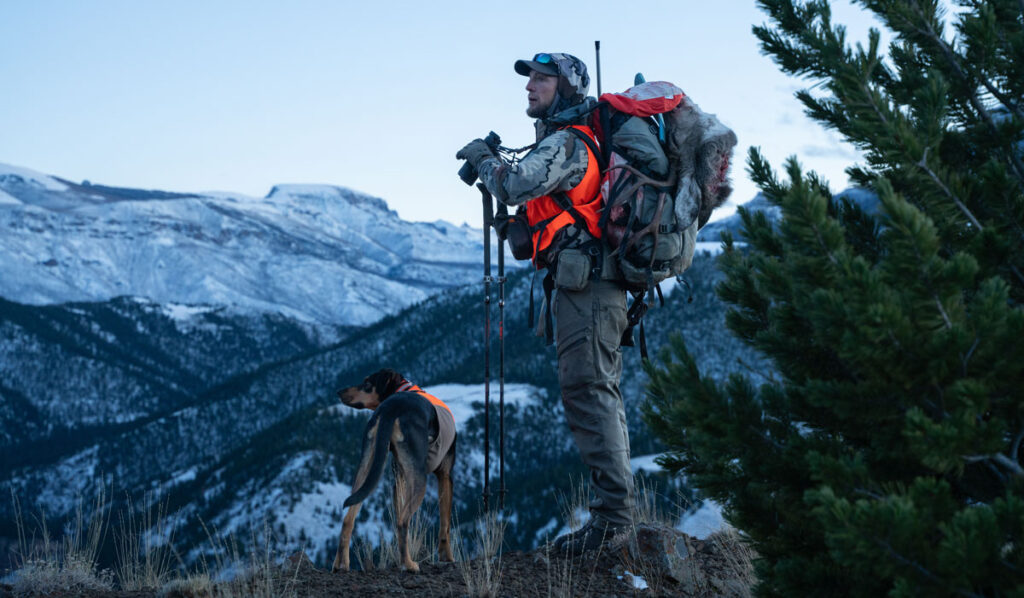
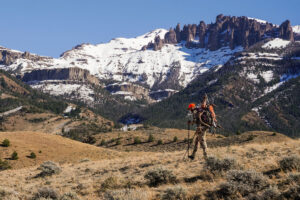
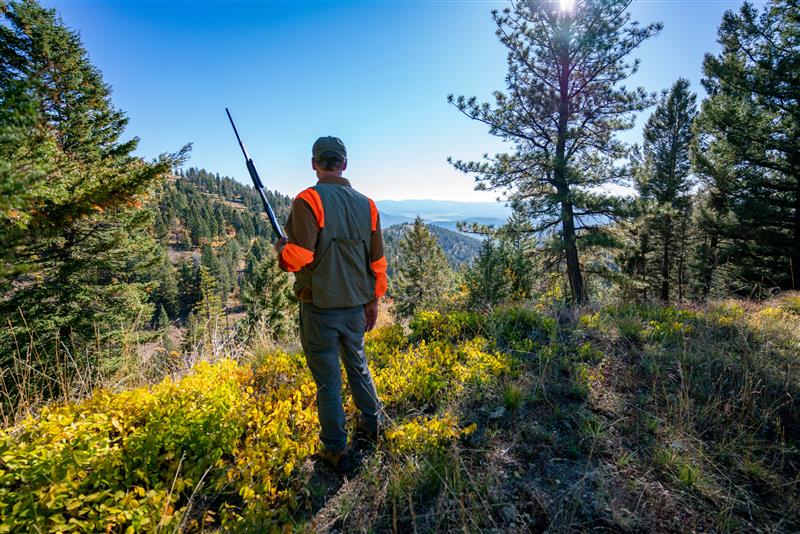
Anyone who has spent time hunting and fishing on our national forests knows that success often depends on putting some distance between yourself and roads. Roadless areas—casually called the backcountry—are essential to America’s sporting traditions and wildlife management.

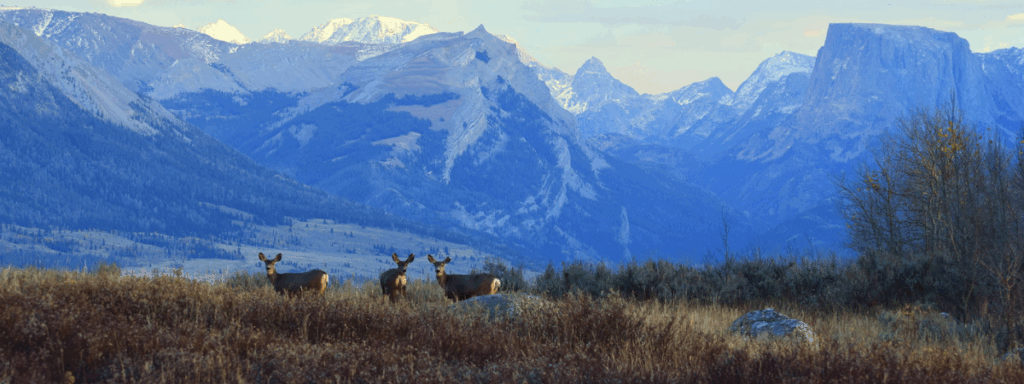
These roadless landscapes provide secure refuge for elk, mule deer, and other big game species, ensuring healthy herds and sustaining increasingly rare over-the-counter hunting opportunities. State wildlife agencies have long emphasized that blocks of secure habitat are critical for effective herd management and for preventing displacement of wildlife onto private lands.

For anglers, roadless areas conserve cold, clean headwaters that sustain wild trout and salmon, and roughly 70 percent of roadless areas contain habitat for native fish.

These qualities are why the sporting community values roadless areas and sees them as a crucial part of the future of hunting and fishing in America.

The Proposal to Rescind the Roadless Rule

On August 29, the U.S. Department of Agriculture published a notice proposing to rescind the 2001 Roadless Area Conservation Rule—a long-standing policy designed to maintain these backcountry values. The public comment period is open through September 19.

A primary argument for rescission is to allow more flexibility for wildfire suppression and forest management. Hunters and anglers understand this does not have to be an either/or choice. We can support proactive management to reduce wildfire risk and improve forest health while maintaining safeguards that are critical for fish, wildlife, and our sporting traditions.

A Balanced Path Forward

Hunters and anglers support a middle ground approach to managing roadless areas. This approach respects backcountry values and provides flexibility where it’s needed. That means:

  • Conserving core backcountry habitat for fish and wildlife while allowing thinning, prescribed burning, and restoration projects to protect communities and improve habitat.
  • Limiting costly new road construction so that scarce agency funding can go toward maintaining the 370,000 miles of existing national forest roads that already provide access for hunters, anglers, and local economies.
  • Accommodating multiple uses, including livestock grazing and motorized and non-motorized recreation.

The Roadless Rule was designed to strike this balance. Rather than scrapping it altogether, the USDA should work with hunters, anglers, and other stakeholders to adapt and improve the rule to ensure it remains durable, practical, and true to the values we share. We have seen this approach work before with the Idaho and Colorado Roadless Rules, and we can apply that success to the rest of the National Forest System.

Take Action

This comment period is our chance to ensure that the future of America’s backcountry reflects hunting and fishing values. By speaking up, we can help secure lasting hunting and fishing opportunities for future generations of sportsmen and women.

Hunters and anglers can make a difference by commenting before September 19.

Here are some important talking points to include in your comments:

  • Roadless areas are critical to America’s sporting traditions. They provide secure habitat for elk, deer, and other big game, and conserve headwaters that sustain native trout and salmon. These landscapes ensure that future generations of hunters and anglers will have the same opportunities we enjoy today.
  • Hunters and anglers know that flexibility can be added to the rule to reduce wildfire risk while also improving forest health and maintaining conservation safeguards that are critical for fish, wildlife, and sporting traditions.
  • The Forest Service should work with hunters, anglers, and other stakeholders to adapt and improve the rule so it remains durable, practical, and true to the values we share.
  • A balanced approach will ensure our forests remain healthy, our communities are safer, and our sporting traditions persist.

by:

posted in:

MAPOceans Act Passes Senate

New legislation would modernize accessibility to saltwater recreational fishing regulations and marine waters navigation information 

Saltwater anglers, hunters, and marine recreationists joined the Theodore Roosevelt Conservation Partnership in cheering Senate passage of the Modernizing Access to Our Public Oceans Act this week by unanimous consent. The MAPOceans Act will direct the standardization, consolidation, and digitization of boating and recreational fishing information for federally managed marine waters and federal fisheries administered by the National Oceanic and Atmospheric Administration. 

The bipartisan legislation was introduced by U.S. Senators Ted Cruz (R-Texas) and Angus King (I-Maine). 

“TRCP joins America’s sportsmen and sportswomen in thanking Senators Cruz and King for bringing forth this bipartisan, access-oriented legislation, and greatly appreciates the broader Senate support for its passage,” said Joel Pedersen, president and CEO of the Theodore Roosevelt Conservation Partnership. “The MAPOceans Act will help simplify fishing and boating experiences to enhance recreation opportunities, while expanding access by making the necessary information for safe, legal saltwater fishing more readily available through digital technology.” 

The MAPOceans Act builds on the success of the MAPLand Act, passed in 2022, and the MAPWaters Act, which passed out of the House of Representatives in January 2025, by directing NOAA to digitize navigation and recreational use rules for marine waters and federal fisheries, and to make those resources readily available to the public. The hundreds of thousands of offshore ocean miles and numerous saltwater fish species regulated by NOAA present enormous recreational opportunities where restrictions are difficult to access and constantly changing. MAPOceans directs the federal agency to compile those rules in digital form so they can be integrated into GPS units and smartphone applications that are popular with boaters and anglers, making that information available to the public in real time. 

“The MAPOceans Act consolidates and makes existing spatial information more accessible, empowering anglers to better understand and safely enjoy our marine waters,” said Glenn Hughes, president of the American Sportfishing Association. “We thank the Senate for passing this bipartisan bill and look forward to its continued progress.” 

“We applaud Senator Cruz and Congressional Sportsmen’s Caucus Co-Chair Senator King for their leadership in passing the MAPOceans Act out of the Senate,” said Chris Horton, senior director of fisheries policy for the Congressional Sportsmen’s Foundation. “This much needed, bipartisan legislation will finally remove the uncertainty about where we can fish and with what gear that can often create barriers for angler participation on our coastal waters.”    

“At the Marine Retailers Association of the Americas, we recognize the immense value our coastal regions provide—not only as vital ecosystems but also as hubs for recreation that drive local economies and support marine retailers,” said Matt Gruhn, president of the MRAA. “The MAPOceans Act represents a crucial step forward in providing standardized, accessible data about our nation’s waterways. By digitizing key information like fishing regulations and restrictions, this legislation will enhance safety and enjoyment for recreational boaters and anglers, while also supporting conservation efforts. We’re grateful to Senators King and Cruz for their leadership in championing this important initiative and their hard work to get it passed out of the Senate.” 

“Expanding access to the information anglers and boaters need to safely get out on the water will help fuel America’s $1.2 trillion outdoor recreation economy,” said Jessica Wahl Turner, president of the Outdoor Recreation Roundtable Association. “The Outdoor Recreation Roundtable appreciates Senators Cruz and King for championing the MAPOceans Act and for finding innovate ways to allow more Americans to enjoy the outdoors.” 

Learn more about TRCP’s work to improve your access to public lands and waters HERE

Photo Credit: David Mangum

by:

posted in:

September 10, 2025

Congressional Review Act Risks Long-Term Dysfunction of Public Land Management

What could be seen as victories in the short term, would make for lasting problems in the future

From balancing a variety of multiple uses and the growing demands on those uses, to invasive species and increased risk of wildfire, America’s 640 million acres of public lands face legitimate management challenges. Many stakeholders, including lawmakers, are understandably frustrated with the often-slow pace of management planning, and sometimes the ultimate outcome of a land-use plan is controversial.

However, instead of following established procedures to work through controversy, some federal lawmakers are turning to an obscure tool called the Congressional Review Act to revoke a few specific Bureau of Land Management land-use plans that were recently completed. This tactic would have far-reaching consequences for industry, land managers, and the millions of Americans who rely on these public lands by crippling the BLM’s ability to adjust future land management, ultimately adding to frustrations and limiting solutions to future management challenges. The good news is that Congress and the administration can address their concerns without resorting to such drastic measures.

 A Better Approach Already Exists

The BLM manages 245 million acres of public lands, located primarily in the West. Managing all these federal public lands for multiple uses is complex and often contentious. Thankfully, the BLM has clear legal authority to amend or revise Resource Management Plans through established administrative processes. These procedures are designed to address shortcomings in existing plans while accepting input from stakeholders, state and local governments, and the public.

Lawmakers can work with the administration to address their concerns through the BLM’s established revision process, which doesn’t trigger the harmful, long-lasting consequences that would accompany use of the CRA.

Application of the Congressional Review Act

Since its passage in 1996, the CRA has not been applied to federal land-use plans. That changed in June 2025 when the Government Accountability Office, responding to a request from Congress, issued a nonbinding report asserting that a few specific BLM RMPs qualified as rules under the CRA.

Our 21st century landscapes would be stuck with 20th century management, meaning everything from land sales and disposal lists to grazing and mineral permits would remain at their old quotas. This would leave energy and mineral industries, ranchers, and public land hunters and anglers in the lurch.

Following the report, resolutions of disapproval were introduced for the Central Yukon RMP (Alaska), Miles City RMP Amendment (Montana), and North Dakota Field Office RMP. The U.S. House of Representatives voted on September 3 to approve those resolutions, and the U.S. Senate now may choose to take action on them. Final passage of these resolutions would rescind the land-use plans.  

A Short-Term Win for Long-Term Losses

Using the CRA to rescind a controversial land-use plan might gain short-term benefits for some interests, but those will be outweighed by the negative long-term consequences to public lands and local communities.

For one, if a revised land-use plan is disapproved through the CRA, the BLM would return to managing lands under the previous plan. In many cases, these land-use plans are decades old and likely wouldn’t address today’s multiple use needs.

Our 21st century landscapes would be stuck with 20th century management, meaning everything from land sales and disposal lists to grazing and mineral permits would remain at their old quotas. This would leave energy and mineral industries, ranchers, and public land hunters and anglers in the lurch.

Another significant factor in the CRA is the “substantially the same” clause. Once a land-use plan is disapproved, the agency would need to show that any future revisions to that plan are not “substantially the same” as the plan that was disapproved.  If this bar cannot be met, revisions would need to be “specifically authorized by a law” through an act of Congress. It seems unlikely that members of Congress will spend time authorizing future updates to public land management plans, which would leave the BLM stuck with outdated plans.   

A Scalpel, Not a Hammer

Land-use plans often require a scalpel and not a hammer to work through conflict and controversy. Fortunately, the BLM already has the authority and processes in place to make specific changes.

The current administration has sufficient time to complete meaningful updates to controversial RMPs through their normal planning process; some of these have already been initiated.

TRCP encourages Congress to work with the administration to resolve controversy through established processes that also preserve the BLM’s ability to responsibly manage public lands for the future. The CRA is the wrong tool for this job.

by:

posted in:

September 9, 2025

Fix Our Forests Act a Bipartisan Solution to a National Problem

Wildfire resilience and forest management have never mattered more

Across the West, when we look at our mountains, we don’t just see the beautiful landscape, we see the lifeblood of the people who live here. These peaks store our water, support our economy, and shape our way of life. But this summer, like every recent summer, is a reminder of what’s at stake: smoky skies, communities on edge, families and businesses evacuated, and whole watersheds under threat. As far as the East Coast, smoke of fires from Western blazes reach across the nation, reminding us that we breathe the same air.

So far in 2025, over 1 million acres have burned in large wildfires across the country.  Wildfire risk has become constant throughout the year in many areas, and now “normal” means living with an expectation of frequent and bigger blazes. Responding to this reality isn’t a one-and-done project — it’s a generational commitment.

That’s why bipartisan support in Congress for wildfire resilience and forest management has never mattered more.

The Fix Our Forests Act was first introduced by Rep. Bruce Westerman (R-Ark.) and passed the U.S. House of Representatives with a strong bipartisan vote earlier this year. The bill has now gained momentum in the U.S. Senate with bipartisan support led by Sen. John Hickenlooper (D-Colo.), Sen. John Curtis (R-Utah), Sen. Alex Padilla (D-Calif.), and Sen. Tim Sheehy (R-Mont.).  The bill reflects that old-fashioned American idea that when a crisis hits, we work together to find solutions.

The bill is designed to accelerate the pace of wildfire mitigation while maintaining the necessary safeguards for fish and wildlife that matter to all of us. Central to the bill is the concept of “Fireshed Management Areas,” targeted zones of up to 10,000 acres where wildfire poses the greatest danger to people and water supplies. Within these zones, risk-reduction projects like ecological thinning, prescribed fire, and fuel breaks can move forward faster by cutting through red tape, while still benefiting fish, wildlife, and their habitat.

The Fix Our Forests Act is also innovative. For the first time, this legislation recognizes that projects to restore and improve floodplains and wetlands can demonstrably reduce wildfire risk to downstream communities, including the long-term impacts wildfires can have on valuable drinking water supplies for rural and urban populations. Identifying the need for smarter, more coordinated responses to wildfire, the bill also creates a national Wildfire Intelligence Center, a state-of-the-art hub for real-time fire data and rapid agency coordination modeled on proven science and public safety systems.

The Fix Our Forests Act is pragmatic, collaborative, and designed for the scale of the threat. The senators’ approach — building consensus, defending conservation values, and insisting on urgency — reflects what leadership looks like when the stakes are highest. Congress has the opportunity to enact into law this piece of legislation that will directly benefit communities throughout the West, and America, for generations to come.

A version of this blog originally ran in The Daily Sentinel out of Grand Junction, Colorado, on August 30, 2025.

HOW YOU CAN HELP

TRCP has partnered with Afuera Coffee Co. to further our commitment to conservation. $4 from each bag is donated to the TRCP, to help continue our efforts of safeguarding critical habitats, productive hunting grounds, and favorite fishing holes for future generations.

Learn More

You have Successfully Subscribed!

You have Successfully Subscribed!

You have Successfully Subscribed!

You have Successfully Subscribed!