Our Issues
Public Lands
Why It Matters

Hunting & Fishing Access

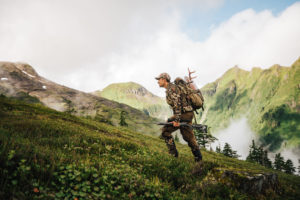
America’s 640 million acres of national public lands provide irreplaceable hunting and fishing opportunities to millions of Americans.

Learn More About Access
What TRCP is Doing

We’re working to safeguard America’s public lands so hunters and anglers always have quality places to pursue their passions.
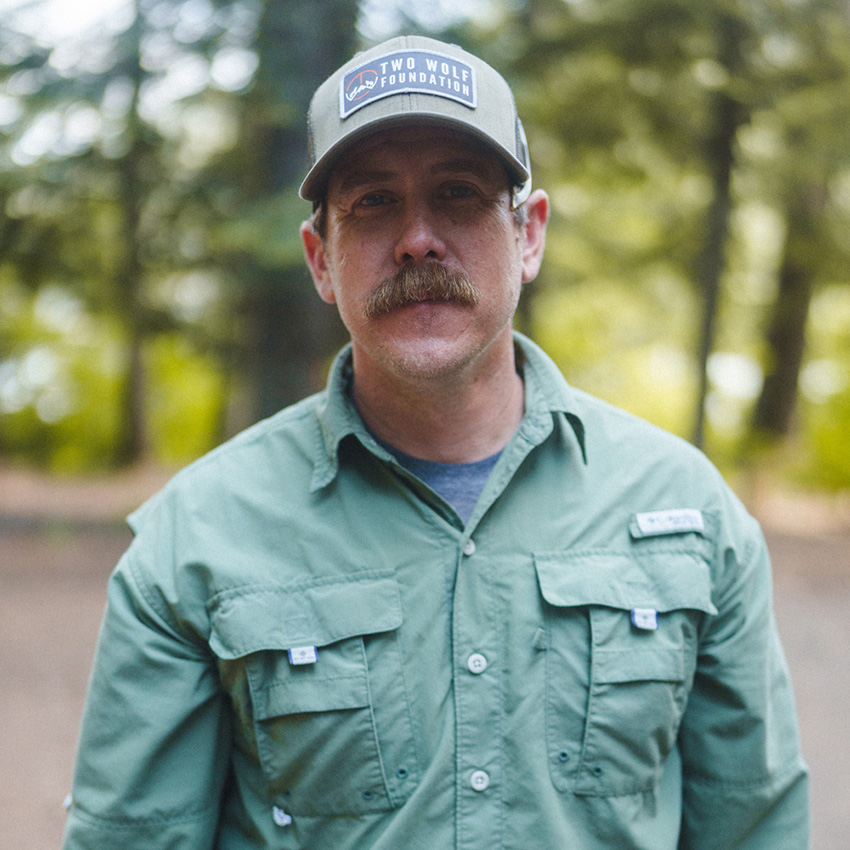
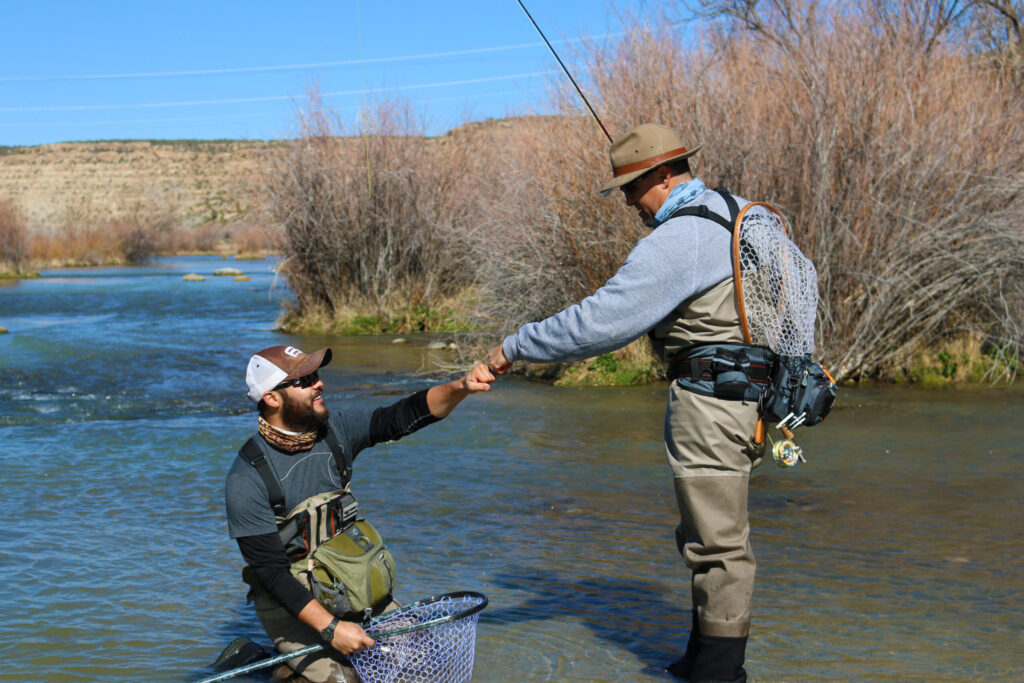
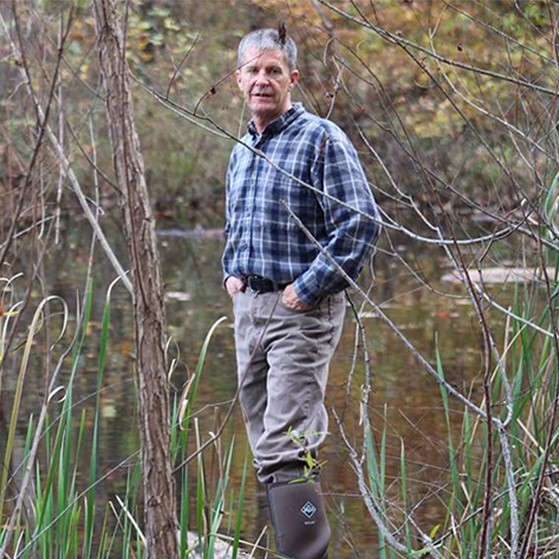
 Brian Flynn, Two Wolf Foundation
How Sportsmen Are Doing It Right

Brian Flynn, Two Wolf Foundation's Story

Following a distinguished career in the U.S. Army, lifelong outdoorsman Brian Flynn returned home from a deployment in Afghanistan and…

Hunting
Why It Matters

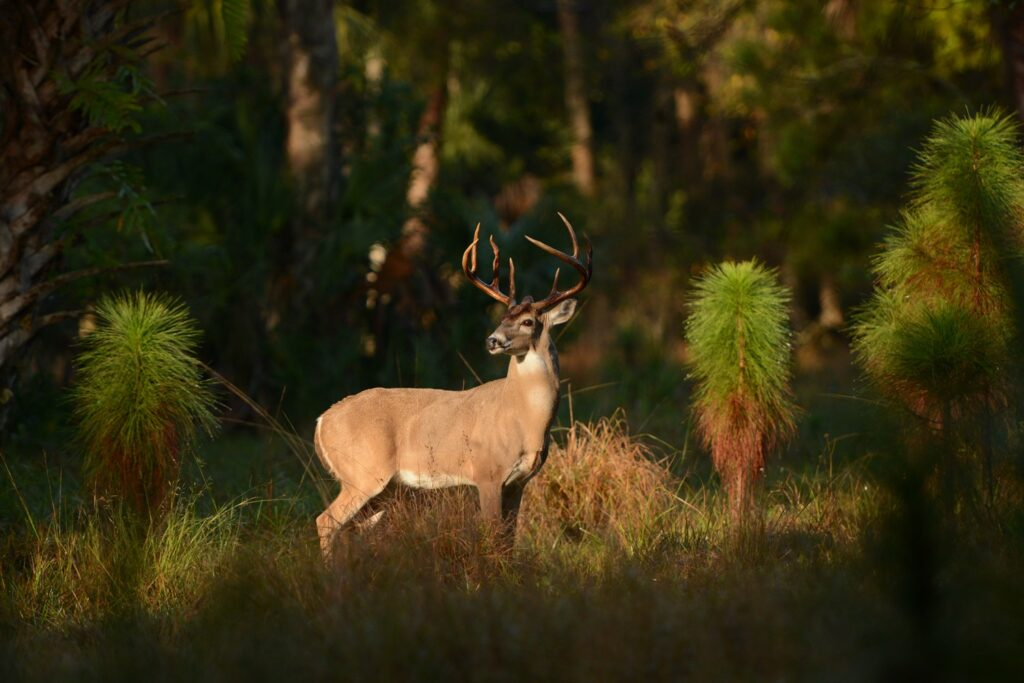
Key Issues for America’s Hunters

Your source for the latest policy updates, conservation challenges, and opportunities shaping America’s hunting traditions.

What TRCP is Doing

We’re fighting for meaningful policy changes that benefit wildlife, our waters, and the American landscapes that make our outdoor traditions possible.

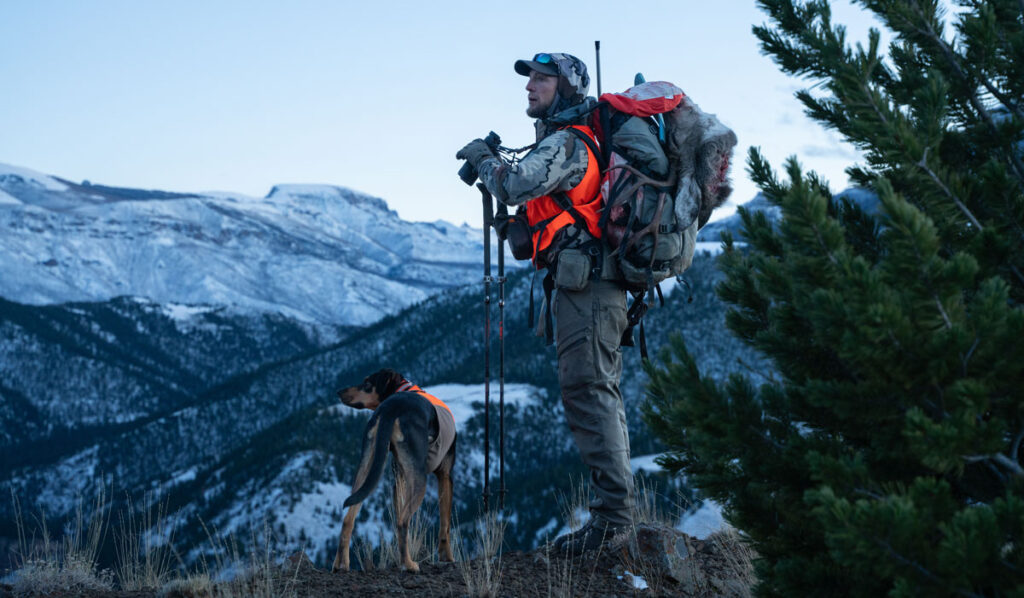
 Ryan Sparks
How Sportsmen Are Doing It Right

Ryan Sparks's Story

TRCP’s “In the Arena” series highlights the individual voices of hunters and anglers who, as Theodore Roosevelt so famously said,…

Fishing
Why It Matters

Key Issues for America’s Anglers

Your source for the latest policy updates, conservation challenges, and opportunities shaping America’s fishing traditions.

What TRCP is Doing

We’re fighting for meaningful policy changes that benefit wildlife, our waters, and the American landscapes that make our outdoor traditions possible.

 David Mangum
How Sportsmen Are Doing It Right

David Mangum's Story

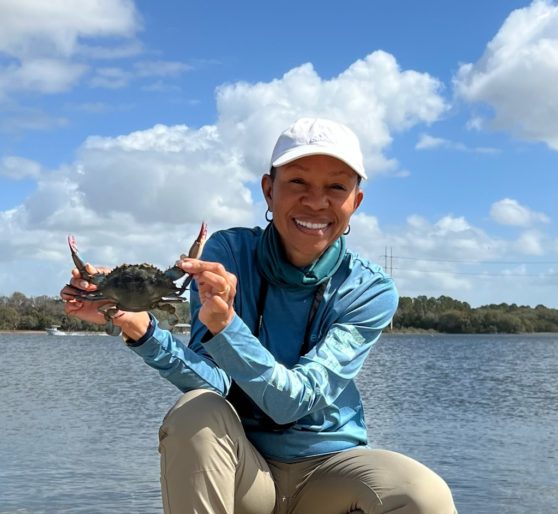
Capt. David Mangum is a YETI ambassador and outdoor photographer who utilizes his talents to produce media that inspire a…

Private Land
Why It Matters

Stewardship on America’s private lands

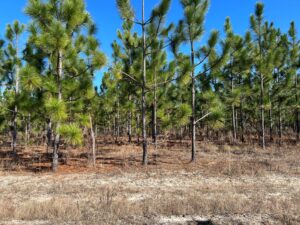
With 70 percent of U.S. lands in private hands and many of our best hunt and fish opportunities occurring there, investing in voluntary conservation on working lands safeguards access, strengthens habitat and water quality, and ensures resilient landscapes.

Learn More
What TRCP is Doing

We champion policies and programs that restore wildlife habitat, improve soil and water health, and keep working lands productive.

 Ward Burton
How Sportsmen are Doing It Right

Ward Burton's Story

Ward Burton’s NASCAR driving career stretched across most of two decades. As an avid sportsman and conservationist, he founded the…

Special Places
Why It Matters

Special Places Worth Protecting

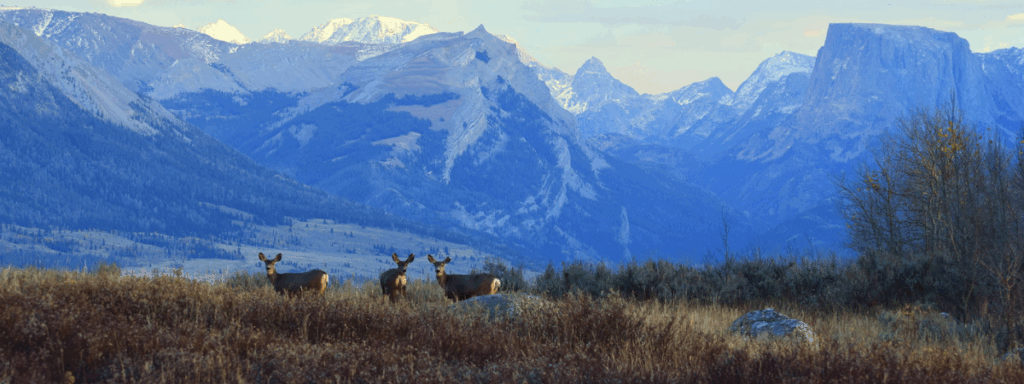
America’s most iconic landscapes provide unmatched habitat and unforgettable days afield. These places sustain wildlife, anchor local economies, and define the hunting and fishing traditions we pass down.

What TRCP is Doing

We’re working to conserve special places that provide world-class habitat and unforgettable opportunities for hunters and anglers.

 Franklin Adams
How Sportsmen Are Doing It Right

Franklin Adams's Story

As a true Gladesman, conservationist, and historian, Capt. Franklin Adams has spent more than six decades championing Everglades restoration efforts…

Habitat & Clean Water
Why It Matters

Healthy Habitat Powers Every Pursuit

All hunting and fishing opportunities depend on quality habitat, from clean water and healthy wetlands to winter and summer habitats and the migration corridors that connect them.

All About Habitat & Clean Water
What TRCP is Doing

We are working to safeguard the habitats that power every hunting and fishing opportunity.

 Alex Harvey
How Sportsmen Are Doing It Right

Alex Harvey's Story

Alex Harvey, founder of Legacy Land Management, is a registered professional forester in Mississippi and Alabama with a Master's degree…

Science
Why It Matters

Science That Guides TRCP

From conserving migration corridors and wetlands to ensuring clean water and resilient landscapes, science provides evidence that turns conservation goals into effective action.

Science for Conservation
What TRCP is Doing

For hunters and anglers, science safeguards the experiences we treasure including resilient big game populations, abundant fish, and wild places that endure changing social landscapes.

Jamelle Ellis
Your Science Expert

Jamelle Ellis's Story

Jamelle Ellis joined the Theodore Roosevelt Conservation Partnership in 2022. Jamelle spent the last three years as an environmental sustainability…

Where We Work
Across the Nation

Conservation Across America

TRCP works across the country to ensure hunters and anglers can enjoy healthy fish and wildlife and quality days afield, no matter where they live.

See All Issues
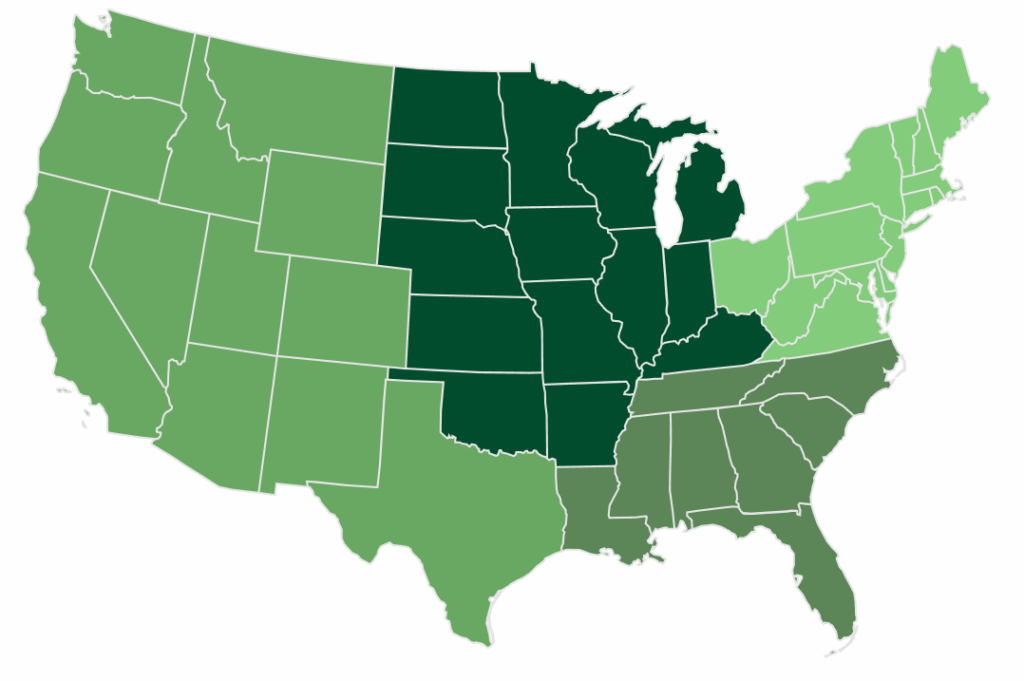
TRCP in Your Region

TRCP works across the country to ensure hunters and anglers can enjoy healthy fish and wildlife and quality days afield, no matter where they live.

Who We Are
Our Mission

To guarantee all Americans quality places to hunt & fish

We unite and amplify our partners’ voices to advance America’s legacy of conservation, habitat, and access.

Our Mission & Values
Our People & Partners
  • Meet the TRCP Team

    Our staff and board members unite and amplify our partners’ voices to advance America’s legacy of conservation, habitat, and access.

    Meet the Team
  • Our Partners

    ‘Partnership’ is in our name. We work with 64 diverse partner groups that represent today’s leading hunting, fishing, and conservation organizations in order to strengthen the sportsman’s voice in Washington, D.C.

    Our Partners
  • Corporate Council

    TRCP’s Corporate Council is made up of diverse corporations that share a common passion for conservation.

    Corporate Council
Our Organization

Looking for more information?

Explore our latest news, policy updates, and conservation resources to get the information you need.

Giving
How You Can Help

To guarantee all Americans quality places to hunt & fish

Your tax-deductible donation will support TRCP's mission, now and into the future.

DONATE
Special Ways to support trcp
  • Capital Conservation Awards Dinner

    The CCAD is one of Washington's best-attended conservation celebrations, featuring dinner, cocktails, and a silent auction.

    Learn More
  • Step Into the Arena

    Help us ensure that our treasured wild habitats and game remain intact for the next generation to enjoy – lend your support to the TRCP’s efforts today!

    Donate
  • Roosevelt Roast

    TRCP has partnered with Afuera Coffee Co. to further our commitment to conservation.

    Learn More
More donation options

Find the best way for you to lend your support. Join one of TRCP’s donor circles for special invitations, premium offerings from outdoor retailers, and more exclusive benefits. Take control of your legacy with planned giving or contribute to special conservation funds.

Other Ways To Give
News
In the Spotlight

In the Arena: Josh Warren

For many hunters and anglers, the connection to conservation begins close to home — in the woods behind the house, along a familiar stretch of river, or through time spent learning from mentors and family. That sense of place is something Joshua Warren carries with him, both personally and professionally. As Director of Marketing at WorkSharp, Josh represents a company rooted in Ashland, Oregon, a community defined by its access to public lands and wild country.

Read More

Stay Informed

Receive our newsletter, the Roosevelt Report, right in your inbox. Never miss the latest news in conservation issues.

by:

posted in:

March 27, 2015

The Sale of Your Public Lands is More Possible Now Than Ever

Yesterday the US Senate passed a budget resolution that, while it does not carry the weight of law – does serve as an internal instructional document, a broad outline of the policies and priorities that Congress will seek over the next few months to implement in legislation that most certainly will carry the weight of law. As such, it included a series of up or down votes that put members of the Senate on record on several issues important to sportsmen.

And, in general, it was not good news.  First, the numbers:

The Senate budget resolution would maintain sequestration for non-defense discretionary spending (including all conservation spending) and then cut an additional $236 billion over the 2017 to 2025 period.  The Senate budget would cut conservation funding in FY2016 by about $5 billion dollars relative to 2013 levels.  Conservation Funding wouldn’t return to its 2013 funding level of $41 billion until 2022.  If you adjust for inflation the cuts inflicted by the budget will be far worse.

And now the policy:

I’ll start with the two bright spots.  Senator Debbie Stabenow’s (D-MI) amendment clarifies that all existing agricultural exemptions in the Clean Water Act, which date back to the early 1970s, should be maintained in the proposed Waters of the US rule.  That the amendment passed unanimously may signal that Congress may be willing to look at the facts on the proposed rule and not just the rhetoric from status quo stakeholders.  The next bright spot was an amendment offered by Senators Crapo (R-ID) and Wyden (D-OR) that changes the way we pay for catastrophic fires, which now eat up almost half of the Forest Service’s annual budget. The amendment had sufficient support that it was included in the manager’s report by acclimation.

Besides the basic funding levels, the giant alarm bell coming from the budget resolution was the amendment offered by Senator Lisa Murkowski (R-AK) that essentially encourages Congress to “sell, or transfer to, or exchange with, a state or local government any Federal land that is not within the boundaries of a National Park, National Preserve, or National Monument…” The amendment passed 51-49. Here is a roll call of the vote.

Photo courtesy of Eric Petlock.

As most sportsmen know, transferring lands to the state or selling them off is a bad deal for sportsmen.  See www.sportsmensaccess.org for more information on the issue.  If Congress were to follow these instructions, all BLM lands, National Forests and even National Wildlife Refuges could go on the chopping block.  Heck, even national battlefields and historic sites could be transferred or sold.

All Democrats voted against the Murkowski amendment, and three Republicans — Senators Alexander (TN), Senator Ayotte (NH) and Senator Gardner (CO) — bucked leadership and sided with sportsmen.

The budget resolution does not carry the weight of law and is an easy place for members to make “symbolic” votes without actually changing the law.  But symbolic votes show what members think and what they think is important.

Make no mistake about it, the public lands vote on the budget resolution was a finger in the eye to sportsmen everywhere.  But the real action is still to come, the question is whether sportsmen and women will pay attention and make their elected representatives know what they think about selling off or giving away our public lands.

As a sportsman who cares about access to our federal public lands, you can do two things right away.

  1. Sign the Sportsmen’s Access petition at www.sportsmensaccess.org – and then forward it to two other friends and urge them to sign as well.
  2. Call your Senator’s office at (202) 224-3121 and thank them if they voted ‘No’ or voice your concern if they voted ‘Yes’ (see how they voted here).

6 Responses to “The Sale of Your Public Lands is More Possible Now Than Ever”

  1. Lynn Gould

    If our state bought the land it might be the best because if they were to sell it they would have to give 95percent to the government so the would have no reason to sell

    • Perhaps that is the case in your state, but in mine – NM – I wouldn’t bet on it. Our State Legislature recently passed a bill reversing decades of public fishing access to streams (but not their banks) that flow through private land, bending to the will of landowners and other private interests.

    • Jonathan Hanna

      The state is not buying the land, it is now the state’s land transferred over from federal control. The state could sell it to the highest bidder of a private party eventually because if will become a financial burden to maintain or manage that land, or they simply decide they don’t want to own it anymore. It will become private land and you will no longer be allowed to access these lands for public use. Texas is a good comparison to what the land ownership will become.

  2. Billy Reeder

    Keep public lands public. Period. Teddy Roosevelt fought to protect our natural resources because making them publicly owned is the only way to preserve them and allow every American to benefit from this natural treasure.

  3. Demencio Campos jr

    The public lands in our USA should always remain as they were determined to be free public land for our citizens & above all sportsmen & sport women to use as the law allows

Do you have any thoughts on this post?

XHTML: You can use these tags: <a href="" title=""> <abbr title=""> <acronym title=""> <b> <blockquote cite=""> <cite> <code> <del datetime=""> <em> <i> <q cite=""> <s> <strike> <strong>

Comments must be under 1000 characters.

by:

posted in:

March 26, 2015

Critter Madness Highlight Reel: Gobblers strut to a win

Make no mistake. Round two of Critter Madness 2015 was a nail-biter. Three of the eight matches were decided by only a handful of votes.

Yellowfin v. tarpon went down to the wire, with the tuna barely advancing with 52.5% percent of the vote. The mallard narrowly escaped an upset scare at the hands of the sharp-tailed grouse and advanced to the field of eight with 53.4% of the vote. And, after a match-up with record turnout and multiple lead changes, the wild turkey outlasted the pheasant in a true knock-down, drag-out fight.

Ali vs Fraiser. Lakers vs Celtics. USA vs the Soviets. And pheasant vs turkeys.

Of course, it wasn’t always close. After taking down the largemouth bass, the smallmouth bass was no match for the brook trout’s Cinderella run. Chinook salmon easily upset our saltwater fishing favorite, the blue marlin, 71.6% to 28.4%. And while we know westerners love their mule deer, it’s pretty clear that they love elk even more.

Now, it’s time for America to determine its regional champions. By the end of the day on Monday, we’ll know America’s favorite big game species, game bird, and saltwater and freshwater fish.

On the terrestrial side, we have a match-up of heavy-weights. Two staples of North American game, the whitetail and the elk, will lock antlers to see who will take home the title of America’s favorite big game species. The mallard and the turkey will face off, beak-to-beak, for the chance to be the avian representative in the Sportsmen’s Four.

While favorites have dominated on land, the aquatic bracket is wide open. Will the brook trout continue its Cinderella story to be our freshwater champion or will the rainbow trout leave the upset bid in its wake? In a matchup of two of America’s hardest hitters, will king salmon or yellowfin tuna emerge as your favorite saltwater game fish?

The stakes are higher now so we’re upping our prizes. Brett Fitzgerald of Florida won our second round prize, a brand new pair of Costa Sunglasses. For the round three, we’re going even bigger. On the March 30, we’ll draw our next winner and they’ll go home with a Abu Garcia Orra SX Low Profile baitcasting combo.

Choose America’s favorite game animal AND win this cool stuff? Now that’s what I’m talking about…

We’re giving out trophies soon, and as American sportsmen and women, you’re on the selection committee. What will you decide?

Log on to crittermadness.org today, cast your votes, and register to win some great prizes.

Looking for updates from earlier in the tournament? Check out our round one recap here or check out our tournament preview here.

by:

posted in:

March 25, 2015

Critter Madness fan prediction: Elk will go all the way

Josh Grieser from Colorado Springs, Colo., was selected as the first winner of our Critter Madness bracket challenge, and we sent him some great gear from Orvis, Buck Knives, and Berkley. He plans to use his prizes on his next trip to Eleven Mile Canyon on the South Platte River, where he’s pictured here fishing for brown trout.

Josh Grieser fishing the South Platte River.

TRCP: Josh, which species do you see going all the way in our Critter Madness Tournament?

JG: I think Critter Madness is a great idea, and I think that elk are going to take the whole thing. I’d definitely like to see steelhead make it pretty far, because I’m originally from the Pacific Northwest and grew up fishing for them, but elk are high on every hunter’s list. I bet, across the country, almost everyone who likes to hunt would love a shot at a big bull at least once in their lifetime.

TRCP: Does that include you?

JG: Oh, yeah! My wife and I recently got into bowhunting for elk, and we’ve got a pretty intense off-season training regimen going, so we’ll be prepared to stalk in close. I love that, especially with archery, you really have to work for it and put in the miles. We’re also planning to put in for our first mule deer tag this year.

Congratulations, Josh, and we hope you have great hunting and fishing this year!

Vote now for your chance to win prizes from Abu Garcia, Remington, and Yeti.

Want to read more fan predictions? Check out Brett Fitzgerald’s picks here.

by:

posted in:

Snapshots of Success: Lemhi Valley, Idaho

From California to New York, from Montana to Mississippi, hunters and anglers are leading important efforts to improve the quality and quantity of our water resources. The most successful conservation efforts are locally driven with a broad base of support, including federal financial and technical assistance.  They honor and respect the traditions of hunting, fishing, farming and ranching while protecting the resources we share.

In a report released on February 26, 2015, the TRCP showcases ten examples of collaborative, sportsmen-led efforts and the importance of federal funding that fuels them.  The lessons sportsmen have learned executing these projects tell a convincing story about the need for responsible water management and adequate funding.

Here is lesson three from Lemhi Valley, Idaho:

Joining forces to rejuvenate the Lemhi River: Lemhi River restoration

Immediately after Idaho rancher Merrill Beyeler met with a state fish and game officer to discuss how best to keep grazing cattle away from the Lemhi River, he started getting calls from neighbors.
Photo courtesy of Bill Mullins.

“My neighbors wanted to know if I was going to jail,” Beyeler said. “That’s how bad the mistrust was at the time.”

That was more than 20 years ago. Funding was scarce. But Merrill Beyeler’s initial conversation eventually brought together the Bureau of Land Management, the U.S. Forest Service and state agencies, which found funding to improve fencing on Beyeler’s ranch. And a major conservation partnership began.

The Problem

Before the partnership, irrigation along the Lemhi resulted in polluted water, limited flow and increased water temperatures. Irrigators had also installed diversions that prevented traditional spawning migrations for Chinook salmon. Water quality and quantity suffered, and so did salmon populations.

But relationships improved. Local landowners and irrigators along the Lemhi eventually teamed up with The Nature Conservancy to use Bonneville Power Administration grant funding through the Columbia Basin Water Transactions Program (CBWTP) to restore the river and redevelop the natural habitat for salmon and many other fish, wildlife and vegetation.

How It Worked

With funding from the CBWTP, project leaders acquired a 630-acre conservation easement allowing local landowners to protect 7.5 miles of river habitat. The project allows ranchers and landowners to continue their long-term stewardship of

The new channel.

their land while meeting the conservation needs of the ecosystem.

It’s not just the fish that benefit from the project. With help from The Nature Conservancy, farmers and ranchers in the Lemhi Valley installed high-efficiency sprinkler systems, which means less demand for river water for irrigation—and more water for fish.

Ranching and Stewardship

Merrill Beyeler, now a Republican state representative in Idaho, entered into a conservation easement with The Nature Conservancy. The agreement allowed him to purchase another ranch with an existing easement, almost doubling the size of his property. The expansion of the property provides more flexibility while adjusting to the conservation standards set forth by the easement. Grazing areas can be rested and rotated with greater frequency, and cattle have been kept off sensitive riverbanks without negatively impacting the ranch’s bottom line.

Lemhi River chinook salmon.

In recent years, Beyeler has witnessed the Lemhi River rush back to life, rejuvenating the entire valley and the economy it supports. Fish and wildlife have reappeared, and local communities see children return to establish their own families and businesses. Merrill Beyeler sees conservation as a catalyst for economic opportunity, business diversity and community vitality.

by:

posted in:

March 24, 2015

Snapshots of Success: Grand Junction, Colorado

From California to New York, from Montana to Mississippi, hunters and anglers are leading important efforts to improve the quality and quantity of our water resources. The most successful conservation efforts are locally driven with a broad base of support, including federal financial and technical assistance.  They honor and respect the traditions of hunting, fishing, farming and ranching while protecting the resources we share.

In a report released on February 26, 2015, the TRCP showcases ten examples of collaborative, sportsmen-led efforts and the importance of federal funding that fuels them.  The lessons sportsmen have learned executing these projects tell a convincing story about the need for responsible water management and adequate funding.

Here is lesson two from Grand Junction, Colorado:

Sweet Success From  a Salty Situation: Colorado River salinity control and water flow restoration

Grand Valley canal.

Thanks to federal funding, innovative water managers and organizations like The Nature Conservancy, both endangered fish and local farmers benefit in Colorado’s Grand Valley surrounding the city of Grand Junction.

Cities as far away as Los Angeles and farmers as far downstream as Yuma, Arizona, also benefit from salinity control in the Grand Valley made possible by federal grants coordinated with major state, power user, and irrigator cost sharing.

How did it happen?
As part of a comprehensive program to control the loading of more than half a million tons of salt every year into the Colorado River from irrigation in the Grand Valley, U.S. Bureau of Reclamation engineers began lining sections of the 100-year old Government Highline Canal in the 1980s. The Highline Canal can divert over 1600 cubic feet of water per second from the Colorado River northeast of Grand Junction, and feeds several other irrigation systems in the Grand Valley on both sides of the river, including the Orchard Mesa Canal. Many farmers, meantime, took advantage of Environmental Quality Incentives Program funding to make on-farm irrigation improvements (such as installing pipes between the canal and farms) to control salinity loading.

It didn’t take long for all this cooperative salinity control to make irrigating in the valley much more efficient. But the combined diversions by the Government Highline Canal
and the Grand Valley Irrigation Company further downstream sometimes still de-watered a 15-mile stretch of the Colorado River that is critical habitat for two endangered fish species – the Colorado pikeminnow and razorback sucker.

“Humpback Chub.” Photo courtesy of Upper Colorado River Endangered Fish Recovery Program.

Working with the Bureau of Reclamation, supportive water users and numerous other partners in the Upper Colorado River Endangered Fish Recovery Program, The Nature Conservancy secured even more improvements in the efficiency of the Highline Canal. With these water savings, the Highline Canal reduced its river diversions and stored the saved water upstream, restoring flows in the river—all without reducing farm deliveries.

These most recent improvements to the Highline Canal funded by the Bureau of Reclamation through the endangered fish program include state-of-the-art computerized monitoring equipment and check dams within the main canal. Before, the Government Highline Canal often carried up to 650 cubic feet per second. Now the canal can run at a rate of about 150 cubic feet per second late in the irrigation season.

What’s next?

Today the long-term effort to keep salt out of the Colorado River runs parallel to the effort to restore the flow of water for endangered fish recovery—as water efficiency improvements near completion.

Read the full report. 

HOW YOU CAN HELP

TRCP has partnered with Afuera Coffee Co. to further our commitment to conservation. $4 from each bag is donated to the TRCP, to help continue our efforts of safeguarding critical habitats, productive hunting grounds, and favorite fishing holes for future generations.

Learn More
Subscribe


You have Successfully Subscribed!

You have Successfully Subscribed!

You have Successfully Subscribed!

You have Successfully Subscribed!

You have Successfully Subscribed!