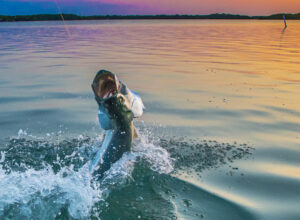
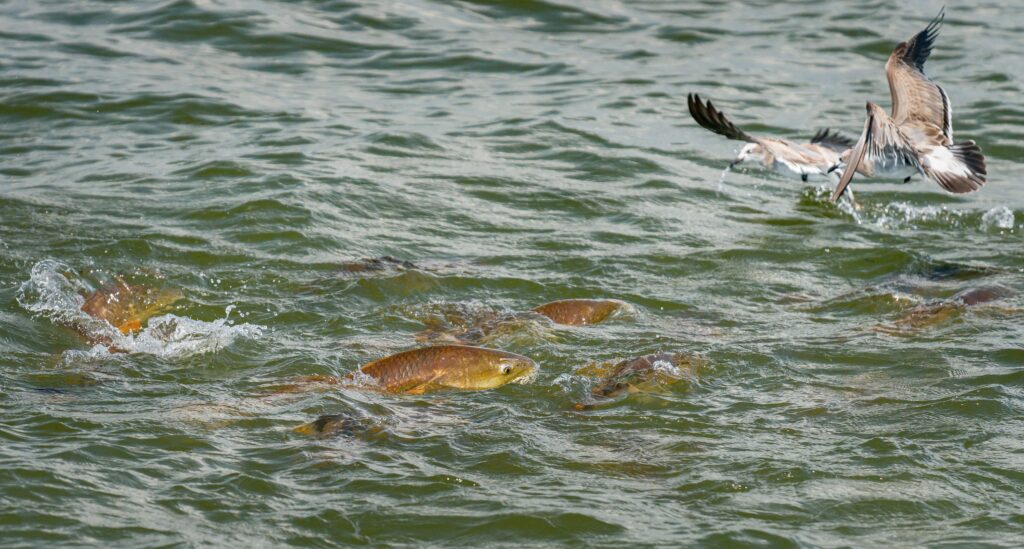
Austin with father and seatrout-Credit Austin Evans-800
Do you have any thoughts on this post?
First-of-its-kind tool identifies six million acres the Bureau of Land Management could advance for sale
onX and the Theodore Roosevelt Conservation Partnership today launched an interactive map that identifies lands deemed eligible for potential sale by the Bureau of Land Management. This map is the first publicly available, easy-to-use tool to inform both the public and policymakers about the locations of public land parcels that the federal government could advance for sale.
“Public lands, like those managed by the BLM, support 178.5 million outdoor recreation participants who rely on these landscapes to hunt, hike, fish, off-road, ski, climb, and bike,” said onX CEO Laura Orvidas. “The outdoor community cherishes these places, and has recently fought fiercely to keep them public. Yet the land disposal process has historically been opaque–often buried in hundreds of pages of government documents. We created this map with TRCP to bring transparency to the land disposal process, to inform outdoor enthusiasts of nearby parcels, and to encourage lawmakers to uphold existing policies that safeguard the public interest when considering any land sales.”
This map was developed using publicly available GIS data derived from 160 individual BLM Resource Management Plans in 17 western states. It reveals 6,086,900 acres of public land marked for potential sale.
“For the first time, the public and policymakers can engage with one map that spans most BLM planning areas, and see public land parcels eligible for sale in the context of other landmarks, like towns, roads, and adjoining public lands,” said Joel Pedersen, president and CEO of the Theodore Roosevelt Conservation Partnership. “TRCP is proud to partner with onX to share this valuable tool that shows specific locations of land that could be considered for sale like never before.”
The six million acres depicted in the map are not guaranteed to be sold, rather, they have been identified in BLM land use plans as eligible for potential disposal or sale. Identification of lands as eligible for disposal does not trigger immediate action, it means those parcels may be considered for sale if and when a proposal is advanced. Importantly, any future sale must go through a multi-step process that includes additional opportunities for public review and comment. By showing these parcels on a map, the public can more readily participate in any future public process.
Explore the map HERE.
Learn more about the BLM’s land disposal history and current process HERE.
Public lands need champions, and thankfully, several bipartisan members of Congress are taking the lead. Learn more about the Public Land Caucus HERE.

Former Wyoming Game and Fish Director a friend to hunters and anglers
Today, the Theodore Roosevelt Conservation Partnership cheers the Senate confirmation of Brian Nesvik to lead the United States Fish and Wildlife Service. The new FWS Director previously served as the Wyoming Game and Fish Director and has an extensive track record of working to conserve and manage fish and wildlife species and their habitat.
“TRCP has worked with Nesvik for many years, and we are pleased to have him in the role of Fish and Wildlife Service Director,” said Joel Pedersen, president and CEO of TRCP. “We look forward to working with him in his new capacity to conserve fish and wildlife habitat and bolster hunting and fishing opportunities.”
The USFWS manages more than 560 National Wildlife Refuges and 70 national fish hatcheries that provide crucial habitat and support opportunities to hunt and fish across the nation. The USFWS also oversees the Endangered Species Act and the Migratory Bird Act as well as programs focused on managing invasive species and providing oversight on importing and exporting wildlife.
Learn more about the USFWS HERE.
TRCP’s Western conservation communications manager reflects on the recent victory for public lands and the opportunities this freedom affords
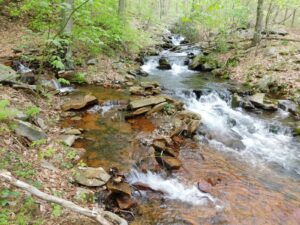
My dad and I worked our way up the creek, which was the only way through the willows, the only path to follow. The stream emptied the peaks above and had flattened out in this hanging valley before it would again find its course to pour lower into the valley.
Where the water gained a foot of depth in front of a young ponderosa that had fallen in, we watched cutthroat trout interrupt the flow as they rose to a hatch of small, gray mayflies that tumbled in the current.

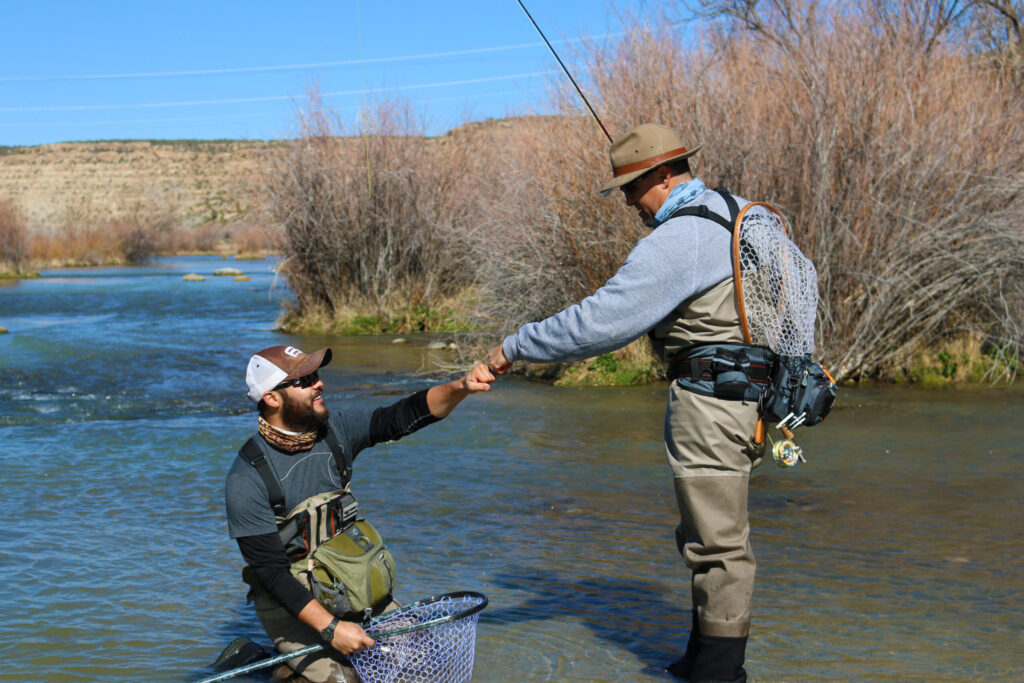
I’d caught a 10-incher in the last bend, so dad took his position on the left bank. Back far enough so his shadow wouldn’t reach over the water, he cast a #14 purple haze toward the top of the run in the bubble line that hugged the grass.
On a day like the one we’d been having, there should’ve been no surprise when the trout appeared below the fly. But there is always a reaction—the same as when a woodcock flushes from cover, or a deer walks into a clearing—of a trout materializing where only a moment ago there was none.
The trout followed the drift for a moment, then swallowed the fly with confidence. Dad’s 3wt bowed with the strong runs and we shared smiles watching the beautiful fish turn in the clear water. The black-spotted Westslope cutthroat came to his hand. The pastel cheek iridescent above the orange flash of the slash beneath the chin.
After a quick picture, the fish bolted back into the depth, disappearing in the nervous water as mayflies continued to float past.
“Plenty of water ahead,” my dad said, drying his hands on his pants.
“And plenty of day to fill,” I smiled back.

For the last dozen summers, my dad and I have spent weeks together in the backcountry of America’s public lands. Sometimes my mom and brother would accompany us, other times my wife, but the constant has been my dad and me folding into the routine of sleeping, eating, and fishing.
This most recent trip felt different. Not that anything had changed, but that it had stayed the same.
During the months before our father-son-first-week-of-July excursion, I’d worked with dozens of members of our TRCP team to help elevate the voices of tens of thousands of fellow hunters and anglers, leading outdoor brands, and partners in urging lawmakers to remove public land sales from budget reconciliation legislation.
We built action alerts and sent emails, organized letters and meetings, called our representatives and spread the news far and wide. We experienced small victories and setbacks and kept pushing knowing that every message to Congress was another step toward keeping our public lands in public hands. It was a powerful and moving moment to be committed our public lands that are the pride of our nation. I was honored to play a small part in this work.
By the time my trip rolled around, the team knew a decision was imminent, yet nothing had been announced. The day before I disappeared into mountains remote enough to bar me from any news, the amendment that would have mandated the sale of millions of acres of public lands was removed.
The celebration began across social media, news outlets, and emails from engaged organizations. The challenge that we had spent months working to overcome was overcome thanks to tens of thousands of conservation-minded people, as well as national, state, and local hunting and fishing businesses and organizations, and leadership from a bipartisan group of public land champions in Congress. Public lands had won!

The beaver dam had been blown out, but still the far side benefited from the slower water where the foundation clung to the bottom. A willow carcass made the run that much more enticing to fish and a danger to an errant cast.
And an errant cast was thrown by me so that my royal Wulff wrapped around a skinny finger of a branch and hung there for just long enough that disappointment grew in my stomach for ruining such a pool. Then, gracefully, the tug of the current on my line pulled the hook to set it free and the fly landed on the water.
Because the accidental placement became accidentally perfect for the drift, a cutthroat rose and swallowed the fly. I watched the orange sides turn and bully into the tangle. My tippet held and finally the trout came into the shallows where I beheld its spot-free side before the black studs appeared on the tail. A perfect fish in a perfect stream.
When the cutthroat returned to the run, Dad and I took a moment to drink some water before continuing. In that still moment, a time when our minds weren’t only occupied by the best path around a log jam or if that stretch was worth fishing, we each said out loud how grateful we were to live in a country that has public land where we can explore and be together without any worry or need to ask permission. That these millions of acres are ours to cherish.
And then we went back to fishing.
The victory of defeating public land sales is worth celebrating, but this most recent challenge is a reminder that our public lands are never guaranteed.
Learn more about how you can stay engaged on hunting and fishing access through our updated Public Land Access webpage below.
Read more public land reflections from the TRCP team HERE.
After mandatory public land sales were removed from budget reconciliation legislation earlier this summer thanks to tens of thousands of hunters and anglers like you, TRCP staff took to public lands to enjoy places they cherish and celebrate the victory. Below are their stories
From Chelsea Pardo, Alaska Senior Program Manager
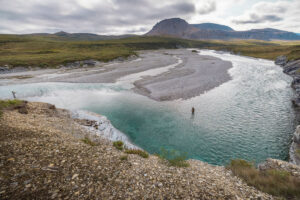
Over the 4th of July holiday, I was fortunate to float the Kenai River in Alaska. The Kenai is the longest river on the Kenai Peninsula in southcentral Alaska and is known for its striking turquoise water and salmon runs.
We packed me, my sister and brother-in-law, and two dogs into the raft and set off on our float. We caught sockeye salmon already well into their spawning transformation as they made their way toward Skilak Lake, and I also landed a rainbow trout, shimmering with incredible colors! Our toughest fishing competition was the grizzly bears along the riverbank.

Throughout the weekend, I felt deep gratitude for having access to such amazing public lands so close to home knowing the public land sales were defeated.
From Emily Forkey, Digital Coordinator
Living in Washington D.C., I sometimes need a little break from the city. Luckily, the Shenandoah and Blue Ridge Mountains and the National Forests that span across those ridges are a short distance away. Since moving to northern Virginia in 2021, the Appalachian Mountains have become really special to me.

When public land sales were removed from budget reconciliation, I was in the middle of enjoying these amazing public lands. My boyfriend and I did a little road trip to Natural Bridge State Park and drove along the Blue Ridge Parkway, stumbling upon Otter Lake Waterfall. We were able to disconnect in the mountains and ended the weekend at Sherando Lake in the George Washington and Jefferson National Forest, swimming and enjoying the beautiful scenery. There was no better way to celebrate this win than spending it in one of my favorite public land spaces.
From Kris Coston, Nevada Field Representative
Hot and dry. That’s the 4th of July in northern Nevada.
From my days as a wildland firefighter, I still recall the safety protocols that every wildland firefighter lives and dies by: the LCES’s.
Now that my firefighting days and wilder years of my youth are behind me, LCES’s have taken on a new meaning.

There is no better place to practice your LCES skills and situational awareness than the crest of the Sierra Nevada Mountains, jeweled with countless cool blue lakes and icy streams, the crest is the juxtaposition of hot and dry.
I can load the family in the truck with rods and tackle, ice, water, beer, camping gear, and food and drive up and over the Carson Pass at 8,652 feet and feel the heat drop into the valley floor like a discarded coat. From here on out it’s wet lines and family time as we fish and camp our way from one lake or stream to another.
Celebrating the 4th is something that I used to do on a mountain top blackened by fire. Now I celebrate from the shores of a clear cool lake or stream and reminisce happily about those old and wild times, thinking how lucky I am to live and raise a family in the greatest country on earth where public lands are in public hands.

To all those men and women who protect our public lands from wildfire, I salute you and thank you for your hard work and sacrifice. And thank you to all who spoke up on behalf of public lands so we can all celebrate in these special places.
From Marcel Gaztambide, Southwest Field Manager
For me and my wife, Bria, some of our most cherished memories with family and friends were made on public lands. Everything from following the careful steps of my grandfather while elk hunting in the Uinta Mountains, trout fishing at Flaming Gorge Reservoir, riding horseback in the Wyoming Range, racing dirt bikes and mountain bikes, wind surfing and paddleboarding, desert river trips, and late-night campfires with themed-dress-up silliness. All of this unstructured fun was easily constructed across 640 million acres of public land in the United States.
When we welcomed our son, Ander, into the world 8 months ago, my wife and I were most looking forward to adventuring with him outside. We were so excited to teach him how to bag the peaks, run the rivers, and track big game through the forests. How to set up his tent, build a fire, and hang a bear-bag. How to squeeze the most out of a life spent out-of-doors on public land.

After the beautiful defense of public spaces mounted by tens of thousands of hunters and anglers across our country, we spent our 4th of July weekend camping out on the San Juan National Forest in southwest Colorado. This was Ander’s second time camping, and certainly not his last, and the trip was made sweeter knowing that people from all walks of life are working hard to protect his ability to carry on our traditions and to have his own adventures. Cheers to public lands, the people who enjoy them, and the people who help keep them in public hands!
From Rob Thornberry, Idaho Field Representative
For years, my son, Jake, and I rarely fished or hunted together. The monthly escapes that we enjoyed during his youth were lost to life. First to high school sports and then to his college years and later when he started a family and a career of his own, now a four-hour drive from my home.
Although we happily forged new bonds–his first daughter calls me Bee-pa and has me hopelessly wrapped around her pinkie–I’ve missed our spring excursions to catch trout on stoneflies and our fall adventures to hunt deer and elk.
That is why when the public land sales amendment was removed from the budget reconciliation package, I received another great joy of summer. Jake texted and asked for a fishing trip for his birthday. Me and him.

Fast forward a couple of weekends and we were tumbling down the ever-roaring South Fork of the Boise River casting huge flies to fat rainbows, him beaming like the boy I so fondly remembered.
As I write this, the Monday after a perfect weekend, I revel in the text just received: “That was a lot of fun. I’m excited for next year.”
It is a tradition built, and survives to this day, on public lands and waters.
From Michael O’Casey, Director of Public Lands
Growing up, our family vacations were centered around public lands. Always on a budget, our trips only required a tent, gravel roads, and the excitement of discovery and freedom found dispersed camping along mountain streams of Oregon, Idaho, Montana, and Wyoming. These trips often culminated in a few days camping and exploring Yellowstone National Park. We’d make the trek from the Oregon coast, driving through high desert, pine forests, and wildflower-filled meadows as we neared the park boundary. Those long road trips and days outdoors formed some of my favorite childhood memories and sparked a passion that led me to work several seasons for the National Park Service and a career in public lands policy.

This summer, as a father of three (8,3,0), I had the chance to return to Yellowstone and share some of these favorite places with my own kids. Watching my oldest catch his first brown trout on a dry fly, listening to them whine as they covered their noses from the smell of rotten eggs at the geysers, and seeing the shock on their faces as Old Faithful erupted for the first time reminded me of the value of these timeless places.
After experiencing such an amazing win as keeping public lands in public hands, what struck me most was how little the experience has changed, and how important that is. In a world that feels increasingly fast and fragmented, these shared landscapes provide a place to slow down, create quality unbroken time together, and to remember what truly matters.
From Josh Metten, Wyoming Field Manager
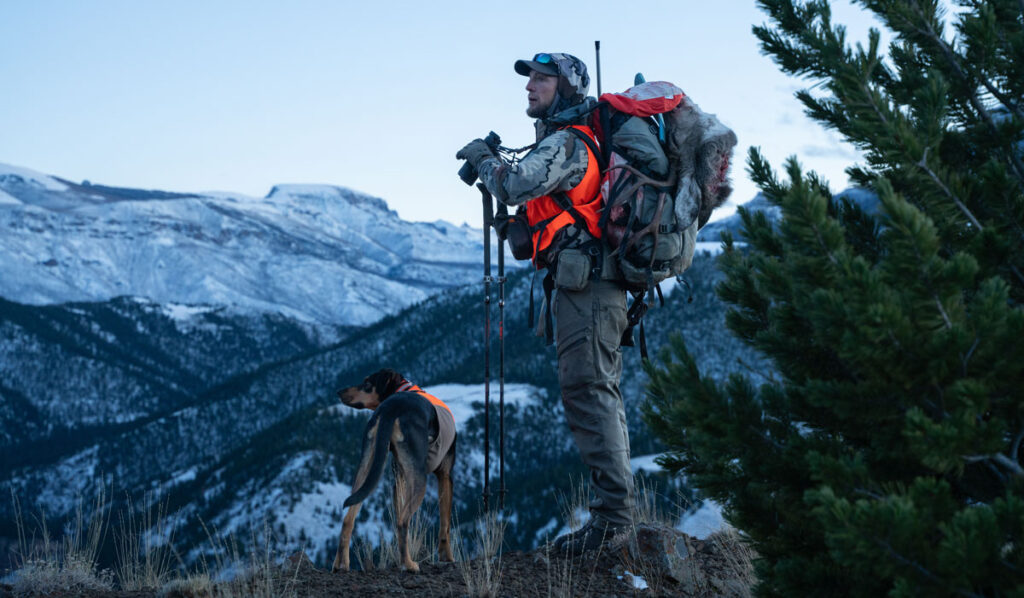
My dog, Ollie, is a public land pup through and through. He’s a rescue mutt from Omaha, Nebraska, but that hasn’t stopped him from becoming a lover of all the outdoor activities public lands have to offer. In our time together in Wyoming, we’ve backpacked through the Absaroka Wilderness, backcountry skied the Tetons, hunted elk in the Wyoming Range, and chased chukar across rugged Bureau of Land Management lands. Most recently, we shared a float down Idaho’s Selway River, which might be my favorite experience with Ollie yet.

Like most Wyomingites, public land is central to my way of life, so I was thrilled that the amendment that would have mandated millions of acres of public land sales in budget reconciliation legislation was removed! Ollie and I celebrated by joining friends on a six-day float down Idaho’s Selway River. The river flows through the Selway Bitterroot Wilderness, which was designated by the 1964 Wilderness Act, a bill sponsored by the late Idaho Senator Frank Church.

Americans love public lands because of their abundance and the freedom they provide. At 640 million acres, we have a massive expanse of diverse landscapes to experience. Floating the Selway was an opportunity to unplug from the rigors of daily life and be thankful that these amazing places have been stewarded for present and future generations to enjoy. I’m happy to share that Ollie loved the float and we can add multi-day river trips to our list of shared public land activities. It turns out that most activities on public lands are better with friends and dogs.
Read another public land reflection from the TRCP team HERE.
Photo credits: TRCP Staff
The TRCP is your resource for all things conservation. In our weekly Roosevelt Report, you’ll receive the latest news on emerging habitat threats, legislation and proposals on the move, public land access solutions we’re spearheading, and opportunities for hunters and anglers to take action. Sign up now.
TRCP has partnered with Afuera Coffee Co. to further our commitment to conservation. $4 from each bag is donated to the TRCP, to help continue our efforts of safeguarding critical habitats, productive hunting grounds, and favorite fishing holes for future generations.
Learn More