Our Issues
Public Lands
Why It Matters

Hunting & Fishing Access

America’s 640 million acres of national public lands provide irreplaceable hunting and fishing opportunities to millions of Americans.

Learn More About Access
What TRCP is Doing

We’re working to safeguard America’s public lands so hunters and anglers always have quality places to pursue their passions.

 Brian Flynn, Two Wolf Foundation
How Sportsmen Are Doing It Right

Brian Flynn, Two Wolf Foundation's Story

Following a distinguished career in the U.S. Army, lifelong outdoorsman Brian Flynn returned home from a deployment in Afghanistan and…


Hunting
Why It Matters

Key Issues for America’s Hunters

Your source for the latest policy updates, conservation challenges, and opportunities shaping America’s hunting traditions.

What TRCP is Doing

We’re fighting for meaningful policy changes that benefit wildlife, our waters, and the American landscapes that make our outdoor traditions possible.

 Ryan Sparks
How Sportsmen Are Doing It Right

Ryan Sparks's Story

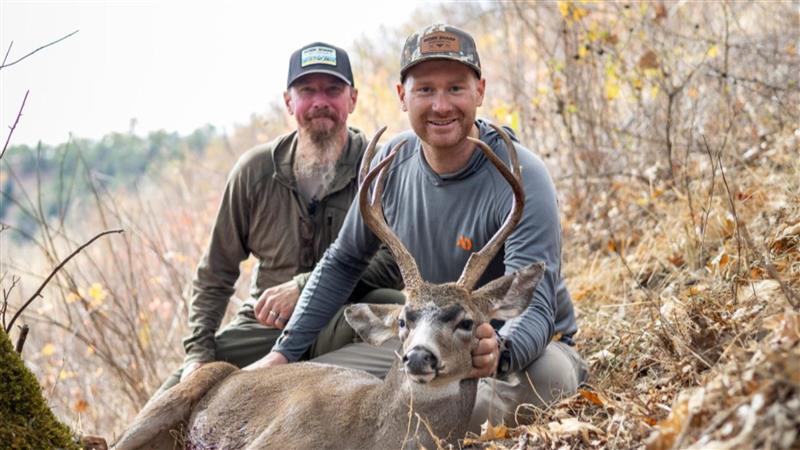
TRCP’s “In the Arena” series highlights the individual voices of hunters and anglers who, as Theodore Roosevelt so famously said,…

Fishing
Why It Matters

Key Issues for America’s Anglers

Your source for the latest policy updates, conservation challenges, and opportunities shaping America’s fishing traditions.

What TRCP is Doing

We’re fighting for meaningful policy changes that benefit wildlife, our waters, and the American landscapes that make our outdoor traditions possible.

 David Mangum
How Sportsmen Are Doing It Right

David Mangum's Story

Capt. David Mangum is a YETI ambassador and outdoor photographer who utilizes his talents to produce media that inspire a…

Private Land
Why It Matters

Stewardship on America’s private lands

With 70 percent of U.S. lands in private hands and many of our best hunt and fish opportunities occurring there, investing in voluntary conservation on working lands safeguards access, strengthens habitat and water quality, and ensures resilient landscapes.

Learn More
What TRCP is Doing

We champion policies and programs that restore wildlife habitat, improve soil and water health, and keep working lands productive.

 Ward Burton
How Sportsmen are Doing It Right

Ward Burton's Story

Ward Burton’s NASCAR driving career stretched across most of two decades. As an avid sportsman and conservationist, he founded the…

Special Places
Why It Matters

Special Places Worth Protecting

America’s most iconic landscapes provide unmatched habitat and unforgettable days afield. These places sustain wildlife, anchor local economies, and define the hunting and fishing traditions we pass down.

What TRCP is Doing

We’re working to conserve special places that provide world-class habitat and unforgettable opportunities for hunters and anglers.

 Franklin Adams
How Sportsmen Are Doing It Right

Franklin Adams's Story

As a true Gladesman, conservationist, and historian, Capt. Franklin Adams has spent more than six decades championing Everglades restoration efforts…

Habitat & Clean Water
Why It Matters

Healthy Habitat Powers Every Pursuit

All hunting and fishing opportunities depend on quality habitat, from clean water and healthy wetlands to winter and summer habitats and the migration corridors that connect them.

All About Habitat & Clean Water
What TRCP is Doing

We are working to safeguard the habitats that power every hunting and fishing opportunity.

 Alex Harvey
How Sportsmen Are Doing It Right

Alex Harvey's Story

Alex Harvey, founder of Legacy Land Management, is a registered professional forester in Mississippi and Alabama with a Master's degree…

Science
Why It Matters

Science That Guides TRCP

From conserving migration corridors and wetlands to ensuring clean water and resilient landscapes, science provides evidence that turns conservation goals into effective action.

Science for Conservation
What TRCP is Doing

For hunters and anglers, science safeguards the experiences we treasure including resilient big game populations, abundant fish, and wild places that endure changing social landscapes.

Jamelle Ellis
Your Science Expert

Jamelle Ellis's Story

Jamelle Ellis joined the Theodore Roosevelt Conservation Partnership in 2022. Jamelle spent the last three years as an environmental sustainability…

Where We Work
Across the Nation

Conservation Across America

TRCP works across the country to ensure hunters and anglers can enjoy healthy fish and wildlife and quality days afield, no matter where they live.

See All Issues
TRCP in Your Region

TRCP works across the country to ensure hunters and anglers can enjoy healthy fish and wildlife and quality days afield, no matter where they live.

Who We Are
Our Mission

To guarantee all Americans quality places to hunt & fish

We unite and amplify our partners’ voices to advance America’s legacy of conservation, habitat, and access.

Our Mission & Values
Our People & Partners
  • Meet the TRCP Team

    Our staff and board members unite and amplify our partners’ voices to advance America’s legacy of conservation, habitat, and access.

    Meet the Team
  • Our Partners

    ‘Partnership’ is in our name. We work with 64 diverse partner groups that represent today’s leading hunting, fishing, and conservation organizations in order to strengthen the sportsman’s voice in Washington, D.C.

    Our Partners
  • Corporate Council

    TRCP’s Corporate Council is made up of diverse corporations that share a common passion for conservation.

    Corporate Council
Our Organization

Looking for more information?

Explore our latest news, policy updates, and conservation resources to get the information you need.

Giving
How You Can Help

To guarantee all Americans quality places to hunt & fish

Your tax-deductible donation will support TRCP's mission, now and into the future.

DONATE
Special Ways to support trcp
  • Capital Conservation Awards Dinner

    The CCAD is one of Washington's best-attended conservation celebrations, featuring dinner, cocktails, and a silent auction.

    Learn More
  • Step Into the Arena

    Help us ensure that our treasured wild habitats and game remain intact for the next generation to enjoy – lend your support to the TRCP’s efforts today!

    Donate
  • Roosevelt Roast

    TRCP has partnered with Afuera Coffee Co. to further our commitment to conservation.

    Learn More
More donation options

Find the best way for you to lend your support. Join one of TRCP’s donor circles for special invitations, premium offerings from outdoor retailers, and more exclusive benefits. Take control of your legacy with planned giving or contribute to special conservation funds.

Other Ways To Give
News
In the Spotlight

In the Arena: Josh Warren

For many hunters and anglers, the connection to conservation begins close to home — in the woods behind the house, along a familiar stretch of river, or through time spent learning from mentors and family. That sense of place is something Joshua Warren carries with him, both personally and professionally. As Director of Marketing at WorkSharp, Josh represents a company rooted in Ashland, Oregon, a community defined by its access to public lands and wild country.

Read More

Stay Informed

Receive our newsletter, the Roosevelt Report, right in your inbox. Never miss the latest news in conservation issues.

by:

posted in:

September 16, 2021

Wildlife Refuge Report

Do you have any thoughts on this post?

XHTML: You can use these tags: <a href="" title=""> <abbr title=""> <acronym title=""> <b> <blockquote cite=""> <cite> <code> <del datetime=""> <em> <i> <q cite=""> <s> <strike> <strong>

Comments must be under 1000 characters.

by:

posted in:

September 15, 2021

Some Deflating Sage Grouse Status Updates and What Can Be Done for Habitat

State wildlife agencies are reflecting on the spring lek count totals, while a national advocacy effort could help private landowners create more grouse habitat

During the recent Association of Fish and Wildlife Agencies annual fall meeting, state wildlife agencies presented updates on spring sage grouse lek counts that didn’t paint a pretty picture.

Like most years, there were localized increases and decreases, but the overall trend continues heading in the wrong direction. This past spring, the U.S. Geological Survey estimated a long-term, downward trend of about 3 percent for male sage grouse counted on mating grounds, or leks, across the Western states. Their analysis showed that there are 80 percent fewer male sage grouse than in 1965, and half of that loss has occurred in just the last 17 years.

Here are a few highlights shared by biologists last week:

  • In Wyoming—the major stronghold state for the bird—sage grouse lek counts were down 13 percent but were higher than at their lowest points in 1996 and 2013.
  • Sage grouse in Nevada are in awful shape. Biologists reported on long-term attendance and monitoring of 160 leks in the state, finding a 47.2-percent decline since 2019 and a trend that is 62 percent below the long-term average—the lowest ever recorded for those leks. Drought stress, cheatgrass, wildfire, feral horses, mining, and geothermal development all contribute to habitat loss and degradation in the state.
  • California noted that the bi-state sage grouse population—a distinct population in Calif. and Nev.—was stable at present, but the state’s portion of the range-wide population is down and still decreasing from peak highs in past years.
  • In Utah, seven of the state’s 11 populations showed declines, while four had increases this past year.
  • Washington suffered devastating wildfires last year that burned up significant amounts of what little quality habitat remained there. Lek counts were down 22 percent in the perimeter of the fire and down 4 percent outside the fire zone.
  • Oregon was a mild bright spot, with lek counts climbing 12 percent over the 2019 counts, but populations are still well below past highs.

These numbers have forced the states to continue conservatively managing sage grouse harvest. Nevada had to close more sage grouse hunting units, the state of Idaho has now converted to a limited permit system, and two prime areas in Colorado remain closed to grouse hunting.

Unfortunately, while our state wildlife agencies have been conservatively managing hunting for decades, this data is making it harder to defend continued recreational harvest of sage grouse. Nor does it indicate that we can avoid a future listing of the bird under the Endangered Species Act. We need huge investments in habitat restoration and continued protection of the healthy sagebrush that remains for the bird. We identified five major habitat threats that contributed to the depressing numbers this spring, and we continue to work with partners on legislative and administrative solutions that will kickstart meaningful sagebrush conservation efforts.

One such solution is introduction and passage of a North American Grasslands Conservation Act—federal legislation that would help incentivize private landowners to restore grasslands and sagebrush habitat.

Everyone, including sportsmen and women, have a vested interest in this unique ecosystem and the species that call it home. Outdoor recreation, energy and agriculture industries, and the species are all at risk if we don’t stop the bleeding and reverse these trends now.

Be part of the solution by supporting the North American Grasslands Conservation Act now. Take action and learn more about our effort with ten other leading conservation groups.

Take Action

by:

posted in:

September 8, 2021

11 Leading Conservation Groups Call on Congress to Take Action for Grasslands and Sagebrush

The TRCP joins forces with key partners to push for a North American Grasslands Conservation Act with strong investments in grassland and sagebrush restoration

The past year and a half has given Americans plenty to worry about. But in these troubling times, we’ve rediscovered an incredible resource that grounds us and helps us cope—the outdoors. And just as participation in hunting, fishing, and outdoor recreation are soaring, these landscapes and our fish and wildlife resources are facing many challenges.

One that has flown under the radar is the loss of native grasslands. In fact, our once vast prairies are now one of the most threatened ecosystems on the planet. Nationwide, more than 50 million acres of grassland habitat have disappeared from the landscape in the last 10 years alone, according to a World Wildlife Fund report.

There is, however, a plan to conserve grasslands and sagebrush before it’s too late. A group of leading conservation organizations—including the TRCP, Pheasants Forever and Quail Forever, National Wildlife Federation, Backcountry Hunters & Anglers, Izaak Walton League, North American Grouse Partnership, National Deer Association, and Land Trust Alliance—are bringing together all those who rely on grasslands to conserve this essential habitat for future generations, while also providing economic opportunities for ranchers, farmers, and outdoor recreation businesses.

The idea is built on a proven model of conservation success and is in front of key lawmakers right now—our hope is that a North American Grasslands Conservation Act will be introduced in Congress this fall. Here’s what you need to know and how you can help.

What would the North American Grasslands Conservation Act do?

A North American Grasslands Conservation Act would provide funding needed to restore and conserve what remains of America’s grasslands and sagebrush habitat while creating a program that would work with private landowners—whose working farms and ranches are key to the success of this ecosystem.

The Act would establish a grant program designed to provide landowners with voluntary, flexible economic incentives and opportunities to help improve and conserve our disappearing grasslands. The funding could go toward restoring native grasses, controlling invasive species, managing with prescribed fire, or fighting conifer tree encroachment that has been turning our grasslands into forests with little utility for grassland-dependent species.

This approach is innovative, but there is already a model for its success: The North American Wetlands Conservation Act. Its voluntary incentives have helped to fund nearly 3,000 wetlands improvement projects across 30 million acres in all 50 states.

What NAWCA has done for waterfowl, the North American Grasslands Conservation Act could do for pronghorns, sage grouse, mule deer, and many other species. And NAWCA has also had a tremendous economic impact that could be replicated in prairie states. A program such as a North American Grasslands Act would create new economic opportunities by funding conservation jobs, improving habitat that supports outdoor recreation and ranching businesses, and investing in the wildlife populations that support hunting and other wildlife-related tourism.

How can hunters and anglers help?

Grasslands and the sagebrush steppe are under threat, but by working together, we can ensure their beauty for future generations and for all those who rely on them. You can call on lawmakers to support the idea behind the North American Grasslands Conservation Act by taking action at actforgrasslands.org.

by:

posted in:

September 3, 2021

Theodore Roosevelt’s Legacy and its Relevance to Conservation Today

It is important to acknowledge our namesake’s flaws as well as his accomplishments. At the TRCP, we challenge ourselves to advance Roosevelt’s conservation vision while doing more to ensure that all Americans have access to the outdoors.

For more than a year, the Natural History Museum in New York City has made national headlines for its decision to remove its statue of Theodore Roosevelt, citing the paternalistic and racist image of Roosevelt on horseback with a Black man and Native American on foot on either side of him. According to the New York Times, the museum’s director noted that the decision was based on the statue itself—namely its “hierarchical composition”—and not on Roosevelt, whom the museum continues to honor as “a pioneering conservationist.”

It prompted internal discussions at TRCP, as an organization named after Theodore Roosevelt, about the 26th president’s legacy as it relates to our mission and vision in contemporary times.

There are various academic studies on Roosevelt’s complicated and often contradictory views of race. This includes his embrace of Manifest Destiny, the displacement of Native Americans from the public lands he created, and his support of eugenics theories—but also his appointment of multiple Black people to important positions within his administration, which drew the ire of Southern lawmakers, and public defense of equality in well-documented speeches. In one, he said, “I cannot consent to take the position that the door of hope—the door of opportunity—is to be shut upon any man, no matter how worthy, purely upon the grounds of race or color.”

My job is not to moderate such discussions, which are healthy and important as we learn from the past to address today’s challenges. As Roosevelt himself said in a 1907 speech about the pilgrims, “Men must be judged with reference to the age in which they dwell.” And while Roosevelt was clearly wrong on some issues, 1907 was a very different time than 2021.

But to strictly ignore some parts of T.R.’s legacy while celebrating others is also to do a disservice to the organizations and communities of color that are essential to the work of keeping conservation alive.

In this work, Roosevelt’s conservation legacy and vision are still relevant today. During his two terms as president, he ended market hunting and set aside 240 million acres of public land as national parks, forests, monuments, and wildlife refuges. His basic philosophy is summarized in this famous quote:

“Defenders of the short-sighted men who in their greed and selfishness will, if permitted, rob our country of half its charm by their reckless extermination of all useful and beautiful wild things, sometimes seek to champion them by saying the ‘the game belongs to the people.’ So, it does; and not merely to the people now alive, but to the unborn people. The ‘greatest good for the greatest number’ applies to the number within the womb of time, compared to which those now alive form but an insignificant fraction. Our duty to the whole, including the unborn generations, bids us restrain an unprincipled present-day minority from wasting the heritage of these unborn generations. The movement for the conservation of wild life and the larger movement for the conservation of all our natural resources are essentially democratic in spirit, purpose, and method.”

Roosevelt believed that wild lands and wild places should be accessible to all Americans. His vision for these public lands stood in stark contrast to the model in most European countries, where fish and wildlife belonged to the landed gentry or the crown. His views on access to the outdoors were consistent with his populist stances on other matters. Through his “trust busting” and threats to nationalize industry because of low wages and other abuses, he lifted up millions of Americans from all backgrounds, races, religions, and genders.

Today, our challenge is to advance Roosevelt’s conservation vision in the face of unprecedented threats, from development to climate change, while at the same time doing more to ensure that all Americans have access to the outdoors and feel welcome in the hunting and fishing community. This is not only the right thing to do; this is fundamental to the future of the North American Model of Conservation.

Hunting, fishing, and conservation depend on participation and broad acceptance by society. When hunting is 96 percent White, and overwhelmingly male and older, it is not a recipe for long-term viability. When large parts of our urban populations, including communities of color, lack access to public lands and waters, we deprive them of the connection to the outdoors that many of us take for granted, and we lose natural allies in the political battles to conserve open spaces and fish and wildlife. A diverse and well-represented hunting and fishing community, on the other hand, brings Americans together and helps to protect hunting and fishing from external attack.

The Haudenosaunee Confederacy has the principle of the “Seventh Generation,” which tells us that decisions made today must be understood in a lens of how they will impact future generations. If we ignore the centuries of wisdom that Native American cultures have about stewardship, we are weaker for it.

TRCP’s mission is to guarantee all Americans quality places to hunt and fish. This includes supporting recruitment, retention, and reactivation practices that make hunting and fishing welcoming activities for every person. We commit to working with Black, Indigenous, and Latino organizations and other communities of color, in combination with our longstanding conservation partners, to achieve this goal.

Conservation works best when we all work together and keep looking forward.


Photo courtesy of Harvard College Library.

by:

posted in:

August 25, 2021

Migration Corridor Conservation Prioritized by NM Governor

New executive order establishes collaborative approach to prioritizing big game seasonal habitats

Governor Michelle Lujan Grisham today announced bold steps to conserve New Mexico’s land, water, and wildlife, adopting the goal of conserving 30 percent of all lands in the state by 2030. Through an executive order, the governor established a 30 by 30 Committee comprised of secretaries or designees of seven state agencies and directed it to “support and implement programs designed to conserve, protect, and enhance lands and natural environments across the state,” emphasizing among other things efforts that “support migratory wildlife habitat and ensure movement across the landscape.”

“Today’s commitment to safeguarding New Mexico’s migratory habitats is a strong step forward on a conservation challenge that has been front-and-center among the issues that matter most to sportsmen and sportswomen,” said John Cornell, the southwest field manager for the Theodore Roosevelt Conservation Partnership. “We want to thank Governor Lujan Grisham for recognizing the value of the outdoor recreation economy, for highlighting the importance of increased access and recreation, and for including these issues among her administration’s priorities. New Mexico has vast natural landscapes and incredible wildlife resources that will benefit greatly from the goals laid out in this order.”

Significantly, the executive order directs state agencies to “coordinat[e] as much as possible with federal agencies that manage lands and resources across New Mexico, including through direct engagement on natural resource management plans, transportation and energy development projects, and any other initiatives that impact land and water conservation, including wildlife migration.” In June, the TRCP released a report highlighting opportunities for the Bureau of Land Management and the Forest Service to work with state wildlife agencies to incorporate big game migration science and data into land management plans and decisions.

Governor Lujan Grisham’s executive order arrives as the Biden-led Departments of the Interior and Agriculture are shaping their next steps for migration corridor conservation, which was highlighted as a priority in the May 2021 report Conserving and Restoring America the Beautiful. The Interior Department began partnering with Western states on the issue in 2018 when then-Secretary Ryan Zinke signed Secretarial Order 3362. Sportsmen and sportswomen see considerable opportunity for the federal agencies to build upon these early successes to ensure meaningful and durable habitat conservation.

According to the executive order, the committee will also focus on land- and water-based solutions that help sequester carbon and greenhouse gas emissions. Last year, the TRCP and 40 other hunting and fishing conservation groups launched Conservationists for Climate Solutions to drive solutions-oriented policies that combat the impacts of climate change on land, water, and wildlife.

“Hunters and anglers applaud today’s announcement and look forward to working with the governor’s office and the New Mexico Department of Game and Fish to achieve these outcomes,” continued Cornell. “Our community is ready to collaborate with a diverse range of stakeholders to be part of the solution and to bring sportsmen’s and sportswomen’s voices to the table as we tackle these important issues.”

To read more from the Governor’s Executive Order click HERE.

HOW YOU CAN HELP

TRCP has partnered with Afuera Coffee Co. to further our commitment to conservation. $4 from each bag is donated to the TRCP, to help continue our efforts of safeguarding critical habitats, productive hunting grounds, and favorite fishing holes for future generations.

Learn More

You have Successfully Subscribed!

You have Successfully Subscribed!

You have Successfully Subscribed!

You have Successfully Subscribed!