Our Issues
Public Lands
Why It Matters

Hunting & Fishing Access

America’s 640 million acres of national public lands provide irreplaceable hunting and fishing opportunities to millions of Americans.

Learn More About Access
What TRCP is Doing

We’re working to safeguard America’s public lands so hunters and anglers always have quality places to pursue their passions.

 Brian Flynn, Two Wolf Foundation
How Sportsmen Are Doing It Right

Brian Flynn, Two Wolf Foundation's Story

Following a distinguished career in the U.S. Army, lifelong outdoorsman Brian Flynn returned home from a deployment in Afghanistan and…


Hunting
Why It Matters

Key Issues for America’s Hunters

Your source for the latest policy updates, conservation challenges, and opportunities shaping America’s hunting traditions.

What TRCP is Doing

We’re fighting for meaningful policy changes that benefit wildlife, our waters, and the American landscapes that make our outdoor traditions possible.

 Ryan Sparks
How Sportsmen Are Doing It Right

Ryan Sparks's Story

TRCP’s “In the Arena” series highlights the individual voices of hunters and anglers who, as Theodore Roosevelt so famously said,…

Fishing
Why It Matters

Key Issues for America’s Anglers

Your source for the latest policy updates, conservation challenges, and opportunities shaping America’s fishing traditions.

What TRCP is Doing

We’re fighting for meaningful policy changes that benefit wildlife, our waters, and the American landscapes that make our outdoor traditions possible.

 David Mangum
How Sportsmen Are Doing It Right

David Mangum's Story

Capt. David Mangum is a YETI ambassador and outdoor photographer who utilizes his talents to produce media that inspire a…

Private Land
Why It Matters

Stewardship on America’s private lands

With 70 percent of U.S. lands in private hands and many of our best hunt and fish opportunities occurring there, investing in voluntary conservation on working lands safeguards access, strengthens habitat and water quality, and ensures resilient landscapes.

Learn More
What TRCP is Doing

We champion policies and programs that restore wildlife habitat, improve soil and water health, and keep working lands productive.

 Ward Burton
How Sportsmen are Doing It Right

Ward Burton's Story

Ward Burton’s NASCAR driving career stretched across most of two decades. As an avid sportsman and conservationist, he founded the…

Special Places
Why It Matters

Special Places Worth Protecting

America’s most iconic landscapes provide unmatched habitat and unforgettable days afield. These places sustain wildlife, anchor local economies, and define the hunting and fishing traditions we pass down.

What TRCP is Doing

We’re working to conserve special places that provide world-class habitat and unforgettable opportunities for hunters and anglers.

 Franklin Adams
How Sportsmen Are Doing It Right

Franklin Adams's Story

As a true Gladesman, conservationist, and historian, Capt. Franklin Adams has spent more than six decades championing Everglades restoration efforts…

Habitat & Clean Water
Why It Matters

Healthy Habitat Powers Every Pursuit

All hunting and fishing opportunities depend on quality habitat, from clean water and healthy wetlands to winter and summer habitats and the migration corridors that connect them.

All About Habitat & Clean Water
What TRCP is Doing

We are working to safeguard the habitats that power every hunting and fishing opportunity.

 Alex Harvey
How Sportsmen Are Doing It Right

Alex Harvey's Story

Alex Harvey, founder of Legacy Land Management, is a registered professional forester in Mississippi and Alabama with a Master's degree…

Science
Why It Matters

Science That Guides TRCP

From conserving migration corridors and wetlands to ensuring clean water and resilient landscapes, science provides evidence that turns conservation goals into effective action.

Science for Conservation
What TRCP is Doing

For hunters and anglers, science safeguards the experiences we treasure including resilient big game populations, abundant fish, and wild places that endure changing social landscapes.

Jamelle Ellis
Your Science Expert

Jamelle Ellis's Story

Jamelle Ellis joined the Theodore Roosevelt Conservation Partnership in 2022. Jamelle spent the last three years as an environmental sustainability…

Where We Work
Across the Nation

Conservation Across America

TRCP works across the country to ensure hunters and anglers can enjoy healthy fish and wildlife and quality days afield, no matter where they live.

See All Issues
TRCP in Your Region

TRCP works across the country to ensure hunters and anglers can enjoy healthy fish and wildlife and quality days afield, no matter where they live.

Who We Are
Our Mission

To guarantee all Americans quality places to hunt & fish

We unite and amplify our partners’ voices to advance America’s legacy of conservation, habitat, and access.

Our Mission & Values
Our People & Partners
  • Meet the TRCP Team

    Our staff and board members unite and amplify our partners’ voices to advance America’s legacy of conservation, habitat, and access.

    Meet the Team
  • Our Partners

    ‘Partnership’ is in our name. We work with 64 diverse partner groups that represent today’s leading hunting, fishing, and conservation organizations in order to strengthen the sportsman’s voice in Washington, D.C.

    Our Partners
  • Corporate Council

    TRCP’s Corporate Council is made up of diverse corporations that share a common passion for conservation.

    Corporate Council
Our Organization

Looking for more information?

Explore our latest news, policy updates, and conservation resources to get the information you need.

Giving
How You Can Help

To guarantee all Americans quality places to hunt & fish

Your tax-deductible donation will support TRCP's mission, now and into the future.

DONATE
Special Ways to support trcp
  • Capital Conservation Awards Dinner

    The CCAD is one of Washington's best-attended conservation celebrations, featuring dinner, cocktails, and a silent auction.

    Learn More
  • Step Into the Arena

    Help us ensure that our treasured wild habitats and game remain intact for the next generation to enjoy – lend your support to the TRCP’s efforts today!

    Donate
  • Roosevelt Roast

    TRCP has partnered with Afuera Coffee Co. to further our commitment to conservation.

    Learn More
More donation options

Find the best way for you to lend your support. Join one of TRCP’s donor circles for special invitations, premium offerings from outdoor retailers, and more exclusive benefits. Take control of your legacy with planned giving or contribute to special conservation funds.

Other Ways To Give
News
In the Spotlight

Oregon Legislature Passes Landmark “1.25 Percent for Wildlife” Act

After three legislative sessions and more than a decade of advocacy, a bipartisan coalition secures Oregon’s most significant conservation funding victory in a generation.

Read More

Stay Informed

Receive our newsletter, the Roosevelt Report, right in your inbox. Never miss the latest news in conservation issues.

by:

posted in:

May 13, 2020

SouthernLancasterESF-1200-web

Do you have any thoughts on this post?

XHTML: You can use these tags: <a href="" title=""> <abbr title=""> <acronym title=""> <b> <blockquote cite=""> <cite> <code> <del datetime=""> <em> <i> <q cite=""> <s> <strike> <strong>

Comments must be under 1000 characters.

by:

posted in:

May 11, 2020

TRCP Challenges Hunters and Anglers to Take the #ResponsibleRecreation Pledge

Sportsmen and women step up to safeguard the privilege of enjoying our country’s natural resources

The Theodore Roosevelt Conservation Partnership is proud to help launch the #ResponsibleRecreation pledge, which encourages Americans to enjoy outdoor recreation while adhering to proper COVID-19 safety protocols.

The coordinated campaign was created with respected conservation leaders at the National Wild Turkey Federation, Congressional Sportsmen’s Foundation, Ducks Unlimited, Trout Unlimited, Pheasants Forever, and Association of Fish and Wildlife Agencies.

These groups are encouraging Americans to take advantage of our country’s numerous opportunities to recreate on public lands and waters, while maintaining proper social distancing and adhering to other best practices in line with recommendations from the Center for Disease Control and Prevention.

“Whether participating in hunting, fishing, shooting sports, or numerous other outdoor activities, individuals and families are getting outside as a means of coping with the challenges of this health crisis,” says Whit Fosburgh, TRCP’s president and CEO. “The conservation community recognizes that this is a privilege, one that sportsmen and women take very seriously. Just as we’ve stepped up to fund conservation efforts and recover at-risk species, hunters and anglers have yet another opportunity to lead by example and ensure that outdoor recreation can continue to delight and facilitate healing for anyone who ventures outside.”

Outdoor television personalities, gear makers, and conservation-minded decision-makers are already embracing the pledge.

“As parts of the country are beginning to reopen and the weather warms up, we will see growing numbers of Americans spend more time in the great outdoors,” says Congressman Marc Veasey. “As an avid sportsman myself, I am eager to get back outside, but in a way that will not accelerate the spread of COVID-19. That means practicing responsible recreation by continuing to socially distance, wear appropriate face coverings when needed, and follow proper health guidelines to protect our fellow Americans.”

While many of the organizations involved in spearheading the #ResponsibleRecreation pledge have their own interests—namely, hunting, fishing, or shooting sports—the hope is to engage anyone who enjoys the outdoors safely and responsibly. Outdoor enthusiasts are encouraged to share how they are recreating responsibly, challenge their friends to do the same, and use the campaign hashtag across social media.

“Now more than ever, Americans want to recreate outdoors for the health, physical, and social benefits,” says Jessica Wahl Turner, executive director of the Outdoor Recreation Roundtable. “As our country begins to reopen, we encourage outdoor enthusiasts to continue practicing social distancing, respect the communities you visit, and follow the health guidelines applicable to your activities. If we work together to steward the outdoors and keep safety top of mind, we can help our public lands and waters remain open and get our recreation economy and jobs back on track.”

Visit responsible-recreation.org to learn more.

The TRCP will also ask those who take the pledge to reach out to their national decision-makers in support of legislation that can improve outdoor recreation infrastructure across the country. Visit the TRCP action center for the most pressing opportunities for advocacy.

May 8, 2020

VA Cuts Menhaden Quota, But Omega Retains Dubious “Sustainable” Label

All the strikes against the industrial fishing operation’s claim of sustainability

In more good news for Atlantic menhaden, the Virginia Marine Resources Commission announced last week that it would set a lower quota for Omega Protein’s industrial harvest operation in the 2020 season. The company brazenly defied the established catch limits on menhaden in the Chesapeake Bay last year, and fisheries managers rejected their request to scale back for the overage more gradually over the course of the next two seasons.

Omega’s rapacious appetite for harvesting as many menhaden as it possibly can is hardly breaking news. For decades, the foreign-owned company has had a monopoly on a public marine resource, threatening the ecology and economy of the Chesapeake Bay and Atlantic coastal communities.

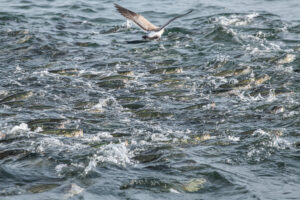
Anglers know firsthand why menhaden are called the most important fish in the sea: Because they are extremely valuable food for many popular and valuable game fish, including striped bass, red drum, bluefish, cobia, tuna, and flounder. Leaving more of these crucial forage in the water is one of the Theodore Roosevelt Conservation Partnership’s key conservation initiatives.

Image courtesy of J.B.Pribanic.

Which is why it is so hard to fathom how Omega Protein can be called “sustainable” in the first place, let alone keep its certification from the Marine Stewardship Council—an international organization that helps determine which fisheries qualify for a seal of approval. Given the fact that Omega willfully blasted past the legitimate Bay cap by more than 30 percent in 2019, one would think the company would be sheepish about continuing to flout this specious sustainability claim.

If legitimately earned, these labels allow consumers to make informed seafood choices. And companies can typically charge a premium to recoup costs associated with being more environmentally responsible. To earn the MSC “blue checkmark” label, for example, seafood companies are required to follow internationally recognized best practices for operating healthy, sustainable fisheries while causing minor impacts on the marine food chain. But the MSC is a for-profit venture, and despite the blowback from anglers, Omega seemed able to buy their way to “sustainability” in 2019.

This was before the company violated the Bay cap last fall, but after it was cited for Clean Water Act violations and paid a $400,000 fine to the Security and Exchange Commission for misleading investors.

Fisheries managers, however, are holding Omega accountable. In October, the Atlantic Marine Fisheries Commission–the coastal board of professionals that manages shared marine resources–unanimously voted Virginia out of compliance with its menhaden management plan.

Then, in December 2019, U.S. Secretary of Commerce Wilbur Ross upheld the ASMFC’s ruling and imposed a moratorium on all menhaden fishing in Virginia waters, effective June 17, 2020, until the state—and, really, just Omega—comes into compliance. The Theodore Roosevelt Conservation Partnership and its partners, along with Virginia Governor Ralph Northam and eight other East Coast governors, helped persuade Secretary Ross to hold Omega accountable.

Full compliance with the ASMFC’s management plan is important, because if the moratorium takes effect, it could have severe economic consequences—not only for Omega’s workers, but also for Bay watermen, charter captains, tackle shop owners, and recreational fishermen.

This isn’t what sportfishing groups want to see happen.

Photo by David Blinken.

Thankfully, the Virginia General Assembly recently passed historic legislation that transfers authority for managing menhaden from the state legislature, where it has been highly politicized for decades, to the Virginia Marine Resource Commission, which was already effectively managing all other marine fisheries in the state—including striped bass, crabs, and oysters. The TRCP and its sportfishing partners played a pivotal role in getting this landmark legislation across the finish line.

Both the new law transferring management authority and the VMRC’s swift action to limit Omega’s harvest this year are historic wins for marine conservation. Later this year, the ASMFC is expected to vote on a new plan for managing menhaden according to their broader ecological value, which offers another opportunity to advance the sound conservation of such a vital resource.

With so many groups invested in securing the future of this forage fish, could it be time for MSC to rethink their tacit endorsement of Omega Protein and yank the “sustainable” label? If you ask me, sucking up thousands of tons of critical food for our most important game fish and disrupting the marine food chain, is about as far from being a responsible steward of a public resource as you can get.

Incredibly, SAI Global, an independent auditor for the MSC that supported Omega’s accreditation, claimed “there is no firm evidence” that the operation affects the species’ sustainability. Recreational anglers and conservationists know better. That’s why we have objected at every stage of the certification process.

Recreational fishing on Chesapeake Bay. Photo by Alicia Pimental/Chesapeake Bay Program.

Without a doubt, there is much at stake to keep the pressure on Omega Protein to be accountable for their actions. Sportfishing is both culturally and economically important to the Chesapeake and mid-Atlantic region. According to a 2016 study by Southwick Associates, striped bass generated almost $8 billion to our country’s GDP. Thousands of jobs tied to a healthy striper population—charter captains, marinas, bait and tackle shops, hotels, and restaurants, to list several—are at risk if menhaden populations are overfished. Moreover, 32 percent of recreational and 69 percent of commercial harvest of stripers comes from the Chesapeake, resulting in a combined economic impact of approximately $2.5 billion.

In Virginia alone, striped bass drove more than $240 million in economic activity just a decade ago. Sadly, those numbers have plummeted to just over $100 million annually. The recent decline in the population of this marquee game fish has already resulted in reduced seasons and creel limits, putting the livelihoods of many coastal residents in jeopardy. In fact, striped bass charters in 2019 were down between 50 and 100 percent in some areas. The uncertainty surrounding COVID-19 has already added to the stress.

Reminder: Omega’s industrialized fleet is the last of its kind on the entire East Coast. All other states have banned reduction fishing using such highly mechanized boats, nets, and gear. And yet Omega—and Daybrooke in the Gulf of Mexico—continues to pulverize these protein-packed fish into oils and powders used in health supplements and, increasingly, as feed for overseas aquaculture operations.

Omega’s operation is particularly nettlesome on the Chesapeake, where concerns over localized depletion have persisted for decades and conflicts with anglers are on the upswing. When Omega Protein flouts its industrial operation as “sustainable,” it’s a step too far. Especially given that state and coastal fishery leaders have taken encouraging steps to better manage menhaden, the label simply doesn’t fit.


Captain Chris Dollar is a professional fishing guide, tackle shop owner, all-around Chesapeake outdoorsman, and writer.

Top photo by the Bywaters via flickr.

by:

posted in:

May 7, 2020

Senate Committee Advances Water Infrastructure Legislation

Bipartisan bill would create jobs, benefit aquatic ecosystems

The Senate Environment and Public Works Committee has passed legislation to invest in water infrastructure, remove barriers to the use of natural infrastructure, and combat invasive species.

The America’s Water Infrastructure Act of 2020 passed the committee by a vote of 21 to 0.

“Investing in water infrastructure creates jobs, benefits aquatic ecosystems, and spurs healthier habitat, fisheries, and wildlife,” said Whit Fosburgh, president and CEO of the Theodore Roosevelt Conservation Partnership. “We want to thank the committee for helping reduce barriers to the use of natural infrastructure, combat invasive species, and incentivize innovation.”

The bill contained several conservation components, including:

  • Investing in natural infrastructure
  • Addressing toxic algal blooms in the Everglades and Great Lakes
  • Remedy issues caused by invasive species
  • Funding watercraft inspection and decontamination stations
  • Modernizing aging irrigation delivery systems to reduce pressure on river systems that face drought


Top photo by Florida Fish and Wildlife

by:

posted in:

May 5, 2020

New Report on Big Game Migration Demonstrates Colorado’s Commitment to Key Conservation Priority

Sportsmen and women applaud the state’s assessment of threats to winter range and migration corridors and recommended conservation actions

Today Colorado Parks & Wildlife released its 2020 Status Report on Big Game Winter Range and Migration Corridors, a significant milestone in its work to conserve critical seasonal habitat and a direct result of Governor Jared Polis’ 2019 executive order on this issue. Sportsmen and women welcome the publication as a valuable resource to improve the conservation of big game winter range and migration corridors, as well as the agency’s commitment to this opportunity.

The report provides the public with a foundational understanding of the best-available science regarding Colorado’s migratory big game populations, including mule deer, elk, pronghorn, bighorn sheep, and moose. It also provides a snapshot of ongoing research on big game and areas requiring further study. Furthermore, Colorado Parks & Wildlife includes in the report a series of recommended actions to address the various threats to big game migration in the state.These recommendations set the stage for the next of the directives in Governor Polis’ order: a report to be completed by July 1 that includes policy actions necessary to conserve big game and their habitat.

“One of the biggest issues facing the conservation of big game migration corridors and seasonal habitats is ensuring policy is grounded in the most current science,” said Dr. Ed Arnett, Chief Scientist for the Theodore Roosevelt Conservation Partnership. “This report provides a good foundation to tackle that challenge and offers a blueprint to guide the work of state and federal agencies as well as their partners. Colorado Parks & Wildlife should be commended for their work and vision for big game conservation.”

In addition to outlining how the state manages and studies these big game animals, as well as summarizing the most up-to-date science regarding their populations, seasonal habitats and migration routes, and the threats they face, the report provides a forward-looking assessment of what is needed to ensure Colorado’s big game migrations continue well into the future. For each general category of conservation threat, such as transportation, the agency identifies specific problems and actions it will take to mitigate potential harm to big game populations. Along similar lines, Colorado Parks & Wildlife has produced a multifaceted list of short- (1-3 years) and long-term needs for additional data and better management.

“Colorado’s wildlife resources and hunting opportunities are second-to-none across the West, and the leadership shown by decision-makers and agency staff to conserve big game migration corridors will ensure that legacy continues well into the future,” said Madeleine West, Director of the Center for Western Lands with the Theodore Roosevelt Conservation Partnership and a Colorado resident. “This report has established a strong model that we hope other states will emulate.”

This report builds on a recent announcement from the Bureau of Land Management, included in a press release regarding its revision of the Uncompahgre Resource Management Plan, that the Colorado BLM has committed to updating its land use plans in the state to ensure management allocations are in accordance with the best-available habitat and migration science. Existing federal agency plans generally do not account for recent advances in science and technology demonstrating increased precision on how and where big game species move across the landscape.

“The Colorado BLM deserves a pat on the back for its commitment to updating management plans for the special consideration and management of habitats that allow big game animals to migrate,” continued West. “The hunting and fishing community looks forward to engaging productively in the BLM’s planning process to ensure the success of these efforts.”

What others are saying:

“We commend the Colorado Department of Natural Resources and Colorado Parks and Wildlife for their continued focus on big game migration corridor conservation, in keeping with Colorado’s executive order and the Interior Department’s secretarial order. This report is a testament to the tireless work of Colorado’s wildlife managers and professionals in documenting the behavior of Colorado’s big game species over the last several decades. With one of the largest elk herds in the country, and a deer population that is struggling to maintain its numbers, the report provides a great foundation to move forward with collaborative planning efforts that safeguard Colorado’s big game herds, migratory corridors and important wildlife habitats, as well as Colorado’s outdoor legacy.”

Robin Knox

President, Colorado Wildlife Federation

“Mule deer populations in some parts of Colorado have been in decline for several years, and sporting groups like ours have been working with Colorado Parks & Wildlife and other partners throughout the state to improve the health of our herds. As research shows, winter ranges and migratory habitat are vital for mule deer survival and recruitment. This report brings home the connection between scientific data and boots-on-the-ground conservation, and hunters appreciate the seriousness with which wildlife managers in Colorado are approaching the issue of big game migration.”

Steve Belinda

Conservation Director, Mule Deer Foundation


Photo: Larry Lamsa via Flickr

HOW YOU CAN HELP

TRCP has partnered with Afuera Coffee Co. to further our commitment to conservation. $4 from each bag is donated to the TRCP, to help continue our efforts of safeguarding critical habitats, productive hunting grounds, and favorite fishing holes for future generations.

Learn More

You have Successfully Subscribed!

You have Successfully Subscribed!

You have Successfully Subscribed!

You have Successfully Subscribed!