Our Issues
Public Lands
Why It Matters

Hunting & Fishing Access

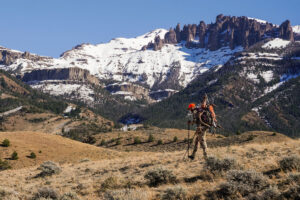
America’s 640 million acres of national public lands provide irreplaceable hunting and fishing opportunities to millions of Americans.

Learn More About Access
What TRCP is Doing

We’re working to safeguard America’s public lands so hunters and anglers always have quality places to pursue their passions.

 Brian Flynn, Two Wolf Foundation
How Sportsmen Are Doing It Right

Brian Flynn, Two Wolf Foundation's Story

Following a distinguished career in the U.S. Army, lifelong outdoorsman Brian Flynn returned home from a deployment in Afghanistan and…


Hunting
Why It Matters

Key Issues for America’s Hunters

Your source for the latest policy updates, conservation challenges, and opportunities shaping America’s hunting traditions.

What TRCP is Doing

We’re fighting for meaningful policy changes that benefit wildlife, our waters, and the American landscapes that make our outdoor traditions possible.

 Ryan Sparks
How Sportsmen Are Doing It Right

Ryan Sparks's Story

TRCP’s “In the Arena” series highlights the individual voices of hunters and anglers who, as Theodore Roosevelt so famously said,…

Fishing
Why It Matters

Key Issues for America’s Anglers

Your source for the latest policy updates, conservation challenges, and opportunities shaping America’s fishing traditions.

What TRCP is Doing

We’re fighting for meaningful policy changes that benefit wildlife, our waters, and the American landscapes that make our outdoor traditions possible.

 David Mangum
How Sportsmen Are Doing It Right

David Mangum's Story

Capt. David Mangum is a YETI ambassador and outdoor photographer who utilizes his talents to produce media that inspire a…

Private Land
Why It Matters

Stewardship on America’s private lands

With 70 percent of U.S. lands in private hands and many of our best hunt and fish opportunities occurring there, investing in voluntary conservation on working lands safeguards access, strengthens habitat and water quality, and ensures resilient landscapes.

Learn More
What TRCP is Doing

We champion policies and programs that restore wildlife habitat, improve soil and water health, and keep working lands productive.

 Ward Burton
How Sportsmen are Doing It Right

Ward Burton's Story

Ward Burton’s NASCAR driving career stretched across most of two decades. As an avid sportsman and conservationist, he founded the…

Special Places
Why It Matters

Special Places Worth Protecting

America’s most iconic landscapes provide unmatched habitat and unforgettable days afield. These places sustain wildlife, anchor local economies, and define the hunting and fishing traditions we pass down.

What TRCP is Doing

We’re working to conserve special places that provide world-class habitat and unforgettable opportunities for hunters and anglers.

 Franklin Adams
How Sportsmen Are Doing It Right

Franklin Adams's Story

As a true Gladesman, conservationist, and historian, Capt. Franklin Adams has spent more than six decades championing Everglades restoration efforts…

Habitat & Clean Water
Why It Matters

Healthy Habitat Powers Every Pursuit

All hunting and fishing opportunities depend on quality habitat, from clean water and healthy wetlands to winter and summer habitats and the migration corridors that connect them.

All About Habitat & Clean Water
What TRCP is Doing

We are working to safeguard the habitats that power every hunting and fishing opportunity.

 Alex Harvey
How Sportsmen Are Doing It Right

Alex Harvey's Story

Alex Harvey, founder of Legacy Land Management, is a registered professional forester in Mississippi and Alabama with a Master's degree…

Science
Why It Matters

Science That Guides TRCP

From conserving migration corridors and wetlands to ensuring clean water and resilient landscapes, science provides evidence that turns conservation goals into effective action.

Science for Conservation
What TRCP is Doing

For hunters and anglers, science safeguards the experiences we treasure including resilient big game populations, abundant fish, and wild places that endure changing social landscapes.

Jamelle Ellis
Your Science Expert

Jamelle Ellis's Story

Jamelle Ellis joined the Theodore Roosevelt Conservation Partnership in 2022. Jamelle spent the last three years as an environmental sustainability…

Where We Work
Across the Nation

Conservation Across America

TRCP works across the country to ensure hunters and anglers can enjoy healthy fish and wildlife and quality days afield, no matter where they live.

See All Issues
TRCP in Your Region

TRCP works across the country to ensure hunters and anglers can enjoy healthy fish and wildlife and quality days afield, no matter where they live.

Who We Are
Our Mission

To guarantee all Americans quality places to hunt & fish

We unite and amplify our partners’ voices to advance America’s legacy of conservation, habitat, and access.

Our Mission & Values
Our People & Partners
  • Meet the TRCP Team

    Our staff and board members unite and amplify our partners’ voices to advance America’s legacy of conservation, habitat, and access.

    Meet the Team
  • Our Partners

    ‘Partnership’ is in our name. We work with 64 diverse partner groups that represent today’s leading hunting, fishing, and conservation organizations in order to strengthen the sportsman’s voice in Washington, D.C.

    Our Partners
  • Corporate Council

    TRCP’s Corporate Council is made up of diverse corporations that share a common passion for conservation.

    Corporate Council
Our Organization

Looking for more information?

Explore our latest news, policy updates, and conservation resources to get the information you need.

Giving
How You Can Help

To guarantee all Americans quality places to hunt & fish

Your tax-deductible donation will support TRCP's mission, now and into the future.

DONATE
Special Ways to support trcp
  • Capital Conservation Awards Dinner

    The CCAD is one of Washington's best-attended conservation celebrations, featuring dinner, cocktails, and a silent auction.

    Learn More
  • Step Into the Arena

    Help us ensure that our treasured wild habitats and game remain intact for the next generation to enjoy – lend your support to the TRCP’s efforts today!

    Donate
  • Roosevelt Roast

    TRCP has partnered with Afuera Coffee Co. to further our commitment to conservation.

    Learn More
More donation options

Find the best way for you to lend your support. Join one of TRCP’s donor circles for special invitations, premium offerings from outdoor retailers, and more exclusive benefits. Take control of your legacy with planned giving or contribute to special conservation funds.

Other Ways To Give
News
In the Spotlight

House Agriculture Committee Chairman GT Thompson Introduces Farm Bill Proposal 

Hunters and anglers depend on strong Conservation and Forestry Titles, and TRCP will closely evaluate the bill's impacts as it moves forward.

Read More

Stay Informed

Receive our newsletter, the Roosevelt Report, right in your inbox. Never miss the latest news in conservation issues.

by:

posted in:

October 17, 2019

150A3363-Photo-by-Gregg-Flores—Where-the-River-Runs-1200-web

Do you have any thoughts on this post?

XHTML: You can use these tags: <a href="" title=""> <abbr title=""> <acronym title=""> <b> <blockquote cite=""> <cite> <code> <del datetime=""> <em> <i> <q cite=""> <s> <strike> <strong>

Comments must be under 1000 characters.

by:

posted in:

TRCP’s Fosburgh Testifies Before Congress on Ways to Slow the Spread of Chronic Wasting Disease

The coalition-builder’s president and CEO offers solutions that require federal investment in state efforts

Today, the president and CEO of the Theodore Roosevelt Conservation Partnership testified in front of the House Natural Resources Committee on ways that Congress can invest in efforts to study, test for, and slow the spread of chronic wasting disease in wild deer and elk herds. CWD is a highly contagious, fatal neurological disease that affects deer, elk, and moose.

Whit Fosburgh offered solutions, including securing bipartisan and bicameral support for the investments in research and testing that have been proposed in two House appropriations bills.

“CWD is one of the greatest threats facing the future of hunting in America,” said Fosburgh. “To its credit, Congress seems to recognize the risk that CWD poses to hunting, agriculture, and even human health—and this subcommittee has certainly stepped up. I encourage you to continue to advocate for the funding levels set in the final version of both the House Interior-Environment and House Agriculture Appropriations bills, because surveillance and testing are key to controlling CWD. By knowing where it is, states can take the management actions necessary to contain the disease.”

CWD deteriorates the animal’s brain over time, resulting in emaciation, abnormal behavior, loss of bodily functions, and death. It was first identified in 1967 and remained isolated to a core region between Colorado and Wyoming for decades. But starting in the early 2000s, CWD began to spread rapidly—positive cases have now been confirmed in 26 U.S. states and four Canadian provinces, and wildlife managers are tasked with responding to the epidemic with limited resources.

Deer hunters make up 80 percent of the American hunting public, contribute nearly $40 billion to the U.S. economy, and support wildlife conservation efforts through their purchases of licenses and gear. Currently, testing for the disease is costly and time consuming, and the presence of CWD-positive deer already has some hunters questioning whether their venison is safe to eat. This could mean greater declines in hunting participation and less funding for states that already depend on hunting license and equipment sales for their conservation budgets.

“According to the USFWS, participation in hunting has been declining from about 13 million to 11 million people in the last decade,” Fosburgh testified. “One bright spot in those numbers, has been the growth of the field-to-table movement, or those who hunt to provide lean, organic, locally sourced protein to their family and friends. If people become wary of eating deer and elk, this area of growth in participation could fall away entirely. And conservation will be the biggest loser.”

In June 2019, the House approved a spending bill for federal agriculture, interior, and environmental agencies (H.R. 3305) with amendments that would send $15 million to the states to combat the spread of chronic wasting disease in wild deer and direct $1.72 million to the U.S. Fish and Wildlife Service to enhance CWD research and testing methods.

The TRCP has asked sportsmen and women to urge lawmakers to invest in better research and testing for CWD through the annual appropriations process. Learn more about CWD and the hunter’s role in combatting the spread of this disease.

This House subcommittee hearing marks the fourth time this year that the TRCP has represented the interests of American sportsmen and women by delivering official testimony before Congress. View details on our previous testimony related to improving access to public lands, the five priority pieces of legislation that would invest in fish and wildlife habitat, and how to create drought solutions while enhancing conditions for fish in the Colorado River Basin.

by:

posted in:

October 15, 2019

Proposed Rule Would Roll Back Conservation in the Tongass National Forest

The draft Alaska Roadless Rule undermines collaboration and creates long-term uncertainty

The U.S. Forest Service today released a proposal that would eliminate conservation safeguards for 9.2 million acres of roadless public lands in Alaska.

The agency issued the proposed rule for the Tongass National Forest after the president instructed the Secretary of Agriculture to roll back an 18-year-old limitation on timber harvest and road building within certain backcountry areas of the iconic forest.

“For years, sportsmen and women have been calling for a lasting solution for Alaska roadless areas that would conserve valuable fish and wildlife habitat and provide certainty for local communities that depend on the balanced use of these public resources,” says Whit Fosburgh, president and CEO of the Theodore Roosevelt Conservation Partnership. “Yet because of direct intervention from the White House, we are facing conservation setbacks within the Tongass that will affect more than half of the world’s largest temperate rainforest.”

Roadless areas within the Tongass National Forest, which have long been managed under the direction of the 2001 Roadless Area Conservation Rule, provide vital habitat for salmon and Sitka blacktail deer. They also provide outstanding opportunities for hunting and fishing that support a strong tourism economy and are important for subsistence.

In January 2018, the state of Alaska petitioned the U.S. Department of Agriculture to allow for the development of a state-specific roadless rule. Many hunting and fishing groups and businesses demonstrated a willingness to collaborate and support such a rule if a durable, good-faith compromise could be reached. One such solution was within the range of proposed options recommended by the Citizens Advisory Committee chartered by Governor Walker and is the path supported by a strong majority of Alaskans.

Yet the possibility of a broadly supported, long-term solution that is good for Alaska was all but eliminated this past summer when the White House intervened after an off-the-record meeting with Governor Dunleavy, and the U.S. Department of Agriculture and U.S. Forest Service were directed to propose the most extreme option.

“If implemented, today’s proposal would lead only to more conflict over the future of these lands, harming local communities and everyone’s interests over the long haul,” says Fosburgh. “We encourage the administration to right this ship, and we ask for leadership from the Alaska congressional delegation to shape a long-lasting outcome for the Tongass that brings people together.”

Last fall, the TRCP asked sportsmen and women to urge the Forest Service to support safeguards for Alaska roadless areas. In March 2019, the TRCP also warned against weakening conservation in roadless areas in Utah.

by:

posted in:

How to Set Up a Facebook Fundraiser in Honor of Theodore Roosevelt’s Birthday

His legacy lives on in the form of 230 million acres of public land set aside for Americans to enjoy and countless species saved by the conservation model he helped to spearhead. It only takes a few minutes to honor Theodore Roosevelt by calling on your own community to give back to conservation.

Here’s how to do it.

On Your Desktop (Recommended)
  1. Click here to visit the Facebook Fundraisers page.
  • You’ll need to be logged in to your Facebook account. You can also find the Fundraisers page icon to the left of your newsfeed.
  • Once there, you will be presented with two options: Raise money for a nonprofit or raise money for you or a friend.
  • Under “Raise money for a nonprofit,” click the button for “Select Nonprofit.”
  • A search bar will appear. In this bar, search “Theodore Roosevelt Conservation Partnership” and select our page to designate the TRCP as your benefiting charity.

2. Tell your friends why you need their help.

  • Select yourself as the organizer, indicate how much you would like to raise, and set the end date as October 27, 2019 (Theodore Roosevelt’s 161st birthday!)
  • Here are some suggested fundraising goals for you to use:

$161 total, in honor of T.R.’s 161st birthday

$230 total, in honor of the 230 million acres of public land T.R. helped to set aside for Americans

$260 total, by getting ten friends to donate $26 each in honor of our 26th president

$500 total, because everyone likes a nice round number

$1027 total, in honor of T.R.’s October 27th birthdate

$1858 total, in honor of the year T.R. was born

  • Facebook will auto-populate the next screen with a fundraiser title and description, but personalizing these fields will make your ask more compelling. Here are some suggestions:

Title: Help Me Support Conservation in Honor of Theodore Roosevelt’s Birthday

Description: October 27 would have been Theodore Roosevelt’s 116th birthday, which is why I’m asking my friends to consider donating whatever they can to carry on this incredible sportsman’s conservation legacy. Whatever I raise will go to support the Theodore Roosevelt Conservation Partnership in their efforts to guarantee all Americans quality places to hunt and fish. I’ve always admired T.R. for his [tell your personal story here] and I have gained so much from my experiences in the outdoors that wouldn’t have been possible without healthy wildlife habitat, clean water, and access close to home. I hope you’ll help me give something

  • Once you’re satisfied with your fundraiser’s title and description, click “Next.”

3. Next, set a cover photo. 

  • We created one for you. Just select T.R.’s smiling face from TRCP’s most recent cover photos right below the preview box.
  • You can also add a downloaded photo by clicking the “Edit” button next to the little camera icon in the lower-righthand corner of the preview box. Select “Upload New Photo/Video” and choose the file on your computer.

  • Once you’re satisfied with your cover photo, title, description, and goal amount, select “Create” to publish your fundraising event!


On Your Mobile Device

  1. Open the Facebook application on your phone or other mobile device.
  • You’ll need to be logged in to your Facebook account. You must also make sure you’re using the most up-to-date version of the Facebook mobile application.
  • Open the menu by clicking the icon on the bottom righthand side of your screen.

  • Scroll down to find and select the Fundraisers page. You may need to expand more options by tapping “See More.” Fundraisers will be next to a yellow circle with a heart in it.
  • From the “Explore” tab, tap the blue “Raise Money” button.

  • A pop-up will appear with the question “Who are you raising money for?” Select “Nonprofit.”
  • A search bar will appear. Type in “Theodore Roosevelt Conservation Partnership” and tap our page to designate the TRCP as your benefitting charity.

2. Tell your friends why you need their help.

  • Facebook will auto-populate the next screen with a fundraiser title and description, but personalizing these fields will make your ask more compelling. Here are some suggestions:

Title: Help Me Support Conservation in Honor of Theodore Roosevelt’s Birthday

Description: October 27 would have been Theodore Roosevelt’s 116th birthday, which is why I’m asking my friends to consider donating whatever they can to carry on this incredible sportsman’s conservation legacy. Whatever I raise will go to support the Theodore Roosevelt Conservation Partnership in their efforts to guarantee all Americans quality places to hunt and fish. I’ve always admired T.R. for his [tell your personal story here] and I have gained so much from my experiences in the outdoors that wouldn’t have been possible without healthy wildlife habitat, clean water, and access close to home. I hope you’ll help me give something back.

3. Next, set a cover photo and fundraising goal.

  • We created one for you. Tap the “Edit” button on the lower-righthand side of the existing photo, tap “Select Photo,” and find T.R.’s smiling face among TRCP’s most recent cover photos.
  • You may also upload your own image: Tap the “Edit” button on the lower-righthand side of the existing photo, tap “Upload Photo,” and choose something from your Camera Roll.
  • Select yourself as the organizer, indicate how much you would like to raise, and set the end date as October 27, 2019 (Theodore Roosevelt’s 161st birthday!)
  • Here are some suggested fundraising goals for you to use:

$161 total, in honor of T.R.’s 161st birthday

$230 total, in honor of the 230 million acres of public land T.R. helped to set aside for Americans

$260 total, by getting ten friends to donate $26 each in honor of our 26th president

$500 total, because everyone likes a nice round number

$1027 total, in honor of T.R.’s October 27th birthdate

  • Once you’re satisfied with your cover photo, title, description, and goal amount, select “create” to publish your fundraising event!
Thank you for your support of the Theodore Roosevelt Conservation Partnership!

If you need help setting up your fundraiser, please contact Cory Deal at cdeal@trcp.org or 202.639.8727 x18.


by:

posted in:

October 11, 2019

TRCP’s President Calls for Collaboration to Solve Public Lands Challenges

Fosburgh highlights climate change as a major threat to public lands at the annual Society of Environmental Journalists convention 

Today, the Theodore Roosevelt Conservation Partnership’s president and CEO Whit Fosburgh called on the Trump Administration to bring diverse stakeholders together and solve public lands challenges.

Fosburgh joined Acting Chief of the Bureau of Land Management William Perry Pendley, Dina Gilio-Whitaker from California State University San Marcos, John Freemuth from Boise State University, and Shea Loper from Encana Corporation to discuss issues facing America’s public lands at the annual Society of Environmental Journalists convention in Fort Collins, Colorado.

The panel, moderated by Washington Post Senior National Affairs Correspondent Juliet Eilperin, focused on how to balance conservation, recreation, and development on public lands.

Fosburgh encouraged the Administration to listen to the hunting, fishing, and conservation communities about how to manage the 640 million acres of federal public land in the U.S. “You have the authority to be creative in how you develop and how you balance [multiple uses],” he said. “Think creatively. Bring stakeholders together and don’t pit one side against the other.”

Fosburgh also discussed the importance of the outdoor recreation economy and the jobs supported by America’s hunting and fishing traditions—from guides and outfitters to main street businesses that thrive because of related tourism.

Eilperin closed the discussion by asking each panelist what they viewed as the biggest challenge to public lands. Fosburgh pointed to climate change:

“Climate change overall impacts every single acre of public land whether in Alaska, Maine, or Florida,” said Fosburgh. “Until we can get our hands around that, it impacts everything else we are dealing with from invasive species to public access—you name it. It’s all impacted.”

The entire panel discussion is available on the SEJ Facebook page.

HOW YOU CAN HELP

TRCP has partnered with Afuera Coffee Co. to further our commitment to conservation. $4 from each bag is donated to the TRCP, to help continue our efforts of safeguarding critical habitats, productive hunting grounds, and favorite fishing holes for future generations.

Learn More

You have Successfully Subscribed!

You have Successfully Subscribed!

You have Successfully Subscribed!

You have Successfully Subscribed!