Our Issues
Public Lands
Why It Matters

Hunting & Fishing Access

America’s 640 million acres of national public lands provide irreplaceable hunting and fishing opportunities to millions of Americans.

Learn More About Access
What TRCP is Doing

We’re working to safeguard America’s public lands so hunters and anglers always have quality places to pursue their passions.

 Brian Flynn, Two Wolf Foundation
How Sportsmen Are Doing It Right

Brian Flynn, Two Wolf Foundation's Story

Following a distinguished career in the U.S. Army, lifelong outdoorsman Brian Flynn returned home from a deployment in Afghanistan and…


Hunting
Why It Matters

Key Issues for America’s Hunters

Your source for the latest policy updates, conservation challenges, and opportunities shaping America’s hunting traditions.

What TRCP is Doing

We’re fighting for meaningful policy changes that benefit wildlife, our waters, and the American landscapes that make our outdoor traditions possible.

 Ryan Sparks
How Sportsmen Are Doing It Right

Ryan Sparks's Story

TRCP’s “In the Arena” series highlights the individual voices of hunters and anglers who, as Theodore Roosevelt so famously said,…

Fishing
Why It Matters

Key Issues for America’s Anglers

Your source for the latest policy updates, conservation challenges, and opportunities shaping America’s fishing traditions.

What TRCP is Doing

We’re fighting for meaningful policy changes that benefit wildlife, our waters, and the American landscapes that make our outdoor traditions possible.

 David Mangum
How Sportsmen Are Doing It Right

David Mangum's Story

Capt. David Mangum is a YETI ambassador and outdoor photographer who utilizes his talents to produce media that inspire a…

Private Land
Why It Matters

Stewardship on America’s private lands

With 70 percent of U.S. lands in private hands and many of our best hunt and fish opportunities occurring there, investing in voluntary conservation on working lands safeguards access, strengthens habitat and water quality, and ensures resilient landscapes.

Learn More
What TRCP is Doing

We champion policies and programs that restore wildlife habitat, improve soil and water health, and keep working lands productive.

 Ward Burton
How Sportsmen are Doing It Right

Ward Burton's Story

Ward Burton’s NASCAR driving career stretched across most of two decades. As an avid sportsman and conservationist, he founded the…

Special Places
Why It Matters

Special Places Worth Protecting

America’s most iconic landscapes provide unmatched habitat and unforgettable days afield. These places sustain wildlife, anchor local economies, and define the hunting and fishing traditions we pass down.

What TRCP is Doing

We’re working to conserve special places that provide world-class habitat and unforgettable opportunities for hunters and anglers.

 Franklin Adams
How Sportsmen Are Doing It Right

Franklin Adams's Story

As a true Gladesman, conservationist, and historian, Capt. Franklin Adams has spent more than six decades championing Everglades restoration efforts…

Habitat & Clean Water
Why It Matters

Healthy Habitat Powers Every Pursuit

All hunting and fishing opportunities depend on quality habitat, from clean water and healthy wetlands to winter and summer habitats and the migration corridors that connect them.

All About Habitat & Clean Water
What TRCP is Doing

We are working to safeguard the habitats that power every hunting and fishing opportunity.

 Alex Harvey
How Sportsmen Are Doing It Right

Alex Harvey's Story

Alex Harvey, founder of Legacy Land Management, is a registered professional forester in Mississippi and Alabama with a Master's degree…

Science
Why It Matters

Science That Guides TRCP

From conserving migration corridors and wetlands to ensuring clean water and resilient landscapes, science provides evidence that turns conservation goals into effective action.

Science for Conservation
What TRCP is Doing

For hunters and anglers, science safeguards the experiences we treasure including resilient big game populations, abundant fish, and wild places that endure changing social landscapes.

Jamelle Ellis
Your Science Expert

Jamelle Ellis's Story

Jamelle Ellis joined the Theodore Roosevelt Conservation Partnership in 2022. Jamelle spent the last three years as an environmental sustainability…

Where We Work
Across the Nation

Conservation Across America

TRCP works across the country to ensure hunters and anglers can enjoy healthy fish and wildlife and quality days afield, no matter where they live.

See All Issues
TRCP in Your Region

TRCP works across the country to ensure hunters and anglers can enjoy healthy fish and wildlife and quality days afield, no matter where they live.

Who We Are
Our Mission

To guarantee all Americans quality places to hunt & fish

We unite and amplify our partners’ voices to advance America’s legacy of conservation, habitat, and access.

Our Mission & Values
Our People & Partners
  • Meet the TRCP Team

    Our staff and board members unite and amplify our partners’ voices to advance America’s legacy of conservation, habitat, and access.

    Meet the Team
  • Our Partners

    ‘Partnership’ is in our name. We work with 64 diverse partner groups that represent today’s leading hunting, fishing, and conservation organizations in order to strengthen the sportsman’s voice in Washington, D.C.

    Our Partners
  • Corporate Council

    TRCP’s Corporate Council is made up of diverse corporations that share a common passion for conservation.

    Corporate Council
Our Organization

Looking for more information?

Explore our latest news, policy updates, and conservation resources to get the information you need.

Giving
How You Can Help

To guarantee all Americans quality places to hunt & fish

Your tax-deductible donation will support TRCP's mission, now and into the future.

DONATE
Special Ways to support trcp
  • Capital Conservation Awards Dinner

    The CCAD is one of Washington's best-attended conservation celebrations, featuring dinner, cocktails, and a silent auction.

    Learn More
  • Step Into the Arena

    Help us ensure that our treasured wild habitats and game remain intact for the next generation to enjoy – lend your support to the TRCP’s efforts today!

    Donate
  • Roosevelt Roast

    TRCP has partnered with Afuera Coffee Co. to further our commitment to conservation.

    Learn More
More donation options

Find the best way for you to lend your support. Join one of TRCP’s donor circles for special invitations, premium offerings from outdoor retailers, and more exclusive benefits. Take control of your legacy with planned giving or contribute to special conservation funds.

Other Ways To Give
News
In the Spotlight

Why TRCP Works to Conserve America’s Special Places

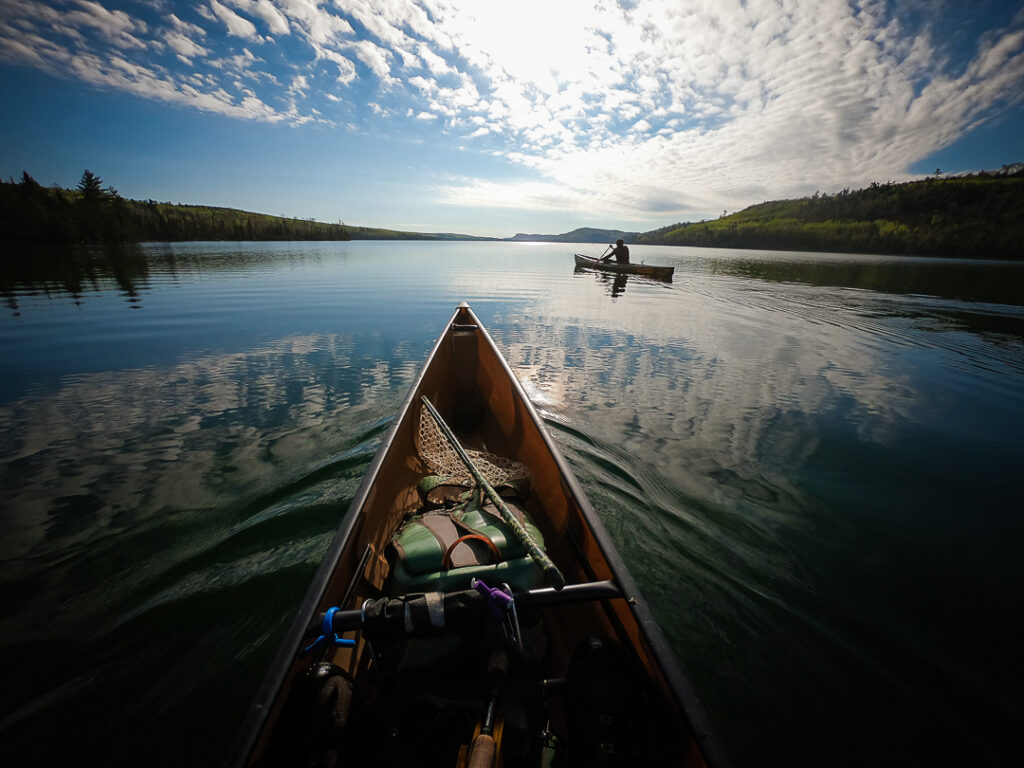
TRCP works to conserve special places like the Boundary Waters and landscapes that define hunting and fishing. Here's why.

Read More

Stay Informed

Receive our newsletter, the Roosevelt Report, right in your inbox. Never miss the latest news in conservation issues.

February 8, 2019

TRCP Named One of America’s Top Charities

Leading non-profit evaluator gives TRCP highest 4-star award for sixth year in a row.

Charity Navigator has placed the Theodore Roosevelt Conservation Partnership in the top 8 percent of U.S. charities for its “strong financial health and commitment to accountability and transparency.”

This marks the sixth consecutive year that TRCP has received the coveted 4-star rating.

“This award demonstrates TRCP’s strong commitment to our members, donors, and partners,” said Whit Fosburgh, president and CEO of Theodore Roosevelt Conservation Partnership. “America’s sportsmen and women trust us to advocate on their behalf, and we will always work hard for them and hold ourselves to the highest standards.”

Charity Navigator is the largest charity evaluator in America tasked with assessing the financial health, accountability, and transparency of more than 8,000 charities. Since 2002, Charity Navigator has awarded only the most fiscally responsible organizations a 4-star rating.

“This exceptional designation from Charity Navigator sets TRCP apart from its peers and demonstrates to the public its trustworthiness, ” wrote Michael Thatcher, president of Charity Navigator.

TRCP has also earned a Platinum ranking from GuideStar and the top accreditation from the Better Business Bureau.


Photo by Stephen Baker/BLM Oregon.

Do you have any thoughts on this post?

XHTML: You can use these tags: <a href="" title=""> <abbr title=""> <acronym title=""> <b> <blockquote cite=""> <cite> <code> <del datetime=""> <em> <i> <q cite=""> <s> <strike> <strong>

Comments must be under 1000 characters.

Reflections on Roosevelt’s Country

A visit to Theodore Roosevelt’s ranch in the Fall of 2018 inspires a young mule deer hunter

Hunting season is here in my home state of Montana, and I’m headed east to look for mule deer. My dog in the backseat, my Weatherby .308 in its case, and my pack at the ready.

Opening the atlas for a quick survey of my route, a splash of green against the white only a few hundred miles ahead grabs me. Theodore Roosevelt National Park beckons from just over the North Dakota state line, right on the edge of the map. I decide hunting can wait for an afternoon. History calls.

The further east I get, the more the flat dreariness of winter-come-early sets in. The clear, dry roads become two lines edged in white, and the moody sky envelops much of the distant horizon. I’m one of only two cars when I roll into the parking lot at the visitor’s center.

Belongings and Bulletholes

The park sits on 70,446 acres that include parcels from Roosevelt’s original cattle ranches. And although the name itself has gone through a few iterations, no national park is more closely associated with a single individual.

Cottonwoods and red willows follow the Little Missouri River’s snaking path through the otherwise broken, sage-brushed landscape. Weather shrouds the tumbling edges of the park, clouds hugging the muted tones of this northern ground.

On display at the park’s headquarters are belongings and words from our twenty-sixth president. For the most part, they illuminate the mundane aspects of his life rather than the mythical. His cabin is preserved on ground, small and humble. There’s a note written to his brother. Photographs of T.R. and his friends. And a full tribute to his passion for birding, including a snowy owl he taxidermied himself. His essence fills the room. He becomes human here.

But it’s the bullet-holed shirt in the glass case that catches my imagination.

You likely know the story: In the course of Roosevelt’s failed bid for the presidency in 1912, a would-be assassin shot him before a scheduled address in Milwaukee. Fifty pages of notes stuffed into the candidate’s breast pocket slowed the bullet before it entered his chest, where it would stay for the rest of his life. Still, Roosevelt took the stage. Announcing that he had just been shot, he quipped that he probably wouldn’t talk long. He then carried on for 84 minutes.

This is a man who knew how to create a mythology.

In contrast to the ethereal nature of the Roosevelt lore is the tangibility of the public land beneath my boots, land that once held the footprints of the man himself. It stands as a powerful totem for the miles upon miles of public land that I’ve taken in as a hiker, backpacker, hunter, and angler. The reality of it makes its way into words as I continue into the park itself: T.R.’s life molded stories that still resonate in our cultural memory, but he also created a physical continuity of place for those, as he famously declared, still in the “womb of time.”

This is the same land where Roosevelt grieved the deaths of his mother and his wife, who both passed on the same day in 1884. In his mourning, he found solace among this wild and broken country. He then saw his own sense of loss reflected in the waning numbers of bison and other wildlife vanishing from the plains. With the strength he drew from the land, he derived a sense of purpose infused with hope.

This land beneath my boots became the fertile ground for the seeds of a national conservation ethic.

A Test of Wills in the Sagebrush

Back into the cold, with daylight quickly fading. Small snow flurries land on my eyelashes and shoulders. In the distance my searching eyes catch three big bull elk, animals reintroduced to this country, now thriving. The humped silhouettes of Roosevelt’s beloved bison graze on far hills. A bounding whitetail deer disappears into the cottonwoods, white flag waving. And then I pull around a corner to face a tank of a mule deer buck walking the edge of the road.

His head is low to the ground, and his behavior is strange. As the car moves closer, another set of tines below him grows visible. I can hear the deer grunting at each other. The smaller buck pins his ears and averts his gaze, submissive. The big guy drops down the hill, circling around until they’re head on. Antlers lock for one moment. Then, the bucks crash into each other with every amount of muscle in their powerful bodies. Pummeled backwards through the sage, the little buck is outmatched. He escapes with a poke in the butt and a chase along the hilly horizon.

The drama of this high-stakes encounter seems befitting of this place—T.R. himself was fond of an old-fashioned test of wills—and all the more-so because the mule deer so perfectly embodies the sagebrush country that shaped Roosevelt’s life.

It’s also a reminder that the rut is on and I’m planning to hunt in the morning, so I best get back on the road.

History, Hunting, and a Heavy Pack

To public land I go.

The days that follow take me to a wilderness study area, BLM land, and a national wildlife refuge. Each step in the rugged breaks country is another gift from Roosevelt’s generous legacy. I barely see a thing before spotting my buck from over a mile away on Montana state land.

I walk that mile through the sagebrush slowly and intentionally. I set up within a hundred yards, prone in the cold, wet dirt. I have the wind. And I study him thoroughly. He’s everything I love in a mule deer. Thick-bodied, wildly unibrowed, and handsome. Crowned like a king.

There are only a few days left in the season, and I promised myself I’d take the first ethical shot on an animal that presented the opportunity. I wait for what seems like an eternity for him to turn broadside, but in my heart I’m telling him to run and to run far and fast. With five minutes of shooting light to spare, he steps to the side. My heart isn’t ready, but the hunter within flips to fire and pulls the trigger. The hit is solid, well-placed. I chamber another round, but there’s no need. I put down my rifle, my heart breaks, I cradle my head in my hands.

Later, kneeling beside him, I notch the date into my tag: November 20, 2018. I roll the tag, tape it onto his leg, and begin to quarter him out.

Roosevelt’s glorious heritage is now mine to hold. I take it all in. My mule deer’s coat is thick, healthy, buoyant to the touch. He smells deeply sweet, a concentrated musk of sage and this arid earth beneath us. He made a life on habitat protected for his sake. The ground that sustained him will soon sustain me.

“I do not believe that any man can adequately appreciate the world of today unless he has some knowledge of—a little more than a slight knowledge, some feeling for and of—the history of the world of the past,” Roosevelt said.

And this knowledge is what brings me out of my initial grief and back to the sinew and muscle in front of me, to the sky going navy above me, and to the sagebrush sea before me. This is what brings me back to the privilege of being here—two hands on a deer and two feet on public ground.

The passage of time has seen the roots of our public lands heritage grow deeper. Roosevelt’s country has no doubt changed over the years, yet it remains intact. Still, the conservation ethic that he upheld and turned into a physical reality for all Americans remains imperiled to this day. It, too, takes a bullet in the chest and stands tall, time and time again.

As I quarter my deer, slowly, deliberately, I know that the great central task of upholding this public land inheritance and passing it along to those who come after me is a hell of a thing to take on. The weight of this uncertain future is heavy, and it rests on the shoulders of anyone who seeks to leave this place better than we found it.

I finish quartering my deer and fill my pack to overflowing. I tighten the straps on my shoulders, braced for the work ahead.


Nicole Qualtieri is the hunting and fishing editor for GearJunkie.com and a freelance creative. She’s an outdoorswoman, a public lands advocate, and an amateur gourmand. When the weather warms up, you’ll find her astride her little brown horse with a border collie in tow, high in the Montana hills.

February 1, 2019

43 Organizations Urge Senate Passage of Historic Public Lands Legislation

TRCP leads effort to support permanent reauthorization of the Land and Water Conservation Fund.

The Theodore Roosevelt Conservation Partnership and 42 other organizations are urging Senate leadership to immediately vote on a bipartisan agreement to permanently reauthorize the Land and Water Conservation Fund and improve outdoor recreation opportunities.

The group of hunting, fishing, wildlife conservation, and outdoor recreation organizations points to the overwhelmingly bipartisan support for this historic public lands legislation (S.47) in both the House and Senate.

“The momentum and support for this package remains widespread across a variety of public lands stakeholders, and urgent consideration of the package in the new Congress is well warranted,” the organizations wrote. “It is thoroughly bipartisan in nature and broad in scope, and passage of this package would be a historical step forward for public lands and conservation.”

U.S. Senators Lisa Murkowski (R-Alaska) and Maria Cantwell (D-Wash.) negotiated the legislation last Congress and received a commitment to bring the bill to the Senate floor for a vote in the 116th Congress.

The group notes passage of this bill is critical, “so that future generations of Americans can enjoy our public lands, waterways, and the wildlife that inhabit them for years to come.”

The group’s letter is available HERE.


Photo courtesy of BLM and Bob Wick.

January 25, 2019

Deal to Reopen Government Could End These Access and Funding Headaches

A short-term funding patch would open some closed gates and put conservation workers back on the job, but there could be long-term consequences for public and private lands

News outlets are reporting that lawmakers have reached a deal to reopen the nine federal departments that have been shut down for more than a month. The temporary funding extension would buy Congress three weeks to come to a long-term agreement.

Over the past few weeks, sportsmen and women have been posting to social media and speaking with reporters about how this historic shutdown has affected hunting and fishing opportunities across the country. During this time, the Bureau of Land Management, U.S. Fish and Wildlife Service, U.S. Department of Agriculture, and U.S. Forest Service—some of the nation’s most important land management agencies—have been without funding.

Here are some of the access challenges, risks to public lands, and delayed conservation work that made news during the shutdown.

Locked Out, Left Home

While some national wildlife refuge employees returned to work to prevent lost hunting opportunities, an estimated 800,000 federal workers were furloughed without pay—this included public-lands firefighters, wildlife biologists, law-enforcement officers, foresters, and maintenance workers.

Understaffing may have contributed to some of the reports we saw of hunters and anglers locked out of public lands. In Idaho, volunteers picked up trash around a popular fishing area within Deer Flat Wildlife Refuge, but the shutdown delayed the repair of an access gate that was damaged on Jan. 1 in a vehicle crash. Normally, the timer-operated gate closes automatically at 5:30 p.m. to discourage vandalism after hours. For now, it remains stuck closed.

Stunted Growth

Just days before the shutdown, President Trump signed into law a new five-year farm bill, which—despite being nearly two months behind schedule—included some big wins for habitat and public access. Farmers and ranchers had already experienced months of uncertainty while the farm bill debate stretched into overtime, and the shutdown delayed farm bill benefits even further. Politico reports that some farmers may not be able to take advantage of other USDA programs in time for the growing season, either.

Failure to Launch

In mid-December, the EPA and the Army Corps took the next step to replace a 2015 rule that benefited headwater streams and wetlands across the country. We know from a 2018 poll that 4 in 5 sportsmen and women supported this move, but the agencies’ new rule would instead roll back these Clean Water Act protections. Because of the shutdown, however, hunters and anglers have been prevented from voicing their feedback on the new rule, keeping waterfowl and fish habitat in limbo.

Waiting for Numbers

Another unintended consequence of the government shutdown might be delayed research that could help sportsmen and women advocate for better policies. For example, it is likely that some marine fisheries stock assessments will be postponed. And this could influence decision-making if the Atlantic States Marine Fisheries Commission meets to consider important management questions without the latest striped bass stock assessment—which is likely to show that the population is overfished.

Funding Shortfalls Stack Up

Unfortunately, the shutdown is also adding to the growing $18.6 billion maintenance backlog on our public lands. The bulk of that figure is tied to overdue projects in national parks, but more than $7 billion in deferred maintenance work is affecting BLM, Forest Service, and national refuge lands where we hunt and fish.

Quite simply, even if Congress can strike a long-term bargain before this deal expires on Feb. 15, it may take years to make up for the time and funding lost during this shutdown.


Top photo by seth schulte on Unsplash

January 10, 2019

The Government Shutdown Needs to End

To do right by public lands, lawmakers need to work together

While Washington plays the blame game, the Theodore Roosevelt Conservation Partnership is calling on our elected officials to work together and reopen the government.

Stories about trash piling up in wildlife refuges and volunteers cleaning toilets in national parks are making national news.

As a result, the TRCP is in contact with the nation’s land management agencies to get status updates on our lands, waters, and wildlife. If you have experienced an impact of the government shutdown, please let us know so we can work to address it.

Our fish and wildlife resources, public lands, and the people who carry out conservation in America should not be ignored. Take action today and join the TRCP in calling for an end to this shutdown.

I stand with @TheTRCP in supporting our public lands. It’s time for Washington to #EndTheShutdown. Share on X


Photo Credit: Architect of the Capitol

HOW YOU CAN HELP

TRCP has partnered with Afuera Coffee Co. to further our commitment to conservation. $4 from each bag is donated to the TRCP, to help continue our efforts of safeguarding critical habitats, productive hunting grounds, and favorite fishing holes for future generations.

Learn More
Subscribe


You have Successfully Subscribed!

You have Successfully Subscribed!

You have Successfully Subscribed!

You have Successfully Subscribed!

You have Successfully Subscribed!