Our Issues
Public Lands
Why It Matters

Hunting & Fishing Access

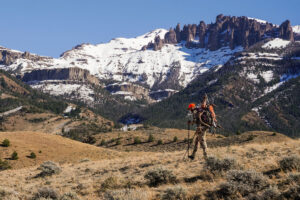
America’s 640 million acres of national public lands provide irreplaceable hunting and fishing opportunities to millions of Americans.

Learn More About Access
What TRCP is Doing

We’re working to safeguard America’s public lands so hunters and anglers always have quality places to pursue their passions.

 Brian Flynn, Two Wolf Foundation
How Sportsmen Are Doing It Right

Brian Flynn, Two Wolf Foundation's Story

Following a distinguished career in the U.S. Army, lifelong outdoorsman Brian Flynn returned home from a deployment in Afghanistan and…


Hunting
Why It Matters

Key Issues for America’s Hunters

Your source for the latest policy updates, conservation challenges, and opportunities shaping America’s hunting traditions.

What TRCP is Doing

We’re fighting for meaningful policy changes that benefit wildlife, our waters, and the American landscapes that make our outdoor traditions possible.

 Ryan Sparks
How Sportsmen Are Doing It Right

Ryan Sparks's Story

TRCP’s “In the Arena” series highlights the individual voices of hunters and anglers who, as Theodore Roosevelt so famously said,…

Fishing
Why It Matters

Key Issues for America’s Anglers

Your source for the latest policy updates, conservation challenges, and opportunities shaping America’s fishing traditions.

What TRCP is Doing

We’re fighting for meaningful policy changes that benefit wildlife, our waters, and the American landscapes that make our outdoor traditions possible.

 David Mangum
How Sportsmen Are Doing It Right

David Mangum's Story

Capt. David Mangum is a YETI ambassador and outdoor photographer who utilizes his talents to produce media that inspire a…

Private Land
Why It Matters

Stewardship on America’s private lands

With 70 percent of U.S. lands in private hands and many of our best hunt and fish opportunities occurring there, investing in voluntary conservation on working lands safeguards access, strengthens habitat and water quality, and ensures resilient landscapes.

Learn More
What TRCP is Doing

We champion policies and programs that restore wildlife habitat, improve soil and water health, and keep working lands productive.

 Ward Burton
How Sportsmen are Doing It Right

Ward Burton's Story

Ward Burton’s NASCAR driving career stretched across most of two decades. As an avid sportsman and conservationist, he founded the…

Special Places
Why It Matters

Special Places Worth Protecting

America’s most iconic landscapes provide unmatched habitat and unforgettable days afield. These places sustain wildlife, anchor local economies, and define the hunting and fishing traditions we pass down.

What TRCP is Doing

We’re working to conserve special places that provide world-class habitat and unforgettable opportunities for hunters and anglers.

 Franklin Adams
How Sportsmen Are Doing It Right

Franklin Adams's Story

As a true Gladesman, conservationist, and historian, Capt. Franklin Adams has spent more than six decades championing Everglades restoration efforts…

Habitat & Clean Water
Why It Matters

Healthy Habitat Powers Every Pursuit

All hunting and fishing opportunities depend on quality habitat, from clean water and healthy wetlands to winter and summer habitats and the migration corridors that connect them.

All About Habitat & Clean Water
What TRCP is Doing

We are working to safeguard the habitats that power every hunting and fishing opportunity.

 Alex Harvey
How Sportsmen Are Doing It Right

Alex Harvey's Story

Alex Harvey, founder of Legacy Land Management, is a registered professional forester in Mississippi and Alabama with a Master's degree…

Science
Why It Matters

Science That Guides TRCP

From conserving migration corridors and wetlands to ensuring clean water and resilient landscapes, science provides evidence that turns conservation goals into effective action.

Science for Conservation
What TRCP is Doing

For hunters and anglers, science safeguards the experiences we treasure including resilient big game populations, abundant fish, and wild places that endure changing social landscapes.

Jamelle Ellis
Your Science Expert

Jamelle Ellis's Story

Jamelle Ellis joined the Theodore Roosevelt Conservation Partnership in 2022. Jamelle spent the last three years as an environmental sustainability…

Where We Work
Across the Nation

Conservation Across America

TRCP works across the country to ensure hunters and anglers can enjoy healthy fish and wildlife and quality days afield, no matter where they live.

See All Issues
TRCP in Your Region

TRCP works across the country to ensure hunters and anglers can enjoy healthy fish and wildlife and quality days afield, no matter where they live.

Who We Are
Our Mission

To guarantee all Americans quality places to hunt & fish

We unite and amplify our partners’ voices to advance America’s legacy of conservation, habitat, and access.

Our Mission & Values
Our People & Partners
  • Meet the TRCP Team

    Our staff and board members unite and amplify our partners’ voices to advance America’s legacy of conservation, habitat, and access.

    Meet the Team
  • Our Partners

    ‘Partnership’ is in our name. We work with 64 diverse partner groups that represent today’s leading hunting, fishing, and conservation organizations in order to strengthen the sportsman’s voice in Washington, D.C.

    Our Partners
  • Corporate Council

    TRCP’s Corporate Council is made up of diverse corporations that share a common passion for conservation.

    Corporate Council
Our Organization

Looking for more information?

Explore our latest news, policy updates, and conservation resources to get the information you need.

Giving
How You Can Help

To guarantee all Americans quality places to hunt & fish

Your tax-deductible donation will support TRCP's mission, now and into the future.

DONATE
Special Ways to support trcp
  • Capital Conservation Awards Dinner

    The CCAD is one of Washington's best-attended conservation celebrations, featuring dinner, cocktails, and a silent auction.

    Learn More
  • Step Into the Arena

    Help us ensure that our treasured wild habitats and game remain intact for the next generation to enjoy – lend your support to the TRCP’s efforts today!

    Donate
  • Roosevelt Roast

    TRCP has partnered with Afuera Coffee Co. to further our commitment to conservation.

    Learn More
More donation options

Find the best way for you to lend your support. Join one of TRCP’s donor circles for special invitations, premium offerings from outdoor retailers, and more exclusive benefits. Take control of your legacy with planned giving or contribute to special conservation funds.

Other Ways To Give
News
In the Spotlight
Colorado river

Colorado River Decisions Will Shape the Future of Fish, Wildlife, and the Southwest

With this important federal milestone, now is the time for the Colorado River Basin States to come to an agreement on the future of the Colorado River.

Read More

Stay Informed

Receive our newsletter, the Roosevelt Report, right in your inbox. Never miss the latest news in conservation issues.

by:

posted in:

March 15, 2016

Linh_Nguyen_web

Do you have any thoughts on this post?

XHTML: You can use these tags: <a href="" title=""> <abbr title=""> <acronym title=""> <b> <blockquote cite=""> <cite> <code> <del datetime=""> <em> <i> <q cite=""> <s> <strike> <strong>

Comments must be under 1000 characters.

by:

posted in:

Glassing the Hill: March 14 – 18

The TRCP’s scouting report on sportsmen’s issues in Congress

The Senate is in session this week before a two-week recess for the Easter holiday. The House is back in session and won’t take recess until next Wednesday.

Photo courtesy of Library of Congress.

There are just 80 legislative days until the end of the 114th Congress. Take that in. Kids in D.C. public schools actually have more days before their summer vacation than lawmakers have to figure out how to keep the government funded by the end of fiscal year 2016.

To that end, the House Budget Committee will meet this week to vote on a budget resolution that will cut $30 billion of mandatory spending. Much of that cut will come from Medicaid, but resistance is certain, and even if such a move clears the House, it has no way forward in the Senate. For their part, Senate leaders announced last week that they would honor the broad funding levels agreed to in the Bipartisan Budget Act of 2015 as they craft their appropriations bills. Unfortunately, even in the Senate, successful passage of individual appropriations bills (otherwise known as the way things are supposed to be done) is far from being a certainty.

Meanwhile, many of the disagreements that were keeping the Energy Policy Modernization Act of 2015 off the Senate floor over the last several weeks have seemingly been resolved, although a new legislative hold was placed by Senator Bill Nelson (D-FL), who opposes an amendment to expand revenue sharing for oil and gas exploration in the Gulf of Mexico. Late last week, Nelson was sending very public signals that he was unwilling to negotiate–it’s not clear if those sentiments have changed over the weekend. And the clock is ticking on this energy legislation: If the bill does not hit the Senate floor by the end of this week, the start of a two-week Easter recess may close the window on it. Ouch.

What We’re Tracking

Tuesday, March 15, 2015
14 Public lands bills will be marked up by the House Natural Resources Committee over two days. More info here.  

Flint water crisis, to be discussed in a House Oversight and Government Reform Committee hearing 

Environmental mitigation, in a Senate Energy and Natural Resources Committee hearing entitled, “Mitigating Impacts on Natural Resources from Development and Encouraging Related Private Investment

Wednesday March 16, 2016
Water policies and projects, in a Senate Environment and Public Works Committee hearing on the Water Resources Development Act

Thursday March 17, 2016
24 National Park-related bills will be discussed in a Senate Energy and Natural Resources Subcommittee on National Parks hearing

PLUS: Fiscal year 2017 budget requests for the U.S. Department of Agriculture and Rural Development, U.S. Department of Energy and Environmental ManagementNational Park ServiceNational Oceanic and Atmospheric Administration, and U.S. Fish and Wildlife Service

by:

posted in:

March 14, 2016

Happy 113th Birthday, National Wildlife Refuge System

Today, we celebrate 113 years of kids holding their first fish, birds finding a safe haven for nesting, boots getting muddy just miles outside the city, and conservation advancing on 560 National Wildlife Refuges across the country.

Cyrus Baird banding Wood Ducks at Pocosin Lakes National Wildlife Refuge.

On March 14, 1903, President Theodore Roosevelt designated Florida’s Pelican Island as the first wildlife refuge. Having worked at Pocosin Lakes National Wildlife Refuge in North Carolina, and as a frequent visitor to refuges all across the country, I’ve seen firsthand the benefits they offer to hunters, anglers, birdwatchers, trailrunners, and every American who loves to spend time outdoors.

And National Wildlife Refuges undoubtedly play a huge role in conservation in North America. With refuges in every U.S. state, spanning more than 150 million acres in total, the crucial habitat they provide is paramount for fish and wildlife. More than 700 species of birds, 200 species of mammals, 250 reptile and amphibian species, and more than 1,000 species of fish call these areas home.

While many refuges are key stopover points for migratory birds, it’s not difficult to see why sportsmen flock to them, too. Thousands of hunters and anglers rely on National Wildlife Refuges each year for their hunting and fishing opportunities. In 2011, 46.5 million visitors to wildlife refuges pumped $2.4 billion into surrounding communities, supporting over 35,000 jobs.

Elk at the National Elk Refuge courtesy of Nick Dobric.

Now, more than ever, we should fight to keep refuges funded, maintained, and open to recreation. As most of you are well aware, the Malheur National Wildlife Refuge in Burns, Oregon, became the focus of controversy earlier this year, when extremists seized refuge facilities and called for the federal government to hand over public lands. Public access was forcibly barred and efforts to manage invasive carp populations were blocked for 41 days. The economic and ecological effects may not be fully apparent for months or years.

The best way to celebrate the National Wildlife Refuge System at a time when public lands are under duress from this type of movement is simply to use and enjoy them—find your local refuge and take advantage of the opportunities provided there!

We’d love to hear about your experiences, too. Post your pics with #PublicLandsProud on Facebook, Twitter, or Instagram, and we’ll share our favorites.

by:

posted in:

ATTENTION BRACKET LOVERS: CRITTER MADNESS IS BACK

News for Immediate Release

Mar. 14, 2016

Contact: Kristyn Brady, 617-501-6352, kbrady@trcp.org

The second-annual tournament to decide America’s favorite game or fish species starts today

WASHINGTON, D.C. – The Theodore Roosevelt Conservation Partnership has once again launched its “Critter Madness” bracket-style contest to determine America’s favorite game or fish species. Voting for the first of four rounds with 16 species begins today at crittermadness.org.

Modeled on the popular NCAA basketball tournament, Critter Madness is entering its second year. In 2015, American sportsmen and women cast more than 10,000 votes for their favorite big game, upland, waterfowl, and fish species. Last April, the iconic elk of the American West emerged as the winner.

This year, the elk will defend the title against bighorn sheep, whitetail deer, turkeys, pheasants, tarpons, brook trout, bass, and more. The Critter Madness champion will be announced on April 4.

Participants are encouraged to register before voting to be eligible for weekly contestant prizes, which include a pair of Costa Del Mar sunglasses, a new Abu Garcia rod and reel, a custom TRCP Yeti cooler, and a Mossberg 12-gauge shotgun.

Learn more here.

Inspired by the legacy of Theodore Roosevelt, the TRCP is a coalition of organizations and grassroots partners working together to preserve the traditions of hunting and fishing.

by:

posted in:

March 10, 2016

This Well-Worn Turkey Vest Holds Years of Hunting Stories (And My Calls)

Talk about ‘the fabric of our lives’

When we get together as a staff, as we did last month to open the TRCP’s new Western office, discussion inevitably turns to new hunting and fishing gear and gadgets. Between us, we probably have enough inventory for a Bass Pro Shop’s store, and I’m certainly not immune to the appeal of a new camo pattern or unmarked slate call. Still, while a new spring season brings the temptation of new gear, there are a few items in my closet that I’d have trouble replacing.

Image courtesy of Cyrus Baird.

The gloves I’ll use this turkey season are the ones I stole from my dad years ago. He bought them back in the 80s, and they looked less tattered back then. I’ll hunt in the same camo jumpsuit I wore when I was a kid—also my fathers—although I don’t have to roll the legs and sleeves up anymore.

And I still use the first turkey vest I ever bought new, going on 15 years ago. An older Field & Stream model, now sporting faded fabric and some tears, it’s easily one of the most dated pieces in my spring get-up. When I first brought it home, it was two sizes too big for me—now, it’s two sizes too small. Its pockets are coated with the chalk I carry around to tune up my handmade cedar box-calls. The foam pad has seen better days and some of the zippers have stopped working, but I can’t picture setting up on a gobbler without it.

Of course, at the TRCP, we also talk a lot about preserving our hunting and fishing traditions and carrying on the legacy of one of the greatest conservation heroes in our country’s history. You see, it isn’t sentimental to look back, if there are lessons to be learned.

I was wearing my old vest when I killed my first turkey at age 13. It was a beautiful 20-pound tom that I could barely carry over my shoulder, its 11-inch beard swaying by its lolling head. I was also wearing it the time that I foolishly activated the trigger lock on my Remington 870 out in the field—the key was at home—leaving my gun functionally useless as turkeys gobbled at me all morning. (My dad still teases me for that.)

Image courtesy of Cyrus Baird.

It has seen countless spring sunrises in several states. It has been between my back and many a pine tree and creek-bottom hardwood. It has been through pouring rain and oppressive heat. It may be the reason I’m still so bad at math, since I used to skip my first-period class in high school to go hunting. The experiences I’ve had in this vest most likely drove my decision to work in wildlife conservation.

Something about wearing a worn-in article of clothing on a hunt just feels right. As I take in my surrounding with my eyes, my gear is actually soaking up the elements, bringing me closer to the places I love to be outdoors. I’m still a sucker for all the new high-tech fabrics and thoughtful improvements of contemporary gear, but it’s tough to part with my more seasoned apparel, embedded with so many memories.

So, when the last stitch on my old turkey vest looks like it’s about to unravel, I think I’ll just put it away until my own kids are old enough to slide their skinny arms into its oversized and faded frame. When that day comes around, I hope I’ll be able to tell them how today’s sportsmen helped ensure that we could rest our backs on a pine tree and converse with a wiley gobbler.

Until then, turkey season is calling.

HOW YOU CAN HELP

TRCP has partnered with Afuera Coffee Co. to further our commitment to conservation. $4 from each bag is donated to the TRCP, to help continue our efforts of safeguarding critical habitats, productive hunting grounds, and favorite fishing holes for future generations.

Learn More

You have Successfully Subscribed!

You have Successfully Subscribed!

You have Successfully Subscribed!

You have Successfully Subscribed!