Our Issues
Public Lands
Why It Matters

Hunting & Fishing Access

America’s 640 million acres of national public lands provide irreplaceable hunting and fishing opportunities to millions of Americans.

Learn More About Access
What TRCP is Doing

We’re working to safeguard America’s public lands so hunters and anglers always have quality places to pursue their passions.

 Brian Flynn, Two Wolf Foundation
How Sportsmen Are Doing It Right

Brian Flynn, Two Wolf Foundation's Story

Following a distinguished career in the U.S. Army, lifelong outdoorsman Brian Flynn returned home from a deployment in Afghanistan and…


Hunting
Why It Matters

Key Issues for America’s Hunters

Your source for the latest policy updates, conservation challenges, and opportunities shaping America’s hunting traditions.

What TRCP is Doing

We’re fighting for meaningful policy changes that benefit wildlife, our waters, and the American landscapes that make our outdoor traditions possible.

 Ryan Sparks
How Sportsmen Are Doing It Right

Ryan Sparks's Story

TRCP’s “In the Arena” series highlights the individual voices of hunters and anglers who, as Theodore Roosevelt so famously said,…

Fishing
Why It Matters

Key Issues for America’s Anglers

Your source for the latest policy updates, conservation challenges, and opportunities shaping America’s fishing traditions.

What TRCP is Doing

We’re fighting for meaningful policy changes that benefit wildlife, our waters, and the American landscapes that make our outdoor traditions possible.

 David Mangum
How Sportsmen Are Doing It Right

David Mangum's Story

Capt. David Mangum is a YETI ambassador and outdoor photographer who utilizes his talents to produce media that inspire a…

Private Land
Why It Matters

Stewardship on America’s private lands

With 70 percent of U.S. lands in private hands and many of our best hunt and fish opportunities occurring there, investing in voluntary conservation on working lands safeguards access, strengthens habitat and water quality, and ensures resilient landscapes.

Learn More
What TRCP is Doing

We champion policies and programs that restore wildlife habitat, improve soil and water health, and keep working lands productive.

 Ward Burton
How Sportsmen are Doing It Right

Ward Burton's Story

Ward Burton’s NASCAR driving career stretched across most of two decades. As an avid sportsman and conservationist, he founded the…

Special Places
Why It Matters

Special Places Worth Protecting

America’s most iconic landscapes provide unmatched habitat and unforgettable days afield. These places sustain wildlife, anchor local economies, and define the hunting and fishing traditions we pass down.

What TRCP is Doing

We’re working to conserve special places that provide world-class habitat and unforgettable opportunities for hunters and anglers.

 Franklin Adams
How Sportsmen Are Doing It Right

Franklin Adams's Story

As a true Gladesman, conservationist, and historian, Capt. Franklin Adams has spent more than six decades championing Everglades restoration efforts…

Habitat & Clean Water
Why It Matters

Healthy Habitat Powers Every Pursuit

All hunting and fishing opportunities depend on quality habitat, from clean water and healthy wetlands to winter and summer habitats and the migration corridors that connect them.

All About Habitat & Clean Water
What TRCP is Doing

We are working to safeguard the habitats that power every hunting and fishing opportunity.

 Alex Harvey
How Sportsmen Are Doing It Right

Alex Harvey's Story

Alex Harvey, founder of Legacy Land Management, is a registered professional forester in Mississippi and Alabama with a Master's degree…

Science
Why It Matters

Science That Guides TRCP

From conserving migration corridors and wetlands to ensuring clean water and resilient landscapes, science provides evidence that turns conservation goals into effective action.

Science for Conservation
What TRCP is Doing

For hunters and anglers, science safeguards the experiences we treasure including resilient big game populations, abundant fish, and wild places that endure changing social landscapes.

Jamelle Ellis
Your Science Expert

Jamelle Ellis's Story

Jamelle Ellis joined the Theodore Roosevelt Conservation Partnership in 2022. Jamelle spent the last three years as an environmental sustainability…

Where We Work
Across the Nation

Conservation Across America

TRCP works across the country to ensure hunters and anglers can enjoy healthy fish and wildlife and quality days afield, no matter where they live.

See All Issues
TRCP in Your Region

TRCP works across the country to ensure hunters and anglers can enjoy healthy fish and wildlife and quality days afield, no matter where they live.

Who We Are
Our Mission

To guarantee all Americans quality places to hunt & fish

We unite and amplify our partners’ voices to advance America’s legacy of conservation, habitat, and access.

Our Mission & Values
Our People & Partners
  • Meet the TRCP Team

    Our staff and board members unite and amplify our partners’ voices to advance America’s legacy of conservation, habitat, and access.

    Meet the Team
  • Our Partners

    ‘Partnership’ is in our name. We work with 64 diverse partner groups that represent today’s leading hunting, fishing, and conservation organizations in order to strengthen the sportsman’s voice in Washington, D.C.

    Our Partners
  • Corporate Council

    TRCP’s Corporate Council is made up of diverse corporations that share a common passion for conservation.

    Corporate Council
Our Organization

Looking for more information?

Explore our latest news, policy updates, and conservation resources to get the information you need.

Giving
How You Can Help

To guarantee all Americans quality places to hunt & fish

Your tax-deductible donation will support TRCP's mission, now and into the future.

DONATE
Special Ways to support trcp
  • Capital Conservation Awards Dinner

    The CCAD is one of Washington's best-attended conservation celebrations, featuring dinner, cocktails, and a silent auction.

    Learn More
  • Step Into the Arena

    Help us ensure that our treasured wild habitats and game remain intact for the next generation to enjoy – lend your support to the TRCP’s efforts today!

    Donate
  • Roosevelt Roast

    TRCP has partnered with Afuera Coffee Co. to further our commitment to conservation.

    Learn More
More donation options

Find the best way for you to lend your support. Join one of TRCP’s donor circles for special invitations, premium offerings from outdoor retailers, and more exclusive benefits. Take control of your legacy with planned giving or contribute to special conservation funds.

Other Ways To Give
News
In the Spotlight

In the Arena: Josh Warren

For many hunters and anglers, the connection to conservation begins close to home — in the woods behind the house, along a familiar stretch of river, or through time spent learning from mentors and family. That sense of place is something Joshua Warren carries with him, both personally and professionally. As Director of Marketing at WorkSharp, Josh represents a company rooted in Ashland, Oregon, a community defined by its access to public lands and wild country.

Read More

Stay Informed

Receive our newsletter, the Roosevelt Report, right in your inbox. Never miss the latest news in conservation issues.

by:

posted in:

October 3, 2014

Stripers and sage grouse

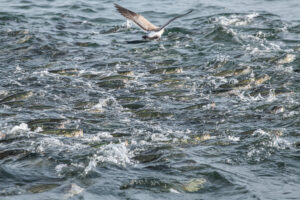
I was in an overcrowded and overheated hotel conference room in St. Louis, Missouri, talking about sage grouse when I started thinking about Chesapeake Bay striped bass.

What do sage grouse have to do with striped bass?

Image by George Halt.

Well, both are iconic species, the very essence of the habitats they occupy. And both are widely sought by American sportsmen. Yet the future of each is uncertain, which should give hunters and anglers of all stripes a reason for pause: Increasingly it seems that the very species that define us as sportsmen find themselves in dire straits.

Just a couple weeks ago, in another hotel conference room in Annapolis, Maryland, the director of the Maryland Fisheries Service assured attendees at a symposium organized by the Coastal Conservation Association-Maryland that there is no striped bass crisis. But that does not mean fishery managers and fishermen aren’t worrying about the state of the Atlantic striper population.

When it comes to managing striped bass, officials care most about two factors: fishing mortality (i.e. the removal of fish from the stock due to fishing activities) and the spawning stock biomass (the number of female fish old enough to reproduce). When the spawning stock biomass drops, fishing mortality needs to drop with it; the arithmetic for a thriving fishery couldn’t be much clearer. For a decade, the striped bass spawning stock biomass has been falling, with a variety of factors, including habitat quality, nutritional issues and disease, all playing a role. But fishing pressure has not followed the downward trend. This means that striped bass may be subject to a fishing pressure that is unsustainable, promising very real problems for the fishery in the not too distant future.

A flyer for the Coastal Conservation Association’s striped bass symposium.

There is no better way to ensure a crisis than by seeing one coming and doing nothing. While perhaps not a crisis today, a problem exists in striped bass country that requires action. Some combination of bigger minimums, reduced creels and/or shorter seasons are all on the table as fishery managers attempt to get out in front of a catastrophe in a major recreational fishery. The most aggressive steps will likely assure the best results, putting the fishery back on track in the shortest order. Of course, in exchange for maintaining the status quo today, some will champion a tepid response that kicks even tougher choices further down the road. Recreational anglers should reject this short-sightedness and support what the science indicates needs to happen.

And that is where we come back to the sage grouse, a species that is truly on the brink. Once widely hunted with long seasons and liberal bag limits, the federal government and 11 Western states are wringing their collective hands over a potential listing of the sage grouse under the Endangered Species Act. In striper country, we actually have the chance to write a different kind of story for our own iconic species.

Do you have any thoughts on this post?

XHTML: You can use these tags: <a href="" title=""> <abbr title=""> <acronym title=""> <b> <blockquote cite=""> <cite> <code> <del datetime=""> <em> <i> <q cite=""> <s> <strike> <strong>

Comments must be under 1000 characters.

by:

posted in:

September 30, 2014

Opportunity taken

I love the game of chasing chukar and watching bird dogs work the sagebrush of arid ranges in my home state of Oregon. Earlier this month, I decided to take my chances on another upland bird: the greater sage grouse. With the controversy surrounding the bird and its possible listing in 2015 under the Endangered Species Act, I decided to apply for a controlled hunt permit with the hope that this wouldn’t be my last opportunity to pursue the bird.

The sage grouse is a Western icon, known for its unique, breast-inflating courtship dance. It inhabits sagebrush rangelands throughout the West. State and federal agencies, ranchers, environmentalists and sportsmen are working diligently and cooperatively to prevent the bird’s ESA listing, which would eliminate any future opportunity for sportsmen to hunt sage grouse – and would have significant implications for other resource uses across 11 states.

The sagebrush ecosystem where these magnificent birds thrive is also home to more than 350 species of plants and animals, including many pursued by sportsmen. Mule deer, pronghorn, elk and other species all need healthy, intact sagebrush habitat for their survival. If we imaging a huge tent or umbrella with all these species protected beneath it, conserving sage grouse habitat translates into good wildlife and rangeland conservation. Sagebrush conservation is good for our nation’s economy, too, especially in rural communities.

Oregon is one of the few states a person can hunt sage grouse with a controlled hunting permit, with a two-bird limit per permit. In 2013, 659 people hunted sage grouse throughout Central and Southeast Oregon. Each of these sportsmen spent money on gas, food, lodging and gear for each hunt, and those dollars get distributed across rural areas all across the state.

After the postcard arrived in the mail validating that I drew a permit, the pre-planning began. My shotgun had not been fired for months and needed to be fitted, so I delivered it to a local gunsmith. Next, I had to decide where to go. The area I drew was in the Lakeview Bureau of Land Management district. Within that unit there is more than 1 million acres of public land available for hunting. I called the district biologist and a couple ranchers for their recommendations on places to go. I studied the BLM district maps for access roads and coordinated meeting a friend who also drew a tag. The trip was coming together.

With my gear packed and the dog ready to go, I began the five-hour journey to my destination. Some might wonder why I would hunt a bird that only has a bag limit of two and only a weeklong season. I see this as an opportunity to hunt a new place, experience wide-open spaces and watch bird dogs do what they do best – find birds!

The next morning we woke up early to get the dogs ready and drink that first cup of joe. Driving down the bumpy road anticipating the first bird, the dogs could sense our excitement. We parked near a spring, got the collars on the dogs and dusted off the guns. The sagebrush aroma filled my lungs, and Cedar, my pudalpointer, started working like a veteran. Though he never had hunted sage grouse before, he worked with authority searching for birds. This wasn’t his first rodeo.

We walked miles covering a flat, and after a few hours, we saw movement in the distance. It was a covey of sage grouse. The cover was low, and we were exposed, just like the birds, so we decided to walk a wide circle around them and approach them up wind. Keeping our eyes on the birds, we slowly moved in. They quickly spotted us and started walking. Soon they were out of shooting range, eventually flying off, splitting in two directions and landing a couple hundred yards away.

We decided to break apart and ambush the birds. Cedar and I worked the near side while Mellissa and her dogs worked in the distance. We eventually spotted the birds and moved in. They held, and Cedar crept in. The sage grouse looked at us. I moved in closer and closer. Finally they took wing. I took a shot, and a bird fell. Cedar circled around for the retrieve and pranced back with the smile of success.

Sportsmen can’t afford another loss of opportunity if the sage grouse is listed under the Endangered Species Act. Nor can sportsmen remain silent – our voices must be heard, and we must advocate for solid state and federal conservation plans for sage grouse that also will protect other species we enjoy pursuing. With hunter participation declining across the West, we must act and get involved to ensure sage grouse habitat is conserved and a listing is avoided. Sportsmen must define our own destiny and help conserve wildlife to retain all our opportunities – as well as those for future generations.

by:

posted in:

September 23, 2014

Sportsmen’s access must be safeguarded

“Guaranteeing all Americans quality places to hunt and fish…”

That statement is more than just a tagline. It is the simplest way to describe the mission of the Theodore Roosevelt Conservation Partnership and the efforts we undertake every day to unite hunters and anglers around habitat conservation and sportsmen’s access. Without quality habitat and abundant critters we love to pursue, our time in the field or on the water would be greatly diminished. And without sportsmen’s access to those quality places, our opportunities to enjoy those resources will be limited.

Conservation and sportsmen’s access are fundamentally linked. While our mission might be simple, it will take all sportsmen working together to ensure conservation and access will continue to be linked for future generations.

TRCP’s Whit Fosburgh and Bass Pro Shops’ Johnny Morris co-authored an op-ed on this important subject in anticipation of National Hunting and Fishing Day on September 27th.

You can read their article here in the Kansas City Star.

by:

posted in:

September 19, 2014

House votes against sportsmen and clean water

In a bipartisan display of contempt for sportsmen’s priorities last week, 262 members of the U.S. House of Representatives – 227 Republicans and 35 Democrats – voted to kill a rulemaking process to clarify the reach of the Clean Water Act.

Never mind that everyone up to and including the Supreme Court agrees the rulemaking is needed. Never mind that the public comment process – where sportsmen and any member of the public can provide input on and improve the proposed rule – is ongoing. And never mind that 13 leading sportsmen’s organizations wrote to Congress as recently as Sept. 8, 2014, urging the House to oppose the bill.

The message sportsmen should take away from this vote is these congressmen believe it is better to perpetuate the confusion that hinders effective use of the Clean Water Act in this country than restore protections for our wetlands and headwater streams.

You may have thought that the appearance this summer of a dead zone in the Gulf of Mexico covering an area the size of Connecticut – an annual occurrence that is becoming all too commonplace – or an algal bloom in Lake Erie that cut off drinking water to 400,000 Ohioans would have persuaded Congress to consider ways to improve water quality. But the House is going in the opposite direction, and it threatens to continue the acceleration we are seeing in wetland loss and risks to headwater streams.

Fortunately, the legislation approved by the House stands little chance of becoming law in the near term. But these types of attacks against hunter and angler priorities should give all sportsmen pause. If we don’t let Congress know where we stand, they may eventually succeed.

To see if your member of Congress supported this attack on fisheries and waterfowl habitat, click here. (A “Yes” vote represents a vote against sportsmen in this case.)

Then let your representatives in Congress know you support healthy fisheries and vibrant, working wetlands.

by:

posted in:

September 17, 2014

TRCP holds annual Western Media Summit Sept. 7-11, 2014 (Day Three)

More than 60 members of the media and other stakeholders concerned about pressing sportsmen conservation issues attended TRCP’s annual Western Media Summit in Great Falls, Montana. The 10th annual summit explored public lands issues and water topics, including federal water budgeting, the “waters of the U.S.” rulemaking, BLM backcountry conservation and the agency’s Planning 2.0 process, and ongoing efforts to conserve sage grouse and sagebrush ecosystems. The following are highlights from the event with short presentation recaps and photos.

Wednesday afternoon, September 10

Following a cold, misty morning of fishing on the Missouri River and hunting, Summit attendees gathered at the Lewis and Clark Interpretive Center for the final sessions and closing night dinner. The first session covered the Bureau of Land Management Conversation and Planning about public lands and featured Don Thomas, Traditional Bowhunter Magazine; Hal Herring, TRCP Field Representative; Ryan Callaghan, First Lite; and moderator Joel Webster, TRCP. The panel explored how sportsmen are working to conserve lands in and around the beautiful Missouri River Breaks. At the conclusion of the session, Ryan Callaghan revealed that more than 90 hunting- and fishing-dependent businesses signed a letter to the Bureau of Land Management urging the BLM to sustain public lands to hunt and fish, stand up for outdoor-related businesses, and support high-quality habitat.

The final session of the afternoon focused on sage grouse conservation and balancing multiple land uses. Panelists included Dr. Ed Arnett, TRCP; Tim Baker, Policy Advisor for Natural Resources, the Governor’s Office (MT); Ken Mayer, Western Association of Fish and Wildlife Agencies; and Dan Bailey, Pheasants Forever.

Before dinner was served at the Center, Jim Martin, TRCP Board Vice Chair, gave a rousing speech where he hammered home the theme that the job of the TRCP is to amplify the voice of the sportsman. “The Media Summit is the beating heart of TRCP,” he said. He also announced that he was stepping down from the Board.

Attendees also had the opportunity to participate in a sunglass fitting by Summit sponsor Costa, led by Peter Vandergrift, the sunglass manufacturer’s flying fishing community leader.

Don Thomas, Co-Editor, Bowhunter Magazine: “The Breaks can’t be managed in bits and pieces. There needs to conservation on the Breaks.”

Hal Herring, Montana Field Representative, TRCP, on the Cemetery Road Backcountry: “This is sage grouse core territory. The wealth of this piece of ground is astounding. This is a big wildlife-rich area.”

Ryan Callaghan, Marketing Manager, First Lite: “Public land hunting is absolutely paramount to our business.”

Joel Webster, Director of the TRCP Center for Western Lands: “You think no one cares about a piece of land until you try to do something with it.”

Dr. Ed Arnett, Director of the TRCP Center for Responsible Energy Development: “Sage grouse are a unique and iconic species in the West. This is a species that loves big open species. This is why we love the West.”

Tim Baker, Policy Advisor for Natural Resources, Governor’s Office (MT): “Sixty-four percent of sage grouse habitat is in private land and that is a particular problem.”

Dan Bailey, Montana Regional Representative, Pheasants Forever, on sage grouse habitat: “These are romantic ecosystems…where the deer and the antelope play.”

Sunglass fitting and reception

The Deseret News’ Amy Joi O’Donoghue poses with a pair of Costa sunglasses prior to the Summit’s closing night dinner.

HOW YOU CAN HELP

TRCP has partnered with Afuera Coffee Co. to further our commitment to conservation. $4 from each bag is donated to the TRCP, to help continue our efforts of safeguarding critical habitats, productive hunting grounds, and favorite fishing holes for future generations.

Learn More
Subscribe


You have Successfully Subscribed!

You have Successfully Subscribed!

You have Successfully Subscribed!

You have Successfully Subscribed!

You have Successfully Subscribed!