Our Issues
Public Lands
Why It Matters

Hunting & Fishing Access

America’s 640 million acres of national public lands provide irreplaceable hunting and fishing opportunities to millions of Americans.

Learn More About Access
What TRCP is Doing

We’re working to safeguard America’s public lands so hunters and anglers always have quality places to pursue their passions.

 Brian Flynn, Two Wolf Foundation
How Sportsmen Are Doing It Right

Brian Flynn, Two Wolf Foundation's Story

Following a distinguished career in the U.S. Army, lifelong outdoorsman Brian Flynn returned home from a deployment in Afghanistan and…


Hunting
Why It Matters

Key Issues for America’s Hunters

Your source for the latest policy updates, conservation challenges, and opportunities shaping America’s hunting traditions.

What TRCP is Doing

We’re fighting for meaningful policy changes that benefit wildlife, our waters, and the American landscapes that make our outdoor traditions possible.

 Ryan Sparks
How Sportsmen Are Doing It Right

Ryan Sparks's Story

TRCP’s “In the Arena” series highlights the individual voices of hunters and anglers who, as Theodore Roosevelt so famously said,…

Fishing
Why It Matters

Key Issues for America’s Anglers

Your source for the latest policy updates, conservation challenges, and opportunities shaping America’s fishing traditions.

What TRCP is Doing

We’re fighting for meaningful policy changes that benefit wildlife, our waters, and the American landscapes that make our outdoor traditions possible.

 David Mangum
How Sportsmen Are Doing It Right

David Mangum's Story

Capt. David Mangum is a YETI ambassador and outdoor photographer who utilizes his talents to produce media that inspire a…

Private Land
Why It Matters

Stewardship on America’s private lands

With 70 percent of U.S. lands in private hands and many of our best hunt and fish opportunities occurring there, investing in voluntary conservation on working lands safeguards access, strengthens habitat and water quality, and ensures resilient landscapes.

Learn More
What TRCP is Doing

We champion policies and programs that restore wildlife habitat, improve soil and water health, and keep working lands productive.

 Ward Burton
How Sportsmen are Doing It Right

Ward Burton's Story

Ward Burton’s NASCAR driving career stretched across most of two decades. As an avid sportsman and conservationist, he founded the…

Special Places
Why It Matters

Special Places Worth Protecting

America’s most iconic landscapes provide unmatched habitat and unforgettable days afield. These places sustain wildlife, anchor local economies, and define the hunting and fishing traditions we pass down.

What TRCP is Doing

We’re working to conserve special places that provide world-class habitat and unforgettable opportunities for hunters and anglers.

 Franklin Adams
How Sportsmen Are Doing It Right

Franklin Adams's Story

As a true Gladesman, conservationist, and historian, Capt. Franklin Adams has spent more than six decades championing Everglades restoration efforts…

Habitat & Clean Water
Why It Matters

Healthy Habitat Powers Every Pursuit

All hunting and fishing opportunities depend on quality habitat, from clean water and healthy wetlands to winter and summer habitats and the migration corridors that connect them.

All About Habitat & Clean Water
What TRCP is Doing

We are working to safeguard the habitats that power every hunting and fishing opportunity.

 Alex Harvey
How Sportsmen Are Doing It Right

Alex Harvey's Story

Alex Harvey, founder of Legacy Land Management, is a registered professional forester in Mississippi and Alabama with a Master's degree…

Science
Why It Matters

Science That Guides TRCP

From conserving migration corridors and wetlands to ensuring clean water and resilient landscapes, science provides evidence that turns conservation goals into effective action.

Science for Conservation
What TRCP is Doing

For hunters and anglers, science safeguards the experiences we treasure including resilient big game populations, abundant fish, and wild places that endure changing social landscapes.

Jamelle Ellis
Your Science Expert

Jamelle Ellis's Story

Jamelle Ellis joined the Theodore Roosevelt Conservation Partnership in 2022. Jamelle spent the last three years as an environmental sustainability…

Where We Work
Across the Nation

Conservation Across America

TRCP works across the country to ensure hunters and anglers can enjoy healthy fish and wildlife and quality days afield, no matter where they live.

See All Issues
TRCP in Your Region

TRCP works across the country to ensure hunters and anglers can enjoy healthy fish and wildlife and quality days afield, no matter where they live.

Who We Are
Our Mission

To guarantee all Americans quality places to hunt & fish

We unite and amplify our partners’ voices to advance America’s legacy of conservation, habitat, and access.

Our Mission & Values
Our People & Partners
  • Meet the TRCP Team

    Our staff and board members unite and amplify our partners’ voices to advance America’s legacy of conservation, habitat, and access.

    Meet the Team
  • Our Partners

    ‘Partnership’ is in our name. We work with 64 diverse partner groups that represent today’s leading hunting, fishing, and conservation organizations in order to strengthen the sportsman’s voice in Washington, D.C.

    Our Partners
  • Corporate Council

    TRCP’s Corporate Council is made up of diverse corporations that share a common passion for conservation.

    Corporate Council
Our Organization

Looking for more information?

Explore our latest news, policy updates, and conservation resources to get the information you need.

Giving
How You Can Help

To guarantee all Americans quality places to hunt & fish

Your tax-deductible donation will support TRCP's mission, now and into the future.

DONATE
Special Ways to support trcp
  • Capital Conservation Awards Dinner

    The CCAD is one of Washington's best-attended conservation celebrations, featuring dinner, cocktails, and a silent auction.

    Learn More
  • Step Into the Arena

    Help us ensure that our treasured wild habitats and game remain intact for the next generation to enjoy – lend your support to the TRCP’s efforts today!

    Donate
  • Roosevelt Roast

    TRCP has partnered with Afuera Coffee Co. to further our commitment to conservation.

    Learn More
More donation options

Find the best way for you to lend your support. Join one of TRCP’s donor circles for special invitations, premium offerings from outdoor retailers, and more exclusive benefits. Take control of your legacy with planned giving or contribute to special conservation funds.

Other Ways To Give
News
In the Spotlight

The Next Step for the Tongass

Hunters and Anglers Can Help Shape the Forest Plan.

Read More

Stay Informed

Receive our newsletter, the Roosevelt Report, right in your inbox. Never miss the latest news in conservation issues.

by:

posted in:

June 16, 2021

Migration_TRCP_FL_Maven_24 resize

hunter looking at mountain view

Craig Okraska/Maven

Do you have any thoughts on this post?

XHTML: You can use these tags: <a href="" title=""> <abbr title=""> <acronym title=""> <b> <blockquote cite=""> <cite> <code> <del datetime=""> <em> <i> <q cite=""> <s> <strike> <strong>

Comments must be under 1000 characters.

by:

posted in:

June 15, 2021

Louisiana Lawmakers Reject Bill to Create Pogie Boat Buffer Zone

Champions of sportfish populations, coastal habitat, and recreational fishing were disappointed by the failure to keep disruptive industrial menhaden harvest activity farther away from Louisiana beaches

Unfortunately, a handful of misguided Louisiana lawmakers undermined the will of the overwhelming majority of residents and legislators seeking reasonable conservation through H.B. 535, which would have created an exclusion zone to keep industrial menhaden harvesters one half mile away from beaches. Legislators reached an impasse last week, despite previous support for the measure in state House and Senate committees.

All who care about Louisiana’s beaches, barrier islands, and fisheries are thankful for Representative Orgeron’s leadership and the help we received from many other coastal lawmakers who put the needs of our state ahead of those of foreign-owned pogie reduction fishing companies. The concerns about the damage being caused to Louisiana’s surf zones by these companies are only going to increase.

There is a reason why every other coastal state has safeguards in place to protect their shorelines against the abuse of commercial pogie fishing. The proposed half-mile buffer zone was a substantial compromise from the one-mile exclusion area considered but not approved by the Louisiana Wildlife and Fisheries Commission. The TRCP, Coastal Conservation Association Louisiana and our coalition partners will continue to champion this issue until we get the necessary protections in place for our coastal ecosystems, fisheries, and coastal communities.

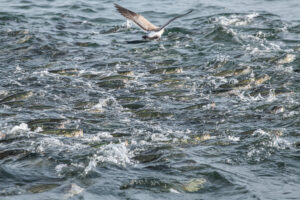
Read on for my official testimony given before Louisiana’s Senate Natural Resources Committee on Tuesday, June 1, when I outlined the argument for this legislative commitment to coastal habitat and jobs in Louisiana. If you find it compelling, sign our open letter to state and federal fisheries officials supporting better management of menhaden, which means pushing back on the foreign-owned companies that disrupt recreational fishing when pogie boats pull up near our beaches and leave dead sportfish in their wake.

TRCP’s Official Testimony on Louisiana H.B. 535

Chairman Hensgens, members of the Committee, thank you for the chance to be here today.

My name is Chris Macaluso. I am the marine fisheries director for the Theodore Roosevelt Conservation Partnership. I am a lifelong Louisianan, proud conservationist, and an avid recreational fisherman.

I want to thank Representative Orgeron for introducing his bill and for working with charter fishermen, recreational fishing groups, and conservation organizations to develop this bill. I want to also thank Representatives Zeringue, Fontenot, and Kerner as well as Senator Allain and all other legislators who participated in the discussions to try to find compromise over the last seven months.

I am here today to urge you to support H.B. 535. As an avid angler, and because of my job, I am on the coast on a weekly basis. I have seen the pogie harvest along our beaches many, many times. I have been fishing within 50 yards of beaches in Plaquemines and Terrebonne Parish and had pogie boats come as close as 100 yards from me and set their nets. It’s never pleasant to see the rafts of dead pogies and the dead redfish, sharks, jacks, and other fish we often see left behind.

I have many friends who are charter captains. I hear from them constantly during the spring and summer about pogie boats in water so shallow that they muddy the water and the boats run aground. They also complain about the dead fish and how sometimes they have to take customers elsewhere because they are disgusted by the sights and smells. I hear from other anglers regularly who see dead redfish on the beaches, floating in the surf. It makes them angry. And it should. That is an iconic fish in Louisiana, a vital part of a $3 billion annual recreational fishing industry in our state being wasted. I have sent all of you links to videos showing this activity, and I could send you many, many more.


Menhaden boats run aground, chew up surf zone in Empire, La.


Dead bull redfish floating in the wake of menhaden boats in Empire, La.


Menhaden boats 300 yards from Elmer’s Island Beach, La. 


Dead redfish and menhaden left by menhaden boats in the surf, Elmer’s Island Beach, La.


You may have been told that these are isolated incidents. They are not. This is a regular occurrence during the summer on our beaches.

Once or twice would be an isolated incident. But about 20 times over the last 30 years, I have personally seen rafts of dead pogies multiple times near Grand Isle and Cocodrie, dozens of dead redfish floating at Elmer’s Island and in Lake Pelto, dead pogies and herring washed up on the beach at Grand Isle and Elmer’s Island, and boats fishing in very shallow water less than 200 yards from beaches. I’m not on the water every day. Some charter guides around Grand Isle and Empire see this on a weekly basis.

This is not just about a conflict between user groups. There is a biological concern. It’s estimated nearly a billion pounds of pogies are harvested annually off Louisiana’s coast, and that includes an additional 30 to 50 million pounds of unintended catch—much of which would serve as food for sportfish. All of this harvest happens with no consideration for the role these fish play as food for other fish and animals or the impact on water quality.

The surf zone is home to the highest diversity of fish and wildlife in the Gulf. If the pogie boats are in the same place where speckled trout and redfish are being caught, then speckled trout and redfish are being killed in their nets. The redfish and trout are there to spawn and are eating pogies.

It’s also reasonable to think that the thousands of dead redfish anglers are seeing on our beaches and in the surf are detrimental to our redfish populations. Preliminary results of a study being conducted by NOAA and the University of Florida show a significant reduction in speckled trout and redfish biomass in the Gulf from menhaden harvest—as much as a 50-percent reduction.

I’d also like to address some of the other issues that have been brought up to try and paint this bill as some kind of attack on Louisiana jobs or assault on all commercial fishing. These are all untrue and misleading arguments.

As Representative Orgeron has said over and over again, if this bill was going to cost hundreds of jobs, he wouldn’t have introduced it. And we aren’t here asking the industry to catch any fewer fish. We are asking for some simple, reasonable protection of our beaches.

The argument that efforts to enact reasonable conservation is costing jobs is especially dubious considering Omega Protein chose to eliminate jobs in Cameron Parish by closing its plant in 2014, sending some of those jobs to Mississippi. Nobody here asking for reasonable conservation measures had anything to do with those jobs being lost in Louisiana. That was Omega choosing to do what they called “streamlining” and “reallocating assets.” Meaning fewer jobs for Louisiana and more money for their shareholders.

You have likely heard that this menhaden fishery has received the Marine Stewardship Council Certification for sustainability. That certification is provisional. These two companies have to agree to meet [certain standards in the future, including] ecological reference points. That could mean a reduction in harvest and certainly will mean a catch limit. That could lead to a loss of jobs. And there isn’t an organization here asking for this bill to pass that made these two companies take that step.

Speaking of that certification, Omega Protein received that same certification in the Atlantic for its plant in Virginia in 2019. That same year, the company willfully violated the terms of that certification by blatantly exceeding the catch limit in Chesapeake Bay by more than 30 percent, forcing the Atlantic States Marine Fisheries Commission and the Trump Administration to punish them and reduce the following year’s harvest.

Earlier, I mentioned that Louisiana jobs were moved to Mississippi. It’s fair to ask how much of the opposition to this bill is so pogie boats from Mississippi can fish right up against Louisiana’s beaches and damage Louisiana’s coastal habitat. Mississippi has already moved to protect many of its beaches and barrier islands from this fishery. We are asking Louisiana to do the same.

And I think it’s fair to say Louisiana fishermen and Louisiana lawmakers shouldn’t tolerate a single dead redfish from pogie boats coming here from Mississippi.

So, I’m here today to ask us to take the side of conservation. Let’s do what’s best for our state, our recently restored beaches, and our recreational fishing and tourism economy. Move this fishing activity out of the surf zone and into deeper water where there is less chance to damage our shores and less chance of bycatch. Thank you.


Take action now to support meaningful updates to menhaden management.


Top photo courtesy of Healthy Gulf via Flickr.

by:

posted in:

June 11, 2021

TRCP Applauds USDA Tongass Announcement

First step toward restoring safeguards to roadless areas in Alaska’s Tongass National Forest

Hunters and anglers commended an announcement that the U.S. Department of Agriculture intends to “restore or replace” the previous administration’s decision to exempt the Tongass National Forest from the 2001 Roadless Rule.

The Tongass exemption, which was finalized in October 2020, stripped conservation safeguards from more than 9 million acres of public lands in Southeast Alaska, despite overwhelming opposition from Alaskans as well as sportsmen and sportswomen across the nation. Today’s announcement confirms that the decision-making process used to justify the exemption was flawed and begins the process of restoring the management framework.

“Today’s announcement is welcomed by a majority of Alaskans and more than 250,000 Americans who vocally opposed last year’s extreme decision to fully exempt the Tongass National Forest from the Roadless Rule,” said Whit Fosburgh, president and CEO of the Theodore Roosevelt Conservation Partnership. “The TRCP thanks USDA Secretary Vilsack for taking the first step toward restoring conservation safeguards to some of Southeast Alaska’s best fish and wildlife habitat. We urge USDA and the Forest Service to swiftly reinstate the conservation measures that have served the Tongass well for 20 years.”

The Tongass National Forest encompasses nearly 90 percent of the southeastern panhandle of Alaska. Some of the nation’s most productive watersheds for salmon rearing and fishing are located within roadless areas of the forest. Eliminating the Roadless Rule in the Tongass made more than 9 million acres of undeveloped forests available to industrial logging and road construction, undermining some of Alaska’s largest salmon fisheries and potentially impacting vital habitat for Sitka black-tailed deer, black and brown bears, and moose.

Earlier this month, nearly 70 hunting- and fishing-related groups, national brands, and local businesses signed a joint letter calling on the USDA to move quickly to reinstate roadless area safeguards in the Tongass. From gear manufacturers and media companies to guides, outfitters, and retailers, the letter emphasized the importance of sustainable forest management on the outdoor recreation economy.

By the Forest Service’s own analysis, repealing the Roadless Rule was expected to have only a “minimal beneficial effect” on the region’s diminished forest products industry, and at a significant cost to taxpayers. Instead of focusing on cutting critically important mature forests, conservation groups have urged the decision makers to manage the Tongass with an emphasis on second-growth forest management, an approach that would support local jobs and forest health.

“The industries that contribute the most to Southeast Alaska’s economy—such as commercial fishing, recreation, and tourism—rely on the conservation of our remaining old-growth forests and pristine watersheds within the Tongass,” said Jen Leahy, Alaska field representative for the Theodore Roosevelt Conservation Partnership. “It’s time we help the Forest Service manage the Tongass in a way that conserves vital fish and wildlife habitat, allows for sustainable second growth forest management, and boosts the resiliency of our communities.”

Photo: Ben Matthews (www.bentmatthews.com)

by:

posted in:

June 10, 2021

House Committee Passes Highway Bill with Dedicated Funding for Wildlife Crossings

$100M annually for wildlife-friendly roadway crossing structures represents one of the bill’s biggest benefits for hunters and anglers

Early this morning in a 38-26 vote, the House Committee on Transportation and Infrastructure passed its five-year highway bill with $547 billion in transportation infrastructure investments, including a new grant program to help states construct more wildlife crossings that knit together fragmented habitat and increase public safety.

The INVEST in America Act establishes the wildlife crossings program and funds it at $100 million annually. This investment would be the first of its kind in a national wildlife crossings initiative and satisfies what has been a top legislative priority for the TRCP since 2019. The organization has convened wildlife experts, department of transportation planners, engineers, and others to formulate its recommendations in this policy area.

“We are thrilled to see this momentum for a program and funding that would kickstart the construction of critical wildlife crossings,” says Whit Fosburgh, president and CEO of the Theodore Roosevelt Conservation Partnership. “The timing couldn’t be better, as our enhanced understanding of big game migration routes demands that we reconnect critical seasonal habitats that have been fragmented by roadways, potentially altering the movements of mule deer, elk, pronghorn, and other species.”

Of course, the highway system presents habitat connectivity issues to more than just Western big game. The program would also fund projects that benefit amphibians, fish, and reptiles. “We know that one of the best ways we can ensure fish and wildlife adapt to a changing climate is to enhance their ability to move, as needed, across the landscape,” says Fosburgh. “As Congress prepares to make some of the most impactful investments in our highway system, critical infrastructure, and American jobs, we look forward to working with lawmakers to support these efforts.”

Other important provisions in the INVEST Act include:

  • $555 million per year for the Federal Lands Transportation Program, which helps federal agencies maintain passenger roads through public lands. Of this total, the $50 million set aside for the Forest Service is just one-fifth of the total that the TRCP and others recommended to avoid contributing to the maintenance backlog at the agency. Congress must invest more in the Forest Service’s aging roads, which Americans rely on not just for outdoor recreation but to connect communities that are adjacent to or separated by Forest Services lands.
  • $345 million annually for the Federal Lands Access Program to repair, maintain, and reconstruct roads on public lands, which are essential for outdoor recreation.
  • Establishment of a pre-disaster mitigation program to help communities prepare for future catastrophic weather events that often affect habitat. The TRCP has prioritized this as one of the ways Congress can put Americans back to work through conservation, especially when communities are encouraged to invest in nature-based infrastructure.

The Senate surface transportation bill includes $350 million over five years for wildlife crossings, plus support for climate resilience and better access to public lands. It has passed out of committee and needs a floor vote before both chambers can hammer out a deal to reconcile the two bills.

Also of interest to sportsmen and sportswomen is a bill to increase funding for the Clean Water State Revolving Fund Program, which was passed in the same House committee markup today.

Since February, the TRCP has called on Congress to authorize $40 billion over five years for this bedrock program used by states and territories to fund water quality protection, including wastewater control, water treatment, and activities such as land conservation and habitat restoration projects. The TRCP also supported setting aside 15 percent of these funds for the Green Project Reserve Program within the Clean Water SRF to encourage states to invest in natural systems and nature-based approaches to addressing local water quality challenges.

Both of these provisions were included in the Water Quality Protection and Job Creation Act of 2021 when it passed out of committee today with a bipartisan vote of 42-25.

To learn more about the natural infrastructure and water quality solutions championed by hunters and anglers, click here.


Top photo courtesy of Wyoming Game and Fish Dept.

by:

posted in:

June 8, 2021

House Committee Considers the MAPLand Act

Sportsmen and sportswomen call for swift passage of important public land access legislation

Hunters and anglers around the nation voiced support for the bipartisan Modernizing Access to our Public Land (MAPLand) Act as the bill received its first hearing in the 117th Congress.

The House Natural Resources Committee held a hearing on Tuesday for the MAPLand Act (H.R. 3113), introduced by Representative Blake Moore (R-Utah) and co-sponsored by Representatives Kim Schrier (D-Wash.), Russ Fulcher (R-Idaho), and Joe Neguse (D-Colo.).

The bill will enhance recreational opportunities on public land by investing in modern mapping systems that allow outdoor enthusiasts to access the information they need using computer applications and the handheld GPS technology commonly found in smartphones.

“Unfortunately, when it comes to public lands, incomplete and inconsistent mapping data prevents outdoor recreationists as well as land management agencies—including the Forest Service, Bureau of Land Management, National Park Service, and Army Corps of Engineers—from utilizing the full benefit of these technologies,” noted the Theodore Roosevelt Conservation Partnership in its formal testimony.

The MAPLand Act will direct federal land management agencies to consolidate, digitize, and make publicly available recreational access information as GIS files. Such records include information about:

• legal easements and rights-of-way across private land;
• year-round or seasonal closures on roads and trails;
• road-specific restrictions by vehicle-type;
• boundaries of areas where special rules or prohibitions apply to hunting and shooting;
• and areas of public waters that are closed to watercraft or have horsepower restrictions.

Last year, a coalition of 150+ hunting- and fishing-related businesses called on Congress to support the bill, highlighting the importance of public land access to the $778-billion outdoor recreation economy.

A companion bill in the Senate was introduced in March of this year by Senators Jim Risch (R-Idaho) and Angus King (I-Maine) alongside Senators Mike Crapo (R-Idaho), Susan Collins (R-Maine), John Barrasso (R-Wyo.), Joe Manchin (D-W.Va.), Martin Heinrich (D-N.M.), Steve Daines (R-Mont.), and Mark Kelly (D-Ariz.).

“The events of the past year have helped to put in perspective the importance of outdoor access, and this bill would make it easier for Americans from all walks of life and varying experience levels to take advantage of the opportunities we all share,” said Whit Fosburgh, president and CEO of the Theodore Roosevelt Conservation Partnership. “Hunters, anglers, and the countless other Americans who enjoy recreating on our public lands extend their appreciation to the members of the subcommittee for their attention to this issue and ask lawmakers in both the House and Senate to support the MAPLand Act.”

TRCP’s full testimony in support of the MAPLand Act can be read HERE.


Photo: Craig Okraska/Maven

HOW YOU CAN HELP

TRCP has partnered with Afuera Coffee Co. to further our commitment to conservation. $4 from each bag is donated to the TRCP, to help continue our efforts of safeguarding critical habitats, productive hunting grounds, and favorite fishing holes for future generations.

Learn More

You have Successfully Subscribed!

You have Successfully Subscribed!

You have Successfully Subscribed!

You have Successfully Subscribed!