Our Issues
Public Lands
Why It Matters

Hunting & Fishing Access

America’s 640 million acres of national public lands provide irreplaceable hunting and fishing opportunities to millions of Americans.

Learn More About Access
What TRCP is Doing

We’re working to safeguard America’s public lands so hunters and anglers always have quality places to pursue their passions.

 Brian Flynn, Two Wolf Foundation
How Sportsmen Are Doing It Right

Brian Flynn, Two Wolf Foundation's Story

Following a distinguished career in the U.S. Army, lifelong outdoorsman Brian Flynn returned home from a deployment in Afghanistan and…


Hunting
Why It Matters

Key Issues for America’s Hunters

Your source for the latest policy updates, conservation challenges, and opportunities shaping America’s hunting traditions.

What TRCP is Doing

We’re fighting for meaningful policy changes that benefit wildlife, our waters, and the American landscapes that make our outdoor traditions possible.

 Ryan Sparks
How Sportsmen Are Doing It Right

Ryan Sparks's Story

TRCP’s “In the Arena” series highlights the individual voices of hunters and anglers who, as Theodore Roosevelt so famously said,…

Fishing
Why It Matters

Key Issues for America’s Anglers

Your source for the latest policy updates, conservation challenges, and opportunities shaping America’s fishing traditions.

What TRCP is Doing

We’re fighting for meaningful policy changes that benefit wildlife, our waters, and the American landscapes that make our outdoor traditions possible.

 David Mangum
How Sportsmen Are Doing It Right

David Mangum's Story

Capt. David Mangum is a YETI ambassador and outdoor photographer who utilizes his talents to produce media that inspire a…

Private Land
Why It Matters

Stewardship on America’s private lands

With 70 percent of U.S. lands in private hands and many of our best hunt and fish opportunities occurring there, investing in voluntary conservation on working lands safeguards access, strengthens habitat and water quality, and ensures resilient landscapes.

Learn More
What TRCP is Doing

We champion policies and programs that restore wildlife habitat, improve soil and water health, and keep working lands productive.

 Ward Burton
How Sportsmen are Doing It Right

Ward Burton's Story

Ward Burton’s NASCAR driving career stretched across most of two decades. As an avid sportsman and conservationist, he founded the…

Special Places
Why It Matters

Special Places Worth Protecting

America’s most iconic landscapes provide unmatched habitat and unforgettable days afield. These places sustain wildlife, anchor local economies, and define the hunting and fishing traditions we pass down.

What TRCP is Doing

We’re working to conserve special places that provide world-class habitat and unforgettable opportunities for hunters and anglers.

 Franklin Adams
How Sportsmen Are Doing It Right

Franklin Adams's Story

As a true Gladesman, conservationist, and historian, Capt. Franklin Adams has spent more than six decades championing Everglades restoration efforts…

Habitat & Clean Water
Why It Matters

Healthy Habitat Powers Every Pursuit

All hunting and fishing opportunities depend on quality habitat, from clean water and healthy wetlands to winter and summer habitats and the migration corridors that connect them.

All About Habitat & Clean Water
What TRCP is Doing

We are working to safeguard the habitats that power every hunting and fishing opportunity.

 Alex Harvey
How Sportsmen Are Doing It Right

Alex Harvey's Story

Alex Harvey, founder of Legacy Land Management, is a registered professional forester in Mississippi and Alabama with a Master's degree…

Science
Why It Matters

Science That Guides TRCP

From conserving migration corridors and wetlands to ensuring clean water and resilient landscapes, science provides evidence that turns conservation goals into effective action.

Science for Conservation
What TRCP is Doing

For hunters and anglers, science safeguards the experiences we treasure including resilient big game populations, abundant fish, and wild places that endure changing social landscapes.

Jamelle Ellis
Your Science Expert

Jamelle Ellis's Story

Jamelle Ellis joined the Theodore Roosevelt Conservation Partnership in 2022. Jamelle spent the last three years as an environmental sustainability…

Where We Work
Across the Nation

Conservation Across America

TRCP works across the country to ensure hunters and anglers can enjoy healthy fish and wildlife and quality days afield, no matter where they live.

See All Issues
TRCP in Your Region

TRCP works across the country to ensure hunters and anglers can enjoy healthy fish and wildlife and quality days afield, no matter where they live.

Who We Are
Our Mission

To guarantee all Americans quality places to hunt & fish

We unite and amplify our partners’ voices to advance America’s legacy of conservation, habitat, and access.

Our Mission & Values
Our People & Partners
  • Meet the TRCP Team

    Our staff and board members unite and amplify our partners’ voices to advance America’s legacy of conservation, habitat, and access.

    Meet the Team
  • Our Partners

    ‘Partnership’ is in our name. We work with 64 diverse partner groups that represent today’s leading hunting, fishing, and conservation organizations in order to strengthen the sportsman’s voice in Washington, D.C.

    Our Partners
  • Corporate Council

    TRCP’s Corporate Council is made up of diverse corporations that share a common passion for conservation.

    Corporate Council
Our Organization

Looking for more information?

Explore our latest news, policy updates, and conservation resources to get the information you need.

Giving
How You Can Help

To guarantee all Americans quality places to hunt & fish

Your tax-deductible donation will support TRCP's mission, now and into the future.

DONATE
Special Ways to support trcp
  • Capital Conservation Awards Dinner

    The CCAD is one of Washington's best-attended conservation celebrations, featuring dinner, cocktails, and a silent auction.

    Learn More
  • Step Into the Arena

    Help us ensure that our treasured wild habitats and game remain intact for the next generation to enjoy – lend your support to the TRCP’s efforts today!

    Donate
  • Roosevelt Roast

    TRCP has partnered with Afuera Coffee Co. to further our commitment to conservation.

    Learn More
More donation options

Find the best way for you to lend your support. Join one of TRCP’s donor circles for special invitations, premium offerings from outdoor retailers, and more exclusive benefits. Take control of your legacy with planned giving or contribute to special conservation funds.

Other Ways To Give
News
In the Spotlight

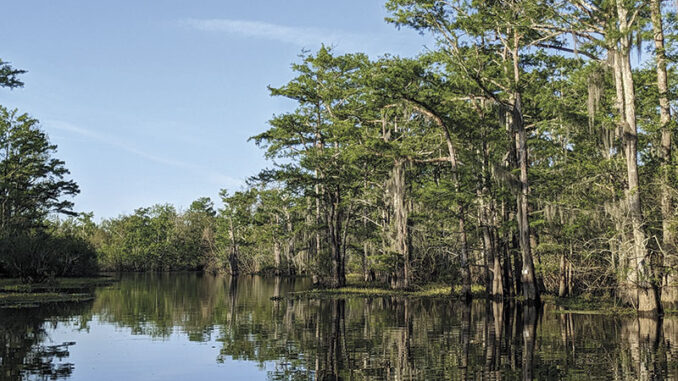
All Eyes On The Atchafalaya Basin

The Lower Mississippi River Comprehensive Management Study moves forward despite slashed budget

Read More

Stay Informed

Receive our newsletter, the Roosevelt Report, right in your inbox. Never miss the latest news in conservation issues.

by:

posted in:

September 15, 2016

Six Out-Of-Office Replies That’ll Make You Proud to Be a Sportsman

When we’re not working tirelessly to protect our country’s hunting and fishing heritage, we’re outside enjoying it, so leave a message

For the next few months, you can expect to get a lot of automated out-of-office replies from folks who love to hunt and fish. And, while we never stop working to guarantee all Americans quality places to pursue these sports, TRCP staffers definitely take the time to get outside and enjoy the season when we can.

We like to have a bit of fun, while we’re at it. Here are the real and embellished email replies you’ll get from some of us this fall, complete with shout-outs to our favorite spots and critters. Our time out there inspires what we do for conservation, and it might just inspire a little envy for those of you stuck at your computers.

Spot and Stalk

Coo, Hiss

 Free Relationship Advice, Anyone?

Unicorns and Daydreams

Steak Out

Why We Do This

TRCP’s director of Western Lands. Image courtesy of Joel Webster.


Do you have any thoughts on this post?

XHTML: You can use these tags: <a href="" title=""> <abbr title=""> <acronym title=""> <b> <blockquote cite=""> <cite> <code> <del datetime=""> <em> <i> <q cite=""> <s> <strike> <strong>

Comments must be under 1000 characters.

by:

posted in:

Six Out-Of-Office Replies That’ll Make You Proud to Be a Sportsman

When we’re not working tirelessly to protect our country’s hunting and fishing heritage, we’re outside enjoying it, so leave a message

For the next few months, you can expect to get a lot of automated out-of-office replies from folks who love to hunt and fish. And, while we never stop working to guarantee all Americans quality places to pursue these sports, TRCP staffers definitely take the time to get outside and enjoy the season when we can.

We like to have a bit of fun, while we’re at it. Here are the real and embellished email replies you’ll get from some of us this fall, complete with shout-outs to our favorite spots and critters. Our time out there inspires what we do for conservation, and it might just inspire a little envy for those of you stuck at your computers.

Spot and Stalk

Coo, Hiss

 Free Relationship Advice, Anyone?

Unicorns and Daydreams

Steak Out

Why We Do This

TRCP’s director of Western Lands. Image courtesy of Joel Webster.


by:

posted in:

Everglades Restoration and Fish Habitat Get a Boost in Senate Water Projects Bill

Major water projects legislation authorizes Everglades restoration, using wetlands as infrastructure, and improving habitat connectivity

The U.S. Senate has passed the Water Resources Development Act of 2016 (WRDA), which contains provisions to benefit fish and wildlife habitat and water quality in some of America’s most iconic places. The bipartisan bill would authorize more than $10 billion in water projects overseen by the U.S. Army Corps of Engineers in 18 states.

Notably, the legislation authorizes $1.9 billion for restoration projects in the Everglades, where critical steps for restoring natural flows and removing pollutants must be fast-tracked to reverse algae blooms and other conditions devastating South Florida’s fisheries.

Image courtesy of Daniel Hartwig/Flickr.

“We are delighted to see key Everglades restoration projects advancing in the Water Resources Development Act,” says Dawn Shirreffs, senior Everglades policy advisor for the Everglades Foundation. “Authorization of the Central Everglades Planning Project is critical to removing barriers and restoring Everglades water flow, which can bring 67 billion gallons of water to improve habitat in Florida Bay. This is particularly important for spotted seatrout and snook, but also helps prevent future seagrass die-offs that affect the entire fishery.”

The Senate version of the bill also contains a provision that would emphasize the use of nature-based infrastructure, like wetlands, dunes, and reefs, over new man-made structures. Natural infrastructure provides for sustainable and cost-effective means of reducing flood and storm damage, improving water quality, and protecting vital fish and wildlife habitat in the process.

“As we’ve learned from recent storms and floods, nature is often our first and most effective line of defense against such natural disasters,” says Lynn Scarlett, The Nature Conservancy’s managing director for public policy. “The projects and policies included in this WRDA emphasize the important role nature can play to help meet the needs of people, communities, and public safety.”

More than a dozen groups—including the American Sportfishing Association, Association of Fish and Wildlife Agencies, B.A.S.S., Trout Unlimited, The Nature Conservancy, and the Theodore Roosevelt Conservation Partnership—have been calling on Congress for support for “water resource development projects that consider natural and nature-based features” since June 2016.

The Senate version of WRDA also contains language to ensure that enhancing and sustaining fish and wildlife habitat connectivity is a robust part of the Army Corp’s mitigation planning process.

The House Transportation and Infrastructure Committee reported out their version of the 2016 WRDA reauthorization, but the bill has not yet come to the House floor for final passage. The House bill does not currently contain funding for Everglades restoration or a push for natural infrastructure, but once passed, the process of reconciling the Senate and House bills can begin.

“With the clock ticking down to the end of the 114th Congress, the Water Resources Development Act remains amongst TRCP’s highest conservation priorities,” says Whit Fosburgh, president and CEO of the Theodore Roosevelt Conservation Partnership. “With expiration of the current law set for 2017, it is critical for this Congress to send a WRDA bill to the president, so that we don’t have to start this process over again next year. Today’s action by the Senate, on a bill with many benefits for fish and wildlife habitat, is a great first step. Now, the House must act expeditiously.”

by:

posted in:

September 14, 2016

Working Toward Conservation Solutions After Election Day

Fringe views on land management can’t distract from the real work that must be done as a new administration enters the White House

At the Theodore Roosevelt Conservation Partnership, we do not engage in elections other than to make sure that voters understand where the candidates stand on major conservation and access issues. This is why we hosted a forum, moderated by Field & Stream, at our Western Media Summit, where surrogates for the Trump and Clinton campaigns had an hour to discuss their priorities and take questions from the sporting and mainstream media. (Watch the unedited footage of these Q&As with Donald Trump Jr. and Rep. Mike Thompson.)

America’s sportsmen and women tend to be fairly mainstream. We care about lands and waters and want America’s conservation legacy to endure for future generations. But we use these lands and choose to pursue some of the critters we work so hard to conserve. Sometimes we even kill and eat those critters. And we’re proud of the fact that our dollars and volunteer efforts have made America’s fish and wildlife some of the healthiest and best-managed populations of species in any industrialized nation in the world.

We have been critical of some right-wing politicians and their enablers in industry who would sell off the nation’s remarkable public lands, which provide the foundation for hunting and fishing in America. But there are times when the left fringe can be equally ideological and out of touch.

Image courtesy of Tami A. Heilemann/Dept. of Interior.

Take the reaction to Secretary Clinton’s announcement that former Secretary of the Interior and U.S. Senator Ken Salazar would oversee her transition team, if she is elected president. The announcement was greeted by most as a sensible and strong choice, but not from many on the left, who described the pick as a sell-out to corporate America. One blogger posted that Salazar’s selection meant “…the oil and gas industry just hit a political gusher.”

We worked closely with Ken Salazar when he was Secretary of the Interior from 2009 until 2013. During this time, he initiated major reforms in oil and gas drilling on federal lands, known as “master lease planning,” to ensure that new development would only occur in the right places at the right times, without impacting sensitive lands and species. He blocked oil and gas leasing in Alaska’s Bristol Bay, home of the world’s largest salmon runs, and launched a major process to develop solar energy zones on public lands as a way to address a warming climate. These and other actions were largely criticized by the oil and gas industry.

Ken Salazar is a fifth-generation rancher from Colorado who loves the land and understands that it can and must support multiple uses. This is not just true for agricultural lands in Colorado’s San Luis Valley, but also for America’s 640 million acres of public lands. Some areas are national parks or wilderness areas. Others should be managed for wildlife and others for grazing, timber, or energy production. This is how it is supposed to work.

But for extremists on both sides, this is not the way they want it to work.

At the TRCP, we will work with whichever candidate is elected. If Secretary Clinton is elected, I know we can work with Ken Salazar, because we have done so in the past, and we understand his commitment to well-managed public lands and, more broadly, America’s conservation legacy. It is safe to say that we will not get everything we want, but that is not our definition of success.

by:

posted in:

September 13, 2016

A Conservation Convert Goes Back to School

Our summer intern leaves for the fall semester with a newfound appreciation for habitat conservation, sportsmen’s access, and the outdoor recreation economy

Image courtesy of Shannon Fagan.

After a summer interning for the TRCP in Washington, D.C., I’m headed back to school with a whole new perspective on conservation policy, Congress, and the role of sportsmen. So, for my final blog, I’d like to share a little bit of what I learned about the TRCP and what they do for sportsmen and women across the country.

From day one, I was surprised by the range of issues that impact our ability to hunt and fish. For example, at first glance, the Farm Bill might not seem that important to sportsmen, but I learned that this giant bill encompasses many provisions that affect wildlife. The Conservation Reserve Program (CRP), in particular, helps establish and conserve habitat for quail, pheasants, waterfowl, whitetails, and countless other critters that are important to sportsmen. For you anglers out there, CRP also helps protect 170,000 stream miles through riparian buffers, which keep pollutants from reaching the water.

I was surprised that despite support from farmers, sportsmen, and both sides of the aisle, eligible CRP acreage has been shrinking, which means less habitat benefits for fish and wildlife. Not only did I see firsthand how the TRCP engaged in discussion with partners about how to protect the program, but I also got to sit courtside as we launched a #CRPWorks petition to urge lawmakers to build a better CRP in the next Farm Bill.

Because of the TRCP’s Sportsmen’s Access campaign and website, I learned a lot about the ongoing threats to America’s public lands, as well. I grew up on the east coast and I go to college in the Midwest, where folks are not as aware of talk about transferring public land to states, despite some local governments’ history of selling or closing off land to recreation.  At the TRCP, I gained valuable perspective on this issue from the Western field representatives, who live and work in the communities that would directly feel the impacts of these proposed policies, and the government relations team in D.C., who do their best to share this local sportsmen’s perspective with members of Congress.

I understand now that my name on a petition does make a difference, and when a stack of names—like the more than 32,000 on TRCP’s petition opposing public land transfer—appears on the desk of your Congressmen, it’s hard to ignore. I’m grateful that groups like the TRCP won’t let lawmakers forget that they aren’t standing with their constituents who hunt and fish if they support or vote for land transfer.

I’ve also learned that sometimes the provisions that aren’t included in legislation are just as important to sportsmen as the provisions that are. For example, the TRCP staff has spent a lot of time and energy trying to keep language that would effectively halt federal conservation plans to restore and protect greater sage-grouse habitat out of the National Defense Authorization Act. And, in a big win for public lands this May, lawmakers blocked a proposal to transfer the popular Vieques National Wildlife Refuge to the commonwealth of Puerto Rico for debt relief, a move that would have set a harmful precedent of privatizing public lands that are crucial to outdoor recreation.

Overall, I had an amazing summer here at the TRCP. I learned a ton about federal policy, habitat conservation, the outdoor recreation economy, and how they are interconnected. It’s been great to work with a dedicated staff that is also intelligent and incredibly kind. I came to D.C. as an outdoor enthusiast, and I’m leaving as a well-informed conservation advocate, ready to take action and support the ambitious community of conservation partners I’ve come to admire over the past few months. I look forward to seeing all the great things to come for conservation!

Shannon Fagan was the TRCP summer intern through the Demmer Scholar Program. She is now in her senior year at Michigan State University where she is majoring in Social Relations and Policy and minoring in Science, Technology, Environment and Public Policy.

HOW YOU CAN HELP

TRCP has partnered with Afuera Coffee Co. to further our commitment to conservation. $4 from each bag is donated to the TRCP, to help continue our efforts of safeguarding critical habitats, productive hunting grounds, and favorite fishing holes for future generations.

Learn More
Subscribe


You have Successfully Subscribed!

You have Successfully Subscribed!

You have Successfully Subscribed!

You have Successfully Subscribed!

You have Successfully Subscribed!