Our Issues
Public Lands
Why It Matters

Hunting & Fishing Access

America’s 640 million acres of national public lands provide irreplaceable hunting and fishing opportunities to millions of Americans.

Learn More About Access
What TRCP is Doing

We’re working to safeguard America’s public lands so hunters and anglers always have quality places to pursue their passions.

 Brian Flynn, Two Wolf Foundation
How Sportsmen Are Doing It Right

Brian Flynn, Two Wolf Foundation's Story

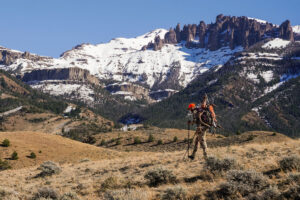
Following a distinguished career in the U.S. Army, lifelong outdoorsman Brian Flynn returned home from a deployment in Afghanistan and…


Hunting
Why It Matters

Key Issues for America’s Hunters

Your source for the latest policy updates, conservation challenges, and opportunities shaping America’s hunting traditions.

What TRCP is Doing

We’re fighting for meaningful policy changes that benefit wildlife, our waters, and the American landscapes that make our outdoor traditions possible.

 Ryan Sparks
How Sportsmen Are Doing It Right

Ryan Sparks's Story

TRCP’s “In the Arena” series highlights the individual voices of hunters and anglers who, as Theodore Roosevelt so famously said,…

Fishing
Why It Matters

Key Issues for America’s Anglers

Your source for the latest policy updates, conservation challenges, and opportunities shaping America’s fishing traditions.

What TRCP is Doing

We’re fighting for meaningful policy changes that benefit wildlife, our waters, and the American landscapes that make our outdoor traditions possible.

 David Mangum
How Sportsmen Are Doing It Right

David Mangum's Story

Capt. David Mangum is a YETI ambassador and outdoor photographer who utilizes his talents to produce media that inspire a…

Private Land
Why It Matters

Stewardship on America’s private lands

With 70 percent of U.S. lands in private hands and many of our best hunt and fish opportunities occurring there, investing in voluntary conservation on working lands safeguards access, strengthens habitat and water quality, and ensures resilient landscapes.

Learn More
What TRCP is Doing

We champion policies and programs that restore wildlife habitat, improve soil and water health, and keep working lands productive.

 Ward Burton
How Sportsmen are Doing It Right

Ward Burton's Story

Ward Burton’s NASCAR driving career stretched across most of two decades. As an avid sportsman and conservationist, he founded the…

Special Places
Why It Matters

Special Places Worth Protecting

America’s most iconic landscapes provide unmatched habitat and unforgettable days afield. These places sustain wildlife, anchor local economies, and define the hunting and fishing traditions we pass down.

What TRCP is Doing

We’re working to conserve special places that provide world-class habitat and unforgettable opportunities for hunters and anglers.

 Franklin Adams
How Sportsmen Are Doing It Right

Franklin Adams's Story

As a true Gladesman, conservationist, and historian, Capt. Franklin Adams has spent more than six decades championing Everglades restoration efforts…

Habitat & Clean Water
Why It Matters

Healthy Habitat Powers Every Pursuit

All hunting and fishing opportunities depend on quality habitat, from clean water and healthy wetlands to winter and summer habitats and the migration corridors that connect them.

All About Habitat & Clean Water
What TRCP is Doing

We are working to safeguard the habitats that power every hunting and fishing opportunity.

 Alex Harvey
How Sportsmen Are Doing It Right

Alex Harvey's Story

Alex Harvey, founder of Legacy Land Management, is a registered professional forester in Mississippi and Alabama with a Master's degree…

Science
Why It Matters

Science That Guides TRCP

From conserving migration corridors and wetlands to ensuring clean water and resilient landscapes, science provides evidence that turns conservation goals into effective action.

Science for Conservation
What TRCP is Doing

For hunters and anglers, science safeguards the experiences we treasure including resilient big game populations, abundant fish, and wild places that endure changing social landscapes.

Jamelle Ellis
Your Science Expert

Jamelle Ellis's Story

Jamelle Ellis joined the Theodore Roosevelt Conservation Partnership in 2022. Jamelle spent the last three years as an environmental sustainability…

Where We Work
Across the Nation

Conservation Across America

TRCP works across the country to ensure hunters and anglers can enjoy healthy fish and wildlife and quality days afield, no matter where they live.

See All Issues
TRCP in Your Region

TRCP works across the country to ensure hunters and anglers can enjoy healthy fish and wildlife and quality days afield, no matter where they live.

Who We Are
Our Mission

To guarantee all Americans quality places to hunt & fish

We unite and amplify our partners’ voices to advance America’s legacy of conservation, habitat, and access.

Our Mission & Values
Our People & Partners
  • Meet the TRCP Team

    Our staff and board members unite and amplify our partners’ voices to advance America’s legacy of conservation, habitat, and access.

    Meet the Team
  • Our Partners

    ‘Partnership’ is in our name. We work with 64 diverse partner groups that represent today’s leading hunting, fishing, and conservation organizations in order to strengthen the sportsman’s voice in Washington, D.C.

    Our Partners
  • Corporate Council

    TRCP’s Corporate Council is made up of diverse corporations that share a common passion for conservation.

    Corporate Council
Our Organization

Looking for more information?

Explore our latest news, policy updates, and conservation resources to get the information you need.

Giving
How You Can Help

To guarantee all Americans quality places to hunt & fish

Your tax-deductible donation will support TRCP's mission, now and into the future.

DONATE
Special Ways to support trcp
  • Capital Conservation Awards Dinner

    The CCAD is one of Washington's best-attended conservation celebrations, featuring dinner, cocktails, and a silent auction.

    Learn More
  • Step Into the Arena

    Help us ensure that our treasured wild habitats and game remain intact for the next generation to enjoy – lend your support to the TRCP’s efforts today!

    Donate
  • Roosevelt Roast

    TRCP has partnered with Afuera Coffee Co. to further our commitment to conservation.

    Learn More
More donation options

Find the best way for you to lend your support. Join one of TRCP’s donor circles for special invitations, premium offerings from outdoor retailers, and more exclusive benefits. Take control of your legacy with planned giving or contribute to special conservation funds.

Other Ways To Give
News
In the Spotlight

TRCP Appreciates Make America Beautiful Again 250 Strategy and Migration Announcements

Efforts will continue progress on habitat, access, and big game migration corridor conservation

Read More

Stay Informed

Receive our newsletter, the Roosevelt Report, right in your inbox. Never miss the latest news in conservation issues.

by:

posted in:

November 4, 2013

capital building wide

US Capital Building

Do you have any thoughts on this post?

XHTML: You can use these tags: <a href="" title=""> <abbr title=""> <acronym title=""> <b> <blockquote cite=""> <cite> <code> <del datetime=""> <em> <i> <q cite=""> <s> <strike> <strong>

Comments must be under 1000 characters.

by:

posted in:

After Shutdown, the Stakes are High for Hunters and Anglers

October was hardly Washington’s finest month. A government shutdown that served no purpose and cost Americans more than $20 billion. Hunters and anglers denied access to national wildlife refuges and parks. The spectacle of lawmakers who caused the shutdown, once they were certain the cameras were rolling, berating park rangers who were simply doing their jobs.

It’s no wonder Americans hold our elected officials in such low regard.

But today the government is open; Congress has an opportunity to actually legislate. And the stakes for conservation are high.

The next two months will be dominated by two topics that directly impact conservation and hunting and fishing: The Farm Bill and the federal budget.

The Farm Bill: ‘Must-pass’ Legislation

The Farm Bill, which includes the Conservation Reserve Program, the Wetlands Reserve Program and the Open Fields public access program, among others, is the single most important piece of legislation for conservation on private lands. The current version of the bill expired on Sept. 30 after the House of Representatives and the Senate failed to (“never tried to” is more accurate) resolve the differences between their two bills.  The main point of disagreement is over funding for the bill’s nutrition title, which includes food stamps and school lunches.

Assuming lawmakers can agree on nutrition funding, which is not a given, the debate over the conservation title of the bill will center on two issues: re-linking conservation compliance with crop insurance and the Sodsaver program. Together these programs help ensure that the federal government is not creating incentives to drain wetlands and convert native prairie and highly erodible lands to row crops.

The Farm Bill and its conservation title have the potential to dramatically impact the fish and wildlife populations and outdoor opportunities relied upon by millions of Americans. The bill is “must-pass” legislation, and all sportsmen should make sure that Congress understands this.

The Federal Budget: The Stakes for Conservation Have Never Been Higher

The budget debate has implications for literally every conservation program in the country, from how our public lands are managed to funding that supports state management of our fish and wildlife and even the grant programs that drive the work of Ducks Unlimited, Trout Unlimited, Pheasants Forever and so many other conservation groups.

While entitlements and defense-security spending have steadily increased, conservation funding has plummeted. From about 2.5 percent of the federal budget in the 1970s, conservation funding now represents only about 1 percent of the budget. The House budget would accelerate this trend by zeroing out funding for key conservation programs such as the Land and Water Conservation Fund and the North American Wetlands Conservation Act while further gutting the already underfunded federal lands management agencies like the Bureau of Land Management and the Fish and Wildlife Service.

Under the agreement that reopened the government, Congress has until Jan. 15 to come to a budget agreement, which not only will fund the government through Sept. 2014; it also will become the starting point for fiscal year 2015 budget negotiations.

If the government shutdown has a silver lining, it is that the crucial importance of our nation’s parks and refuges became impossible to ignore. These places are not expendable luxuries; they are a fundamental part of the American economy and the American identity. People care about them – and rely upon them. Theodore Roosevelt understood this more than a century ago. Perhaps today’s politicians now do, as well.

Look to the TRCP to keep you informed and involved as these key initiatives require attention in Congress. Sign up for our weekly emails to stay up to date on the latest news and policy important to sportsmen.

by:

posted in:

Everglades National Park Back in Business

Everglades mangrove snapper
With the government shutdown over, fishing guides and their clients have returned to Everglades National Park. Photo by Mac Stone.

The end of the federal government shutdown was especially good news for guides who fish in Everglades National Park.

For the first time in more than two weeks, they were allowed to legally fish in park waters.

“People don’t realize the effects of the shutdown on guides,” said Capt. Jason Sullivan, who lost several trips because of the park closure.

That anglers were not allowed to fish in the park, even though many of them access the waters in Florida Bay and along the Gulf of Mexico coastline by boat, was bureaucratic pettiness at its worst.

It was one thing not to allow anglers to drive their tow vehicles into the park and launch their boats at Flamingo. But what did it matter if guides drove their boats across park boundaries from the Florida Keys?

That was the same spiteful mentality behind the National Park Service putting up barricades at the open-air World War II Memorial in Washington, D.C., although federal bureaucrats said they had no choice but to close the park.

At least Everglades National Park’s rangers didn’t hassle boaters who ended up in park waters, some of whom didn’t realize they were not allowed in the park and some of whom didn’t care. The rangers told boaters and anglers they could not stop in park waters and sent them on their way without issuing any citations.

Capt. Brian Sanders was one of the lucky ones. He fishes out of Chokoloskee Island on the northwest side of the park and typically goes after snook and redfish in park waters along Gulf beaches and islands.

With the park shut down, Sanders headed 30-plus miles into the Gulf so his clients could fish for snapper and grouper. Fortunately, he had good weather that allowed him to make the long run in his 24-foot bay boat. Even better, the fish were biting – so good, in fact, that after park waters reopened, he still made the trek into the Gulf.

Sanders said that some guides still fished in the park during the closure because of economic necessity.

“I talked to a few of them,” he said. “They said, ‘The park’s not going to pay my mortgage for me, and the park’s not going to pay my bills for me,’ so they went fishing. This was not a lot of days, it was a few days. Those days they never saw anybody.”

Sullivan said he, too, was fortunate. He said he lost about four trips. He could have lost more, but he was able to talk his clients into fishing at night for tarpon and snook in Biscayne Bay in Miami.

Guides in the Keys either had to cancel trips for snook, redfish and tarpon in the park or, like Sanders, make a long run into the Gulf of Mexico or fish shallow reefs in the Atlantic Ocean for Spanish mackerel, snapper and grouper.

As soon as they were allowed back in the park, guides out of Bud N’ Mary’s Marina in Islamorada reported great fishing for snook and tarpon, according to marina owner Richard Stanczyk.

Stanczyk did note that the timing of the shutdown was good because early October is a slow time of year for business.

“Out of our 24 guides, only six were fishing,” said Stanczyk, who added that all of his marina’s guides obeyed the rules and stayed out of the park. “None of them lost any trips, but there were people who didn’t book trips because of the closure.”

by:

posted in:

Join the TRCP in Shaping a Future for Conservation

Every day, hunters and anglers see wetlands drained and buffer strips bulldozed – and valuable acres once enrolled in the Conservation Reserve Program plowed into corn fields. Guides cancel hunts with their clients because there are so few birds – and the habitat needed to support them is quickly disappearing. 

Click here to see how you can help.

Read John’s story and support the TRCP’s efforts to mobilize leaders and get a full Farm Bill through Congress.

by:

posted in:

October 30, 2013

TAKE ACTION! Tell the EPA to Protect Aquatic Habitat Based on the Best Science

Many sportsmen may not realize it, but we are on the cusp of a once-in-a-lifetime opportunity to restore protections to our most cherished hunting and fishing areas.

That is because the federal government is taking steps now that will decide which bodies of water will be protected by standards set by the Clean Water Act.

But the waters most important to sportsmen won’t benefit from this effort unless you take action and speak up now.

The Clean Water Act is undoubtedly one of our nation’s most successful and important environmental laws. In the 41 years the modern Clean Water Act has been in existence, it has transformed many of our lakes and rivers from toxic dumping grounds into vibrant fish and wildlife habitat, sources of drinking water and commercial and recreational hotspots.

However, there has long been a debate about which bodies of water Congress intended to cover with the Clean Water Act. Was it everything that is wet in America or only the largest interstate rivers? (Most reasonable people agree it’s somewhere in the middle, but where exactly do you draw the line?) A couple of Supreme Court decisions in the 2000s confused rather than clarified this debate, but the most recent decision pointed to a solution.

In a 2006 Supreme Court decision, Justice Kennedy established the significant nexus test for determining which waters should receive Clean Water Act protections. He said that waters deserve federal protection if they “either alone or in combination with similarly situated lands in the region, significantly affect the chemical, physical, and biological integrity” of the larger bodies of water that everyone agrees should be covered by the Clean Water Act. To figure out the answer to this test, however, you first have to know how wetlands, headwater streams and other small water bodies are connected chemically, physically and biologically to larger, downstream water bodies.

So the Environmental Protection Agency brought together their best scientists, and they compiled and reviewed more than 1,000 of the best peer-reviewed scientific papers on hydrologic connectivity. The draft report summarizing their results, Connectivity of Streams and Wetlands to Downstream Waters: A Review and Synthesis of the Scientific Evidence, will inform future decisions the federal government makes about Clean Water Act jurisdiction. An independent panel of scientists is currently reviewing the draft report, and that’s where you come in.

The EPA is taking comments related to the report from the public now. Comments received by Nov. 6 will be considered by the independent review panel when it meets in December. Once the independent review is complete and public comments are incorporated, the EPA will finalize the report and use it to decide how to apply the Clean Water Act. Those decisions will be open for public input and scrutiny starting in early 2014 and will shape Clean Water Act protections for a long time to come.

It’s critical that sportsmen make their voices heard, because hunters and anglers understand the value of these resources like no one else.

Tell the EPA you support actions that protect wetlands and headwater streams based on the best available science.

HOW YOU CAN HELP

TRCP has partnered with Afuera Coffee Co. to further our commitment to conservation. $4 from each bag is donated to the TRCP, to help continue our efforts of safeguarding critical habitats, productive hunting grounds, and favorite fishing holes for future generations.

Learn More

You have Successfully Subscribed!

You have Successfully Subscribed!

You have Successfully Subscribed!

You have Successfully Subscribed!