Our Issues
Public Lands
Why It Matters

Hunting & Fishing Access

America’s 640 million acres of national public lands provide irreplaceable hunting and fishing opportunities to millions of Americans.

Learn More About Access
What TRCP is Doing

We’re working to safeguard America’s public lands so hunters and anglers always have quality places to pursue their passions.

 Brian Flynn, Two Wolf Foundation
How Sportsmen Are Doing It Right

Brian Flynn, Two Wolf Foundation's Story

Following a distinguished career in the U.S. Army, lifelong outdoorsman Brian Flynn returned home from a deployment in Afghanistan and…


Hunting
Why It Matters

Key Issues for America’s Hunters

Your source for the latest policy updates, conservation challenges, and opportunities shaping America’s hunting traditions.

What TRCP is Doing

We’re fighting for meaningful policy changes that benefit wildlife, our waters, and the American landscapes that make our outdoor traditions possible.

 Ryan Sparks
How Sportsmen Are Doing It Right

Ryan Sparks's Story

TRCP’s “In the Arena” series highlights the individual voices of hunters and anglers who, as Theodore Roosevelt so famously said,…

Fishing
Why It Matters

Key Issues for America’s Anglers

Your source for the latest policy updates, conservation challenges, and opportunities shaping America’s fishing traditions.

What TRCP is Doing

We’re fighting for meaningful policy changes that benefit wildlife, our waters, and the American landscapes that make our outdoor traditions possible.

 David Mangum
How Sportsmen Are Doing It Right

David Mangum's Story

Capt. David Mangum is a YETI ambassador and outdoor photographer who utilizes his talents to produce media that inspire a…

Private Land
Why It Matters

Stewardship on America’s private lands

With 70 percent of U.S. lands in private hands and many of our best hunt and fish opportunities occurring there, investing in voluntary conservation on working lands safeguards access, strengthens habitat and water quality, and ensures resilient landscapes.

Learn More
What TRCP is Doing

We champion policies and programs that restore wildlife habitat, improve soil and water health, and keep working lands productive.

 Ward Burton
How Sportsmen are Doing It Right

Ward Burton's Story

Ward Burton’s NASCAR driving career stretched across most of two decades. As an avid sportsman and conservationist, he founded the…

Special Places
Why It Matters

Special Places Worth Protecting

America’s most iconic landscapes provide unmatched habitat and unforgettable days afield. These places sustain wildlife, anchor local economies, and define the hunting and fishing traditions we pass down.

What TRCP is Doing

We’re working to conserve special places that provide world-class habitat and unforgettable opportunities for hunters and anglers.

 Franklin Adams
How Sportsmen Are Doing It Right

Franklin Adams's Story

As a true Gladesman, conservationist, and historian, Capt. Franklin Adams has spent more than six decades championing Everglades restoration efforts…

Habitat & Clean Water
Why It Matters

Healthy Habitat Powers Every Pursuit

All hunting and fishing opportunities depend on quality habitat, from clean water and healthy wetlands to winter and summer habitats and the migration corridors that connect them.

All About Habitat & Clean Water
What TRCP is Doing

We are working to safeguard the habitats that power every hunting and fishing opportunity.

 Alex Harvey
How Sportsmen Are Doing It Right

Alex Harvey's Story

Alex Harvey, founder of Legacy Land Management, is a registered professional forester in Mississippi and Alabama with a Master's degree…

Science
Why It Matters

Science That Guides TRCP

From conserving migration corridors and wetlands to ensuring clean water and resilient landscapes, science provides evidence that turns conservation goals into effective action.

Science for Conservation
What TRCP is Doing

For hunters and anglers, science safeguards the experiences we treasure including resilient big game populations, abundant fish, and wild places that endure changing social landscapes.

Jamelle Ellis
Your Science Expert

Jamelle Ellis's Story

Jamelle Ellis joined the Theodore Roosevelt Conservation Partnership in 2022. Jamelle spent the last three years as an environmental sustainability…

Where We Work
Across the Nation

Conservation Across America

TRCP works across the country to ensure hunters and anglers can enjoy healthy fish and wildlife and quality days afield, no matter where they live.

See All Issues
TRCP in Your Region

TRCP works across the country to ensure hunters and anglers can enjoy healthy fish and wildlife and quality days afield, no matter where they live.

Who We Are
Our Mission

To guarantee all Americans quality places to hunt & fish

We unite and amplify our partners’ voices to advance America’s legacy of conservation, habitat, and access.

Our Mission & Values
Our People & Partners
  • Meet the TRCP Team

    Our staff and board members unite and amplify our partners’ voices to advance America’s legacy of conservation, habitat, and access.

    Meet the Team
  • Our Partners

    ‘Partnership’ is in our name. We work with 64 diverse partner groups that represent today’s leading hunting, fishing, and conservation organizations in order to strengthen the sportsman’s voice in Washington, D.C.

    Our Partners
  • Corporate Council

    TRCP’s Corporate Council is made up of diverse corporations that share a common passion for conservation.

    Corporate Council
Our Organization

Looking for more information?

Explore our latest news, policy updates, and conservation resources to get the information you need.

Giving
How You Can Help

To guarantee all Americans quality places to hunt & fish

Your tax-deductible donation will support TRCP's mission, now and into the future.

DONATE
Special Ways to support trcp
  • Capital Conservation Awards Dinner

    The CCAD is one of Washington's best-attended conservation celebrations, featuring dinner, cocktails, and a silent auction.

    Learn More
  • Step Into the Arena

    Help us ensure that our treasured wild habitats and game remain intact for the next generation to enjoy – lend your support to the TRCP’s efforts today!

    Donate
  • Roosevelt Roast

    TRCP has partnered with Afuera Coffee Co. to further our commitment to conservation.

    Learn More
More donation options

Find the best way for you to lend your support. Join one of TRCP’s donor circles for special invitations, premium offerings from outdoor retailers, and more exclusive benefits. Take control of your legacy with planned giving or contribute to special conservation funds.

Other Ways To Give
News
In the Spotlight

Oregon Legislature Passes Landmark “1.25 Percent for Wildlife” Act

After three legislative sessions and more than a decade of advocacy, a bipartisan coalition secures Oregon’s most significant conservation funding victory in a generation.

Read More

Stay Informed

Receive our newsletter, the Roosevelt Report, right in your inbox. Never miss the latest news in conservation issues.

July 14, 2022

New Commission Will Work to Control Aquatic Invasive Species

Commissioners include representatives from YETI®, Yamaha Marine, BoatU.S., B.A.S.S., the American Sportfishing Association, National Marine Manufacturing Association, Theodore Roosevelt Conservation Partnership, and Association of Fish and Wildlife Agencies

Members of the $689-billion outdoor recreation industry have established a blue-ribbon commission to stop and reverse the spread of aquatic invasive species in the U.S. The commission will convene leading biologists, environmentalists, policymakers, and resource managers to assess existing mitigation efforts and identify more effective eradication solutions. Findings from the analysis will be presented to Congress and the administration in 2023, with a goal of passing comprehensive legislation to better manage and eliminate aquatic invasive species.

The commission will meet for the first time next week at ICAST.

Aquatic invasive species are spreading at levels that are unsustainable for the waterways where they have been introduced, posing a growing threat to aquatic ecosystems, local economies, and outdoor recreation opportunities across the country. Currently, the cost to control and eradicate these invasives in the U.S. amounts to more than $100 billion each year. For decades, a patchwork of federal and state initiatives has failed to address this crisis.

“Aquatic invasive species pose a national threat to both habitat and fishing and boating access, but it is possible to put more effective policies and mitigation efforts in place,” says Whit Fosburgh, president and CEO of the Theodore Roosevelt Conservation Partnership. “We’ve shown time and time again that when our community convenes around a common threat, listens to the science, and makes thoughtful recommendations, we can successfully shift conservation policy. The TRCP is proud to participate in the commission’s work and future advocacy to see recommendations through.”

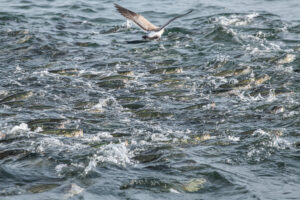
“In central and southern states, invasive silver carp frustrate anglers and state and federal resource managers,” says Ben Speciale, president of the U.S. Marine Business Unit at Yamaha. “But silver carp represent just a fraction of the invasive species problem in our nation. For every region, state, coast, and body of water, there is a similar pressing issue. We need a different, national approach to solving the aquatic invasive species problem. Yamaha supports this effort, because we believe the commission’s recommendations to Congress and the administration will help combat the AIS situation and help to allocate the resources needed to meet this challenge.”

“BoatU.S. has long worked to educate boaters on the impacts of invasive species and how boaters can better protect our waterways,” says Chris Edmonston, president of the BoatU.S. Foundation. “We look forward to working with industry and government agencies to come up with commonsense solutions that protect and enhance America’s waters.”

“The Aquatic Invasive Species Commission, spearhead by some of the biggest names in outdoor recreation and conservation, will be at the forefront of working alongside the administration and Congress to stop and reverse the spread of aquatic invasive species, which threaten recreational boating and fishing access, local economies, and aquatic ecosystems,” says Frank Hugelmeyer, president of the National Marine Manufacturers Association. “As the nation’s original conservationists, our industry looks forward to the commission’s findings and implementing more effective practices to eradicate AIS.”

“As the number and scale of aquatic invasive species grows, it’s clear that continuing with status quo isn’t going to solve the problem,” says Mike Leonard, vice president of government affairs for the American Sportfishing Association. “On behalf of the recreational fishing industry, which depends on healthy aquatic ecosystems, ASA is excited to be a part of the Aquatic Invasive Species Commission. While faced with a daunting task, I’m confident the experts that comprise the commission will help put us on a path toward better response, control, and eradication of aquatic invasive species.”


Members of the Blue-Ribbon Aquatic Invasive Species Commission:

John Arway, Retired State Director
Elizabeth Brown, North American Invasive Species Management Association
Jason Christie, Pro Angler
George Cooper, Forbes-Tate
Clay Crabtree, National Marine Manufacturing Association
Devin Demario, Association of Fish and Wildlife Agencies
Jake Dree, YETI
Chris Edmonston, BoatU.S.
Marc Gaden, Great Lakes Fishery Commission
Gene Gilliland, B.A.S.S.
Heather Hennessey, Yamaha
Alanna Keating, BoatU.S.
Mike Leonard, American Sportfishing Association
Chris Macaluso, Theodore Roosevelt Conservation Partnership
Mark Menendez, Pro Angler
Ish Monroe, Pro Angler
Steve Moyer, Trout Unlimited
John O’Keefe, Yamaha
Martin Peters, Yamaha
Stephen Phillips, Pacific States Marine Fisheries Commission
Christy Plumer, Theodore Roosevelt Conservation Partnership
Ann Rogers Harrison, Texas Parks and Wildlife Department
Jennifer Silberman, YETI
Mathew Van Daele, Sun’aq Tribe
Nick Wiley, Ducks Unlimited
Drue Winters, American Fisheries Society
Dennis Zabaglo, Tahoe Regional Planning Agency


Top photo by Todd Davis/U.S. Army Corps of Engineers

3 Responses to “New Commission Will Work to Control Aquatic Invasive Species”

  1. Bill Crumrine

    I have concluded with the problems of Axis deer, feral hogs, the ungodly carp and all its subspecies, the non-native aquatic weeds, the now glorification of the snakehead, the goby, and many more uncalculable non-natives species, be they mammal, fish, bird, starting somewhere, anywhere, is needed, to rid this nation of unwanted and not needed , no matter how smal or big, just do it!!!

  2. Clint Carter

    We are targeting Asian Carp and common carp with commercial fishing. We formed a co-op and have harvested over 10,000,000 pounds in the last couple years. The areas we target are looking really good with native fish populations. It’s very hard work and most of the guys are 50 to 70 years old. We have to build our own coolers and chill the fish to be able to sell them. We also mostly use 150 hp Yamaha outboard motors and lose lower units quite often. These things are financially burdensome to the fisherman. Maybe you could pass this along to some of your partners. I will be more than happy to take you out fishing with us and show you the improvements.

    Thanks

  3. For nearly 3 decades we have been battling the Asian carp invasion with little to no success and billions of dollars spent. As I write they now infested the water of every tributary and sub basin of the Mississippi River. The most effective tool currently at the ready is commercial harvest, processing and marketing of this natural resource (although unintended) and to use them for every available purpose and fact is there are many. No barrier is 100% effective, hence the important of commercial harvest. If we reduce to the numbers of Asian carp in states to the south of the Great Lakes, this reduces the pressure on barrier and limits the potential for new populations to spawn downstream. Therefore, every state in the continental United States needs to be following the same game plan. If we don’t use them now the invasion will never be stopped. Less spending dollars and time on redundant research and believe me I say there is copious amounts of that currently ongoing.

Do you have any thoughts on this post?

XHTML: You can use these tags: <a href="" title=""> <abbr title=""> <acronym title=""> <b> <blockquote cite=""> <cite> <code> <del datetime=""> <em> <i> <q cite=""> <s> <strike> <strong>

Comments must be under 1000 characters.

July 11, 2022

PA Legislature Passes Budget with Important Conservation Investments

Resolution calls for establishing a new Growing Greener program and Clean Streams Fund

On Friday, Pennsylvania Governor Tom Wolf signed into law a budget that prioritizes conservation by investing over $696 million in clean water, habitat restoration, and outdoor recreation access.

“Pennsylvania’s hunters and anglers should be proud to live and recreate in a state with not only incredible natural resources and public access, but also a legacy of strong state conservation funding initiatives to ensure these amenities will be enjoyed by future generations,” said Alexandra Kozak, Pennsylvania field manager for the Theodore Roosevelt Conservation Partnership. “We appreciate the leadership of lawmakers who know the importance of conservation to our state and thank the governor for signing this budget into law without delay.”

Aspects of two bills supported by the hunting, fishing, and conservation community were incorporated into the final budget resolution. As originally proposed in S.B. 525, a portion of PA’s $320 million in federal funding from the American Rescue Plan Act of 2021 will be used to establish a Growing Greener III program that enhances fish and wildlife habitat and creates better hunting and fishing opportunities with an additional $156 million to increase state park and outdoor recreation infrastructure. Further, $220 million will go to improving water quality, specifically focused on “non-point” sources of pollution, such as agricultural runoff and acid mine drainage, as originally proposed in S.B. 832 this session.

“CBF applauds the legislature and the governor for including in this budget much-needed funding to support farm conservation projects and the boots on the ground working hard to reduce pollution,” said Bill Chain, interim director and senior agriculture program manager in Pennsylvania for the Chesapeake Bay Foundation.

“The TRCP is grateful to state legislators for this commitment to supporting fish and wildlife populations, growing our state’s $58-billion outdoor recreation economy, and funding clean water solutions that will benefit habitat and communities from western Pennsylvania to the Chesapeake Bay,” continued Kozak. “We look forward to working with our partners and other stakeholders to see that these investments make a big difference in the field and on the water where they are needed most.”

Since December 2021, the TRCP has urged PA sportsmen and sportswomen to contact lawmakers in support of reinvesting American Rescue Plan funds in conservation through Growing Greener and a new Clean Streams Fund. Learn more here.

June 30, 2022

Three Ways Congress Can Respond to Drought Through Habitat Enhancement

As hotter, drier conditions challenge water resources in the West, lawmakers have opportunities to invest in resilience 

As Congress marches toward a hotly contested 2022 midterm election, with the potential for a new political landscape in 2023, much of the American West is experiencing a historic multi-year drought. Lawmakers have taken notice, and recent hearings in the Senate Energy and Natural Resources and Agriculture committees have highlighted the serious drought-related challenges to fish and wildlife habitat. While D.C. remains gridlocked on a host of issues, Congress also has some immediate opportunities to deliver on water and conservation policies that invest in habitat, access, forest health, and drought resilience.

Here’s what the TRCP and our partner groups are prioritizing on Capitol Hill in the next six months.

Investments in Agricultural Conservation and Forest Management

The House-passed Build Back Better reconciliation package, which included $27.1 billion for climate-smart agricultural practices and an additional $27.1 billion for forest management and watershed restoration, has been on the back burner since last year. Over the past month, some reports suggest Senate Democrats may consider a slimmed down version of the package.

Even a skinny version of the original proposal, should it include funding for conservation and forestry, would provide a significant boost to the existing suite of farm bill conservation programs that are perennially oversubscribed and build on the Bipartisan Infrastructure Law’s investments in forest management and habitat restoration. The TRCP is pushing for investments that would improve habitat and resilience to drought and wildfire at a landscape level. These efforts are not only climate-smart but would also pay dividends by avoiding the cost of species recovery and disaster response down the road.

Advancing Water Conservation and Drought Resilience Legislation in Committee

Over the past several weeks, Congress has held multiple hearings on short- and long-term solutions to addressing drought in Western watersheds. At one of those hearings, on June 14, Bureau of Reclamation Commissioner Camille Touton made a groundbreaking announcement: To mitigate the impacts of drought on the Colorado River Basin, states must develop a plan by mid-August to conserve 2 to 4 million acre-feet of water on an annual basis—or collectively more Colorado River water than what is currently allocated for the entire state of Arizona.

The scale of this challenge is immense and will require that Congress support immediate investments to assist states, Tribes, and other water users in reducing overall demand, while prioritizing multi-purpose conservation approaches that benefit the fish and wildlife habitat that is important to hunters and anglers. TRCP, for its part, is working with key members of the House and Senate as they consider advancing a package of Western water measures with a particular focus on legislation that can help achieve this scale of water conservation, prioritizes long-term resilience, and restores riparian areas and wetlands that provide natural water storage and fish and wildlife habitat.

Sending the Water Resources Development Act to the President’s Desk

The Water Resources Development Act, which authorizes and advances U.S. Army Corps of Engineers water projects, is typically considered and passed by Congress every two years. The TRCP and many of our partner organizations keep an eye on this legislation, because it has real implications for fish and wildlife habitat and aquatic ecosystem restoration. The House of Representatives passed its version of the 2022 WRDA bill earlier this year and, while the full Senate has yet to consider WRDA, the Senate’s Environment and Public Works Committee unanimously approved its version of WRDA in early May.


Although the House and Senate versions are slightly different, both include a provision developed by TRCP staff that directs the Corps to study the benefits of natural infrastructure for enhancing the resilience of the agency’s reservoir operations to drought and wildfire, while benefiting fish and wildlife. Once the Senate acts on WRDA, it will be important for both sides to resolve their differences and send a final bill to the president’s desk, so that important ecosystem restoration projects continue or, in the case of the new natural infrastructure study, get underway.

June 27, 2022

Limits on Industrial Menhaden Fishing in Virginia Would Boost Economy

Youngkin should end reduction fishing for menhaden in the Chesapeake Bay to support coastal communities, enhance recreational fishing, and create jobs

[This opinion piece was originally published in the The Virginian-Pilot and Daily Press.]

Virginia Gov. Glenn Youngkin is working hard to improve Virginia’s economy. By establishing an Amazon fulfillment center in Augusta County, which will create 500 new jobs, and a Walgreens micro-fulfillment center in Hanover County, which will create 249 new jobs, it’s clear that Youngkin is pro-business.

As a Republican governor focused on building up the commonwealth, the Chesapeake Bay is most likely high on Youngkin’s list of priorities.

The bay has been a breadbasket in our region for hundreds of years, producing vital food and resources, as well as supporting thriving coastal ecosystems. Now it’s time to focus economic growth on the Northern Neck, by revitalizing industries that have fallen to the wayside in favor of industrialized fishing, which has been pillaging our bay for decades.

In Reedville, within Northumberland County, internationally owned Omega Protein operates a largescale “reduction” fishing operation for Atlantic menhaden. Each year, more than 100 million pounds of Atlantic menhaden are being removed from bay waters and “reduced” to fish meal and oil for pet food and salmon feed. However, Atlantic menhaden play a vital role in coastal ecosystems by serving as the base of the food chain, supporting the diets of striped bass, bluefish, humpback whales, and osprey, to name a few.

Between 2009 and 2016, the value of the striped bass fishery, once the most economically valuable recreational fishery in Virginia, dropped by more than 50 percent from $382 million to $166 million. The decline in the striped bass population, which uses the Chesapeake Bay as its primary nursery grounds, can be traced back to the menhaden reduction fishery.

According to the latest ecosystem modeling, the health of the striped bass population is directly tied to menhaden fishing in the Atlantic. As menhaden reduction fishing increases, relative striped bass biomass decreases. In other words, because striped bass are so dependent on Atlantic menhaden, reduction fishing is estimated to contribute to about a 30-percent decline in the striped bass population coastwide.

Saltwater recreational fishing in Virginia is enjoyed by 600,000 anglers annually, contributing $465 million to the commonwealth’s economy and supporting more than 6,500 jobs. The opportunities created by these fisheries are the lifeblood of our coastal communities, as more than 90 percent of the sportfishing and boating industry is made up of small businesses.

Virginia’s menhaden resources belong to all citizens of the commonwealth and not to one company whose profits are funneled back to an international corporation and its other international subsidiaries. By allowing this company to take the resource from our bay at a lower cost, Virginia in effect is subsidizing this operation. And since the menhaden fishing season only runs eight months out of the year, it’s up to Omega’s employees to find a new job to cover that gap or apply for unemployment during the off-season.

It’s time that Youngkin becomes the first Virginia governor to boost our Northern Neck economy, just as he did in Augusta and Hanover counties, by ending menhaden reduction fishing in the Chesapeake Bay, and by establishing good-paying jobs for Virginia citizens.

The detrimental impact of menhaden reduction fishing on the marine environment is so pronounced that it is outlawed in every state along the East Coast except Virginia. Let’s get with the times and produce some real economic change in the commonwealth by prioritizing the livelihoods of our hardworking citizens rather than prioritizing the bank accounts of foreign companies.

Please join the Virginia Saltwater Sportfishing Association and other organizations by signing our petition to Gov. Youngkin to move the industrial harvest of menhaden out of the Chesapeake Bay by taking action right here.

Mike Avery, of Hampton, is the chairman of the Virginia Saltwater Sportfishing Association. Top photo by Steve Droter/Chesapeake Bay Program.

June 24, 2022

Agencies Announce Critical Next Step for the Boundary Waters

U.S. Forest Service says this kind of development would jeopardize the nation’s most popular wilderness

The conservation community is applauding a proposal from federal agencies that would protect the Boundary Waters Canoe Area Wilderness in Northeast Minnesota. A long-awaited assessment from the U.S. Forest Service shows that copper-nickel mining poses a major risk to habitat, and the draft environmental assessment proposes a 20-year ban on copper-nickel mining on federal lands in the watershed.

The proposed moratorium from the U.S. Forest Service and Bureau of Land Management would prohibit the development of any mineral leases on approximately 225,054 acres of Superior National Forest lands within the watershed of the Boundary Waters for up to 20 years.

“This EA validates what is obvious to any person devoted to this incredible water wilderness where we hunt and fish: The risk of copper-nickel mining to the purest waters remaining in the Lower 48 is flatly unacceptable,” says Lukas Leaf, executive director of Sportsmen for the Boundary Waters. “This type of mining is not compatible with the BWCA watershed, and it’s clear that there’s solid scientific footing to implement the proposed 20-year mineral withdrawal.”

Another mineral withdrawal had been proposed during the Obama administration, but the Trump administration reversed it shortly after. Last year, the Biden administration reinitiated the study for two years. Earlier this year, the Department of the Interior also decided to cancel two federal hardrock mineral leases located in the Superior National Forest within the Boundary Waters Canoe Area Wilderness watershed, citing the importance of sustaining the Boundary Waters’ recreational, economic, and fish and wildlife values.

As part of the draft environmental assessment, a 30-day public comment period will open on June 28—stay tuned to the TRCP for updates on this step, which will require hunters and anglers to take action.

“We’ll be encouraging sportsmen and sportswomen to participate fully in this latest opportunity to speak out against the risk of mining in one-of-a-kind habitat and a bucket-list hunting, fishing, and paddling destination,” says Whit Fosburgh, president and CEO of the Theodore Roosevelt Conservation Partnership. “Our community has been working diligently for years to get to this step, with a thorough assessment of the threats to the region from proposed development and clear support for conservation from our federal agencies. It speaks to the power of hunter and angler voices that we’ve come this far, and we appreciate the administration’s commitment to ensuring that future generations of Americans will be able to experience the Boundary Waters as we know them today.”

Following agency review of comments, the EA will be finalized and handed to the Bureau of Land Management, which will summarize and deliver it to the desk of Interior Secretary Deb Haaland for a decision.

The new draft EA would extend protections for 20 years, but only Congress can implement a permanent ban. Rep. Betty McCollum, who was recently awarded TRCP’s James D. Range Conservation Award, has championed such protections for the BWCA via the Boundary Waters Wilderness Protection and Pollution Prevention Act. If passed, H.R. 2794 would permanently protect 234,328 acres of federal lands and waters within the Superior National Forest from sulfide-ore copper mining. It has the support of local, regional, and national advocacy groups in favor of permanently protecting these critical resources.

To learn more, visit sportsmenbwca.org.

HOW YOU CAN HELP

TRCP has partnered with Afuera Coffee Co. to further our commitment to conservation. $4 from each bag is donated to the TRCP, to help continue our efforts of safeguarding critical habitats, productive hunting grounds, and favorite fishing holes for future generations.

Learn More
Subscribe


You have Successfully Subscribed!

You have Successfully Subscribed!

You have Successfully Subscribed!

You have Successfully Subscribed!

You have Successfully Subscribed!