Our Issues
Public Lands
Why It Matters

Hunting & Fishing Access

America’s 640 million acres of national public lands provide irreplaceable hunting and fishing opportunities to millions of Americans.

Learn More About Access
What TRCP is Doing

We’re working to safeguard America’s public lands so hunters and anglers always have quality places to pursue their passions.

 Brian Flynn, Two Wolf Foundation
How Sportsmen Are Doing It Right

Brian Flynn, Two Wolf Foundation's Story

Following a distinguished career in the U.S. Army, lifelong outdoorsman Brian Flynn returned home from a deployment in Afghanistan and…


Hunting
Why It Matters

Key Issues for America’s Hunters

Your source for the latest policy updates, conservation challenges, and opportunities shaping America’s hunting traditions.

What TRCP is Doing

We’re fighting for meaningful policy changes that benefit wildlife, our waters, and the American landscapes that make our outdoor traditions possible.

 Ryan Sparks
How Sportsmen Are Doing It Right

Ryan Sparks's Story

TRCP’s “In the Arena” series highlights the individual voices of hunters and anglers who, as Theodore Roosevelt so famously said,…

Fishing
Why It Matters

Key Issues for America’s Anglers

Your source for the latest policy updates, conservation challenges, and opportunities shaping America’s fishing traditions.

What TRCP is Doing

We’re fighting for meaningful policy changes that benefit wildlife, our waters, and the American landscapes that make our outdoor traditions possible.

 David Mangum
How Sportsmen Are Doing It Right

David Mangum's Story

Capt. David Mangum is a YETI ambassador and outdoor photographer who utilizes his talents to produce media that inspire a…

Private Land
Why It Matters

Stewardship on America’s private lands

With 70 percent of U.S. lands in private hands and many of our best hunt and fish opportunities occurring there, investing in voluntary conservation on working lands safeguards access, strengthens habitat and water quality, and ensures resilient landscapes.

Learn More
What TRCP is Doing

We champion policies and programs that restore wildlife habitat, improve soil and water health, and keep working lands productive.

 Ward Burton
How Sportsmen are Doing It Right

Ward Burton's Story

Ward Burton’s NASCAR driving career stretched across most of two decades. As an avid sportsman and conservationist, he founded the…

Special Places
Why It Matters

Special Places Worth Protecting

America’s most iconic landscapes provide unmatched habitat and unforgettable days afield. These places sustain wildlife, anchor local economies, and define the hunting and fishing traditions we pass down.

What TRCP is Doing

We’re working to conserve special places that provide world-class habitat and unforgettable opportunities for hunters and anglers.

 Franklin Adams
How Sportsmen Are Doing It Right

Franklin Adams's Story

As a true Gladesman, conservationist, and historian, Capt. Franklin Adams has spent more than six decades championing Everglades restoration efforts…

Habitat & Clean Water
Why It Matters

Healthy Habitat Powers Every Pursuit

All hunting and fishing opportunities depend on quality habitat, from clean water and healthy wetlands to winter and summer habitats and the migration corridors that connect them.

All About Habitat & Clean Water
What TRCP is Doing

We are working to safeguard the habitats that power every hunting and fishing opportunity.

 Alex Harvey
How Sportsmen Are Doing It Right

Alex Harvey's Story

Alex Harvey, founder of Legacy Land Management, is a registered professional forester in Mississippi and Alabama with a Master's degree…

Science
Why It Matters

Science That Guides TRCP

From conserving migration corridors and wetlands to ensuring clean water and resilient landscapes, science provides evidence that turns conservation goals into effective action.

Science for Conservation
What TRCP is Doing

For hunters and anglers, science safeguards the experiences we treasure including resilient big game populations, abundant fish, and wild places that endure changing social landscapes.

Jamelle Ellis
Your Science Expert

Jamelle Ellis's Story

Jamelle Ellis joined the Theodore Roosevelt Conservation Partnership in 2022. Jamelle spent the last three years as an environmental sustainability…

Where We Work
Across the Nation

Conservation Across America

TRCP works across the country to ensure hunters and anglers can enjoy healthy fish and wildlife and quality days afield, no matter where they live.

See All Issues
TRCP in Your Region

TRCP works across the country to ensure hunters and anglers can enjoy healthy fish and wildlife and quality days afield, no matter where they live.

Who We Are
Our Mission

To guarantee all Americans quality places to hunt & fish

We unite and amplify our partners’ voices to advance America’s legacy of conservation, habitat, and access.

Our Mission & Values
Our People & Partners
  • Meet the TRCP Team

    Our staff and board members unite and amplify our partners’ voices to advance America’s legacy of conservation, habitat, and access.

    Meet the Team
  • Our Partners

    ‘Partnership’ is in our name. We work with 64 diverse partner groups that represent today’s leading hunting, fishing, and conservation organizations in order to strengthen the sportsman’s voice in Washington, D.C.

    Our Partners
  • Corporate Council

    TRCP’s Corporate Council is made up of diverse corporations that share a common passion for conservation.

    Corporate Council
Our Organization

Looking for more information?

Explore our latest news, policy updates, and conservation resources to get the information you need.

Giving
How You Can Help

To guarantee all Americans quality places to hunt & fish

Your tax-deductible donation will support TRCP's mission, now and into the future.

DONATE
Special Ways to support trcp
  • Capital Conservation Awards Dinner

    The CCAD is one of Washington's best-attended conservation celebrations, featuring dinner, cocktails, and a silent auction.

    Learn More
  • Step Into the Arena

    Help us ensure that our treasured wild habitats and game remain intact for the next generation to enjoy – lend your support to the TRCP’s efforts today!

    Donate
  • Roosevelt Roast

    TRCP has partnered with Afuera Coffee Co. to further our commitment to conservation.

    Learn More
More donation options

Find the best way for you to lend your support. Join one of TRCP’s donor circles for special invitations, premium offerings from outdoor retailers, and more exclusive benefits. Take control of your legacy with planned giving or contribute to special conservation funds.

Other Ways To Give
News
In the Spotlight

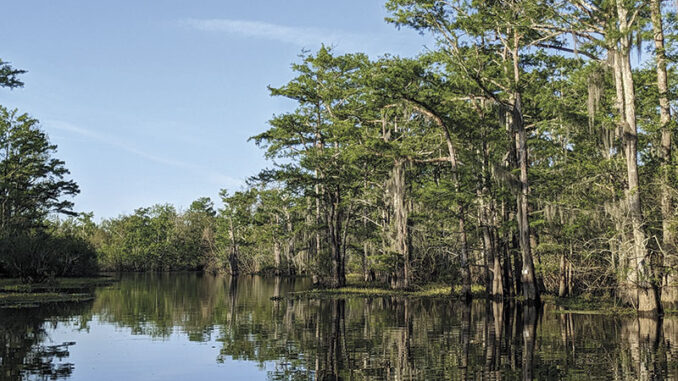
All Eyes On The Atchafalaya Basin

The Lower Mississippi River Comprehensive Management Study moves forward despite slashed budget

Read More

Stay Informed

Receive our newsletter, the Roosevelt Report, right in your inbox. Never miss the latest news in conservation issues.

Connecting Black Farmers with Opportunities to Benefit from Farm Bill Conservation

Meet The KKAC Organization, an Arkansas non-profit with a mission to educate minority youths about the value of agriculture and help Black landowners to grow thriving businesses that can be passed down for generations


In the course of our efforts to educate the hunting and fishing public about the significance of private land conservation and advocate for strong Farm Bill conservation programs, we have been introduced to some inspirational and hardworking groups making a big difference for fish and wildlife habitat. One of those groups is The KKAC Organization, based near the Arkansas-Mississippi border.

Founded by the Peers—a multi-generational farming family—The KKAC Organization began with a purpose of educating minority youth about agricultural production and business. But it quickly expanded to help farmers, ranchers, and landowners with estate planning, land management, and opportunities to take advantage of Farm Bill programs operated out of the U.S. Department of Agriculture’s Natural Resources Conservation Service.

KKAC saw a serious need in local communities, and their work has quickly made a difference for Black landowners, young people, and the hunters and anglers who are enjoying better habitat in two states that are primarily made up of private land. Here is their story. —Andrew Earl, TRCP Director of Government Relations


Our research indicates that around 1915, African Americans owned between 20 million and 30 million acres of land, or about 14 percent of the farmland in the country. Today, African Americans own around 1.5 percent of the production agricultural land in this country.

Many acres were lost due to discriminatory practices, and just bad public policy. Black landowners historically had limited access to loans and other resources at the USDA, where their applications were given less consideration. A Black producer could apply at the beginning of the year and not get the application funded until May or June. In the case that a Black producer’s loan was approved, they were required to have supervised credit—a joint accountholder or co-signer to OK anything purchased. In summary, the USDA refused to approve the loan in most cases, and the process was hostile for those Black agricultural producers who did receive a loan.

But approximately 30 percent of our land was lost due to our community’s failure to make wills and trusts to pass the land to the next generation.

In 2015, The KKAC Organization was initially founded to assist with agricultural production education for minority youth who did not understand the basic principles of growing crops. Still, we quickly expanded to address land retention and wealth-building issues for Black farmers.

Understanding the value of the land and agricultural production is essential to keeping these businesses going—this is why we want to educate as many young people as possible. We want our kids to understand the exciting dynamics of farming. They need to know that if you are a farmer, you are a business manager and need to know the basics of chemistry. If you own livestock, you need to know the basics of biology and the marketing process. If you own several acres of land, you might be considered “well-off.”

Eventually, we saw that as minority agricultural producers grew older, they felt that selling the land was the only option for financial benefit. But there are other options.

The Farm Bill’s Agriculture Conservation Easement Program allows landowners to receive near fair market value for land accepted into the program and still pass their land on to heirs, allowing land ownership to stay in the Black community. Many of these ACEP landowners also lease land to duck hunters, creating outdoor recreation access, or request permission from NRCS to sell trees once they mature. This also allows landowners to receive financial benefits from carbon credits.

Unfortunately, many landowners in Arkansas, Louisiana, and Mississippi still need to be educated about ACEP, woodland management, or other conservation efforts that could be financially beneficial. A large portion of the minority community does not understand that proper woodland management is as profitable as row crop production, if the wooded acres are properly managed. And these practices also help us conserve natural resources. That’s why we work hard to educate minority farmers on practices such as cover cropping, nutrient management, and land leveling. We believe that if farmers know their options, their farms can be more profitable and create wildlife habitat.

Progress can be slow, even for those landowners who understand the program benefits. In Arkansas, we helped more than 25 landowners apply for ACEP projects over three years, and unfortunately not a single one got funded. We recently secured Regional Conservation Partnership Program funding as an organization, so now we can be certain that at least 80 percent of the applicants will be funded through KKAC. We did not track all of our applicants in Mississippi, but we do believe that it is significantly more than our Arkansas count. Our organization is currently in the process of going back to obtain the number of Mississippi applicants that were driven by our outreach efforts over the past two to three years.

Over the next 50 years, KKAC hopes to have convinced the majority of our communities of the crucial importance of proper estate planning. We want The KKAC Organization and the new Heirs’ Property Clearinghouse—what we hope will become known as a reliable tool for clearing up issues with inherited property—to stop the loss of Black-owned land and ensure that the land that we own is being managed wisely.


Learn more about The KKAC Organization and follow their progress at kkac.org. Top photo by USDA/Lance Cheung.

Do you have any thoughts on this post?

XHTML: You can use these tags: <a href="" title=""> <abbr title=""> <acronym title=""> <b> <blockquote cite=""> <cite> <code> <del datetime=""> <em> <i> <q cite=""> <s> <strike> <strong>

Comments must be under 1000 characters.

Connecting Black Farmers with Opportunities to Benefit from Farm Bill Conservation

Meet The KKAC Organization, an Arkansas non-profit with a mission to educate minority youths about the value of agriculture and help Black landowners to grow thriving businesses that can be passed down for generations


In the course of our efforts to educate the hunting and fishing public about the significance of private land conservation and advocate for strong Farm Bill conservation programs, we have been introduced to some inspirational and hardworking groups making a big difference for fish and wildlife habitat. One of those groups is The KKAC Organization, based near the Arkansas-Mississippi border.

Founded by the Peers—a multi-generational farming family—The KKAC Organization began with a purpose of educating minority youth about agricultural production and business. But it quickly expanded to help farmers, ranchers, and landowners with estate planning, land management, and opportunities to take advantage of Farm Bill programs operated out of the U.S. Department of Agriculture’s Natural Resources Conservation Service.

KKAC saw a serious need in local communities, and their work has quickly made a difference for Black landowners, young people, and the hunters and anglers who are enjoying better habitat in two states that are primarily made up of private land. Here is their story. —Andrew Earl, TRCP Director of Government Relations


Our research indicates that around 1915, African Americans owned between 20 million and 30 million acres of land, or about 14 percent of the farmland in the country. Today, African Americans own around 1.5 percent of the production agricultural land in this country.

Many acres were lost due to discriminatory practices, and just bad public policy. Black landowners historically had limited access to loans and other resources at the USDA, where their applications were given less consideration. A Black producer could apply at the beginning of the year and not get the application funded until May or June. In the case that a Black producer’s loan was approved, they were required to have supervised credit—a joint accountholder or co-signer to OK anything purchased. In summary, the USDA refused to approve the loan in most cases, and the process was hostile for those Black agricultural producers who did receive a loan.

But approximately 30 percent of our land was lost due to our community’s failure to make wills and trusts to pass the land to the next generation.

In 2015, The KKAC Organization was initially founded to assist with agricultural production education for minority youth who did not understand the basic principles of growing crops. Still, we quickly expanded to address land retention and wealth-building issues for Black farmers.

Understanding the value of the land and agricultural production is essential to keeping these businesses going—this is why we want to educate as many young people as possible. We want our kids to understand the exciting dynamics of farming. They need to know that if you are a farmer, you are a business manager and need to know the basics of chemistry. If you own livestock, you need to know the basics of biology and the marketing process. If you own several acres of land, you might be considered “well-off.”

Eventually, we saw that as minority agricultural producers grew older, they felt that selling the land was the only option for financial benefit. But there are other options.

The Farm Bill’s Agriculture Conservation Easement Program allows landowners to receive near fair market value for land accepted into the program and still pass their land on to heirs, allowing land ownership to stay in the Black community. Many of these ACEP landowners also lease land to duck hunters, creating outdoor recreation access, or request permission from NRCS to sell trees once they mature. This also allows landowners to receive financial benefits from carbon credits.

Unfortunately, many landowners in Arkansas, Louisiana, and Mississippi still need to be educated about ACEP, woodland management, or other conservation efforts that could be financially beneficial. A large portion of the minority community does not understand that proper woodland management is as profitable as row crop production, if the wooded acres are properly managed. And these practices also help us conserve natural resources. That’s why we work hard to educate minority farmers on practices such as cover cropping, nutrient management, and land leveling. We believe that if farmers know their options, their farms can be more profitable and create wildlife habitat.

Progress can be slow, even for those landowners who understand the program benefits. In Arkansas, we helped more than 25 landowners apply for ACEP projects over three years, and unfortunately not a single one got funded. We recently secured Regional Conservation Partnership Program funding as an organization, so now we can be certain that at least 80 percent of the applicants will be funded through KKAC. We did not track all of our applicants in Mississippi, but we do believe that it is significantly more than our Arkansas count. Our organization is currently in the process of going back to obtain the number of Mississippi applicants that were driven by our outreach efforts over the past two to three years.

Over the next 50 years, KKAC hopes to have convinced the majority of our communities of the crucial importance of proper estate planning. We want The KKAC Organization and the new Heirs’ Property Clearinghouse—what we hope will become known as a reliable tool for clearing up issues with inherited property—to stop the loss of Black-owned land and ensure that the land that we own is being managed wisely.


Learn more about The KKAC Organization and follow their progress at kkac.org. Top photo by USDA/Lance Cheung.

April 7, 2022

Interior Reaffirms Commitment to Big Game Seasonal Habitats

Secretary Haaland announces new actions to conserve and enhance wildlife migration corridors in partnership with states and Tribes

Today, the Theodore Roosevelt Conservation Partnership celebrated a U.S. Department of the Interior event announcing a suite of developments and commitments centered on wildlife migration and connectivity.

Secretary Deb Haaland participated in a live-streamed panel discussion on wildlife movement corridors and habitat connectivity, highlighting steps that the Biden Administration is taking to continue implementation of Secretarial Order 3362—signed in 2018 by then-Secretary Ryan Zinke—as well as plans to expand this work to include additional species and geographies.

“Migration corridors and other seasonal habitats are critical to maintaining wildlife abundance and public hunting opportunities in the West,” said Whit Fosburgh, president and CEO of the Theodore Roosevelt Conservation Partnership. “We appreciate Secretary Haaland’s leadership on this issue, and today’s announcement further demonstrates that wildlife migration conservation is an issue that spans political boundaries and is something that all Americans can agree on.”

In addition to the panel discussion, several announcements from the event promise a continuing commitment and further progress on the issue of wildlife migration, including:

  • The National Fish and Wildlife Foundation announced a new round of grant funding for its Improving Habitat Quality in Western Big Game Migration Corridors and Habitat Connectivity program.
  • The U.S. Geological Survey is set to release the second volume of the ungulate migration atlas, an online and print publication that includes maps and detailed descriptions of numerous migration corridors across the West.
  • The U.S. Fish and Wildlife Service has entered into a memorandum of understanding with the Native American Fish and Wildlife Society, a national organization that provides its more than 200 member Tribes with assistance and support in the conservation and management of their fish and wildlife resources.

Wildlife migration corridor conservation was highlighted in the May 2021 report, Conserving and Restoring America the Beautiful. In August of that year, the Department of the Interior, Department of Agriculture, and state of Wyoming announced new cooperative efforts to partner in the conservation and enhancement of wildlife migration corridors, which marked the Biden Administration’s first agency efforts to address the issue.

“As landscapes across the West green up with the arrival of spring weather, the seasonal movements of elk, mule deer, and pronghorns are on full display, which brings into focus the very significant challenges these animals face in reaching the habitats they need to survive,” continued Fosburgh. “Hunters and conservationists recognize both the importance of Interior’s leadership on this issue as well as the need for continued cooperation by the administration, states, Tribes, and private landowners, all of whom have critical roles to play in conservation.”


Photo: Bill Sincavage (@jakeysforkphoto)

Why the Recovering America’s Wildlife Act Would Benefit Hunters and Anglers

This bipartisan effort to create dedicated funding for proactive conservation is the next major victory-in-the-making for the sporting community

Today, the Senate Environment and Public Works Committee passed the Recovering America’s Wildlife Act in a bipartisan vote of 15-5. This brings us one step closer to securing a solution that has been championed by the hunting and fishing community since 2016.

“Passage of the Recovering America’s Wildlife Act would be a defining victory for wildlife, habitat, outdoor recreation, and our economy,” says Whit Fosburgh, president and CEO of the Theodore Roosevelt Conservation Partnership. “We applaud members of the Senate Environment and Public Works Committee for this step today and urge lawmakers on both sides of Capitol Hill to take up and pass this bill without delay.”

It may not be a household name quite yet, but the Recovering America’s Wildlife Act is the next victory-in-the-making for sportsmen and sportswomen, on the scale of 2020’s Great American Outdoors Act. And we think you’re going to be hearing about it from every corner of the hunting, fishing, and conservation space over the next few months.

Here are five reasons why.

RAWA Would Save Taxpayers Money

A lack of federal conservation dollars, a changing climate, and declining habitat have all contributed to putting thousands of species at risk of being listed as threatened or endangered. Once a species reaches this point, recovery becomes significantly more uncertain, difficult, and expensive. Proactive efforts made at the early signs of decline are better for wildlife, cost less money, and are less restrictive to hunters and anglers. Plus, many habitat projects funded by the bill could improve natural infrastructure systems that prevent costly damage from extreme weather and other emergencies, like catastrophic wildfire.

RAWA Helps Species You Care About (and More)

State fish and wildlife agencies have identified more than 12,000 species in need of conservation action that would benefit from the Recovering America’s Wildlife Act. These include popular sportfish and game like the ruffed grouse, sage grouse, coho salmon, and sockeye salmon. If these sportfish and game were to end up threatened or endangered, it could lead to stricter bag limits or hunting and fishing moratoriums to save these species.

RAWA Would Supplement Hunter- and Angler-Sourced Conservation Funding

Currently, 80 percent of the funding for state fish and wildlife agencies comes from state hunting and fishing licenses and permits as well as federal excise taxes on hunting and fishing gear. While this funding model has worked for decades, more investment is needed. This is why pushing for passage of the Recovering America’s Wildlife Act is one of the TRCP’s top ten legislative priorities this year. The bill would amend the Pittman-Robertson Wildlife Restoration Act to provide an additional $1.4 billion per year—$1.3 billion for state agencies and $97.5 million for tribes—in dedicated funding to restore habitat, recover wildlife populations, and rebuild the infrastructure for both our natural systems and outdoor recreation opportunities.

RAWA Is Truly Bipartisan

The legislation has strong support on both sides of the aisle, with 32 co-sponsors in the Senate—evenly divided between parties—and hundreds of co-sponsors in the House.

RAWA Is the Win Some Lawmakers Need Right Now

This legislation has had momentum before, but the timing couldn’t be better for lawmakers who are up for re-election to bring a big win home for fish, wildlife, and habitat in a way that benefits not only sportsmen and sportswomen but Americans from all walks of life.

Take a few minutes to send your lawmakers a direct message urging them to support and pass the Recovering America’s Wildlife Act without delay.


Top photo by Roger Tabor/USFWS

March 24, 2022

The Key to Sage Grouse Recovery Is Partnership

One Farm Bill conservation program is a strong model for collaboration among federal, state, and local partners creating better habitat for sage grouse 

As most sportsmen and sportswomen know, a major conservation challenge that requires an even larger solution is the plight of the greater sage grouse. The sagebrush steppe ecosystem, which once spanned nearly 500,000 square miles across the Intermountain West, has shrunk by half, due to a variety of issues including invasive species, drought, land conversion, and development. These stressors have each contributed to population declines of over 95 percent and brought sage grouse to the brink of an endangered species listing in 2014.

The issue has been a political football in the years since, marked by court cases and management plan revisions, and all the while, Congress has included an annual rider in its spending bills to prohibit the use of U.S. Fish and Wildlife Service funding for purposes of listing the bird as endangered. Ten Western states have developed sage grouse management plans across 65 million federal acres, but populations continue to struggle.

As any wildlife biologist or land manager can attest, the issues that threaten a species and its associated habitats do not exist in a vacuum—nor do effective solutions. That’s why the careful collaboration and negotiation of conservation measures for sage grouse on public land are not enough.

Fortunately, there are a handful of tools available to private landowners to boost sage grouse habitat. One, the Regional Conservation Partnership Program, was created in the 2014 Farm Bill and has quickly grown into our nation’s premier public-private conservation program addressing resource challenges on a landscape scale. Based on its early popularity, the program was expanded in the 2018 Farm Bill and subsequently authorized at $300 million annually.

One of the success stories that brought Congress to invest in the RCPP in the 2018 bill was an effort underway in California and Nevada to ensure the future of the bi-state population of greater sage grouse. Led by the Eastern Sierra Land Trust, 11 national, state, and local partners have been working to conserve the bird since 2002. In 2017, those groups together leveraged $16 million in partner funds to secure an additional $8 million in RCPP dollars for habitat restoration on the California-Nevada border, an RCPP project known as “Livestock In Harmony.”

Map of the project area of the Regional Conservation Partnership Program.


In the five years since this RCPP investment was awarded, the locally led partnership has made significant funding and technical assistance available to farmers and ranchers to enroll in agricultural and wetland easements. It has also carried out ecosystem restoration, optimized water use, supported outreach and education, and more.

The project wraps up in June 2022, and we look forward to seeing the progress made on local sage grouse populations as well as the surrounding landscape generally. As improvement projects have done for many bellwether species, restoration of sage grouse habitat will have far-reaching benefits for all sagebrush species.

Of course, implementation of the expanded RCPP hasn’t been without hurdles. The TRCP and our partners—some of whom are involved in project implementation—hear concerns about application timelines and costly requirements for the share of funds not being contributed by the federal government. Especially as lawmakers begin to develop the 2023 Farm Bill, it’s critical that the U.S. Department of Agriculture is able to get authorized funding out the door and onto the landscape now, or risk Congress providing a much smaller sum to the program in the years ahead.

For more information on the RCPP and other Farm Bill conservation programs, visit trcp.org/farmbill.


Top photo courtesy of the USFWS / Tom Koerner via Flickr.

HOW YOU CAN HELP

TRCP has partnered with Afuera Coffee Co. to further our commitment to conservation. $4 from each bag is donated to the TRCP, to help continue our efforts of safeguarding critical habitats, productive hunting grounds, and favorite fishing holes for future generations.

Learn More
Subscribe


You have Successfully Subscribed!

You have Successfully Subscribed!

You have Successfully Subscribed!

You have Successfully Subscribed!

You have Successfully Subscribed!