Our Issues
Public Lands
Why It Matters

Hunting & Fishing Access

America’s 640 million acres of national public lands provide irreplaceable hunting and fishing opportunities to millions of Americans.

Learn More About Access
What TRCP is Doing

We’re working to safeguard America’s public lands so hunters and anglers always have quality places to pursue their passions.

 Brian Flynn, Two Wolf Foundation
How Sportsmen Are Doing It Right

Brian Flynn, Two Wolf Foundation's Story

Following a distinguished career in the U.S. Army, lifelong outdoorsman Brian Flynn returned home from a deployment in Afghanistan and…


Hunting
Why It Matters

Key Issues for America’s Hunters

Your source for the latest policy updates, conservation challenges, and opportunities shaping America’s hunting traditions.

What TRCP is Doing

We’re fighting for meaningful policy changes that benefit wildlife, our waters, and the American landscapes that make our outdoor traditions possible.

 Ryan Sparks
How Sportsmen Are Doing It Right

Ryan Sparks's Story

TRCP’s “In the Arena” series highlights the individual voices of hunters and anglers who, as Theodore Roosevelt so famously said,…

Fishing
Why It Matters

Key Issues for America’s Anglers

Your source for the latest policy updates, conservation challenges, and opportunities shaping America’s fishing traditions.

What TRCP is Doing

We’re fighting for meaningful policy changes that benefit wildlife, our waters, and the American landscapes that make our outdoor traditions possible.

 David Mangum
How Sportsmen Are Doing It Right

David Mangum's Story

Capt. David Mangum is a YETI ambassador and outdoor photographer who utilizes his talents to produce media that inspire a…

Private Land
Why It Matters

Stewardship on America’s private lands

With 70 percent of U.S. lands in private hands and many of our best hunt and fish opportunities occurring there, investing in voluntary conservation on working lands safeguards access, strengthens habitat and water quality, and ensures resilient landscapes.

Learn More
What TRCP is Doing

We champion policies and programs that restore wildlife habitat, improve soil and water health, and keep working lands productive.

 Ward Burton
How Sportsmen are Doing It Right

Ward Burton's Story

Ward Burton’s NASCAR driving career stretched across most of two decades. As an avid sportsman and conservationist, he founded the…

Special Places
Why It Matters

Special Places Worth Protecting

America’s most iconic landscapes provide unmatched habitat and unforgettable days afield. These places sustain wildlife, anchor local economies, and define the hunting and fishing traditions we pass down.

What TRCP is Doing

We’re working to conserve special places that provide world-class habitat and unforgettable opportunities for hunters and anglers.

 Franklin Adams
How Sportsmen Are Doing It Right

Franklin Adams's Story

As a true Gladesman, conservationist, and historian, Capt. Franklin Adams has spent more than six decades championing Everglades restoration efforts…

Habitat & Clean Water
Why It Matters

Healthy Habitat Powers Every Pursuit

All hunting and fishing opportunities depend on quality habitat, from clean water and healthy wetlands to winter and summer habitats and the migration corridors that connect them.

All About Habitat & Clean Water
What TRCP is Doing

We are working to safeguard the habitats that power every hunting and fishing opportunity.

 Alex Harvey
How Sportsmen Are Doing It Right

Alex Harvey's Story

Alex Harvey, founder of Legacy Land Management, is a registered professional forester in Mississippi and Alabama with a Master's degree…

Science
Why It Matters

Science That Guides TRCP

From conserving migration corridors and wetlands to ensuring clean water and resilient landscapes, science provides evidence that turns conservation goals into effective action.

Science for Conservation
What TRCP is Doing

For hunters and anglers, science safeguards the experiences we treasure including resilient big game populations, abundant fish, and wild places that endure changing social landscapes.

Jamelle Ellis
Your Science Expert

Jamelle Ellis's Story

Jamelle Ellis joined the Theodore Roosevelt Conservation Partnership in 2022. Jamelle spent the last three years as an environmental sustainability…

Where We Work
Across the Nation

Conservation Across America

TRCP works across the country to ensure hunters and anglers can enjoy healthy fish and wildlife and quality days afield, no matter where they live.

See All Issues
TRCP in Your Region

TRCP works across the country to ensure hunters and anglers can enjoy healthy fish and wildlife and quality days afield, no matter where they live.

Who We Are
Our Mission

To guarantee all Americans quality places to hunt & fish

We unite and amplify our partners’ voices to advance America’s legacy of conservation, habitat, and access.

Our Mission & Values
Our People & Partners
  • Meet the TRCP Team

    Our staff and board members unite and amplify our partners’ voices to advance America’s legacy of conservation, habitat, and access.

    Meet the Team
  • Our Partners

    ‘Partnership’ is in our name. We work with 64 diverse partner groups that represent today’s leading hunting, fishing, and conservation organizations in order to strengthen the sportsman’s voice in Washington, D.C.

    Our Partners
  • Corporate Council

    TRCP’s Corporate Council is made up of diverse corporations that share a common passion for conservation.

    Corporate Council
Our Organization

Looking for more information?

Explore our latest news, policy updates, and conservation resources to get the information you need.

Giving
How You Can Help

To guarantee all Americans quality places to hunt & fish

Your tax-deductible donation will support TRCP's mission, now and into the future.

DONATE
Special Ways to support trcp
  • Capital Conservation Awards Dinner

    The CCAD is one of Washington's best-attended conservation celebrations, featuring dinner, cocktails, and a silent auction.

    Learn More
  • Step Into the Arena

    Help us ensure that our treasured wild habitats and game remain intact for the next generation to enjoy – lend your support to the TRCP’s efforts today!

    Donate
  • Roosevelt Roast

    TRCP has partnered with Afuera Coffee Co. to further our commitment to conservation.

    Learn More
More donation options

Find the best way for you to lend your support. Join one of TRCP’s donor circles for special invitations, premium offerings from outdoor retailers, and more exclusive benefits. Take control of your legacy with planned giving or contribute to special conservation funds.

Other Ways To Give
News
In the Spotlight

Why TRCP Works to Conserve America’s Special Places

TRCP works to conserve special places like the Boundary Waters and landscapes that define hunting and fishing. Here's why.

Read More

Stay Informed

Receive our newsletter, the Roosevelt Report, right in your inbox. Never miss the latest news in conservation issues.

by:

posted in: Outdoor Economy

November 14, 2017

Atlantic States’ Vote on Management of Critical Forage Fish Opens Door for Better Study

Commission vote falls short of considering ecosystem-wide impacts in management of Atlantic menhaden but establishes new reference points for future decisions

BALTIMORE — Today, the Atlantic States Marine Fisheries Commission (ASMFC) voted to continue its current management approach for Atlantic menhaden, the second-most heavily commercially fished species in the nation and a critically important food source for sportfish like striped bass. With this vote, menhaden will continue to be managed as a single species until menhaden-specific ecological reference points can be developed. The Commission further decided to allocate a 0.5% minimum for each state and set the coastwide total allowable catch at 216,000 metric tons for the 2018 and 2019 seasons.

Recreational anglers have strongly advocated for an ecosystem-based management approach that considers the menhaden’s role in the food chain and factors in predator/prey relationships when setting catch limits. Anglers, small businesses, environmentalists, and other stakeholders from all fifteen ASMFC-managed states submitted hundreds of comments and turned out for fifteen public hearings up and down the coast in support of Option E to advance a more aggressive timeline for an ecosystem-wide management approach, before the states ultimately decided to maintain current management practices.

“The recreational fishing and conservation community looks forward to working with the Commission to set and implement these new ecological reference points as quickly as possible,” says Whit Fosburgh, president and CEO of the Theodore Roosevelt Conservation Partnership “We knew this would be a long-term process and we are ready to move forward with the best available science and are taking a long-term view. Moving to an ecosystem-based management of this important forage species is not only good for our fisheries, but also critical for our coastal economies, which get a substantial boost from reliable and sustainable recreational fishing opportunities.”

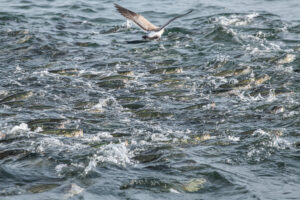
The importance of Atlantic menhaden, also known as pogey or bunker, is clear to recreational fishermen on the East Coast. As high-protein forage fish that striped bass, tuna, mackerel, sharks, drum, cobia, and tarpon depend on for food, the abundance of menhaden often determines the likelihood of a good day on the water. In addition, menhaden help filter water and improve marine habitats. By feeding on algae-causing plankton, an adult menhaden can filter 2.4 gallons of water per minute, providing a valuable service in a place like Chesapeake Bay, where nutrient runoff becomes concentrated.

Check the ASMFC’s website for the full meeting summary and latest menhaden stock assessments.

4 Responses to “Atlantic States’ Vote on Management of Critical Forage Fish Opens Door for Better Study”

  1. It’s time to frame this for what it is, a complete failure by the Atlantic States Fisheries Commission to embrace a management process that includes the entire ecosystem and not just a single species. There’s no sugar-coating it. Let’s hold the ASMFC accountable for this failure.

Do you have any thoughts on this post?

XHTML: You can use these tags: <a href="" title=""> <abbr title=""> <acronym title=""> <b> <blockquote cite=""> <cite> <code> <del datetime=""> <em> <i> <q cite=""> <s> <strike> <strong>

Comments must be under 1000 characters.

by:

posted in: Outdoor Economy

November 13, 2017

Locals Helped Hammer Out a Plan for Responsible Energy Development on Public Lands in Colorado

The process checks a couple of boxes for decision-makers who want less top-down policy-making and fewer hurdles for development, but the future of the plan is uncertain

Park County is a small, rural Colorado county that finds its identity in the outdoors. Ranching, hunting, fishing, camping, and a rural way of life bring people to live and work in South Park. Home to world-class fishing waters, including several miles of the South Platte River’s Gold Medal “dream stream,” South Park attracts anglers from all over the country. The 1,000-square mile South Park valley also provides phenomenal habitat for elk, mule deer, pronghorns, bighorn sheep, and many other game animals. State and BLM land in the Reinecker Ridge area supports more than 1,000 wintering elk from three different herds. These elk attract thousands of hunters to Colorado, boosting the outdoor recreation economy that generated more than $17.7 million in economic activity from hunting and fishing in 2007, and supported 207 jobs in Park County alone.

It’s no wonder that the local community cares about how this land is managed.

There’s a good chance that over the next 20 years Park County will be targeted by the oil and gas industry for development. This is why the community—including sportsmen, small businesses, agricultural producers, and other local stakeholders—has been heavily involved in the BLM’s planning process for the last seven years. We want to find a balance between a complete shutdown of extractive industries and irresponsible oil and gas drilling, which some worry will lead to long-term litigation and significant deterioration of big game habitat, greatly hampering our hunting opportunities. Surely, we can continue forward with this responsible and balanced approach that will serve the community and our fish and wildlife resources.

See It to Believe It

Last week, I led a field tour of the area for Senator Gardner’s staff, and I was joined by two of the three Park County commissioners, the CPW Area Wildlife Manager, a local cattle rancher, and representatives from the Colorado Wildlife Federation, Trout Unlimited, and the National Wildlife Federation. As locals, we wanted to showcase all of the land’s many benefits. As stakeholders who have been engaged in the BLM planning process since day one, we wanted to make clear that we wouldn’t be happy to see all our efforts come to nothing.

The South Park plan could be a model to follow, with a coalition of the willing coming together, regardless of ideology, to hammer out a plan that will allow for extraction of the oil and gas we all depend on without jeopardizing the traditional use of the land that makes South Park the community that it is. Compromises on things like phased development, when and where to apply seasonal closures for big game, and using science to determine proper mitigation and restoration techniques are already in place. Landowner, cattle rancher, and local advocate for the plan, Terry O’Neill stated “I often hear from Park County residents how deeply appreciative of these efforts they are.” Now, it is time for our representatives to stand up and show support for this locally vetted plan as it moves up the chain to decision-makers in D.C.

Field tour participants pictured on location at the James Mark Jones State Wildlife Area. From left to right: Lew Carpenter, National Wildlife Federation; Tyler Baskfield, Trout Unlimited; Samantha Gunther, Senator Corey Gardner’s office; Mark Lamb, Colorado Parks and Wildlife; Mark Dowaliby, Park County; Terry O’Neill, Park County resident. Cover photo of the author fishing on the South Platte River in the Charlie Meyers State Wildlife Area by Amber Hooper.

If the current administration has been vocal about anything, it’s the need for local stakeholders to be involved in shaping the policies that affect them and their livelihoods. This planning process in South Park is a textbook example of that. Our decision-makers are also committed to streamlining development, and having local support up front is a great way to give certainty to industry, too—as long as they’re willing to come to the table.

We’re hopeful that the vision and management direction decided on by South Park’s stakeholders moves forward as intended, and potentially serves as a great example for how to get things done elsewhere. This is an open call to decision-makers across the country to step up and do what’s right for America through comprehensive, responsible, and locally-driven energy development planning. As sportsmen and women, we’re counting on your leadership and commitment to solutions that make sense for the long-term health of our economy, public lands, and hunting and fishing traditions.

November 7, 2017

Lindsey Elliott Wants Everyone to Tell More Complex, Emotional Hunting Stories

Part Two in our series of conversations with women who are helping to shine a spotlight on habitat, access, and funding issues that impact hunting and fishing

Perhaps one of the best things to come out of recent threats to public lands has been a new kind of alliance between hunters, anglers, and other people who enjoy the outdoors, like skiers, hikers, bikers, climbers, and paddlers. Lindsey Elliott considers herself originally from this second group, but as an enthusiastic newcomer to hunting—she went on her first big game hunt last year—she’s become a very willing ambassador for our sports, especially with devotees of her business Wylder Goods, a built-by-women-for-women outdoor gear retailer she co-founded with her friend Jainee Dial in April 2016.

We talked to Lindsey about how she got interested in hunting—it involves her collecting roadkill, more on that later—and why she believes in weaving conservation stories into the marketing of a business that relies on the outdoors.

Photo by Jainee Dial.

TRCP: We first got to know you at the Outdoor Retailer show this summer, where you were on a panel about hunting and public lands with our president and CEO Whit Fosburgh. He said you had a really unique journey to discovering your love of hunting—can you share it with us?

ELLIOTT: Yeah, I was sort of the token beginner hunter on that panel, which was great because it’s such an interesting time to be joining the hunting community—there’s this bipartisan wave of support for public lands, and meanwhile women are increasingly getting into hunting as the overall number of hunters is declining. It’s part of why I’m motivated to share my story.

I don’t come from a hook-and-bullet background. I mean, I fished as a kid and I’ve gotten into flyfishing as an adult, but I don’t have any family members who hunt. I’d really never fired a high-powered rifle until last year.

I used to work in environmental education, and we’d show the kids things like primitive skills and basic firemaking. One day I found a dead fox on the side of the road—it had this really beautiful coat and it wasn’t mangled or anything, so I had an expert help me use it for a skinning demonstration. She did about half the job and talked me through the rest, and it ended up being this really incredible experience for me where I sort of felt like I was out of my body watching my hands move as if they knew where to go. I realized it didn’t matter whether I thought I could or couldn’t do it—it was biologically engrained in me.

That sort of lit a spark, and for the next eight years or so I just wanted more and more experiences like that. I got a collection permit to use other critters to teach my students, whether it was about feather design or what scavengers eat. I learned how to tan hides (not very well, because it’s super hard), and I just became the person everyone called when they had dead animals! I was like the roadkill queen of my community, which was pretty funny.

Photo by Jainee Dial.

Then I moved to Utah, and one of my friends here has been hunting for 25 years. His walls are covered in beautiful taxidermy mounts and skulls, and we’d eat these wonderful meals with wild game and I’d ask him about the stories behind all of it. He finally asked if I wanted to come along on a hunt and see for myself, so I got an apprentice hunter license.

I thought I’d just shadow him for the season, but then I got a tag and started training with a rifle, and since I wasn’t half bad it seemed like I could really go for it. Everything just kept lining up. By early fall, I’d spent about eight months reading a lot about hunting and sort of testing the conversation in my peer group, just exploring the idea. But now I really wanted to do this! I sincerely hoped I’d get the opportunity to shoot a deer—and I did.

It was a beautiful process, and one that I immediately felt aligned with. Since then, cooking that meat for friends has even deepened the spirituality of the experience. I was sure I’d know in an instant if hunting was going to be for me, and every part of my first hunt just confirmed that this is something I’m going to pursue for the rest of my life.

Photo by Abbi Hearne.

TRCP: You made a great point about this being a very big moment for public lands and maybe an opportunity for some non-traditional partnerships around conservation. But do you think that women who hunt are accepted by your customers who are adventure athletes? Is that a dated stereotype that there is mistrust between the two groups?

ELLIOTT: Coming from the climbing and biking side, I’ll say that it felt like a big risk a year ago to step out and start talking about hunting on the Wylder platform, because it can be such a divisive topic. But I have been so surprised at how interested outdoorswomen have been in my process and the stories that I’m sharing. Every time that I bring it up on social media, I get responses from a handful of women who say Thank you for sharing this, or I really want to get into this someday, or I just asked my dad if he would take me hunting for the first time. So, I do notice that there’s more genuine interest than I thought there was in a group where I was pretty concerned about broaching the conversation. That’s exciting.

Photo by Jainee Dial.

TRCP: You created Wylder because you saw a need to better serve women interested in outdoor gear made for them. Do you think the industry is evolving, and where do you think other women have an opportunity to help make a change?

ELLIOTT: The hunting industry does seem to be turning a corner, even in the short amount of time I’ve been paying attention, especially with Sitka’s women’s line coming out and there being more of an accurate representation of women in hunting magazines and videos.

Where I’m personally motivated is changing the style of storytelling, and I think that women should be a part of that: Let’s tell more complex, emotional stories about hunting, because there’s so much more to it than what a grip-and-grin photo shows you. You have this incredible moment of fear and anguish—I mean, I was buckling at the knees just watching from afar as my deer collapsed to the ground—and of course there’s a moment of relief that you finally got there, and you can eventually smile at some point for a photo. But I think a lot of that gets left out, and it could shift the public perception of what it means to be a hunter.

Photo by Abbi Hearne.

TRCP: Wylder is a certified B Corp, a for-profit company that uses the power of business as a force for good. Why is that important to you?

ELLIOTT: For us, it was part of the original conception of Wylder and really the only way we saw ourselves getting involved in business in the first place. We partner with four non-profits, donate two percent of our sales profit to them, and dedicate a quarter of our marketing to their calls to action and campaigns. Part of our goal is infusing learning and advocacy into the narrative of our online community so people feel less like visitors to wild places and more like part of the ecosystem. When I first learned about B Corps, it just struck me that we could start a business in a place where we are personally connected, where there’s a need in the market, and we can use it as the engine for driving attention toward the good work that we want to see happen in the world. It has been the biggest surprise in my career to end up doing what I’m doing.

Follow Lindsey at @lindenroams, @wyldergoods, and on the Wylder blog. If you know an amazing, inspiring sportswoman with a passion for conservation, tag us on social media and share her story. We’d love to feature more fierce females like this.

by:

posted in: Outdoor Economy

October 26, 2017

An Everglades Restoration Project Could Help Florida Recover from Hurricane Irma

Moving water south from Lake Okeechobee into the Everglades has been a goal for decades, but securing funding for and breaking ground on the project could end up helping hurricane-ravaged South Florida recover just as much as the fish habitat

While parts of Florida are steadily recovering from the devastation of Hurricane Irma’s vicious winds and storm surge, rural communities like Everglades City and Chokoloskee—home to fishing guides, marina owners, and others who make a living from the popularity of sportfishing—have a tougher road ahead. For these towns to recover, become more resilient, and continue to welcome countless anglers, there are a number of immediate and long-term challenges to overcome.


Home and Habitat Damage

Initial damage assessments concluded that more than half the houses in Everglades City were destroyed and 95 percent of area businesses were closed. Running water and electricity wasn’t available for weeks, and area sewage treatment failed, with sewage backing up into the streets. While basic utilities have been restored in the last month, many of the areas where vacationing anglers would stay and the homes where locals and guides live are still in disrepair.

Wetlands and waterways suffered, as well. Storm surge brought saltwater deep into brackish and freshwater wetlands, and streams became clogged with debris, like tree branches, sunken boats, siding, and appliances. Sewage spilled into waterways, and samples of receding floodwaters one week after the hurricane indicated the presence of more human or animal waste than the test could quantify.

All of this illustrates the need for basic infrastructure improvements to ensure that the Everglades can remain a pristine and safe place to fish, even after the next hurricane.


Restoration Must Continue

Fortunately, many experts on the ecology of the Everglades believe the system will heal itself in time, boosted by ongoing efforts to move freshwater back into the area from Lake Okeechobee. But these projects must proceed into the engineering and construction phases without delay.

Moving clean water south from the lake will help alleviate the lingering effects of this year’s tropical storm season. Heavy rains from Irma and other storms have filled Lake Okeechobee to an unsafe level, potentially stressing the dike that surrounds the lake and protects local communities. Too much freshwater in coastal estuaries, a condition that caused crippling algae blooms in the summer of 2016, is hurting fall fishing for redfish, speckled trout, and snook.

This is why the TRCP and a host of other sportfishing and conservation groups are working with Congress to expedite construction on projects to restore and protect critical habitat for fish and wildlife in South Florida.

In a letter to Senate and House leaders on October 10, a dozen groups—including the TRCP, Everglades Foundation, Snook and Gamefish Foundation, B.A.S.S., Guy Harvey Ocean Foundation, and International Gamefish Association—asked for funding to complete a water control structure that is critical to allowing water to move into affected areas. We also requested their long-term commitment to funding other approved Everglades projects.

Our hearts go out to fellow anglers and all Floridians who are rebuilding after the storm. The angling community in South Florida and beyond has responded by raising thousands of dollars to help those affected. This will help in the short term, but the long-term health of the area’s economy will depend on anglers returning to hire guides, buy ice and tackle, stay in area hotels, and eat at local restaurants. It is worth investing in infrastructure and habitat improvements to make sure that happens.


October 24, 2017

Congressional Farm Tour Highlights Conservation Achievements for Wildlife, Water, and the Economy

Hunting and angling groups joined members of the Iowa delegation to highlight opportunities to enhance conservation programs in the 2018 Farm Bill

On Friday, congressional staff representing Sen. Joni Ernst, Sen. Chuck Grassley, and Rep. David Young toured four southwest Iowa farm operations that have implemented conservation practices using funding and technical support from the federal Farm Bill. The tour was sponsored by a unique coalition of state and federal natural resource agencies and agriculture, conservation, and hunting and fishing groups working to enhance conservation provisions in the next five-year Farm Bill.

“We appreciate the Iowa delegation’s interest in seeing firsthand the practical application of conservation on private lands, and we hope to see these decision makers go on to lead the conversation about the many benefits of the Farm Bill Title II programs that enhance wildlife habitat, water quality, public access to hunting and fishing, and diverse rural economies,” says Christy Plumer, chief conservation officer for the Theodore Roosevelt Conservation Partnership.

The tour highlighted Farm Bill projects that have led to the recovery of pheasant and bobwhite quail habitat, wetlands restoration, nutrient loss and soil erosion prevention, improvements to water quality, enhancement of voluntary public access for hunting and fishing, and efforts to incentivize putting marginal lands into conservation instead of agriculture. The conservation discussion continued after lunch at the Winterset Gun Club with representatives from the TRCP, Iowa Soybean Association, National Bobwhite Conservation Initiative, Pheasants Forever, Quail Forever, National Association of Conservation Districts, and Iowa Department of Natural Resources.

“It’s easy to appreciate the appeal of or need for Farm Bill conservation cornerstones like the Conservation Reserve Program or Environmental Quality Incentives Program when you see quail, pheasants, and pollinators restored with native vegetation on the landscape,” says Tom Franklin, agriculture liaison for the National Bobwhite Conservation Initiative. “In Iowa, the results are real and tangible, and we appreciate the opportunity to show lawmakers those results.”

In a recent national survey of hunters and anglers, 75 percent agreed with providing financial incentives to farmers and ranchers to implement habitat conservation, and 87 percent said they do not want to see cuts to conservation programs, in the upcoming 2018 Farm Bill or anywhere else. This summer, the TRCP’s Agriculture and Wildlife Working Group revealed its list of recommendations for conservation and sportsmen’s access priorities in the 2018 Farm Bill, which Congress needs to finalize by September 30 of next year.

“There’s no question that hunters and anglers are at the table as the Farm Bill debate ramps up, because fewer resources for conservation on private lands means fewer options for American farmers and the loss of access and opportunity for sportsmen and women who spend money in rural communities,” says Eric Sytsma, regional representative for Iowa Pheasants Forever and Quail Forever. “I think our message to congressional staff on the tour was that cuts to conservation in the Farm Bill would be felt across the state, by farmers, hunters, and the folks who run gas stations, motels, diners, and other small businesses.”

Read the full list of recommendations for growing conservation in the next Farm Bill, supported by 31 hunting and fishing organizations.

HOW YOU CAN HELP

TRCP has partnered with Afuera Coffee Co. to further our commitment to conservation. $4 from each bag is donated to the TRCP, to help continue our efforts of safeguarding critical habitats, productive hunting grounds, and favorite fishing holes for future generations.

Learn More
Subscribe


You have Successfully Subscribed!

You have Successfully Subscribed!

You have Successfully Subscribed!

You have Successfully Subscribed!

You have Successfully Subscribed!