Our Issues
Public Lands
Why It Matters

Hunting & Fishing Access

America’s 640 million acres of national public lands provide irreplaceable hunting and fishing opportunities to millions of Americans.

Learn More About Access
What TRCP is Doing

We’re working to safeguard America’s public lands so hunters and anglers always have quality places to pursue their passions.

 Brian Flynn, Two Wolf Foundation
How Sportsmen Are Doing It Right

Brian Flynn, Two Wolf Foundation's Story

Following a distinguished career in the U.S. Army, lifelong outdoorsman Brian Flynn returned home from a deployment in Afghanistan and…


Hunting
Why It Matters

Key Issues for America’s Hunters

Your source for the latest policy updates, conservation challenges, and opportunities shaping America’s hunting traditions.

What TRCP is Doing

We’re fighting for meaningful policy changes that benefit wildlife, our waters, and the American landscapes that make our outdoor traditions possible.

 Ryan Sparks
How Sportsmen Are Doing It Right

Ryan Sparks's Story

TRCP’s “In the Arena” series highlights the individual voices of hunters and anglers who, as Theodore Roosevelt so famously said,…

Fishing
Why It Matters

Key Issues for America’s Anglers

Your source for the latest policy updates, conservation challenges, and opportunities shaping America’s fishing traditions.

What TRCP is Doing

We’re fighting for meaningful policy changes that benefit wildlife, our waters, and the American landscapes that make our outdoor traditions possible.

 David Mangum
How Sportsmen Are Doing It Right

David Mangum's Story

Capt. David Mangum is a YETI ambassador and outdoor photographer who utilizes his talents to produce media that inspire a…

Private Land
Why It Matters

Stewardship on America’s private lands

With 70 percent of U.S. lands in private hands and many of our best hunt and fish opportunities occurring there, investing in voluntary conservation on working lands safeguards access, strengthens habitat and water quality, and ensures resilient landscapes.

Learn More
What TRCP is Doing

We champion policies and programs that restore wildlife habitat, improve soil and water health, and keep working lands productive.

 Ward Burton
How Sportsmen are Doing It Right

Ward Burton's Story

Ward Burton’s NASCAR driving career stretched across most of two decades. As an avid sportsman and conservationist, he founded the…

Special Places
Why It Matters

Special Places Worth Protecting

America’s most iconic landscapes provide unmatched habitat and unforgettable days afield. These places sustain wildlife, anchor local economies, and define the hunting and fishing traditions we pass down.

What TRCP is Doing

We’re working to conserve special places that provide world-class habitat and unforgettable opportunities for hunters and anglers.

 Franklin Adams
How Sportsmen Are Doing It Right

Franklin Adams's Story

As a true Gladesman, conservationist, and historian, Capt. Franklin Adams has spent more than six decades championing Everglades restoration efforts…

Habitat & Clean Water
Why It Matters

Healthy Habitat Powers Every Pursuit

All hunting and fishing opportunities depend on quality habitat, from clean water and healthy wetlands to winter and summer habitats and the migration corridors that connect them.

All About Habitat & Clean Water
What TRCP is Doing

We are working to safeguard the habitats that power every hunting and fishing opportunity.

 Alex Harvey
How Sportsmen Are Doing It Right

Alex Harvey's Story

Alex Harvey, founder of Legacy Land Management, is a registered professional forester in Mississippi and Alabama with a Master's degree…

Science
Why It Matters

Science That Guides TRCP

From conserving migration corridors and wetlands to ensuring clean water and resilient landscapes, science provides evidence that turns conservation goals into effective action.

Science for Conservation
What TRCP is Doing

For hunters and anglers, science safeguards the experiences we treasure including resilient big game populations, abundant fish, and wild places that endure changing social landscapes.

Jamelle Ellis
Your Science Expert

Jamelle Ellis's Story

Jamelle Ellis joined the Theodore Roosevelt Conservation Partnership in 2022. Jamelle spent the last three years as an environmental sustainability…

Where We Work
Across the Nation

Conservation Across America

TRCP works across the country to ensure hunters and anglers can enjoy healthy fish and wildlife and quality days afield, no matter where they live.

See All Issues
TRCP in Your Region

TRCP works across the country to ensure hunters and anglers can enjoy healthy fish and wildlife and quality days afield, no matter where they live.

Who We Are
Our Mission

To guarantee all Americans quality places to hunt & fish

We unite and amplify our partners’ voices to advance America’s legacy of conservation, habitat, and access.

Our Mission & Values
Our People & Partners
  • Meet the TRCP Team

    Our staff and board members unite and amplify our partners’ voices to advance America’s legacy of conservation, habitat, and access.

    Meet the Team
  • Our Partners

    ‘Partnership’ is in our name. We work with 64 diverse partner groups that represent today’s leading hunting, fishing, and conservation organizations in order to strengthen the sportsman’s voice in Washington, D.C.

    Our Partners
  • Corporate Council

    TRCP’s Corporate Council is made up of diverse corporations that share a common passion for conservation.

    Corporate Council
Our Organization

Looking for more information?

Explore our latest news, policy updates, and conservation resources to get the information you need.

Giving
How You Can Help

To guarantee all Americans quality places to hunt & fish

Your tax-deductible donation will support TRCP's mission, now and into the future.

DONATE
Special Ways to support trcp
  • Capital Conservation Awards Dinner

    The CCAD is one of Washington's best-attended conservation celebrations, featuring dinner, cocktails, and a silent auction.

    Learn More
  • Step Into the Arena

    Help us ensure that our treasured wild habitats and game remain intact for the next generation to enjoy – lend your support to the TRCP’s efforts today!

    Donate
  • Roosevelt Roast

    TRCP has partnered with Afuera Coffee Co. to further our commitment to conservation.

    Learn More
More donation options

Find the best way for you to lend your support. Join one of TRCP’s donor circles for special invitations, premium offerings from outdoor retailers, and more exclusive benefits. Take control of your legacy with planned giving or contribute to special conservation funds.

Other Ways To Give
News
In the Spotlight

In the Arena: Josh Warren

For many hunters and anglers, the connection to conservation begins close to home — in the woods behind the house, along a familiar stretch of river, or through time spent learning from mentors and family. That sense of place is something Joshua Warren carries with him, both personally and professionally. As Director of Marketing at WorkSharp, Josh represents a company rooted in Ashland, Oregon, a community defined by its access to public lands and wild country.

Read More

Stay Informed

Receive our newsletter, the Roosevelt Report, right in your inbox. Never miss the latest news in conservation issues.

by:

posted in:

April 8, 2015

Critter Madness highlight reel: 2015 Champion

We started out with 32 of America’s game species. Now we have one.

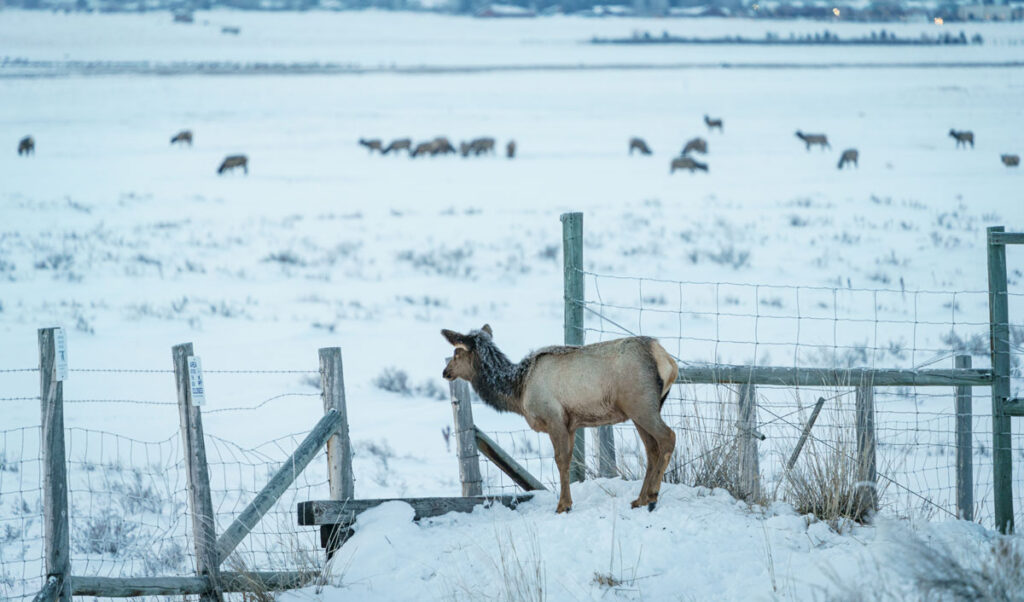
After four weeks of voting, hunters and anglers from across the country have crowned the elk as the king of American fish and game. The elk steamrolled its early competition, trouncing Team Moose and Team Muley with 70% and 75% of the vote, respectively. After gaining momentum in an upset win over whitetail, the elk faithful built up enough steam to topple the wild turkey. In the end, the Cinderella run of the brook trout didn’t stand a chance and the elk took home the distinction as the 2015 Critter Madness Champion.

We’ve had many other champions along the way and you can check out some of our past winners here and here. We gave away great prizes in every round from a killer line of sponsors, including Remington, Yeti Coolers, Costa Sunglasses, Abu Garcia, Orvis, Berkley Fishing, and Buck Knives.

Missed out on the action? Check out the final results via the Bird’s Eye View tab on our Critter Madness page or read our recap of Round 1, 2, and 3 here.

Is there a species you want to see in the next Critter Madness? Leave your nominations in the comments section and you could be driving the cous deer bandwagon next year.

Thanks for taking part in Critter Madness and keep it locked here for more great ways to support quality places to hunt and fish.

Do you have any thoughts on this post?

XHTML: You can use these tags: <a href="" title=""> <abbr title=""> <acronym title=""> <b> <blockquote cite=""> <cite> <code> <del datetime=""> <em> <i> <q cite=""> <s> <strike> <strong>

Comments must be under 1000 characters.

by:

posted in:

April 3, 2015

Snapshot of success: The Missouri River confluence

From California to New York, from Montana to Mississippi, hunters and anglers are leading important efforts to improve the quality and quantity of our water resources. The most successful conservation efforts are locally driven with a broad base of support, including federal financial and technical assistance.  They honor and respect the traditions of hunting, fishing, farming and ranching while protecting the resources we share.

In a report released on February 26, 2015, the TRCP showcases ten examples of collaborative, sportsmen-led efforts and the importance of federal funding that fuels them.  The lessons sportsmen have learned executing these projects tell a convincing story about the need for responsible water management and adequate funding.

Here is lesson four from the Missouri River:

The Missouri River Confluence: Where hunters, landowners & rivers meet

The Challenge

Photo courtesy of Missouri/Mississippi Rivers Confluence Conservation Partnership.

As St. Louis grew from a Midwestern frontier town to a city of 2.8 million, the area around the confluence of the Missouri and Mississippi Rivers (known as the Confluence Region) lost 90 percent of its natural wetland habitat.

But it wasn’t the fear of growth—and its impact on the floodplain—that prompted the 14-year, multimillion-dollar success story of the Missouri Confluence Conservation Partnership. It was a passion for ducks. If local hunters and birders didn’t sound the alarm, they knew the ducks would disappear.
The Confluence Region is now a revitalized wetland habitat in the heart of the St. Louis Metropolitan Area. The area is home to millions of migratory waterfowl and holds up to 260 billion gallons of water during the high flood season.
Photo courteys of Missouri/Mississippi Rivers Confluence Conservation Partnership.

“Building on and developing this floodplain has enormous impacts on wildlife habitat and neighboring communities,” says Jim Blair, chairman of the Great Rivers Habitat Alliance. “Ill-fated attempts to continually manipulate rivers, solely for commercial interests, ignores the needs of wildlife and the cultural values sportsmen treasure greatly. As has always been the case, it is sportsmen who protect and work to preserve precious habitats and the species that rely on them. Sportsmen are important allies in protecting our resources, and we knew we had to get them involved to find a solution.”

The Solution

In the early 2000s, a group of local landowners voted to take action, and it prompted a domino effect. Ducks Unlimited and the Missouri Confluence Collaboration Partnership used numerous private and federal grants, notably from the Doris Duke Foundation and the North American Wetlands Conservation Act (NAWCA) to leverage additional land protections in the area.
Photo courtesy of Missouri/Mississippi Rivers Confluence Conservation Partnership.

To date, thanks to the enthusiasm and momentum of local landowners and hunters, by early 2015, the Partnership expects to secure 9,194 acres of protected private property via 28 easements through Ducks Unlimited. Thanks to matching funding from NAWCA, the Partnership will ultimately protect and enhance a total of 43,000 acres of public lands in the region.

What’s Next

The Missouri Confluence Conservation Partnership hopes to acquire an additional $2.1 million to protect and enhance another 15,000 acres of habitat. If secured, the money will be used for easements on what is regarded as “highly expensive potential real estate.”

by:

posted in:

April 1, 2015

BLM debuts more balanced plan for 1.5 million acres of Colorado’s ‘Mule deer factory’

On Friday, the Bureau of Land Management’s White River Field Office in northwest Colorado issued its final Resource Management Plan Amendment (RMPA), with a specific focus on oil and gas development. The 1.5-million-acre area that will be impacted is home to two of the largest mule deer and elk herds in North America, and this RMPA will influence how those species are managed in the face of large-scale oil and gas development. After providing significant comments on the draft plan in early 2013, sportsmen are calling the final RMPA greatly improved.

Photo courtesy of the BLM.

“While there are still some concerns about long-term impacts tobig game and other wildlife, the BLM has made significant improvements from the draft plan,” said Nick Payne, our Colorado field representative. “The BLM has focused on maintaining wildlife populations and public recreationopportunities, while ensuring the responsible development of oil and gas resources. The ultimate success of this plan will depend on successful implementation in the coming years.”

The BLM has committed to sustaining habitat conditions that support big game populations at levels commensurate with long-term objectives established by Colorado Parks and Wildlife. This includes growing the White River mule deer herd, which populates what was once known as the ‘mule deer factory,’ to 67,500 animals. In the 2013 draft of the plan, the BLM had proposed a reduction of up to 50% of this herd, whose population was already 30% below the Colorado Parks and Wildlife management objective.

“Northwest Colorado offers some of the finest mule deer and elk hunting anywhere, and it is imperative that this resource be sustained for current and future generations of sportsmen,” says Ed Arnett, senior scientist for the TRCP. “I’d encourage BLM offices across the West to follow the lead of the White River Field Office in committing to the state fish and wildlife agencies’ established population objectives.” Arnett shared this opinion with the Denver Post’s Bruce Finley in this April 1 story.

The BLM will also be instituting a master leasing plan for more than 422,000 acres of BLM land surrounding Dinosaur National Monument in the northwest part of the field office. Development within that area will be introduced in stages to help minimize negative effects of development on wildlife and other resources. “Master Leasing Plans are an important component of responsible energy development,” says John Ellenberger, a retired Colorado Parks and Wildlife big game manager. “I was involved with establishing game management units in quality elk hunting areas, and I’m thankful that the BLM has adequately planned to give this important wildlife habitat ample consideration.”

Photo courtesy of BLM.

Within the White River RMPA, the BLM is applying measures to conserve about 167,000 acres of “generally intact and undeveloped backcountry,” which provide “high quality recreational settings, habitats, and primitive-type recreational opportunities.” This includes big game habitat and access to quality hunting opportunities in four Colorado Game Management Units that host thousands of hunters each year. “I appreciate the fact that the Bureau of Land Management has taken steps to maintain traditional land uses,” says Larry Amos, owner of Winterhawk Outfitters in Collbran and a volunteer with Colorado Backcountry Hunters & Anglers. “This plan will ensure that hunting, fishing, and outfitting can remain viable in Colorado, by conserving some of our most spectacular lands and wildlife habitat and keeping it intact.”

A local coalition of 32 sporting organizations and businesses was involved in this planning process, and sportsmen across the West are prepared to stay involved as the plans are implemented. “The BLM has taken positive steps to conserve intact backcountry lands with high quality wildlife habitat and hunting opportunities, and as a business owner whose bottom line depends on public lands hunting and fishing, I appreciate that,” said Kevin Timm, owner of Seek Outside, a Grand Junction-based outdoor gear manufacturer that sells products directly to sportsmen. “The stage is now set for sportsmen to engage in the forthcoming full RMP revision. It’s what we need to do to ensure that intact and undeveloped lands are responsibly managed as backcountry conservation areas.”

Read the final EIS here. Protests may be filed through April 27, 2015.

by:

posted in:

Critter Madness highlight reel: Fur, fins and feathers will fly

This is it. The field is set. After 32 species have scratched and clawed their way through three rounds, we have our four regional champions.

After edging out a crowded field that included the mallard, the pheasant, and the sharp-tailed grouse, the wild turkey emerged as our avian representative in the Final Four. The elk easily steamrolled the competition in the first three rounds and has emerged victorious as the big game hunting champion. The brook trout continues to shock the world, upsetting the rainbow trout and writing another chapter in its underdog story. And the chinook salmon outmuscled the yellowfin tuna to claim its place atop the saltwater fishing division.

> > Click here to play Critter Madness! < <

Now, these heavyweights, unencumbered by divisional foes, face off in unfamiliar habitats. What happens when bird meets beast? Will the elk continue to dominate, or will the battle-tested gobblers emerge as America’s favorite hunt?

And how brackish will things get on the aquatic side of the bracket? The brook trout has certainly fought in a heavier weight class before, but can it hang with the King?

To celebrate each of our divisional champions, we’re giving away another prize. Congratulations to Dee Jolley of Colorado Springs, Colo., the proud new owner of an Abu Garcia Orra SX Low Profile baitcasting combo.

At 12:01 AM Eastern on Friday, April 3, the winners advance, and we’ll give away our Final Four prize: a Yeti Tundra 45 cooler, customized with the TRCP logo. So don’t miss out. Enter to win, vote for your favorite game animal or fish, and see which two species make it to the championship.

Want other updates from the tournament? Check out our round 1 recap here and our round two recap here.

by:

posted in:

March 30, 2015

Critter Madness fan prediction: Yellowfin for it all

Image courtesy of Brett Fitzgerald.

Brett Fitzgerald from West Palm Beach, Fla., was selected as the second-round winner in our Critter Madness bracket challenge, and we sent him a shiny new pair of Costa shades to wear the next time he goes out fishing for snook. He knows a thing or two about Atlantic Coast fish—Brett is the southeast regional director for the Snook & Gamefish Foundation, where we’re lucky enough to work with him on conservation policy—but will his beloved saltwater species represent in the final round of Critter Madness?

TRCP: Brett, what did you think of the upset action in the first two rounds?

BF: You know, I really thought one of the bass would take the whole tournament, just because they have the broadest appeal. And I figured that people who fish for both would probably favor the smallmouth. But since the brook trout beat them both, it’s hard to say how things will turn out. This isn’t like picking a college basketball team—this is important stuff! For what it’s worth, I remember the first brookie I ever caught more than 40 years ago. It was tiny, I used a fly out of my grandpa’s flybox, and I’ve probably told the story a hundred times. I can’t say that about my first bass.

TRCP: Do you think the brookie will win it all?

BF: I do think the winner will be a fish, but the yellowfin tuna is going to pull it out. It’s an underdog, too.

Congratulations to Brett, and best of luck to his Critter Madness picks for the Final Four.

Vote now for your chance to win prizes from Abu Garcia, Remington, and Yeti.

Check out some other fan predictions here.

HOW YOU CAN HELP

TRCP has partnered with Afuera Coffee Co. to further our commitment to conservation. $4 from each bag is donated to the TRCP, to help continue our efforts of safeguarding critical habitats, productive hunting grounds, and favorite fishing holes for future generations.

Learn More
Subscribe


You have Successfully Subscribed!

You have Successfully Subscribed!

You have Successfully Subscribed!

You have Successfully Subscribed!

You have Successfully Subscribed!