Our Issues
Public Lands
Why It Matters

Hunting & Fishing Access

America’s 640 million acres of national public lands provide irreplaceable hunting and fishing opportunities to millions of Americans.

Learn More About Access
What TRCP is Doing

We’re working to safeguard America’s public lands so hunters and anglers always have quality places to pursue their passions.

 Brian Flynn, Two Wolf Foundation
How Sportsmen Are Doing It Right

Brian Flynn, Two Wolf Foundation's Story

Following a distinguished career in the U.S. Army, lifelong outdoorsman Brian Flynn returned home from a deployment in Afghanistan and…


Hunting
Why It Matters

Key Issues for America’s Hunters

Your source for the latest policy updates, conservation challenges, and opportunities shaping America’s hunting traditions.

What TRCP is Doing

We’re fighting for meaningful policy changes that benefit wildlife, our waters, and the American landscapes that make our outdoor traditions possible.

 Ryan Sparks
How Sportsmen Are Doing It Right

Ryan Sparks's Story

TRCP’s “In the Arena” series highlights the individual voices of hunters and anglers who, as Theodore Roosevelt so famously said,…

Fishing
Why It Matters

Key Issues for America’s Anglers

Your source for the latest policy updates, conservation challenges, and opportunities shaping America’s fishing traditions.

Sign Up For Forage Fish Updates
What TRCP is Doing

We’re fighting for meaningful policy changes that benefit wildlife, our waters, and the American landscapes that make our outdoor traditions possible.

 David Mangum
How Sportsmen Are Doing It Right

David Mangum's Story

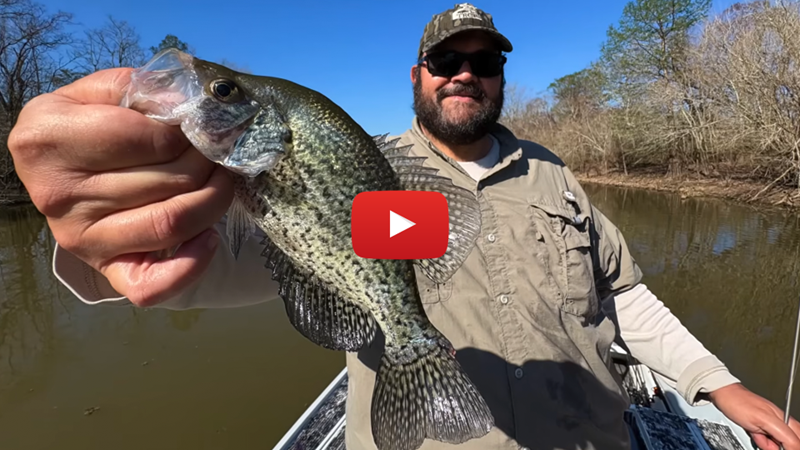
Capt. David Mangum is a YETI ambassador and outdoor photographer who utilizes his talents to produce media that inspire a…

Private Land
Why It Matters

Stewardship on America’s private lands

With 70 percent of U.S. lands in private hands and many of our best hunt and fish opportunities occurring there, investing in voluntary conservation on working lands safeguards access, strengthens habitat and water quality, and ensures resilient landscapes.

Take Action - Farm Bill 2026
What TRCP is Doing

We champion policies and programs that restore wildlife habitat, improve soil and water health, and keep working lands productive.

 Ward Burton
How Sportsmen are Doing It Right

Ward Burton's Story

Ward Burton’s NASCAR driving career stretched across most of two decades. As an avid sportsman and conservationist, he founded the…

Special Places
Why It Matters

Special Places Worth Protecting

America’s most iconic landscapes provide unmatched habitat and unforgettable days afield. These places sustain wildlife, anchor local economies, and define the hunting and fishing traditions we pass down.

What TRCP is Doing

We’re working to conserve special places that provide world-class habitat and unforgettable opportunities for hunters and anglers.

 Franklin Adams
How Sportsmen Are Doing It Right

Franklin Adams's Story

As a true Gladesman, conservationist, and historian, Capt. Franklin Adams has spent more than six decades championing Everglades restoration efforts…

Habitat & Clean Water
Why It Matters

Healthy Habitat Powers Every Pursuit

All hunting and fishing opportunities depend on quality habitat, from clean water and healthy wetlands to winter and summer habitats and the migration corridors that connect them.

All About Habitat & Clean Water
What TRCP is Doing

We are working to safeguard the habitats that power every hunting and fishing opportunity.

 Alex Harvey
How Sportsmen Are Doing It Right

Alex Harvey's Story

Alex Harvey, founder of Legacy Land Management, is a registered professional forester in Mississippi and Alabama with a Master's degree…

Science
Why It Matters

Science That Guides TRCP

From conserving migration corridors and wetlands to ensuring clean water and resilient landscapes, science provides evidence that turns conservation goals into effective action.

Science for Conservation
What TRCP is Doing

For hunters and anglers, science safeguards the experiences we treasure including resilient big game populations, abundant fish, and wild places that endure changing social landscapes.

Jamelle Ellis
Your Science Expert

Jamelle Ellis's Story

Jamelle Ellis joined the Theodore Roosevelt Conservation Partnership in 2022. Jamelle spent the last three years as an environmental sustainability…

Where We Work
Across the Nation

Conservation Across America

TRCP works across the country to ensure hunters and anglers can enjoy healthy fish and wildlife and quality days afield, no matter where they live.

See All Issues
TRCP in Your Region

TRCP works across the country to ensure hunters and anglers can enjoy healthy fish and wildlife and quality days afield, no matter where they live.

Who We Are
Our Mission

To guarantee all Americans quality places to hunt & fish

We unite and amplify our partners’ voices to advance America’s legacy of conservation, habitat, and access.

Our Mission & Values
Our People & Partners
  • Meet the TRCP Team

    Our staff and board members unite and amplify our partners’ voices to advance America’s legacy of conservation, habitat, and access.

    Meet the Team
  • Our Partners

    ‘Partnership’ is in our name. We work with 64 diverse partner groups that represent today’s leading hunting, fishing, and conservation organizations in order to strengthen the sportsman’s voice in Washington, D.C.

    Our Partners
  • Corporate Council

    TRCP’s Corporate Council is made up of diverse corporations that share a common passion for conservation.

    Corporate Council
Our Organization

Looking for more information?

Explore our latest news, policy updates, and conservation resources to get the information you need.

Giving
How You Can Help

To guarantee all Americans quality places to hunt & fish

Your tax-deductible donation will support TRCP's mission, now and into the future.

DONATE
Special Ways to support trcp
  • Capital Conservation Awards Dinner

    The CCAD is one of Washington's best-attended conservation celebrations, featuring dinner, cocktails, and a silent auction.

    Learn More
  • Step Into the Arena

    Help us ensure that our treasured wild habitats and game remain intact for the next generation to enjoy – lend your support to the TRCP’s efforts today!

    Donate
  • Roosevelt Roast

    TRCP has partnered with Afuera Coffee Co. to further our commitment to conservation.

    Learn More
More donation options

Find the best way for you to lend your support. Join one of TRCP’s donor circles for special invitations, premium offerings from outdoor retailers, and more exclusive benefits. Take control of your legacy with planned giving or contribute to special conservation funds.

Other Ways To Give
News
In the Spotlight

Preventing the Decline of a Top Louisiana Fishery

TRCP’s Chris Macaluso recently fished in Louisiana’s famous Atchafalaya Basin to target a local favorite catch and share updates and thoughts on the quintessential swamp’s restoration needs.

Read More

Stay Informed

Receive our newsletter, the Roosevelt Report, right in your inbox. Never miss the latest news in conservation issues.

by:

posted in:

May 18, 2016

Nevada-BLM-Landscape-10-river_web

Do you have any thoughts on this post?

XHTML: You can use these tags: <a href="" title=""> <abbr title=""> <acronym title=""> <b> <blockquote cite=""> <cite> <code> <del datetime=""> <em> <i> <q cite=""> <s> <strike> <strong>

Comments must be under 1000 characters.

by:

posted in:

House Passes Dangerous Sage-Grouse Rider in Defense Bill


State and federal progress to keep iconic Western gamebird off endangered species list could be undone by Congress

Today, the U.S. House of Representatives passed the National Defense Authorization Act. Contained in this ‘must-pass’ legislation that funds America’s military readiness was language that would force the Bureau of Land Management and U.S. Forest Service to abandon successful sage-grouse conservation plans. These federal plans resulted from years of collaboration and millions of taxpayer dollars that successfully kept the sage-grouse off the Endangered Species Act list.

“Sportsmen across the country are very disappointed with the House’s action to play politics with our national defense by inserting unrelated and detrimental language about sage-grouse conservation into the bill,” said Whit Fosburgh, president and CEO of the Theodore Roosevelt Conservation Partnership. “If language contained in the House bill were to become law, it would throw into question decades of statutory precedent, scores of environmental laws, and the subsequent legal decisions around those laws. This legislation is a Trojan horse for transferring public lands to the states and stands to have lasting repercussions beyond curtailing conservation efforts in sagebrush country.”

Opponents of the 2015 conservation victory would rather see state-developed plans implemented instead. The shift in management, elimination of judicial review, and long-term delay of any future listing decision erodes the implementation of bedrock conservation statutes—such as the National Environmental Policy Act, Endangered Species Act, and the Federal Land Policy and Management Act. While many of the 11 western state plans are good, some do not fully address threats to sage-grouse and need to be complimented by federal plans.

“Success for the greater sage-grouse was achieved in 2015 through the combination of strong conservation plans on federal public lands, coupled with state conservation plans and voluntary efforts from private landowners,” said Steve Williams, President of the Wildlife Management Institute. “Future success depends heavily on immediate and consistent implementation of all these combined efforts. Congressional efforts to eliminate federal plans would negate effectiveness of all efforts and result in a waste of both state and federal funds expended to date.”

“We are disappointed to see this effort by the House to snatch defeat from the jaws of a victory that has already been achieved,” said Howard Vincent, president and CEO of Pheasants Forever/Quail Forever. “The eleven western states, federal agencies, and private landowners must continue with their unprecedented efforts to conserve and manage sage-grouse. Congress simply needs to fund implementation of these combined efforts, especially private landowner efforts to conserve sage-grouse and 350 other sagebrush-dependent species.”

Sportsmen organizations continue to communicate to lawmakers that the best thing they can do for sage-grouse is ensure that adequate funding goes toward implementation of federal plans, that necessary resources go to the states, and that private lands conservation continues. If implemented, these plans would be a windfall for habitat of species like mule deer and pronghorns, not to mention a boon to sportsmen. Undoing those conservation plans might be the best way to ensure a listing—bad news for just about everyone.

The Senate is expected to consider their version of the NDAA—which currently does not include the detrimental sage-grouse provisions – sometime next week. “This issue has no link to military readiness and it’s simply playing politics to suggest otherwise,” continued Fosburgh. “Our community looks forward to working with the Senate to ensure that these provisions to undermine sage-grouse conservation are kept out of their version of the legislation.”

by:

posted in:

May 17, 2016

Gulf Snapper Anglers See Red, Experts Look To Improve Angling Opportunity

Constructive solutions the key to improved fisheries management and more certainty for recreational fishermen

Duck hunters in Louisiana have known for a month their season will begin in early November and last for 60 days. For the last 20 years, duck seasons in the Bayou State have consistently started either the first or second weekend in November, ended in late January, with a bag limit of six ducks.

Coastal anglers across Gulf States and beyond who pursue popular sportfish like speckled trout and redfish have year-round seasons and can take advantage of good weather and time off from work to catch a few fish and even take a couple home for dinner – all while maintaining healthy, sustainable stocks.

Image courtesy of Amanda Nalley/Florida Fish and Wildlife.

Consistency and certainty is vital to duck hunters, anglers, and the businesses that support those activities. However, achieving that level of certainty enjoyed in waterfowling, other hunting, and in state-based fisheries management has proven to be very difficult to maintain at the federal level where conservation measures required by the Magnuson-Stevens Act have forced managers to shorten fishing seasons for many popular reef fish such as red snapper and grouper. This problem has been compounded by imprecise data collection methods even despite recovering populations and stock sizes at record levels for many of these species.

In many cases, management approaches for these popular fish were established to allow a maximum amount of commercial harvest while maintaining barely sustainable stocks. Recreational fishing has been forced into the same management structure despite obvious differences in culture and approach to the resource by commercial and recreational fishermen.

The 2014 report “A Vision for Managing America’s Saltwater Recreational Fisheries” released by the TRCP and the foremost angling advocacy and conservation organizations in America made six recommendations to improve federal fisheries management for recreational fishing, including “adopting a revised approach to saltwater recreational fisheries management.”

These groups will take that recommendation a step further over the next two months by convening workshops comprised of experts in fisheries management, biology, and policy at the state and federal level as well as recreational fishing advocacy groups and conservation organizations. They will all discuss what works well in fish and game management, where the deficiencies are in achieving certainty in federal management, and how better data collection efforts and alternative approaches to current federal management can be incorporated into laws and policies that govern recreational fishing.

This is not an effort to simply launch attacks on current federal approaches and those responsible for their implementation. It is a cooperative effort by the TRCP, the American Sportfishing Association and other concerned sportfishing and conservation groups to try to constructively address management shortcomings that even NOAA Fisheries officials recognize as well.

Image courtesy of Amanda Nalley/Florida Fish and Wildlife.

The first workshop was held May 17-18 in Tampa, Fla. and facilitated by Florida Fish and Wildlife Conservation Commission’s Marine Fisheries Management Director Jessica McCawley and Deputy Director Jim Estes. Representatives from NOAA Fisheries gave overviews of current federal management policies and data collection efforts. This was closely examined and compared with state inland and coastal fisheries management approaches and to the cooperative effort by state and federal waterfowl biologists to balance conservation and access to duck and goose hunting. The workshop will also feature efforts by states like Louisiana and Florida to collect more accurate data on angler harvest in federal and state waters.

The second workshop will be in Washington, DC in June and will tackle how the management approaches discussed in the first meeting can be used to improve federal management through policy recommendations and legislative changes. Policy experts from the recreational fishing and conservation community will participate in the discussion alongside congressional staff who are working to reauthorize the Magnuson-Stevens Act and advance other fisheries management legislation.

The goal at the end of this process is to have a concise set of recommendations that can help Congress, state and federal fisheries managers, and anglers work together toward common goals of achieving long-term fisheries conservation and sustainability. By doing so in a constructive and collaborative way, we can allow the economy and the culture of recreational fishing to thrive as fish stocks across our coasts continue to grow larger and healthier.

by:

posted in:

May 16, 2016

Glassing The Hill: May 16 – 20

The TRCP’s scouting report on sportsmen’s issues in Congress

The Senate and the House are both in session.

Photo courtesy of Library of Congress.

One appropriation bill passed, 11 more to go. Last week the Senate passed a $37.5-billion Energy and Water Appropriations Bill on a 90-8 vote. The TRCP supported passage of this bill because it increased funding for water conservation and did not include harmful language blocking the administration’s Clean Water Rule that clarifies the jurisdiction of the Clean Water Act.  The House has yet to take up its version of the Energy and Water Appropriations Bill.

This week the Senate will consider “The Transportation, Housing and Urban Development, and Related Agencies Appropriations Act” and combine it with “The Military Construction, Veterans Affairs, and Related Agencies Appropriations Act.” The Senate Appropriations Committee will mark up legislation that affects the U.S. Department of Agriculture funding levels.

The House is expected to begin considering appropriation bills this week by starting with the military construction spending bill.

While Congress is making progress processing appropriations bills, many of the appropriations bills likely won’t be signed into law until Congress passes a continuing resolution or an omnibus bill in the lame duck.  It took the Senate three weeks to pass the Energy and Water Appropriations Bill. The chamber only has 29 legislative days before the national party conventions and 46 legislative days before the end of the fiscal year on September 30.

The National Defense Authorization Act is no place for attacks on critical conservation programs for sage grouse. The House begins consideration of its version of “The National Defense Authorization Act” (NDAA) this week.  The House bill includes language that would block conservation of critical habitat for greater sage grouse. Democrats are expected to offer an amendment to strike the language about sage grouse and two other endangered species provisions related to the lesser prairie chicken and burying beetle.

The Senate Armed Services Committee passed their version of the NDAA last week. This version did not include language regarding the greater sage grouse, but we’re anticipating that it could be offered as an amendment on the Senate floor as early as next week.

What’s the summer forecast look like for Western states?  On Tuesday, two drought bills offered by Senators Feinstein (D-Calif.) and Flake (R-Ariz.) will be debated by the Senate Energy and Natural Resources Subcommittee on Water and Power. Sen. Feinstein’s bill would primarily focus on California’s drought and change the state’s water facility operations, while Sen. Flake’s legislation would be directed at the Army Corps of Engineers to update a better forecasting plan for water storage. This will be the first time the Senate will consider comprehensive drought legislation that is directed toward Western states’ concerns.

Hearings and mark-ups:

Tuesday, May 17

Fisheries: Senate Environment and Public Works Subcommittee on Fisheries, Water and Wildlife hearing on marine debris

Fish: House Natural Resources Subcommittee on Water, Power and Ocean hearing entitled; “The Implications of President Obama’s National Ocean Policy”

Conservation: House Agriculture Subcommittee on Conservation and Forestry hearing entitled; “Focus on the Farm Economy: Impacts of Environmental Regulations and Voluntary Conservation Solutions”

Water: House Transportation and Infrastructure Subcommittee on Water Resources and Environment hearing on the Army Corps of Engineers chief’s reports

Water: Senate Energy and Natural Resources Subcommittee on Water and Power hearing on drought legislation

Federal Regulations: House Judiciary Subcommittee on Regulatory Reform, Commercial and Antitrust Law hearing on judicial review

Agriculture, FY17 Spending Levels: Senate Appropriations Subcommittee on Agriculture mark-up on the agriculture spending bill

Wednesday, May 18

Energy: Senate Environment and Public Works Committee mark-up on coal ash, nuclear bills

NOAA, FY17 Spending Levels: House Appropriations Subcommittee on Commerce, Justice, Science and Related Agencies mark-up on the Fiscal Year 2017 commerce, justice, and science related spending bill

Public Lands: House Natural Resources Subcommittee on Indian, Insular and Alaska Native Affairs hearing on legislation about transferring land to an Alaskan tribe

Thursday, May 19

DOI: House Natural Resources Subcommittee on Energy and Mineral Resources hearing on the U.S. Department of Interior’s economic development opportunities

Agriculture, FY17 Spending Levels: Senate Appropriations Committee mark-up on the agriculture spending bill

Energy: Senate Energy and Natural Resources Committee hearing to survey the OCS Oil and Gas Leasing Program


by:

posted in:

May 12, 2016

WATER CONSERVATION FUNDING IN SENATE SPENDING BILL WILL BENEFIT RIVERS AND FISH

News for Immediate Release

May. 12, 2016

Contact: Kristyn Brady, 617-501-6352, kbrady@trcp.org

Increased funding will go to proactive, collaborative projects that leave water in the river for fish and wildlife, with new aid available for drought-stressed areas

WASHINGTON, D.C. – Today the Senate passed a bill that sets funding levels for energy and water development and includes increased investments in conservation that would benefit fish, wildlife, riparian habitat, and sportsmen, especially in drought-stricken states.

In a victory for sportsmen, the bill did not include a rider to block the Clean Water Rule, which will restore protections to headwater streams and wetlands that are critical for fish and the majority of the country’s waterfowl. The Senate rejected Sen. Hoeven’s attempt to add the rider in late April.

“Hunters and anglers understand the essential nature of clean water and healthy river systems as well as the threats posed by drought and falling water levels,” says Jimmy Hague, director of the Center for Water Resources with the Theodore Roosevelt Conservation Partnership. “The Senate’s investments in water conservation will bring about tangible benefits for all species, improve our days afield, and begin to restore balance to the wild places we cherish.”

Senators voted to match the president’s request for critical funding in the WaterSMART Program, operated by the Bureau of Reclamation. With $24 million available for WaterSMART Grants, projects can move forward that leave more water in our rivers for fish and wildlife. The appropriations bill also includes $100 million to help address Western drought issues, and increases the amount that can be spent on cooperative water conservation efforts for the benefit of the entire Colorado River system.

“There is a right way and a wrong way to deal with drought, and Chairman Alexander and Ranking Member Feinstein have wisely chosen to fund programs that will help us find adequate water for fish and rivers, as well as for farmers and cities,” says Steve Moyer, vice president of government affairs for Trout Unlimited. “We are also pleased by the amendment offered by Nevada Senators Reid and Heller, which will strengthen a new and promising effort to develop water solutions for the Colorado River basin.”

The House still needs to vote on its energy and water appropriations bill, which contains the harmful rider that would block the Clean Water Rule.

Inspired by the legacy of Theodore Roosevelt, the TRCP is a coalition of organizations and grassroots partners working together to preserve the traditions of hunting and fishing.

HOW YOU CAN HELP

TRCP has partnered with Afuera Coffee Co. to further our commitment to conservation. $4 from each bag is donated to the TRCP, to help continue our efforts of safeguarding critical habitats, productive hunting grounds, and favorite fishing holes for future generations.

Learn More

You have Successfully Subscribed!

You have Successfully Subscribed!

You have Successfully Subscribed!

You have Successfully Subscribed!