1
Do you have any thoughts on this post?

Bill would direct Department of Transportation to establish grant program to fund the digitization of county public roads
The Theodore Roosevelt Conservation Partnership joins hunters, anglers, and all who drive rural, county roads in cheering House introduction of the Modernizing Access to Public Roads Act.
The bipartisan legislation is sponsored by Representative Blake Moore (R-Utah) and cosponsored by Representative Val Hoyle (D-Ore.), Representative Jeff Hurd (R-Colo.), and Representative Susie Lee (D-Nev.).
“The lack of publicly accessible and accurate county road map information is a key barrier for hunters and anglers trying to access public lands,” said Joel Pedersen, president and CEO of the Theodore Roosevelt Conservation Partnership. “The bipartisan MAP Roads Act will provide funding to address these mapping shortfalls and improve public access, resulting in reduced confusion for hunters and anglers trying to navigate rural road systems across America.”
The MAP Roads Act builds on the success of the MAPLand Act, MAPWaters Act, and MAPOceans Act by establishing a $20 million, 5-year pilot grant program through the U.S. Department of Transportation to:
⦁ Fund county road digitization by converting paper or outdated formats into standardized geospatial datasets.
⦁ Create publicly accessible statewide road data repositories that distinguish public and private roads, are compatible with third-party mapping platforms, and are updated annually.
⦁ Provide funds to support local capacity toward county subgrants, personnel training, or hiring contractors for data conversion.
The clarity and accessibility to this information for both the public and local municipalities would improve rural commerce, public safety, navigation, and access to public lands so more Americans can confidently access and enjoy their public roadways and the adventures beyond. The MAP Roads Act would not create any new road authority, or alter any legal status, ownership, or jurisdiction of roads.
“We appreciate Congressman Moore’s introduction of the Modernizing Access to Public Roads Act,” said Judy Camuso, commissioner of the Maine Department of Inland Fisheries and Wildlife and president of the Association of Fish and Wildlife Agencies. “This legislation affords the opportunity for states and local governments to utilize technology to improve road access data that will ultimately help improve public access for our hunters, anglers, and outdoor recreationalists.”
“Too often, outdoor recreationists are left guessing whether a rural road is public or private because county road records have not kept pace with modern navigation technology,” said Laura Orvidas, CEO of onX. “This uncertainty can restrict recreational access to public places and can cause conflicts between private landowners and the public. The MAP Roads Act will accelerate the modernization of these records, giving people the confidence to know where they can travel to reach public land. Not only will it expand recreational access, but it will also streamline county operations, all while preserving local authority over road networks.”
“In an era where mobile apps and GPS are essential for navigating vast public lands to reach remote hunting grounds, accurate and up-to-date county road data is critical,” said Kurt Dyroff, Co-CEO of the National Wild Turkey Federation. “The MAP Roads Act will reduce inadvertent trespass risks, enhance safety during hunts, and open safer, more reliable access to our nation’s public hunting opportunities.”
“Accurate and readily available maps are essential for ensuring access to our nation’s public lands and waters,” said Kaden McArthur, Congressional Affairs Director for Trout Unlimited. “We thank Representative Blake Moore for his leadership on the MAP Roads Act which would make it easier to find reliable routes to rivers and streams by bringing outdated road maps into the digital age. This legislation would allow anglers to spend more time on the water and less time worrying about how to get there.”
Learn more about TRCP’s commitment to public access HERE.
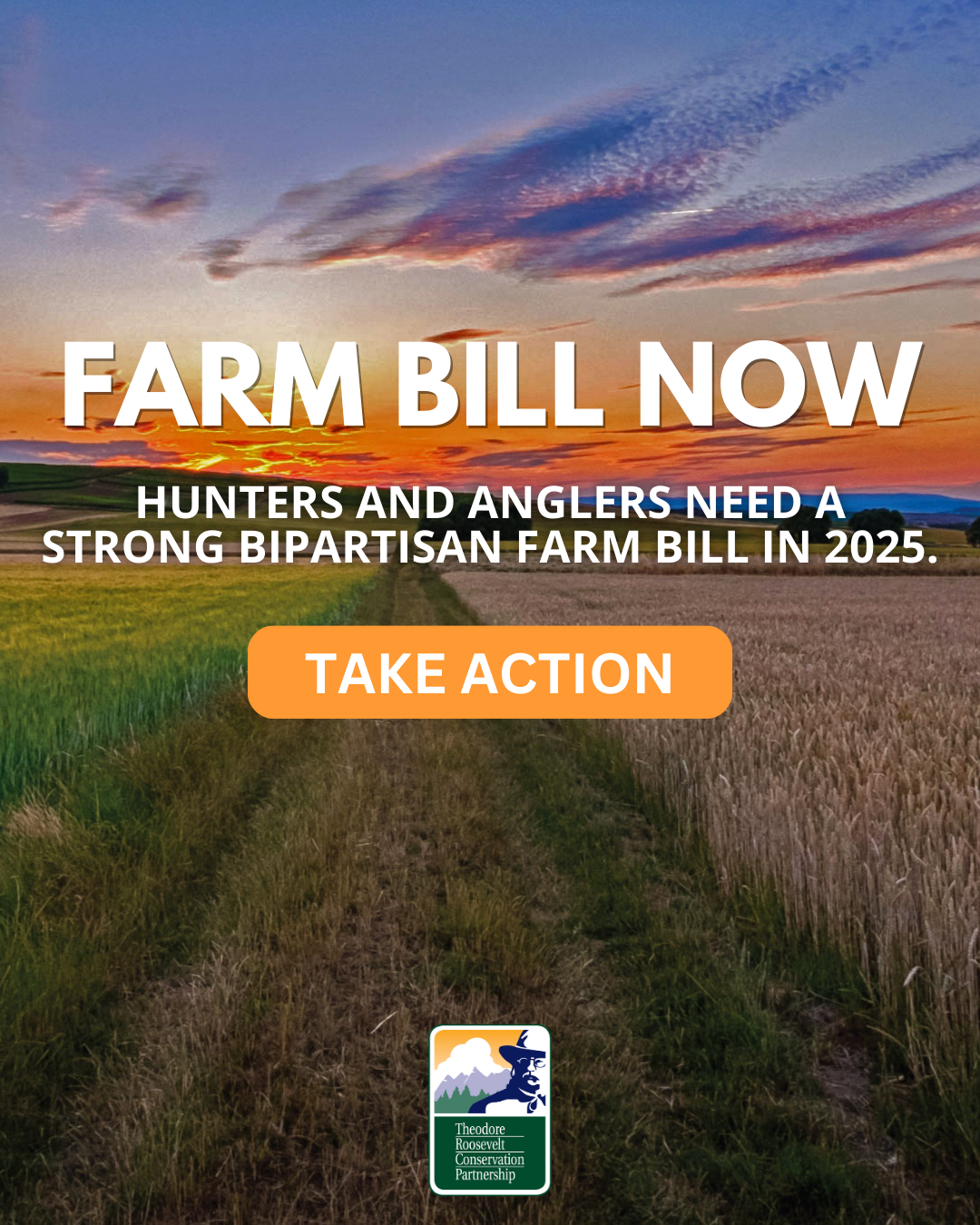
The Farm Bill is one of the most important pieces of legislation that Congress considers, supporting agriculture producers and helping to ensure families have food on the table. Within this bill are also vital conservation programs that strengthen habitat, improve water quality, and promote more sustainable landscapes – providing a lifeline for fish and wildlife. Encompassing food, fiber, and fuel production, nutrition assistance, agricultural research and trade promotion, conservation, and forestry, this bill is a must-pass. Despite that, we are now nearly two years past the initial expiration of the 2018 Farm Bill. Congress has managed to limp these programs along by extending them for one year (twice), but we are once again nearing a September 30th expiration of key Farm Bill programs, including the Conservation Reserve Program.
In recent years, Congress has used a process known as budget reconciliation to advance policy that would typically be part of a broader bipartisan Farm Bill. Although this has led to major investments in programs hunters and anglers care about, the budget reconciliation process has strict restrictions on policy changes, and its partisan nature tends to make accomplishments less durable.
That’s why the TRCP and hundreds of agricultural and conservation organizations from across the country sent a letter last week calling on Congressional leaders to prioritize the development, debate, and passage of a full, five-year, bipartisan Farm Bill.
“Good conservation work on agricultural and forest land in this country leads directly to improved fish and wildlife habitat and increased fish and wildlife populations,” said Aaron Field, TRCP’s director of private lands conservation. “Without a full, five-year Farm Bill, we miss our chance to improve how these programs operate, and we risk losing key conservation tools like the Conservation Reserve Program. It’s time for Congress to make the Farm Bill a priority.”
Want to learn more about how the Farm Bill impacts fish and wildlife? CLICK HERE.
We know it can be challenging to break through the alphabet soup of program acronyms to understand why the reauthorization and improvement of Farm Bill conservation programs is a top priority. In this short video series, we demystify the Farm Bill and the crucial conservations programs that sportsmen and women should care about.

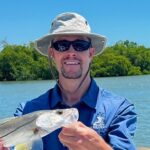
Born and raised in the Florida panhandle, Mangum has developed his expertise for finding and catching fish from decades on his home waters. He is widely known as a tarpon specialist (some might say addict) who lands a list of top clients the chance to battle the silver king as well as redfish and other quarry in shallow-water flats and coastal marshes. A passionate fly fisherman with an adventurous soul, he’s guided around North America, from Alaska to Colorado to the Bahamas, and has been featured in an episode of the Millhouse Podcast. Mangum also is an avid hunter, who’s relished many annual winter quail hunts in Arizona. Despite all this, his pursuits aren’t just limited to professional fishing, hobby hunting, and world-class photography. This renaissance (outdoors)man is also an accomplished oil painter whose works center on his saltwater lifestyle and other nature-focused subject matter. Mangum even boasts co-director credits for “Huff – The Film,” a short documentary about another legendary Florida guide and close friend.
Here is his story.
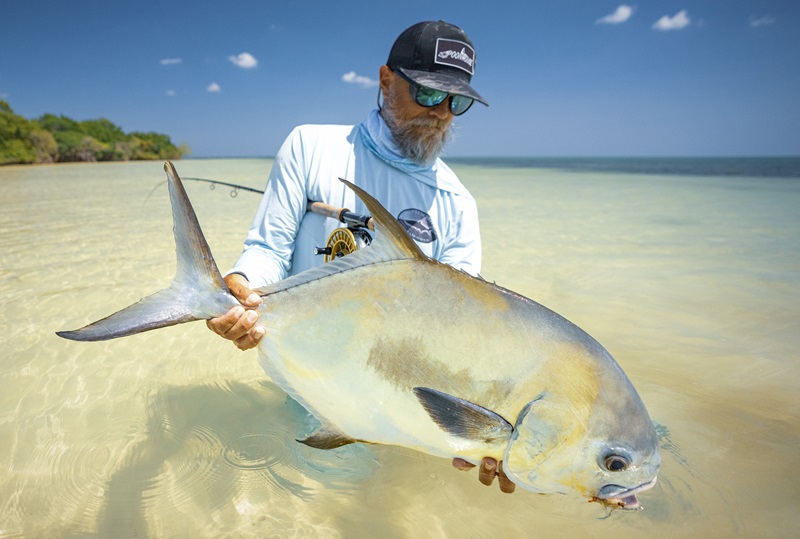
Like many others, I was introduced to the outdoors at a young age by my father, Col. Denny Mangum, United States Air Force. He taught me both upland bird hunting and fishing.
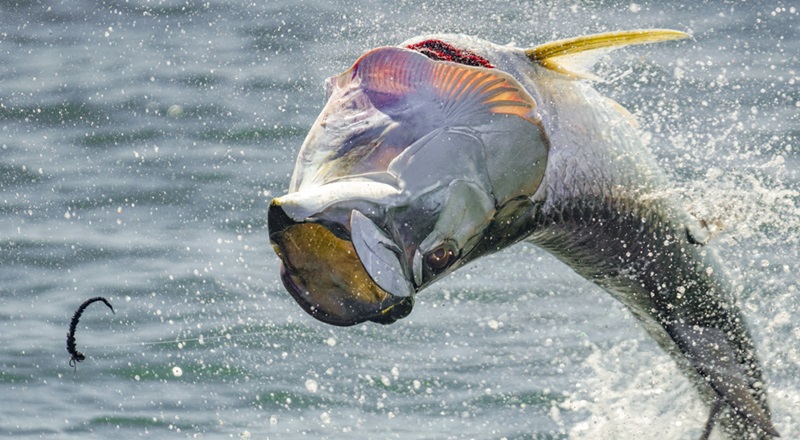
I remember the first time I saw tarpon was with him. I was young and we were fishing in Destin. He didn’t see the tarpon in the water, but several of them “rolled” at the same time and I swore to him I had seen some kind of sea serpent. That memory stuck with me for years until I was older and realized what I had seen. I have often wondered if that was the formative moment that would lead me down the path to becoming a guide, and more specifically, a guide who is known for tarpon.
If I could hunt or fish anywhere, I would return to southern Arizona to chase Mearns quail. I spent many a January with my first bird dog, Bella, in the high desert canyons of the Coronado National Forest.
Conservation is necessary for the places like this, where we hunt and fish. Without the conservation efforts of those before me, I believe our outdoor world would be in desperate shape. Anywhere you look (with a few exceptions), our natural world has taken a toll. Less fish, less animals, fewer places untouched by our human hand. It’s only because of the efforts of those without blinders on that we still have the remaining flora and fauna which we share the world with.

“Freshwater is the lifeblood of everything that lives in the salt. It all starts there.”
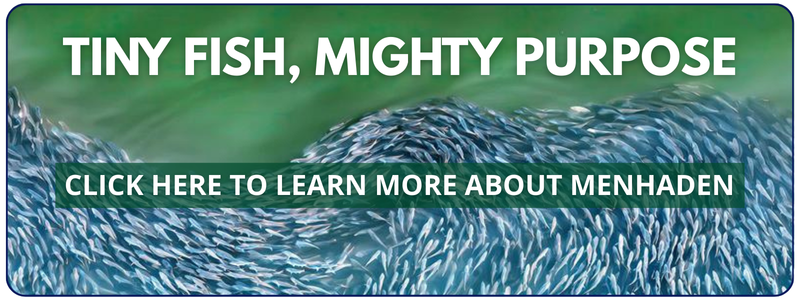
I believe the biggest conservation challenge along north Florida’s Gulf Coast is water. The diminished flows and instability of freshwater rivers, with either too much or not enough fresh water, is one of the most influential factors on coastal systems today. The balance has been thrown off. Freshwater is the lifeblood of everything that lives in the salt. It all starts there. Where salt and fresh meet, plankton and zooplankton thrive and start the food web. At the top of that web is one of the most important fish in the sea, the menhaden.
Gamefish, birds, and marine mammals depend on the menhaden as their primary food source. These small filter feeders are essential to ALL creatures in the sea. Without the menhaden everything we see in our coastal ecosystems falls apart.

The simple reason it’s important for me personally to be involved in conservation is that I feel morally obligated to take action when I see problem. We all should! Especially those of us who make a living using the outdoor resources.
“Without the menhaden everything we see in our coastal ecosystems falls apart.“
It’s obvious why conservation should matter to the next generation of hunters and anglers. We just need to ask future outdoorsmen and women this question: What will the world look like if conservation isn’t important to you? Just imagine the current place you live, but without the sounds of birds, of insects and frogs at night. Imagine no fish in the water and no deer in the woods. That’s a world none of us wants, and that’s why we should all be adamantly involved in conservation.
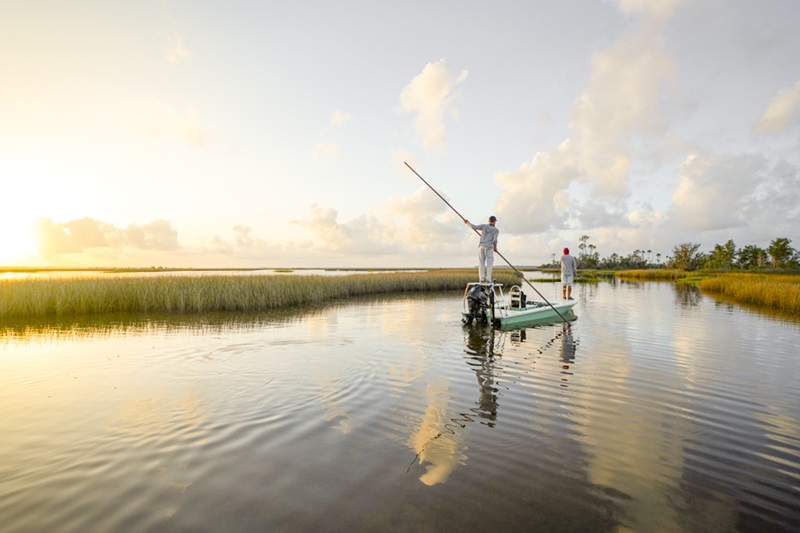
Banner image credit: Jay Riley
Help sustain public access, fish and wildlife habitat, and the outdoor traditions we all value
The Tongass and Chugach National Forests are two of the most spectacular and unique landscapes in the United States. Together, they encompass more than 22 million acres of intact habitat for fish and wildlife, support local economies, and provide opportunities for rural subsistence as well as recreational hunting and fishing. These lands are part of what make Alaska truly extraordinary.
On August 29, the U.S. Department of Agriculture announced a proposal to rescind the Roadless Area Conservation Rule across the National Forest System, including in Alaska. If completed, this action would remove important conservation measures that have helped maintain some of the best remaining big game and salmon habitat in the state.
Why These Forests Matter
The Chugach National Forest supports key salmon streams and moose, bear, and mountain goat habitat. Because of its proximity to Anchorage, these nearly 6 million acres are crucial to local communities that depend on accessible public lands.
The Tongass National Forest is home to all five species of wild Pacific salmon and provides high-quality habitat for black-tailed deer, brown bear, and mountain goats. These nearly 17 million acres in Southeast Alaska are also vital for subsistence users, as well as fishing and tourism economies.
Old-growth forests on the Tongass—dominated by large western hemlock and Sitka spruce trees in roadless areas—provide a critical mosaic of habitat for deer, especially during heavy snow years. According to the Alaska Department of Fish and Game, severe winter weather is one of the biggest factors influencing deer populations, making intact habitat all the more important.
The Tongass is also at a turning point. Millions of acres of young-growth forests are now ready for restoration and management that can both support the forest products industry and strengthen habitat for fish and wildlife. Rather than remain locked in old debates over large-scale old-growth logging, this is an opportunity to invest in young-growth management that benefits local communities, hunters, anglers, and the long-term productivity of public lands in Southeast Alaska.
A Need for Dialogue
Hunters and anglers need to remain at the table as decisions are made about national forests in Alaska. We believe it is possible to support local economies, provide flexibility for responsible management, and sustain the fish, wildlife, and access values that are so important to hunters, anglers, and rural communities.
Sportsmen and women must weigh in to help shape this outcome. By submitting comments, we can encourage the Forest Service to pursue a balanced approach that maintains consistent safeguards for roadless area habitats while also supporting restoration, young-growth management, and community needs.
Take Action
The USDA is accepting public comments on the future of the Roadless Rule in Alaska until September 19. Hunters and anglers can make a difference by speaking up for intact habitat, strong local economies, and lasting outdoor traditions.
Sample Comment
As a hunter, angler, and public land user, I encourage a thoughtful approach when reevaluating roadless areas in Alaska’s Tongass and Chugach National Forests. Roadless areas provide essential habitat for fish and wildlife, support local economies, and offer important opportunities for hunting, fishing, recreation, and subsistence. Please ensure that any changes to the Roadless Rule will maintain these values and benefit both current and future generations of Alaskans.
TRCP has partnered with Afuera Coffee Co. to further our commitment to conservation. $4 from each bag is donated to the TRCP, to help continue our efforts of safeguarding critical habitats, productive hunting grounds, and favorite fishing holes for future generations.
Learn More