by:

posted in: In the Arena

September 17, 2025

In the Arena: David Mangum

TRCP’s “In the Arena” series highlights the individual voices of hunters and anglers who, as Theodore Roosevelt so famously said, strive valiantly in the worthy cause of conservation.

Capt. David Mangum

Hometown: Santa Rosa Beach, Florida 
Occupation: Saltwater fly-fishing guide for Shallow Water Expeditions
Conservation credentials: Mangum is a YETI ambassador and outdoor photographer who utilizes his talents to produce media that inspire a spirit of conservation and educate saltwater anglers. He’s also been involved with the fish-tagging efforts of the Bonefish & Tarpon Trust and the Rosenstiel School of Marine, Atmospheric, and Earth Science.
Credit: Jay Riley

Born and raised in the Florida panhandle, Mangum has developed his expertise for finding and catching fish from decades on his home waters. He is widely known as a tarpon specialist (some might say addict) who lands a list of top clients the chance to battle the silver king as well as redfish and other quarry in shallow-water flats and coastal marshes. A passionate fly fisherman with an adventurous soul, he’s guided around North America, from Alaska to Colorado to the Bahamas, and has been featured in an episode of the Millhouse Podcast. Mangum also is an avid hunter, who’s relished many annual winter quail hunts in Arizona. Despite all this, his pursuits aren’t just limited to professional fishing, hobby hunting, and world-class photography. This renaissance (outdoors)man is also an accomplished oil painter whose works center on his saltwater lifestyle and other nature-focused subject matter. Mangum even boasts co-director credits for “Huff – The Film,” a short documentary about another legendary Florida guide and close friend.

Here is his story.
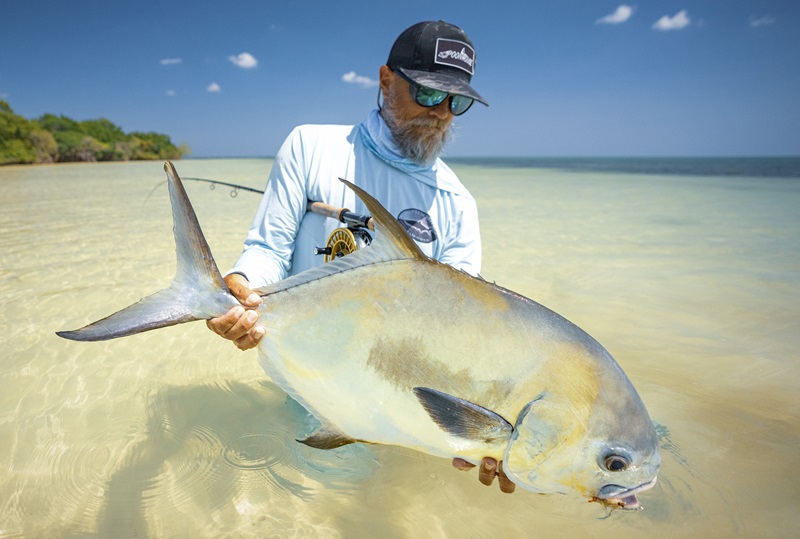
Credit: David Mangum

Like many others, I was introduced to the outdoors at a young age by my father, Col. Denny Mangum, United States Air Force. He taught me both upland bird hunting and fishing.

I remember the first time I saw tarpon was with him. I was young and we were fishing in Destin. He didn’t see the tarpon in the water, but several of them “rolled” at the same time and I swore to him I had seen some kind of sea serpent. That memory stuck with me for years until I was older and realized what I had seen. I have often wondered if that was the formative moment that would lead me down the path to becoming a guide, and more specifically, a guide who is known for tarpon.
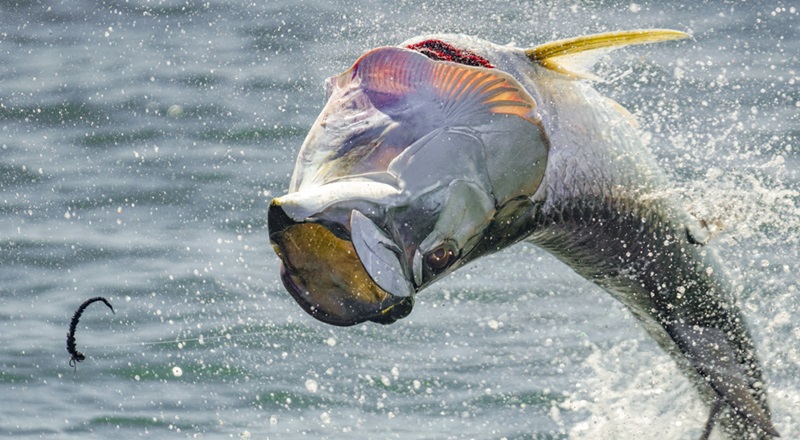
Credit: David Mangum

If I could hunt or fish anywhere, I would return to southern Arizona to chase Mearns quail. I spent many a January with my first bird dog, Bella, in the high desert canyons of the Coronado National Forest.

Conservation is necessary for the places like this, where we hunt and fish. Without the conservation efforts of those before me, I believe our outdoor world would be in desperate shape. Anywhere you look (with a few exceptions), our natural world has taken a toll. Less fish, less animals, fewer places untouched by our human hand. It’s only because of the efforts of those without blinders on that we still have the remaining flora and fauna which we share the world with.

Credit: David Mangum

“Freshwater is the lifeblood of everything that lives in the salt. It all starts there.”

I believe the biggest conservation challenge along north Florida’s Gulf Coast is water. The diminished flows and instability of freshwater rivers, with either too much or not enough fresh water, is one of the most influential factors on coastal systems today. The balance has been thrown off. Freshwater is the lifeblood of everything that lives in the salt. It all starts there. Where salt and fresh meet, plankton and zooplankton thrive and start the food web. At the top of that web is one of the most important fish in the sea, the menhaden.

Gamefish, birds, and marine mammals depend on the menhaden as their primary food source. These small filter feeders are essential to ALL creatures in the sea. Without the menhaden everything we see in our coastal ecosystems falls apart.

Credit: Jay Riley

The simple reason it’s important for me personally to be involved in conservation is that I feel morally obligated to take action when I see problem. We all should! Especially those of us who make a living using the outdoor resources.

Without the menhaden everything we see in our coastal ecosystems falls apart.

It’s obvious why conservation should matter to the next generation of hunters and anglers. We just need to ask future outdoorsmen and women this question: What will the world look like if conservation isn’t important to you? Just imagine the current place you live, but without the sounds of birds, of insects and frogs at night. Imagine no fish in the water and no deer in the woods. That’s a world none of us wants, and that’s why we should all be adamantly involved in conservation.
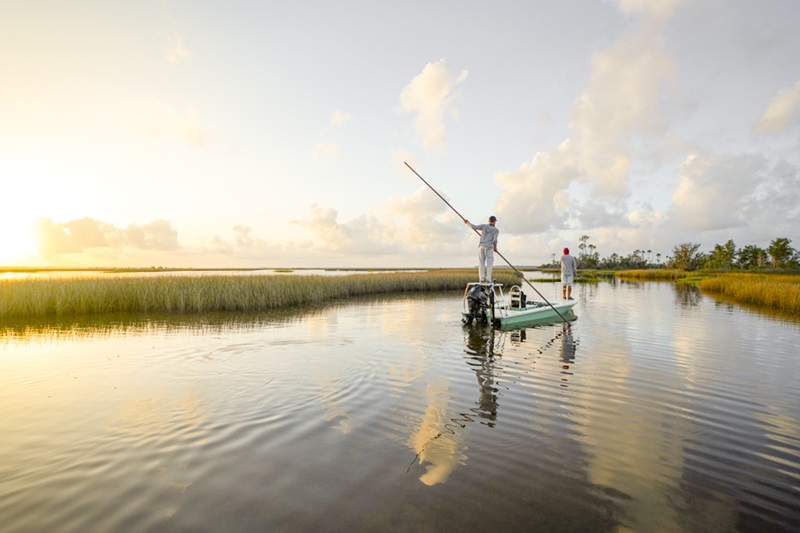
Credit: David Mangum

Banner image credit: Jay Riley


Do you have any thoughts on this post?

XHTML: You can use these tags: <a href="" title=""> <abbr title=""> <acronym title=""> <b> <blockquote cite=""> <cite> <code> <del datetime=""> <em> <i> <q cite=""> <s> <strike> <strong>

Comments must be under 1000 characters.

by:

posted in: In the Arena

August 26, 2025

In the Arena: David Brooks

TRCP’s “In the Arena” series highlights the individual voices of hunters and anglers who, as Theodore Roosevelt so famously said, strive valiantly in the worthy cause of conservation.

David Brooks

Hometown: Missoula, Montana
Occupation: Executive Director, Montana Trout Unlimited
Conservation credentials: While David Brooks has been at the helm of Montana Trout Unlimited, the organization has supported partners with dam removals from critical spawning tributaries for native westslope cutthroat and bull trout, monitored and researched cold water species across Montana’s beloved trout rivers and streams, and helped educate future generations of anglers about the importance of conservation.

After a childhood in Indiana and a collegiate running career in Colorado, David Brooks understood that he wanted to remain in America’s West. Luckily for him, he moved to Missoula, Montana, and quickly found friends that were willing to share their knowledge and a few select places to hunt and fish. Since those early years, Brooks has hunted big game and birds across Montana and as far north as the Arctic Circle in Alaska. This intimate knowledge of place has helped inform his professional career as Executive Director of Montana Trout Unlimited.

Here is his story.

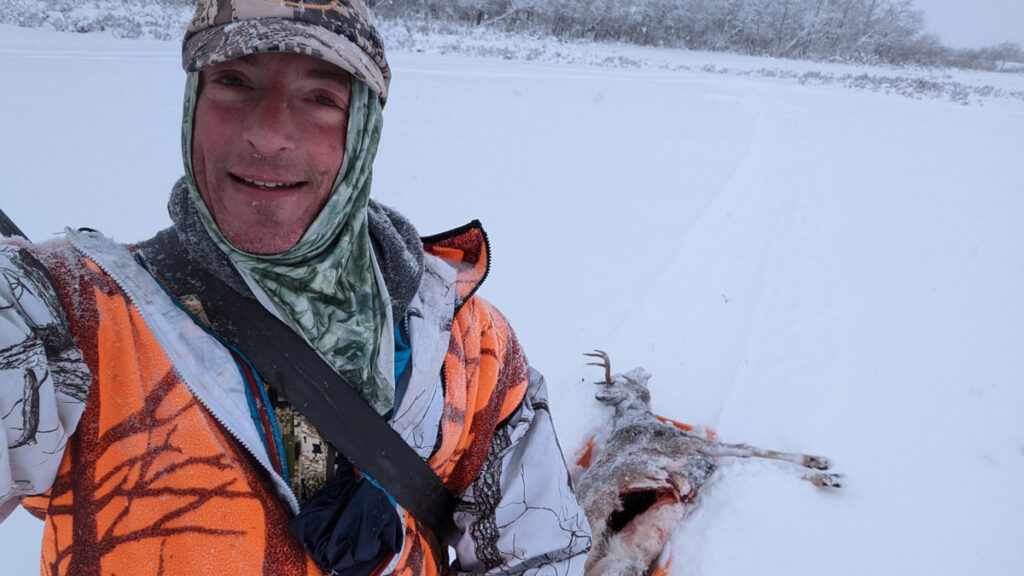
Brooks after a successful, snowy whitetail hunt in Montana.

TRCP: How were you introduced to hunting, fishing, and the outdoors? Who introduced you? 

David Brooks: The grace and generosity of friends introduced me to hunting, fishing, and most of my outdoor pursuits. When I moved from the Midwest to southern Colorado for my undergraduate studies, I did so mostly to run cross country and track for Coach Joe I. Vigil at Adams State College. Though I was mainly focused on running and school, I began to meet people who spent their falls stalking elk in the San Juan Mountains, their springs and summers casting flies for wild trout in tributaries that flowed out of those same public lands, and their winter weekends carving turns in the snow-covered flanks of the Colorado ranges. Hearing the stories of those outings from my non-runner friends planted seeds in the field of what my post-collegiate life might look like. When my wife and I moved to Missoula, Montana, in a pickup truck in 2000, I was fortunate to befriend a few people who had spent their lives hunting, fishing, floating rivers, backpacking, and generally reaping the bounty of the great outdoors. I slowly started acquiring the tools—a used Winchester .270, a hand-me-down Orvis rod, a third-hand raft. More importantly, these new friends shared their stories and let me tag along on a whitetail hunt, a trek to find native westslope cutthroat trout in a small stream, and on a 5-day river trip. The outings provided me with lessons on how to move in the woods, how to wield a flyrod, how to read water. The stories were of equal value in teaching me how to think as a hunter, angler, and lover of wild places.

TRCP: Tell us about one of your most memorable outdoor adventures. 

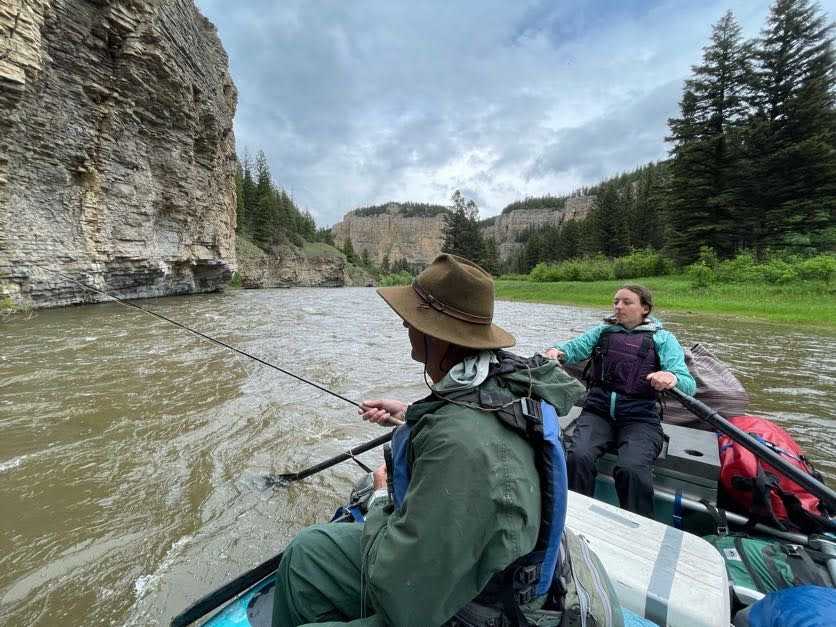
David Brooks: In 2004, I was invited to float the Smith River, Montana’s only permitted multi-day float trip. Fortunately, one of my closest friends and mentors agreed to go and to let me bring my 15-month-old daughter. He provided all the gear. At the time, my wife and I had been modest backpackers, so didn’t own a raft, drybags, or any other river trip toys. This friend even let me try rowing a few times each of the five days we were on the river, while he kept one eye on my daughter and the other downstream. When I banged his boat off a rock, a bank, or cliff wall, he offered keen rowing advice rather than admonitions. He laughed rather than cursed and let me keep trying. After five days of staring up into the Smith River canyon and enjoying the special camaraderie that river trips bring, I returned home with an unshakable case to share with my wife about why we needed to start investing in river gear. And we did. Besides launching our love of river trips, which have been our summer family vacation ever since, that trip taught me about the value of stringing consecutive days of outdoor time together, especially hunting and fishing. The river taught me about immersion.

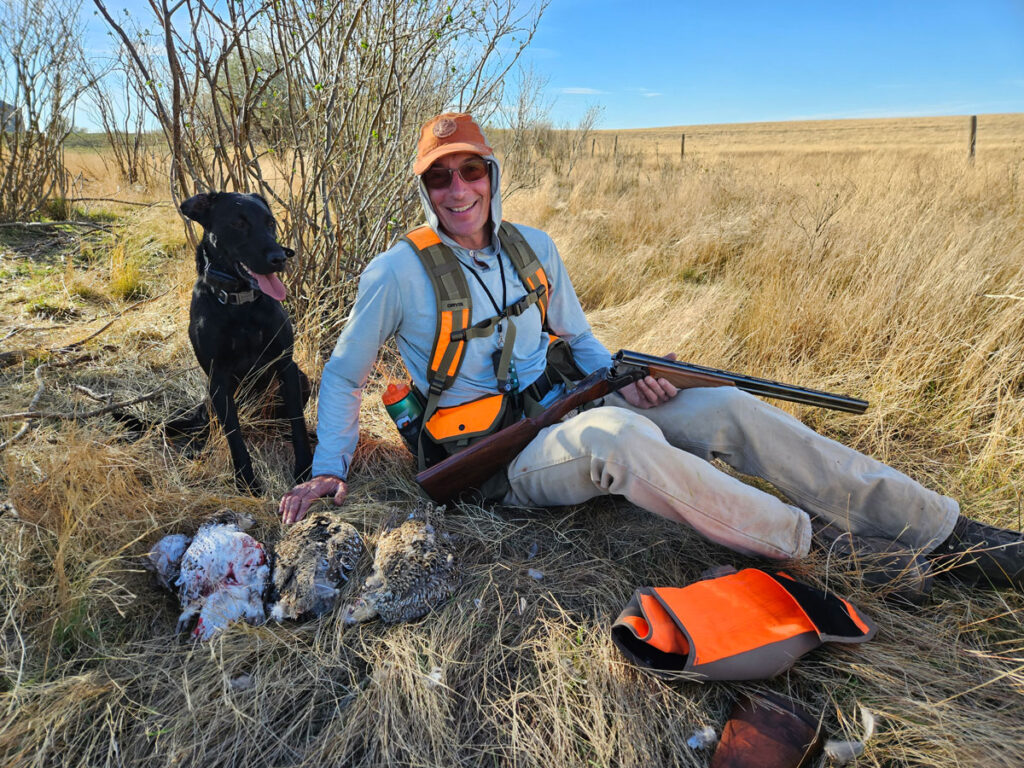
Brooks and lab Juno with sharptails in eastern Montana.

TRCP: If you could hunt or fish anywhere, where would it be and why?

David Brooks: With the exception of a glorious 10-day float-hunt in Alaska, most of my hunting and fishing has been in Montana. I have yet to tire of returning to the places I have started to know near home, nor have I tired of exploring new places within the state. Since turning 50-years-old, doing a DIY drop camp to hunt elk in a Wilderness Area in western Montana is probably my top priority. My clock is ticking for such a hunt. So I aim to spend some days in 2025 scouting camp and hunting spots for a 2026 trip. As for fishing, I have yet to catch a redband trout or a Yellowstone cutthroat trout in Montana in their native range, so those are both high priority goals. While I would love to hunt caribou in Alaska again or cast for a 100+ pound arapaima in the Amazon, the realities of my lifestyle increasingly point me in the direction of exploring a new section of a small western Montana trout stream each year, or learning a few more of the pinch points between elk feeding and resting grounds in the walk-in areas of public land I favor each fall near my home.

Brooks floats down a river above the Arctic Circle. Caribou in tow.

TRCP: How does conservation help enhance your outdoor life? 

David Brooks: In general, working in and learning about conservation issues always adds a layer to my time outdoors. When a conservation measure like Hoot Owl restrictions are implemented on Montana rivers, it makes me think more keenly about how water quality, like temperature, affects trout health and behavior. It pushes me to learn more about where cold water refugia are in a stretch of river or stream, such as upwellings of groundwater, springs and, of course, cold tributaries and, hence, where fish will be moving and how they will be feeding. Conservation introduces me to new places. When MTU joined our National TU staff in pursuing the removal of an old dam from the Rattlesnake Wilderness Area, working on that effort drew me farther and deeper than I had ever been in a Wilderness Area that is essentially in my backyard and where I regularly recreate. Knowing the conservation challenges that our streams, rivers, and lands face increases the gratitude I feel for each close encounter I have with a native trout, elk, whitetail deer, or sharptail grouse.

TRCP: What are the major conservation challenges where you live?

David Brooks: It is hard not to wear my MTU hat when thinking about the biggest conservation challenge where I live. From that vantage, I think diminishing and changing patterns of flow in our streams and rivers has to be near the top of the worry list. Climate change is making year-round precipitation less certain and altering the timing. We are seeing more short, weak winters. Even when winter snowpack reaches historic norms, like this year across much of the state, that snow begins melting earlier and across a ‘longer spring’ so that we don’t see normal peak runoff. And then flows quickly fall to base or below baseflow. Low, increasingly warm water lasts longer into fall. More such drought years in a row without the reprieve of truly good water years in between is the biggest challenge to maintaining or recovering healthy native and wild trout populations statewide. Concurrently, I don’t know of a single diminishing demand on water.

Brooks (left) drifts a fly under the watchful eye of his daughter Sage.

TRCP: Why is it important to you to be involved in conservation? 

David Brooks: I have a daughter. In conservation, we often talk about passing on the world to the next generation(s) in as good or better shape than we found it. Besides the innate value of ecosystems, what higher purpose for being in conservation is there?

TRCP: Why should conservation matter to the next generation of hunters and anglers?

David Brooks: While I have said that the highest reason to be involved in conservation is to pass on places in better shape to the next generation than we found them, those of us at a certain age and in our late careers in conservation need the next generation of hunters and anglers. We need their creativity and energy for the variety and complexity of conservation issues we face. And, more soberingly, if young hunters and anglers don’t care about conservation, chances are that many of the places they hunt or fish will be gone or greatly diminished within their lifetimes. There will be many places that they might discover as rich hunting and fishing grounds that will wither to a poor imitation of their current selves or disappear completely.

Photo credits: David Brooks


The TRCP is your resource for all things conservation. In our weekly Roosevelt Report, you’ll receive the latest news on emerging habitat threats, legislation and proposals on the move, public land access solutions we’re spearheading, and opportunities for hunters and anglers to take action. Sign up now.

by:

posted in: In the Arena

July 23, 2025

In the Arena: Sergio Diaz

TRCP’s “In the Arena” series highlights the individual voices of hunters and anglers who, as Theodore Roosevelt so famously said, strive valiantly in the worthy cause of conservation.

Sergio Diaz

Hometown: Sayville, New York 
Occupation: IT professional by trade, and part-time professional photographer and filmmaker focused on storytelling tied to nature, conservation, and outdoors subject matter
Conservation credentials: Diaz harnesses his adventurous fishing spirit, a gift for outdoor photography, and a prominent platform on social media to advocate for marine conservation, inspiring and helping educate saltwater anglers.

Besides sharing his captivating shots of recreational fishing feats with conservation groups like TRCP and Safeguard the Seas, Diaz has donated his breathtaking underwater shots of striped bass to the Bayshore Saltwater Flyrodders of New Jersey and has been invited to speak at several fly fishing clubs in New York and New Jersey, where he focuses on the importance of safer catch and release practices. Diaz volunteers for the Manhattan Cup, a fishing tournament in New York City that benefits veterans, to shoot photos and video. Currently, he’s working with TRCP partner Bonefish & Tarpon Trust to plan a trip to document the planting of mangroves and habitat restoration in the Bahamas or Caribbean.

Here is his story.

Credit: Sergio Diaz

Some of my earliest memories are from when I lived in the state of Tabasco, Mexico. My father was a military officer in the army, and during those years, the local fisheries were incredibly abundant. We had easy access to rivers and a coastline full of tarpon, snook, tropical gar, and jacks. It wasn’t unusual to see all of those species in a single morning.

Those early experiences with my father, learning how to cast and being immersed in such a diverse ecosystem (so yes, full of biting insects), left a lasting impression on me. They taught me to value wild places and understand the importance of protecting them, especially because, back then, conservation wasn’t practiced the way we know it today.

Credit: Steve Bechard

Over the years, I’ve had the opportunity to experience incredible moments on the water. Recently, while wading the flats of Inagua, Bahamas, looking for bonefish, I spotted something large floating almost motionless along a channel. As I got closer, I realized it was a big barracuda, perfectly still and clearly waiting to ambush prey.

Hoping for a shot at this trophy fish, I quickly clipped my leader, tied on wire, and rigged a large white deceiver fly to try and trigger a strike. Luckily, the barracuda was still holding in place by the time I was ready. On my second cast, she hit so fast I barely saw it happen.

I fought her in the shallow flat, where I could truly appreciate her size and watch her leap into the air several times. An amazing fish—and a moment I won’t forget

Credit: Koby Fulks

There are so many remote angling destinations still on my list. But if I could fish anywhere, I’d have to say I’d go back to Hawaii to wade for big bonefish. The first time I visited was on my honeymoon, and while fishing wasn’t exactly on the itinerary, I couldn’t help but notice bonefish cruising the flats and hear talk of people targeting them. At the time, I had to let it go, but ever since, the idea of returning has stuck with me, especially after seeing videos of those massive fish. Hawaii is home to some of the biggest bonefish in the world, and the thought of sight fishing for them in such a stunning, remote setting is just too good to resist.

Being involved in conservation means protecting the waters, habitats, and species we rely on, so the fish are still there tomorrow.

Conservation is at the heart of my fishing life because the health of the resource is everything. I love everything about fishing – not just catching fish, but the whole experience of being involved in nature, reading the water, and connecting with wild places. Without healthy ecosystems and abundant fish populations, that experience simply wouldn’t exist.

Overfishing and water quality are the biggest conservation challenges where I live in coastal New York. Pressure from recreational and commercial fishing has led to reduced populations of key species like striped bass. A critical part of addressing this is the need to conserve menhaden, commonly known where I live as “bunker,” as an essential forage fish that striped bass and other gamefish species depend on for food. At the same time, water quality degradation from nitrogen pollution, mainly due to septic systems and runoff, continues to destroy habitats and create aquatic dead zones.

Credit: Sergio Diaz

Conservation ensures that the waters I fish today will still be there tomorrow, full of life and possibility. It’s about respecting the resource, practicing catch and release when appropriate, and supporting efforts that protect habitats and biodiversity. For me, being a responsible angler goes hand in hand with being a good steward of the places I love.

I feel compelled to do my part in conservation because I want the next generation to experience the same connection to fishing that I’ve been lucky to have. Fishing isn’t just a pastime. It teaches respect for the environment and shows the value of healthy ecosystems. Being involved in conservation means protecting the waters, habitats, and species we rely on, so the fish are still there tomorrow, not just today. It’s about giving back to a resource that’s given me so much.

Credit: Sergio Diaz

If we don’t take care of the land and water now, there won’t be anything left to hunt or fish later. Conservation helps to keep the traditions alive – the early mornings on the water, the stories, the connection to nature. If we want to continue to enjoy the outdoors, we have to protect them.

Banner image credit Sergio Diaz

by:

posted in: In the Arena

July 17, 2025

In the Arena: Dr. Carolyn Mahan

TRCP’s “In the Arena” series highlights the individual voices of hunters and anglers who, as Theodore Roosevelt so famously said, strive valiantly in the worthy cause of conservation.

Dr. Carolyn Mahan

Hometown: State College, Pennsylvania
Occupation: Professor of Biology and Environmental Studies, Penn State Altoona
Conservation credentials: Dr. Carolyn Mahan has spent her professional career researching topics to improve conservation across America and the world. Currently, Dr. Mahan’s research interests include wildlife use of human-modified landscapes, management of public lands, and squirrel ecology. Her research has been widely published and cited in top science journals, and she currently serves on Pennsylvania governor Josh Shapiro’s Advisory Council for Conservation.

Dr. Mahan has researched wildlife around the globe but loves the diverse world of the Appalachian Mountains she calls home. Her education and research combined with passions for hunting and fishing make her a fantastic educator in the Penn State University system, as well as an invaluable expert when working with the oil and gas industry on conservation. Dr. Mahan lives a life that takes active steps toward a future where humans and wildlife can coexist. 

Here is her story.

TRCP: How were you introduced to hunting, fishing, and the outdoors? Who introduced you? 

Dr. Mahan: I always loved nature, hiking, bird watching, and wildlife. However, my husband, Kurt Engstrom, introduced me to fishing and hunting while we were dating and both students at the University of Connecticut in the late 1980s. At first, I would just accompany him in the forest and watch wildlife. Gradually, I learned how to fish for bass and trout. Finally, once we moved to Pennsylvania, I began to hunt whitetail deer. 

TRCP: Tell us about one of your most memorable outdoor adventures. 

Dr. Mahan: I have had so many memorable experiences in nature locally, nationally, and internationally.  However, a seemingly small natural event occurs every year on my back porch, and I treasure seeing it. In late March, a pair of Carolina wrens inevitably chooses my laundry apron, the pocket of my hunting coat, or my window box as a place to build their beautiful moss-covered, domed nest.  This event is one of the first signs of spring for me and my family, and we watch the wren pair as they lay their four eggs, incubate them, and eventually fledge their babies. This annual event is an on-going sign that, perhaps, humans and wildlife can travel together into the future.  

TRCP: If you could hunt or fish anywhere, where would it be and why?

Dr. Mahan: I would like to go on a pack trip on horses into the western backcountry to hunt for elk. I grew up riding horses, so this would combine things that I love. Fishing for Atlantic salmon in the UK or brook trout in Labrador would be amazing as well. 

TRCP: How does conservation help enhance your outdoor life? 

Dr. Mahan: My entire life is conservation. I am a professor who teaches courses in conservation to undergraduate students at Penn State, and I conduct research on conservation of all types of wildlife (native pollinators, breeding birds, carnivores, small mammals, and rare species) in human-modified landscapes such as oil and gas pipelines. So, every time that I am in the outdoors for work or play, I am thinking about conservation and how to create and restore landscapes where humans and wildlife can coexist. 

TRCP: What are the major conservation challenges where you live?

Dr. Mahan: I used to think that habitat loss was the biggest threat to wildlife. Habitat loss is still a critical factor impacting wildlife, but we are learning to manage landscapes so that both humans and wildlife can occupy the landscape. In terms of drastic wildlife losses, the spread of infectious diseases caused, in part, by globalization, climate change, and human activities (e.g, game farming), is the biggest challenge. Infectious diseases and pathogens like Chronic Wasting Disease, White-nosed Syndrome, West Nile Virus, and Avian Malaria has caused sudden and drastic health threats to whitetail Deer, North American bats, ruffed grouse, and songbirds respectively. In addition, non-native species including Japanese knotweed, stilt grass, spotted lanternfly, hemlock woolly adelgid, and emerald ash borer have changed the species composition of Pennsylvania forests over the past few decades. 

TRCP: Why is it important to you to be involved in conservation? 

Dr. Mahan: Aldo Leopold wrote that “one of the penalties of an ecological education is that one lives alone in a world of wounds.” I feel that quote everyday as I see the changes in wildlife populations and forest composition that I previously mentioned, and sadly, many of these negative changes are unnoticed by the general public. People can make a difference, however, through their actions.  Actions may include removing non-native species, planting a native tree, growing native forbs, teaching others to cherish nature, being conscientious about what you purchase, and assisting in wildlife management. 

Dr. Mahan on a Pennsylvania pheasant hunt.

TRCP: Why should conservation matter to the next generation of hunters and anglers?

Dr. Mahan: In the United States, conservation is funded at the governmental level primarily by taxes on hunting and fishing equipment and hunting/fishing license sales. If you are a hunter or an angler, your money is used for conservation. Newcomers to these past times should learn about ways that their funds are used and assist state officials in explaining the importance of hunters and anglers in their role as conservationists. I also hope that hunters and anglers will focus on more than just the species that they harvest. Conservationists should care about all species of native wildlife because healthy, functioning ecosystems are critical for sustainable hunting and fishing. 

Photo credits: Dr. Carolyn Mahan


The TRCP is your resource for all things conservation. In our weekly Roosevelt Report, you’ll receive the latest news on emerging habitat threats, legislation and proposals on the move, public land access solutions we’re spearheading, and opportunities for hunters and anglers to take action. Sign up now.

by:

posted in: In the Arena

May 1, 2025

In the Arena: Capt. John McMurray

TRCP’s “In the Arena” series highlights the individual voices of hunters and anglers who, as Theodore Roosevelt so famously said, strive valiantly in the worthy cause of conservation.

John McMurray

Hometown: Oceanside, New York 
Occupation: Fishing guide/charter boat captain
Conservation credentials: McMurray has been the executive director of the Coastal Conservation Association New York and director of grant programs at the Norcross Wildlife Foundation. He was also a legislative proxy for the Atlantic States Marine Fisheries Commission and served for a decade as New York’s recreational representative on the Mid-Atlantic Fishery Management Council.

Capt. John McMurray hails as a renowned big tuna and striped bass charter captain based on Long Island, New York. The hard-charging captain has been the owner and primary operator of One More Cast Charters, Inc. for more than twenty years, where he charters trips far offshore on seaworthy Contenders and inshore on smaller skiffs. McMurray has been a leader with the New York arm of the Coastal Conservation Association and a long-time advocate for menhaden conservation. He’s also served in the U.S. Coast Guard as a coxswain and law enforcement officer, and for 16 years served as the director of grant programs at the Norcross Wildlife Foundation, which distributed over $20 million in grants that largely targeted the protection of marine fish and habitat. Driven to fish hard for his clients without respite during major runs, he’s out on the water almost every day of the season, rain or shine – including a running timeslot every other Sunday he sets aside to take his son and his friends fishing on what he refers to as “Bro-day.”

McMurray is an oft-published outdoor writer, who currently blogs for the Marine Fish Conservation Network and has had feature articles/photography published in On The Water, Saltwater Fly Fishing, and The New York Times. A decade ago he penned a weekly conservation blog for TRCP.

Here is his story.

No one ever really introduced me to the outdoors. I didn’t really come from an outdoorsy family. Just kinda got into it myself. There was a local pond we’d go to in northern Virginia. I started out with bluegills, graduated to catfish, then largemouths in the Potomac. I later enlisted in the Coast Guard, which brought me to New York, where I discovered striped bass and became a full-on addict. Eventually I got into tuna fishing. At that point fishing kinda became my life.

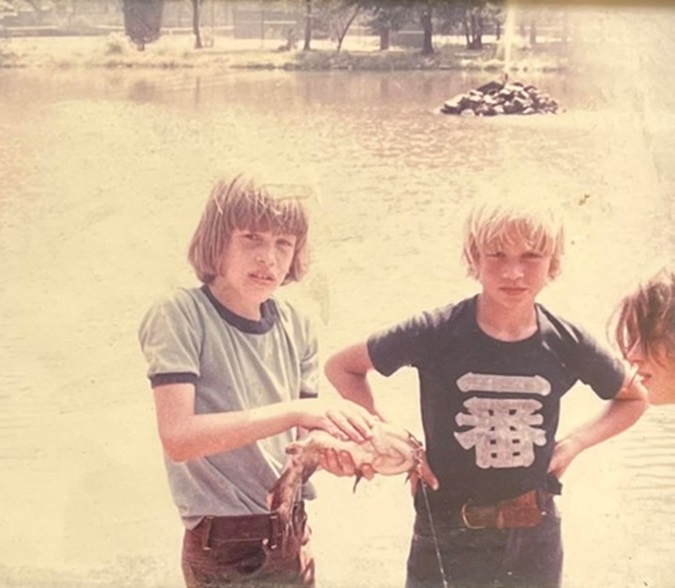
I guess my most memorable outdoor adventure was at that local pond, there was a “giant” catfish (I’m sure it was probably more than one) that would break people off, stole at least one “dead-sticked” rod. No one could ever land it. Eventually, one year (I think I was 9) I stuck it, did a lap around the pond while a small crowd gathered as I landed it. It was not “big” really, maybe 10 lbs., but back then? It was HUGE! I was an instant legend (in my own mind anyway).

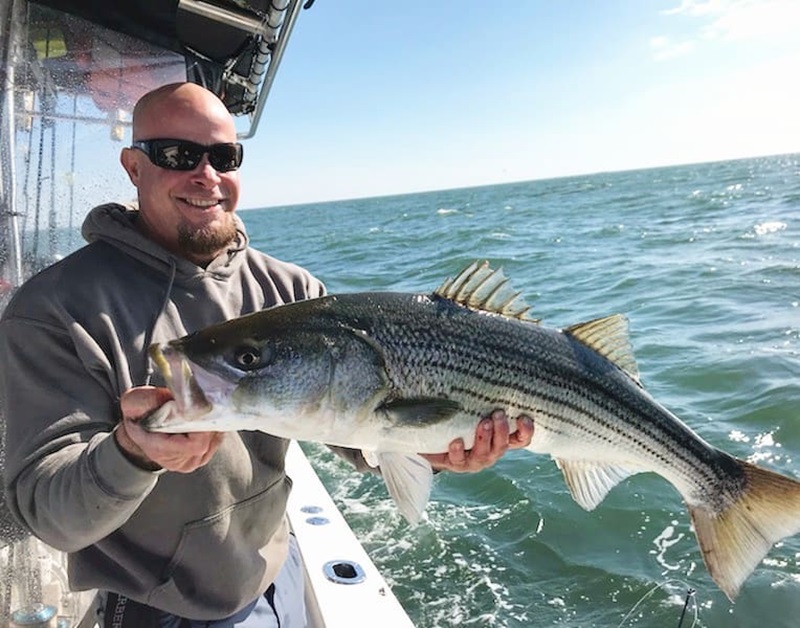
If I could fish anywhere in the world, honestly, it would be Long Island, New York, man. Believe it or not, we’ve got one of THE best fisheries in the world. Incredibly abundant striped bass populations. The sight/flats fishing is GREAT in the spring and the fall blitz fishery is Nat Geo-type stuff. We’ve also got an extraordinary giant tuna fishery within sight of land. Mid-shore the recreational size bluefin fishery is awesome too. Fish in the 150, even 200 lb.-range can be caught on spin gear! Offshore? We’ve got an insane yellowfin tuna fishery. We get 100 lb. fish on poppers regularly.

Conservation enhances what I do because it creates abundance, and abundance equals opportunity. The main conservation challenge off of Long Island is that A LOT of our fisheries revolve around menhaden aggregations. We get the menhaden schools, we get predators.  Every year though, the large-scale processors in Virginia sail purse-seine boats and fly spotter planes up here. They sit right off the 3-mile line and rake up hundreds of thousands of pounds of menhaden, effectively shutting down bluefin and striped bass runs. It REALLY sucks.

If we deplete forage fish stocks, those predator fish ain’t coming around.

I’m involved in conservation efforts out of enlightened self-interest. I need there to be an abundance of both predators and forage fish around to be successful at the catching part. My business emphasizes the experience fishing brings rather than just filling coolers. So a fish in the water is WAY more beneficial than a dead one on the dock. It’s not really how many I can kill that’s important, but how many we can catch.

It’s obvious to me why conservation should matter to our next generation of anglers. We kill too many predator fish now, there won’t be any left for my kids. If we deplete forage fish stocks, those predator fish ain’t coming around. For me, or for future generations.

All images credit John McMurray

HOW YOU CAN HELP

TRCP has partnered with Afuera Coffee Co. to further our commitment to conservation. $4 from each bag is donated to the TRCP, to help continue our efforts of safeguarding critical habitats, productive hunting grounds, and favorite fishing holes for future generations.

Learn More
Subscribe


You have Successfully Subscribed!

You have Successfully Subscribed!

You have Successfully Subscribed!

You have Successfully Subscribed!

You have Successfully Subscribed!